Adverbs
Definition
Adverbs describe verbs and modify adjectives
and other adverbs.
Adverbs, unlike adjectives, do not modify
nouns. Adverbs can also modify phrases,
clauses, and sentences. Adverbs answer one of
the following questions: When? Where? Why?
How? Under what conditions? and To what
extent?
In the parts of speech adverb plays an
important role.
Let us see what is it’s role …………..
Adverb:- Basically, most adverbs
tell you how, where or when some thing is done.
In other words, they describe the manner, place
or time of an action.
Commonly adverbs are formed
from adjectives. Some are below.
Adjectives Adverbs
Kind Kindly
Happy Happily
Wonderful Wonderfully
Loud Loudly
Sad Sadly
Beautiful Beautifully
Sweet Sweetly
Many adverbs end with ly. You make these
adverbs by adding ly to adjectives.
Some words that end in ly are not adverbs. Some
adjectives end in ly too. For Example:-
1.Sam was feeling very lonely.
2.She was wearing a lovely dress.
3.It was a very lively party
Note:
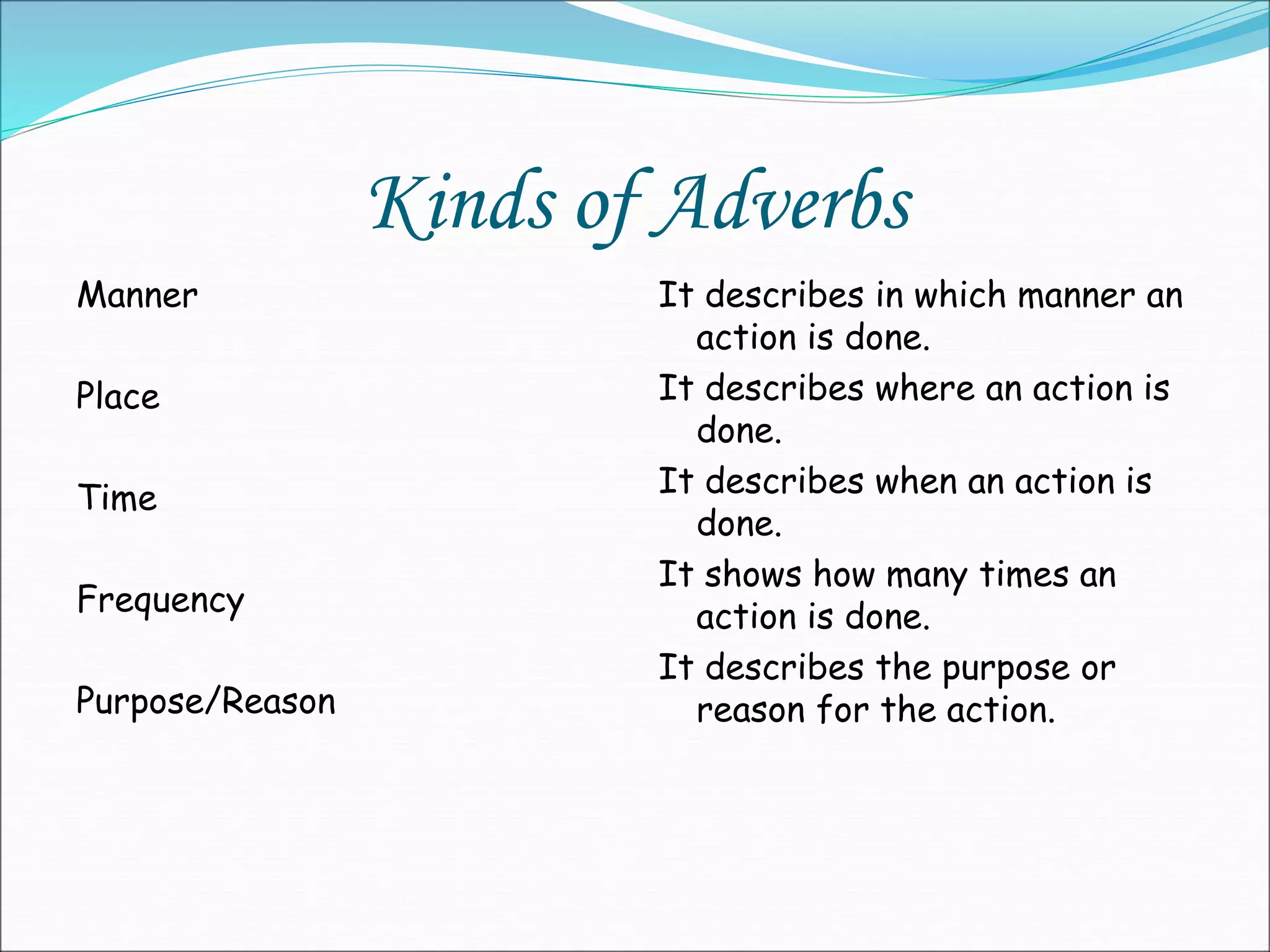
Kinds of Adverbs
Manner
Place
Time
Frequency
Purpose/Reason
It describes in which manner an
action is done.
It describes where an action is
done.
It describes when an action is
done.
It shows how many times an
action is done.
It describes the purpose or
reason for the action.
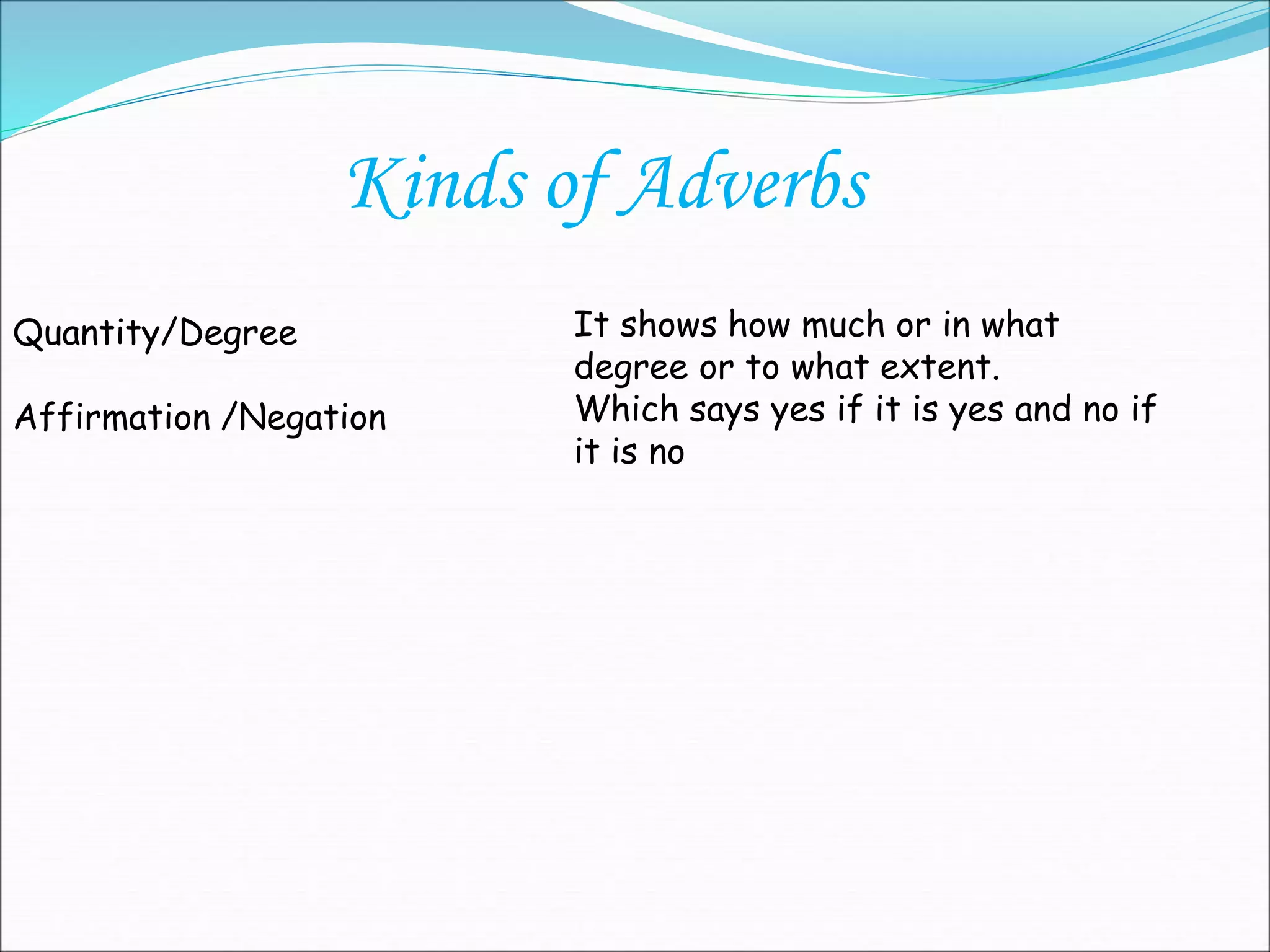
Quantity/Degree
Affirmation /Negation
It shows how much or in what
degree or to what extent.
Which says yes if it is yes and no if
it is no
Kinds of Adverbs
Examples :
The boys are playing upstairs.
The dog is in the garden.
We’re going to NewYork City on our
school trip.
It’s very sunny but cold outside.
Adverbs of Place:
Some adverbs and adverb phrases answer the question
“where?”.
They are called adverbs of place.
Adverb of places
1. I’ve lived here for about two years.
2. English and German are closely related.
1. Is mark still in bed
2. His children go everywhere with him.
Examples:
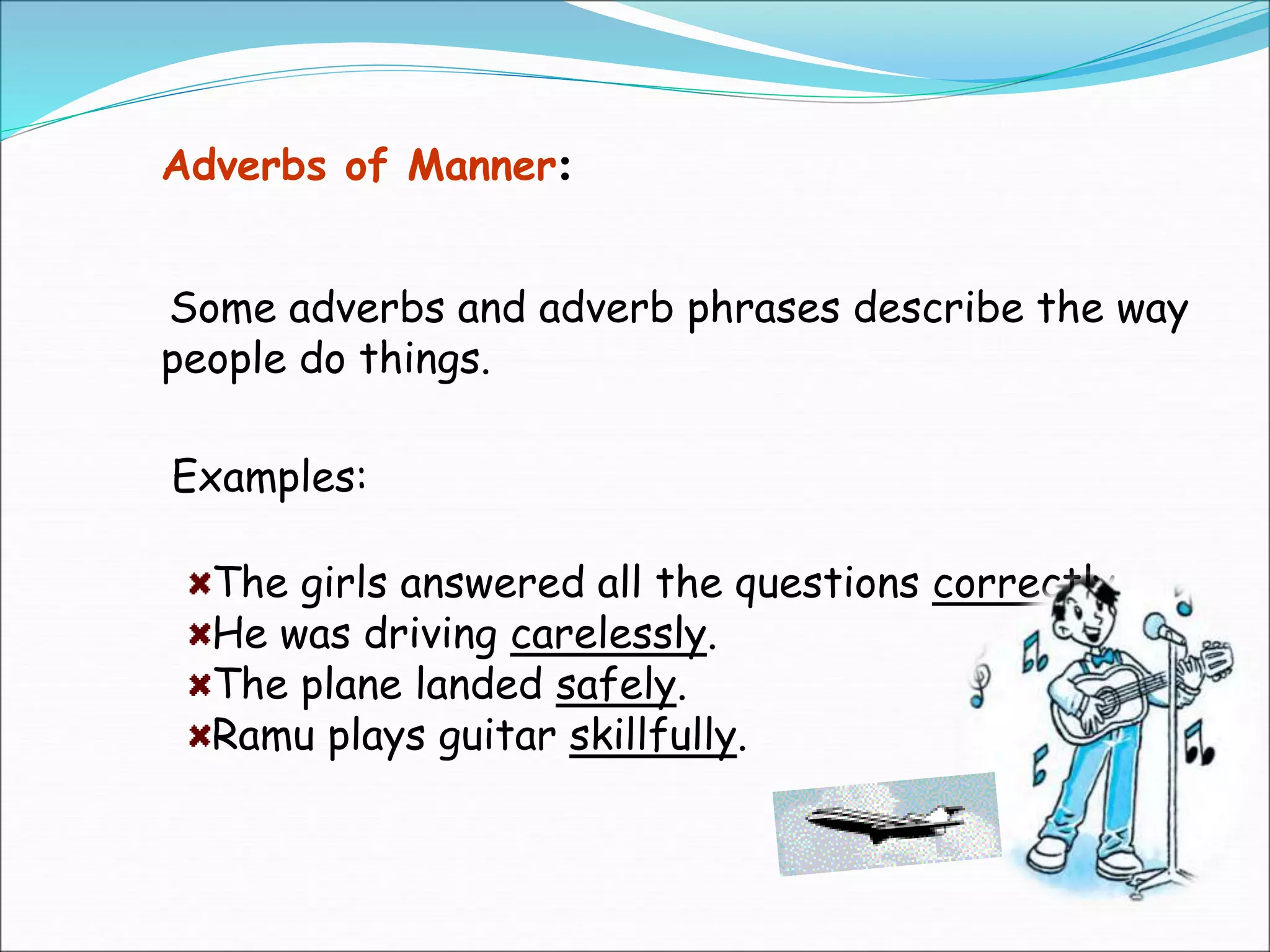
The girls answered all the questions correctly.
He was driving carelessly.
The plane landed safely.
Ramu plays guitar skillfully.
Adverbs of Manner:
Some adverbs and adverb phrases describe the way
people do things.
Adverb of manner
1. They watched Carefully.
2. The flower was beautifully made up
3. She seemed faintly.
4. The team played wonderfully.
Adverbs of Frequency
Some adverbs and adverb phrases answer the
question “how often an action is done”
They are called adverbs of frequency.
Examples :
The children always go to school on the bus.
I’ll never make that mistake again .
I clean my bedroom every day.
Dad polishes his shoes twice a week.
Examples :
The train has already left.
We moved into our new house last week.
Our favorite T.V. program starts at 6’o clock.
I’m going to my new school tomorrow.
Adverbs of Time:
Some adverbs and adverb phrases answer the
question “when?”.
They are called adverbs of time.
Adverbs Of Time
We shall now begin to work.
He called here a few minutes ago.
I have spoken to him yesterday.
He comes here daily.
Mr. Guptha formerly lived here.
Adverbs of quantity or degree
It shows how much, or in what
degree or to what extent.
He was too careless.
The sea is very stormy.
I am rather busy.
I am fully prepared.
These mangos are almost ripe.
Adverbs of reason
The adverb which tells about a
reason is called adverb of reason.
He is hence unable to refute the charge.
He therefore left school.
Adverbs of affirmation and negation:
Which says yes if it is yes and no if it is no
Examples:
1. I don’t know.
2. Surely you are mistaken.
3. He certainly went.
Examples of Adverbs:-
1.She sings sweetly.
2.He speaks quite clearly.
3.She shouts loudly.
4. She smiled cheerfully.
5.The traffic was moving slowly.
6.She writes neatly.
7.We waited patiently to see the doctor.
Some examples of adverbs of different kinds:
1. Tortoise walks slowly (Manner).
2. We will have our Semester exams on April 1st
week(Time).
3. The accident happened near the Highway(Place).
4. At least twice a week I used to go for
Temple(Frequency).
5. We all go for a picnic just for enjoyment(Purpose).
6. The sea is very stormy(Degree /Quantity).
7. Surely you are mistaken(Affirmation/Negation).
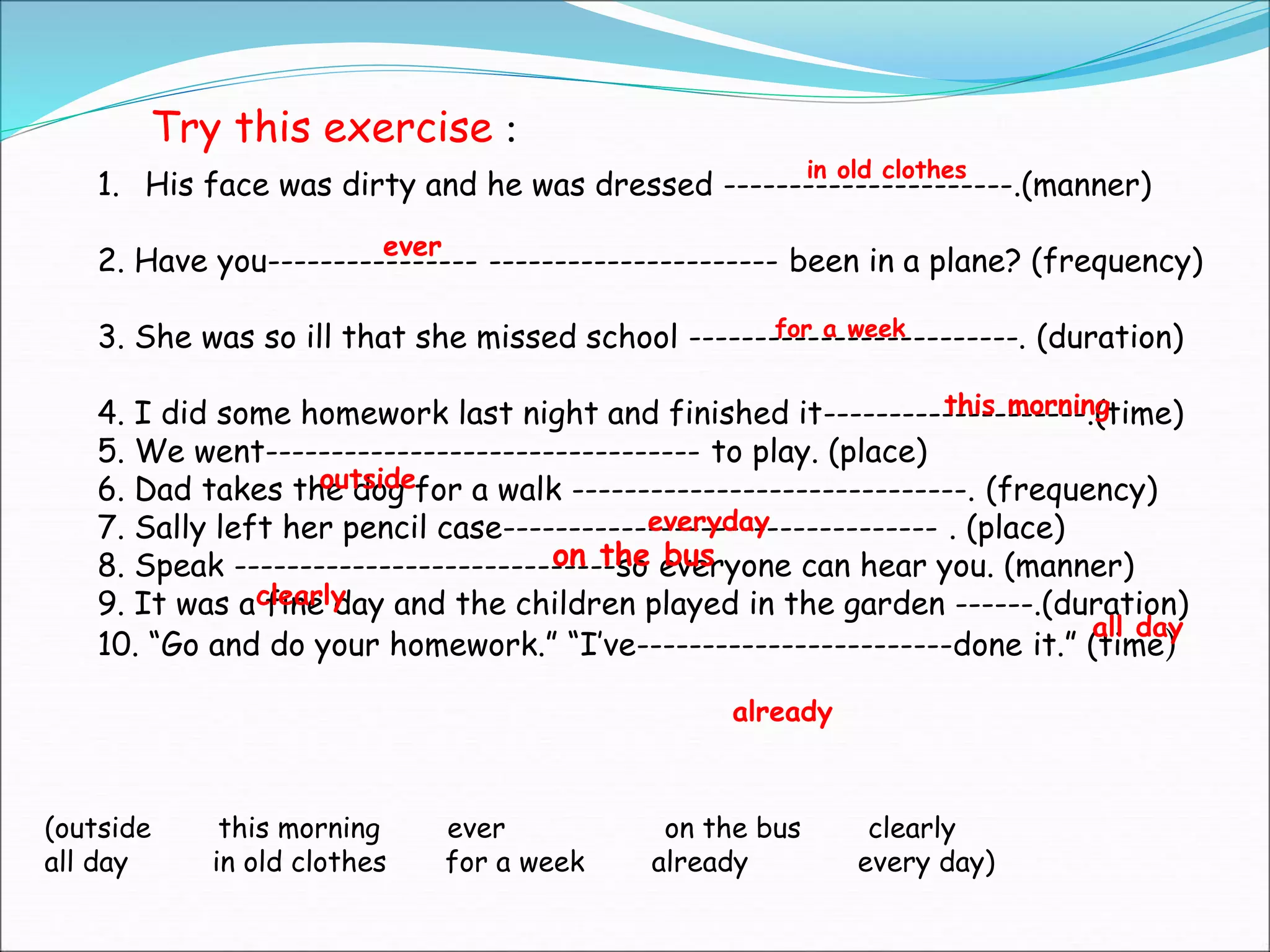
1. His face was dirty and he was dressed ----------------------.(manner)
2. Have you---------------- ---------------------- been in a plane? (frequency)
3. She was so ill that she missed school -------------------------. (duration)
4. I did some homework last night and finished it--------------------.(time)
5. We went--------------------------------- to play. (place)
6. Dad takes the dog for a walk ------------------------------. (frequency)
7. Sally left her pencil case--------------------------------- . (place)
8. Speak -----------------------------so everyone can hear you. (manner)
9. It was a fine day and the children played in the garden ------.(duration)
10. “Go and do your homework.” “I’ve------------------------done it.” (time)
(outside this morning ever on the bus clearly
all day in old clothes for a week already every day)
Try this exercise :
in old clothes
ever
for a week
this morning
outside
everyday
on the bus
clearly
all day
already
This powerpoint was kindly donated to
www.worldofteaching.com
http://www.worldofteaching.com is home to over a
thousand powerpoints submitted by teachers. This is a
completely free site and requires no registration. Please
visit and I hope it will help in your teaching.

Adverbs.ppt

  • 1.
  • 2.
    Definition Adverbs describe verbsand modify adjectives and other adverbs. Adverbs, unlike adjectives, do not modify nouns. Adverbs can also modify phrases, clauses, and sentences. Adverbs answer one of the following questions: When? Where? Why? How? Under what conditions? and To what extent?
  • 3.
    In the partsof speech adverb plays an important role. Let us see what is it’s role …………..
  • 4.
    Adverb:- Basically, mostadverbs tell you how, where or when some thing is done. In other words, they describe the manner, place or time of an action.
  • 5.
    Commonly adverbs areformed from adjectives. Some are below. Adjectives Adverbs Kind Kindly Happy Happily Wonderful Wonderfully Loud Loudly Sad Sadly Beautiful Beautifully Sweet Sweetly
  • 6.
    Many adverbs endwith ly. You make these adverbs by adding ly to adjectives. Some words that end in ly are not adverbs. Some adjectives end in ly too. For Example:- 1.Sam was feeling very lonely. 2.She was wearing a lovely dress. 3.It was a very lively party Note:
  • 7.
    Kinds of Adverbs Manner Place Time Frequency Purpose/Reason Itdescribes in which manner an action is done. It describes where an action is done. It describes when an action is done. It shows how many times an action is done. It describes the purpose or reason for the action.
  • 8.
    Quantity/Degree Affirmation /Negation It showshow much or in what degree or to what extent. Which says yes if it is yes and no if it is no Kinds of Adverbs
  • 9.
    Examples : The boysare playing upstairs. The dog is in the garden. We’re going to NewYork City on our school trip. It’s very sunny but cold outside. Adverbs of Place: Some adverbs and adverb phrases answer the question “where?”. They are called adverbs of place.
  • 10.
    Adverb of places 1.I’ve lived here for about two years. 2. English and German are closely related. 1. Is mark still in bed 2. His children go everywhere with him.
  • 11.
    Examples: The girls answeredall the questions correctly. He was driving carelessly. The plane landed safely. Ramu plays guitar skillfully. Adverbs of Manner: Some adverbs and adverb phrases describe the way people do things.
  • 12.
    Adverb of manner 1.They watched Carefully. 2. The flower was beautifully made up 3. She seemed faintly. 4. The team played wonderfully.
  • 13.
    Adverbs of Frequency Someadverbs and adverb phrases answer the question “how often an action is done” They are called adverbs of frequency. Examples : The children always go to school on the bus. I’ll never make that mistake again . I clean my bedroom every day. Dad polishes his shoes twice a week.
  • 14.
    Examples : The trainhas already left. We moved into our new house last week. Our favorite T.V. program starts at 6’o clock. I’m going to my new school tomorrow. Adverbs of Time: Some adverbs and adverb phrases answer the question “when?”. They are called adverbs of time.
  • 15.
    Adverbs Of Time Weshall now begin to work. He called here a few minutes ago. I have spoken to him yesterday. He comes here daily. Mr. Guptha formerly lived here.
  • 16.
    Adverbs of quantityor degree It shows how much, or in what degree or to what extent. He was too careless. The sea is very stormy. I am rather busy. I am fully prepared. These mangos are almost ripe.
  • 17.
    Adverbs of reason Theadverb which tells about a reason is called adverb of reason. He is hence unable to refute the charge. He therefore left school.
  • 18.
    Adverbs of affirmationand negation: Which says yes if it is yes and no if it is no Examples: 1. I don’t know. 2. Surely you are mistaken. 3. He certainly went.
  • 19.
    Examples of Adverbs:- 1.Shesings sweetly. 2.He speaks quite clearly. 3.She shouts loudly. 4. She smiled cheerfully. 5.The traffic was moving slowly. 6.She writes neatly. 7.We waited patiently to see the doctor.
  • 20.
    Some examples ofadverbs of different kinds: 1. Tortoise walks slowly (Manner). 2. We will have our Semester exams on April 1st week(Time). 3. The accident happened near the Highway(Place). 4. At least twice a week I used to go for Temple(Frequency). 5. We all go for a picnic just for enjoyment(Purpose). 6. The sea is very stormy(Degree /Quantity). 7. Surely you are mistaken(Affirmation/Negation).
  • 21.
    1. His facewas dirty and he was dressed ----------------------.(manner) 2. Have you---------------- ---------------------- been in a plane? (frequency) 3. She was so ill that she missed school -------------------------. (duration) 4. I did some homework last night and finished it--------------------.(time) 5. We went--------------------------------- to play. (place) 6. Dad takes the dog for a walk ------------------------------. (frequency) 7. Sally left her pencil case--------------------------------- . (place) 8. Speak -----------------------------so everyone can hear you. (manner) 9. It was a fine day and the children played in the garden ------.(duration) 10. “Go and do your homework.” “I’ve------------------------done it.” (time) (outside this morning ever on the bus clearly all day in old clothes for a week already every day) Try this exercise : in old clothes ever for a week this morning outside everyday on the bus clearly all day already
  • 23.
    This powerpoint waskindly donated to www.worldofteaching.com http://www.worldofteaching.com is home to over a thousand powerpoints submitted by teachers. This is a completely free site and requires no registration. Please visit and I hope it will help in your teaching.