ENGLISH 
NAME: LENIN PROAÑO
Adverbs of frequency 
 Adverbs that change or qualify the meaning of a sentence by 
telling us how often or how frequently something happens 
are defined as adverbs of frequency. 
 An adverb of frequency is exactly what it sounds like – an 
adverb of time. Adverbs of frequency always describe how 
often something occurs, either in definite or indefinite 
terms. An adverb that describes definite frequency is one 
such as weekly, daily, or yearly. An adverb describing 
indefinite frequency doesn’t specify an exact time frame; 
examples are sometimes, often, and rarely.
These simple rules for adverbs of frequency will 
help you to use them correctly: 
 Always use adverbs of frequency to discuss how often 
something happens. 
 Adverbs of frequency are often used to indicate routine or 
repeated activities, so they are often used with the present 
simple tense. 
 If a sentence has only one verb, place the adverb of 
frequency in the middle of the sentence so that it is 
positioned after the subject but before the verb. For 
example: Tom never flies. He always takes the bus. 
 When a sentence contains more than one verb, place the 
adverb of frequency before the main verb. For example: 
They have often visited Europe. 
 When using an adverb of frequency in the negative or in 
forming a question, place it before the main verb. For 
example: Do you usually get up so late?
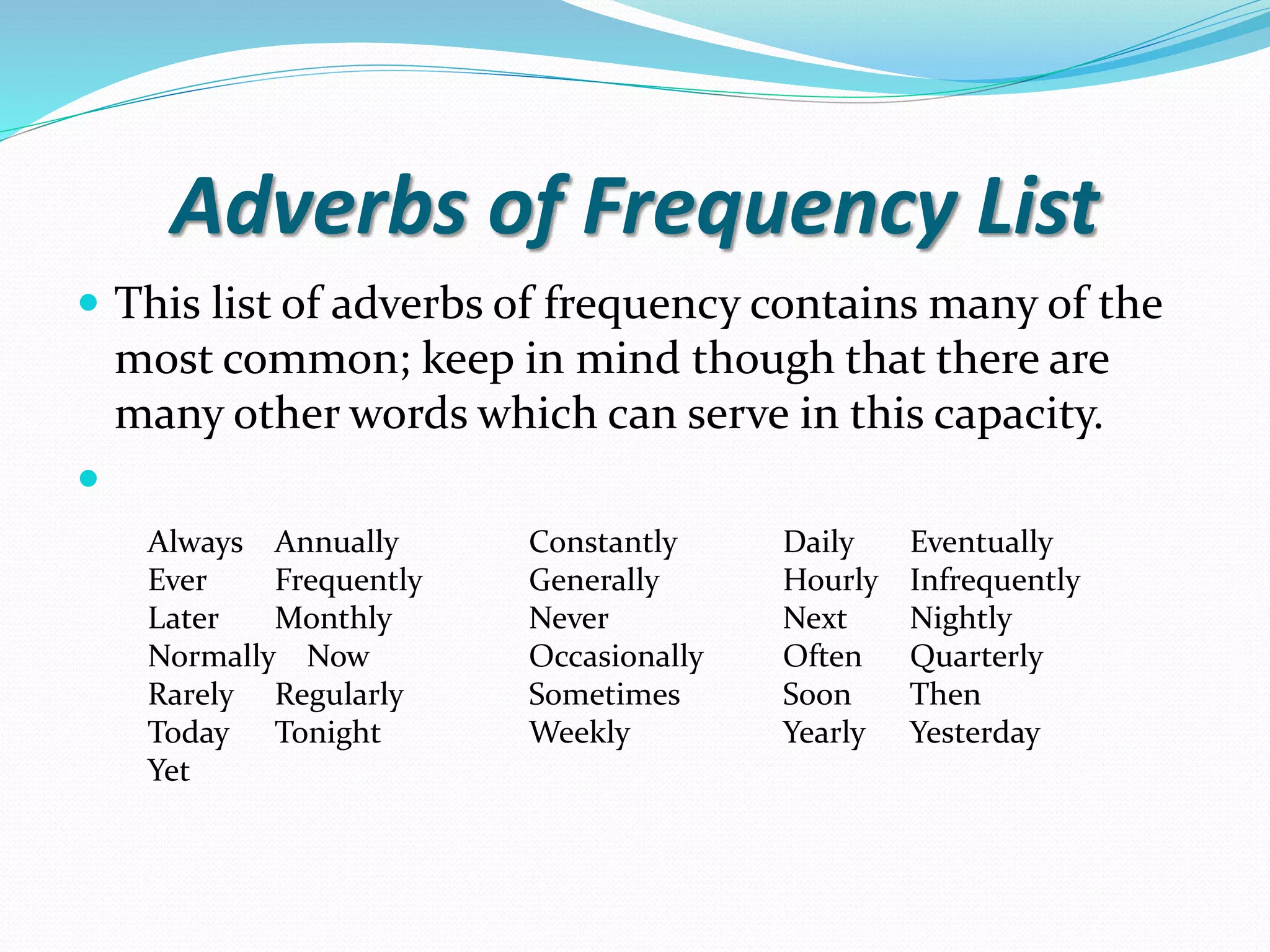
Adverbs of Frequency List 
 This list of adverbs of frequency contains many of the 
most common; keep in mind though that there are 
many other words which can serve in this capacity. 
 
Always Annually Constantly Daily Eventually 
Ever Frequently Generally Hourly Infrequently 
Later Monthly Never Next Nightly 
Normally Now Occasionally Often Quarterly 
Rarely Regularly Sometimes Soon Then 
Today Tonight Weekly Yearly Yesterday 
Yet
Examples of Adverbs of Frequency 
Each sentence contains an example of an adverb of 
frequency; the examples are italicized for easy 
identification. 
 The incubator turns each egg hourly. 
 We take a vacation at least once annually. 
 I usually shop for groceries on Saturday mornings. 
 He is often late for work. 
 We seldom see John. 
 My dentist told me I should floss twice daily.
The Position of the Adverb in a Sentence 
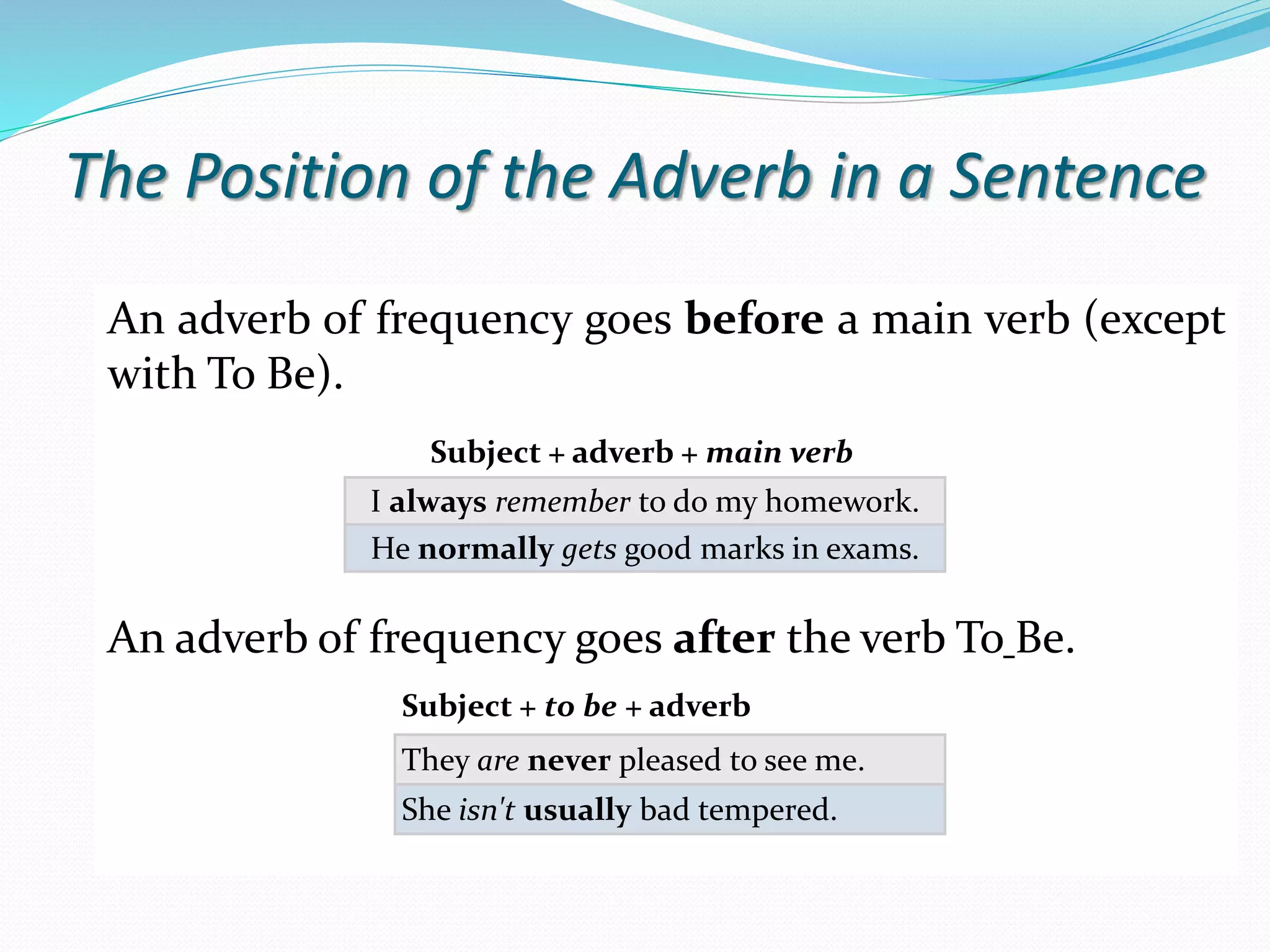
An adverb of frequency goes before a main verb (except 
with To Be). 
Subject + adverb + main verb 
I always remember to do my homework. 
He normally gets good marks in exams. 
An adverb of frequency goes after the verb To Be. 
Subject + to be + adverb 
They are never pleased to see me. 
She isn't usually bad tempered.
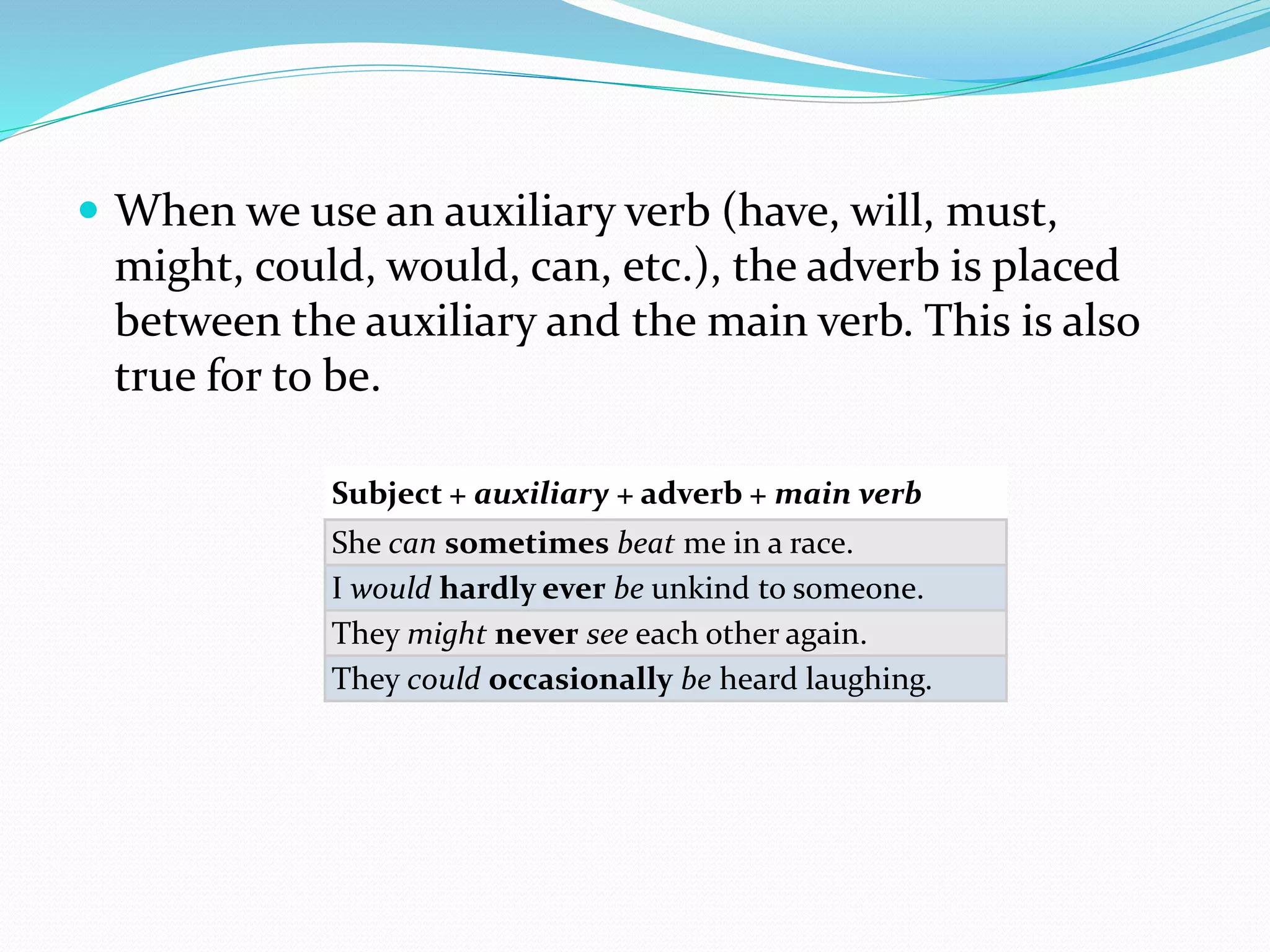
 When we use an auxiliary verb (have, will, must, 
might, could, would, can, etc.), the adverb is placed 
between the auxiliary and the main verb. This is also 
true for to be. 
Subject + auxiliary + adverb + main verb 
She can sometimes beat me in a race. 
I would hardly ever be unkind to someone. 
They might never see each other again. 
They could occasionally be heard laughing.
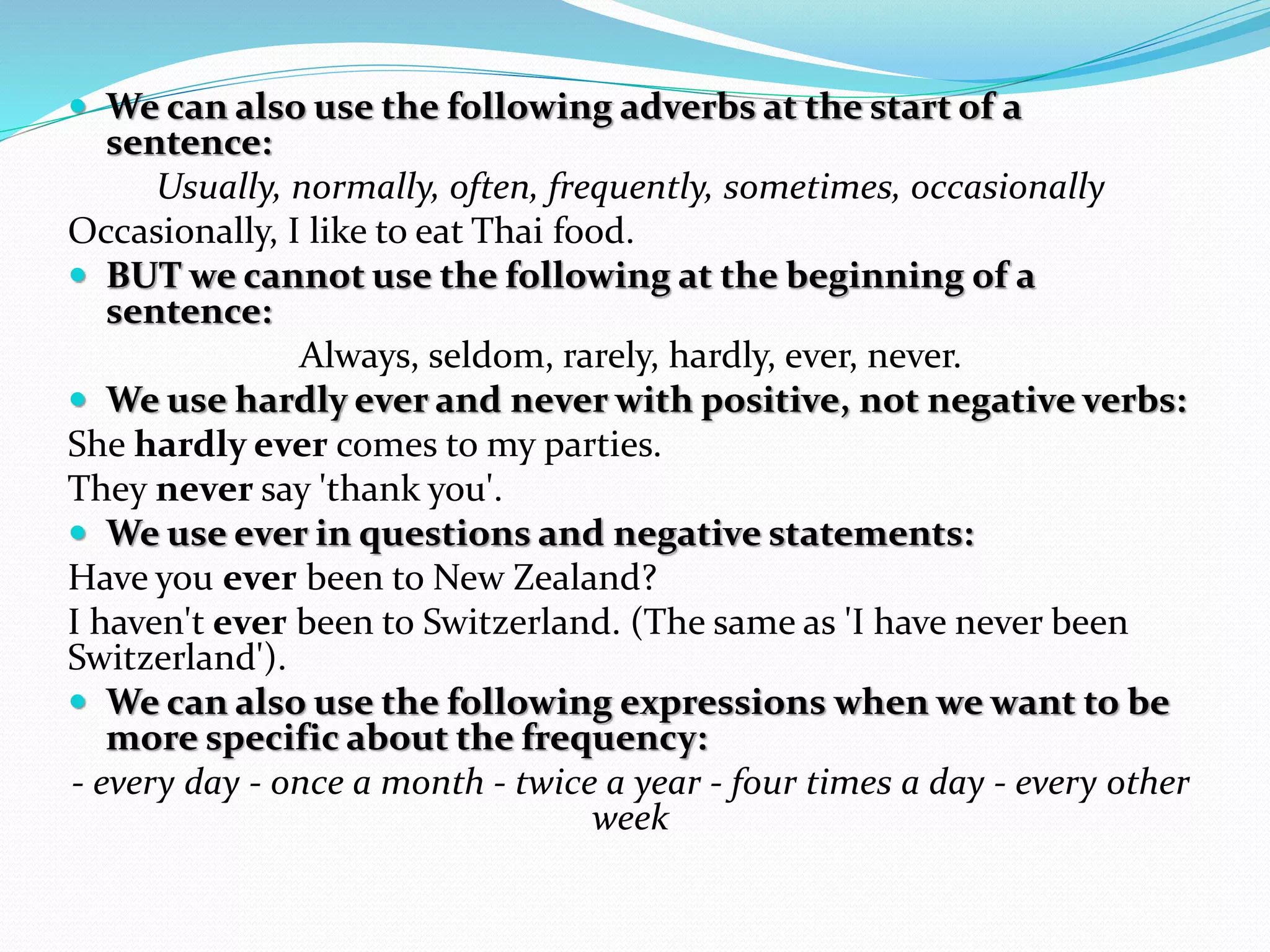
 We can also use the following adverbs at the start of a 
sentence: 
Usually, normally, often, frequently, sometimes, occasionally 
Occasionally, I like to eat Thai food. 
 BUT we cannot use the following at the beginning of a 
sentence: 
Always, seldom, rarely, hardly, ever, never. 
 We use hardly ever and never with positive, not negative verbs: 
She hardly ever comes to my parties. 
They never say 'thank you'. 
 We use ever in questions and negative statements: 
Have you ever been to New Zealand? 
I haven't ever been to Switzerland. (The same as 'I have never been 
Switzerland'). 
 We can also use the following expressions when we want to be 
more specific about the frequency: 
- every day - once a month - twice a year - four times a day - every other 
week
CONNECTORS OF SEQUENCE 
If we use the connectors of sequence to order events, is the 
following order correct. 
First, next, then, after that, next, then, after that, next, finally. 
If we use sequence connectors to show the sequence of events 
in a composition or a report of an event (more than ten 
events), which of the following expressions do you prefer? 
1. First, next, then, after that, next, then, after that, next, after 
that, then, next, finally. 
2. First, second, third, fourth, fifth, sixth, seventh, eighth, 
ninth, tenth, eleventh, finally.
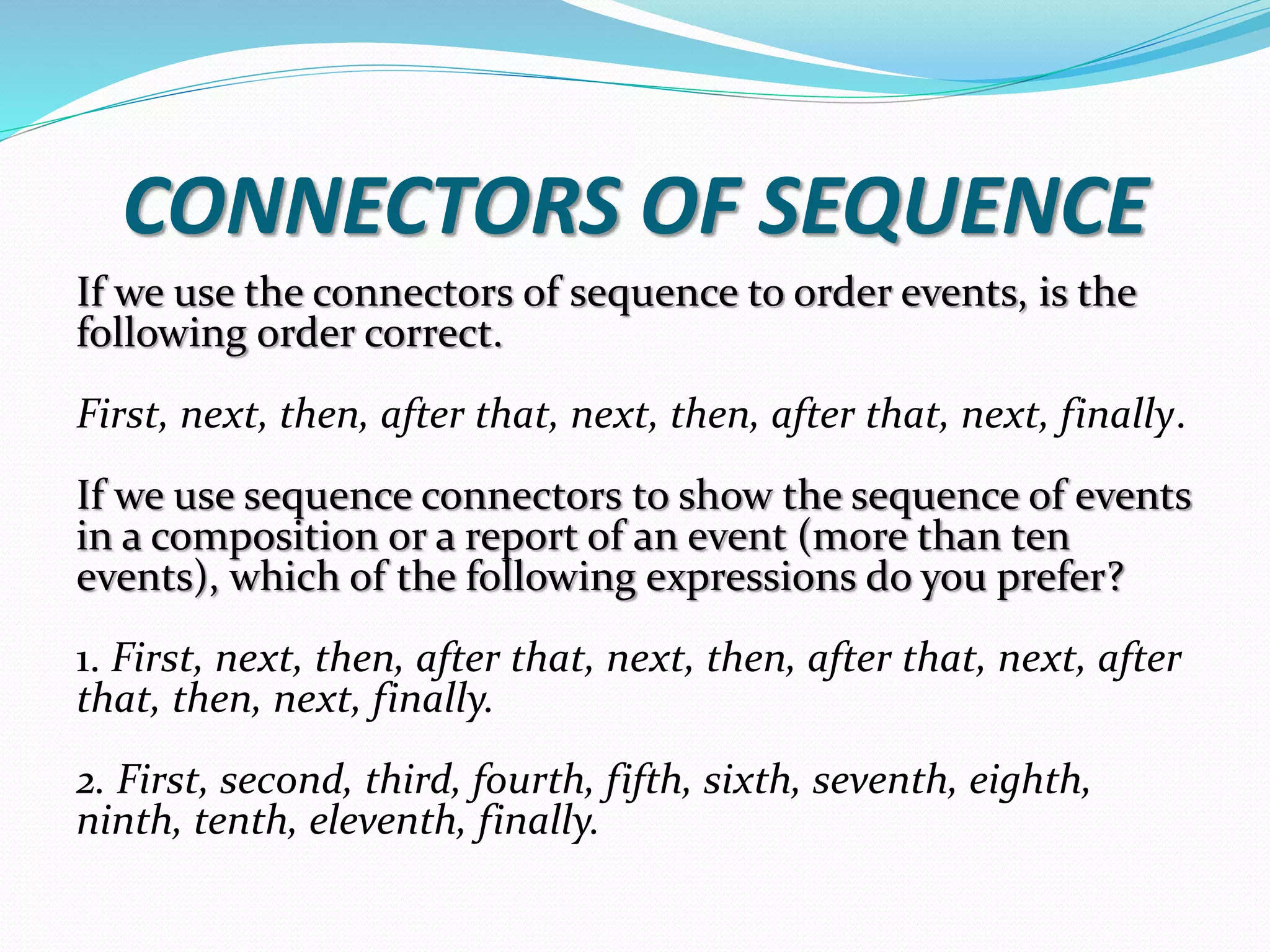
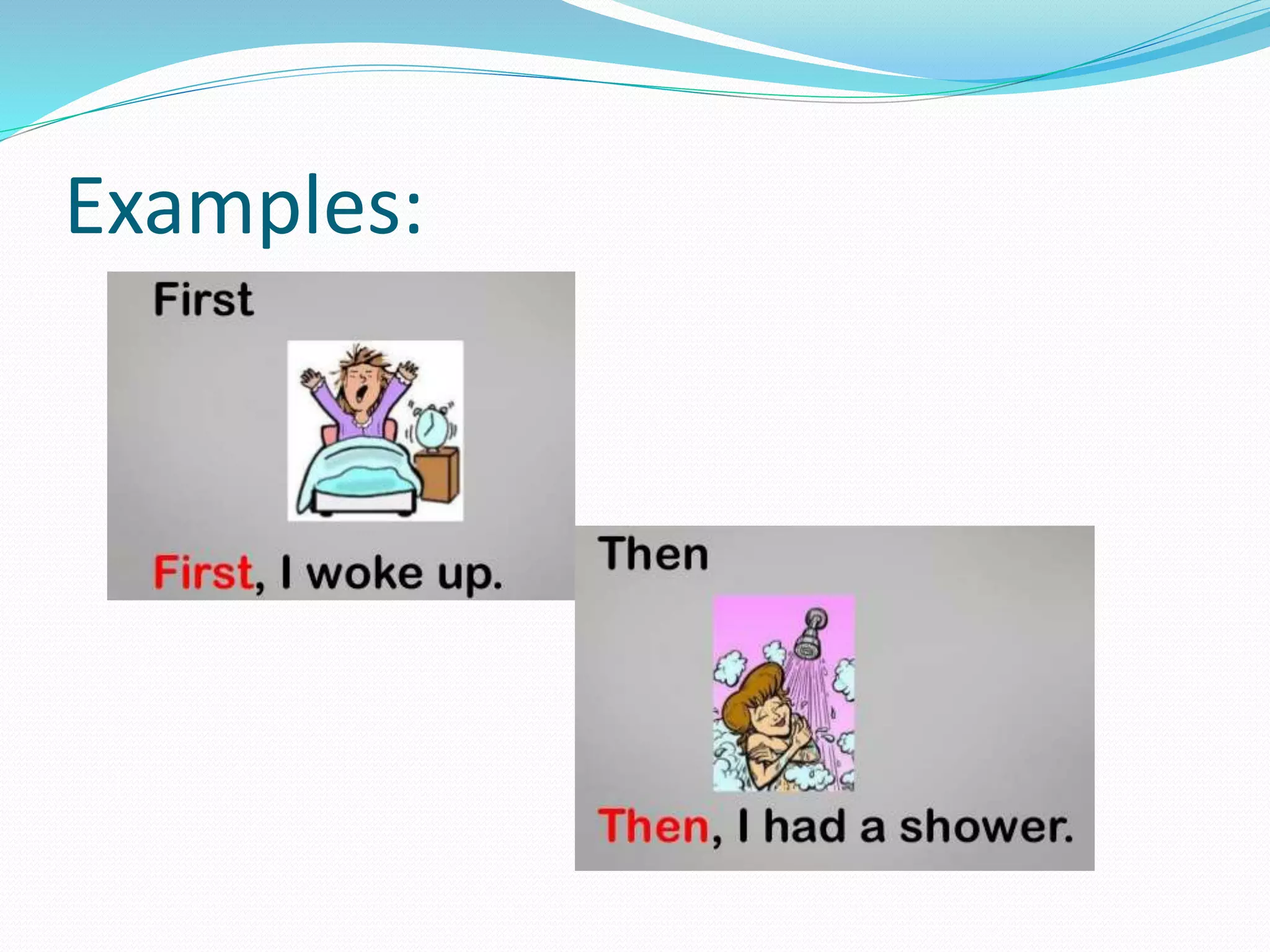
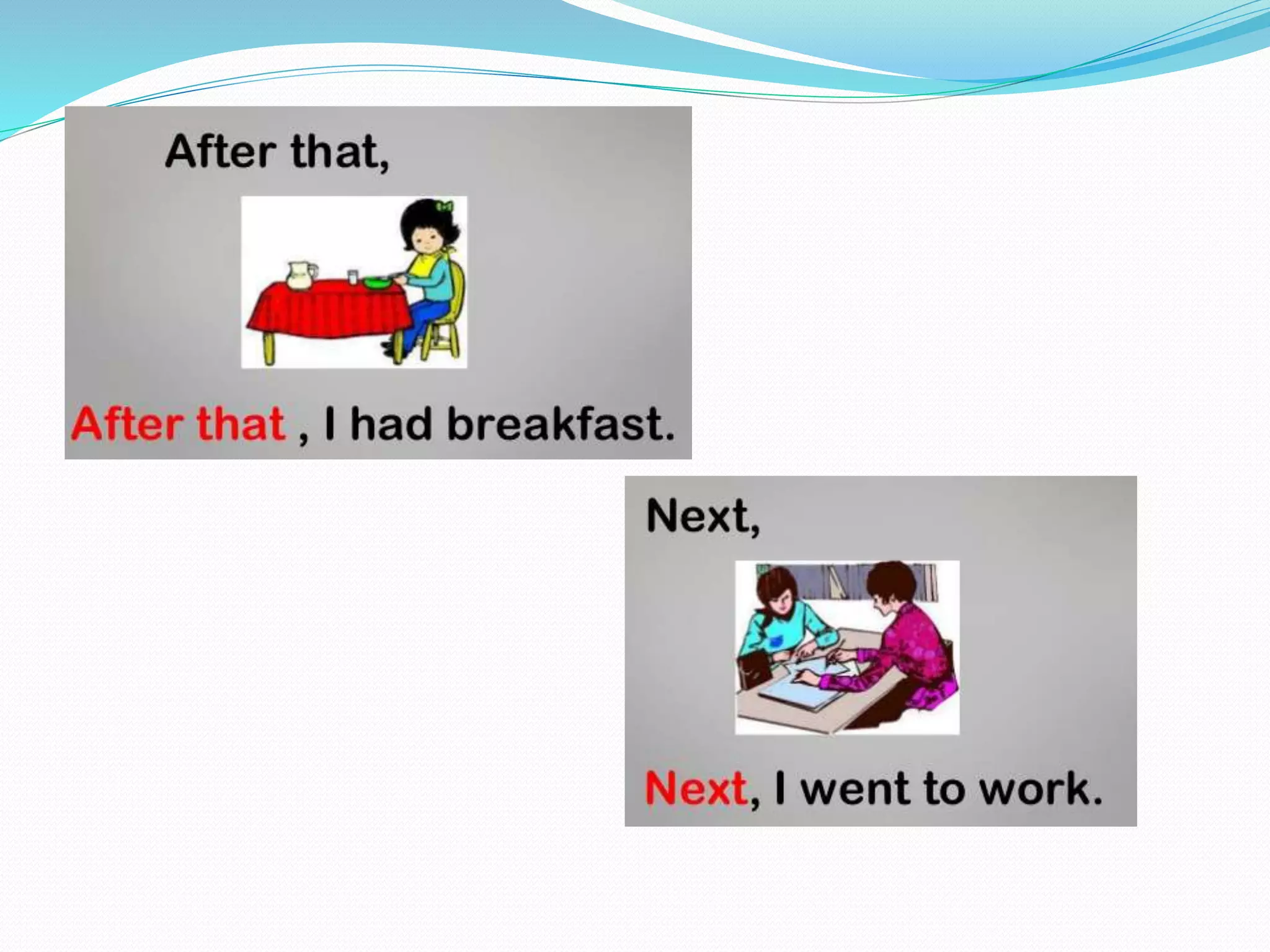
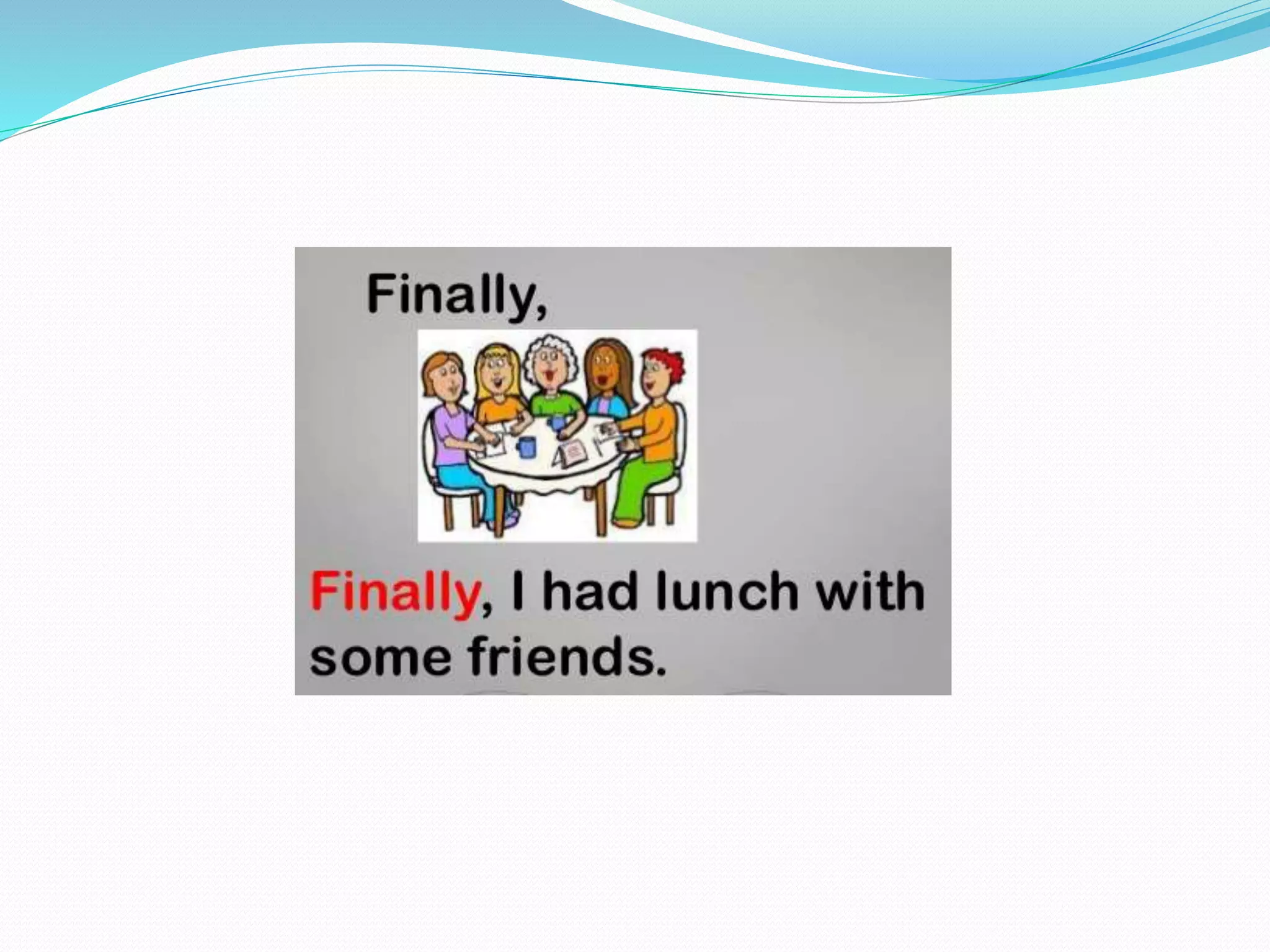
Examples:
Adverbs of frecuency and sequence connectors

Adverbs of frecuency and sequence connectors

  • 1.
  • 2.
    Adverbs of frequency  Adverbs that change or qualify the meaning of a sentence by telling us how often or how frequently something happens are defined as adverbs of frequency.  An adverb of frequency is exactly what it sounds like – an adverb of time. Adverbs of frequency always describe how often something occurs, either in definite or indefinite terms. An adverb that describes definite frequency is one such as weekly, daily, or yearly. An adverb describing indefinite frequency doesn’t specify an exact time frame; examples are sometimes, often, and rarely.
  • 3.
    These simple rulesfor adverbs of frequency will help you to use them correctly:  Always use adverbs of frequency to discuss how often something happens.  Adverbs of frequency are often used to indicate routine or repeated activities, so they are often used with the present simple tense.  If a sentence has only one verb, place the adverb of frequency in the middle of the sentence so that it is positioned after the subject but before the verb. For example: Tom never flies. He always takes the bus.  When a sentence contains more than one verb, place the adverb of frequency before the main verb. For example: They have often visited Europe.  When using an adverb of frequency in the negative or in forming a question, place it before the main verb. For example: Do you usually get up so late?
  • 4.
    Adverbs of FrequencyList  This list of adverbs of frequency contains many of the most common; keep in mind though that there are many other words which can serve in this capacity.  Always Annually Constantly Daily Eventually Ever Frequently Generally Hourly Infrequently Later Monthly Never Next Nightly Normally Now Occasionally Often Quarterly Rarely Regularly Sometimes Soon Then Today Tonight Weekly Yearly Yesterday Yet
  • 5.
    Examples of Adverbsof Frequency Each sentence contains an example of an adverb of frequency; the examples are italicized for easy identification.  The incubator turns each egg hourly.  We take a vacation at least once annually.  I usually shop for groceries on Saturday mornings.  He is often late for work.  We seldom see John.  My dentist told me I should floss twice daily.
  • 6.
    The Position ofthe Adverb in a Sentence An adverb of frequency goes before a main verb (except with To Be). Subject + adverb + main verb I always remember to do my homework. He normally gets good marks in exams. An adverb of frequency goes after the verb To Be. Subject + to be + adverb They are never pleased to see me. She isn't usually bad tempered.
  • 7.
     When weuse an auxiliary verb (have, will, must, might, could, would, can, etc.), the adverb is placed between the auxiliary and the main verb. This is also true for to be. Subject + auxiliary + adverb + main verb She can sometimes beat me in a race. I would hardly ever be unkind to someone. They might never see each other again. They could occasionally be heard laughing.
  • 8.
     We canalso use the following adverbs at the start of a sentence: Usually, normally, often, frequently, sometimes, occasionally Occasionally, I like to eat Thai food.  BUT we cannot use the following at the beginning of a sentence: Always, seldom, rarely, hardly, ever, never.  We use hardly ever and never with positive, not negative verbs: She hardly ever comes to my parties. They never say 'thank you'.  We use ever in questions and negative statements: Have you ever been to New Zealand? I haven't ever been to Switzerland. (The same as 'I have never been Switzerland').  We can also use the following expressions when we want to be more specific about the frequency: - every day - once a month - twice a year - four times a day - every other week
  • 10.
    CONNECTORS OF SEQUENCE If we use the connectors of sequence to order events, is the following order correct. First, next, then, after that, next, then, after that, next, finally. If we use sequence connectors to show the sequence of events in a composition or a report of an event (more than ten events), which of the following expressions do you prefer? 1. First, next, then, after that, next, then, after that, next, after that, then, next, finally. 2. First, second, third, fourth, fifth, sixth, seventh, eighth, ninth, tenth, eleventh, finally.
  • 11.