IAES International Journal of Artificial Intelligence (IJ-AI)
Vol. 14, No. 3, June 2025, pp. 2113~2122
ISSN: 2252-8938, DOI: 10.11591/ijai.v14.i3.pp2113-2122  2113
Journal homepage: http://ijai.iaescore.com
Advancing precision in air quality forecasting through machine
learning integration
Muhamad Komarudin1,2
, Sri Ratna Sulistiyanti1
, Suharso3
, Muhammad Irsyad4
, Hery Dian Septama1
,
Titin Yulianti1
, Ali Sophian5
, Michel1
1
Department of Electrical and Informatics Engineering, Faculty of Engineering, University of Lampung, Bandar Lampung, Indonesia
2
Environmental Science Graduate School, University of Lampung, Bandar Lampung, Indonesia
3
Department of Chemistry, Faculty of Mathematics and Natural Sciences, University of Lampung, Bandar Lampung, Indonesia
4
Department of Mechanical Engineering, Faculty of Engineering, University of Lampung, Bandar Lampung, Indonesia
5
Department of Mechatronics Engineering, International Islamic University Malaysia, Selangor, Malaysia
Article Info ABSTRACT
Article history:
Received Mar 21, 2024
Revised Feb 12, 2025
Accepted Mar 15, 2025
In an era where environmental concerns are escalating, air quality forecasting
emerges. Forecasting is a crucial tool for addressing the adverse impacts of
pollution on public health and ecosystems. In urban centers like Bandar
Lampung, economic activities intensify pollution levels. This condition
leveraging advanced machine learning forecasting methods can significantly
mitigate these effects. This study evaluates the precision of long short-term
memory (LSTM) and Prophet methods in predicting air quality. This study
utilizes data from January 12, 2022 to November 9, 2023. The results reveal a
distinct advantage of the LSTM method over the Prophet. The LSTM method
showcases superior accuracy across all evaluation metrics. Specifically, the
LSTM method achieved an average root mean squared error (RMSE) of 5.38,
mean absolute error (MAE) of 3.94, and mean absolute percentage error
(MAPE) of 0.07. In contrast, the Prophet method recorded higher error rates,
with an average RMSE of 18.48, MAE of 15.61, and MAPE of 0.25. These
numbers underscore the LSTM method's robustness and reliability in
forecasting air quality. The result highlights its potential as a pivotal resource
for environmental monitoring and policymaking to safeguard public health and
promote sustainable urban development.
Keywords:
Air quality
Forecasting
Machine learning
Precision
Public health
This is an open access article under the CC BY-SA license.
Corresponding Author:
Muhamad Komarudin
Environmental Science Graduate School and Department of Electrical and Informatics Engineering,
Faculty of Engineering, University of Lampung
Bandar Lampung, Indonesia
Email: m.komarudin@eng.unila.ac.id
1. INTRODUCTION
Air pollution is a major environmental issue affecting public health, ecosystems, and climate. This
issue makes it critical to implement proper monitoring and control strategies [1]. The presence of dust,
smoke, gases, and water vapor pollutants contributes to air pollution. It can lead to short-term and long-term
diseases in various body systems. This disease may impact the respiratory tract, heart, eyes, skin, and
reproductive and nervous systems [2]. Particulate matter, nitrogen dioxide, sulfur dioxide, and ground-level
ozone are the primary air pollutants responsible for various illnesses [3]. Exposure to these pollutants can
result in respiratory diseases, strokes, lung diseases, cardiovascular diseases, liver and blood diseases, and
other health issues [4]. The inhalation of particulate matter and gaseous pollutants can cause pulmonary
inflammation, chronic obstructive pulmonary disease, heart rate variability, ischemic heart disease, mental
and behavior disorders, and insulin resistance [5]. The effects of air pollution on health depend on various
 ISSN: 2252-8938
Int J Artif Intell, Vol. 14, No. 3, June 2025: 2113-2122
2114
factors, such as pollutant concentrations, chemical properties, age, general health, duration of exposure,
weather conditions, and distance from emission sources. Urbanization, industrialization, and globalization
have increased air pollution, particularly in developing countries [6]. Other issues include rapid urbanization,
industrialization, vehicular emissions, and deforestation. These sources emit a wide range of pollutants,
including particulate matter (PM), nitrogen dioxide (NO2), sulfur dioxide (SO2), and volatile organic
compounds (VOCs). Air pollution in urban areas is a significant concern since ambient air pollution
concentrations in many cities have reached levels that threaten people's health [7].
Urban air quality measurement is important for human health and the environment [8]. Indoor air
quality levels were also found to trigger building syndrome illness among occupant [9]–[11]. Traditional air
quality monitoring stations have spatial coverage and cost limitations. Several studies have explored
alternative methods to address this. Niepsch et al. [12] using lichens as biomonitoring tools to assess air
quality in urban areas. Several studies in low-cost particulate matter measurement devices have been
developed. This device is then deployed in urban areas to provide cost-efficient monitoring [13]–[15]. These
methods and devices can be used to monitor air quality limit values and assess the frequency of limit
exceedances [16], [17]. Others studies by [18], [19] integrating these low-cost devices with existing air
quality monitoring networks. The results can enhance understanding of air pollution sources and spatial
variability even in real time. Furthermore, the data collected by these monitoring devices can be analyzed.
Machine learning models can be used to analyze data precisely and quickly. Several studies have proven the
use of machine learning in various cases. Rogers et al. [20] using machine learning in climate variability to
provide accurate and timely weather forecasts. Another study by Suwadi et al. [21] uses machine learning to
forecast water quality.
Precise air quality forecasting has become an important strategy for managing air pollution. Air
pollution prediction models without machine learning have significant drawbacks. The complex source lists
of models like WRF-Chem and CMAQ require frequent updates. This limits their scalability, especially in
regions with limited resources. Therefore, it is hard to predict air pollution accurately across different terrains
[22], [23]. Time series data collected by air quality monitoring devices in urban environments can be
advanced through processing to yield air quality forecasts. Innovative forecasting methodologies have
emerged to ascertain air quality levels across diverse regions. This method incorporates various techniques
and computational models to enhance predictive precision [24]. Furthermore, the progress in machine
learning technologies is renowned for their ability to derive accurate predictions from complex datasets. This
method offers promising applications in air quality forecasting. Thus, it can potentially elevate the accuracy
and reliability of air quality predictions. The work in [25]–[28] uses time series data prediction methods and
machine learning to forecast air quality. The work offers promising results in air quality forecasting in
several urban cities [29], [30]. However, a comparative machine learning algorithm must be used to provide
more accurate data analysis for air quality forecasting.
This study addresses the problem of forecasting air pollution levels accuracy. Data on air pollution
from in urban city exemplifies these challenges. Bandar Lampung is a major urban city and economic hub in
Sumatra, Indonesia. Its strategic position as a gateway between the Java and Sumatra islands leads to heavy
traffic flow and industrial activity. Therefore, this condition makes air pollution levels worse in Bandar
Lampung. Traditional forecasting methods often struggle with the complexity and variability of
environmental data. The advent of artificial intelligence (AI) offers new possibilities for improving the
accuracy and reliability of air quality forecasts. Specifically, this research compares the effectiveness of two
AI-based forecasting methods: long short-term memory (LSTM) and Prophet. LSTM is known for its ability
to process time series data. It has the benefit of remembering information over long periods that is well-suited
for air quality forecasting [31]. Prophet provides a more straightforward approach that focuses on trend and
seasonality in time series data [32]. This study aims to identify the most effective model for supporting local
environmental management and public health. It also aims to evaluate the performance of these methods in
predicting air quality. The results may show the most precise model for advancing the precision of air quality
parameter forecasting.
2. MATERIAL AND METHOD
2.1. Material
This research uses air quality data for Bandar Lampung with an hourly time range from January 12, 2022
to November 9, 2023. Data was obtained from https://www.weatherbit.io/, a website that provides global and
local weather and air quality API services online global and local. The data consists of 11 columns containing
the variables AQI, CO, datetime, NO2, O3, PM10, PM2.5, SO2, timestamp_local, timestamp_utc, and ts, with
each column containing 15,153 rows of data.
Int J Artif Intell ISSN: 2252-8938 
Advancing precision in air quality forecasting through machine learning… (Muhamad Komarudin)
2115
2.2. Method
The data mining process employed in this research adopts the data science framework flow, which
provides a comprehensive and structured approach to building a data science model. As depicted in Figure 1,
the workflow commences with identifying datasets and proceeds through a series of systematic steps to the
evaluation phase. The framework's structured approach ensures that the research outcomes are reliable and
valid.
Figure 1. Research method
In the business understanding stages, the objective goal is determined. Therefore, to fulfill the goal,
dataset identification and collection are carried out according to the objectives. This study uses air quality
data for Bandar Lampung City. The following process is data pre-preprocessing, where the datasets that have
been obtained are collected before entering the data cleaning stage. The data cleaning stage is done by
determining the variables that will be used by deleting unnecessary variables. This process selects the
appropriate data type for each column and fills in the empty data, known as dataset imputation. In addition,
outliers were removed using the interquartile range (IQR) statistical method. This is done so that the dataset
can be appropriately processed at the next stage.
The dataset was then split into training and testing datasets. The training dataset will be used for the
machine learning algorithm training stage. Then, the already-trained model will be tested for the evaluation
process using the testing dataset. The next stage is the modeling stage; modeling is carried out based on data
that has been explored and split in the previous stage. The model design uses a deep learning model, namely
the LSTM and the Prophet methods. The LSTM method is an artificial neural network (ANN) architecture
that can handle long-range dependency problems. LSTM is widely used to model complex relationships and
patterns over time in datasets. Apart from that, the Prophet method is used, which is a method that can be
used for time series data that may have unique properties that are difficult to accommodate by traditional
methods [33]. Both methods use Python with libraries such as TensorFlow for LSTM and Prophet for the
Prophet model. Apart from that, a tuning process was also carried out to obtain model parameters. The best
architecture for LSTM and added regressors, holiday, and seasonal effects for the Prophet model.
The interpretation stage is the final stage aimed at evaluating the results of testing the model that has
been built. Model testing results are graphical visualizations of actual and predicted data. In addition, model
evaluation metrics are used to measure errors in predictions made. The evaluation results are in the form of mean
absolute percentage error (MAPE), mean absolute error (MAE), and root mean squared error (RMSE) values, and
the best error values are obtained so that insights can be obtained that can be used in decision-making.
 ISSN: 2252-8938
Int J Artif Intell, Vol. 14, No. 3, June 2025: 2113-2122
2116
3. RESULTS AND DISCUSSION
This research uses data from https://www.weatherbit.io/, a platform that provides free and paid
weather and air quality API services. The parameter used air quality data for Bandar Lampung from
January 12, 2022 to November 9, 2023. The dataset consists of 8 columns: datetime, AQI, CO, NO2, O3,
PM10, PM2.5, and SO2. The following process is the dataset-cleaning process. The first step involves
adjusting the data type within the dataset. Then, each column can function according to its intended
purpose. Next is the imputation process that fills in the dataset's not a number (NaN) value. Some models,
including LSTM and Prophet models, cannot handle missing values. Therefore, making cleaning the
dataset of NaN values is necessary for the model to learn effectively. Columns with missing values will be
replaced using the median of the available data. The replacement of NaN values with the median is chosen
because this method offers a balanced approach to handling missing values. The median is more resistant
to outliers than the mean. Thus, it is not affected by extreme values that might distort the data distribution.
Replacing NaN values with the median can minimize potential distortion in the data due to extreme values.
Additionally, using the median maintains information about the center of the distribution. The results
provide a more representative picture of the original data. The last process in this stage is removing
outliers. However, eliminating outliers cannot be done thoroughly. It can affect model performance
because it can cause some critical information in the dataset to be lost. This process is carried out by
calculating the number of outliers in each variable using the IQR method. The interquartile use is a Q1
value of 0.25 and a Q3 value of 0.75. Based on Q1 0.25 and Q3 0.75 calculations, the number of outliers in
each variable and the total number of outliers in the dataset were 1,557. In this study, outliers from the air
quality variable data of Bandar Lampung City were removed using a Q1 value of 0.2 and a Q3 value of
0.8. Determining appropriate Q1 and Q3 values in the model will not cause the dataset to lose significant
information that could impair model performance. After calculating the upper and lower bounds, outlier
identification was carried out on the dataset variables. Data considered outliers were eliminated, and the
distribution was observed after outlier removal. The subsequent process involves dividing the dataset, a
procedure referred to as data splitting. The data is segmented into two parts: one for training and the other
for testing. It is noted that the total dataset of Bandar Lampung city's air quality consists of 14,987 entries.
The training data comprises 11,989 (80%) entries, and the testing data consists of 2,998 (20%).
Additionally, information on the number of days used in the training and testing processes was obtained by
dividing the training and test data by 24, which is initialized as the number of hours in a day. This
calculation yields 500 days for the training data and 125 days for the testing data. The training data
timeframe starts from January 12, 2022, until July 4, 2023, while the remaining time until November 9,
2023, is allocated for the testing data. The process continues with normalization using MinMaxScaler to
transform the values in the dataset to a range between 0 and 1. This process results in two normalized
datasets, followed by the formation of input and output samples for training and testing the model.
3.1. Long short-term memory
The process of determining the number of layers and units in the LSTM model using hyperparameter
tuning is done twice with a different number of n steps, namely 6 and 24. The following table shows the results
of tuning neurons or units in modeling using a different number of n steps. Based on Table 1, the results of the
hyperparameter tuning for the number of neurons and n-step are obtained. In the first experiment with n-step in
of 6, the best score was obtained using several neurons of 100, with a value of 0.001679. At n-step in as many
as 24, the best score is obtained with several neurons of 50 and a value of 0.001823. The best score is
determined based on the mean squared error (MSE) evaluation metric, where a smaller value indicates better
model performance. Therefore, modeling combines the best scores, namely 50 and 100 neurons, in each
LSTM layer. The following is the LSTM modeling architecture, which combines the two best neurons, namely
50 and 100. LSTM modeling uses a three-layer architecture: one dense layer and two LSTM layers with
varying neurons. The number of neurons in each LSTM layer is chosen through a fine-tuning process using
grid search. The first layer has 100 neurons using rectified linear unit (ReLu) activation. A RepeatVector layer
repeats the output vector from the previous LSTM layer n_steps_out times to predict multiple steps into the
future. The second or third LSTM layer has 50 neurons with a ReLu activation function. A time distributed
dense layer is used to apply a dense layer at each step of the output sequence.
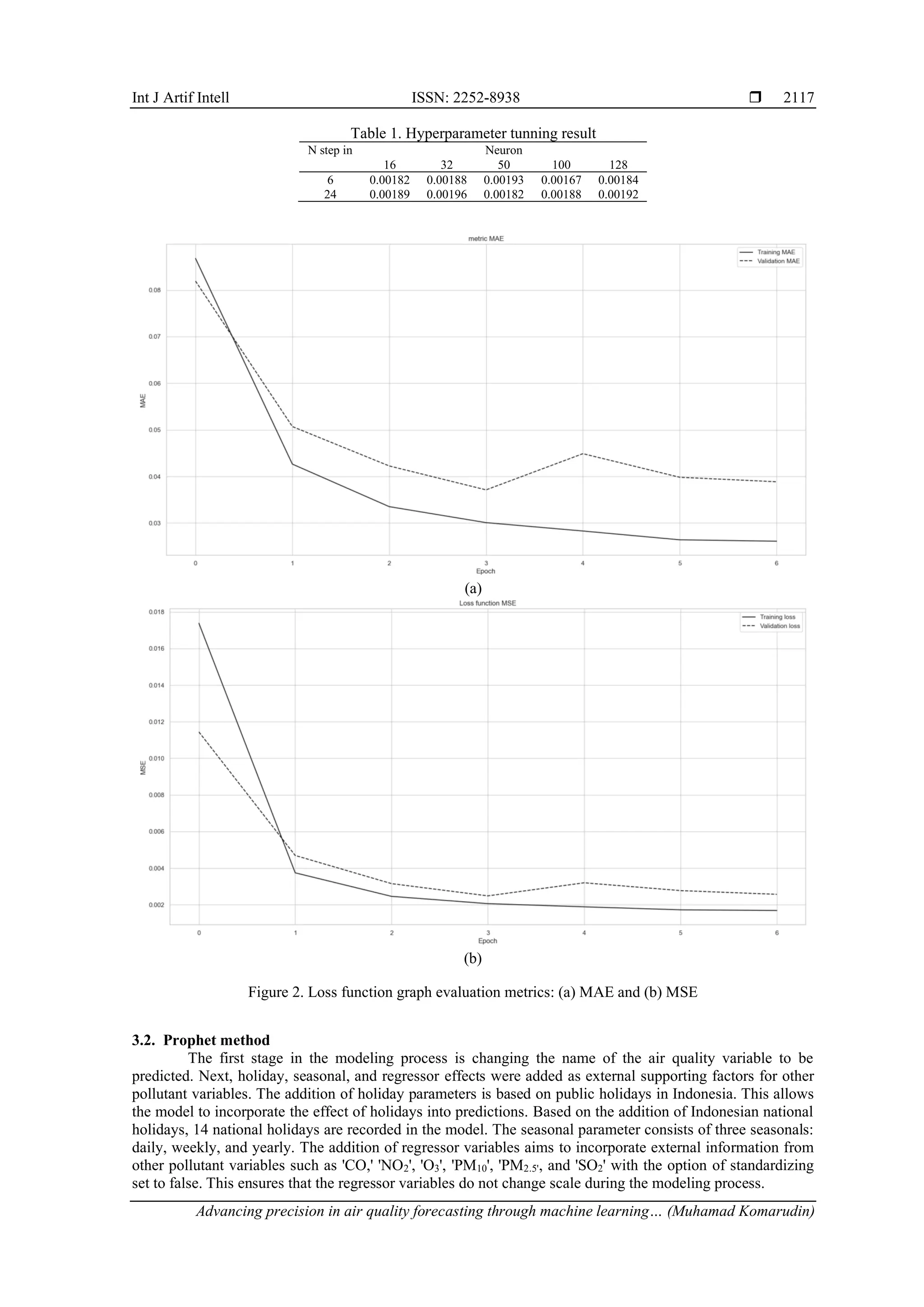
Figure 2 shows a graph that displays the loss function metrics. Figure 2(a) shows MAE, which
measures the average magnitude of the errors. Figure 2(b) shows the MSE, which measures the average
squared magnitude of the errors. The graph indicates that during the training process, there was a reduction in
both training and validation loss in both evaluation metrics. This shows that the model optimized its internal
parameters systematically. The results helped reduce the squared difference between the predicted values
generated by the model and the actual values.
Int J Artif Intell ISSN: 2252-8938 
Advancing precision in air quality forecasting through machine learning… (Muhamad Komarudin)
2117
Table 1. Hyperparameter tunning result
N step in Neuron
16 32 50 100 128
6 0.00182 0.00188 0.00193 0.00167 0.00184
24 0.00189 0.00196 0.00182 0.00188 0.00192
(a)
(b)
Figure 2. Loss function graph evaluation metrics: (a) MAE and (b) MSE
3.2. Prophet method
The first stage in the modeling process is changing the name of the air quality variable to be
predicted. Next, holiday, seasonal, and regressor effects were added as external supporting factors for other
pollutant variables. The addition of holiday parameters is based on public holidays in Indonesia. This allows
the model to incorporate the effect of holidays into predictions. Based on the addition of Indonesian national
holidays, 14 national holidays are recorded in the model. The seasonal parameter consists of three seasonals:
daily, weekly, and yearly. The addition of regressor variables aims to incorporate external information from
other pollutant variables such as 'CO,' 'NO2', 'O3', 'PM10', 'PM2.5', and 'SO2' with the option of standardizing
set to false. This ensures that the regressor variables do not change scale during the modeling process.
 ISSN: 2252-8938
Int J Artif Intell, Vol. 14, No. 3, June 2025: 2113-2122
2118
3.3. Evaluation
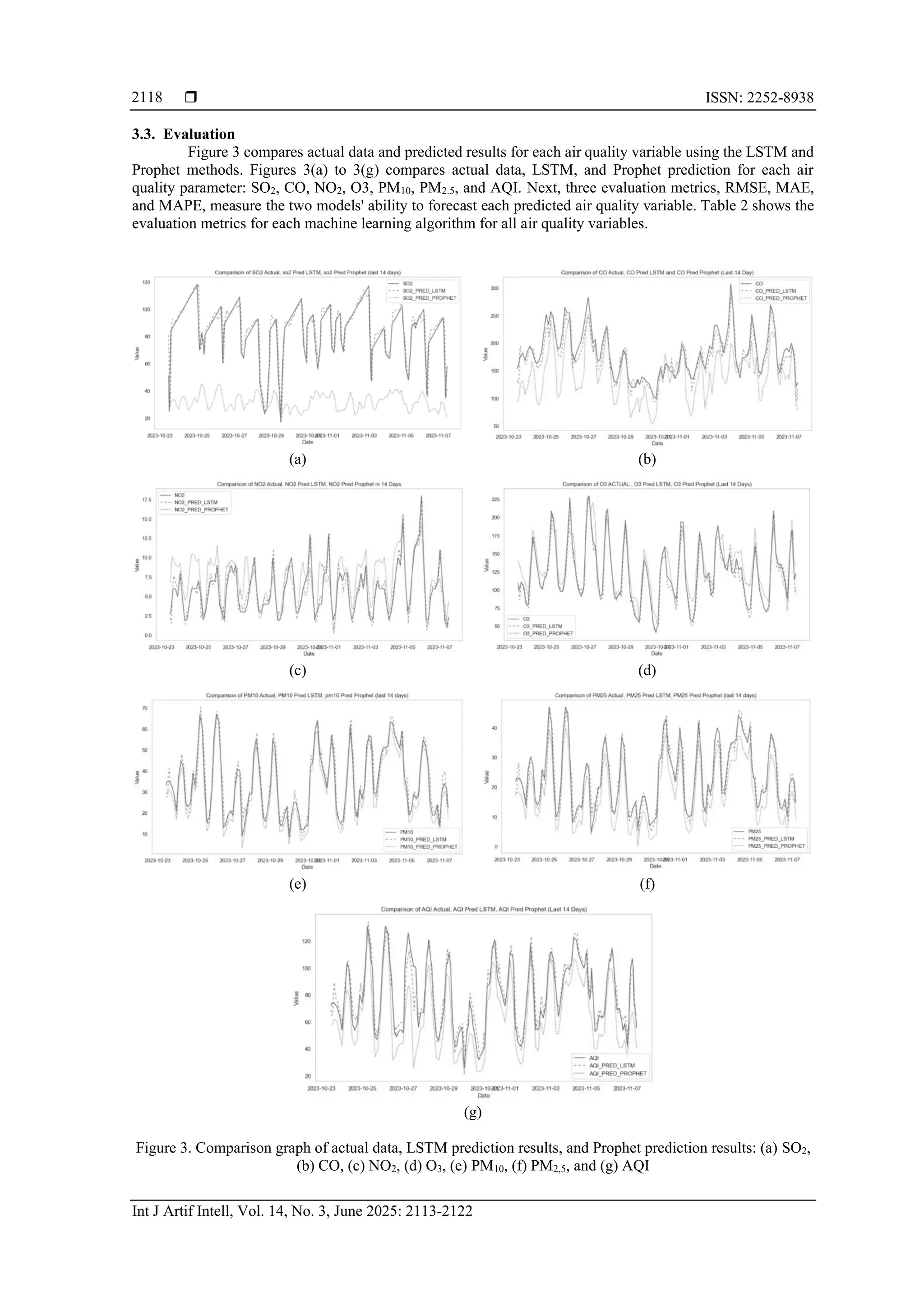
Figure 3 compares actual data and predicted results for each air quality variable using the LSTM and
Prophet methods. Figures 3(a) to 3(g) compares actual data, LSTM, and Prophet prediction for each air
quality parameter: SO2, CO, NO2, O3, PM10, PM2.5, and AQI. Next, three evaluation metrics, RMSE, MAE,
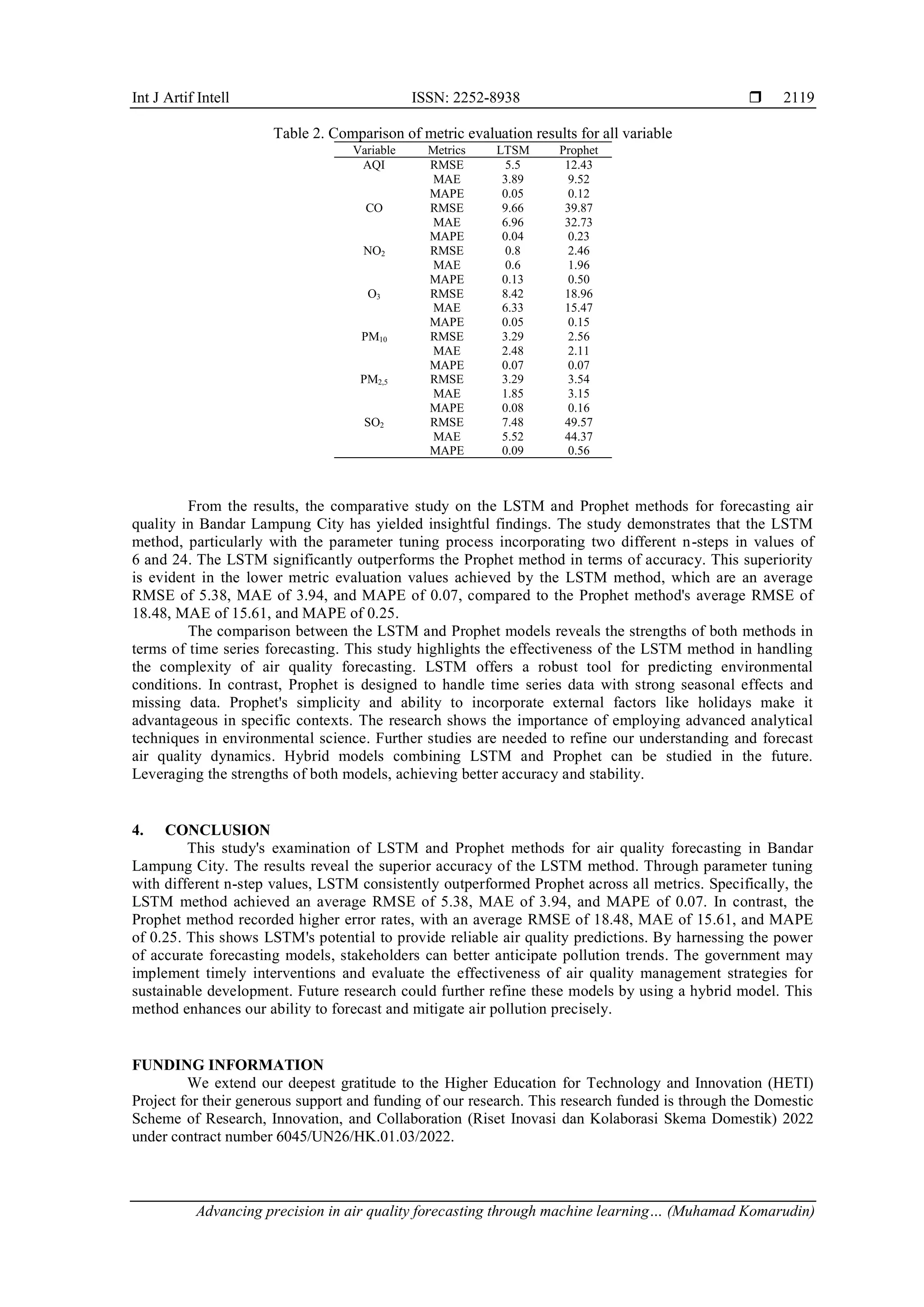
and MAPE, measure the two models' ability to forecast each predicted air quality variable. Table 2 shows the
evaluation metrics for each machine learning algorithm for all air quality variables.
(a) (b)
(c) (d)
(e) (f)
(g)
Figure 3. Comparison graph of actual data, LSTM prediction results, and Prophet prediction results: (a) SO2,
(b) CO, (c) NO2, (d) O3, (e) PM10, (f) PM2,5, and (g) AQI
Int J Artif Intell ISSN: 2252-8938 
Advancing precision in air quality forecasting through machine learning… (Muhamad Komarudin)
2119
Table 2. Comparison of metric evaluation results for all variable
Variable Metrics LTSM Prophet
AQI RMSE 5.5 12.43
MAE 3.89 9.52
MAPE 0.05 0.12
CO RMSE 9.66 39.87
MAE 6.96 32.73
MAPE 0.04 0.23
NO2 RMSE 0.8 2.46
MAE 0.6 1.96
MAPE 0.13 0.50
O3 RMSE 8.42 18.96
MAE 6.33 15.47
MAPE 0.05 0.15
PM10 RMSE 3.29 2.56
MAE 2.48 2.11
MAPE 0.07 0.07
PM2,5 RMSE 3.29 3.54
MAE 1.85 3.15
MAPE 0.08 0.16
SO2 RMSE 7.48 49.57
MAE 5.52 44.37
MAPE 0.09 0.56
From the results, the comparative study on the LSTM and Prophet methods for forecasting air
quality in Bandar Lampung City has yielded insightful findings. The study demonstrates that the LSTM
method, particularly with the parameter tuning process incorporating two different n-steps in values of
6 and 24. The LSTM significantly outperforms the Prophet method in terms of accuracy. This superiority
is evident in the lower metric evaluation values achieved by the LSTM method, which are an average
RMSE of 5.38, MAE of 3.94, and MAPE of 0.07, compared to the Prophet method's average RMSE of
18.48, MAE of 15.61, and MAPE of 0.25.
The comparison between the LSTM and Prophet models reveals the strengths of both methods in
terms of time series forecasting. This study highlights the effectiveness of the LSTM method in handling
the complexity of air quality forecasting. LSTM offers a robust tool for predicting environmental
conditions. In contrast, Prophet is designed to handle time series data with strong seasonal effects and
missing data. Prophet's simplicity and ability to incorporate external factors like holidays make it
advantageous in specific contexts. The research shows the importance of employing advanced analytical
techniques in environmental science. Further studies are needed to refine our understanding and forecast
air quality dynamics. Hybrid models combining LSTM and Prophet can be studied in the future.
Leveraging the strengths of both models, achieving better accuracy and stability.
4. CONCLUSION
This study's examination of LSTM and Prophet methods for air quality forecasting in Bandar
Lampung City. The results reveal the superior accuracy of the LSTM method. Through parameter tuning
with different n-step values, LSTM consistently outperformed Prophet across all metrics. Specifically, the
LSTM method achieved an average RMSE of 5.38, MAE of 3.94, and MAPE of 0.07. In contrast, the
Prophet method recorded higher error rates, with an average RMSE of 18.48, MAE of 15.61, and MAPE
of 0.25. This shows LSTM's potential to provide reliable air quality predictions. By harnessing the power
of accurate forecasting models, stakeholders can better anticipate pollution trends. The government may
implement timely interventions and evaluate the effectiveness of air quality management strategies for
sustainable development. Future research could further refine these models by using a hybrid model. This
method enhances our ability to forecast and mitigate air pollution precisely.
FUNDING INFORMATION
We extend our deepest gratitude to the Higher Education for Technology and Innovation (HETI)
Project for their generous support and funding of our research. This research funded is through the Domestic
Scheme of Research, Innovation, and Collaboration (Riset Inovasi dan Kolaborasi Skema Domestik) 2022
under contract number 6045/UN26/HK.01.03/2022.
 ISSN: 2252-8938
Int J Artif Intell, Vol. 14, No. 3, June 2025: 2113-2122
2120
AUTHOR CONTRIBUTIONS STATEMENT
This journal uses the Contributor Roles Taxonomy (CRediT) to recognize individual author
contributions, reduce authorship disputes, and facilitate collaboration.
Name of Author C M So Va Fo I R D O E Vi Su P Fu
Muhamad Komarudin ✓ ✓ ✓ ✓ ✓ ✓ ✓ ✓ ✓ ✓
Sri Ratna Sulistiyanti ✓ ✓ ✓ ✓ ✓
Suharso ✓ ✓ ✓
Muhammad Irsyad ✓ ✓ ✓ ✓
Hery Dian Septama ✓ ✓ ✓ ✓ ✓ ✓
Titin Yulianti ✓ ✓ ✓ ✓ ✓
Ali Sophian ✓ ✓ ✓ ✓
Michel ✓ ✓ ✓ ✓ ✓
C : Conceptualization
M : Methodology
So : Software
Va : Validation
Fo : Formal analysis
I : Investigation
R : Resources
D : Data Curation
O : Writing - Original Draft
E : Writing - Review & Editing
Vi : Visualization
Su : Supervision
P : Project administration
Fu : Funding acquisition
CONFLICT OF INTEREST STATEMENT
Authors state no conflict of interest.
DATA AVAILABILITY
The data that support the findings of this study are available from https://www.weatherbit.io/.
Restrictions apply to the availability of these data, which were used under license for this study. Data are
available from the corresponding author with the permission of weatherbit.io.
REFERENCES
[1] E. G. Prihardanu, H. Kusnoputranto, and H. Herdiansyah, “Indoor air quality in urban residential: Current status, regulation and
future research for Indonesia,” International Journal of Public Health Science, vol. 10, no. 4, pp. 824–833, 2021, doi:
10.11591/ijphs.v10i4.20885.
[2] A. E. Önal, Air quality and health. London, United Kingdom: IntechOpen, 2022, doi: 10.5772/intechopen.98023.
[3] C. Mănescu, T. Mateoc-Sîrb, H. Vass, and N. Mateoc-Sîrb, “Studies on the effects of air pollution on human health,”
International Multidisciplinary Scientific GeoConference Surveying Geology and Mining Ecology Management, vol. 22, no. 5.1,
pp. 415–422, 2022, doi: 10.5593/sgem2022/5.1/s20.053.
[4] J. A. Douglass, “How can air quality affect health?,” Internal Medicine Journal, vol. 50, no. 11, 2020, doi: 10.1111/imj.15050.
[5] H. Chen et al., “Effects of air pollution on human health – Mechanistic evidence suggested by in vitro and in vivo modelling,”
Environmental Research, vol. 212, 2022, doi: 10.1016/j.envres.2022.113378.
[6] A. Piracha and M. T. Chaudhary, “Urban air pollution, urban heat island and human health: a review of the literature,”
Sustainability, vol. 14, no. 15, 2022, doi: 10.3390/su14159234.
[7] D. Schwela, “Air pollution and health in urban areas,” Reviews on Environmental Health, vol. 15, no. 1–2, pp. 13–42, 2000, doi:
10.1515/REVEH.2000.15.1-2.13.
[8] A. K. Srivastava, “Air pollution: facts, causes, and impacts,” in Asian Atmospheric Pollution, Elsevier, 2022, pp. 39–54, doi:
10.1016/B978-0-12-816693-2.00020-2.
[9] R. Pitarma, G. Marques, and B. R. Ferreira, “Monitoring indoor air quality for enhanced occupational health,” Journal of Medical
Systems, vol. 41, no. 2, 2017, doi: 10.1007/s10916-016-0667-2.
[10] V. Manasa et al., “Indoor air quality analysis and sustainable practices,” E3S Web of Conferences, vol. 507, Mar. 2024, doi:
10.1051/e3sconf/202450701004.
[11] V. V. Tran, D. Park, and Y. C. Lee, “Indoor air pollution, related human diseases, and recent trends in the control and improvement of indoor
air quality,” International Journal of Environmental Research and Public Health, vol. 17, no. 8, 2020, doi: 10.3390/ijerph17082927.
[12] D. Niepsch, L. J. Clarke, J. Newton, K. Tzoulas, and G. Cavan, “High spatial resolution assessment of air quality in urban centres
using lichen carbon, nitrogen and sulfur contents and stable-isotope-ratio signatures,” Environmental Science and Pollution
Research, vol. 30, no. 20, pp. 58731–58754, 2023, doi: 10.1007/s11356-023-26652-8.
[13] R. Schrödner, H. Alas, and J. Voigtländer, “Application of cost-efficient particulate matter measurement devices in an urban network
and comparison to state-of-the-art air quality monitoring,” in EGU General Assembly 2023, 2023, doi: 10.5194/egusphere-egu23-9356.
[14] J. Swolkień, M. Tomaszek, and W. Halecki, “Urban network of air quality measurement nodes,” Geomatics, Landmanagement
and Landscape, vol. 1, pp. 23–39, 2021, doi: 10.15576/gll/2021.1.23.
[15] M. Komarudin, H. D. Septama, T. Yulianti, A. Yudamson, M. Pratama, and T. P. Zuhelmi, “Air quality monitoring device for
smart health solution during covid-19 pandemic,” in 2021 International Conference on Converging Technology in Electrical and
Information Engineering (ICCTEIE), 2021, pp. 78–81, doi: 10.1109/ICCTEIE54047.2021.9650638.
[16] M. Komarudin, S. R. Sulistyanti, Suharso, M. Irsyad, H. D. Septama, and T. Yulianti, “Improving low-cost carbon dioxide sensor
accuracy for environmental air quality monitoring systems,” in 2023 International Conference on Converging Technology in
Electrical and Information Engineering (ICCTEIE), 2023, pp. 1–5, doi: 10.1109/ICCTEIE60099.2023.10366775.
Int J Artif Intell ISSN: 2252-8938 
Advancing precision in air quality forecasting through machine learning… (Muhamad Komarudin)
2121
[17] N. N. Mafop, A. Z. Abidin, and H. Mohamad, “IoT-based monitoring system for indoor air quality using thingsboard,” in 2024 IEEE
International Conference on Applied Electronics and Engineering (ICAEE), 2024, pp. 1–6, doi: 10.1109/ICAEE62924.2024.10667562.
[18] P. Diviacco et al., “Monitoring air quality in urban areas using a vehicle sensor network (VSN) crowdsensing paradigm,” Remote
Sensing, vol. 14, no. 21, 2022, doi: 10.3390/rs14215576.
[19] J. P. Sá et al., “Selection and evaluation of commercial low-cost devices for indoor air quality monitoring in schools,” Journal of
Building Engineering, vol. 98, 2024, doi: 10.1016/j.jobe.2024.110952.
[20] J. K. B. Rogers, T. C. R. Mercado, and F. A. Galleto, “Comparison of ARIMA boost, Prophet boost, and TSLM models in
forecasting Davao City weather data,” Indonesian Journal of Electrical Engineering and Computer Science, vol. 34, no. 2, pp.
1092–1101, 2024, doi: 10.11591/ijeecs.v34.i2.pp1092-1101.
[21] N. A. Suwadi et al., “An optimized approach for predicting water quality features based on machine learning,” Wireless
Communications and Mobile Computing, vol. 2022, pp. 1–20, 2022, doi: 10.1155/2022/3397972.
[22] J. K. Deters, R. Zalakeviciute, M. Gonzalez, and Y. Rybarczyk, “Modeling PM 2.5 urban pollution using machine learning and selected
meteorological parameters,” Journal of Electrical and Computer Engineering, vol. 2017, pp. 1–14, 2017, doi: 10.1155/2017/5106045.
[23] X. Xi et al., “A comprehensive evaluation of air pollution prediction improvement by a machine learning method,” in 2015 IEEE
International Conference on Service Operations And Logistics, And Informatics, 2015, pp. 176–181, doi: 10.1109/SOLI.2015.7367615.
[24] P. H. Nguyen, N. K. Dao, and L. S. P. Nguyen, “Development of machine learning and deep learning prediction models for
PM2.5 in Ho Chi Minh City, Vietnam,” Atmosphere, vol. 15, no. 10, 2024, doi: 10.3390/atmos15101163.
[25] S. Mahajan, H. M. Liu, T. C. Tsai, and L. J. Chen, “Improving the accuracy and efficiency of PM2.5 forecast service using
cluster-based hybrid neural network model,” IEEE Access, vol. 6, pp. 19193–19204, 2018, doi: 10.1109/ACCESS.2018.2820164.
[26] X. Wang and B. Wang, “Research on prediction of environmental aerosol and PM2.5 based on artificial neural network,” Neural
Computing and Applications, vol. 31, no. 12, pp. 8217–8227, 2019, doi: 10.1007/s00521-018-3861-y.
[27] R. Li, Y. Dong, Z. Zhu, C. Li, and H. Yang, “A dynamic evaluation framework for ambient air pollution monitoring,” Applied
Mathematical Modelling, vol. 65, pp. 52–71, 2019, doi: 10.1016/j.apm.2018.07.052.
[28] M. Benhaddi and J. Ouarzazi, “Multivariate time series forecasting with dilated residual convolutional neural networks for urban air
quality prediction,” Arabian Journal for Science and Engineering, vol. 46, no. 4, pp. 3423–3442, 2021, doi: 10.1007/s13369-020-05109-x.
[29] H. Maleki, A. Sorooshian, G. Goudarzi, Z. Baboli, Y. Tahmasebi Birgani, and M. Rahmati, “Air pollution prediction by using an artificial
neural network model,” Clean Technologies and Environmental Policy, vol. 21, no. 6, 2019, doi: 10.1007/s10098-019-01709-w.
[30] M. R. Delavar et al., “A novel method for improving air pollution prediction based on machine learning approaches: A case study
applied to the capital city of Tehran,” ISPRS International Journal of Geo-Information, vol. 8, no. 2, 2019, doi: 10.3390/ijgi8020099.
[31] S. Hochreiter and J. Schmidhuber, “Long short-term memory,” Neural Computation, vol. 9, no. 8, 1997, doi: 10.1162/neco.1997.9.8.1735.
[32] S. J. Taylor and B. Letham, “Forecasting at scale,” American Statistician, vol. 72, no. 1, 2018, doi: 10.1080/00031305.2017.1380080.
[33] J. Shen, D. Valagolam, and S. McCalla, “Prophet forecasting model: A machine learning approach to predict the concentration of
air pollutants (PM2.5, PM10, O3, NO2, SO2, CO) in Seoul, South Korea,” PeerJ, vol. 8, 2020, doi: 10.7717/peerj.9961.
BIOGRAPHIES OF AUTHORS
Muhamad Komarudin received his B.Eng. from Universitas Gadjah Mada and
M.Eng. from Institut Teknologi Bandung, Indonesia, in 1993 and 1997, respectively. He is
currently a lecturer at the Department of Electrical and Informatics Engineering at the University
of Lampung. He has also been a doctoral student at the Environmental Science Graduate School,
University of Lampung, since January 2021. His research includes cyber-physical systems,
machine learning, data mining, and IT governance. He can be contacted at email:
m.komarudin@eng.unila.ac.id.
Sri Ratna Sulistiyanti received Dr. degree in electrical engineering from Gadjah
Mada University, Yogyakarta, Indonesia, with the dissertation “Spectral aspects of infrared fires
for obtain information on the thermal conditions of objects with consumer digital camera.” She
has been an Associate Professor of electrical engineering at Universitas Lampung since 1995. Her
research interests include data acquisition, instrumentation, control, and artificial intelligence. She
has also chaired several international conferences in collaboration with IEEE. She can be
contacted at email: sr_sulistiyanti@eng.unila.ac.id.
Suharso holds a Ph.D. from Curtin University of Technology Perth, Australia, in
2003. He is currently a professor in the Department of Chemistry at the University of Lampung,
Indonesia. His research areas of interest include inorganic chemistry, mechanism of crystal
growth, and green scaling inhibitors. He writes more than 60 Scopus-indexed articles with an H-
index of 15. He can be contacted at email: suharso@fmipa.unila.ac.id.
 ISSN: 2252-8938
Int J Artif Intell, Vol. 14, No. 3, June 2025: 2113-2122
2122
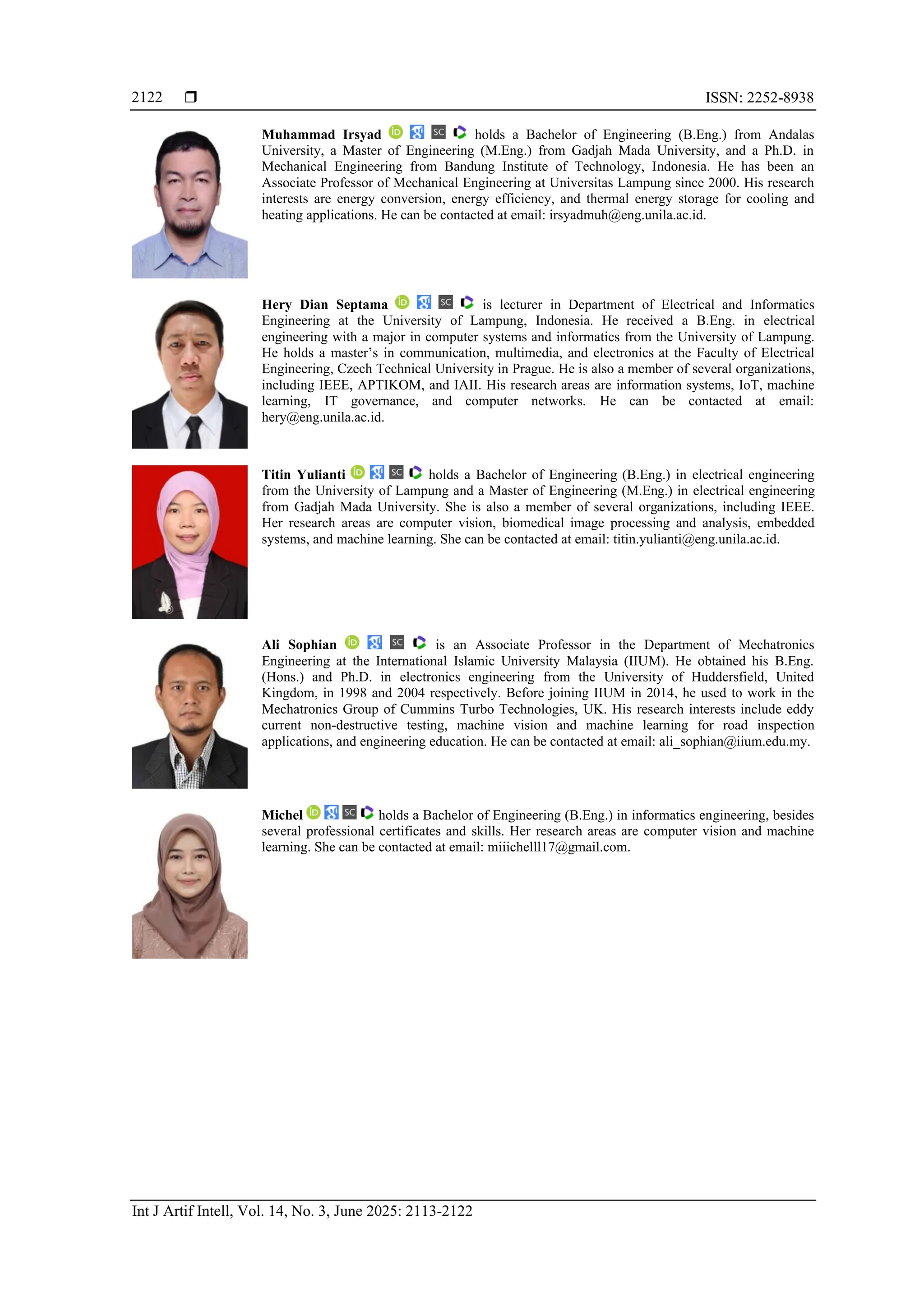
Muhammad Irsyad holds a Bachelor of Engineering (B.Eng.) from Andalas
University, a Master of Engineering (M.Eng.) from Gadjah Mada University, and a Ph.D. in
Mechanical Engineering from Bandung Institute of Technology, Indonesia. He has been an
Associate Professor of Mechanical Engineering at Universitas Lampung since 2000. His research
interests are energy conversion, energy efficiency, and thermal energy storage for cooling and
heating applications. He can be contacted at email: irsyadmuh@eng.unila.ac.id.
Hery Dian Septama is lecturer in Department of Electrical and Informatics
Engineering at the University of Lampung, Indonesia. He received a B.Eng. in electrical
engineering with a major in computer systems and informatics from the University of Lampung.
He holds a master’s in communication, multimedia, and electronics at the Faculty of Electrical
Engineering, Czech Technical University in Prague. He is also a member of several organizations,
including IEEE, APTIKOM, and IAII. His research areas are information systems, IoT, machine
learning, IT governance, and computer networks. He can be contacted at email:
hery@eng.unila.ac.id.
Titin Yulianti holds a Bachelor of Engineering (B.Eng.) in electrical engineering
from the University of Lampung and a Master of Engineering (M.Eng.) in electrical engineering
from Gadjah Mada University. She is also a member of several organizations, including IEEE.
Her research areas are computer vision, biomedical image processing and analysis, embedded
systems, and machine learning. She can be contacted at email: titin.yulianti@eng.unila.ac.id.
Ali Sophian is an Associate Professor in the Department of Mechatronics
Engineering at the International Islamic University Malaysia (IIUM). He obtained his B.Eng.
(Hons.) and Ph.D. in electronics engineering from the University of Huddersfield, United
Kingdom, in 1998 and 2004 respectively. Before joining IIUM in 2014, he used to work in the
Mechatronics Group of Cummins Turbo Technologies, UK. His research interests include eddy
current non-destructive testing, machine vision and machine learning for road inspection
applications, and engineering education. He can be contacted at email: ali_sophian@iium.edu.my.
Michel holds a Bachelor of Engineering (B.Eng.) in informatics engineering, besides
several professional certificates and skills. Her research areas are computer vision and machine
learning. She can be contacted at email: miiichelll17@gmail.com.

Advancing precision in air quality forecasting through machine learning integration

  • 1.
    IAES International Journalof Artificial Intelligence (IJ-AI) Vol. 14, No. 3, June 2025, pp. 2113~2122 ISSN: 2252-8938, DOI: 10.11591/ijai.v14.i3.pp2113-2122  2113 Journal homepage: http://ijai.iaescore.com Advancing precision in air quality forecasting through machine learning integration Muhamad Komarudin1,2 , Sri Ratna Sulistiyanti1 , Suharso3 , Muhammad Irsyad4 , Hery Dian Septama1 , Titin Yulianti1 , Ali Sophian5 , Michel1 1 Department of Electrical and Informatics Engineering, Faculty of Engineering, University of Lampung, Bandar Lampung, Indonesia 2 Environmental Science Graduate School, University of Lampung, Bandar Lampung, Indonesia 3 Department of Chemistry, Faculty of Mathematics and Natural Sciences, University of Lampung, Bandar Lampung, Indonesia 4 Department of Mechanical Engineering, Faculty of Engineering, University of Lampung, Bandar Lampung, Indonesia 5 Department of Mechatronics Engineering, International Islamic University Malaysia, Selangor, Malaysia Article Info ABSTRACT Article history: Received Mar 21, 2024 Revised Feb 12, 2025 Accepted Mar 15, 2025 In an era where environmental concerns are escalating, air quality forecasting emerges. Forecasting is a crucial tool for addressing the adverse impacts of pollution on public health and ecosystems. In urban centers like Bandar Lampung, economic activities intensify pollution levels. This condition leveraging advanced machine learning forecasting methods can significantly mitigate these effects. This study evaluates the precision of long short-term memory (LSTM) and Prophet methods in predicting air quality. This study utilizes data from January 12, 2022 to November 9, 2023. The results reveal a distinct advantage of the LSTM method over the Prophet. The LSTM method showcases superior accuracy across all evaluation metrics. Specifically, the LSTM method achieved an average root mean squared error (RMSE) of 5.38, mean absolute error (MAE) of 3.94, and mean absolute percentage error (MAPE) of 0.07. In contrast, the Prophet method recorded higher error rates, with an average RMSE of 18.48, MAE of 15.61, and MAPE of 0.25. These numbers underscore the LSTM method's robustness and reliability in forecasting air quality. The result highlights its potential as a pivotal resource for environmental monitoring and policymaking to safeguard public health and promote sustainable urban development. Keywords: Air quality Forecasting Machine learning Precision Public health This is an open access article under the CC BY-SA license. Corresponding Author: Muhamad Komarudin Environmental Science Graduate School and Department of Electrical and Informatics Engineering, Faculty of Engineering, University of Lampung Bandar Lampung, Indonesia Email: m.komarudin@eng.unila.ac.id 1. INTRODUCTION Air pollution is a major environmental issue affecting public health, ecosystems, and climate. This issue makes it critical to implement proper monitoring and control strategies [1]. The presence of dust, smoke, gases, and water vapor pollutants contributes to air pollution. It can lead to short-term and long-term diseases in various body systems. This disease may impact the respiratory tract, heart, eyes, skin, and reproductive and nervous systems [2]. Particulate matter, nitrogen dioxide, sulfur dioxide, and ground-level ozone are the primary air pollutants responsible for various illnesses [3]. Exposure to these pollutants can result in respiratory diseases, strokes, lung diseases, cardiovascular diseases, liver and blood diseases, and other health issues [4]. The inhalation of particulate matter and gaseous pollutants can cause pulmonary inflammation, chronic obstructive pulmonary disease, heart rate variability, ischemic heart disease, mental and behavior disorders, and insulin resistance [5]. The effects of air pollution on health depend on various
  • 2.
     ISSN: 2252-8938 IntJ Artif Intell, Vol. 14, No. 3, June 2025: 2113-2122 2114 factors, such as pollutant concentrations, chemical properties, age, general health, duration of exposure, weather conditions, and distance from emission sources. Urbanization, industrialization, and globalization have increased air pollution, particularly in developing countries [6]. Other issues include rapid urbanization, industrialization, vehicular emissions, and deforestation. These sources emit a wide range of pollutants, including particulate matter (PM), nitrogen dioxide (NO2), sulfur dioxide (SO2), and volatile organic compounds (VOCs). Air pollution in urban areas is a significant concern since ambient air pollution concentrations in many cities have reached levels that threaten people's health [7]. Urban air quality measurement is important for human health and the environment [8]. Indoor air quality levels were also found to trigger building syndrome illness among occupant [9]–[11]. Traditional air quality monitoring stations have spatial coverage and cost limitations. Several studies have explored alternative methods to address this. Niepsch et al. [12] using lichens as biomonitoring tools to assess air quality in urban areas. Several studies in low-cost particulate matter measurement devices have been developed. This device is then deployed in urban areas to provide cost-efficient monitoring [13]–[15]. These methods and devices can be used to monitor air quality limit values and assess the frequency of limit exceedances [16], [17]. Others studies by [18], [19] integrating these low-cost devices with existing air quality monitoring networks. The results can enhance understanding of air pollution sources and spatial variability even in real time. Furthermore, the data collected by these monitoring devices can be analyzed. Machine learning models can be used to analyze data precisely and quickly. Several studies have proven the use of machine learning in various cases. Rogers et al. [20] using machine learning in climate variability to provide accurate and timely weather forecasts. Another study by Suwadi et al. [21] uses machine learning to forecast water quality. Precise air quality forecasting has become an important strategy for managing air pollution. Air pollution prediction models without machine learning have significant drawbacks. The complex source lists of models like WRF-Chem and CMAQ require frequent updates. This limits their scalability, especially in regions with limited resources. Therefore, it is hard to predict air pollution accurately across different terrains [22], [23]. Time series data collected by air quality monitoring devices in urban environments can be advanced through processing to yield air quality forecasts. Innovative forecasting methodologies have emerged to ascertain air quality levels across diverse regions. This method incorporates various techniques and computational models to enhance predictive precision [24]. Furthermore, the progress in machine learning technologies is renowned for their ability to derive accurate predictions from complex datasets. This method offers promising applications in air quality forecasting. Thus, it can potentially elevate the accuracy and reliability of air quality predictions. The work in [25]–[28] uses time series data prediction methods and machine learning to forecast air quality. The work offers promising results in air quality forecasting in several urban cities [29], [30]. However, a comparative machine learning algorithm must be used to provide more accurate data analysis for air quality forecasting. This study addresses the problem of forecasting air pollution levels accuracy. Data on air pollution from in urban city exemplifies these challenges. Bandar Lampung is a major urban city and economic hub in Sumatra, Indonesia. Its strategic position as a gateway between the Java and Sumatra islands leads to heavy traffic flow and industrial activity. Therefore, this condition makes air pollution levels worse in Bandar Lampung. Traditional forecasting methods often struggle with the complexity and variability of environmental data. The advent of artificial intelligence (AI) offers new possibilities for improving the accuracy and reliability of air quality forecasts. Specifically, this research compares the effectiveness of two AI-based forecasting methods: long short-term memory (LSTM) and Prophet. LSTM is known for its ability to process time series data. It has the benefit of remembering information over long periods that is well-suited for air quality forecasting [31]. Prophet provides a more straightforward approach that focuses on trend and seasonality in time series data [32]. This study aims to identify the most effective model for supporting local environmental management and public health. It also aims to evaluate the performance of these methods in predicting air quality. The results may show the most precise model for advancing the precision of air quality parameter forecasting. 2. MATERIAL AND METHOD 2.1. Material This research uses air quality data for Bandar Lampung with an hourly time range from January 12, 2022 to November 9, 2023. Data was obtained from https://www.weatherbit.io/, a website that provides global and local weather and air quality API services online global and local. The data consists of 11 columns containing the variables AQI, CO, datetime, NO2, O3, PM10, PM2.5, SO2, timestamp_local, timestamp_utc, and ts, with each column containing 15,153 rows of data.
  • 3.
    Int J ArtifIntell ISSN: 2252-8938  Advancing precision in air quality forecasting through machine learning… (Muhamad Komarudin) 2115 2.2. Method The data mining process employed in this research adopts the data science framework flow, which provides a comprehensive and structured approach to building a data science model. As depicted in Figure 1, the workflow commences with identifying datasets and proceeds through a series of systematic steps to the evaluation phase. The framework's structured approach ensures that the research outcomes are reliable and valid. Figure 1. Research method In the business understanding stages, the objective goal is determined. Therefore, to fulfill the goal, dataset identification and collection are carried out according to the objectives. This study uses air quality data for Bandar Lampung City. The following process is data pre-preprocessing, where the datasets that have been obtained are collected before entering the data cleaning stage. The data cleaning stage is done by determining the variables that will be used by deleting unnecessary variables. This process selects the appropriate data type for each column and fills in the empty data, known as dataset imputation. In addition, outliers were removed using the interquartile range (IQR) statistical method. This is done so that the dataset can be appropriately processed at the next stage. The dataset was then split into training and testing datasets. The training dataset will be used for the machine learning algorithm training stage. Then, the already-trained model will be tested for the evaluation process using the testing dataset. The next stage is the modeling stage; modeling is carried out based on data that has been explored and split in the previous stage. The model design uses a deep learning model, namely the LSTM and the Prophet methods. The LSTM method is an artificial neural network (ANN) architecture that can handle long-range dependency problems. LSTM is widely used to model complex relationships and patterns over time in datasets. Apart from that, the Prophet method is used, which is a method that can be used for time series data that may have unique properties that are difficult to accommodate by traditional methods [33]. Both methods use Python with libraries such as TensorFlow for LSTM and Prophet for the Prophet model. Apart from that, a tuning process was also carried out to obtain model parameters. The best architecture for LSTM and added regressors, holiday, and seasonal effects for the Prophet model. The interpretation stage is the final stage aimed at evaluating the results of testing the model that has been built. Model testing results are graphical visualizations of actual and predicted data. In addition, model evaluation metrics are used to measure errors in predictions made. The evaluation results are in the form of mean absolute percentage error (MAPE), mean absolute error (MAE), and root mean squared error (RMSE) values, and the best error values are obtained so that insights can be obtained that can be used in decision-making.
  • 4.
     ISSN: 2252-8938 IntJ Artif Intell, Vol. 14, No. 3, June 2025: 2113-2122 2116 3. RESULTS AND DISCUSSION This research uses data from https://www.weatherbit.io/, a platform that provides free and paid weather and air quality API services. The parameter used air quality data for Bandar Lampung from January 12, 2022 to November 9, 2023. The dataset consists of 8 columns: datetime, AQI, CO, NO2, O3, PM10, PM2.5, and SO2. The following process is the dataset-cleaning process. The first step involves adjusting the data type within the dataset. Then, each column can function according to its intended purpose. Next is the imputation process that fills in the dataset's not a number (NaN) value. Some models, including LSTM and Prophet models, cannot handle missing values. Therefore, making cleaning the dataset of NaN values is necessary for the model to learn effectively. Columns with missing values will be replaced using the median of the available data. The replacement of NaN values with the median is chosen because this method offers a balanced approach to handling missing values. The median is more resistant to outliers than the mean. Thus, it is not affected by extreme values that might distort the data distribution. Replacing NaN values with the median can minimize potential distortion in the data due to extreme values. Additionally, using the median maintains information about the center of the distribution. The results provide a more representative picture of the original data. The last process in this stage is removing outliers. However, eliminating outliers cannot be done thoroughly. It can affect model performance because it can cause some critical information in the dataset to be lost. This process is carried out by calculating the number of outliers in each variable using the IQR method. The interquartile use is a Q1 value of 0.25 and a Q3 value of 0.75. Based on Q1 0.25 and Q3 0.75 calculations, the number of outliers in each variable and the total number of outliers in the dataset were 1,557. In this study, outliers from the air quality variable data of Bandar Lampung City were removed using a Q1 value of 0.2 and a Q3 value of 0.8. Determining appropriate Q1 and Q3 values in the model will not cause the dataset to lose significant information that could impair model performance. After calculating the upper and lower bounds, outlier identification was carried out on the dataset variables. Data considered outliers were eliminated, and the distribution was observed after outlier removal. The subsequent process involves dividing the dataset, a procedure referred to as data splitting. The data is segmented into two parts: one for training and the other for testing. It is noted that the total dataset of Bandar Lampung city's air quality consists of 14,987 entries. The training data comprises 11,989 (80%) entries, and the testing data consists of 2,998 (20%). Additionally, information on the number of days used in the training and testing processes was obtained by dividing the training and test data by 24, which is initialized as the number of hours in a day. This calculation yields 500 days for the training data and 125 days for the testing data. The training data timeframe starts from January 12, 2022, until July 4, 2023, while the remaining time until November 9, 2023, is allocated for the testing data. The process continues with normalization using MinMaxScaler to transform the values in the dataset to a range between 0 and 1. This process results in two normalized datasets, followed by the formation of input and output samples for training and testing the model. 3.1. Long short-term memory The process of determining the number of layers and units in the LSTM model using hyperparameter tuning is done twice with a different number of n steps, namely 6 and 24. The following table shows the results of tuning neurons or units in modeling using a different number of n steps. Based on Table 1, the results of the hyperparameter tuning for the number of neurons and n-step are obtained. In the first experiment with n-step in of 6, the best score was obtained using several neurons of 100, with a value of 0.001679. At n-step in as many as 24, the best score is obtained with several neurons of 50 and a value of 0.001823. The best score is determined based on the mean squared error (MSE) evaluation metric, where a smaller value indicates better model performance. Therefore, modeling combines the best scores, namely 50 and 100 neurons, in each LSTM layer. The following is the LSTM modeling architecture, which combines the two best neurons, namely 50 and 100. LSTM modeling uses a three-layer architecture: one dense layer and two LSTM layers with varying neurons. The number of neurons in each LSTM layer is chosen through a fine-tuning process using grid search. The first layer has 100 neurons using rectified linear unit (ReLu) activation. A RepeatVector layer repeats the output vector from the previous LSTM layer n_steps_out times to predict multiple steps into the future. The second or third LSTM layer has 50 neurons with a ReLu activation function. A time distributed dense layer is used to apply a dense layer at each step of the output sequence. Figure 2 shows a graph that displays the loss function metrics. Figure 2(a) shows MAE, which measures the average magnitude of the errors. Figure 2(b) shows the MSE, which measures the average squared magnitude of the errors. The graph indicates that during the training process, there was a reduction in both training and validation loss in both evaluation metrics. This shows that the model optimized its internal parameters systematically. The results helped reduce the squared difference between the predicted values generated by the model and the actual values.
  • 5.
    Int J ArtifIntell ISSN: 2252-8938  Advancing precision in air quality forecasting through machine learning… (Muhamad Komarudin) 2117 Table 1. Hyperparameter tunning result N step in Neuron 16 32 50 100 128 6 0.00182 0.00188 0.00193 0.00167 0.00184 24 0.00189 0.00196 0.00182 0.00188 0.00192 (a) (b) Figure 2. Loss function graph evaluation metrics: (a) MAE and (b) MSE 3.2. Prophet method The first stage in the modeling process is changing the name of the air quality variable to be predicted. Next, holiday, seasonal, and regressor effects were added as external supporting factors for other pollutant variables. The addition of holiday parameters is based on public holidays in Indonesia. This allows the model to incorporate the effect of holidays into predictions. Based on the addition of Indonesian national holidays, 14 national holidays are recorded in the model. The seasonal parameter consists of three seasonals: daily, weekly, and yearly. The addition of regressor variables aims to incorporate external information from other pollutant variables such as 'CO,' 'NO2', 'O3', 'PM10', 'PM2.5', and 'SO2' with the option of standardizing set to false. This ensures that the regressor variables do not change scale during the modeling process.
  • 6.
     ISSN: 2252-8938 IntJ Artif Intell, Vol. 14, No. 3, June 2025: 2113-2122 2118 3.3. Evaluation Figure 3 compares actual data and predicted results for each air quality variable using the LSTM and Prophet methods. Figures 3(a) to 3(g) compares actual data, LSTM, and Prophet prediction for each air quality parameter: SO2, CO, NO2, O3, PM10, PM2.5, and AQI. Next, three evaluation metrics, RMSE, MAE, and MAPE, measure the two models' ability to forecast each predicted air quality variable. Table 2 shows the evaluation metrics for each machine learning algorithm for all air quality variables. (a) (b) (c) (d) (e) (f) (g) Figure 3. Comparison graph of actual data, LSTM prediction results, and Prophet prediction results: (a) SO2, (b) CO, (c) NO2, (d) O3, (e) PM10, (f) PM2,5, and (g) AQI
  • 7.
    Int J ArtifIntell ISSN: 2252-8938  Advancing precision in air quality forecasting through machine learning… (Muhamad Komarudin) 2119 Table 2. Comparison of metric evaluation results for all variable Variable Metrics LTSM Prophet AQI RMSE 5.5 12.43 MAE 3.89 9.52 MAPE 0.05 0.12 CO RMSE 9.66 39.87 MAE 6.96 32.73 MAPE 0.04 0.23 NO2 RMSE 0.8 2.46 MAE 0.6 1.96 MAPE 0.13 0.50 O3 RMSE 8.42 18.96 MAE 6.33 15.47 MAPE 0.05 0.15 PM10 RMSE 3.29 2.56 MAE 2.48 2.11 MAPE 0.07 0.07 PM2,5 RMSE 3.29 3.54 MAE 1.85 3.15 MAPE 0.08 0.16 SO2 RMSE 7.48 49.57 MAE 5.52 44.37 MAPE 0.09 0.56 From the results, the comparative study on the LSTM and Prophet methods for forecasting air quality in Bandar Lampung City has yielded insightful findings. The study demonstrates that the LSTM method, particularly with the parameter tuning process incorporating two different n-steps in values of 6 and 24. The LSTM significantly outperforms the Prophet method in terms of accuracy. This superiority is evident in the lower metric evaluation values achieved by the LSTM method, which are an average RMSE of 5.38, MAE of 3.94, and MAPE of 0.07, compared to the Prophet method's average RMSE of 18.48, MAE of 15.61, and MAPE of 0.25. The comparison between the LSTM and Prophet models reveals the strengths of both methods in terms of time series forecasting. This study highlights the effectiveness of the LSTM method in handling the complexity of air quality forecasting. LSTM offers a robust tool for predicting environmental conditions. In contrast, Prophet is designed to handle time series data with strong seasonal effects and missing data. Prophet's simplicity and ability to incorporate external factors like holidays make it advantageous in specific contexts. The research shows the importance of employing advanced analytical techniques in environmental science. Further studies are needed to refine our understanding and forecast air quality dynamics. Hybrid models combining LSTM and Prophet can be studied in the future. Leveraging the strengths of both models, achieving better accuracy and stability. 4. CONCLUSION This study's examination of LSTM and Prophet methods for air quality forecasting in Bandar Lampung City. The results reveal the superior accuracy of the LSTM method. Through parameter tuning with different n-step values, LSTM consistently outperformed Prophet across all metrics. Specifically, the LSTM method achieved an average RMSE of 5.38, MAE of 3.94, and MAPE of 0.07. In contrast, the Prophet method recorded higher error rates, with an average RMSE of 18.48, MAE of 15.61, and MAPE of 0.25. This shows LSTM's potential to provide reliable air quality predictions. By harnessing the power of accurate forecasting models, stakeholders can better anticipate pollution trends. The government may implement timely interventions and evaluate the effectiveness of air quality management strategies for sustainable development. Future research could further refine these models by using a hybrid model. This method enhances our ability to forecast and mitigate air pollution precisely. FUNDING INFORMATION We extend our deepest gratitude to the Higher Education for Technology and Innovation (HETI) Project for their generous support and funding of our research. This research funded is through the Domestic Scheme of Research, Innovation, and Collaboration (Riset Inovasi dan Kolaborasi Skema Domestik) 2022 under contract number 6045/UN26/HK.01.03/2022.
  • 8.
     ISSN: 2252-8938 IntJ Artif Intell, Vol. 14, No. 3, June 2025: 2113-2122 2120 AUTHOR CONTRIBUTIONS STATEMENT This journal uses the Contributor Roles Taxonomy (CRediT) to recognize individual author contributions, reduce authorship disputes, and facilitate collaboration. Name of Author C M So Va Fo I R D O E Vi Su P Fu Muhamad Komarudin ✓ ✓ ✓ ✓ ✓ ✓ ✓ ✓ ✓ ✓ Sri Ratna Sulistiyanti ✓ ✓ ✓ ✓ ✓ Suharso ✓ ✓ ✓ Muhammad Irsyad ✓ ✓ ✓ ✓ Hery Dian Septama ✓ ✓ ✓ ✓ ✓ ✓ Titin Yulianti ✓ ✓ ✓ ✓ ✓ Ali Sophian ✓ ✓ ✓ ✓ Michel ✓ ✓ ✓ ✓ ✓ C : Conceptualization M : Methodology So : Software Va : Validation Fo : Formal analysis I : Investigation R : Resources D : Data Curation O : Writing - Original Draft E : Writing - Review & Editing Vi : Visualization Su : Supervision P : Project administration Fu : Funding acquisition CONFLICT OF INTEREST STATEMENT Authors state no conflict of interest. DATA AVAILABILITY The data that support the findings of this study are available from https://www.weatherbit.io/. Restrictions apply to the availability of these data, which were used under license for this study. Data are available from the corresponding author with the permission of weatherbit.io. REFERENCES [1] E. G. Prihardanu, H. Kusnoputranto, and H. Herdiansyah, “Indoor air quality in urban residential: Current status, regulation and future research for Indonesia,” International Journal of Public Health Science, vol. 10, no. 4, pp. 824–833, 2021, doi: 10.11591/ijphs.v10i4.20885. [2] A. E. Önal, Air quality and health. London, United Kingdom: IntechOpen, 2022, doi: 10.5772/intechopen.98023. [3] C. Mănescu, T. Mateoc-Sîrb, H. Vass, and N. Mateoc-Sîrb, “Studies on the effects of air pollution on human health,” International Multidisciplinary Scientific GeoConference Surveying Geology and Mining Ecology Management, vol. 22, no. 5.1, pp. 415–422, 2022, doi: 10.5593/sgem2022/5.1/s20.053. [4] J. A. Douglass, “How can air quality affect health?,” Internal Medicine Journal, vol. 50, no. 11, 2020, doi: 10.1111/imj.15050. [5] H. Chen et al., “Effects of air pollution on human health – Mechanistic evidence suggested by in vitro and in vivo modelling,” Environmental Research, vol. 212, 2022, doi: 10.1016/j.envres.2022.113378. [6] A. Piracha and M. T. Chaudhary, “Urban air pollution, urban heat island and human health: a review of the literature,” Sustainability, vol. 14, no. 15, 2022, doi: 10.3390/su14159234. [7] D. Schwela, “Air pollution and health in urban areas,” Reviews on Environmental Health, vol. 15, no. 1–2, pp. 13–42, 2000, doi: 10.1515/REVEH.2000.15.1-2.13. [8] A. K. Srivastava, “Air pollution: facts, causes, and impacts,” in Asian Atmospheric Pollution, Elsevier, 2022, pp. 39–54, doi: 10.1016/B978-0-12-816693-2.00020-2. [9] R. Pitarma, G. Marques, and B. R. Ferreira, “Monitoring indoor air quality for enhanced occupational health,” Journal of Medical Systems, vol. 41, no. 2, 2017, doi: 10.1007/s10916-016-0667-2. [10] V. Manasa et al., “Indoor air quality analysis and sustainable practices,” E3S Web of Conferences, vol. 507, Mar. 2024, doi: 10.1051/e3sconf/202450701004. [11] V. V. Tran, D. Park, and Y. C. Lee, “Indoor air pollution, related human diseases, and recent trends in the control and improvement of indoor air quality,” International Journal of Environmental Research and Public Health, vol. 17, no. 8, 2020, doi: 10.3390/ijerph17082927. [12] D. Niepsch, L. J. Clarke, J. Newton, K. Tzoulas, and G. Cavan, “High spatial resolution assessment of air quality in urban centres using lichen carbon, nitrogen and sulfur contents and stable-isotope-ratio signatures,” Environmental Science and Pollution Research, vol. 30, no. 20, pp. 58731–58754, 2023, doi: 10.1007/s11356-023-26652-8. [13] R. Schrödner, H. Alas, and J. Voigtländer, “Application of cost-efficient particulate matter measurement devices in an urban network and comparison to state-of-the-art air quality monitoring,” in EGU General Assembly 2023, 2023, doi: 10.5194/egusphere-egu23-9356. [14] J. Swolkień, M. Tomaszek, and W. Halecki, “Urban network of air quality measurement nodes,” Geomatics, Landmanagement and Landscape, vol. 1, pp. 23–39, 2021, doi: 10.15576/gll/2021.1.23. [15] M. Komarudin, H. D. Septama, T. Yulianti, A. Yudamson, M. Pratama, and T. P. Zuhelmi, “Air quality monitoring device for smart health solution during covid-19 pandemic,” in 2021 International Conference on Converging Technology in Electrical and Information Engineering (ICCTEIE), 2021, pp. 78–81, doi: 10.1109/ICCTEIE54047.2021.9650638. [16] M. Komarudin, S. R. Sulistyanti, Suharso, M. Irsyad, H. D. Septama, and T. Yulianti, “Improving low-cost carbon dioxide sensor accuracy for environmental air quality monitoring systems,” in 2023 International Conference on Converging Technology in Electrical and Information Engineering (ICCTEIE), 2023, pp. 1–5, doi: 10.1109/ICCTEIE60099.2023.10366775.
  • 9.
    Int J ArtifIntell ISSN: 2252-8938  Advancing precision in air quality forecasting through machine learning… (Muhamad Komarudin) 2121 [17] N. N. Mafop, A. Z. Abidin, and H. Mohamad, “IoT-based monitoring system for indoor air quality using thingsboard,” in 2024 IEEE International Conference on Applied Electronics and Engineering (ICAEE), 2024, pp. 1–6, doi: 10.1109/ICAEE62924.2024.10667562. [18] P. Diviacco et al., “Monitoring air quality in urban areas using a vehicle sensor network (VSN) crowdsensing paradigm,” Remote Sensing, vol. 14, no. 21, 2022, doi: 10.3390/rs14215576. [19] J. P. Sá et al., “Selection and evaluation of commercial low-cost devices for indoor air quality monitoring in schools,” Journal of Building Engineering, vol. 98, 2024, doi: 10.1016/j.jobe.2024.110952. [20] J. K. B. Rogers, T. C. R. Mercado, and F. A. Galleto, “Comparison of ARIMA boost, Prophet boost, and TSLM models in forecasting Davao City weather data,” Indonesian Journal of Electrical Engineering and Computer Science, vol. 34, no. 2, pp. 1092–1101, 2024, doi: 10.11591/ijeecs.v34.i2.pp1092-1101. [21] N. A. Suwadi et al., “An optimized approach for predicting water quality features based on machine learning,” Wireless Communications and Mobile Computing, vol. 2022, pp. 1–20, 2022, doi: 10.1155/2022/3397972. [22] J. K. Deters, R. Zalakeviciute, M. Gonzalez, and Y. Rybarczyk, “Modeling PM 2.5 urban pollution using machine learning and selected meteorological parameters,” Journal of Electrical and Computer Engineering, vol. 2017, pp. 1–14, 2017, doi: 10.1155/2017/5106045. [23] X. Xi et al., “A comprehensive evaluation of air pollution prediction improvement by a machine learning method,” in 2015 IEEE International Conference on Service Operations And Logistics, And Informatics, 2015, pp. 176–181, doi: 10.1109/SOLI.2015.7367615. [24] P. H. Nguyen, N. K. Dao, and L. S. P. Nguyen, “Development of machine learning and deep learning prediction models for PM2.5 in Ho Chi Minh City, Vietnam,” Atmosphere, vol. 15, no. 10, 2024, doi: 10.3390/atmos15101163. [25] S. Mahajan, H. M. Liu, T. C. Tsai, and L. J. Chen, “Improving the accuracy and efficiency of PM2.5 forecast service using cluster-based hybrid neural network model,” IEEE Access, vol. 6, pp. 19193–19204, 2018, doi: 10.1109/ACCESS.2018.2820164. [26] X. Wang and B. Wang, “Research on prediction of environmental aerosol and PM2.5 based on artificial neural network,” Neural Computing and Applications, vol. 31, no. 12, pp. 8217–8227, 2019, doi: 10.1007/s00521-018-3861-y. [27] R. Li, Y. Dong, Z. Zhu, C. Li, and H. Yang, “A dynamic evaluation framework for ambient air pollution monitoring,” Applied Mathematical Modelling, vol. 65, pp. 52–71, 2019, doi: 10.1016/j.apm.2018.07.052. [28] M. Benhaddi and J. Ouarzazi, “Multivariate time series forecasting with dilated residual convolutional neural networks for urban air quality prediction,” Arabian Journal for Science and Engineering, vol. 46, no. 4, pp. 3423–3442, 2021, doi: 10.1007/s13369-020-05109-x. [29] H. Maleki, A. Sorooshian, G. Goudarzi, Z. Baboli, Y. Tahmasebi Birgani, and M. Rahmati, “Air pollution prediction by using an artificial neural network model,” Clean Technologies and Environmental Policy, vol. 21, no. 6, 2019, doi: 10.1007/s10098-019-01709-w. [30] M. R. Delavar et al., “A novel method for improving air pollution prediction based on machine learning approaches: A case study applied to the capital city of Tehran,” ISPRS International Journal of Geo-Information, vol. 8, no. 2, 2019, doi: 10.3390/ijgi8020099. [31] S. Hochreiter and J. Schmidhuber, “Long short-term memory,” Neural Computation, vol. 9, no. 8, 1997, doi: 10.1162/neco.1997.9.8.1735. [32] S. J. Taylor and B. Letham, “Forecasting at scale,” American Statistician, vol. 72, no. 1, 2018, doi: 10.1080/00031305.2017.1380080. [33] J. Shen, D. Valagolam, and S. McCalla, “Prophet forecasting model: A machine learning approach to predict the concentration of air pollutants (PM2.5, PM10, O3, NO2, SO2, CO) in Seoul, South Korea,” PeerJ, vol. 8, 2020, doi: 10.7717/peerj.9961. BIOGRAPHIES OF AUTHORS Muhamad Komarudin received his B.Eng. from Universitas Gadjah Mada and M.Eng. from Institut Teknologi Bandung, Indonesia, in 1993 and 1997, respectively. He is currently a lecturer at the Department of Electrical and Informatics Engineering at the University of Lampung. He has also been a doctoral student at the Environmental Science Graduate School, University of Lampung, since January 2021. His research includes cyber-physical systems, machine learning, data mining, and IT governance. He can be contacted at email: m.komarudin@eng.unila.ac.id. Sri Ratna Sulistiyanti received Dr. degree in electrical engineering from Gadjah Mada University, Yogyakarta, Indonesia, with the dissertation “Spectral aspects of infrared fires for obtain information on the thermal conditions of objects with consumer digital camera.” She has been an Associate Professor of electrical engineering at Universitas Lampung since 1995. Her research interests include data acquisition, instrumentation, control, and artificial intelligence. She has also chaired several international conferences in collaboration with IEEE. She can be contacted at email: sr_sulistiyanti@eng.unila.ac.id. Suharso holds a Ph.D. from Curtin University of Technology Perth, Australia, in 2003. He is currently a professor in the Department of Chemistry at the University of Lampung, Indonesia. His research areas of interest include inorganic chemistry, mechanism of crystal growth, and green scaling inhibitors. He writes more than 60 Scopus-indexed articles with an H- index of 15. He can be contacted at email: suharso@fmipa.unila.ac.id.
  • 10.
     ISSN: 2252-8938 IntJ Artif Intell, Vol. 14, No. 3, June 2025: 2113-2122 2122 Muhammad Irsyad holds a Bachelor of Engineering (B.Eng.) from Andalas University, a Master of Engineering (M.Eng.) from Gadjah Mada University, and a Ph.D. in Mechanical Engineering from Bandung Institute of Technology, Indonesia. He has been an Associate Professor of Mechanical Engineering at Universitas Lampung since 2000. His research interests are energy conversion, energy efficiency, and thermal energy storage for cooling and heating applications. He can be contacted at email: irsyadmuh@eng.unila.ac.id. Hery Dian Septama is lecturer in Department of Electrical and Informatics Engineering at the University of Lampung, Indonesia. He received a B.Eng. in electrical engineering with a major in computer systems and informatics from the University of Lampung. He holds a master’s in communication, multimedia, and electronics at the Faculty of Electrical Engineering, Czech Technical University in Prague. He is also a member of several organizations, including IEEE, APTIKOM, and IAII. His research areas are information systems, IoT, machine learning, IT governance, and computer networks. He can be contacted at email: hery@eng.unila.ac.id. Titin Yulianti holds a Bachelor of Engineering (B.Eng.) in electrical engineering from the University of Lampung and a Master of Engineering (M.Eng.) in electrical engineering from Gadjah Mada University. She is also a member of several organizations, including IEEE. Her research areas are computer vision, biomedical image processing and analysis, embedded systems, and machine learning. She can be contacted at email: titin.yulianti@eng.unila.ac.id. Ali Sophian is an Associate Professor in the Department of Mechatronics Engineering at the International Islamic University Malaysia (IIUM). He obtained his B.Eng. (Hons.) and Ph.D. in electronics engineering from the University of Huddersfield, United Kingdom, in 1998 and 2004 respectively. Before joining IIUM in 2014, he used to work in the Mechatronics Group of Cummins Turbo Technologies, UK. His research interests include eddy current non-destructive testing, machine vision and machine learning for road inspection applications, and engineering education. He can be contacted at email: ali_sophian@iium.edu.my. Michel holds a Bachelor of Engineering (B.Eng.) in informatics engineering, besides several professional certificates and skills. Her research areas are computer vision and machine learning. She can be contacted at email: miiichelll17@gmail.com.