ADVANCED MAINTAINED
HIGHWAY ENGINEERING
NAME : PATEL DHRUV J
ID NO. : D18CL124
DIV : 2
BRANCH : CIVIL
SUBJECT : TRANSPORTATION ENGINEERING – I
INTRODUCTION
The idea of automated driving dates back to almost 50 years ago when
General Motors (GM) presented a vision of driverless vehicles under
automated control at the 1939 World fairs in New York.
In the 1950’s research by industrial organizations conceptualized automated
vehicles controlled by mechanical systems and radio controls.
After the first appearance of the computers in the 1960’s, researchers began
to consider the potential use of computers to provide lateral and longitudinal
control and traffic management.
The fully automated highway concept was initially examined by GM with
sponsorship from the US department of Transportation (DOT) in the
late1970’s.
During these times, focus was laid on automated vehicles on a highway as
computers were not powerful enough to consider a complete fully automated
highway system.
Advances in the computing technologies, micro-electronics and sensors in
the 1980’s provoked commercial interest in the technologies that might
enhance driver capability and perception and both private and public
researchers examined partially automated products and services.
Among others, the University of California Partners in Advanced Transport
and Highways (PATH) has carried out significant research and development in
the field of highway automation since the 1980’s.
As various transportation technologies emerged that could assist driving on
one hand and also traffic efficiency on the other, interest in fully automated
driving or integrated auto-highway technologies grew once again.
With the passage of the 1991 Intermodal Surface Transport Efficiency Act
(ISTEA), efforts were on early prototype development and testing of fully
automated vehicles and highways.
Research continues to this day though it is largely sketchy owing to the
withdrawal of the financial support for the National Automated Highway
Systems Research Programmed (NAHSRP) by the US Department of
Transportation in the year 1997.
Many studies conducted by the National Automated Highway Systems
Consortium (NAHSC) continue in partial way with a couple of federal
programmers like the Intelligent Vehicle Initiative (IVI) with more focus on a
nearer-term horizon.
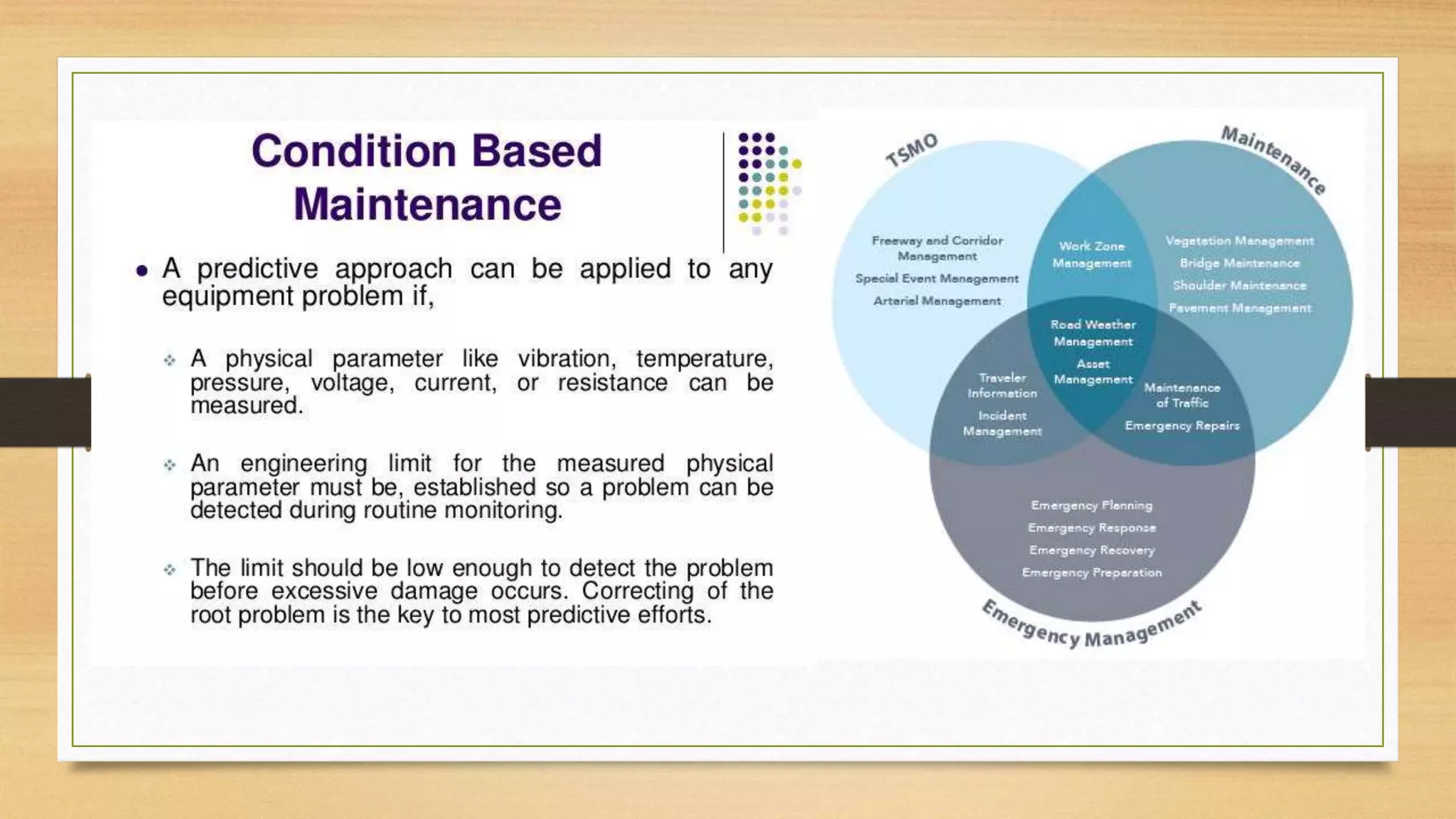
Highway Maintenance Management System
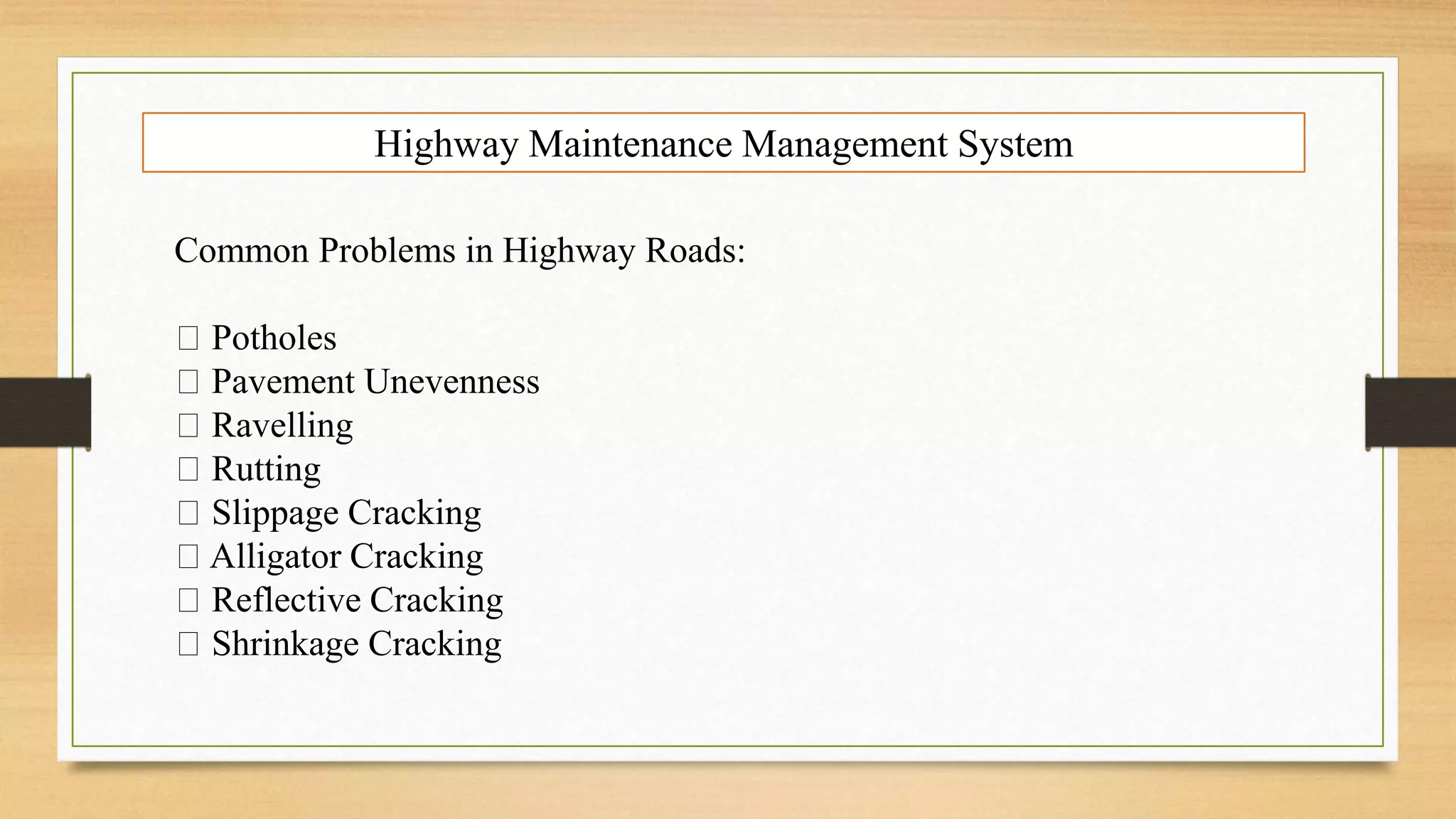
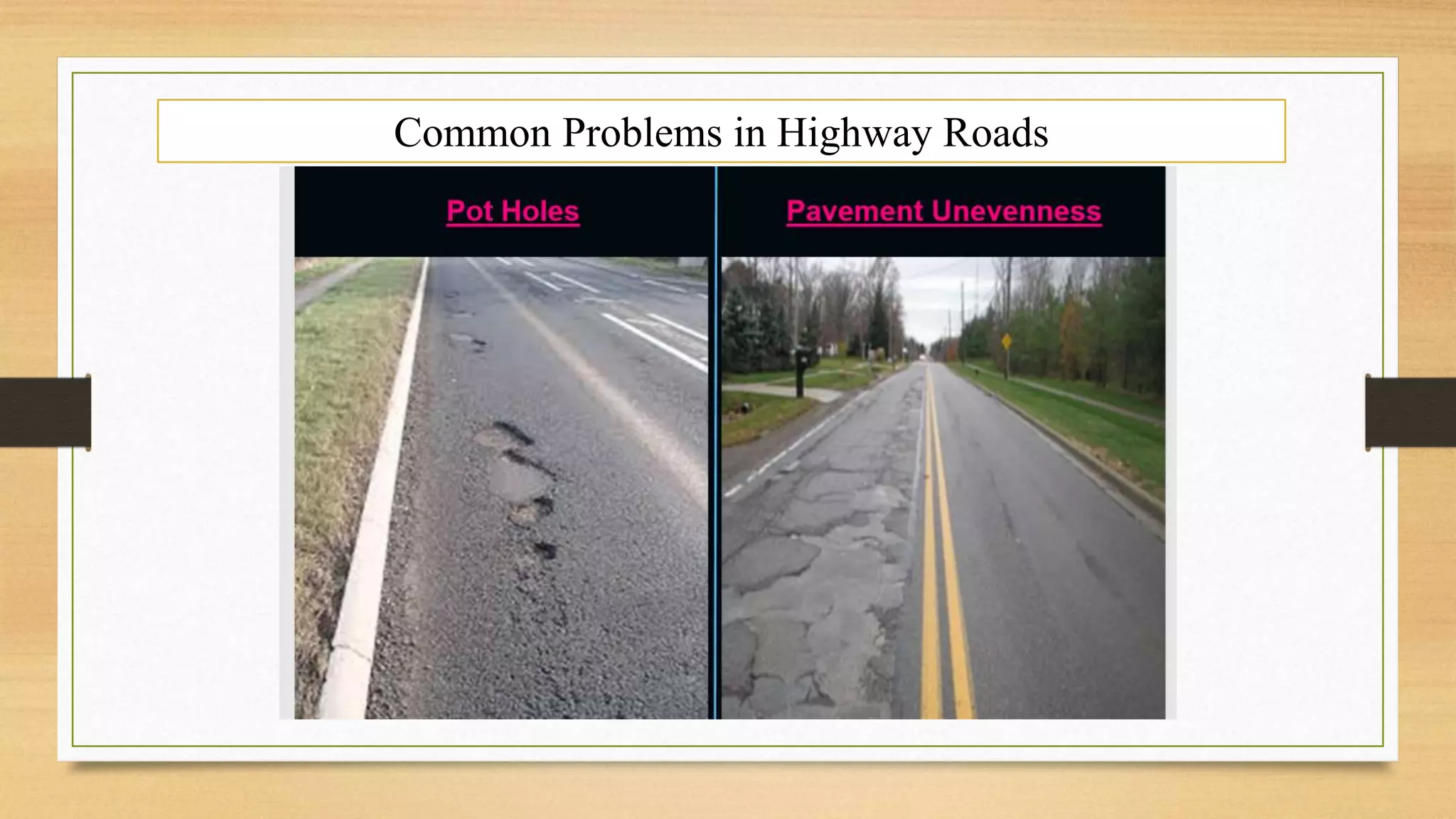
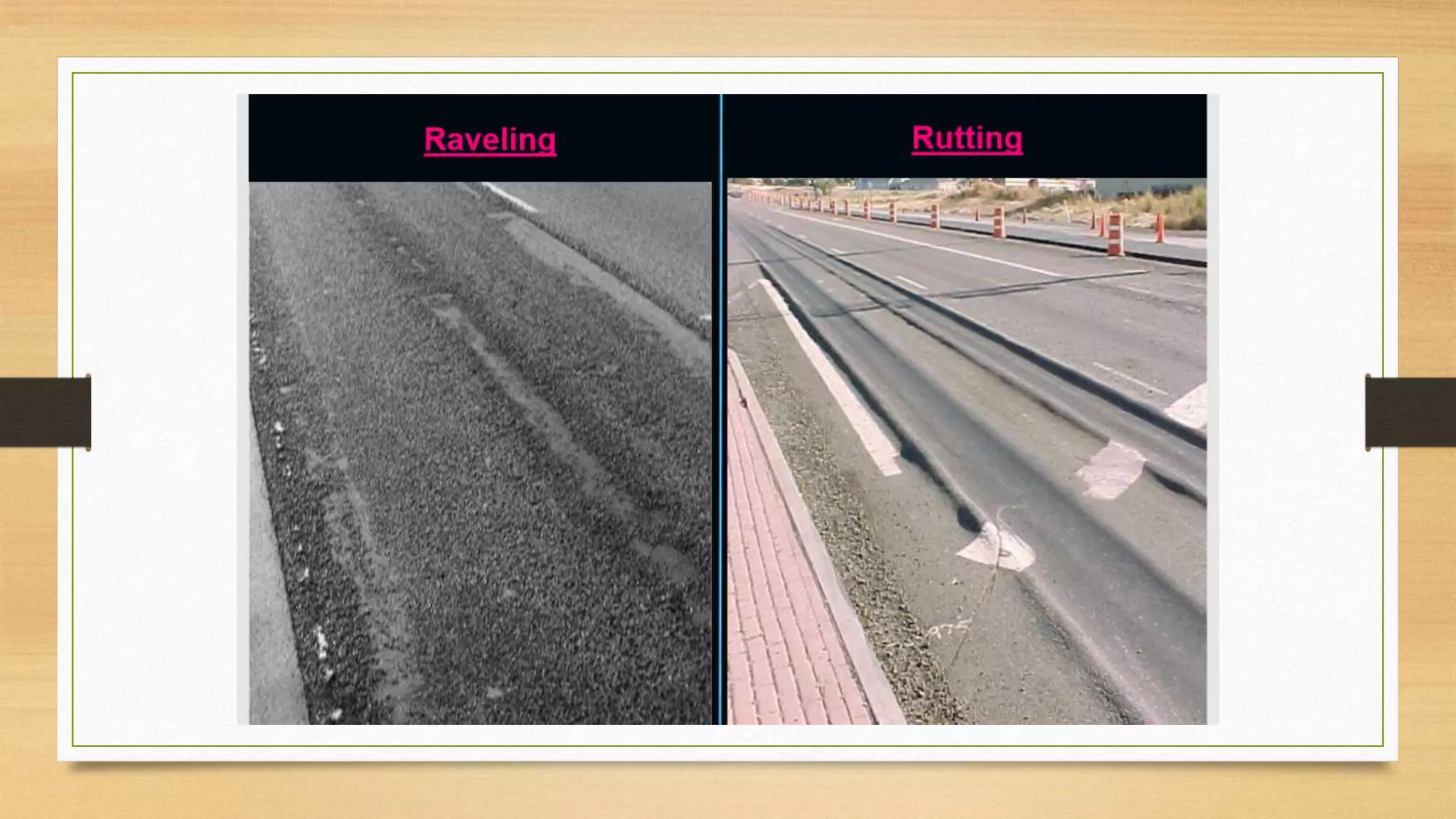
Common Problems in Highway Roads:
Potholes
Pavement Unevenness
Ravelling
Rutting
Slippage Cracking
Alligator Cracking
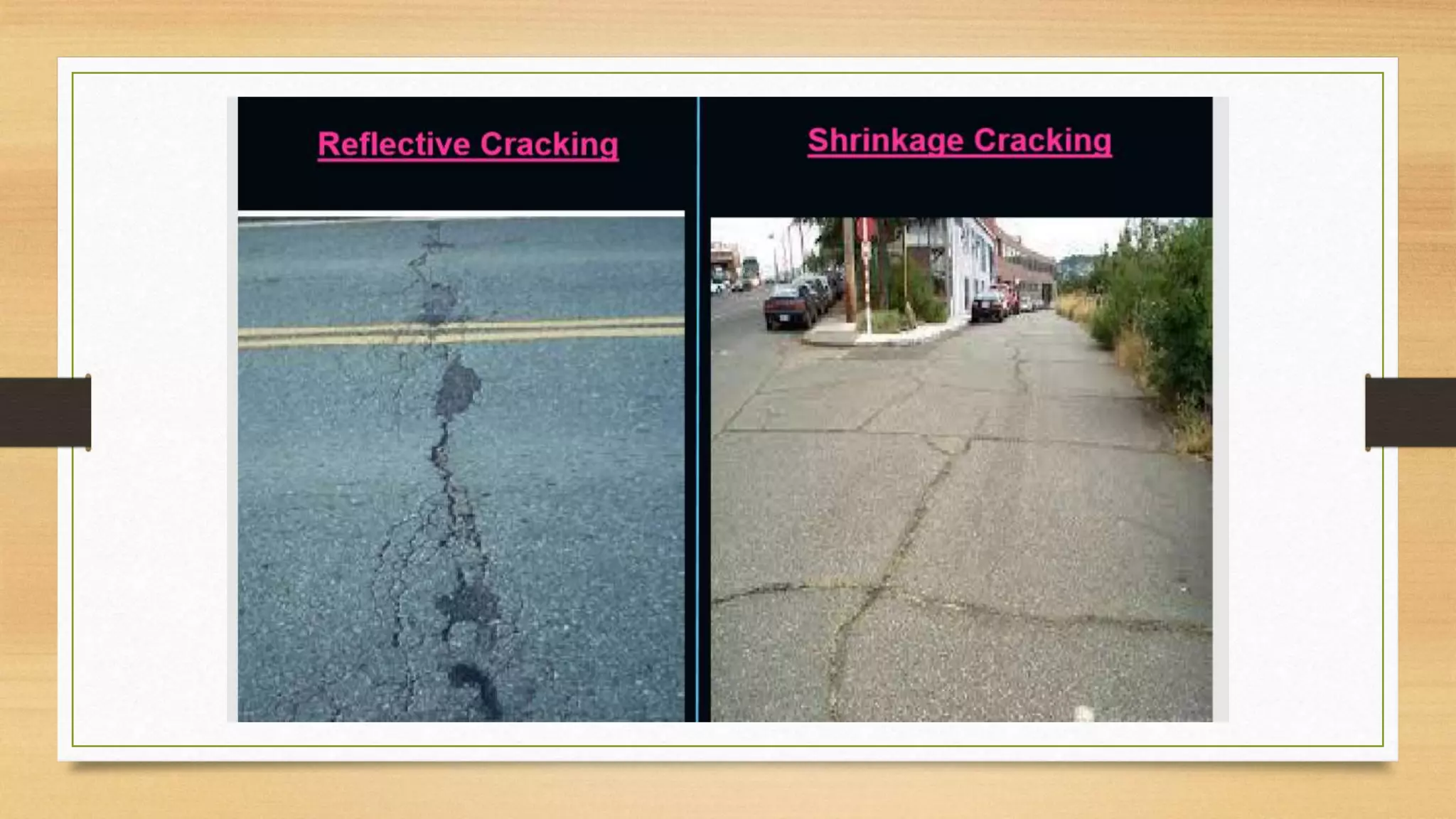
Reflective Cracking
Shrinkage Cracking
Common Problems in Highway Roads
Highway Maintenance Management System
Highway maintenance has the following objectives:
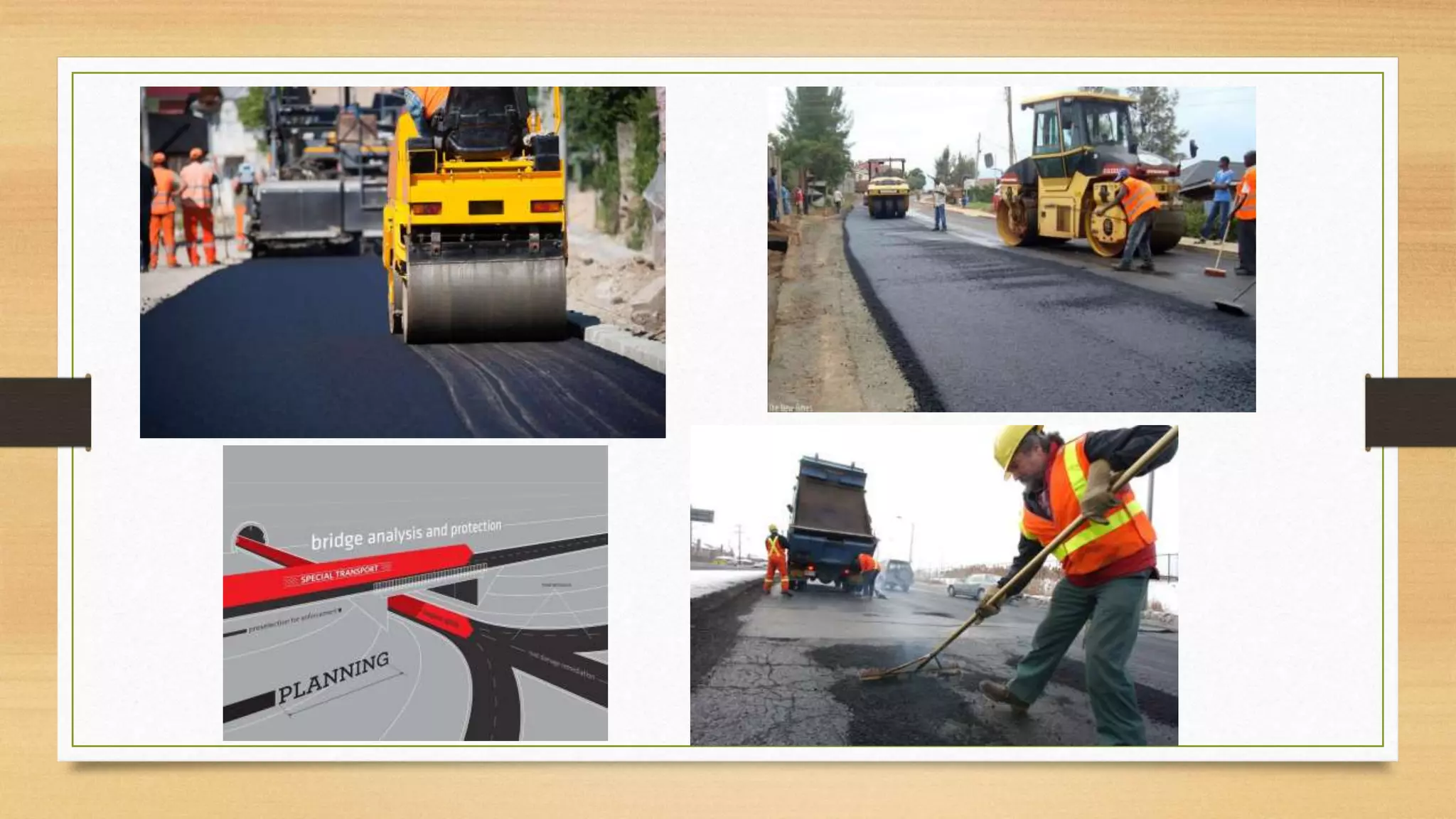
The repair of the functional pavement defects.
Prolonging the functional and structural life of the pavement.
Maintaining road safety and signage.
Keeping the road reserve in an acceptable condition.
Types of Highway Maintenance:
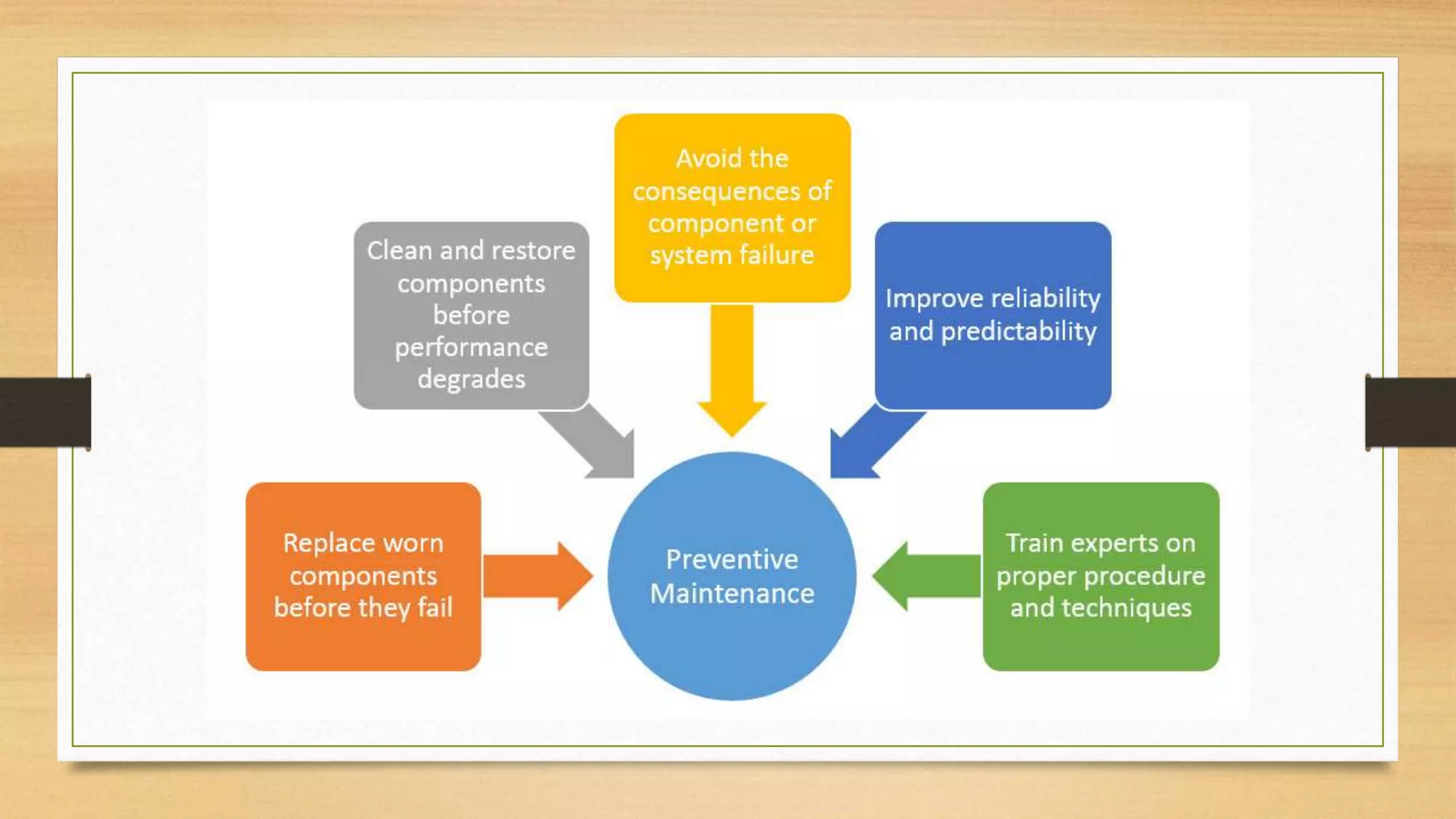
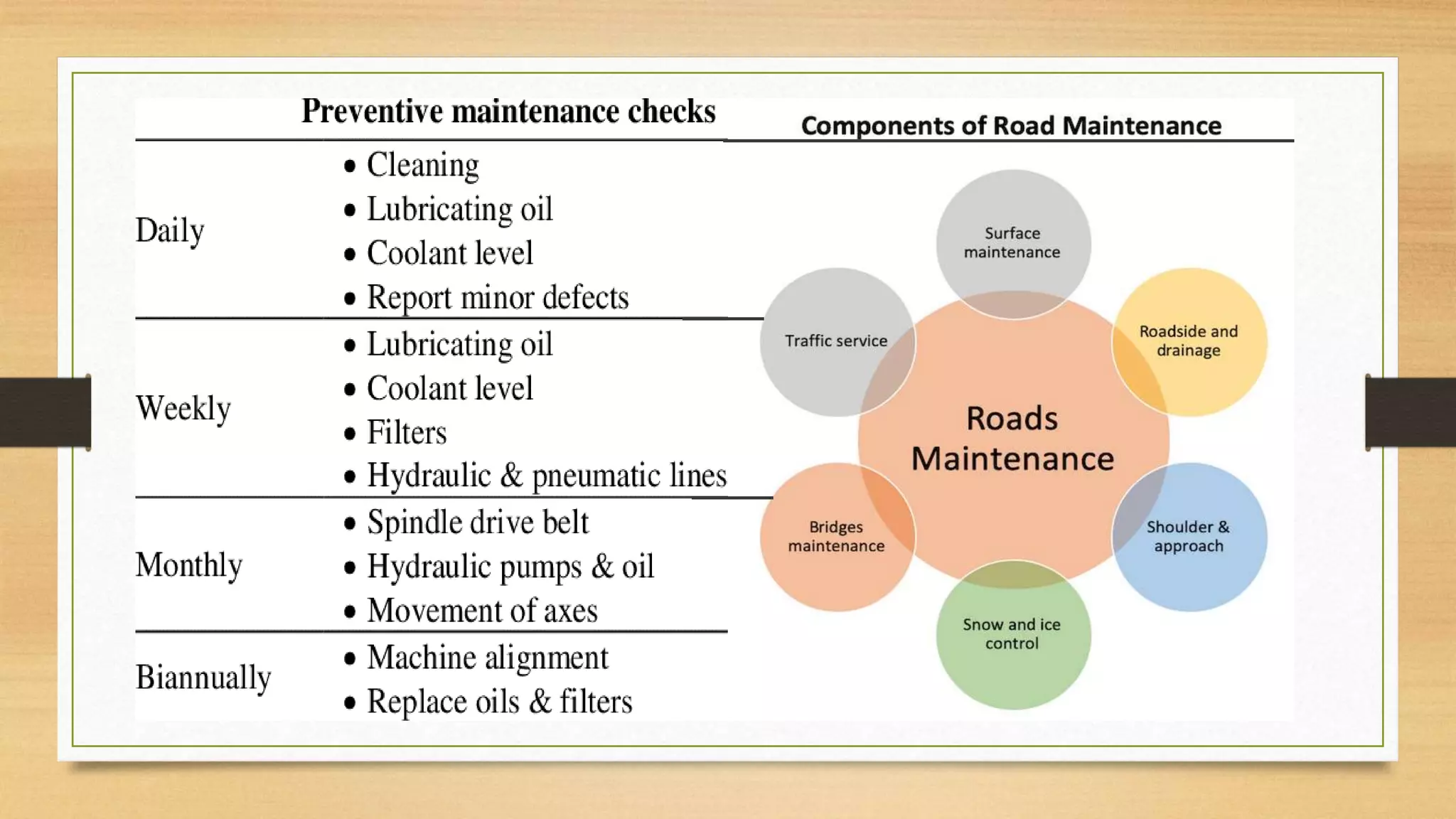
Preventive maintenance
Remedial maintenance
Emergency maintenance
Advanced maintained highway engineering

Advanced maintained highway engineering

  • 1.
    ADVANCED MAINTAINED HIGHWAY ENGINEERING NAME: PATEL DHRUV J ID NO. : D18CL124 DIV : 2 BRANCH : CIVIL SUBJECT : TRANSPORTATION ENGINEERING – I
  • 2.
    INTRODUCTION The idea ofautomated driving dates back to almost 50 years ago when General Motors (GM) presented a vision of driverless vehicles under automated control at the 1939 World fairs in New York. In the 1950’s research by industrial organizations conceptualized automated vehicles controlled by mechanical systems and radio controls. After the first appearance of the computers in the 1960’s, researchers began to consider the potential use of computers to provide lateral and longitudinal control and traffic management. The fully automated highway concept was initially examined by GM with sponsorship from the US department of Transportation (DOT) in the late1970’s.
  • 3.
    During these times,focus was laid on automated vehicles on a highway as computers were not powerful enough to consider a complete fully automated highway system. Advances in the computing technologies, micro-electronics and sensors in the 1980’s provoked commercial interest in the technologies that might enhance driver capability and perception and both private and public researchers examined partially automated products and services. Among others, the University of California Partners in Advanced Transport and Highways (PATH) has carried out significant research and development in the field of highway automation since the 1980’s. As various transportation technologies emerged that could assist driving on one hand and also traffic efficiency on the other, interest in fully automated driving or integrated auto-highway technologies grew once again.
  • 4.
    With the passageof the 1991 Intermodal Surface Transport Efficiency Act (ISTEA), efforts were on early prototype development and testing of fully automated vehicles and highways. Research continues to this day though it is largely sketchy owing to the withdrawal of the financial support for the National Automated Highway Systems Research Programmed (NAHSRP) by the US Department of Transportation in the year 1997. Many studies conducted by the National Automated Highway Systems Consortium (NAHSC) continue in partial way with a couple of federal programmers like the Intelligent Vehicle Initiative (IVI) with more focus on a nearer-term horizon.
  • 5.
    Highway Maintenance ManagementSystem Common Problems in Highway Roads: Potholes Pavement Unevenness Ravelling Rutting Slippage Cracking Alligator Cracking Reflective Cracking Shrinkage Cracking
  • 6.
    Common Problems inHighway Roads
  • 10.
    Highway Maintenance ManagementSystem Highway maintenance has the following objectives: The repair of the functional pavement defects. Prolonging the functional and structural life of the pavement. Maintaining road safety and signage. Keeping the road reserve in an acceptable condition. Types of Highway Maintenance: Preventive maintenance Remedial maintenance Emergency maintenance