METHODS OF
CAKE-MAKING
Prepared by: Maria Merllan Estrellante Mier
METHODS OF CAKE-MAKING
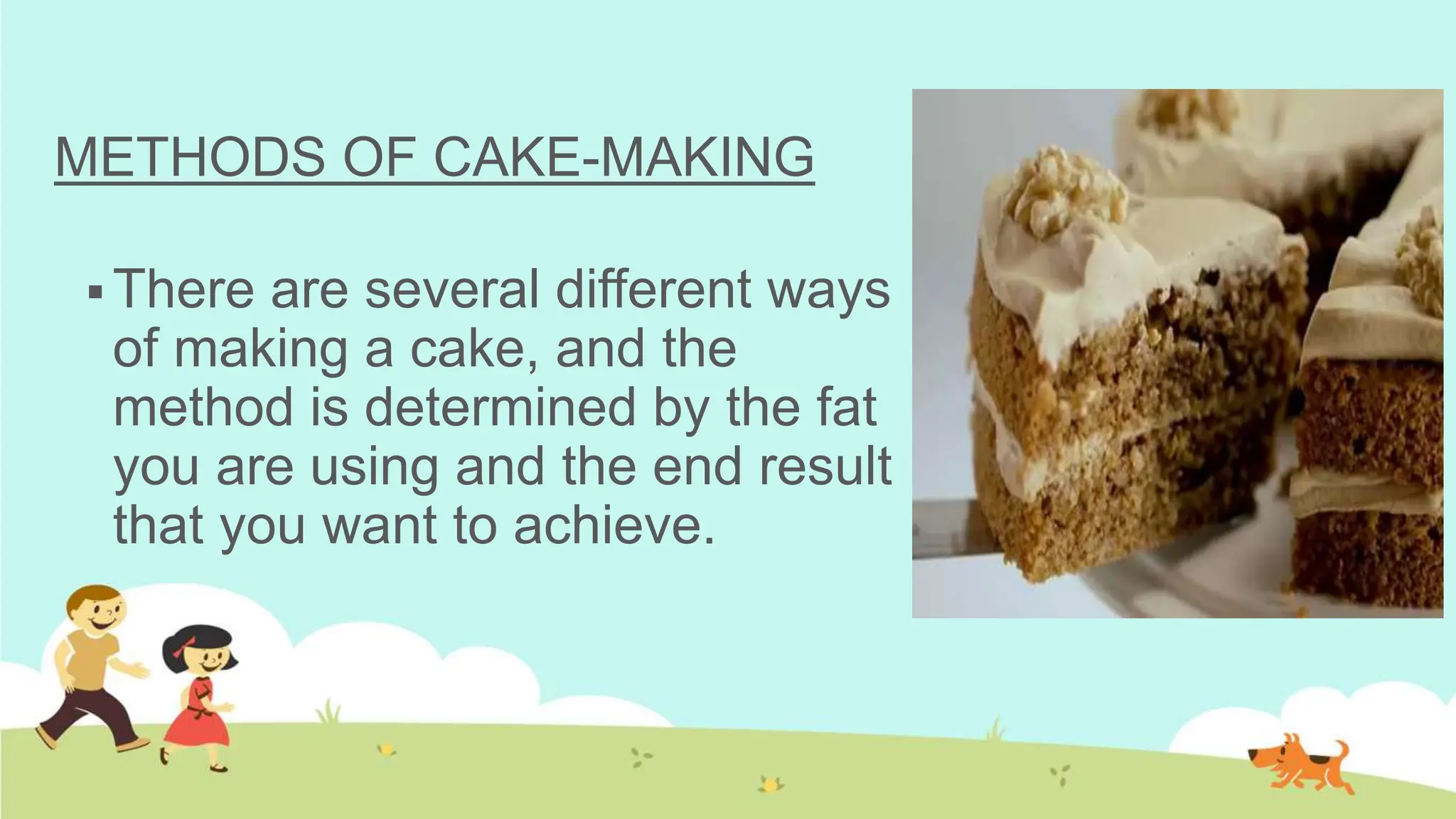
 There are several different ways
of making a cake, and the
method is determined by the fat
you are using and the end result
that you want to achieve.
CREAMING
 This is the term used when a cake is made
with butter or block margarine (soft or
whipped margarine is unsuitable). It means
that the fat and sugar are beaten together
until creamy and pale: the eggs are then
beaten into this mixture bit by bit.
CREAMING METHOD
RUBBING-IN
 A cake made by this method starts off
with the fat being rubbed into the
flour – exactly the same as for short-
crust pastry. Butter, block margarine,
and lard can all be used. It is a very
easy method.
RUBBING-IN METHOD
BOIL-AND-BAKE
 In recipes of this kind, the fat and liquid are
boiled together before the flour is added.
Again, a very straightforward method.
ALL-IN-ONE
Exactly as the name suggests, these
cakes are mixed all in one go. All the
ingredients go into the bowl together
and the mixing is done in seconds. Soft
margarine is tailor-made for this
method.
ALL-IN-ONE METHOD
6 Different Types of
Icing for your Cake
 The proverbial ‘Icing on the Cake’ gets
even better when there are 6 different
ways of professional cake decoration
by which you can add visual and
toothsome pleasure to your freshly
baked delicious cake.
 Whether it be creating an artistic-looking
cake for an occasion or simply a dessert
to finish a special meal or something
that you would indulge in only to satiate
those cravings, a cake does not seem
complete without the icing over it. Here
are the most well-liked kinds of icing that
you can use to finish your cakes.
1. Butter Cream
 is softer and more spreadable than most icing and is the
preferred choice for taste and flexibility. It can be used as
a filling inside cakes and also as a coating for decoration.
It is made by creaming together sugar and butter or other
fats like lard or margarine.
1. Butter Cream
The quality of the fat used will affect the taste,
consistency, and appearance of the cream
frosting, as also the temperature at which the
butter is whipped. Add a burst of flavour with
vanilla extract. The cream melts easily in hot
weather and so must be kept chilled to keep its
form.
2. Whipped Cream
 If lighter frosting is what you need then whipped
cream is the answer. Often called Chantilly cream or
crème Chantilly, it is made by cold-whipping together
heavy cream and sugar till light and fluffy. You could
also add or use meringue powder for stability.
Enhance your cake’s taste by adding flavours to the
cream.
3. Royal Icing
Traditionally used to cover and decorate dense
fruit cakes, Royal icing is a pure white and fluid
paste that solidifies into a hard outer shell on
drying. Made by beating together egg whites,
icing sugar, and lime juice, it looks smooth,
hard, and matte when dry.
3. Royal Icing
Some may use meringue powder instead of
egg whites because of the risk of salmonella
when using raw egg whites. Glycerine is
often added to prevent the icing from setting
too hard. It is easily dyeable using edible
food colourings.
4. Cream Cheese Frosting
Cream cheese frosting is perfect for carrot cakes,
cupcakes, red velvet cake, as a filling for
doughnuts, and well just about any kind of pastry
with all that creamy and cheesy deliciousness.
4. Cream Cheese Frosting
It comes together quickly by creaming
together part buttercream frosting and a good
quality cream cheese. A bit heavier than most
types of cake icing, the texture and taste are
best when made with high-fat cream cheese.
5. Meringue
This very light & frothy icing is made by beating
together egg whites, cold water, and
granulated sugar. The technique of introducing
air to the mixture gives it a foamy consistency.
The added sugar stiffens the foam.
 It can be plain or flavoured and with nuts
added to it. There are 3 popular varieties of
meringue – French, Italian, and Swiss. The
difference lies in the methods of beating the
eggs. Uncooked meringue can be used as
pastry toppings, or it can be baked until
crisp and eaten like cookies.
5. Meringue
6. Fondant
 Fondant is a popular heavy frosting that
can be easily sculpted and is used mainly
for celebration cakes. Basic fondant
ingredients include water, gelatine,
glycerine, water, sugar (icing or castor
sugar), and shortening.
 Some use marshmallows in place of
gelatine and glycerine. The ideal texture is
a fondant that can be stretched without
tearing. It can be worked into different
shapes using carving and decorating
tools.
6. Fondant
 THANK YOU 
-ma’am Lyn

Advance Baking 8 (methods cake).pptx

  • 1.
    METHODS OF CAKE-MAKING Prepared by:Maria Merllan Estrellante Mier
  • 2.
    METHODS OF CAKE-MAKING There are several different ways of making a cake, and the method is determined by the fat you are using and the end result that you want to achieve.
  • 3.
    CREAMING  This isthe term used when a cake is made with butter or block margarine (soft or whipped margarine is unsuitable). It means that the fat and sugar are beaten together until creamy and pale: the eggs are then beaten into this mixture bit by bit.
  • 4.
  • 5.
    RUBBING-IN  A cakemade by this method starts off with the fat being rubbed into the flour – exactly the same as for short- crust pastry. Butter, block margarine, and lard can all be used. It is a very easy method.
  • 6.
  • 7.
    BOIL-AND-BAKE  In recipesof this kind, the fat and liquid are boiled together before the flour is added. Again, a very straightforward method.
  • 8.
    ALL-IN-ONE Exactly as thename suggests, these cakes are mixed all in one go. All the ingredients go into the bowl together and the mixing is done in seconds. Soft margarine is tailor-made for this method.
  • 9.
  • 10.
    6 Different Typesof Icing for your Cake
  • 11.
     The proverbial‘Icing on the Cake’ gets even better when there are 6 different ways of professional cake decoration by which you can add visual and toothsome pleasure to your freshly baked delicious cake.
  • 12.
     Whether itbe creating an artistic-looking cake for an occasion or simply a dessert to finish a special meal or something that you would indulge in only to satiate those cravings, a cake does not seem complete without the icing over it. Here are the most well-liked kinds of icing that you can use to finish your cakes.
  • 13.
    1. Butter Cream is softer and more spreadable than most icing and is the preferred choice for taste and flexibility. It can be used as a filling inside cakes and also as a coating for decoration. It is made by creaming together sugar and butter or other fats like lard or margarine.
  • 14.
    1. Butter Cream Thequality of the fat used will affect the taste, consistency, and appearance of the cream frosting, as also the temperature at which the butter is whipped. Add a burst of flavour with vanilla extract. The cream melts easily in hot weather and so must be kept chilled to keep its form.
  • 15.
    2. Whipped Cream If lighter frosting is what you need then whipped cream is the answer. Often called Chantilly cream or crème Chantilly, it is made by cold-whipping together heavy cream and sugar till light and fluffy. You could also add or use meringue powder for stability. Enhance your cake’s taste by adding flavours to the cream.
  • 16.
    3. Royal Icing Traditionallyused to cover and decorate dense fruit cakes, Royal icing is a pure white and fluid paste that solidifies into a hard outer shell on drying. Made by beating together egg whites, icing sugar, and lime juice, it looks smooth, hard, and matte when dry.
  • 17.
    3. Royal Icing Somemay use meringue powder instead of egg whites because of the risk of salmonella when using raw egg whites. Glycerine is often added to prevent the icing from setting too hard. It is easily dyeable using edible food colourings.
  • 18.
    4. Cream CheeseFrosting Cream cheese frosting is perfect for carrot cakes, cupcakes, red velvet cake, as a filling for doughnuts, and well just about any kind of pastry with all that creamy and cheesy deliciousness.
  • 19.
    4. Cream CheeseFrosting It comes together quickly by creaming together part buttercream frosting and a good quality cream cheese. A bit heavier than most types of cake icing, the texture and taste are best when made with high-fat cream cheese.
  • 20.
    5. Meringue This verylight & frothy icing is made by beating together egg whites, cold water, and granulated sugar. The technique of introducing air to the mixture gives it a foamy consistency. The added sugar stiffens the foam.
  • 21.
     It canbe plain or flavoured and with nuts added to it. There are 3 popular varieties of meringue – French, Italian, and Swiss. The difference lies in the methods of beating the eggs. Uncooked meringue can be used as pastry toppings, or it can be baked until crisp and eaten like cookies. 5. Meringue
  • 22.
    6. Fondant  Fondantis a popular heavy frosting that can be easily sculpted and is used mainly for celebration cakes. Basic fondant ingredients include water, gelatine, glycerine, water, sugar (icing or castor sugar), and shortening.
  • 23.
     Some usemarshmallows in place of gelatine and glycerine. The ideal texture is a fondant that can be stretched without tearing. It can be worked into different shapes using carving and decorating tools. 6. Fondant
  • 24.
     THANK YOU -ma’am Lyn