ADOLESCENCE
BETWEEN
CHILDHOOD and
ADULTHOOD
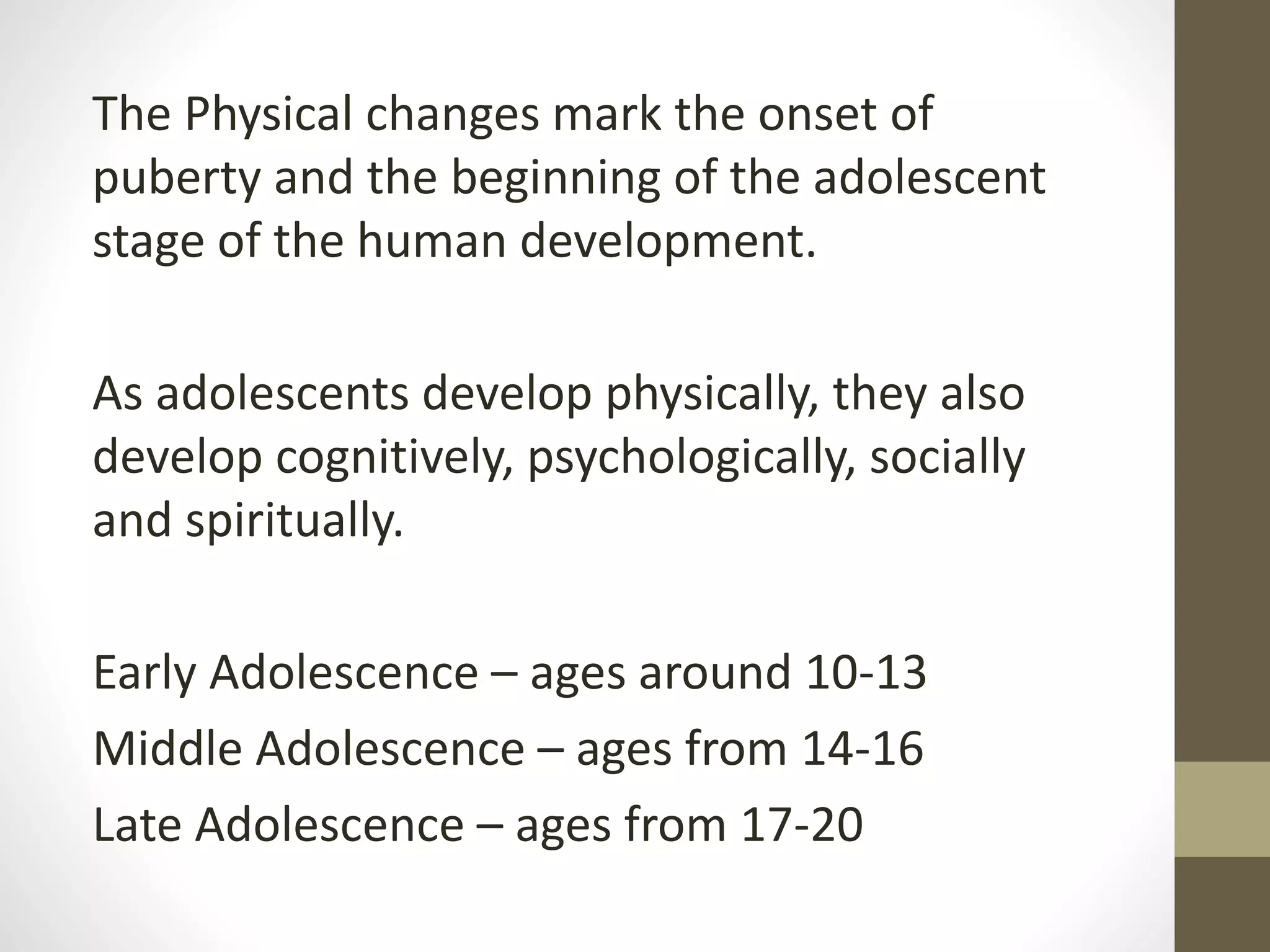
The Physical changes mark the onset of
puberty and the beginning of the adolescent
stage of the human development.
As adolescents develop physically, they also
develop cognitively, psychologically, socially
and spiritually.
Early Adolescence – ages around 10-13
Middle Adolescence – ages from 14-16
Late Adolescence – ages from 17-20
This age definition of adolescence is not a cut and
dried rule as some persons mature ahead of
others or some experience delayed maturity due
t5o any factors like genetics, environment or even
economic conditions.
Erick Erickson’s Eight stages of personality
development define each stage of human
development with a crisis or a conflict. Each crisis
or conflict either gets resolve or may be left
unresolved, resulting in favorable or unfavorable
outcomes.
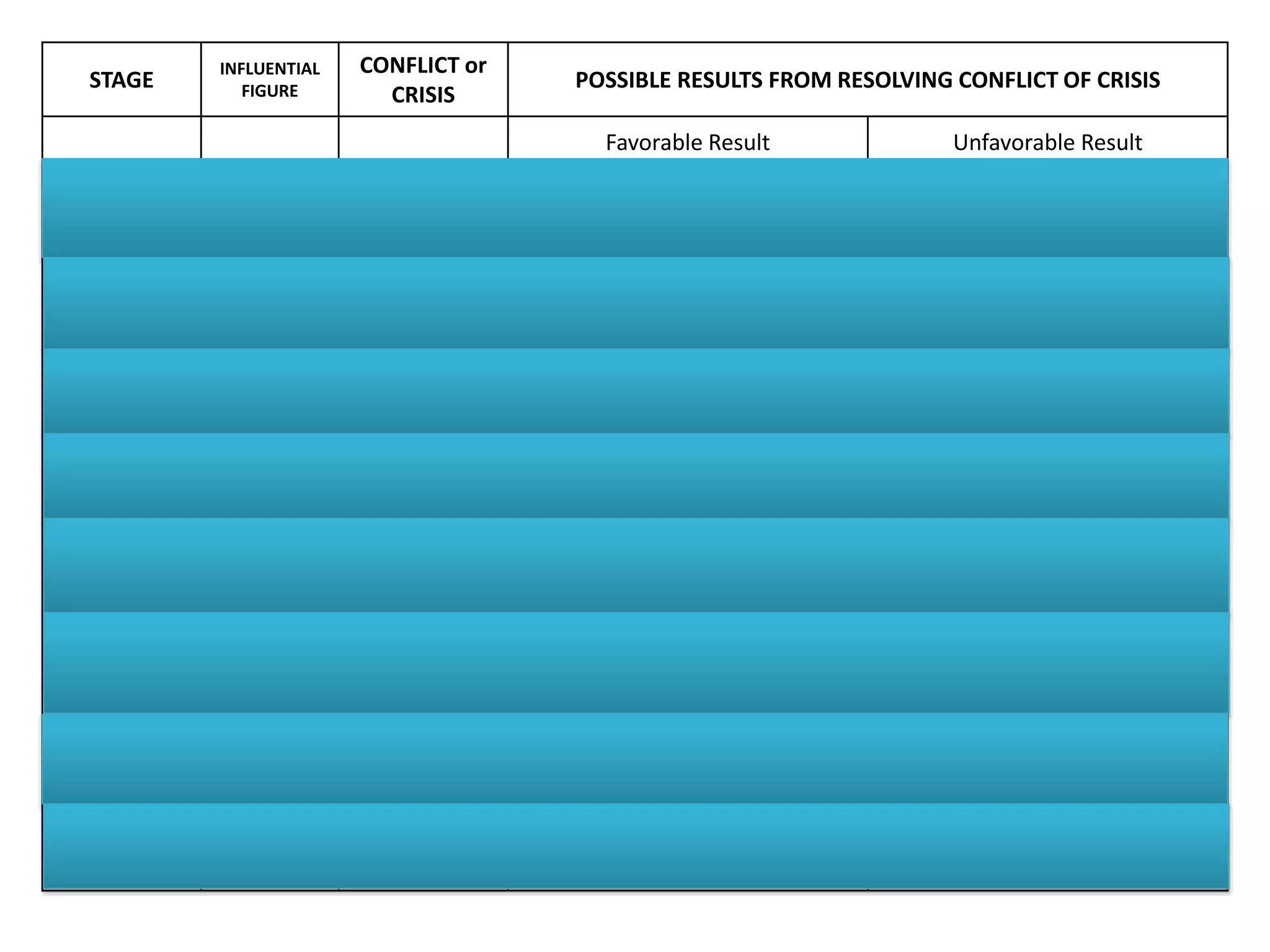
Choose a partner and fill in the
necessary information for the
chosen STAGE of Development.
After completing the
information about the chosen
stage, discuss it in the class.
STAGE
INFLUENTIAL
FIGURE
CONFLICT
or CRISIS
POSSIBLE RESULTS FROM RESOLVING CONFLICT OF CRISIS
Favorable Result Unfavorable Result
Infancy
Early
Childhood
Late
Childhood
School Age
Adolescence
Young
Adulthood
Adulthood
Maturity
STAGE
INFLUENTIAL
FIGURE
CONFLICT or
CRISIS
POSSIBLE RESULTS FROM RESOLVING CONFLICT OF CRISIS
Favorable Result Unfavorable Result
Infancy Parents
Thrust
vs
Mistrust
Being able to trust others when primary
caregiver (usually mother) provide caring,
attention and love.
Mistrusting others, withdrawal or
estrangement.
Early
Childhood
Parents
Autonomy
vs
Shame & Doubt
Develops self-control and physical skills
and sense of independence without losing
self –esteem
Compulsive self-restraint or compliance.
Willfulness and defiance. Failure will result
in feelings of shame and doubt
Late
Childhood
Parents &
Teachers
Initiative vs Guilt
Learns that being assertive using power
and being purposeful can influence their
environment.
When using too much power and control,
might experience disapproval resulting in
lack of self confidence and sense of guilt
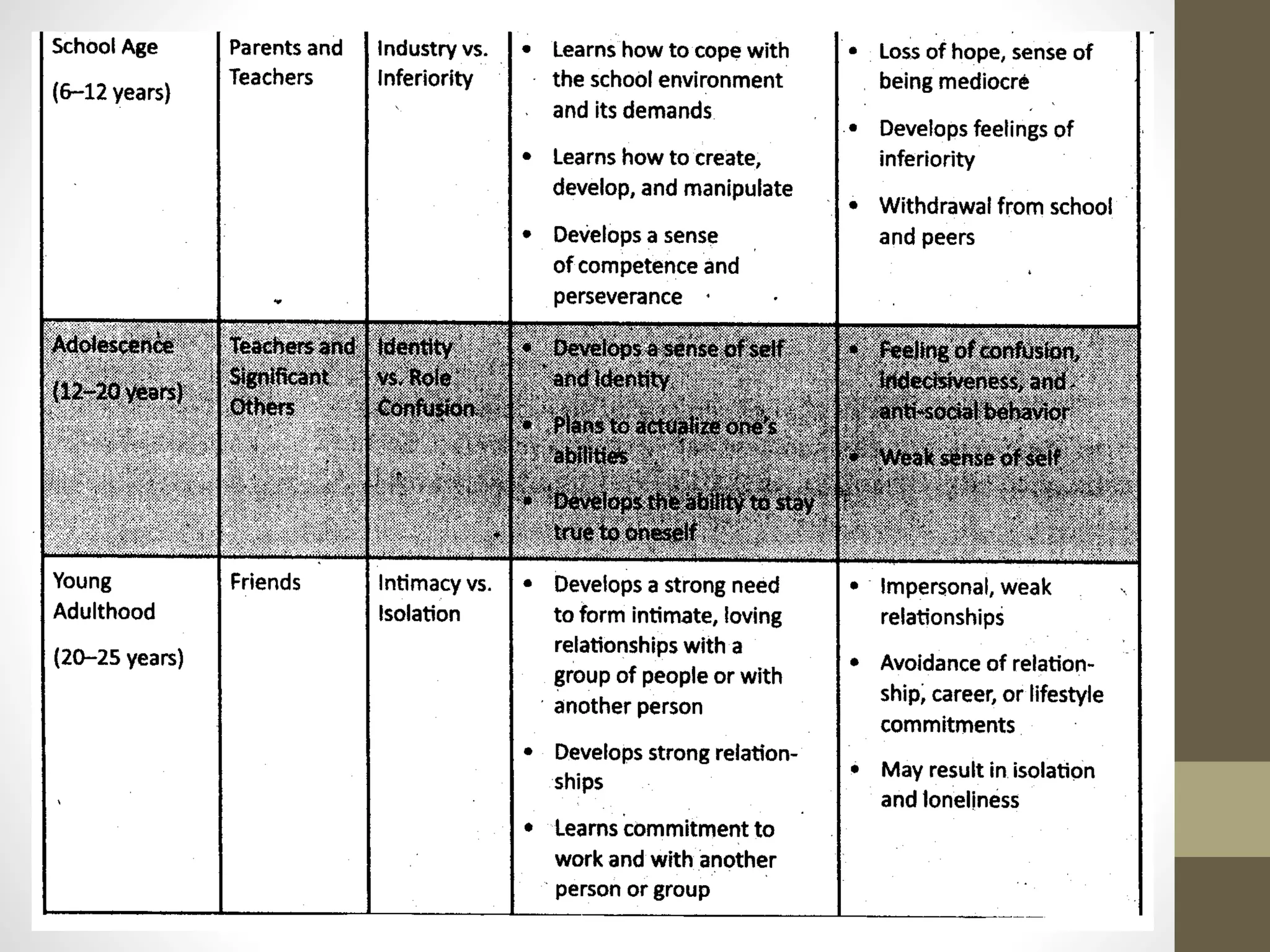
School Age
Teachers &
Significant
others
Industry
vs
Inferiority
Learns how to cope with the school
environment and its demands
Loss of hope, sense of being mediocre
Develops feelings of inferiority.
Withdrawal from school and peers.
Adolescence Friends
Identity
vs
Role Confusion
Develops a sense of self identity. Plans to
actualize one’s abilities.
Feeling of confusion, indecisiveness and anti
social behavior. Weak sense of self.
Young
Adulthood
Community
Intimacy
vs
Isolation
Develops a strong need to form intimate,
loving relationships with a group of
people or with another person
Impersonal, weak relationship. Avoidance of
relationship, career or lifestyle
commitments. May result in isolation and
loneliness
Adulthood Community
Generativity
vs
Stagnation
Creates or nurtures things that will outlast
the, either by having children or creating a
positive change that benefits others
Self indulgence, self concern or lack of
interests and commitments. Shallow
involvement in the world, pessimism.
Maturity Community
Integrity
vs
Despair
Sense of fulfillment as one looks back in
one’s life and develops feeling of wisdom
Sense of loss, contempt for others May
result in regret, bitterness and despair.

Adolescence Between Childhood and Adulthood

  • 1.
  • 2.
    The Physical changesmark the onset of puberty and the beginning of the adolescent stage of the human development. As adolescents develop physically, they also develop cognitively, psychologically, socially and spiritually. Early Adolescence – ages around 10-13 Middle Adolescence – ages from 14-16 Late Adolescence – ages from 17-20
  • 3.
    This age definitionof adolescence is not a cut and dried rule as some persons mature ahead of others or some experience delayed maturity due t5o any factors like genetics, environment or even economic conditions. Erick Erickson’s Eight stages of personality development define each stage of human development with a crisis or a conflict. Each crisis or conflict either gets resolve or may be left unresolved, resulting in favorable or unfavorable outcomes.
  • 8.
    Choose a partnerand fill in the necessary information for the chosen STAGE of Development. After completing the information about the chosen stage, discuss it in the class.
  • 9.
    STAGE INFLUENTIAL FIGURE CONFLICT or CRISIS POSSIBLE RESULTSFROM RESOLVING CONFLICT OF CRISIS Favorable Result Unfavorable Result Infancy Early Childhood Late Childhood School Age Adolescence Young Adulthood Adulthood Maturity
  • 11.
    STAGE INFLUENTIAL FIGURE CONFLICT or CRISIS POSSIBLE RESULTSFROM RESOLVING CONFLICT OF CRISIS Favorable Result Unfavorable Result Infancy Parents Thrust vs Mistrust Being able to trust others when primary caregiver (usually mother) provide caring, attention and love. Mistrusting others, withdrawal or estrangement. Early Childhood Parents Autonomy vs Shame & Doubt Develops self-control and physical skills and sense of independence without losing self –esteem Compulsive self-restraint or compliance. Willfulness and defiance. Failure will result in feelings of shame and doubt Late Childhood Parents & Teachers Initiative vs Guilt Learns that being assertive using power and being purposeful can influence their environment. When using too much power and control, might experience disapproval resulting in lack of self confidence and sense of guilt School Age Teachers & Significant others Industry vs Inferiority Learns how to cope with the school environment and its demands Loss of hope, sense of being mediocre Develops feelings of inferiority. Withdrawal from school and peers. Adolescence Friends Identity vs Role Confusion Develops a sense of self identity. Plans to actualize one’s abilities. Feeling of confusion, indecisiveness and anti social behavior. Weak sense of self. Young Adulthood Community Intimacy vs Isolation Develops a strong need to form intimate, loving relationships with a group of people or with another person Impersonal, weak relationship. Avoidance of relationship, career or lifestyle commitments. May result in isolation and loneliness Adulthood Community Generativity vs Stagnation Creates or nurtures things that will outlast the, either by having children or creating a positive change that benefits others Self indulgence, self concern or lack of interests and commitments. Shallow involvement in the world, pessimism. Maturity Community Integrity vs Despair Sense of fulfillment as one looks back in one’s life and develops feeling of wisdom Sense of loss, contempt for others May result in regret, bitterness and despair.