C O M PA R E A N D C O N T R A S T T H E
A D D I E M O D E L
T O D I C K A N D C A R E Y M O D E L .
BY: WENDY WOODWARD
HRD 647 INSTRUCTIONAL DESIGN
NOVEMBER 6, 2022
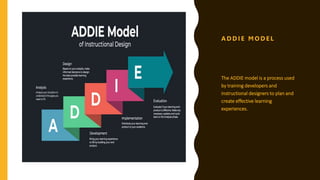
The ADDIE model is a process used
by training developers and
instructional designers to plan and
create effective learning
experiences.
A D D I E M O D E L
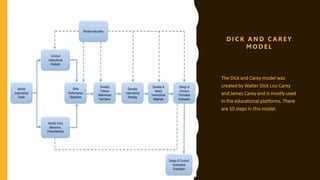
The Dick and Carey model was
created by Walter Dick Lou Carey
and James Carey and is mostly used
in the educational platforms. There
are 10 steps in this model.
D I C K A N D C A R E Y
M O D E L
Uses a systematic approach.
All stages must be completed
in the order it is presented.
Analysis is completed in the
beginning.
They both have an evaluation
stage at end.
These models were both
developed in the 1970s.
Similarities
in both
models
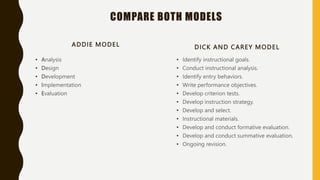
COMPARE BOTH MODELS
ADDIE MODEL
• Analysis
• Design
• Development
• Implementation
• Evaluation
DICK AND CAREY MODEL
• Identify instructional goals.
• Conduct instructional analysis.
• Identify entry behaviors.
• Write performance objectives.
• Develop criterion tests.
• Develop instruction strategy.
• Develop and select.
• Instructional materials.
• Develop and conduct formative evaluation.
• Develop and conduct summative evaluation.
• Ongoing revision.
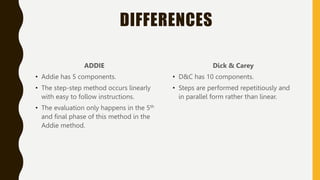
DIFFERENCES
ADDIE
• Addie has 5 components.
• The step-step method occurs linearly
with easy to follow instructions.
• The evaluation only happens in the 5th
and final phase of this method in the
Addie method.
Dick & Carey
• D&C has 10 components.
• Steps are performed repetitiously and
in parallel form rather than linear.
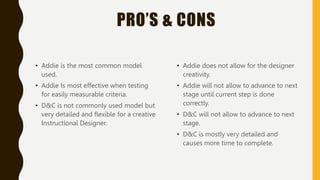
PRO’S & CONS
• Addie is the most common model
used.
• Addie Is most effective when testing
for easily measurable criteria.
• D&C is not commonly used model but
very detailed and flexible for a creative
Instructional Designer.
• Addie does not allow for the designer
creativity.
• Addie will not allow to advance to next
stage until current step is done
correctly.
• D&C will not allow to advance to next
stage.
• D&C is mostly very detailed and
causes more time to complete.
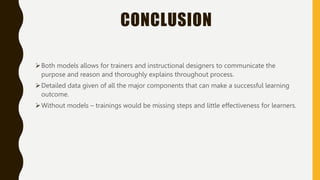
CONCLUSION
Both models allows for trainers and instructional designers to communicate the
purpose and reason and thoroughly explains throughout process.
Detailed data given of all the major components that can make a successful learning
outcome.
Without models – trainings would be missing steps and little effectiveness for learners.
REFERENCES:
Napa, Paula. (2022). The ADDIE Model: Understanding the 5 Steps. Northpass.com.
https://www.northpass.com/blog/understanding-the-addie-model-and-how-you-can-improve-learning-outcomes
Dick, W., & Carley, L. (2000). The Systematic Design of Instruction. Glen view, IL: Scott, Foresman and Company.
Husain, S., (2014). Summary and Comparison: ADDIE vs. Dick & Carey Model.
http://sarwathusain.weebly.com

ADDIE & Dick Carey Model Presentation.pptx

  • 1.
    C O MPA R E A N D C O N T R A S T T H E A D D I E M O D E L T O D I C K A N D C A R E Y M O D E L . BY: WENDY WOODWARD HRD 647 INSTRUCTIONAL DESIGN NOVEMBER 6, 2022
  • 2.
    The ADDIE modelis a process used by training developers and instructional designers to plan and create effective learning experiences. A D D I E M O D E L
  • 3.
    The Dick andCarey model was created by Walter Dick Lou Carey and James Carey and is mostly used in the educational platforms. There are 10 steps in this model. D I C K A N D C A R E Y M O D E L
  • 4.
    Uses a systematicapproach. All stages must be completed in the order it is presented. Analysis is completed in the beginning. They both have an evaluation stage at end. These models were both developed in the 1970s. Similarities in both models
  • 5.
    COMPARE BOTH MODELS ADDIEMODEL • Analysis • Design • Development • Implementation • Evaluation DICK AND CAREY MODEL • Identify instructional goals. • Conduct instructional analysis. • Identify entry behaviors. • Write performance objectives. • Develop criterion tests. • Develop instruction strategy. • Develop and select. • Instructional materials. • Develop and conduct formative evaluation. • Develop and conduct summative evaluation. • Ongoing revision.
  • 6.
    DIFFERENCES ADDIE • Addie has5 components. • The step-step method occurs linearly with easy to follow instructions. • The evaluation only happens in the 5th and final phase of this method in the Addie method. Dick & Carey • D&C has 10 components. • Steps are performed repetitiously and in parallel form rather than linear.
  • 7.
    PRO’S & CONS •Addie is the most common model used. • Addie Is most effective when testing for easily measurable criteria. • D&C is not commonly used model but very detailed and flexible for a creative Instructional Designer. • Addie does not allow for the designer creativity. • Addie will not allow to advance to next stage until current step is done correctly. • D&C will not allow to advance to next stage. • D&C is mostly very detailed and causes more time to complete.
  • 8.
    CONCLUSION Both models allowsfor trainers and instructional designers to communicate the purpose and reason and thoroughly explains throughout process. Detailed data given of all the major components that can make a successful learning outcome. Without models – trainings would be missing steps and little effectiveness for learners.
  • 9.
    REFERENCES: Napa, Paula. (2022).The ADDIE Model: Understanding the 5 Steps. Northpass.com. https://www.northpass.com/blog/understanding-the-addie-model-and-how-you-can-improve-learning-outcomes Dick, W., & Carley, L. (2000). The Systematic Design of Instruction. Glen view, IL: Scott, Foresman and Company. Husain, S., (2014). Summary and Comparison: ADDIE vs. Dick & Carey Model. http://sarwathusain.weebly.com