A
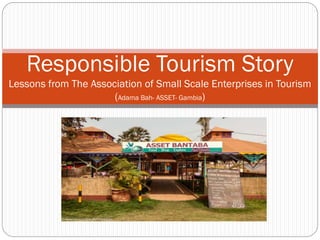
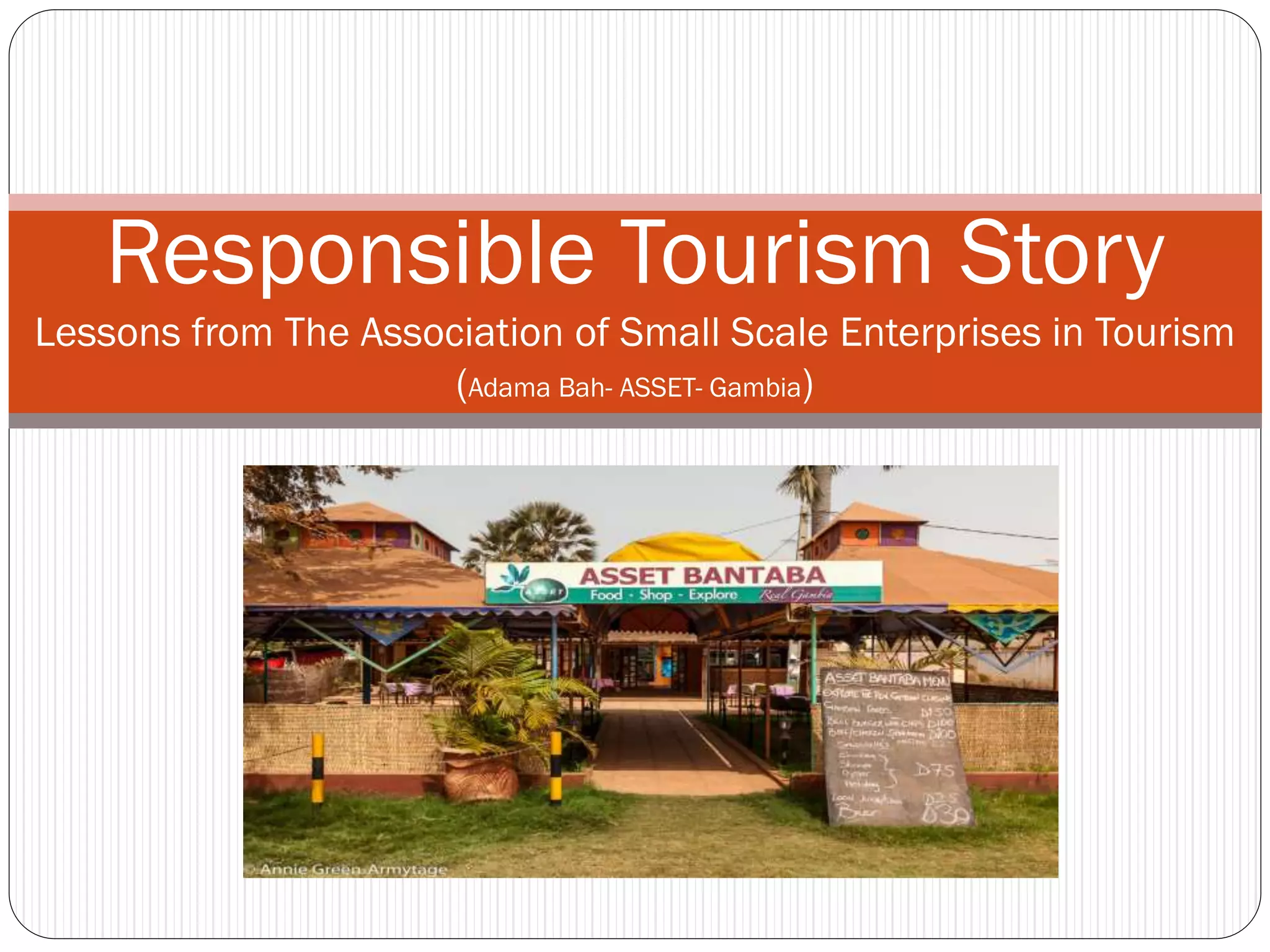
Responsible Tourism Story
Lessons from The Association of Small Scale Enterprises in Tourism
(Adama Bah- ASSET- Gambia)
Tourism and In-Dependence
 1965- self rule from Empire-
“Independence”
 1965- Investor in tourism 300
tourists
 1970 Republican status
 1972-White paper on tourism
 Tourism seen as the “black
gold”
 40 Km of beach
Impact?
 Increased debt
burden-infrastructure
 Women rice and
vegetable growers
affected
 Fisherpersons affected
 Communities not
compensated for lost
of community land
 Cluster development
 “Bendula” Meeting
concept
 Informal sector
businesses created
 Women participation
in cash trade-
 Traditional Craft -cast
system
1980s Financial Crises!
 Poverty increased;
 inflation accelerated;
 real per capita income declined;
 agricultural production failed;
 shortages of basic commodities
(fuel, rice, etc)
 creditworthiness declined -
donors suspended all aid except
for humanitarian assistance.
1985- ERP
 Workers in the public sector
made redundant
 Foreign currency float – no
fixed rate
 Agricultural subsidies
cancelled
 Government divestiture
programme started with
more redundancy
RESULT
More
dependence
onTourism
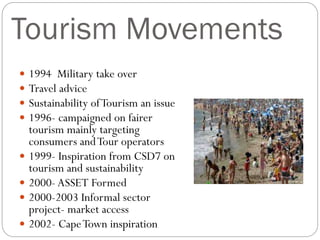
Tourism Movements
 1994 Military take over
 Travel advice
 Sustainability ofTourism an issue
 1996- campaigned on fairer
tourism mainly targeting
consumers andTour operators
 1999- Inspiration from CSD7 on
tourism and sustainability
 2000- ASSET Formed
 2000-2003 Informal sector
project- market access
 2002- CapeTown inspiration
Agenda for Change
2000 informal sector
project….
 Conflicts of interests?
 How can the poor better
access the market?
 How can linkages be
improved?
 Training/licensing/insurance
requirements
 Formal sector participation
 Informal/small enterprises
respect
Inspiration: Cape Town Declaration 2002
GTA Directors attended and got Inspired
 Minimises negative environmental,social and cultural impacts;
 Generates greater economic benefits for local people and enhances the wellbeing of
host communities,by improving working conditions and access to the industry;
 involves local people in decisions that affect their lives and life chances.
 makes positive contributions to the conservation of natural and cultural heritage and
to the maintenance of the world’s diversity;
 provides more enjoyable experiences for tourists through more meaningful
connections with local people, and a greater understanding of local cultural and
environmental issues;
 provides access for physically challenged people;
 and is culturally sensitive and engenders respect between tourists and hosts.
2004 BLUE PRINT: Creating
Responsible Tourism Policy
What we wanted to achieve….
 Demonstrate stakeholder responsible behavior – by assuring
compliance and sustainability.
 Comply with ethical business principles, national laws and
international norms.
 Commit to human rights, employee rights, environmental
protection, community involvement, stakeholder rights, right to
access etc. and monitoring.
 Implement Stakeholder Responsibility on 3’ple bottom lines:
environmentally sound, socially just and economically viable for a
better future.
 Market for a better unique destination not just for the numbers
Communities as genuine stakeholders
Contributions towards making tourism possible
 Tourism as an investment to make development possible for
people
 Development plans and external debt burden
 Economic: Direct and indirect taxes impact on people’s
poverty
 Cultural: Sell people’s cultural attributes
 Environment: For people to protect the environment provide
alternatives in tourism
 Therefore not for charity but positive development
Taking Responsibility…….
What it means to us?
 Beyond “greenwashing” to measurable positive CHANGE
 Take Responsibility: NO outsourcing
 Not small vs. big- Everyone takes responsibility
 Commitment to ethical principles ie addressing social issues
and poverty seriously not just for the money or the
environment.
 Should include the right to say “Yes” or “No” to tourism-
consultation
 Commitment for creating consumer awareness
 Making available resources to implement RT projects;
 Staff training (capacity building);
 Consultation /Collaboration between stakeholders;
 Social and Environmental monitoring and evaluation to
determine progress.
Responsibility: Benefit communities and SMEs
Gambian Situation…
 ASSET – training, product design &
development, marketing etc..
 Government: 2011Tourism
Regulations ratified.
 Government legislated the fruit
vendors, local guides, juice pressers,
craft market vendors and tourists taxi
drivers as formal businesses.
 Government- Schedule B ground
operational license introduced for
small operators
 Tour operators, Hotels –Travel
Foundation
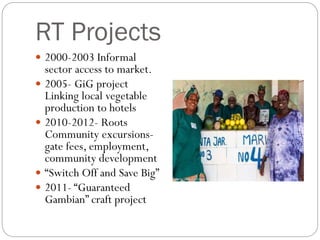
RT Projects
 2000-2003 Informal
sector access to market.
 2005- GiG project
Linking local vegetable
production to hotels
 2010-2012- Roots
Community excursions-
gate fees, employment,
community development
 “Switch Off and Save Big”
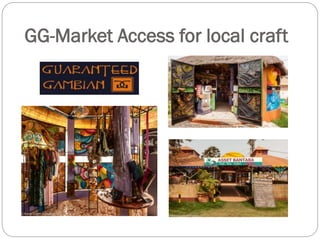
 2011- “Guaranteed
Gambian” craft project
GG-Market Access for local craft
RT Project implementation…
Achievements Challenges
 Motivated and dedicated
individuals can make it happen
 Participation of government and
tour operators
 Stakeholder’s support
 Mass tourism can make bigger
impacts in terms of economic
returns-proper linkages
 Use of Bottom up and top down
approaches
 Awareness of RT Issues
 Changing dynamics of tourism
 Traditions vs Entrepreneurship
drive
 Access to market for the poor
 Government regulations slow
 Constant monitoring
 Provide subsidies “in transition” –
for the poor
 Short term nature of projects-
cultural shift of beneficiaries not
taken into consideration.
 Exit strategy – who takes over
when beneficiaries are “not ready”
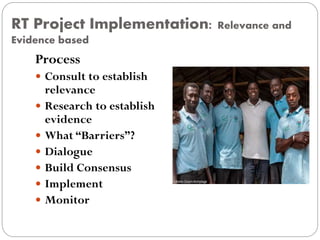
RT Project Implementation: Relevance and
Evidence based
Process
 Consult to establish
relevance
 Research to establish
evidence
 What “Barriers”?
 Dialogue
 Build Consensus
 Implement
 Monitor
RT Lessons…
RESPONSIBLE TOURISM
PARTNERSHIP
Not just a worthy cause but
good business!
POLICY
 Influence from CapeTown
RT Conference and
declaration in 2002
 RT Policy of the Gambia
done and presented at the
WorldTravel Market in
2004
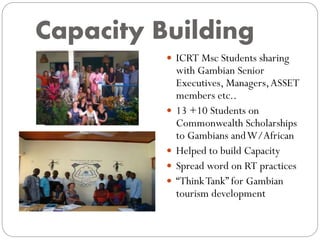
Capacity Building
 ICRT Msc Students sharing
with Gambian Senior
Executives, Managers,ASSET
members etc..
 13 +10 Students on
Commonwealth Scholarships
to Gambians andW/African
 Helped to build Capacity
 Spread word on RT practices
 “ThinkTank” for Gambian
tourism development
Irresponsible Tourism:
Take Action!
:- RTP/ASSET/GTA worked with Child Protection Alliance-CPA -to train stakeholderCode of C on Child Sex Tourism signed and dispmany
hoteIssued by GTA
 ASSET/GTB worked with Child Protection
Alliance-CPA -to train stakeholders
 Code of Conduct on Child SexTourism
signed and displayed by many hotels
 Tourism offensesAct (2003)
 Electronic signboard mounted at the Banjul
International Airport.
Child SexTourism is an Issue
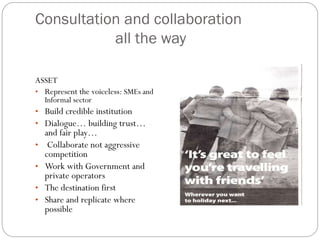
Consultation and collaboration
all the way
ASSET
• Represent the voiceless: SMEs and
Informal sector
• Build credible institution
• Dialogue… building trust…
and fair play…
• Collaborate not aggressive
competition
• Work with Government and
private operators
• The destination first
• Share and replicate where
possible
Thank You!
www.therealgambia.org

Adama Bah - RTD11 2015

  • 1.
    A Responsible Tourism Story Lessonsfrom The Association of Small Scale Enterprises in Tourism (Adama Bah- ASSET- Gambia)
  • 2.
    Tourism and In-Dependence 1965- self rule from Empire- “Independence”  1965- Investor in tourism 300 tourists  1970 Republican status  1972-White paper on tourism  Tourism seen as the “black gold”  40 Km of beach
  • 3.
    Impact?  Increased debt burden-infrastructure Women rice and vegetable growers affected  Fisherpersons affected  Communities not compensated for lost of community land  Cluster development  “Bendula” Meeting concept  Informal sector businesses created  Women participation in cash trade-  Traditional Craft -cast system
  • 4.
    1980s Financial Crises! Poverty increased;  inflation accelerated;  real per capita income declined;  agricultural production failed;  shortages of basic commodities (fuel, rice, etc)  creditworthiness declined - donors suspended all aid except for humanitarian assistance.
  • 5.
    1985- ERP  Workersin the public sector made redundant  Foreign currency float – no fixed rate  Agricultural subsidies cancelled  Government divestiture programme started with more redundancy RESULT More dependence onTourism
  • 6.
    Tourism Movements  1994Military take over  Travel advice  Sustainability ofTourism an issue  1996- campaigned on fairer tourism mainly targeting consumers andTour operators  1999- Inspiration from CSD7 on tourism and sustainability  2000- ASSET Formed  2000-2003 Informal sector project- market access  2002- CapeTown inspiration
  • 7.
    Agenda for Change 2000informal sector project….  Conflicts of interests?  How can the poor better access the market?  How can linkages be improved?  Training/licensing/insurance requirements  Formal sector participation  Informal/small enterprises respect
  • 8.
    Inspiration: Cape TownDeclaration 2002 GTA Directors attended and got Inspired  Minimises negative environmental,social and cultural impacts;  Generates greater economic benefits for local people and enhances the wellbeing of host communities,by improving working conditions and access to the industry;  involves local people in decisions that affect their lives and life chances.  makes positive contributions to the conservation of natural and cultural heritage and to the maintenance of the world’s diversity;  provides more enjoyable experiences for tourists through more meaningful connections with local people, and a greater understanding of local cultural and environmental issues;  provides access for physically challenged people;  and is culturally sensitive and engenders respect between tourists and hosts.
  • 9.
    2004 BLUE PRINT:Creating Responsible Tourism Policy What we wanted to achieve….  Demonstrate stakeholder responsible behavior – by assuring compliance and sustainability.  Comply with ethical business principles, national laws and international norms.  Commit to human rights, employee rights, environmental protection, community involvement, stakeholder rights, right to access etc. and monitoring.  Implement Stakeholder Responsibility on 3’ple bottom lines: environmentally sound, socially just and economically viable for a better future.  Market for a better unique destination not just for the numbers
  • 10.
    Communities as genuinestakeholders Contributions towards making tourism possible  Tourism as an investment to make development possible for people  Development plans and external debt burden  Economic: Direct and indirect taxes impact on people’s poverty  Cultural: Sell people’s cultural attributes  Environment: For people to protect the environment provide alternatives in tourism  Therefore not for charity but positive development
  • 11.
    Taking Responsibility……. What itmeans to us?  Beyond “greenwashing” to measurable positive CHANGE  Take Responsibility: NO outsourcing  Not small vs. big- Everyone takes responsibility  Commitment to ethical principles ie addressing social issues and poverty seriously not just for the money or the environment.  Should include the right to say “Yes” or “No” to tourism- consultation  Commitment for creating consumer awareness  Making available resources to implement RT projects;  Staff training (capacity building);  Consultation /Collaboration between stakeholders;  Social and Environmental monitoring and evaluation to determine progress.
  • 12.
    Responsibility: Benefit communitiesand SMEs Gambian Situation…  ASSET – training, product design & development, marketing etc..  Government: 2011Tourism Regulations ratified.  Government legislated the fruit vendors, local guides, juice pressers, craft market vendors and tourists taxi drivers as formal businesses.  Government- Schedule B ground operational license introduced for small operators  Tour operators, Hotels –Travel Foundation
  • 13.
    RT Projects  2000-2003Informal sector access to market.  2005- GiG project Linking local vegetable production to hotels  2010-2012- Roots Community excursions- gate fees, employment, community development  “Switch Off and Save Big”  2011- “Guaranteed Gambian” craft project
  • 14.
  • 15.
    RT Project implementation… AchievementsChallenges  Motivated and dedicated individuals can make it happen  Participation of government and tour operators  Stakeholder’s support  Mass tourism can make bigger impacts in terms of economic returns-proper linkages  Use of Bottom up and top down approaches  Awareness of RT Issues  Changing dynamics of tourism  Traditions vs Entrepreneurship drive  Access to market for the poor  Government regulations slow  Constant monitoring  Provide subsidies “in transition” – for the poor  Short term nature of projects- cultural shift of beneficiaries not taken into consideration.  Exit strategy – who takes over when beneficiaries are “not ready”
  • 16.
    RT Project Implementation:Relevance and Evidence based Process  Consult to establish relevance  Research to establish evidence  What “Barriers”?  Dialogue  Build Consensus  Implement  Monitor
  • 17.
    RT Lessons… RESPONSIBLE TOURISM PARTNERSHIP Notjust a worthy cause but good business! POLICY  Influence from CapeTown RT Conference and declaration in 2002  RT Policy of the Gambia done and presented at the WorldTravel Market in 2004
  • 18.
    Capacity Building  ICRTMsc Students sharing with Gambian Senior Executives, Managers,ASSET members etc..  13 +10 Students on Commonwealth Scholarships to Gambians andW/African  Helped to build Capacity  Spread word on RT practices  “ThinkTank” for Gambian tourism development
  • 19.
    Irresponsible Tourism: Take Action! :-RTP/ASSET/GTA worked with Child Protection Alliance-CPA -to train stakeholderCode of C on Child Sex Tourism signed and dispmany hoteIssued by GTA  ASSET/GTB worked with Child Protection Alliance-CPA -to train stakeholders  Code of Conduct on Child SexTourism signed and displayed by many hotels  Tourism offensesAct (2003)  Electronic signboard mounted at the Banjul International Airport. Child SexTourism is an Issue
  • 20.
    Consultation and collaboration allthe way ASSET • Represent the voiceless: SMEs and Informal sector • Build credible institution • Dialogue… building trust… and fair play… • Collaborate not aggressive competition • Work with Government and private operators • The destination first • Share and replicate where possible
  • 21.