PRACTICAL POLITICS The Nuts and Bolts of  Grassroots Activism
Developing  a Grassroots Strategy Set Priorities What is your issue? Difference between “Strategy” and  “Tactics”  Make a campaign plan Timeline, budget, audience Goal
Timeline Are there deadlines for action? Start at “D” day and work back Example Election Day Set realistic goals Make a calendar
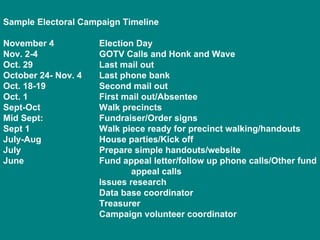
Sample Electoral Campaign Timeline November 4 Election Day Nov. 2-4 GOTV Calls and Honk and Wave Oct. 29 Last mail out October 24- Nov. 4 Last phone bank Oct. 18-19 Second mail out Oct. 1 First mail out/Absentee  Sept-Oct Walk precincts Mid Sept: Fundraiser/Order signs Sept 1 Walk piece ready for precinct walking/handouts July-Aug House parties/Kick off July Prepare simple handouts/website June Fund appeal letter/follow up phone calls/Other fund  appeal calls Issues research Data base coordinator Treasurer Campaign volunteer coordinator
Budget Overall costs How to get them? Fundraising Allocation – set priorities Bank account, Treasurer
Framing What messages work? What is a “frame”? Keep your message in context/timely “ KISS”  Keep it Simple Stupid!  Buzz words and sound bites/Timely Change we can believe in New Leadership New jobs for a new economy
Examples of Frames “No Child Left Behind” “Pro Life” “Defense of Marriage” Act Change we can believe in Clean Energy New jobs for new economy
Working with Volunteers Attracting volunteers Assigning tasks The right person for the job Interest and skill based Making it fun Follow up Rewards Plus Can you fire a volunteer?
Where to Find Volunteers Environmental Groups Social Justice Groups Homeowners’ Associations Community Groups Seniors Young people/Students Parents Other interest groups
Using Volunteers Match talents with needs Petitioning Phone banking Fundraising Research PR Outreach Bookkeeping Office help Fundraising and keeping data base
Likely allies Like minded individuals and Groups Environmentalists Neighborhood groups Good Government activists National/State groups working on your issue
Unlikely Allies Keep open horizons Tax payer groups Parents Small Business Church groups People who are against your opponent
Lobbying Officials Be prepared Know who is in charge Have a specific action Do your homework Know their position Know their constituency
Lobbying cont. Take at least two to a meeting with the official Take notes Bring written material Be polite Be on time Act professional Follow up
Public Hearings Be prepared Have a spokesperson Keep comments short Don’t repeat Polite Hand outs ok Large presence
Activist Tactics Tabling Petitioning Events Press Canvassing Phone Banking
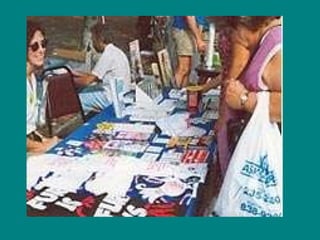
Tabling Use an ironing board Easy to read material Be polite Sign up sheets/Posters Don’t block entrances Know the 1 st  Amendment Keep a schedule
 
Petitioning Know the rules/laws Is it election/pressure on electeds? Keep it simple Similar to tabling Strategically choose locations Park Service for deer WalMart for working conditions/Unions
Events Many events allow tables Make sure it’s a fit Be visible, polite Have plenty of material for audience Good place for sign ups College of Marin events Solar events Clean energy events/hearings
Canvassing Going door to door Election or other? Weekends/dinner hour Be polite If it’s election, use your lists. Up one side, down the other Teamwork Dog treats
Phone Banking Tactic for follow ups to Event invitations Fundraising pitches Polling/surveys Find large place Have a script Provide food for volunteers Keep track of responses
Dealing with the Press Press releases Press Conferences Letters to the Editor OpEds Cultivating “friendly” reporters Editorial Meetings
The Press Release Keep it short White space Who What Where When Contact info up front Short quotes Punchy Headline Know the right person to contact Follow up
The Press Conference Have a good visual reason for calling the press conference Dramatic At the “site” At the Hearing When something important has occurred Spokesperson Written comments
Letters to the Editor Choose a “scribe” Not all the same voice Simple and short (250 words optimum) Respond to paper’s stand/other letters Use email Consider their website, local blogs Respectful even if critical Use non-celebrities
OpEds Longer format Have a photo available A good editor Short paragraphs to the point Can respond to another one
Blogs Use existing paper’s websites Crate your own blog on your website Use political/environmental websites Calitics Sierra Club Sfgate
The “friendly” Reporter Find out who’s covering your issue Get to know them Be respectful Return calls If they’re not friendly, see who is Have a spokseperson
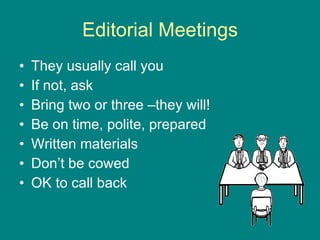
Editorial Meetings They usually call you If not, ask Bring two or three –they will! Be on time, polite, prepared Written materials Don’t be cowed OK to call back
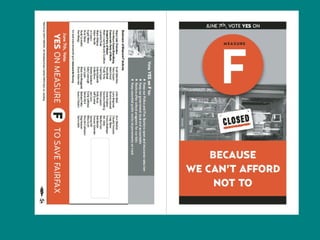
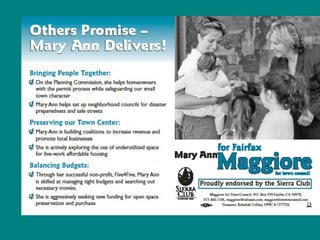
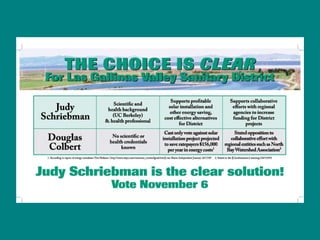
Creating Effective Materials   “ KISS” No more than 3-4 “bullet” points Prioritize your message Pictures and graphics Not too busy (White Space) “ Blocks” of information/photos Color choices Cost
Materials Continued Mailers Handouts/walk pieces Surveys/questionnaires Newsletters “ Dear Friend” Cards Ads Letters to supporters Posters Websites
 
 
Know Your Opposition Research Public record Court files Property records Their past and present filings Web Newspapers Other sources
 
Fundraising Events Major Donor drives Smaller donor drives Grants Dialing for Dollars Letters
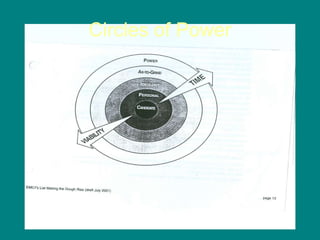
Circles of Power
Events Low return Big investment – Time and money Need a committee Get donations – Food and wine Have a budget Good for publicity Always have sponsors
Major Donor Finance Committee Who donated to like-minded causes? High end house parties Good contacts Personal calls/visits Follow up Thanks
Smaller Donors Invite to events Letters to supporters Ask Again Friends and family and their F and F Phone banks “Pass the hat” Merchant drives
Grants Non-profit organizations Know the Foundation’s guidelines See who they’ve funded Consider professional help Have a clear budget Foundation Center Internet
“Dialing for Dollars” The candidate or chief fundraiser Call “high donors” Use volunteers for smaller donors Keep a list Script Be friendly Ask then wait Thank them
Letters Keep them short and simple Highlight the “ask” Get to the point One page Include a remit envelope “PS” Follow up calls
Are you ready to run? Why do you want to run? “ Fire in the belly” Is this the right office? What does your family think? Is this the right time? Can you afford it Money Time Nasty attacks and ie’s

Activist.Training.Practical Politics.Forum.2008ppt

  • 1.
    PRACTICAL POLITICS TheNuts and Bolts of Grassroots Activism
  • 2.
    Developing aGrassroots Strategy Set Priorities What is your issue? Difference between “Strategy” and “Tactics” Make a campaign plan Timeline, budget, audience Goal
  • 3.
    Timeline Are theredeadlines for action? Start at “D” day and work back Example Election Day Set realistic goals Make a calendar
  • 4.
    Sample Electoral CampaignTimeline November 4 Election Day Nov. 2-4 GOTV Calls and Honk and Wave Oct. 29 Last mail out October 24- Nov. 4 Last phone bank Oct. 18-19 Second mail out Oct. 1 First mail out/Absentee Sept-Oct Walk precincts Mid Sept: Fundraiser/Order signs Sept 1 Walk piece ready for precinct walking/handouts July-Aug House parties/Kick off July Prepare simple handouts/website June Fund appeal letter/follow up phone calls/Other fund appeal calls Issues research Data base coordinator Treasurer Campaign volunteer coordinator
  • 5.
    Budget Overall costsHow to get them? Fundraising Allocation – set priorities Bank account, Treasurer
  • 6.
    Framing What messageswork? What is a “frame”? Keep your message in context/timely “ KISS” Keep it Simple Stupid! Buzz words and sound bites/Timely Change we can believe in New Leadership New jobs for a new economy
  • 7.
    Examples of Frames“No Child Left Behind” “Pro Life” “Defense of Marriage” Act Change we can believe in Clean Energy New jobs for new economy
  • 8.
    Working with VolunteersAttracting volunteers Assigning tasks The right person for the job Interest and skill based Making it fun Follow up Rewards Plus Can you fire a volunteer?
  • 9.
    Where to FindVolunteers Environmental Groups Social Justice Groups Homeowners’ Associations Community Groups Seniors Young people/Students Parents Other interest groups
  • 10.
    Using Volunteers Matchtalents with needs Petitioning Phone banking Fundraising Research PR Outreach Bookkeeping Office help Fundraising and keeping data base
  • 11.
    Likely allies Likeminded individuals and Groups Environmentalists Neighborhood groups Good Government activists National/State groups working on your issue
  • 12.
    Unlikely Allies Keepopen horizons Tax payer groups Parents Small Business Church groups People who are against your opponent
  • 13.
    Lobbying Officials Beprepared Know who is in charge Have a specific action Do your homework Know their position Know their constituency
  • 14.
    Lobbying cont. Takeat least two to a meeting with the official Take notes Bring written material Be polite Be on time Act professional Follow up
  • 15.
    Public Hearings Beprepared Have a spokesperson Keep comments short Don’t repeat Polite Hand outs ok Large presence
  • 16.
    Activist Tactics TablingPetitioning Events Press Canvassing Phone Banking
  • 17.
    Tabling Use anironing board Easy to read material Be polite Sign up sheets/Posters Don’t block entrances Know the 1 st Amendment Keep a schedule
  • 18.
  • 19.
    Petitioning Know therules/laws Is it election/pressure on electeds? Keep it simple Similar to tabling Strategically choose locations Park Service for deer WalMart for working conditions/Unions
  • 20.
    Events Many eventsallow tables Make sure it’s a fit Be visible, polite Have plenty of material for audience Good place for sign ups College of Marin events Solar events Clean energy events/hearings
  • 21.
    Canvassing Going doorto door Election or other? Weekends/dinner hour Be polite If it’s election, use your lists. Up one side, down the other Teamwork Dog treats
  • 22.
    Phone Banking Tacticfor follow ups to Event invitations Fundraising pitches Polling/surveys Find large place Have a script Provide food for volunteers Keep track of responses
  • 23.
    Dealing with thePress Press releases Press Conferences Letters to the Editor OpEds Cultivating “friendly” reporters Editorial Meetings
  • 24.
    The Press ReleaseKeep it short White space Who What Where When Contact info up front Short quotes Punchy Headline Know the right person to contact Follow up
  • 25.
    The Press ConferenceHave a good visual reason for calling the press conference Dramatic At the “site” At the Hearing When something important has occurred Spokesperson Written comments
  • 26.
    Letters to theEditor Choose a “scribe” Not all the same voice Simple and short (250 words optimum) Respond to paper’s stand/other letters Use email Consider their website, local blogs Respectful even if critical Use non-celebrities
  • 27.
    OpEds Longer formatHave a photo available A good editor Short paragraphs to the point Can respond to another one
  • 28.
    Blogs Use existingpaper’s websites Crate your own blog on your website Use political/environmental websites Calitics Sierra Club Sfgate
  • 29.
    The “friendly” ReporterFind out who’s covering your issue Get to know them Be respectful Return calls If they’re not friendly, see who is Have a spokseperson
  • 30.
    Editorial Meetings Theyusually call you If not, ask Bring two or three –they will! Be on time, polite, prepared Written materials Don’t be cowed OK to call back
  • 31.
    Creating Effective Materials “ KISS” No more than 3-4 “bullet” points Prioritize your message Pictures and graphics Not too busy (White Space) “ Blocks” of information/photos Color choices Cost
  • 32.
    Materials Continued MailersHandouts/walk pieces Surveys/questionnaires Newsletters “ Dear Friend” Cards Ads Letters to supporters Posters Websites
  • 33.
  • 34.
  • 35.
    Know Your OppositionResearch Public record Court files Property records Their past and present filings Web Newspapers Other sources
  • 36.
  • 37.
    Fundraising Events MajorDonor drives Smaller donor drives Grants Dialing for Dollars Letters
  • 38.
  • 39.
    Events Low returnBig investment – Time and money Need a committee Get donations – Food and wine Have a budget Good for publicity Always have sponsors
  • 40.
    Major Donor FinanceCommittee Who donated to like-minded causes? High end house parties Good contacts Personal calls/visits Follow up Thanks
  • 41.
    Smaller Donors Inviteto events Letters to supporters Ask Again Friends and family and their F and F Phone banks “Pass the hat” Merchant drives
  • 42.
    Grants Non-profit organizationsKnow the Foundation’s guidelines See who they’ve funded Consider professional help Have a clear budget Foundation Center Internet
  • 43.
    “Dialing for Dollars”The candidate or chief fundraiser Call “high donors” Use volunteers for smaller donors Keep a list Script Be friendly Ask then wait Thank them
  • 44.
    Letters Keep themshort and simple Highlight the “ask” Get to the point One page Include a remit envelope “PS” Follow up calls
  • 45.
    Are you readyto run? Why do you want to run? “ Fire in the belly” Is this the right office? What does your family think? Is this the right time? Can you afford it Money Time Nasty attacks and ie’s