Storytelling for Grant Writing
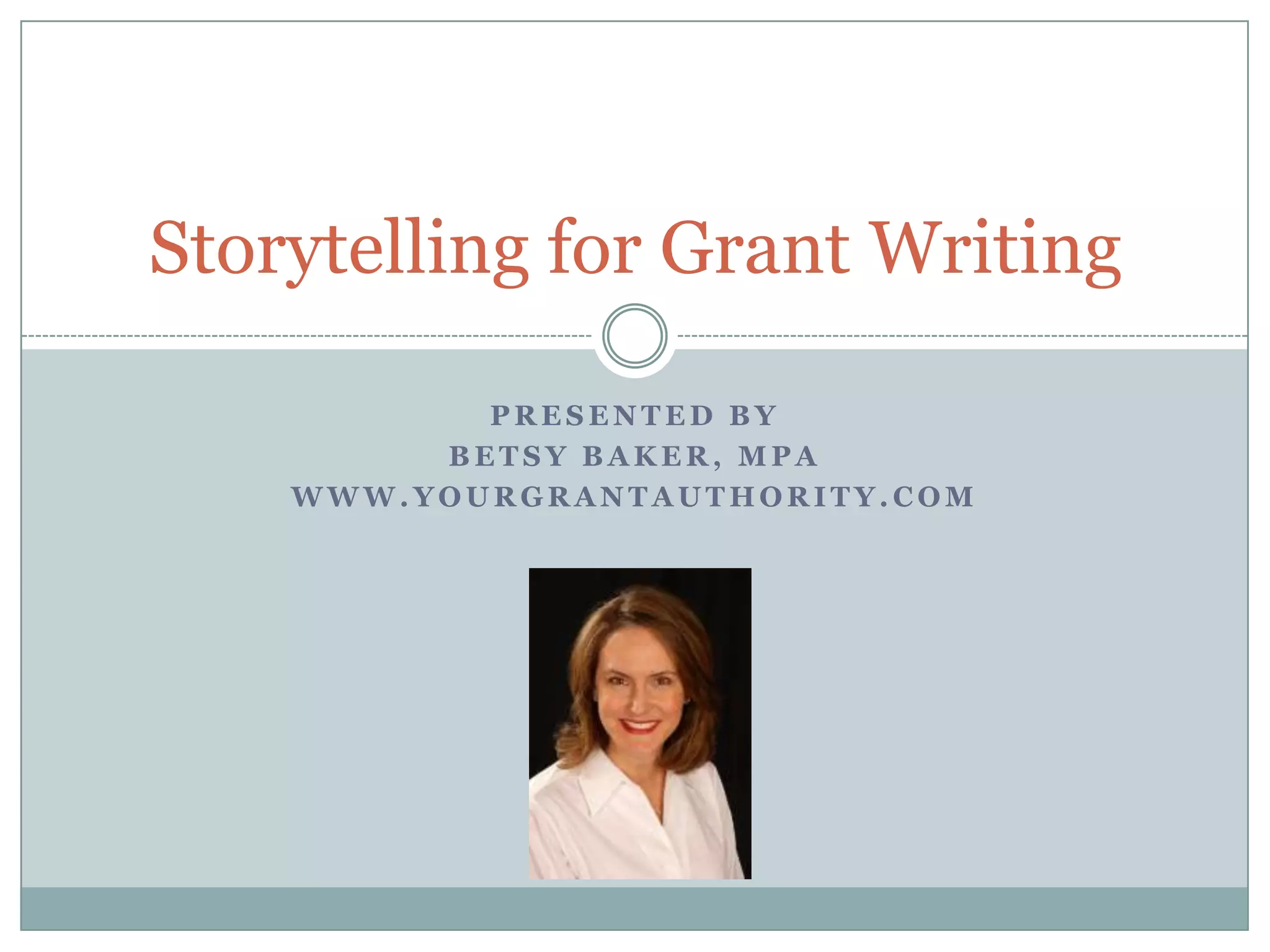
PRESENTED BY
BETSY BAKER, MPA
WWW.YOURGRANTAUTHORITY.COM
A little about me…
Began career in nonprofit development
10 years as a grant writing consultant
$10 million in grants received
Speaker for the Foundation Center, the Grant
Professionals Association & the Association of Fund
Raising Professionals
 Regular contributor to OpportunityKnocks! and
CharityChannel
 Founder www.YourGrantAuthority.com , hosts
webinars, workshops and other grant writing
educational opportunities. Also helpful to aspiring
grant writing consultants.




Listen Closely
Writing Styles
Sticking only to technique
and form = boring

Adding creativity and
passion = a much better
read for the grant reviewer!
All great stories have
 Characters
 A hero
 A “bad guy”
 Setting
 Time
 Place
 Plot
 Conflict
 Conclusion
How do you begin telling stories?

You have to know them first!
How to write your nonprofit’s best stories ever:
 Be an investigative reporter to get to know your

characters:
Executive Director
program staff
financial guru
program partners

 Research to intimately know your nonprofit’s stories

inside and out:
prior evaluation reports
online
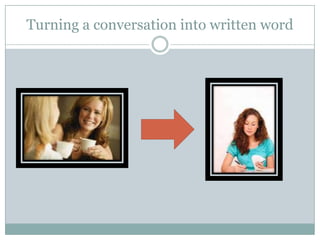
Turning a conversation into written word
How to make your application have more personality
 Turn off that “editor’s voice” inside your head
 Write the way you speak rather than the way you

think you should write
 Think about words that describe your organization –

what gives it a unique place in your community
It’s Your Turn!
 A museum can be described as:
 Historical
 Archival
 Educational
 Kid-friendly
 Acclaimed
How to introduce your organization’s characters
in the Proposal Narrative
 Provide a “hook” by introducing your antagonist

character first
 Allow the protagonist – your hero nonprofit – to be

introduced next providing fundamental information
 Introduce other main characters such as your clients
Establish a sense of time in your proposal
 Your work is to support the future of your

organization
 Plan ahead
 Grant review can last anywhere from 4-6 months
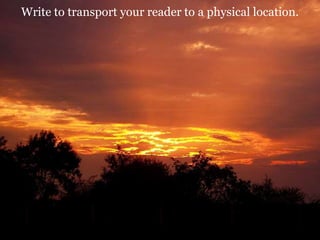
Write to transport your reader to a physical location.

Location, location, location!
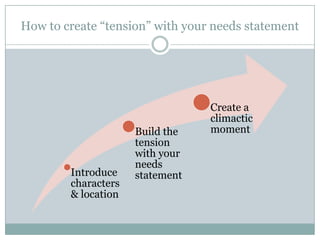
How to create “tension” with your needs statement

Introduce
characters
& location

Build the
tension
with your
needs
statement

Create a
climactic
moment
Apply storytelling to your needs statement by answering:
 Who are the people who have the need or the





problem?
Where do the people with the need or problem live?
When is the problem or need evident?
Why does the problem or need occur?
What is the problem with the problem?
Example: your need describes the problem of
unemployment
 Who are the people with the need & where do they

live? Unemployed people living in Pike County, AL
 How is the need evident? Poverty
rates, homelessness and crime are higher here than
in the rest of the state (use stats)
 Why does the problem exist? It’s complex – lack of
safe schools, employment opportunities &
transportation
 Why is the problem a problem?
Poverty, homelessness & crime equals higher & more
long-term costs (again, use stats)
Statistics are important – grant
writers love a good statistic.

But you have to have heart in your
proposal to temper the stats!
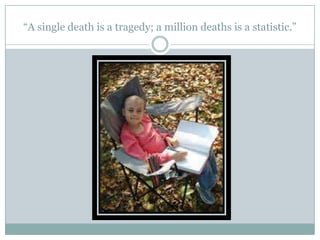
“A single death is a tragedy; a million deaths is a statistic.”
You gotta have a hero!
Thank YOU! 
Stay in touch with me at
Facebook.com/YourGrantAuthority

Storytelling for Grant Writing

  • 1.
    Storytelling for GrantWriting PRESENTED BY BETSY BAKER, MPA WWW.YOURGRANTAUTHORITY.COM
  • 2.
    A little aboutme… Began career in nonprofit development 10 years as a grant writing consultant $10 million in grants received Speaker for the Foundation Center, the Grant Professionals Association & the Association of Fund Raising Professionals  Regular contributor to OpportunityKnocks! and CharityChannel  Founder www.YourGrantAuthority.com , hosts webinars, workshops and other grant writing educational opportunities. Also helpful to aspiring grant writing consultants.    
  • 3.
  • 4.
    Writing Styles Sticking onlyto technique and form = boring Adding creativity and passion = a much better read for the grant reviewer!
  • 5.
    All great storieshave  Characters  A hero  A “bad guy”  Setting  Time  Place  Plot  Conflict  Conclusion
  • 6.
    How do youbegin telling stories? You have to know them first!
  • 7.
    How to writeyour nonprofit’s best stories ever:  Be an investigative reporter to get to know your characters: Executive Director program staff financial guru program partners  Research to intimately know your nonprofit’s stories inside and out: prior evaluation reports online
  • 8.
    Turning a conversationinto written word
  • 9.
    How to makeyour application have more personality  Turn off that “editor’s voice” inside your head  Write the way you speak rather than the way you think you should write  Think about words that describe your organization – what gives it a unique place in your community
  • 10.
    It’s Your Turn! A museum can be described as:  Historical  Archival  Educational  Kid-friendly  Acclaimed
  • 11.
    How to introduceyour organization’s characters in the Proposal Narrative  Provide a “hook” by introducing your antagonist character first  Allow the protagonist – your hero nonprofit – to be introduced next providing fundamental information  Introduce other main characters such as your clients
  • 12.
    Establish a senseof time in your proposal  Your work is to support the future of your organization  Plan ahead  Grant review can last anywhere from 4-6 months
  • 13.
    Write to transportyour reader to a physical location. Location, location, location!
  • 14.
    How to create“tension” with your needs statement Introduce characters & location Build the tension with your needs statement Create a climactic moment
  • 15.
    Apply storytelling toyour needs statement by answering:  Who are the people who have the need or the     problem? Where do the people with the need or problem live? When is the problem or need evident? Why does the problem or need occur? What is the problem with the problem?
  • 16.
    Example: your needdescribes the problem of unemployment  Who are the people with the need & where do they live? Unemployed people living in Pike County, AL  How is the need evident? Poverty rates, homelessness and crime are higher here than in the rest of the state (use stats)  Why does the problem exist? It’s complex – lack of safe schools, employment opportunities & transportation  Why is the problem a problem? Poverty, homelessness & crime equals higher & more long-term costs (again, use stats)
  • 17.
    Statistics are important– grant writers love a good statistic. But you have to have heart in your proposal to temper the stats!
  • 18.
    “A single deathis a tragedy; a million deaths is a statistic.”
  • 19.
  • 20.
    Thank YOU!  Stayin touch with me at Facebook.com/YourGrantAuthority