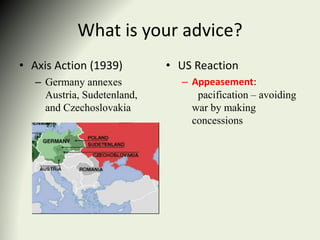
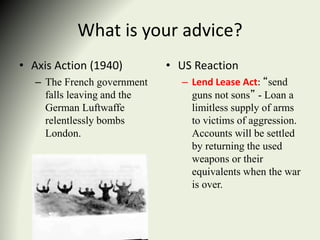
The document discusses America's foreign policy decisions leading up to WWII from 1930-1941. It provides context on actions taken by Axis powers like Japan invading Manchuria in 1931 and Germany remilitarizing the Rhineland in 1936. The US initially took an appeasement approach but over time enacted policies like cash and carry and embargoes on Japan in response to their aggression. It asks the reader to consider what priorities like national security, trade, peace, or human rights should guide foreign policy. Finally, it summarizes key Axis actions and American reactions up until Japan's attack on Pearl Harbor in 1941.





![Major Events of WWII [power point] 1942 43](https://cdn.slidesharecdn.com/ss_thumbnails/9-160728165959-thumbnail.jpg?width=640&height=640&fit=bounds)


