Using ACT as a
therapeutic frame
for Psychedelic
Assisted Therapy
Marina Bystritsky, Ph.D.
Image that summarizes the experience
of participants in 2 hour ACT workshops
A lot to cover.
Like taking a sip from a fire hose.
“The single most remarkable fact
about human existence is how
hard it is for humans to be
happy”
(Hays, Strosahl, & Wilson, 1999)
Why ACT?
 ACT is grounded in rigorous, tested and cohesive
theory of human behavior
 ACT is consistent with existing theories on the
neuro-psychological processes of the psychedelic
state
 ACT was developed as trans-diagnostic
psychotherapy for psychological distress
 ACT is an evidence-based therapy
ACT CAN BE DEFINED:
“ACT uses acceptance and
mindfulness techniques, along
with commitment and behavior
change processes, to produce
greater psychological flexibility”
Steven C.
Hayes
ACT is different from other
treatments:
 Other treatments focus heavily on symptom alleviation
 ACT goals are:
 Acceptance of unwanted private experiences that are out
of personal control
 Committed action towards living a valued life
In other words:
“Embrace your demons, and follow your heart”
Consider the Possibility that…
 Human suffering is not caused by difficult emotions,
irrational thinking, or dysfunctional schemata,
but how we respond to them
ACT UNCONVENTIONAL
CONCEPTS
 Psychological pain is normal, important and
everyone has it
 You can’t deliberately get rid of psychological
pain, but you can avoid increasing it artificially
 Pain and suffering are two different states of
being
Suffering = Pain + Resistance to Pain
 Accepting your pain is first step toward ridding
yourself from your suffering
 You can live a life your value, beginning right now,
but to do that you have to learn how to get out of
your mind and into your life
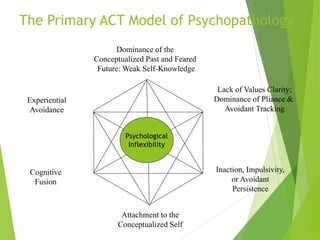
The Primary ACT Model of Psychopathology
Dominance of the
Conceptualized Past and Feared
Future: Weak Self-Knowledge
Inaction, Impulsivity,
or Avoidant
Persistence
Lack of Values Clarity;
Dominance of Pliance &
Avoidant Tracking
Attachment to the
Conceptualized Self
Experiential
Avoidance
Cognitive
Fusion
Psychological
Inflexibility
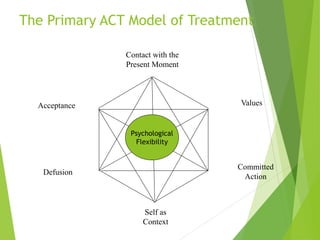
The Primary ACT Model of Treatment
Contact with the
Present Moment
Committed
Action
Values
Self as
Context
Acceptance
Defusion
Psychological
Flexibility
There are six core processes
in ACT:
 Contact with the present moment
 Acceptance
 Defussion
 Self – as – context
 Values
 Committed Action
Contact with the Present
Moment
 ACT promotes ongoing, nonjudgmental contact with
psychological and environmental events as they occur.
 The goal is present moment awareness
 When in contact with present moment humans are
flexible, responsive and aware of possibilities afforded
by current situation (as compared to being in
conceptualized past or future)
Contact with the Present Moment
and Psychedelic Experience
 Common Reports following Psychedelic Experience
- Slowing Down
- Being less ruminative about the past
- Being less hurried and more present
- Increased mindfulness as measured by Five Factors
Mindfulness questionnaire in people attending
Ayahuasca retreat
EXPERIENTIAL AVOIDANCE
Tendency to attempt to alter frequency, form and/or
intensity of negative private experience:
- Thoughts
- Emotions/Sensations
- Images
- Memories
- Urges
Even when attempts to do so causes psychological or
behavioral harm
ACCEPTANCE
 Acceptance of private events is taught as alternative to
experiential avoidance
 It involve the active embrace of private events without
unnecessary attempts to change their frequency or form
“Opening yourself fully to experience as it is, not as your
mind says it is or should be”
ACCEPTANCE
 Is not a goal, is means to a goal
 Cultivate willingness to feel unpleasant emotions in
order to do something of value
 Acceptance is not resignation
 You don’t have to like it, want it, approve of it in order
to accept it
 Acceptance is making peace, letting go of the struggle
ACCEPTANCE
 Allow it to be there (Simply because it’s already is)
 Give it permission to be where it already is
 Let go of struggling with that
 Make room for it
 Soften up around it
 Breath into it
 Stop wasting your energy by pushing it away
* Might be very relevant during preparation sessions
Common Instructions During
Dosing Sessions
 “Let Go”
 “Allow it to happen”
 “Go towards it” (scary object)
 “Be with it”
Multiple studies suggest that it is common to report
experiences of surrender and self-acceptance in
psychedelic experiences
DEFUSION
 Noticing thoughts rather than being caught up by
thoughts
 Looking at thoughts rather then from thoughts
 The aim IS NOT to get rid of unwanted thoughts
 The aim IS to reduce influence of unhelpful cognitive
processes upon behavior
DEFUSION
 Thoughts are merely sounds, words, stories passing
through our heads
 Thoughts may or may not be true, we don’t
automatically believe them
 Thoughts may or may not be important. We pay
attention only if they’re helpful.
 Thoughts are not orders. We don’t have to obey them
Defusion is organic in high
dose psychedelic experience
 High dose psychedelics interrupt normal language and
cognitive processes
 A hallmark of mystical experience is ineffability –
inability to describe it in words
DEFUSION TECHNIQUES
 Leaves on the stream
 I’m having a thought that….
 Repetition – e.g. lemon, lemon, lemon…
 Thank you mind
 Singing the thought
 See thoughts on computer/TV screen
 Radio doom and gloom
SELF-AS-CONTEXT
 A transcendent sense of self: a consistent perspective
from which to observe all changing experiences
 Self is looked at more as a context or arena for
experience than as experience itself
 Through metaphors and exercises ACT helps us to
contact this sense of self as context – a continues and
secure I from which events are experienced
Self-as-Context and
Psychedelic Experience
 Self and its transcendence are central to ACT
 The role of self-experience and changes in sense of self
is also central to psychedelic experience
“Being one with Universe”
“I’m me and there are no defining characteristics!”
“There was no me as I know myself, but I was aware”
Contacting “Inner teacher”
VALUES
 Chosen life directions
 Different than goals
 Give life meaning
 Provide guidance for your actions
“You heart’s deepest desires for the sort of person you
want to be and the things you want to do in your
lifetime on this planet; in other words, what do you
want to stand for in life”
VALUES
 What do you really want?
 What sort of person do you want to be?
 What do you want to do with your life?
 What do you want your life to stand for?
 What sort of relationships you want to build?
 How do you want to act towards yourself, towards
others?
 Funeral/Obituary/Celebration Dinner
Psychedelic experience and
Values
Often people emerge from psychedelic experience with
new insights about
 What’s important in their life
 That their life is off course
 Needing to make changes in their life
* Can be used in preparation and integration session
COMMITED ACTION
 Development of larger and larger patterns action linked
to chosen values
* Translating insights gained during the psychedelic
experience into concrete behavior change can be an
important part of an integration phase
COMMITED ACTION
 Not a promise/not a prediction
 Not an attempt to be perfect
 It means commitment to act in line with values
 Take it for granted that you will go “off course” again
and again and again
 Commit to getting back on track again as soon as you
realize what has happened
CONTROL IS THE PROBLEM
If control is a problem why does it persist?
 Control strategies can be useful
 Our society encourages and models control
 Cognitions and emotions are widely believed to cause and
control behavior
 Short-term effects of experiential avoidance are often
positive, even if negative in the long-term, therefore
powerful reinforcer of control strategies
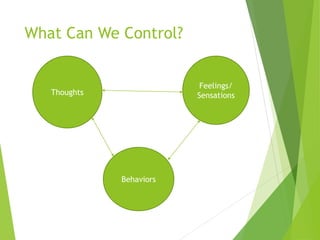
What Can We Control?
Thoughts
Feelings/
Sensations
Behaviors

Module 4 ACT for KAP

  • 1.
    Using ACT asa therapeutic frame for Psychedelic Assisted Therapy Marina Bystritsky, Ph.D.
  • 2.
    Image that summarizesthe experience of participants in 2 hour ACT workshops A lot to cover. Like taking a sip from a fire hose.
  • 3.
    “The single mostremarkable fact about human existence is how hard it is for humans to be happy” (Hays, Strosahl, & Wilson, 1999)
  • 4.
    Why ACT?  ACTis grounded in rigorous, tested and cohesive theory of human behavior  ACT is consistent with existing theories on the neuro-psychological processes of the psychedelic state  ACT was developed as trans-diagnostic psychotherapy for psychological distress  ACT is an evidence-based therapy
  • 5.
    ACT CAN BEDEFINED: “ACT uses acceptance and mindfulness techniques, along with commitment and behavior change processes, to produce greater psychological flexibility” Steven C. Hayes
  • 6.
    ACT is differentfrom other treatments:  Other treatments focus heavily on symptom alleviation  ACT goals are:  Acceptance of unwanted private experiences that are out of personal control  Committed action towards living a valued life In other words: “Embrace your demons, and follow your heart”
  • 7.
    Consider the Possibilitythat…  Human suffering is not caused by difficult emotions, irrational thinking, or dysfunctional schemata, but how we respond to them
  • 8.
    ACT UNCONVENTIONAL CONCEPTS  Psychologicalpain is normal, important and everyone has it  You can’t deliberately get rid of psychological pain, but you can avoid increasing it artificially  Pain and suffering are two different states of being Suffering = Pain + Resistance to Pain  Accepting your pain is first step toward ridding yourself from your suffering  You can live a life your value, beginning right now, but to do that you have to learn how to get out of your mind and into your life
  • 9.
    The Primary ACTModel of Psychopathology Dominance of the Conceptualized Past and Feared Future: Weak Self-Knowledge Inaction, Impulsivity, or Avoidant Persistence Lack of Values Clarity; Dominance of Pliance & Avoidant Tracking Attachment to the Conceptualized Self Experiential Avoidance Cognitive Fusion Psychological Inflexibility
  • 10.
    The Primary ACTModel of Treatment Contact with the Present Moment Committed Action Values Self as Context Acceptance Defusion Psychological Flexibility
  • 11.
    There are sixcore processes in ACT:  Contact with the present moment  Acceptance  Defussion  Self – as – context  Values  Committed Action
  • 12.
    Contact with thePresent Moment  ACT promotes ongoing, nonjudgmental contact with psychological and environmental events as they occur.  The goal is present moment awareness  When in contact with present moment humans are flexible, responsive and aware of possibilities afforded by current situation (as compared to being in conceptualized past or future)
  • 13.
    Contact with thePresent Moment and Psychedelic Experience  Common Reports following Psychedelic Experience - Slowing Down - Being less ruminative about the past - Being less hurried and more present - Increased mindfulness as measured by Five Factors Mindfulness questionnaire in people attending Ayahuasca retreat
  • 14.
    EXPERIENTIAL AVOIDANCE Tendency toattempt to alter frequency, form and/or intensity of negative private experience: - Thoughts - Emotions/Sensations - Images - Memories - Urges Even when attempts to do so causes psychological or behavioral harm
  • 15.
    ACCEPTANCE  Acceptance ofprivate events is taught as alternative to experiential avoidance  It involve the active embrace of private events without unnecessary attempts to change their frequency or form “Opening yourself fully to experience as it is, not as your mind says it is or should be”
  • 16.
    ACCEPTANCE  Is nota goal, is means to a goal  Cultivate willingness to feel unpleasant emotions in order to do something of value  Acceptance is not resignation  You don’t have to like it, want it, approve of it in order to accept it  Acceptance is making peace, letting go of the struggle
  • 17.
    ACCEPTANCE  Allow itto be there (Simply because it’s already is)  Give it permission to be where it already is  Let go of struggling with that  Make room for it  Soften up around it  Breath into it  Stop wasting your energy by pushing it away * Might be very relevant during preparation sessions
  • 18.
    Common Instructions During DosingSessions  “Let Go”  “Allow it to happen”  “Go towards it” (scary object)  “Be with it” Multiple studies suggest that it is common to report experiences of surrender and self-acceptance in psychedelic experiences
  • 19.
    DEFUSION  Noticing thoughtsrather than being caught up by thoughts  Looking at thoughts rather then from thoughts  The aim IS NOT to get rid of unwanted thoughts  The aim IS to reduce influence of unhelpful cognitive processes upon behavior
  • 20.
    DEFUSION  Thoughts aremerely sounds, words, stories passing through our heads  Thoughts may or may not be true, we don’t automatically believe them  Thoughts may or may not be important. We pay attention only if they’re helpful.  Thoughts are not orders. We don’t have to obey them
  • 21.
    Defusion is organicin high dose psychedelic experience  High dose psychedelics interrupt normal language and cognitive processes  A hallmark of mystical experience is ineffability – inability to describe it in words
  • 22.
    DEFUSION TECHNIQUES  Leaveson the stream  I’m having a thought that….  Repetition – e.g. lemon, lemon, lemon…  Thank you mind  Singing the thought  See thoughts on computer/TV screen  Radio doom and gloom
  • 23.
    SELF-AS-CONTEXT  A transcendentsense of self: a consistent perspective from which to observe all changing experiences  Self is looked at more as a context or arena for experience than as experience itself  Through metaphors and exercises ACT helps us to contact this sense of self as context – a continues and secure I from which events are experienced
  • 24.
    Self-as-Context and Psychedelic Experience Self and its transcendence are central to ACT  The role of self-experience and changes in sense of self is also central to psychedelic experience “Being one with Universe” “I’m me and there are no defining characteristics!” “There was no me as I know myself, but I was aware” Contacting “Inner teacher”
  • 25.
    VALUES  Chosen lifedirections  Different than goals  Give life meaning  Provide guidance for your actions “You heart’s deepest desires for the sort of person you want to be and the things you want to do in your lifetime on this planet; in other words, what do you want to stand for in life”
  • 26.
    VALUES  What doyou really want?  What sort of person do you want to be?  What do you want to do with your life?  What do you want your life to stand for?  What sort of relationships you want to build?  How do you want to act towards yourself, towards others?  Funeral/Obituary/Celebration Dinner
  • 27.
    Psychedelic experience and Values Oftenpeople emerge from psychedelic experience with new insights about  What’s important in their life  That their life is off course  Needing to make changes in their life * Can be used in preparation and integration session
  • 28.
    COMMITED ACTION  Developmentof larger and larger patterns action linked to chosen values * Translating insights gained during the psychedelic experience into concrete behavior change can be an important part of an integration phase
  • 29.
    COMMITED ACTION  Nota promise/not a prediction  Not an attempt to be perfect  It means commitment to act in line with values  Take it for granted that you will go “off course” again and again and again  Commit to getting back on track again as soon as you realize what has happened
  • 30.
    CONTROL IS THEPROBLEM If control is a problem why does it persist?  Control strategies can be useful  Our society encourages and models control  Cognitions and emotions are widely believed to cause and control behavior  Short-term effects of experiential avoidance are often positive, even if negative in the long-term, therefore powerful reinforcer of control strategies
  • 31.
    What Can WeControl? Thoughts Feelings/ Sensations Behaviors