โ€ซุงู„ุฑุญูŠู…โ€ฌ โ€ซุงู„ุฑุญู…ู†โ€ฌ โ€ซุงู„โ€ฌ โ€ซุจุณู…โ€ฌ
U O H S
University of Health Science
Faculty: Of Pharmacy
Subject: Chemistry
Semester: Two
Assignment: Acids & Bases
OUTLINEOUTLINE
Acids & Bases
History of Acids and Bases
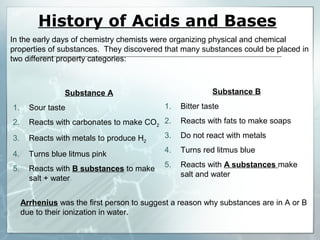
In the early days of chemistry chemists were organizing physical and chemical
properties of substances. They discovered that many substances could be placed in
two different property categories:
Substance A
1. Sour taste
2. Reacts with carbonates to make CO2
3. Reacts with metals to produce H2
4. Turns blue litmus pink
5. Reacts with B substances to make
salt + water
Substance B
1. Bitter taste
2. Reacts with fats to make soaps
3. Do not react with metals
4. Turns red litmus blue
5. Reacts with A substances make
salt and water
Arrhenius was the first person to suggest a reason why substances are in A or B
due to their ionization in water.
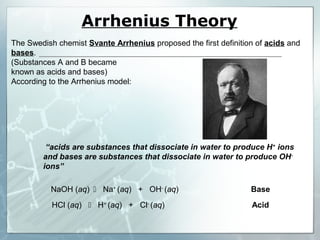
The Swedish chemist Svante Arrhenius proposed the first definition of acids and
bases.
(Substances A and B became
known as acids and bases)
According to the Arrhenius model:
โ€œacids are substances that dissociate in water to produce H+
ions
and bases are substances that dissociate in water to produce OH-
ionsโ€
NaOH (aq) ๏€ข Na+
(aq) + OH-
(aq) Base
HCl (aq) ๏€ข H+
(aq) + Cl-
(aq) Acid
Arrhenius Theory
What is an acid?
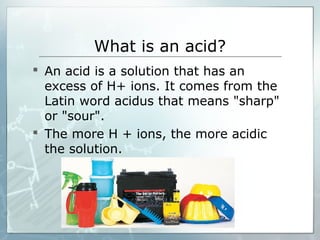
๏‚ง An acid is a solution that has an
excess of H+ ions. It comes from the
Latin word acidus that means "sharp"
or "sour".
๏‚ง The more H + ions, the more acidic
the solution.
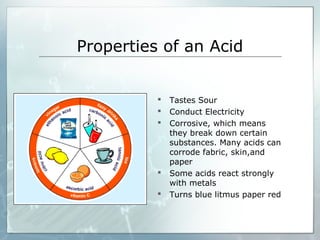
Properties of an Acid
๏‚ง Tastes Sour
๏‚ง Conduct Electricity
๏‚ง Corrosive, which means
they break down certain
substances. Many acids can
corrode fabric, skin,and
paper
๏‚ง Some acids react strongly
with metals
๏‚ง Turns blue litmus paper red
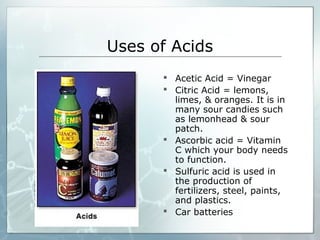
Uses of Acids
๏‚ง Acetic Acid = Vinegar
๏‚ง Citric Acid = lemons,
limes, & oranges. It is in
many sour candies such
as lemonhead & sour
patch.
๏‚ง Ascorbic acid = Vitamin
C which your body needs
to function.
๏‚ง Sulfuric acid is used in
the production of
fertilizers, steel, paints,
and plastics.
๏‚ง Car batteries
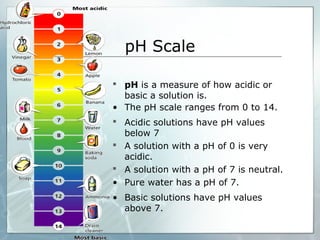
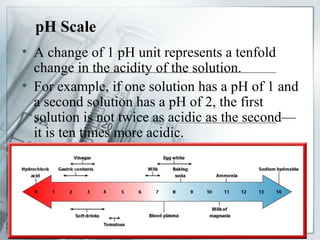
pH Scale
๏‚ง pH is a measure of how acidic or
basic a solution is.
โ€ข The pH scale ranges from 0 to 14.
๏‚ง Acidic solutions have pH values
below 7
๏‚ง A solution with a pH of 0 is very
acidic.
๏‚ง A solution with a pH of 7 is neutral.
โ€ข Pure water has a pH of 7.
โ€ข Basic solutions have pH values
above 7.
pH Scale
โ€ข A change of 1 pH unit represents a tenfold
change in the acidity of the solution.
โ€ข For example, if one solution has a pH of 1 and
a second solution has a pH of 2, the first
solution is not twice as acidic as the secondโ€”
it is ten times more acidic.
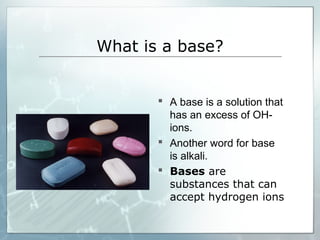
What is a base?
๏‚ง A base is a solution that
has an excess of OH-
ions.
๏‚ง Another word for base
is alkali.
๏‚ง Bases are
substances that can
accept hydrogen ions
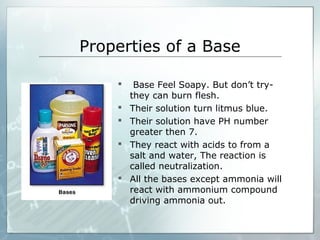
Properties of a Base
๏‚ง Base Feel Soapy. But donโ€™t try-
they can burn flesh.
๏‚ง Their solution turn litmus blue.
๏‚ง Their solution have PH number
greater then 7.
๏‚ง They react with acids to from a
salt and water, The reaction is
called neutralization.
๏‚ง All the bases except ammonia will
react with ammonium compound
driving ammonia out.
Uses of Bases
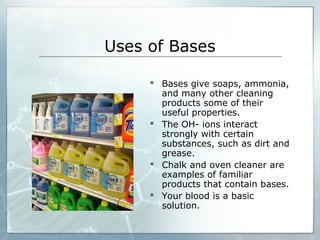
๏‚ง Bases give soaps, ammonia,
and many other cleaning
products some of their
useful properties.
๏‚ง The OH- ions interact
strongly with certain
substances, such as dirt and
grease.
๏‚ง Chalk and oven cleaner are
examples of familiar
products that contain bases.
๏‚ง Your blood is a basic
solution.
Acid โ€“ Base Reactions
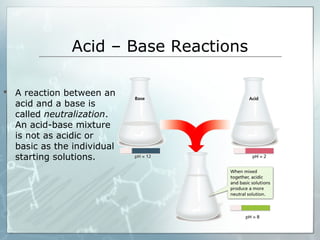
๏‚ง A reaction between an
acid and a base is
called neutralization.
An acid-base mixture
is not as acidic or
basic as the individual
starting solutions.
Acid โ€“ Base reactions
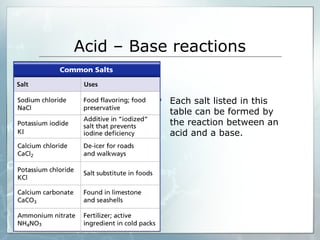
๏‚ง Each salt listed in this
table can be formed by
the reaction between an
acid and a base.

Acid and base

  • 1.
  • 2.
    U O HS University of Health Science Faculty: Of Pharmacy Subject: Chemistry Semester: Two Assignment: Acids & Bases
  • 3.
  • 6.
  • 7.
    History of Acidsand Bases In the early days of chemistry chemists were organizing physical and chemical properties of substances. They discovered that many substances could be placed in two different property categories: Substance A 1. Sour taste 2. Reacts with carbonates to make CO2 3. Reacts with metals to produce H2 4. Turns blue litmus pink 5. Reacts with B substances to make salt + water Substance B 1. Bitter taste 2. Reacts with fats to make soaps 3. Do not react with metals 4. Turns red litmus blue 5. Reacts with A substances make salt and water Arrhenius was the first person to suggest a reason why substances are in A or B due to their ionization in water.
  • 8.
    The Swedish chemistSvante Arrhenius proposed the first definition of acids and bases. (Substances A and B became known as acids and bases) According to the Arrhenius model: โ€œacids are substances that dissociate in water to produce H+ ions and bases are substances that dissociate in water to produce OH- ionsโ€ NaOH (aq) ๏€ข Na+ (aq) + OH- (aq) Base HCl (aq) ๏€ข H+ (aq) + Cl- (aq) Acid Arrhenius Theory
  • 10.
    What is anacid? ๏‚ง An acid is a solution that has an excess of H+ ions. It comes from the Latin word acidus that means "sharp" or "sour". ๏‚ง The more H + ions, the more acidic the solution.
  • 11.
    Properties of anAcid ๏‚ง Tastes Sour ๏‚ง Conduct Electricity ๏‚ง Corrosive, which means they break down certain substances. Many acids can corrode fabric, skin,and paper ๏‚ง Some acids react strongly with metals ๏‚ง Turns blue litmus paper red
  • 12.
    Uses of Acids ๏‚งAcetic Acid = Vinegar ๏‚ง Citric Acid = lemons, limes, & oranges. It is in many sour candies such as lemonhead & sour patch. ๏‚ง Ascorbic acid = Vitamin C which your body needs to function. ๏‚ง Sulfuric acid is used in the production of fertilizers, steel, paints, and plastics. ๏‚ง Car batteries
  • 14.
    pH Scale ๏‚ง pHis a measure of how acidic or basic a solution is. โ€ข The pH scale ranges from 0 to 14. ๏‚ง Acidic solutions have pH values below 7 ๏‚ง A solution with a pH of 0 is very acidic. ๏‚ง A solution with a pH of 7 is neutral. โ€ข Pure water has a pH of 7. โ€ข Basic solutions have pH values above 7.
  • 15.
    pH Scale โ€ข Achange of 1 pH unit represents a tenfold change in the acidity of the solution. โ€ข For example, if one solution has a pH of 1 and a second solution has a pH of 2, the first solution is not twice as acidic as the secondโ€” it is ten times more acidic.
  • 17.
    What is abase? ๏‚ง A base is a solution that has an excess of OH- ions. ๏‚ง Another word for base is alkali. ๏‚ง Bases are substances that can accept hydrogen ions
  • 18.
    Properties of aBase ๏‚ง Base Feel Soapy. But donโ€™t try- they can burn flesh. ๏‚ง Their solution turn litmus blue. ๏‚ง Their solution have PH number greater then 7. ๏‚ง They react with acids to from a salt and water, The reaction is called neutralization. ๏‚ง All the bases except ammonia will react with ammonium compound driving ammonia out.
  • 19.
    Uses of Bases ๏‚งBases give soaps, ammonia, and many other cleaning products some of their useful properties. ๏‚ง The OH- ions interact strongly with certain substances, such as dirt and grease. ๏‚ง Chalk and oven cleaner are examples of familiar products that contain bases. ๏‚ง Your blood is a basic solution.
  • 21.
    Acid โ€“ BaseReactions ๏‚ง A reaction between an acid and a base is called neutralization. An acid-base mixture is not as acidic or basic as the individual starting solutions.
  • 22.
    Acid โ€“ Basereactions ๏‚ง Each salt listed in this table can be formed by the reaction between an acid and a base.