Accuracy and Precision -
The Art of Measurement
This uncertainty is referred to as an error. Accuracy and
precision are two important factors to consider while
taking measurements. Both these terms reflect how
close a measurement is to a known or accepted value.
Measurement is essential for us to understand the
external world, and through millions of years of life,
we have developed a sense of measurement.
Measurements require tools that provide scientists
with a quantity. The problem here is that the result of
every measurement by any measuring instrument
contains some uncertainty.
Accuracy and Precision
Accuracy
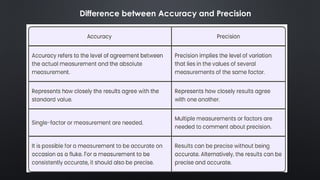
Accuracy is defined as ‘the degree to which the result of
a measurement conforms to the correct value or a
standard’ and essentially refers to how close a
measurement is to its agreed value.
Precision
Precision is defined as ‘the quality of being exact’ and
refers to how close two or more measurements are to
each other, regardless of whether those measurements
are accurate or not. It is possible for precision
measurements to not be accurate.
What is the difference between Accuracy and
Precision?
Both accuracy and precision reflect how close a
measurement is to an actual value, but they are not the
same. Accuracy reflects how close a measurement is to a
known or accepted value, while precision reflects how
reproducible measurements are, even if they are far from
the accepted value. Measurements that are both precise
and accurate are repeatable and very close to true values.
Example of the difference
between Accuracy and
Precision…
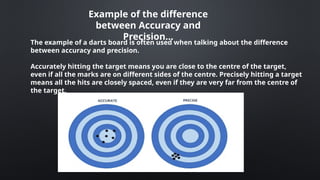
The example of a darts board is often used when talking about the difference
between accuracy and precision.
Accurately hitting the target means you are close to the centre of the target,
even if all the marks are on different sides of the centre. Precisely hitting a target
means all the hits are closely spaced, even if they are very far from the centre of
the target.
Difference between Accuracy and Precision

accuracy and precision in General Chemistry

  • 3.
    Accuracy and Precision- The Art of Measurement
  • 4.
    This uncertainty isreferred to as an error. Accuracy and precision are two important factors to consider while taking measurements. Both these terms reflect how close a measurement is to a known or accepted value. Measurement is essential for us to understand the external world, and through millions of years of life, we have developed a sense of measurement. Measurements require tools that provide scientists with a quantity. The problem here is that the result of every measurement by any measuring instrument contains some uncertainty. Accuracy and Precision
  • 5.
    Accuracy Accuracy is definedas ‘the degree to which the result of a measurement conforms to the correct value or a standard’ and essentially refers to how close a measurement is to its agreed value. Precision Precision is defined as ‘the quality of being exact’ and refers to how close two or more measurements are to each other, regardless of whether those measurements are accurate or not. It is possible for precision measurements to not be accurate.
  • 6.
    What is thedifference between Accuracy and Precision? Both accuracy and precision reflect how close a measurement is to an actual value, but they are not the same. Accuracy reflects how close a measurement is to a known or accepted value, while precision reflects how reproducible measurements are, even if they are far from the accepted value. Measurements that are both precise and accurate are repeatable and very close to true values.
  • 7.
    Example of thedifference between Accuracy and Precision… The example of a darts board is often used when talking about the difference between accuracy and precision. Accurately hitting the target means you are close to the centre of the target, even if all the marks are on different sides of the centre. Precisely hitting a target means all the hits are closely spaced, even if they are very far from the centre of the target.
  • 8.