IAS-1
Presentation of
Financial Statements
context
 Scope
 General Purpose of Financial Statement
 Purpose of Financial Statement
 Financial Statement
 General Features
 Fair presentation and compliance
 Going Concern
 Accrual basis of accounting
 Materiality and aggregation
 Offsetting
 Frequency of Reporting
 Comparative Information
 Consistency of Presentation
 Statements of Financial Position
 Statements of Comprehensive Income
 Notes
 Disclosure of Accounting Policies
 Implementation of IAS-1 in burj bank Financial Statements
SCOPE
 An entity shall apply this Standard in preparing and
presenting general purpose financial statements in
accordance with International Financial Reporting Standards
(IFRSs).
 Does not apply on
- Interim Financial Statements
- Consolidated Financial Statement
General Purpose Financial
Statement
 Financial statements are those intended to meet the needs of
users who are not in a position to require an entity to prepare
reports tailored to their particular information needs.
 International Financial Reporting Standards (IFRSs) are
Standards and Interpretations adopted by the International
Accounting Standards Board (IASB). They comprise:
(a) International Financial Reporting Standards
(b) International Accounting Standards
(c) International Financial Reporting Interpretations
Committee (IFRIC)
Purpose of financial statements
 To provide information about the financial position, financial
performance and cash flows of an entity that is useful to a wide
range of users in making economic decisions
 (a) assets
 (b) liabilities
 (c) equity
 (d) income and expenses, including gains and losses
 (e) contributions by and distributions to owners
 (f) cash flows.
FINANCIAL STATEMENTS
 Statement of financial position as at the end of the period
 Statement of comprehensive income for the period
 Statement of changes in equity for the period
 Statement of cash flows for the period
 Notes, comprising a summary of significant accounting
policies and other explanatory information
General features
 Fair presentation and compliance with IFRSs
 Going concern
 Accrual basis of accounting
 Materiality and aggregation
 Offsetting
 Frequency of reporting
 Comparative information
 Consistency of presentation
Fair presentation and compliance
 Financial statements shall present fairly the financial position,
financial performance and cash flows of an entity.
 Faithful representation of the effects of transactions, other
events and conditions in accordance IFRSs, with additional
disclosure when necessary.
Going concern
 When preparing financial statements, management shall
make an assessment of an entity’s ability to continue as a
going concern.
 Prepare financial statements on a going concern basis
unless management either intends to liquidate the entity or to
cease trading, or has no realistic alternative but to do so.
Accrual basis of accounting
 An entity shall prepare its financial statements, except for
cash flow information, using the accrual basis of accounting.
Materiality and aggregation
 An entity shall present separately each material class of
similar items.
 An entity shall present separately items of a dissimilar nature
or function unless they are immaterial.
 An entity need not provide a specific disclosure required by
an IFRS if the information is not material.
Offsetting
 An entity shall not offset assets and liabilities or income and
expenses, unless required or permitted by an IFRS.
Frequency of reporting
 An entity shall present a complete set of financial statements
(including comparative information) at least annually.
 When an entity changes the end of its reporting period and
presents financial statements for a period longer or shorter
than one year, an entity shall disclose
- Reason for using a longer or shorter period
- Fact that amounts presented in the financial
statements are not entirely comparable.
Comparative information
 Entity shall disclose comparative information in respect of the
previous period for all amounts reported in the current
period’s financial statements
 Except when IFRSs permit or require otherwise.
 Entity changes the presentation or classification of items in
its financial statements, the entity shall reclassify
comparative amounts.
Consistency of presentation
 An entity shall retain the presentation and classification of
items in the financial statements from one period to the next
unless
- It is apparent, that another presentation
or classification would more appropriate
- IFRS requires a change in presentation.
Statement of financial position
As a minimum, the statement of financial position shall include
line items that present the following amounts
 property, plant and equipment
 investment property
 intangible assets
 financial assets
 investments accounted for using the equity method
 biological assets
 Inventories
 trade and other receivables
 cash and cash equivalents;
 total of assets classified as held for sale
 trade and other payables
 Provisions
 financial liabilities
 liabilities and assets for current tax
 deferred tax liabilities and deferred tax assets
 non-controlling interest, presented within equity
 issued capital and reserves attributable to owners of the
parent.
 An entity shall present current and non-current assets, and
current and non-current liabilities, as separate classifications
in its statement of financial position
 except when a presentation based on liquidity provides
information then an entity shall present all assets and
liabilities in order of liquidity.
Statement of comprehensive
income
 An entity shall present all items of income and expense
recognized in a period
 In a single statement of comprehensive income
 In two statements: a statement displaying components of
profit or loss and a second statement beginning with profit or
loss and displaying components of other comprehensive
income.
Statement of comprehensive income shall include:
 Revenue
 Finance costs
 share of the profit or loss of associates and joint ventures
 tax expense
 profit or loss
 component of other comprehensive income classified by nature
 share of the other comprehensive income of associates and joint
ventures
 total comprehensive income.
Notes
The notes shall include
 present information about the basis of preparation of the
financial statements and the specific accounting policies
used
 disclose the information required by IFRSs that is not
presented elsewhere in the financial statements
 provide information that is not presented elsewhere in the
financial statements, but is relevant to an understanding of
any of them.
 An entity shall, as far as practicable, present notes in a
systematic manner.
 Entity shall cross reference each item in the statements of
financial position and of comprehensive income, and in the
statements of changes in equity and of cash flows to any
related information in the notes.
Disclosure of accounting
policies
An entity shall disclose in the summary of significant
accounting policies
 the measurement basis (or bases) used in preparing the
financial statements
 the other accounting policies used that are relevant to an
understanding of the financial statements.
Implementation of
IAS-1 in burj bank
financial position As at
June 31, 2015
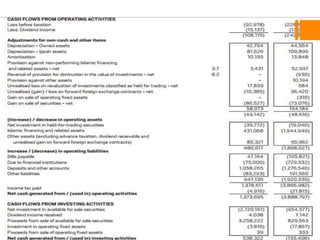
Burj bank cash flow
statement as at march
31st 2015
Profit and Loss Account For
the year ended march 31, 2015
Statement of Comprehensive
Income For the year ended
march 31, 2015
THE END

Accounting Ias 1 presentation

  • 1.
  • 2.
    context  Scope  GeneralPurpose of Financial Statement  Purpose of Financial Statement  Financial Statement  General Features  Fair presentation and compliance  Going Concern  Accrual basis of accounting  Materiality and aggregation  Offsetting  Frequency of Reporting  Comparative Information  Consistency of Presentation  Statements of Financial Position  Statements of Comprehensive Income  Notes  Disclosure of Accounting Policies  Implementation of IAS-1 in burj bank Financial Statements
  • 3.
    SCOPE  An entityshall apply this Standard in preparing and presenting general purpose financial statements in accordance with International Financial Reporting Standards (IFRSs).  Does not apply on - Interim Financial Statements - Consolidated Financial Statement
  • 4.
    General Purpose Financial Statement Financial statements are those intended to meet the needs of users who are not in a position to require an entity to prepare reports tailored to their particular information needs.
  • 5.
     International FinancialReporting Standards (IFRSs) are Standards and Interpretations adopted by the International Accounting Standards Board (IASB). They comprise: (a) International Financial Reporting Standards (b) International Accounting Standards (c) International Financial Reporting Interpretations Committee (IFRIC)
  • 6.
    Purpose of financialstatements  To provide information about the financial position, financial performance and cash flows of an entity that is useful to a wide range of users in making economic decisions  (a) assets  (b) liabilities  (c) equity  (d) income and expenses, including gains and losses  (e) contributions by and distributions to owners  (f) cash flows.
  • 7.
    FINANCIAL STATEMENTS  Statementof financial position as at the end of the period  Statement of comprehensive income for the period  Statement of changes in equity for the period  Statement of cash flows for the period  Notes, comprising a summary of significant accounting policies and other explanatory information
  • 8.
    General features  Fairpresentation and compliance with IFRSs  Going concern  Accrual basis of accounting  Materiality and aggregation  Offsetting  Frequency of reporting  Comparative information  Consistency of presentation
  • 9.
    Fair presentation andcompliance  Financial statements shall present fairly the financial position, financial performance and cash flows of an entity.  Faithful representation of the effects of transactions, other events and conditions in accordance IFRSs, with additional disclosure when necessary.
  • 10.
    Going concern  Whenpreparing financial statements, management shall make an assessment of an entity’s ability to continue as a going concern.  Prepare financial statements on a going concern basis unless management either intends to liquidate the entity or to cease trading, or has no realistic alternative but to do so.
  • 11.
    Accrual basis ofaccounting  An entity shall prepare its financial statements, except for cash flow information, using the accrual basis of accounting.
  • 12.
    Materiality and aggregation An entity shall present separately each material class of similar items.  An entity shall present separately items of a dissimilar nature or function unless they are immaterial.  An entity need not provide a specific disclosure required by an IFRS if the information is not material.
  • 13.
    Offsetting  An entityshall not offset assets and liabilities or income and expenses, unless required or permitted by an IFRS.
  • 14.
    Frequency of reporting An entity shall present a complete set of financial statements (including comparative information) at least annually.  When an entity changes the end of its reporting period and presents financial statements for a period longer or shorter than one year, an entity shall disclose - Reason for using a longer or shorter period - Fact that amounts presented in the financial statements are not entirely comparable.
  • 15.
    Comparative information  Entityshall disclose comparative information in respect of the previous period for all amounts reported in the current period’s financial statements  Except when IFRSs permit or require otherwise.  Entity changes the presentation or classification of items in its financial statements, the entity shall reclassify comparative amounts.
  • 16.
    Consistency of presentation An entity shall retain the presentation and classification of items in the financial statements from one period to the next unless - It is apparent, that another presentation or classification would more appropriate - IFRS requires a change in presentation.
  • 17.
    Statement of financialposition As a minimum, the statement of financial position shall include line items that present the following amounts  property, plant and equipment  investment property  intangible assets  financial assets  investments accounted for using the equity method  biological assets  Inventories  trade and other receivables  cash and cash equivalents;
  • 18.
     total ofassets classified as held for sale  trade and other payables  Provisions  financial liabilities  liabilities and assets for current tax  deferred tax liabilities and deferred tax assets  non-controlling interest, presented within equity  issued capital and reserves attributable to owners of the parent.
  • 19.
     An entityshall present current and non-current assets, and current and non-current liabilities, as separate classifications in its statement of financial position  except when a presentation based on liquidity provides information then an entity shall present all assets and liabilities in order of liquidity.
  • 20.
    Statement of comprehensive income An entity shall present all items of income and expense recognized in a period  In a single statement of comprehensive income  In two statements: a statement displaying components of profit or loss and a second statement beginning with profit or loss and displaying components of other comprehensive income.
  • 21.
    Statement of comprehensiveincome shall include:  Revenue  Finance costs  share of the profit or loss of associates and joint ventures  tax expense  profit or loss  component of other comprehensive income classified by nature  share of the other comprehensive income of associates and joint ventures  total comprehensive income.
  • 22.
    Notes The notes shallinclude  present information about the basis of preparation of the financial statements and the specific accounting policies used  disclose the information required by IFRSs that is not presented elsewhere in the financial statements  provide information that is not presented elsewhere in the financial statements, but is relevant to an understanding of any of them.
  • 23.
     An entityshall, as far as practicable, present notes in a systematic manner.  Entity shall cross reference each item in the statements of financial position and of comprehensive income, and in the statements of changes in equity and of cash flows to any related information in the notes.
  • 24.
    Disclosure of accounting policies Anentity shall disclose in the summary of significant accounting policies  the measurement basis (or bases) used in preparing the financial statements  the other accounting policies used that are relevant to an understanding of the financial statements.
  • 25.
    Implementation of IAS-1 inburj bank financial position As at June 31, 2015
  • 27.
    Burj bank cashflow statement as at march 31st 2015
  • 29.
    Profit and LossAccount For the year ended march 31, 2015
  • 31.
    Statement of Comprehensive IncomeFor the year ended march 31, 2015
  • 33.