Accounting project
Made by :
Ibrahem Taha
Nour Medhat
Shahd Mohamed
Nadeen Khaled
Sandy Hamdy
Balance sheet & cash flow statements
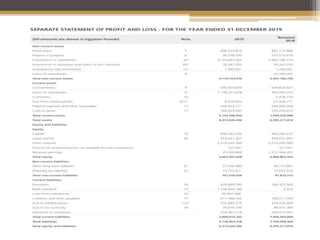
Of Suez cement company
Balance sheet statement
• A balance sheet is one of several major financial
statements you can use to track spending and
earnings. Also called a statement of financial
position, a balance sheet shows what your
company owns and what it owes through the
date listed, as Accounting Coach stated. It
displays this information in terms of your
company’s assets, liabilities, and equity.
Usefulness of Balance Sheet
• Computing rates of return .
• Evaluating the capital structure .
• Assess risk and future cash flows .
Limitations of Balance Sheet
• Most assets and liabilities are reported at
historical cost.
• Use of judgments and estimates.
• Many items of financial value are omitted.
Cash flow statement
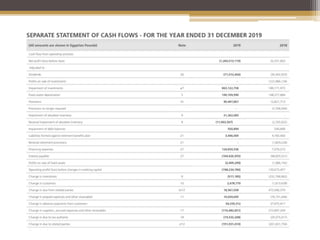
• A cash flow statement (CFS) is a financial
statement that summarizes the inflows and
outflows of cash transactions during a given
period.
• The purpose of a cash flow statement is to record
the amount of cash and cash equivalents
entering and leaving the company. As a result,
businesses get a detailed picture of the cash
position, which is essential for the company'’
financial health.
Elements of the statement
• The key elements of a cash flow statement
• A cash flow statement typically includes three
main components:
1. Operating activities
2. Investing activities
3. Financing activities
Operating activities
• this section measures the cash flow from a
company’s provision of products or services.
Some examples of operating activities include
sales of goods and services, salary payments,
rent payments, and income tax payments.
Investing activities
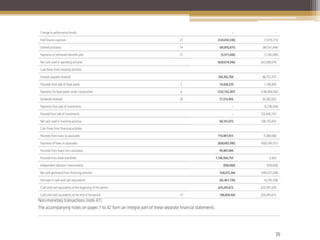
• Investing activities include cash flow from the
acquisition and disposal of long-term assets and
other investments not included in cash
equivalents. These represent long-term
investments in the company’s growth. For
instance, purchasing or selling physical
property, such as real estate or vehicles, and
non-physical property, like patents.
Financing activities
• Cash flows related to financing activities
typically represent cash from investors or banks,
issuing and buying back shares, as well as a
dividend payment. So whether you are raising a
loan, paying interest to service debt, or
distributing dividends, all these transactions fall
under the financing activities section in the cash
flow statement.
Thank you

Accounting 2 project.pptx

  • 1.
    Accounting project Made by: Ibrahem Taha Nour Medhat Shahd Mohamed Nadeen Khaled Sandy Hamdy
  • 2.
    Balance sheet &cash flow statements Of Suez cement company
  • 3.
    Balance sheet statement •A balance sheet is one of several major financial statements you can use to track spending and earnings. Also called a statement of financial position, a balance sheet shows what your company owns and what it owes through the date listed, as Accounting Coach stated. It displays this information in terms of your company’s assets, liabilities, and equity.
  • 4.
    Usefulness of BalanceSheet • Computing rates of return . • Evaluating the capital structure . • Assess risk and future cash flows .
  • 5.
    Limitations of BalanceSheet • Most assets and liabilities are reported at historical cost. • Use of judgments and estimates. • Many items of financial value are omitted.
  • 7.
    Cash flow statement •A cash flow statement (CFS) is a financial statement that summarizes the inflows and outflows of cash transactions during a given period. • The purpose of a cash flow statement is to record the amount of cash and cash equivalents entering and leaving the company. As a result, businesses get a detailed picture of the cash position, which is essential for the company'’ financial health.
  • 8.
    Elements of thestatement • The key elements of a cash flow statement • A cash flow statement typically includes three main components: 1. Operating activities 2. Investing activities 3. Financing activities
  • 9.
    Operating activities • thissection measures the cash flow from a company’s provision of products or services. Some examples of operating activities include sales of goods and services, salary payments, rent payments, and income tax payments.
  • 10.
    Investing activities • Investingactivities include cash flow from the acquisition and disposal of long-term assets and other investments not included in cash equivalents. These represent long-term investments in the company’s growth. For instance, purchasing or selling physical property, such as real estate or vehicles, and non-physical property, like patents.
  • 11.
    Financing activities • Cashflows related to financing activities typically represent cash from investors or banks, issuing and buying back shares, as well as a dividend payment. So whether you are raising a loan, paying interest to service debt, or distributing dividends, all these transactions fall under the financing activities section in the cash flow statement.
  • 14.