Welcome to theACRL ULS / CLSLightning Rounds
Allison LeamingULS / CLS Lightning Rounds
ADifferent Kind of Liaison Experience: Career Research in the Academic Library SettingAllison LeamingBusiness Liaison LibrarianArizona State University Libraries
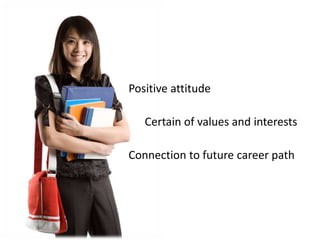
Positive attitudeCertain of values and interestsConnection to future career path
Indecisive Lacking insight	Unable to communicate          career goals
?
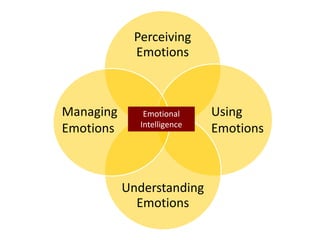
Emotions play an important role in the career decision-making process.
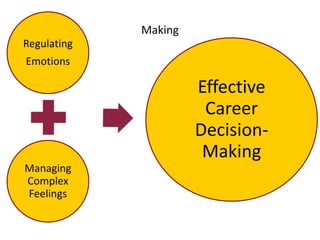
ManagingEmotionsUsingEmotionsEmotional Intelligence
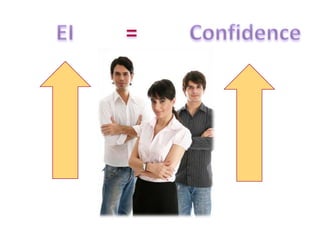
EIConfidence=
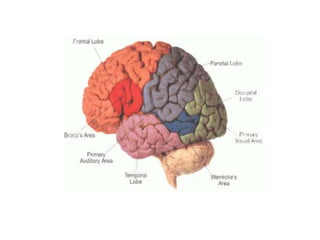
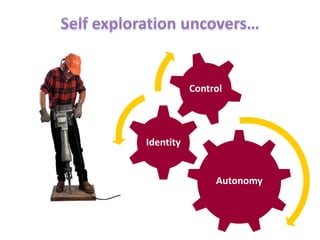
Self exploration uncovers…
Making
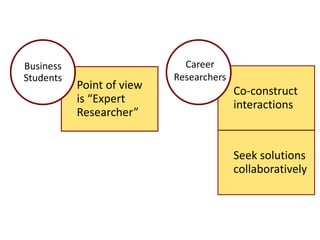
CareerResearchers
SourcesBrown, C., George-Curran, R. & Smith, M.L. (2003). The role of emotional intelligence in the career commitment and decision-making process. Journal of Career Assessment, 11 (4), 379-392.Emmerling, R. & Cherniss, C. (2003). Emotional Intelligence and the Career Choice Process. Journal of Career Assessment, 11 (2), 153-167.Mayer & Salovey (1997) What is Emotional Intelligence? In P. Salovey and D. Sluyter (Eds.), Emotional Development and Emotional Intelligence; Implications for Educators (pp. 3-34) New York: Basic Books.Puffer, K. (2009) Emotional Intelligence as a Salient Predictor for Collegians’ Career Decision Making. Journal of Career Assessment, 19 (2), 130-150.
Angiah DavisULS / CLS Lightning Rounds
Angiah L. Davis, Reference LibrarianInformation & Research Services DepartmentYes, We Deliver!:  Library Outreach Services Across the Atlanta University Center
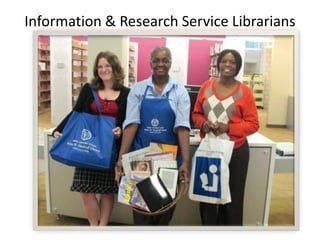
Information & Research Service Librarians
AUC Fast FactsOne library
Serves four Historically Black Colleges and University
Student FTE:      8,651
Faculty FTE:        661
World’s largest and oldest consortium of Historically Black Colleges and Universities (HBCUs)Member Institutions
Why Outreach Services?Not every student will come to the libraryLocation unknownNo timePromote Library ServicesTo build relationships with faculty staff and students
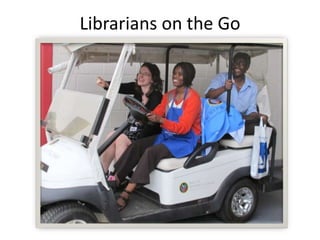
Librarians on the Go
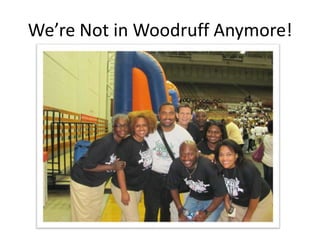
We’re Not in Woodruff Anymore!
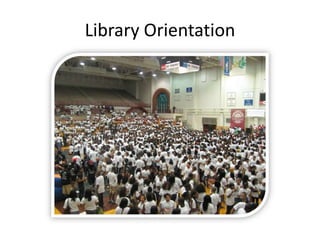
Library Orientation
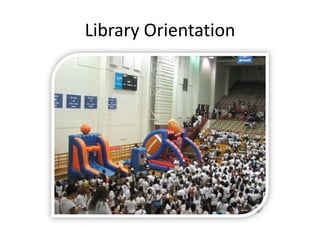
Library Orientation
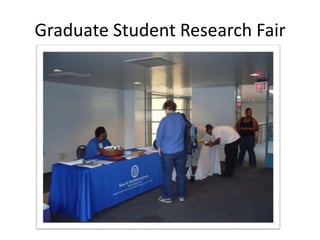
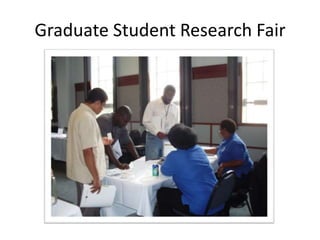
Graduate Student Research Fair
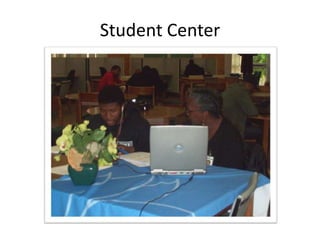
Student Center
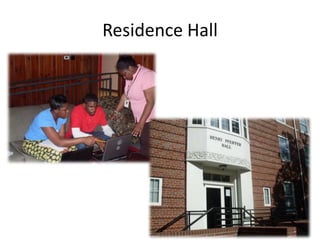
Residence Hall
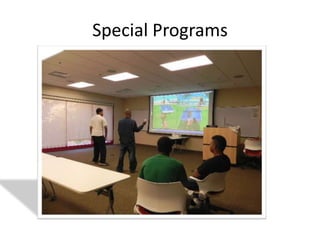
Special Programs
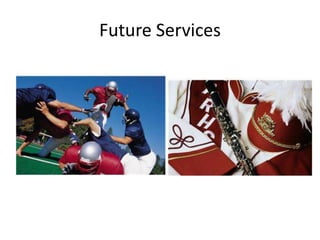
Future ServicesAthletes Band
Selected ReadingsCourtney, N. (2009). Academic library outreach: Beyond the campus walls. Westport, Conn: Libraries Unlimited.
Cummings, L. U. (2007). Bursting out of the box: Outreach to the millennial generation through student services programs. Reference Services Review, 35, 2, 285-295.
Fortson, M., Sahib, J. & Spencer, B. (2011). Step right up to the library! The Week of Welcome carnival at the University of Alabama Libraries. College & Research Libraries News, 72, 6, 350-352. Selected ReadingsKelsey, P., & Kelsey, S. (2003). Outreach services in academic and special libraries. Binghamton, NY: Haworth Information Press.
Smallwood, C. (2010). Librarians as community partners: An outreach handbook. Chicago: American Library Association.
Woodward, J. A. (2009). Creating the customer-driven academic library. Chicago: American Library Association.Contact InformationAngiah DavisReference Librarianadavis@auctr.edu
Diane VanderPolULS / CLS Lightning Rounds
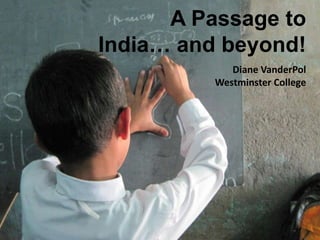
A Passage to India… and beyond!Diane VanderPolWestminster College
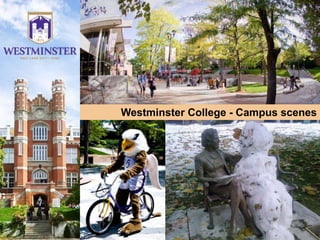
Westminster College - Campus scenes
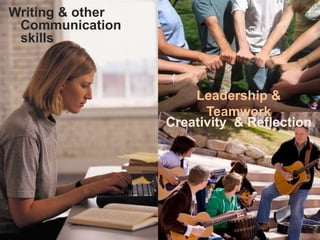
Writing & other Communication skillsLeadership & TeamworkCreativity  & Reflection
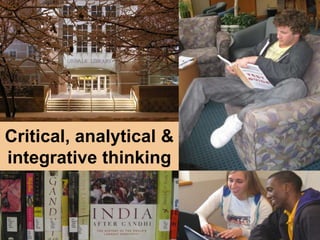
Critical, analytical & integrative thinking
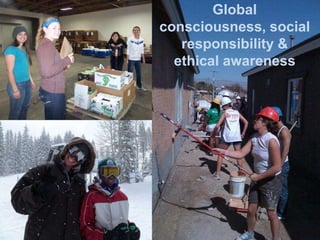
Global consciousness, social responsibility & ethical awareness
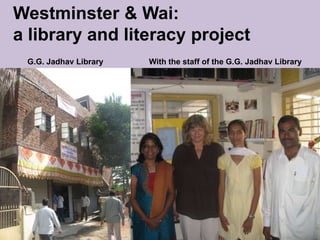
  Westminster & Wai:   a library and literacy projectG.G. Jadhav LibraryWith the staff of the G.G. Jadhav Library
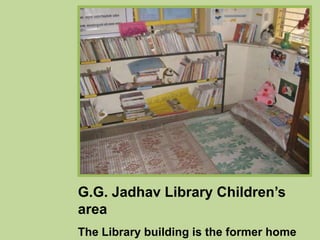
G.G. Jadhav Library Children’s areaThe Library building is the former home of the founder- donated to the community.
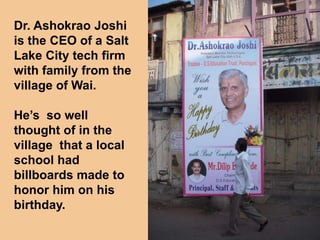
Dr. Ashokrao Joshi  is the CEO of a Salt Lake City tech firm with family from the village of Wai. He’s  so well thought of in the village  that a local school had billboards made to honor him on his birthday.
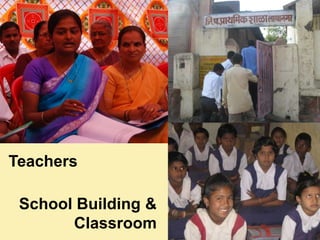
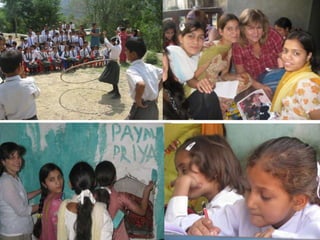
TeachersSchool Building & Classroom
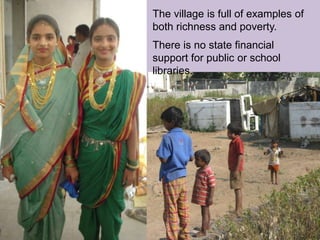
The village is full of examples of both richness and poverty.There is no state financial support for public or school libraries.
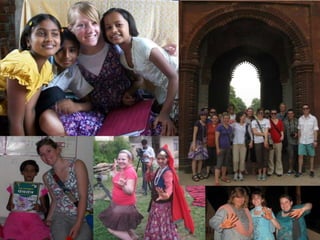
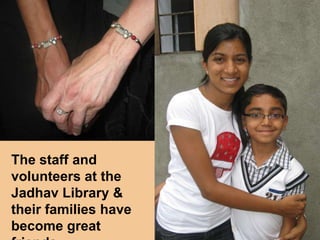
The staff and volunteers at the Jadhav Library & their families have become great friends.
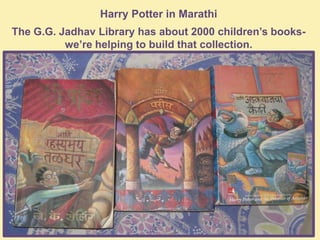
Harry Potter in MarathiThe G.G. Jadhav Library has about 2000 children’s books- we’re helping to build that collection.
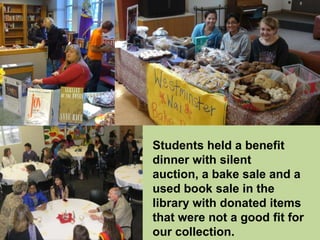
Students held a benefit dinner with silent auction, a bake sale and a used book sale in the library with donated items that were not a good fit for our collection.
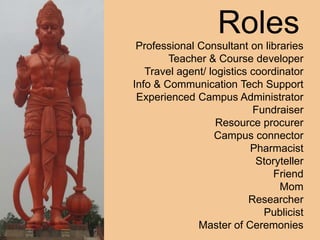
RolesProfessional Consultant on librariesTeacher & Course developerTravel agent/ logistics coordinatorInfo & Communication Tech SupportExperienced Campus AdministratorFundraiserResource procurerCampus connectorPharmacistStorytellerFriendMomResearcherPublicistMaster of Ceremonies
Lisa LapointeULS / CLS Lightning Rounds
Adventures in Academic AdvisingLisa LapointeReference and Instruction LibrarianFlorida Southern Collegellapointe@flsouthern.edu
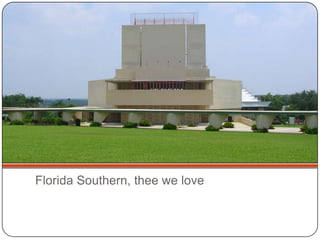
Florida Southern, thee we love
Librarians are faculty, but…
 We Freshmen How it started
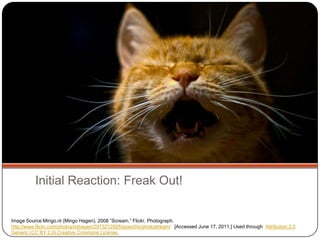
Initial Reaction: Freak Out!Image Source:Mingo.nl (Mingo Hagen). 2008 “Scream.” Flickr. Photograph. http://www.flickr.com/photos/mjhagen/2973212926/sizes/l/in/photostream/   [Accessed June 17, 2011.] Used through  Attribution 2.0 Generic (CC BY 2.0) Creative Commons License.
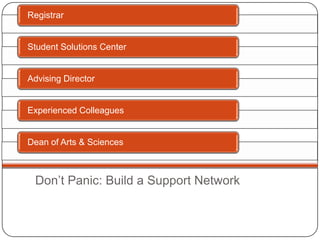
Don’t Panic: Build a Support Network
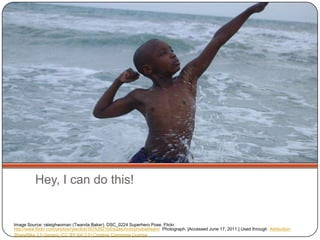
Hey, I can do this! Image Source: raleighwoman (Twanda Baker). DSC_0224 Superhero Pose. Flickr. http://www.flickr.com/photos/ryteclick/3575282100/sizes/m/in/photostream/  Photograph. [Accessed June 17, 2011.] Used through  Attribution-ShareAlike 2.0 Generic (CC BY-SA 2.0) Creative Commons License
Have you tried this?Tell me more about…This feels familiar…
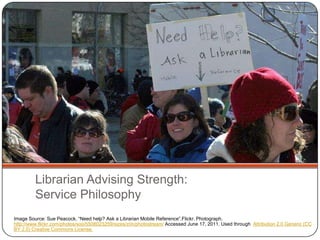
Librarian Advising Strength: Service PhilosophyImage Source: Sue Peacock. “Need help? Ask a Librarian Mobile Reference”.Flickr. Photograph. http://www.flickr.com/photos/soo/5508023259/sizes/z/in/photostream/ Accessed June 17, 2011. Used through  Attribution 2.0 Generic (CC BY 2.0) Creative Commons License.
Librarian Advising Strength: Schedule Flexibility	Image Source: caryatidxx (Emilie). DSC_0697.Flickr. Photograph. http://www.flickr.com/photos/dearlydeparted/3834132754/sizes/l/in/photostream/ [Accessed June 17, 2011.] Used through Attribution-ShareAlike 2.0 Generic (CC BY-SA 2.0) Creative Commons License.
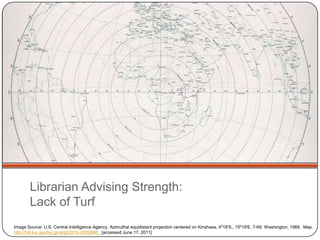
Librarian Advising Strength: Lack of TurfImage Source: U.S. Central Intelligence Agency. Azimuthal equidistant projection centered on Kinshasa, 4018'S., 15018'E. 7-69. Washington, 1969.  Map. http://hdl.loc.gov/loc.gmd/g3201b.ct002666   [accessed June 17, 2011].
Librarian Advising Strength: Connecting Students with ResourcesImage Source: Manchester-Monkey. “Connection.” Flickr. Photograph. http://www.flickr.com/photos/manchester-monkey/4879930891/sizes/l/in/photostream/ [Accessed June 17, 2011]. Used through Attribution-ShareAlike 2.0 Generic Creative Commons license
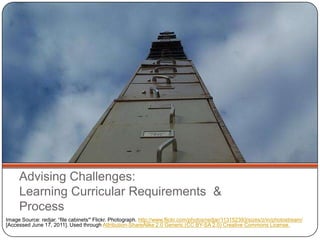
Advising Challenges: Learning Curricular Requirements  & ProcessImage Source: redjar. “file cabinets” Flickr. Photograph. http://www.flickr.com/photos/redjar/113152393/sizes/z/in/photostream/ [Accessed June 17, 2011]. Used through Attribution-ShareAlike 2.0 Generic (CC BY-SA 2.0) Creative Commons License.
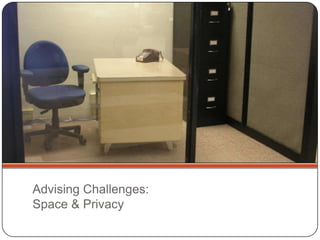
Advising Challenges: Space & Privacy
Benefit to Librarian: Community IntegrationImage Source: fauxto_digit. Bob and Weave: Weaving Friendship Bracelets.Flickr. Photograph. http://www.flickr.com/photos/fauxto_dkp/2915425151/sizes/z/in/photostream/ [Accessed June 17, 2011.] Used through Attribution 2.0 Generic (CC BY 2.0) Creative Commons License.
Benefit to Library: Advising reference pointImage Source: Wikimania2009. Answering the questions. (taken by Damián Buonamico).  Flickr. Photograph.  http://www.flickr.com/photos/wikimania2009/3857765466/sizes/z/in/photostream/  [Accessed June 17, 2011.] Used through  Attribution 2.0 Generic (CC BY 2.0)  Creative Commons License.
Benefit to Students:Individual SupportImage Source:Tobyotter (Tony Alter). Flickr. Photograph. http://www.flickr.com/photos/78428166@N00/3983153056/sizes/l/in/photostream/ [Accessed June 17, 2011.] Used through  Attribution 2.0 Generic (CC BY 2.0) Creative Commons License
Overall a positive experience Image Source:.reid.(Sarah). “thumbs up.” Flickr. Photograph. http://www.flickr.com/photos/sarahreido/3120872862/sizes/l/in/photostream/ [Accessed June 17, 2011.] Used through  Attribution 2.0 Generic (CC BY 2.0) Creative Commons License.
References Studdard, Paul. 2000. Academic librarians as advisors: working with students to plan their futures. College & Research Libraries News 61, no. 9 [October]: 781-2, 792.Young, Courtney L. 2008. Incorporating Undergraduate Advising in Teaching Information Literacy: Case Study for Academic Librarians as Advisors. The Journal of Academic Librarianship 34, no. 2 [March]: 139-144.
Michelle DemeterULS / CLS Lightning Rounds
Keeping it All Together: Life as an Academic Partnership LibrarianMichelle DemeterThe Florida State University
Conan the Librarian
Left wanting more… information?Michelle DemeterFlorida State Universitymdemeter@fsu.edu850.645.2707
Rachel BesaraULS / CLS Lightning Rounds
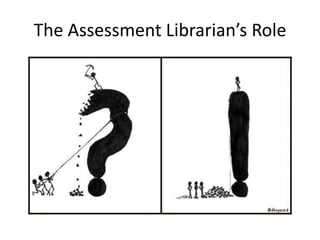
But Who Answers the Library’s Questions? The Assessment Librarian’s Role
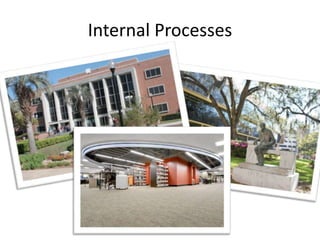
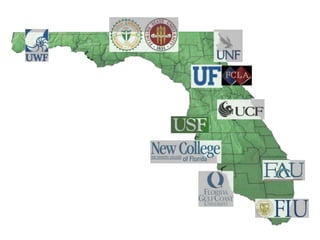
Assessment Answers Questions About…Libraries’ UsersInternal ProcessesLarger Academic Community
Libraries’ Users
Internal Processes
Larger Academic Community
Statistics
Survey Coordination
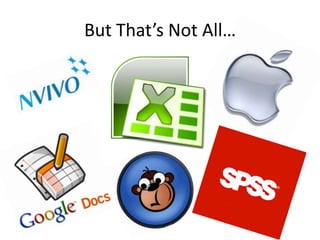
But That’s Not All…
The Assessment Librarian’s Role
Rachel BesaraAssessment LibrarianFlorida State University Librariesrbesara@fsu.edu
Susan SmithULS / CLS Lightning Rounds
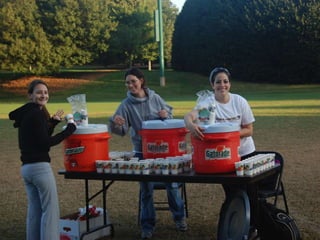
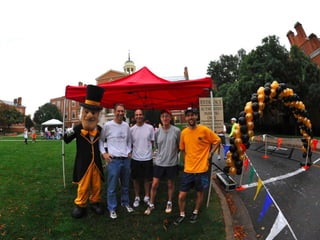
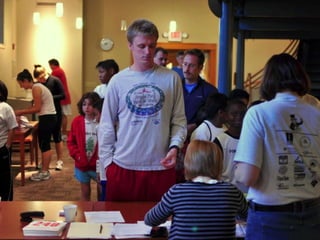
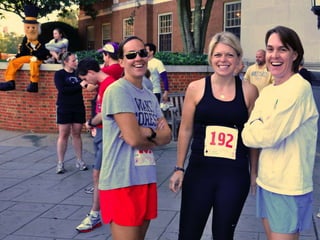
From Department Director to Race DirectorSusan Sharpless SmithZ. Smith Reynolds Library/Wake Forest UniversityULS/CLS Program, ALA Annual New OrleansJune 25, 2011
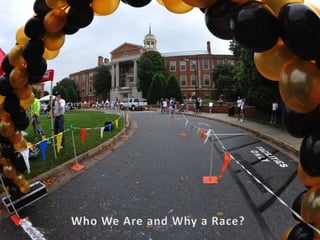
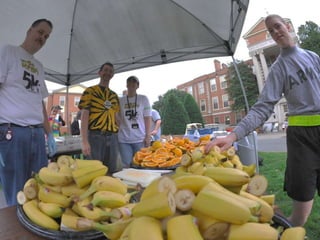
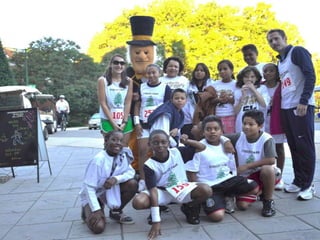
Who We Are and Why a Race?
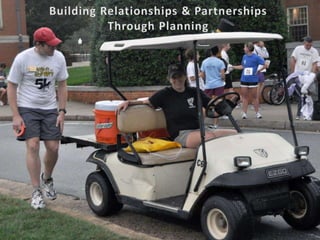
Building Relationships & Partnerships Through Planning
Developing New Skills &  Leveraging Current Ones
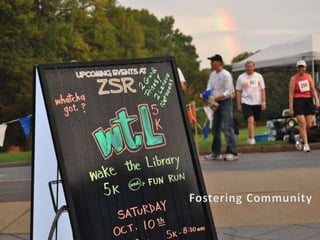
Fostering Community
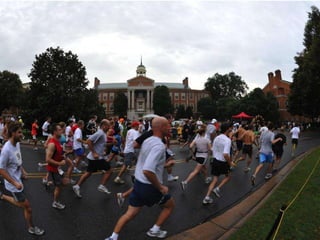
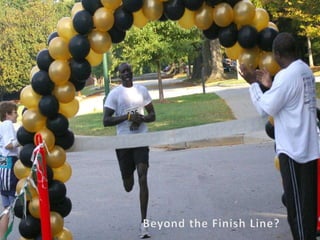
Beyond the Finish Line?
Tara SchmidtULS / CLS Lightning Rounds
Librarians as First Year InstructorsTara Schmidt, Research Services, Univ. of Texas at San Antonio
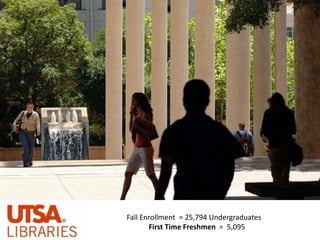
               Fall Enrollment  = 25,794 UndergraduatesFirst Time Freshmen  =  5,095
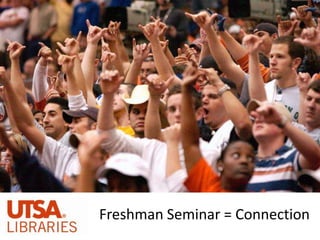
Freshman Seminar = Connection
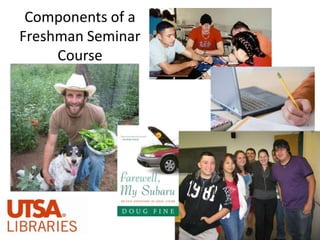
Components of a Freshman Seminar Course
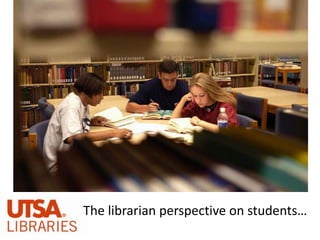
The librarian perspective on students…
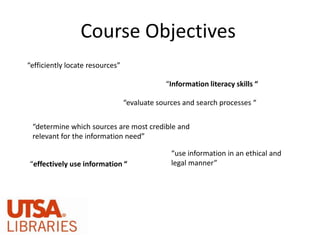
Course Objectives“efficiently locate resources”“Information literacy skills ““evaluate sources and search processes ““determine which sources are most credible and relevant for the information need”“use information in an ethical and legal manner”“effectively use information “
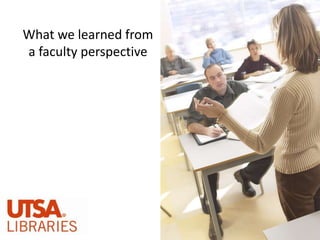
What we learned from a faculty perspective
So where do our faculty see the library fitting into the freshman experience?
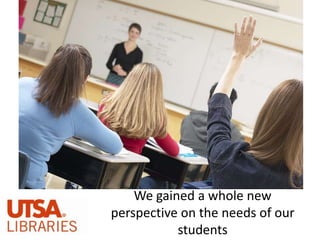
We gained a whole new perspective on the needs of our students
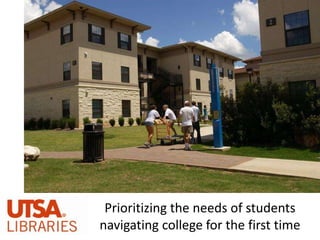
Prioritizing the needs of students navigating college for the first time
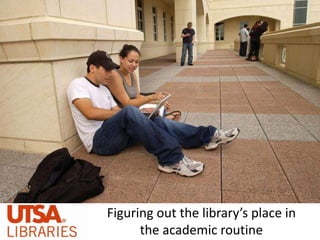
Figuring out the library’s place in the academic routine
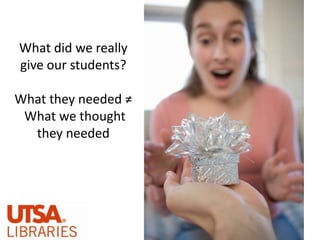
What did we really give our students? What they needed ≠ What we thought they needed
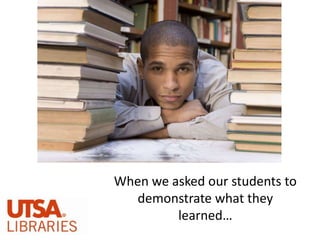
When we asked our students to demonstrate what they learned…
Time to take another look at the course objectives
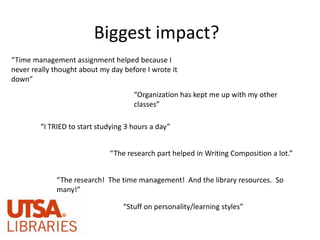
Biggest impact?“Time management assignment helped because I never really thought about my day before I wrote it down”“Organization has kept me up with my other classes”“I TRIED to start studying 3 hours a day”“The research part helped in Writing Composition a lot.” “The research!  The time management!  And the library resources.  So many!”“Stuff on personality/learning styles”
Figuring out where the library fits for our new freshmen
Learning from our mistakesDesigning a new class for the fall
Freshman Seminar = Connection
Library  =  Place	Library  =  Services		Library  =  When students need us
Eric A. KidwellULS / CLS Lightning Rounds
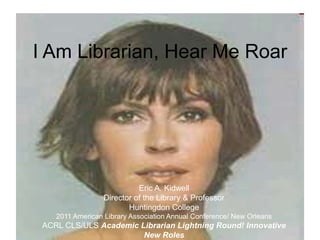
I Am Librarian, Hear Me RoarEric A. KidwellDirector of the Library & ProfessorHuntingdon College2011 American Library Association Annual Conference/ New OrleansACRL CLS/ULS Academic Librarian Lightning Round! Innovative New Roles
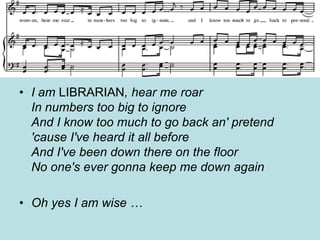
I am LIBRARIAN, hear me roarIn numbers too big to ignoreAnd I know too much to go back an' pretend'cause I've heard it all beforeAnd I've been down there on the floorNo one's ever gonna keep me down againOh yes I am wise …
Caitlin Anne BagleyULS / CLS Lightning Rounds
Librarian As Writing Ambassador: Finding the Path from the Library to KnowledgeCaitlin A. BagleyMurray State University
Waterfield LibraryMurray State University is located in Murray, KY.We are a midsize university with just above 10,000 FTE students.
Writing Across the CurriculumGoal is to help students raise their writing skills, university wide across departments.A Math Major should have the same writing skills as an English Major.
Library as Central LocationWaterfield Library hosts two main places for students to get help:Racer Writing CenterReference Desk
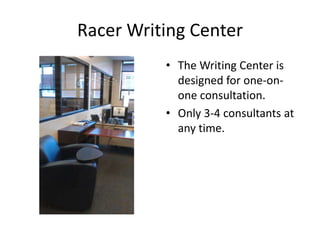
Racer Writing CenterThe Writing Center is designed for one-on-one consultation.Only 3-4 consultants at any time.
Reference DeskTraditional roles also apply, but when students bring their papers to the desk, we encourage and help them with what we can before we pass them on to the Writing Center.
MissionThe library’s mission is to serve as the Intellectual Commons of the University.  WAC’s mission is to “believe that writing and writing instruction should occur across the university curriculum and throughout a student’s education.”The two concepts work together seamlessly.
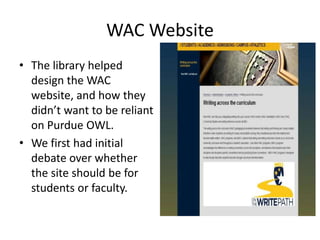
WAC WebsiteThe library helped design the WAC website, and how they didn’t want to be reliant on Purdue OWL.We first had initial debate over whether the site should be for students or faculty.
The Internet – The Great Equalizer?We try to teach students to learn how to swim through the good & bad, taking only the good with them.WAC is in the beginning stages of creating their own website.Currently exists as a help link of style guides and writing examples.
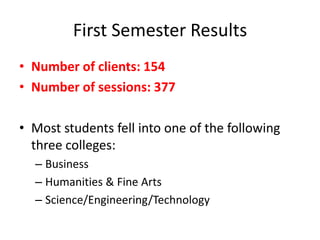
First Semester ResultsNumber of clients: 154Number of sessions: 377Most students fell into one of the following three colleges:BusinessHumanities & Fine ArtsScience/Engineering/Technology
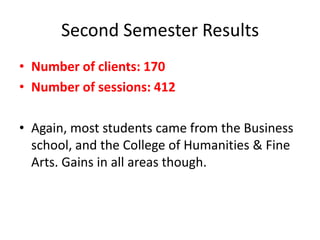
Second Semester ResultsNumber of clients: 170Number of sessions: 412Again, most students came from the Business school, and the College of Humanities & Fine Arts. Gains in all areas though.
OutreachSpreading the word.Physically, the RWC is a removed area of the library.  We have to find ways of making it accessible and noticeable.Mention in all Instruction SessionsHandout bookmarks, pamphlets, etc.Do your own publicity!
Embedded LibrarianshipPublicity only works for so long.Become close w/professors and be added into classes to become go to stops for help.ENG 105 and HIS 400
ENG 105Introductory writing course, mandatory for all students.I try to speak to every section at least once.Some sections I work with in-depth over the semester.
HIS 400This is a combination undergraduate/graduate level course, and so the writing they are expected to turn in is at a higher level.Traditionally, I would teach them research methods.  Now I often combine writing techniques in with this.
LOR 101Alongside, regular duties I teach a 3 CR research class with a heavy writing component.  This enables me to see the tangible proof of students who actually use the service.
One on One InstructionWhen a student comes to my office looking for help with a paper, we both read the paper together.It is usually helpful to have the student read their paper out loud, word for word, omitting no typos or mistakes.
Oral Communication CenterCurrently we are building an Oral Communication Center that we hope to pair with the RWC, in bringing students a better rounded out experience.
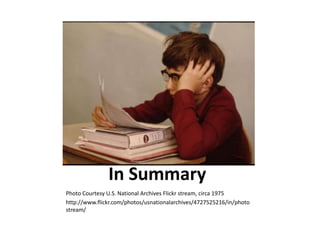
In SummaryPhoto Courtesy U.S. National Archives Flickr stream, circa 1975http://www.flickr.com/photos/usnationalarchives/4727525216/in/photostream/
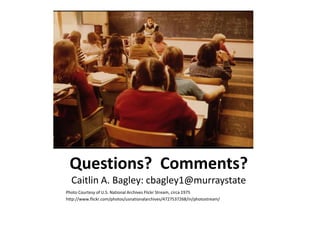
Questions?  Comments?Caitlin A. Bagley: cbagley1@murraystatePhoto Courtesy of U.S. National Archives Flickr Stream, circa 1975http://www.flickr.com/photos/usnationalarchives/4727537268/in/photostream/
Dominique TurnbowULS / CLS Lightning Rounds
incorporating instructional design approaches into our workRedefining LibrarianshipDominique Turnbowdturnbow@ucsd.eduUC San Diego LibrariesMLIS & MA Educational Technology Candidate
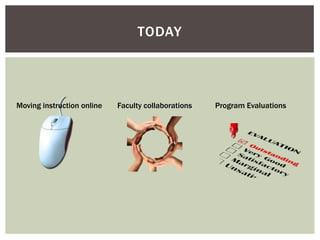
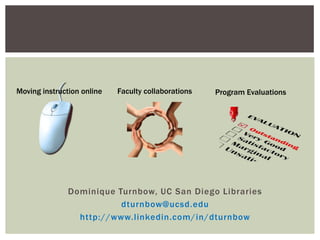
TodayMoving instruction onlineFaculty collaborationsProgram Evaluations
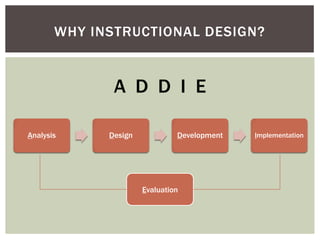
Why instructional design?A  D  D  I  EEvaluation
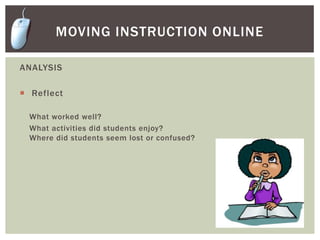
ANALYSISReflectWhat worked well?What activities did students enjoy? Where did students seem lost or confused? Moving instruction online
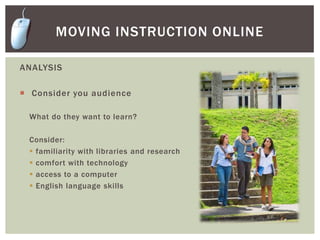
ANALYSISConsider you audienceWhat do they want to learn? Consider:familiarity with libraries and researchcomfort with technologyaccess to a computerEnglish language skillsMoving instruction online
ANALYSISRevisit or create an instruction goalGoals are broad, but specific; should encompass all outcomes in the tutorialMoving instruction onlineEXAMPLE INSTRUCTION GOAL:The learner will be able to use library resources to find three articles about a topic for a lab report.
DESIGN Create ABCD learning objectivesA=audienceB=behaviorC=conditionD=degreeMoving Instruction OnlineEXAMPLE OBJECTIVE:Given access to PubMed and a topic, the learner will be able to find at least three articles for their lab report.
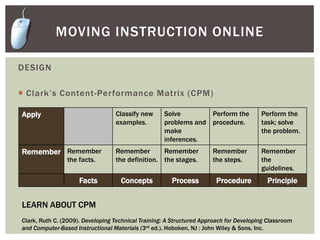
DESIGNClark’s Content-Performance Matrix (CPM)Moving INSTRUCTION OnLINELEARN ABOUT CPMClark, Ruth C. (2009). Developing Technical Training: A Structured Approach for Developing Classroom and Computer-Based Instructional Materials (3rd ed.). Hoboken, NJ : John Wiley & Sons, Inc.
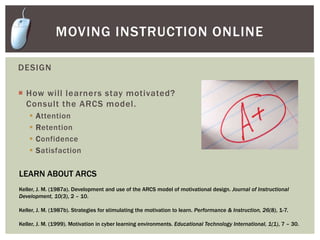
DESIGNHow will learners stay motivated? Consult the ARCS model.AttentionRetentionConfidenceSatisfactionMOVING Instruction onlineLEARN ABOUT ARCSKeller, J. M. (1987a). Development and use of the ARCS model of motivational design. Journal of Instructional Development, 10(3), 2 – 10.Keller, J. M. (1987b). Strategies for stimulating the motivation to learn. Performance & Instruction, 26(8), 1-7.Keller, J. M. (1999). Motivation in cyber learning environments. Educational Technology International, 1(1), 7 – 30.
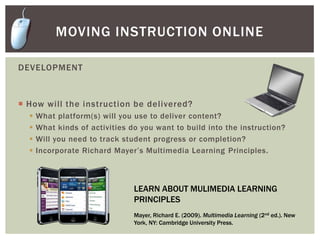
DEVELOPMENTHow will the instruction be delivered?What platform(s) will you use to deliver content?What kinds of activities do you want to build into the instruction? Will you need to track student progress or completion? Incorporate Richard Mayer’s Multimedia Learning Principles.Moving Instruction OnlineLEARN ABOUT MULIMEDIA LEARNING PRINCIPLESMayer, Richard E. (2009). Multimedia Learning (2nd ed.). New York, NY: Cambridge University Press.
IMPLEMENTATIONPrototype and TestingContentFunctionality – especially activities and assessmentsAffective feedbackSupportHow will you provide technical help to learners?How can learners ask questions? Moving Instruction Online
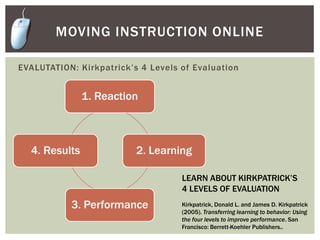
EVALUTATION: Kirkpatrick’s 4 Levels of EvaluationMoving Instruction OnlineLEARN ABOUT KIRKPATRICK’S 4 LEVELS OF EVALUATIONKirkpatrick, Donald L. and James D. Kirkpatrick (2005). Transferring learning to behavior: Using the four levels to improve performance. San Francisco: Berrett-Koehler Publishers..
Revise or create new instructionExample: If faculty provide students with an article to read about a topic, recommend that they also ask students to find and summarize an article with an opposing point of view.Example: Recommend students include 3-5 sentences about how each source helped them understand the topic of their paperwith the bibliography.Grade IL part of assignments or provide a rubric for TAs to useConsider blended instructionTeach low-level outcomes via video or tutorial (e.g. how to find a journal article using the catalog) and high-level ones in-person (e.g. search strategies).Faculty Collaborations
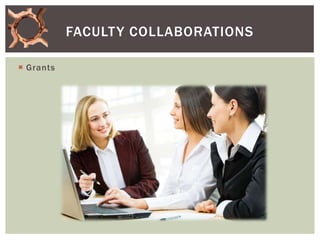
GrantsFaculty collaborations
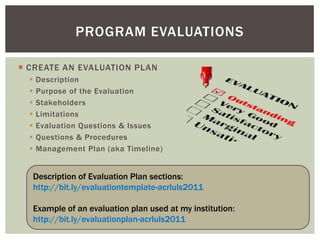
CREATE AN EVALUATION PLANDescriptionPurpose of the EvaluationStakeholdersLimitationsEvaluation Questions & IssuesQuestions & ProceduresManagement Plan (aka Timeline)Program evaluationsDescription of Evaluation Plan sections: http://bit.ly/evaluationtemplate-acrluls2011 Example of an evaluation plan used at my institution:http://bit.ly/evaluationplan-acrluls2011
Moving instruction onlineFaculty collaborationsProgram EvaluationsDominique Turnbow, UC San Diego Librariesdturnbow@ucsd.eduhttp://www.linkedin.com/in/dturnbow
Gregory SchmidtULS / CLS Lightning Rounds
Local History Research and Landscape Architecture Instruction: the Role of Special Collections and ArchivesAmerican Library Association - Annual Meeting 2011Greg Schmidt, Special Collections and Archives LibrarianJocelyn Zanzot, Assistant Professor of Landscape ArchitectureAuburn University, Alabama
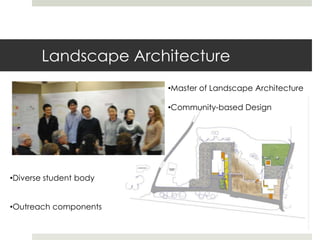
Landscape ArchitectureMaster of Landscape Architecture
Community-based Design
Diverse student body
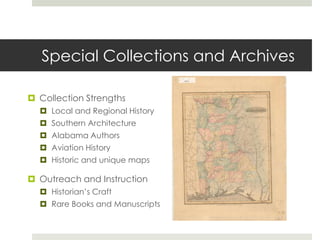
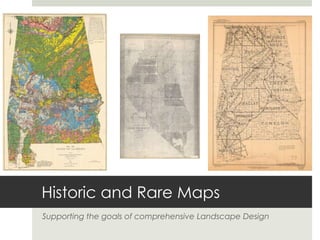
Outreach componentsSpecial Collections and ArchivesCollection StrengthsLocal and Regional HistorySouthern ArchitectureAlabama AuthorsAviation HistoryHistoric and unique mapsOutreach and InstructionHistorian’s CraftRare Books and Manuscripts
Special Collections and Archives InstructionArchives InstructionDiscovering collections through the use of finding aidsAccessing and using rare materialsIncorporating special collections and archives use into research projects and assignmentsGoal: Expand archival and special collections instruction beyond the traditional user groups
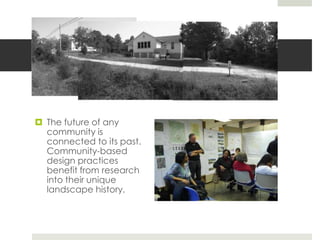
The future of any community is connected to its past. Community-based design practices benefit from research into their unique landscape history.
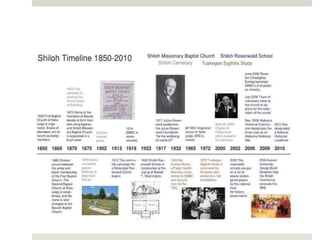
Shiloh Community and Auburn University PartnershipCollaborative Outreach & Scholarship ModelCommunityChurchUniversitiesBusinessesGovernmentShiloh Community Restoration Foundation, Inc.
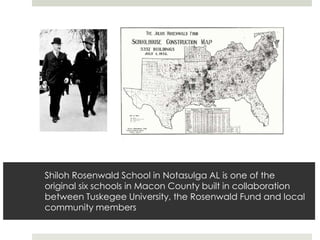
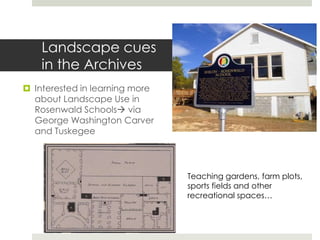
Shiloh Rosenwald School in Notasulga AL is one of the original six schools in Macon County built in collaboration between Tuskegee University, the Rosenwald Fund and local community members
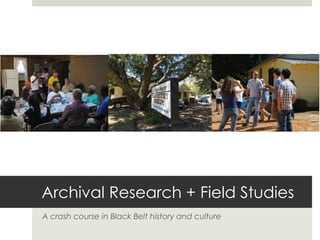
Archival Research + Field StudiesA crash course in Black Belt history and culture
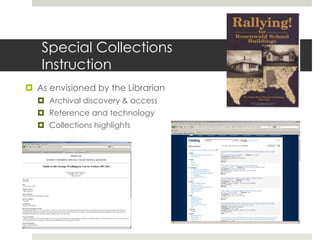
Special Collections InstructionAs envisioned by the LibrarianArchival discovery & accessReference and technologyCollections highlights
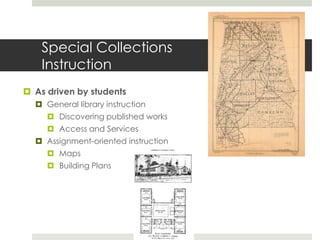
Special Collections InstructionAs driven by studentsGeneral library instructionDiscovering published worksAccess and ServicesAssignment-oriented instructionMapsBuilding Plans
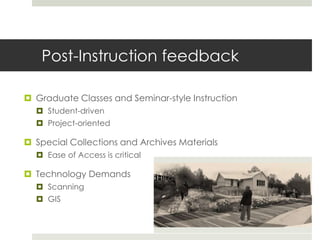
Post-Instruction feedbackGraduate Classes and Seminar-style InstructionStudent-drivenProject-orientedSpecial Collections and Archives MaterialsEase of Access is criticalTechnology DemandsScanningGIS
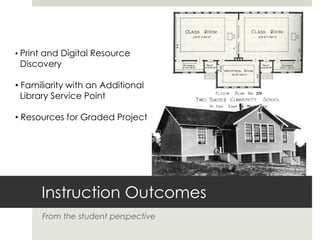
Instruction Outcomes	From the student perspectivePrint and Digital Resource   Discovery  Familiarity with an Additional    Library Service Point Resources for Graded ProjectLandscape cues in the ArchivesInterested in learning more about Landscape Use in Rosenwald Schools via George Washington Carver and TuskegeeTeaching gardens, farm plots, sports fields and other recreational spaces…
Historic and Rare Maps	Supporting the goals of comprehensive Landscape Design

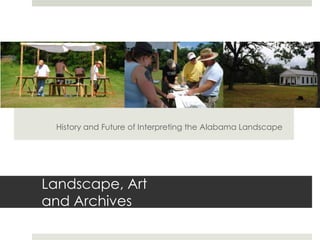
Academic Librarian Lightning Round! Innovative New Roles

  • 1.
    Welcome to theACRLULS / CLSLightning Rounds
  • 2.
    Allison LeamingULS /CLS Lightning Rounds
  • 3.
    ADifferent Kind ofLiaison Experience: Career Research in the Academic Library SettingAllison LeamingBusiness Liaison LibrarianArizona State University Libraries
  • 7.
    Positive attitudeCertain ofvalues and interestsConnection to future career path
  • 8.
    Indecisive Lacking insight Unableto communicate career goals
  • 9.
  • 10.
    Emotions play animportant role in the career decision-making process.
  • 12.
  • 13.
  • 14.
  • 16.
  • 19.
  • 22.
    SourcesBrown, C., George-Curran,R. & Smith, M.L. (2003). The role of emotional intelligence in the career commitment and decision-making process. Journal of Career Assessment, 11 (4), 379-392.Emmerling, R. & Cherniss, C. (2003). Emotional Intelligence and the Career Choice Process. Journal of Career Assessment, 11 (2), 153-167.Mayer & Salovey (1997) What is Emotional Intelligence? In P. Salovey and D. Sluyter (Eds.), Emotional Development and Emotional Intelligence; Implications for Educators (pp. 3-34) New York: Basic Books.Puffer, K. (2009) Emotional Intelligence as a Salient Predictor for Collegians’ Career Decision Making. Journal of Career Assessment, 19 (2), 130-150.
  • 23.
    Angiah DavisULS /CLS Lightning Rounds
  • 24.
    Angiah L. Davis,Reference LibrarianInformation & Research Services DepartmentYes, We Deliver!:  Library Outreach Services Across the Atlanta University Center
  • 25.
    Information & ResearchService Librarians
  • 26.
  • 27.
    Serves four HistoricallyBlack Colleges and University
  • 28.
  • 29.
  • 30.
    World’s largest andoldest consortium of Historically Black Colleges and Universities (HBCUs)Member Institutions
  • 31.
    Why Outreach Services?Notevery student will come to the libraryLocation unknownNo timePromote Library ServicesTo build relationships with faculty staff and students
  • 32.
  • 34.
    We’re Not inWoodruff Anymore!
  • 35.
  • 36.
  • 37.
  • 38.
  • 39.
  • 40.
  • 41.
  • 42.
  • 43.
    Selected ReadingsCourtney, N.(2009). Academic library outreach: Beyond the campus walls. Westport, Conn: Libraries Unlimited.
  • 44.
    Cummings, L. U.(2007). Bursting out of the box: Outreach to the millennial generation through student services programs. Reference Services Review, 35, 2, 285-295.
  • 45.
    Fortson, M., Sahib,J. & Spencer, B. (2011). Step right up to the library! The Week of Welcome carnival at the University of Alabama Libraries. College & Research Libraries News, 72, 6, 350-352. Selected ReadingsKelsey, P., & Kelsey, S. (2003). Outreach services in academic and special libraries. Binghamton, NY: Haworth Information Press.
  • 46.
    Smallwood, C. (2010).Librarians as community partners: An outreach handbook. Chicago: American Library Association.
  • 47.
    Woodward, J. A.(2009). Creating the customer-driven academic library. Chicago: American Library Association.Contact InformationAngiah DavisReference Librarianadavis@auctr.edu
  • 49.
    Diane VanderPolULS /CLS Lightning Rounds
  • 50.
    A Passage toIndia… and beyond!Diane VanderPolWestminster College
  • 51.
  • 52.
    Writing & otherCommunication skillsLeadership & TeamworkCreativity & Reflection
  • 53.
    Critical, analytical &integrative thinking
  • 54.
    Global consciousness, socialresponsibility & ethical awareness
  • 55.
    Westminster& Wai: a library and literacy projectG.G. Jadhav LibraryWith the staff of the G.G. Jadhav Library
  • 56.
    G.G. Jadhav LibraryChildren’s areaThe Library building is the former home of the founder- donated to the community.
  • 57.
    Dr. Ashokrao Joshi is the CEO of a Salt Lake City tech firm with family from the village of Wai. He’s so well thought of in the village that a local school had billboards made to honor him on his birthday.
  • 58.
  • 59.
    The village isfull of examples of both richness and poverty.There is no state financial support for public or school libraries.
  • 63.
    The staff andvolunteers at the Jadhav Library & their families have become great friends.
  • 65.
    Harry Potter inMarathiThe G.G. Jadhav Library has about 2000 children’s books- we’re helping to build that collection.
  • 66.
    Students held abenefit dinner with silent auction, a bake sale and a used book sale in the library with donated items that were not a good fit for our collection.
  • 67.
    RolesProfessional Consultant onlibrariesTeacher & Course developerTravel agent/ logistics coordinatorInfo & Communication Tech SupportExperienced Campus AdministratorFundraiserResource procurerCampus connectorPharmacistStorytellerFriendMomResearcherPublicistMaster of Ceremonies
  • 68.
    Lisa LapointeULS /CLS Lightning Rounds
  • 69.
    Adventures in AcademicAdvisingLisa LapointeReference and Instruction LibrarianFlorida Southern Collegellapointe@flsouthern.edu
  • 70.
  • 71.
  • 72.
    We FreshmenHow it started
  • 73.
    Initial Reaction: FreakOut!Image Source:Mingo.nl (Mingo Hagen). 2008 “Scream.” Flickr. Photograph. http://www.flickr.com/photos/mjhagen/2973212926/sizes/l/in/photostream/ [Accessed June 17, 2011.] Used through Attribution 2.0 Generic (CC BY 2.0) Creative Commons License.
  • 74.
    Don’t Panic: Builda Support Network
  • 75.
    Hey, I cando this! Image Source: raleighwoman (Twanda Baker). DSC_0224 Superhero Pose. Flickr. http://www.flickr.com/photos/ryteclick/3575282100/sizes/m/in/photostream/ Photograph. [Accessed June 17, 2011.] Used through Attribution-ShareAlike 2.0 Generic (CC BY-SA 2.0) Creative Commons License
  • 76.
    Have you triedthis?Tell me more about…This feels familiar…
  • 77.
    Librarian Advising Strength:Service PhilosophyImage Source: Sue Peacock. “Need help? Ask a Librarian Mobile Reference”.Flickr. Photograph. http://www.flickr.com/photos/soo/5508023259/sizes/z/in/photostream/ Accessed June 17, 2011. Used through Attribution 2.0 Generic (CC BY 2.0) Creative Commons License.
  • 78.
    Librarian Advising Strength:Schedule Flexibility Image Source: caryatidxx (Emilie). DSC_0697.Flickr. Photograph. http://www.flickr.com/photos/dearlydeparted/3834132754/sizes/l/in/photostream/ [Accessed June 17, 2011.] Used through Attribution-ShareAlike 2.0 Generic (CC BY-SA 2.0) Creative Commons License.
  • 79.
    Librarian Advising Strength:Lack of TurfImage Source: U.S. Central Intelligence Agency. Azimuthal equidistant projection centered on Kinshasa, 4018'S., 15018'E. 7-69. Washington, 1969. Map. http://hdl.loc.gov/loc.gmd/g3201b.ct002666 [accessed June 17, 2011].
  • 80.
    Librarian Advising Strength:Connecting Students with ResourcesImage Source: Manchester-Monkey. “Connection.” Flickr. Photograph. http://www.flickr.com/photos/manchester-monkey/4879930891/sizes/l/in/photostream/ [Accessed June 17, 2011]. Used through Attribution-ShareAlike 2.0 Generic Creative Commons license
  • 81.
    Advising Challenges: LearningCurricular Requirements & ProcessImage Source: redjar. “file cabinets” Flickr. Photograph. http://www.flickr.com/photos/redjar/113152393/sizes/z/in/photostream/ [Accessed June 17, 2011]. Used through Attribution-ShareAlike 2.0 Generic (CC BY-SA 2.0) Creative Commons License.
  • 82.
  • 83.
    Benefit to Librarian:Community IntegrationImage Source: fauxto_digit. Bob and Weave: Weaving Friendship Bracelets.Flickr. Photograph. http://www.flickr.com/photos/fauxto_dkp/2915425151/sizes/z/in/photostream/ [Accessed June 17, 2011.] Used through Attribution 2.0 Generic (CC BY 2.0) Creative Commons License.
  • 84.
    Benefit to Library:Advising reference pointImage Source: Wikimania2009. Answering the questions. (taken by Damián Buonamico). Flickr. Photograph. http://www.flickr.com/photos/wikimania2009/3857765466/sizes/z/in/photostream/ [Accessed June 17, 2011.] Used through Attribution 2.0 Generic (CC BY 2.0) Creative Commons License.
  • 85.
    Benefit to Students:IndividualSupportImage Source:Tobyotter (Tony Alter). Flickr. Photograph. http://www.flickr.com/photos/78428166@N00/3983153056/sizes/l/in/photostream/ [Accessed June 17, 2011.] Used through Attribution 2.0 Generic (CC BY 2.0) Creative Commons License
  • 86.
    Overall a positiveexperience Image Source:.reid.(Sarah). “thumbs up.” Flickr. Photograph. http://www.flickr.com/photos/sarahreido/3120872862/sizes/l/in/photostream/ [Accessed June 17, 2011.] Used through Attribution 2.0 Generic (CC BY 2.0) Creative Commons License.
  • 87.
    References Studdard, Paul.2000. Academic librarians as advisors: working with students to plan their futures. College & Research Libraries News 61, no. 9 [October]: 781-2, 792.Young, Courtney L. 2008. Incorporating Undergraduate Advising in Teaching Information Literacy: Case Study for Academic Librarians as Advisors. The Journal of Academic Librarianship 34, no. 2 [March]: 139-144.
  • 88.
    Michelle DemeterULS /CLS Lightning Rounds
  • 89.
    Keeping it AllTogether: Life as an Academic Partnership LibrarianMichelle DemeterThe Florida State University
  • 91.
  • 108.
    Left wanting more…information?Michelle DemeterFlorida State Universitymdemeter@fsu.edu850.645.2707
  • 109.
    Rachel BesaraULS /CLS Lightning Rounds
  • 110.
    But Who Answersthe Library’s Questions? The Assessment Librarian’s Role
  • 113.
    Assessment Answers QuestionsAbout…Libraries’ UsersInternal ProcessesLarger Academic Community
  • 114.
  • 118.
  • 122.
  • 124.
  • 125.
  • 126.
  • 128.
  • 129.
    Rachel BesaraAssessment LibrarianFloridaState University Librariesrbesara@fsu.edu
  • 130.
    Susan SmithULS /CLS Lightning Rounds
  • 131.
    From Department Directorto Race DirectorSusan Sharpless SmithZ. Smith Reynolds Library/Wake Forest UniversityULS/CLS Program, ALA Annual New OrleansJune 25, 2011
  • 132.
    Who We Areand Why a Race?
  • 135.
    Building Relationships &Partnerships Through Planning
  • 140.
    Developing New Skills& Leveraging Current Ones
  • 145.
  • 150.
  • 151.
    Tara SchmidtULS /CLS Lightning Rounds
  • 152.
    Librarians as FirstYear InstructorsTara Schmidt, Research Services, Univ. of Texas at San Antonio
  • 153.
    Fall Enrollment = 25,794 UndergraduatesFirst Time Freshmen = 5,095
  • 154.
  • 155.
    Components of aFreshman Seminar Course
  • 156.
  • 157.
    Course Objectives“efficiently locateresources”“Information literacy skills ““evaluate sources and search processes ““determine which sources are most credible and relevant for the information need”“use information in an ethical and legal manner”“effectively use information “
  • 159.
    What we learnedfrom a faculty perspective
  • 160.
    So where doour faculty see the library fitting into the freshman experience?
  • 161.
    We gained awhole new perspective on the needs of our students
  • 162.
    Prioritizing the needsof students navigating college for the first time
  • 163.
    Figuring out thelibrary’s place in the academic routine
  • 164.
    What did wereally give our students? What they needed ≠ What we thought they needed
  • 165.
    When we askedour students to demonstrate what they learned…
  • 166.
    Time to takeanother look at the course objectives
  • 167.
    Biggest impact?“Time managementassignment helped because I never really thought about my day before I wrote it down”“Organization has kept me up with my other classes”“I TRIED to start studying 3 hours a day”“The research part helped in Writing Composition a lot.” “The research! The time management! And the library resources. So many!”“Stuff on personality/learning styles”
  • 168.
    Figuring out wherethe library fits for our new freshmen
  • 169.
    Learning from ourmistakesDesigning a new class for the fall
  • 170.
  • 171.
    Library = Place Library = Services Library = When students need us
  • 172.
    Eric A. KidwellULS/ CLS Lightning Rounds
  • 173.
    I Am Librarian,Hear Me RoarEric A. KidwellDirector of the Library & ProfessorHuntingdon College2011 American Library Association Annual Conference/ New OrleansACRL CLS/ULS Academic Librarian Lightning Round! Innovative New Roles
  • 191.
    I am LIBRARIAN,hear me roarIn numbers too big to ignoreAnd I know too much to go back an' pretend'cause I've heard it all beforeAnd I've been down there on the floorNo one's ever gonna keep me down againOh yes I am wise …
  • 192.
    Caitlin Anne BagleyULS/ CLS Lightning Rounds
  • 193.
    Librarian As WritingAmbassador: Finding the Path from the Library to KnowledgeCaitlin A. BagleyMurray State University
  • 194.
    Waterfield LibraryMurray StateUniversity is located in Murray, KY.We are a midsize university with just above 10,000 FTE students.
  • 195.
    Writing Across theCurriculumGoal is to help students raise their writing skills, university wide across departments.A Math Major should have the same writing skills as an English Major.
  • 196.
    Library as CentralLocationWaterfield Library hosts two main places for students to get help:Racer Writing CenterReference Desk
  • 197.
    Racer Writing CenterTheWriting Center is designed for one-on-one consultation.Only 3-4 consultants at any time.
  • 198.
    Reference DeskTraditional rolesalso apply, but when students bring their papers to the desk, we encourage and help them with what we can before we pass them on to the Writing Center.
  • 199.
    MissionThe library’s missionis to serve as the Intellectual Commons of the University. WAC’s mission is to “believe that writing and writing instruction should occur across the university curriculum and throughout a student’s education.”The two concepts work together seamlessly.
  • 200.
    WAC WebsiteThe libraryhelped design the WAC website, and how they didn’t want to be reliant on Purdue OWL.We first had initial debate over whether the site should be for students or faculty.
  • 201.
    The Internet –The Great Equalizer?We try to teach students to learn how to swim through the good & bad, taking only the good with them.WAC is in the beginning stages of creating their own website.Currently exists as a help link of style guides and writing examples.
  • 202.
    First Semester ResultsNumberof clients: 154Number of sessions: 377Most students fell into one of the following three colleges:BusinessHumanities & Fine ArtsScience/Engineering/Technology
  • 203.
    Second Semester ResultsNumberof clients: 170Number of sessions: 412Again, most students came from the Business school, and the College of Humanities & Fine Arts. Gains in all areas though.
  • 204.
    OutreachSpreading the word.Physically,the RWC is a removed area of the library. We have to find ways of making it accessible and noticeable.Mention in all Instruction SessionsHandout bookmarks, pamphlets, etc.Do your own publicity!
  • 205.
    Embedded LibrarianshipPublicity onlyworks for so long.Become close w/professors and be added into classes to become go to stops for help.ENG 105 and HIS 400
  • 206.
    ENG 105Introductory writingcourse, mandatory for all students.I try to speak to every section at least once.Some sections I work with in-depth over the semester.
  • 207.
    HIS 400This isa combination undergraduate/graduate level course, and so the writing they are expected to turn in is at a higher level.Traditionally, I would teach them research methods. Now I often combine writing techniques in with this.
  • 208.
    LOR 101Alongside, regularduties I teach a 3 CR research class with a heavy writing component. This enables me to see the tangible proof of students who actually use the service.
  • 209.
    One on OneInstructionWhen a student comes to my office looking for help with a paper, we both read the paper together.It is usually helpful to have the student read their paper out loud, word for word, omitting no typos or mistakes.
  • 210.
    Oral Communication CenterCurrentlywe are building an Oral Communication Center that we hope to pair with the RWC, in bringing students a better rounded out experience.
  • 211.
    In SummaryPhoto CourtesyU.S. National Archives Flickr stream, circa 1975http://www.flickr.com/photos/usnationalarchives/4727525216/in/photostream/
  • 212.
    Questions? Comments?CaitlinA. Bagley: cbagley1@murraystatePhoto Courtesy of U.S. National Archives Flickr Stream, circa 1975http://www.flickr.com/photos/usnationalarchives/4727537268/in/photostream/
  • 213.
    Dominique TurnbowULS /CLS Lightning Rounds
  • 214.
    incorporating instructional designapproaches into our workRedefining LibrarianshipDominique Turnbowdturnbow@ucsd.eduUC San Diego LibrariesMLIS & MA Educational Technology Candidate
  • 215.
    TodayMoving instruction onlineFacultycollaborationsProgram Evaluations
  • 216.
    Why instructional design?A D D I EEvaluation
  • 217.
    ANALYSISReflectWhat worked well?Whatactivities did students enjoy? Where did students seem lost or confused? Moving instruction online
  • 218.
    ANALYSISConsider you audienceWhatdo they want to learn? Consider:familiarity with libraries and researchcomfort with technologyaccess to a computerEnglish language skillsMoving instruction online
  • 219.
    ANALYSISRevisit or createan instruction goalGoals are broad, but specific; should encompass all outcomes in the tutorialMoving instruction onlineEXAMPLE INSTRUCTION GOAL:The learner will be able to use library resources to find three articles about a topic for a lab report.
  • 220.
    DESIGN Create ABCDlearning objectivesA=audienceB=behaviorC=conditionD=degreeMoving Instruction OnlineEXAMPLE OBJECTIVE:Given access to PubMed and a topic, the learner will be able to find at least three articles for their lab report.
  • 221.
    DESIGNClark’s Content-Performance Matrix(CPM)Moving INSTRUCTION OnLINELEARN ABOUT CPMClark, Ruth C. (2009). Developing Technical Training: A Structured Approach for Developing Classroom and Computer-Based Instructional Materials (3rd ed.). Hoboken, NJ : John Wiley & Sons, Inc.
  • 222.
    DESIGNHow will learnersstay motivated? Consult the ARCS model.AttentionRetentionConfidenceSatisfactionMOVING Instruction onlineLEARN ABOUT ARCSKeller, J. M. (1987a). Development and use of the ARCS model of motivational design. Journal of Instructional Development, 10(3), 2 – 10.Keller, J. M. (1987b). Strategies for stimulating the motivation to learn. Performance & Instruction, 26(8), 1-7.Keller, J. M. (1999). Motivation in cyber learning environments. Educational Technology International, 1(1), 7 – 30.
  • 223.
    DEVELOPMENTHow will theinstruction be delivered?What platform(s) will you use to deliver content?What kinds of activities do you want to build into the instruction? Will you need to track student progress or completion? Incorporate Richard Mayer’s Multimedia Learning Principles.Moving Instruction OnlineLEARN ABOUT MULIMEDIA LEARNING PRINCIPLESMayer, Richard E. (2009). Multimedia Learning (2nd ed.). New York, NY: Cambridge University Press.
  • 224.
    IMPLEMENTATIONPrototype and TestingContentFunctionality– especially activities and assessmentsAffective feedbackSupportHow will you provide technical help to learners?How can learners ask questions? Moving Instruction Online
  • 225.
    EVALUTATION: Kirkpatrick’s 4Levels of EvaluationMoving Instruction OnlineLEARN ABOUT KIRKPATRICK’S 4 LEVELS OF EVALUATIONKirkpatrick, Donald L. and James D. Kirkpatrick (2005). Transferring learning to behavior: Using the four levels to improve performance. San Francisco: Berrett-Koehler Publishers..
  • 226.
    Revise or createnew instructionExample: If faculty provide students with an article to read about a topic, recommend that they also ask students to find and summarize an article with an opposing point of view.Example: Recommend students include 3-5 sentences about how each source helped them understand the topic of their paperwith the bibliography.Grade IL part of assignments or provide a rubric for TAs to useConsider blended instructionTeach low-level outcomes via video or tutorial (e.g. how to find a journal article using the catalog) and high-level ones in-person (e.g. search strategies).Faculty Collaborations
  • 227.
  • 228.
    CREATE AN EVALUATIONPLANDescriptionPurpose of the EvaluationStakeholdersLimitationsEvaluation Questions & IssuesQuestions & ProceduresManagement Plan (aka Timeline)Program evaluationsDescription of Evaluation Plan sections: http://bit.ly/evaluationtemplate-acrluls2011 Example of an evaluation plan used at my institution:http://bit.ly/evaluationplan-acrluls2011
  • 229.
    Moving instruction onlineFacultycollaborationsProgram EvaluationsDominique Turnbow, UC San Diego Librariesdturnbow@ucsd.eduhttp://www.linkedin.com/in/dturnbow
  • 230.
    Gregory SchmidtULS /CLS Lightning Rounds
  • 231.
    Local History Researchand Landscape Architecture Instruction: the Role of Special Collections and ArchivesAmerican Library Association - Annual Meeting 2011Greg Schmidt, Special Collections and Archives LibrarianJocelyn Zanzot, Assistant Professor of Landscape ArchitectureAuburn University, Alabama
  • 232.
    Landscape ArchitectureMaster ofLandscape Architecture
  • 233.
  • 234.
  • 235.
    Outreach componentsSpecial Collectionsand ArchivesCollection StrengthsLocal and Regional HistorySouthern ArchitectureAlabama AuthorsAviation HistoryHistoric and unique mapsOutreach and InstructionHistorian’s CraftRare Books and Manuscripts
  • 236.
    Special Collections andArchives InstructionArchives InstructionDiscovering collections through the use of finding aidsAccessing and using rare materialsIncorporating special collections and archives use into research projects and assignmentsGoal: Expand archival and special collections instruction beyond the traditional user groups
  • 237.
    The future ofany community is connected to its past. Community-based design practices benefit from research into their unique landscape history.
  • 238.
    Shiloh Community andAuburn University PartnershipCollaborative Outreach & Scholarship ModelCommunityChurchUniversitiesBusinessesGovernmentShiloh Community Restoration Foundation, Inc.
  • 239.
    Shiloh Rosenwald Schoolin Notasulga AL is one of the original six schools in Macon County built in collaboration between Tuskegee University, the Rosenwald Fund and local community members
  • 241.
    Archival Research +Field StudiesA crash course in Black Belt history and culture
  • 242.
    Special Collections InstructionAsenvisioned by the LibrarianArchival discovery & accessReference and technologyCollections highlights
  • 243.
    Special Collections InstructionAsdriven by studentsGeneral library instructionDiscovering published worksAccess and ServicesAssignment-oriented instructionMapsBuilding Plans
  • 244.
    Post-Instruction feedbackGraduate Classesand Seminar-style InstructionStudent-drivenProject-orientedSpecial Collections and Archives MaterialsEase of Access is criticalTechnology DemandsScanningGIS
  • 245.
    Instruction Outcomes From thestudent perspectivePrint and Digital Resource Discovery Familiarity with an Additional Library Service Point Resources for Graded ProjectLandscape cues in the ArchivesInterested in learning more about Landscape Use in Rosenwald Schools via George Washington Carver and TuskegeeTeaching gardens, farm plots, sports fields and other recreational spaces…
  • 246.
    Historic and RareMaps Supporting the goals of comprehensive Landscape Design

Editor's Notes

  • #5 Taking on the career researchers has exposed me to a whole new style of librarianship. Career decision-making is a personal journey, and is sometimes a very difficult process for students. Joining my students on their journey has been a unique professional experience for me.
  • #6 It’s true that some students have this research project totally under control. They are in-tune with their education, professional interests and values, and are able to connect these to their career path. These students research decisively and can easily communicate to me what they need from the library.
  • #7 Other students present more of a challenge. After completing the career assessment tools and surveys that are part of their coursework, they admit to me that are more confused than ever. They doubt their career choice, and are frustrated by the research assignment. As the librarian assigned to help them find resources, I become a casualty of this frustration.
  • #8 After years of success with my business students it was difficult for me to process why I struggled to connect with some of my Career Researchers. Obviously, the topic is much less linear than a typical business query, but I felt like there was more the issue.
  • #9 My reading uncovered something I had not considered – it turns out that emotions play an important role in the career decision-making process.
  • #10 Historically we’ve all been warned against making major decisions based on our emotions. However, Theories of Emotional Intelligence suggest that emotions are essentially linked with many of the cognitive systems used in decision making. If managed correctly, emotions actually can produce better, not worse, decisions.
  • #11 The most interesting thing I learned about Emotional Intelligence and career decision making is that they are positively related. Those with a higher level of Emotional Intelligence were more likely to report greater confidence in their career decision-making abilities.
  • #12 So what about my Career Researchers that are struggling? Poor research skills may not be the root problem. Career choice involves serious self-exploration, including uncovering ideas of identity, autonomy and the extent of control over one’s environment.
  • #13 Students who are less attuned to understanding, analyzing and regulating emotions experience difficulty committing to a career decision. They are less aware of how to use their emotions to guide their thoughts and actions.
  • #14 The bottom line from EI scholars is that tackling the issues of career decision-making requires a understanding of one’s own emotions and an understanding of the complex feelings that naturally accompany major decisions..
  • #15 So what does all this mean for me, librarian charged with helping Career researchers? I knew upon learning more about the connection between Emotional intelligence and effective career decision-making that my approach to helping these students with their research needed to change.
  • #16 I re-examined my encounters and interactions with students who came to me for help, keeping in mind the effect Emotional Intelligence levels might have on a student’s ability to choose a career path..
  • #18 In career research the terms of a successful search can’t be dictated. it is vital that information be shared, not imposed. Possibilities for the career researcher need to be created jointly through open and equal dialogue.
  • #19 Working with these students has really forced me to reflect on my skills and beliefs as an information professional. It has been a satisfying and rewarding experience.
  • #20 I have really enjoyed learning about this topic. Please don’t hesitate to let me know if I can share any of the research this presentation is based on. Thank you!
  • #46 Hi I’m Diane VanderPol, I’m the Director of the Library at Westminster College in Salt Lake City, UT. I’ve had the opportunity to take on new roles at Westminster. Roles which have taken me to new places, mostly to a small library in village of Wai in Maharashtra, India. In the next 4 minutes and a half min or so, I’d like to tell you about how I fell into this new work and how my being a librarian helped me succeed. 15s
  • #47 At Westminster, we have five campus-wide learning goals that are clearly articulated and deeply infused into each academic program. The goals may well look a bit like the general education requirements on your campus. 30s
  • #48 We endeavor to graduate students proficient in writing and other communication skills, students who demonstrate their abilities in the areas of leadership and teamwork, students capable of expressing creativity and with reflective capabilities… 44s
  • #49 Students who are critical, analytical and integrative thinkers- and let me pause briefly here before going on to our 5th campus-wide learning goal to say that this is where we have concentrated our library efforts in the past. This is an “old” role for us- we’ve established our ability to help students think critically about information. 57s
  • #50 So we’ve gone in a new direction, taking a far more active and direct role in helping students to achieve our 5th campus wide learning goal, to develop global consciousness, social responsibility and ethical awareness 1m10s
  • #51 I’ve been involved from the start with a campus project that partners with the staff of the G.G. Jadhav Library in the village of Wai in Maharashtra India- about a 5 hour drive from Mumbai. 1m22s
  • #52 I’d love to say my involvement was the result of a thoughtfully planned expansion into helping students to meet this learning goal, but I’d be lying if I did. I was in the right place at the right time and the word library was being tossed around. 1m35s
  • #53 But both the project and my roles have evolved (much more thoughtfully and intentionally) in the last two years. Initially, a group of faculty, staff and students were charged by our college President together with a local area donor (gesture slide) to create a project that would improve educational and economic opportunities in Wai and promote cross cultural awareness. 1m50s
  • #54 A small group of us went to India in 2009 to do planning work on our project. We metteachers and professional librarians excited about furthering the English language skills of children in Wai and about developing a love of reading and books in their students. 2m5s
  • #55 My role at this point was that of a consultant to both the partners in India who were hungry to learn as much as possible about public and school libraries in the US and also to my project teammates at Westminster who looked to me for a sense of how we might proceed working with the local library resources. 2m20s
  • #56 We lit upon the idea of co-hosting a reading camp at the library during Indian summer break which conveniently fell during our one month May Term- we could turn this into a credit bearing class, students could travel to India and have an incredible immersive cross cultural experience and do important service work and reflection. And so in May of 2010 we took 16 students to India (and brought them all back too!) 2m40s
  • #57 I was one of two instructors for the credit bearing short course- course development & teaching is by no means a new role for librarians- however, given the nature of this course, some non-traditional responsibilities surfaced that I was well prepared to take on thanks to my skills and experiences in libraries: 2m58s
  • #58 I researched travel logistics and options, I employed communication technology tools both in planning with partners in India and also in collecting and “publishing” students’ reflections as part of the course assessment, and I had invaluable familiarity with campus processes and procedures connected to budget, purchasing & risk management. 3m18s
  • #59 As a change manager in libraries, I had some preparation for taking on light counseling and mentorship roles with students, some of whom were overwhelmed by India. Frankly, nothing in libraries prepared me for the role of pharmacist/mom to the kids who were hit with violent cases of Delhi belly- maybe if I’d done some time in public libraries… 3m38s
  • #60 With lessons learned about what worked and where we struggled, we reconfigured the experience for 2011. This August I’ll return to India with 13 students (and a lot of antidiarrheal meds) who will do projects in the library such as shelf building & painting. Additionally, students will develop readaloud programs to take into classrooms that allow school kids in Wai to practice their English language skills with native speakers. 3m58s
  • #61 This trip, however, is not connected to a credit bearing class. The model most closely resembles an Alternative Spring Break trip or a Habitat for Humanity style volunteer trip where students self select, self fund and make a personal commitment to service without meeting any general education or major requirements. 4m16s
  • #62 Without credit, tuition and financial aid in play, the issue of costs and fundraising has taken on a greater importance and I’ve again found that my library experiences and skills help me to successfully contribute to the project in new ways. I brought rich connections to both the curricular and co-curricular units on campus which helped us to find partners and resources such as the donated gift books for our used book sale. 4m35s
  • #63 As the project shifted from the planning stages, to a credit bearing short-course, to a co-curricular experience, my involvement has been consistent and my librarian-ness has made me an integral part of the process and has opened doors for other librarians interested in helping students develop global consciousness, social responsibility and ethical awareness. 5m
  • #68 In the Fall of 2009, three librarians were selected to act as advisors to incoming undeclared freshmen. All of us had prior experience working with some variety of freshmen focused groups, be it a first year course, an honors society or even a mentoring program.
  • #69 First Reaction: Sheer terror of course.
  • #207 Courtsey US National Archives Flickr Stream
  • #210 10 seconds
  • #211 18 seconds
  • #212 30seconds (hurry)
  • #213 12 seconds
  • #214 10 seconds
  • #215 10 seconds
  • #216 20 seconds
  • #217 15 seconds
  • #218 13 seconds
  • #219 27 seconds
  • #220 15 seconds
  • #221 12 seconds
  • #222 38 seconds
  • #223 15 seconds
  • #224 35 seconds
  • #225 20 seconds
  • #227 This is where the authors are introduced and the Title is read aloud (I know reading from slides is LAME-O, but for the title, I think it is acceptable)
  • #228 15 seconds about the Landscape Architecture program:*graduate programA strong emphasis on contemporary landscape design, with significant studio timeA Diverse student body with a significant international student populationThey come with a limited knowledge of local area history and landscapeEmphasis on outreach to regional communities can be problematic for students not familiar with the areas history and culture. How do you do community-based design with a limited picture of the community?ENTER THE LIBRARY!
  • #229 15 seconds about AUL and Special Collections and Archives: One of our strongest collection strengths: relates to local and regional history: from pre-columbian through the presentOur core user groups: Our instruction efforts have largely been used by History Courses (Historians Craft) Courses that need access to rare books: Graphic Design and Literature Courses.
  • #230 SC&AInstruction style has in the past largely been oriented toward our traditional user groups: Historians and Literature studentsWhile these courses are satisfying, and we’ve developed a strong relationship with these departments, my goal has been to reach out to underserved colleges and programs, to make teaching faculty aware of our resources relevant to their endeavors. (segue to Shiloh background section): New faculty in the CADC, particularly Historic Preservation and Landscape Architecture were receptive to my efforts! This has much to do with the CADC engagement with local communities across alabama, in particular the struggling Black Belt region.So, before the Semester began, Professor Zanzot and I met to discuss an upcoming project on the Shiloh School and what her students needed from SC&A. We then set a “library day” instruction/research session for early in the Semester (but after the class had a chance to understand their project)
  • #231 15 seconds on Jossie’s course:A Field Studies Course with the charge to develop a landscape design for a historic site in Notasulga (Macon county) Alabama, in this case the Shiloh School, Church, and Cemetery: each having profound historic significance to the community.Students in this course are required to develop a community-based landscape design incorporating the history of the site, input from the community, and an understanding of the ecology of the site.Landscape Architecture Studio Goals: to make the site accessible to visitorsProvide opportunities to tell history in the landscapeenable a next generation of community programs.
  • #232 15 seconds on the Shiloh-AU partnership: Professor Zanzot’s Class was not the first University group to work with the Shiloh Community. Far From it.* Shiloh Rosenwald School originally built in partnership with Tuskegee University. 1921.Restoration in partnership with Auburn University Master of Design Build Program (Home Depot – provided restoration money)Board Members of the Foundation included AU and Tuskegee people, along with community and governmental representatives.National Register of Historic Places
  • #233  15 Seconds on the Rosenwald schools in general, and the Notasulga school in particular. Julius Rosenwald (CEO of the Sears Corporation) in the early part of the 20th Century set up a fund to assist black communities build school houses. These often became the center of educational and social a activities for their communities; schoolhouse, farm plots, athletic fields.The Fund expired during the great depression, but the schools existed largely until integration. .The Shiloh Community school and grounds is the closest existing Rosenwald school to AU. The only Rosenwald School remaining in Macon county.
  • #234 15 seconds on just the Shiloh site:The community dates back to the 1860s when they moved the Shiloh Missionary Baptist Church to Notasulga from Tuskegee. There are unmarked graves dating back to the 1860s, The school was first built in 1921. Site traverses several significant time periods and historical events. Pre-Columbian era: nearby native american sitesAntebellum and postbellum agricultural heartland (massive changes to natural landscape)Civil Rights era.School integration (which led to closure of school)The infamous Tuskegee Syphilis Study: Shiloh Baptist Church and Cemetery.
  • #235 15 seconds on what the class did prior to the library visit: Before the students began their library research and design planning, they received a crash course in Alabama Black Belt history and cultureStudents were oriented by a visit to the Shiloh grounds to observe work and to meet with community members. On the weekend preceding our Library Instruction Date: they also visited historic sites across Alabama; Civil Rights landmarks & museums, early American forts and roadways, Native american sites.
  • #236 What I planned to get across in 1.5 hours: how to discover materials (operated on assumption that few had ever done archival research)how to access materials (research in a closed stacks situation)archives services (Reference, duplication, digitization)broad scope of SC&A collections and how they can be used in the Shiloh project.
  • #237  What the class turned the session into: Students used catalog to find mostly published histories of the Shiloh area. Little interest in paper finding aids / analog archival collections)Through a seminar-style setting, the empowered students steered instruction toward an emphasis on upcoming graded course assignment using mapsAccessDigitizationOverlays
  • #238 Next Time:A seminar-style instruction session worked well: Graduate Students, even when unfamiliar with SC&A, had an agenda neither I nor Professor Zanzot expected. The longer time allotted allowed for the session allowed for a less-rigid style.If this course happens again, I will likely involve our GIS specialist. This was a far cry from historian and English scholar driven instruction.
  • #239 This could be a slide for a “what did and what didn’t” work in the library instruction session” slide. Your thoughts?
  • #240 Looking to the archives for landscape cues useful to the work of restoration…Some of the materials found to be important to the students’ final projects includedPamphlets and writings on Rosenwald and the schoolsScholarly histories on Tuskegee’s role in the Rosenwald Schools, The Tuskegee Syphilis Study, Local historical society publications(SEGUE TO NEXT SLIDE): and of course maps
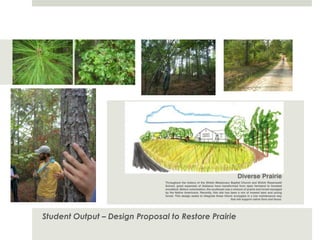
  • #241 Historic ecologiesHuman settlement The American Southwest
  • #242 Design Proposal to restore prairie- (this could be presented in the context of an example of student output and how historic ecologies was a component that the student group was able to extract from their library research)
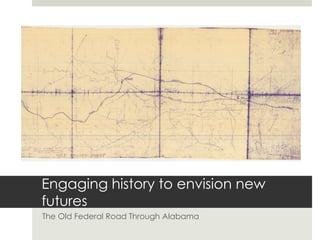
  • #243 (Segue to Old Federal Road Slides)History of Creek Indian settlements and culture was of interest to students during the instruction session.I have found that the more engaged a Program is with the local/regional community, the more important it is to engage their students in instruction related to discovering and accessing materials in the Special Collections and Archives.Collaboration with one unit can naturally lead to other opportunities that would have not been recognized. The above image is that of the Old Federal Road. Landscape Architecture’s awareness of these historic sketches and maps eventually involved the SC&A in a collaboration with other underserved campus departments.
  • #244 15 seconds on the OFR project:Special Collections/Archives + Landscape Arch + Jule Collins Smith Museum + Art Dept awarded AU Intramural Grant
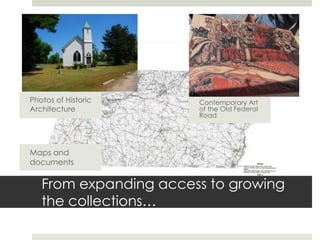
  • #245 InstructionPaid off not only in a broader base of knowledgeable archives users at Auburn Univ, but also paid off in the growth of a new collection to be added to the archives and made available online.Guides to researching location of old federal roadIdentifying events and landscapes along the OFR worthy of interpretation by artistsFuture proposals that introduce people to AL history and landscapes through art.
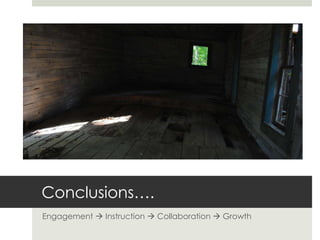
  • #246 ConclusionsBringing Special Collections Instruction into a course with a high degree of creative work posed challenges and required some flexibility in carrying out.While the Role of SC&A as envisioned by me changed over the course of the semester, the value I was certain we could add to Landscape Architecture Instruction was never in question.The collections that may come to SC&A through this engagement are an unexpected but welcome result.