English for Academic Purposes
Academic Communication
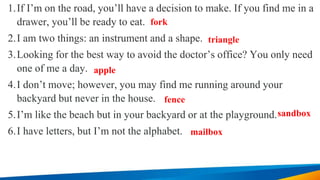
1.If I’m on the road, you’ll have a decision to make. If you find me in a
drawer, you’ll be ready to eat.
2.I am two things: an instrument and a shape.
3.Looking for the best way to avoid the doctor’s office? You only need
one of me a day.
4.I don’t move; however, you may find me running around your
backyard but never in the house.
5.I’m like the beach but in your backyard or at the playground.
6.I have letters, but I’m not the alphabet.
fork
triangle
apple
fence
sandbox
mailbox
Content
Warm Up
Effective Debating Techniques
Mini Group Debate Preparation
Mini Group Debate Presentation
Part 1 IELTS Essay Structure
Part 1 Warm Up
Brain Teaser – Critical Thinking
Try out a brain teaser using the link
below!
https://www.youtube.com/watch?v=m2eIN
I4WXkc
Part 1 IELTS Essay Structure
Part 2 Debating Strengths
and Weaknesses
Video Watching
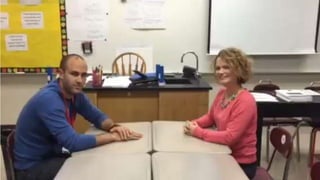
The following debate demonstration shows two
teachers debating if sweatshirts/hoodies should
be allowed to be worn in schools.
While you watch the video try and ask yourself
the following questions:
• Was there a particular teacher who you
thought had better arguments?
• Why was their case stronger?
• What made their arguments weaker?
• As an audience member, which line of
arguing were you more sympathetic to?
Why?
(https://www.youtube.com/watch?v=rcY5A58o
IfA)
Video Watching
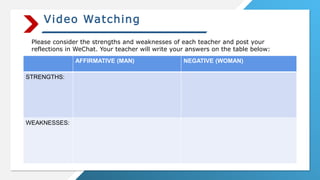
AFFIRMATIVE (MAN) NEGATIVE (WOMAN)
STRENGTHS:
WEAKNESSES:
Please consider the strengths and weaknesses of each teacher and post your
reflections in WeChat. Your teacher will write your answers on the table below:
Video Watching
AFFIRMATIVE (MAN) NEGATIVE (WOMAN)
STRENGTHS: • Argument relates to students being
too cold in colder seasons on
campus.
• Great argument about not
restricting wearing hoodies for all
students based on the bad
behaviors of a select few.
• Argument relates to safety (triggers an
emotional response in audience –
fear).
• Tone and body language is very
assertive.
• Draws authority from mention of
”school rules”.
WEAKNESSES: • Body language and tone/pitch is not
as firm and loud as the opposition.
• Rebuttal does not combat the
argument about restricting wearing
hoodies for all students based on the
bad behaviors of a select few and
instead changes the subject to school
rules.
Here are some reflections from your teacher:
Part 1 IELTS Essay Structure
Part 3 Debating Techniques
Discussion
Please discuss the following as a group:
What makes a good group debate?
• clarity (the main points to be discussed),
• content (the vertical depth in each point) and
• confidence.
Why are some arguments stronger than others?
Strong Argument
• A strong argument is one that is well-supported and well-
reasoned.
• It presents evidence and logical reasoning to support its
conclusion, and is convincing and compelling to the audience.
Weak Argument
A weak argument is one that lacks evidence or logical reasoning
to support its conclusion.
Discussion
Effective Debating Techniques
1. Analogy
2. Tone and Pitch
3. Body Language
4. Story Telling
5. Facts and Evidence
Analogy
An analogy is a logical reasoning or argument style in which two
items are contrasted and conclusions are reached based on their
similarities.
“Life is like a box of chocolates - you never know what you're
gonna get”: An often-used analogy from Forrest Gump shows that
life has many choices and surprises, just like a box of chocolates.
“She's as blind as a bat.”: An analogy used to refer to someone
with bad eyesight. Bats are blind and use sonar and echo-location
to move around, therefore relating someone’s eyesight as similar
to that of a bat is like saying they are blind.
Analogy in debate:
Example: “Allowing skateboarding in the Olympic Games is like
allowing graffiti art into the Louvre.”
The above is a debating analogy comparing two things and
drawing a conclusion about the outcome being similar. (i.e. not
appropriate)
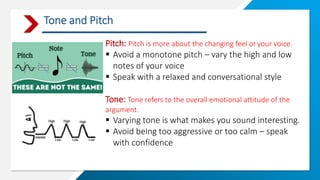
Tone and Pitch
Pitch: Pitch is more about the changing feel of your voice.
 Avoid a monotone pitch – vary the high and low
notes of your voice
 Speak with a relaxed and conversational style
Tone: Tone refers to the overall emotional attitude of the
argument.
 Varying tone is what makes you sound interesting.
 Avoid being too aggressive or too calm – speak
with confidence
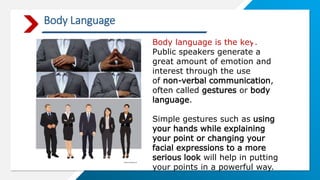
Body Language
Body language is the key:
Public speakers generate a
great amount of emotion and
interest through the use
of non-verbal communication,
often called gestures or body
language.
Simple gestures such as using
your hands while explaining
your point or changing your
facial expressions to a more
serious look will help in putting
your points in a powerful way.
Story Telling
A story is an argument:
Stories are a powerful means to change
people’s attitudes and beliefs. They make the
audience feel personally involved or empathetic
towards the issue.
Topic: Is racism a sport here to stay?
Example of storytelling: “Let me share with you
a story about an eleven-year-old Ethiopian boy
named Solomon who loves to run, despite his
ragged shorts and bare feet...”
Example, Facts and Evidence
 For every argument you make in a debate, examples and/or evidence are
necessary to prove your point.
 Evidence helps to provide a real-world context for your arguments
 It is a requirement in the assessment rubric.
 Statistics, studies, examples, or illustrations. Try to provide at least two
pieces of evidence for each point.
Topic: Do athletes get paid too much?
Example of Evidence: “Education is one of the most economically important
occupations because education directly affects the future. However, teachers
However, teachers earn less than one-tenth of the average professional
professional athlete. According to Fadeaway World, LeBron James currently
James currently makes roughly $542,377 per game. This is far beyond what a
beyond what a teacher will likely ever see working in education.”
Review:
So far:
- Debating strengths &
weaknesses
- Effective Debating
Techniques
Coming up:
-Plan your group debates
-Group debate presentations
-Feedback from teacher
-Q & A session
Part 1 IELTS Essay Structure
Part 4 Mini Group Debate
Planning the Debate
1. Your teacher will break you into groups of 6 students or more
2. Within each group you will be asked to form two smaller
teams of 3 students
3. One team must decide to be negative and one must decide to
be affirmative
4. Each smaller team must then decide who will be the first,
second and third speaker
5. Discuss the prompt:____________________
6. Come up with a 3 possible arguments and discuss these
options
7. Decide which argument will be your main argument
8. Ensure you are using effective debating techniques
(storytelling, analogy etc.)
9. Have your three arguments written down and ready for
presentation
Prompts
Your group will be assigned one of the following prompts:
1. Going to the gym is better than playing a team sport
2. Bodily health is more important than mental health
3. Energy drinks and coffee are good for
concentration/study
4. Children should have a choice if they want to study PE
(Physical Education/Sports) or not
5. Physical exercise should be a mandatory part of
University Education
Every group will have approximately 15 minutes to
Group Presentation Time
• Every pair of groups will present your
debate to the class (or, time pending,
groups may present to each other)
Feedback: Within group
What do you think you did well in the group debate?
(Did people perform their roles? Did everyone use the language from their role)
What debating techniques did you use in your debate?
What have we learned today?
1. Effective debating techniques
2. How to conduct a mini debate using effective debating
techniques
English for Academic Purposes
Academic Communication

Academic Communication Lesson 2 (Debating Techniques).pptx

  • 1.
    English for AcademicPurposes Academic Communication
  • 2.
    1.If I’m onthe road, you’ll have a decision to make. If you find me in a drawer, you’ll be ready to eat. 2.I am two things: an instrument and a shape. 3.Looking for the best way to avoid the doctor’s office? You only need one of me a day. 4.I don’t move; however, you may find me running around your backyard but never in the house. 5.I’m like the beach but in your backyard or at the playground. 6.I have letters, but I’m not the alphabet. fork triangle apple fence sandbox mailbox
  • 3.
    Content Warm Up Effective DebatingTechniques Mini Group Debate Preparation Mini Group Debate Presentation
  • 4.
    Part 1 IELTSEssay Structure Part 1 Warm Up
  • 5.
    Brain Teaser –Critical Thinking Try out a brain teaser using the link below! https://www.youtube.com/watch?v=m2eIN I4WXkc
  • 6.
    Part 1 IELTSEssay Structure Part 2 Debating Strengths and Weaknesses
  • 8.
    Video Watching The followingdebate demonstration shows two teachers debating if sweatshirts/hoodies should be allowed to be worn in schools. While you watch the video try and ask yourself the following questions: • Was there a particular teacher who you thought had better arguments? • Why was their case stronger? • What made their arguments weaker? • As an audience member, which line of arguing were you more sympathetic to? Why? (https://www.youtube.com/watch?v=rcY5A58o IfA)
  • 9.
    Video Watching AFFIRMATIVE (MAN)NEGATIVE (WOMAN) STRENGTHS: WEAKNESSES: Please consider the strengths and weaknesses of each teacher and post your reflections in WeChat. Your teacher will write your answers on the table below:
  • 10.
    Video Watching AFFIRMATIVE (MAN)NEGATIVE (WOMAN) STRENGTHS: • Argument relates to students being too cold in colder seasons on campus. • Great argument about not restricting wearing hoodies for all students based on the bad behaviors of a select few. • Argument relates to safety (triggers an emotional response in audience – fear). • Tone and body language is very assertive. • Draws authority from mention of ”school rules”. WEAKNESSES: • Body language and tone/pitch is not as firm and loud as the opposition. • Rebuttal does not combat the argument about restricting wearing hoodies for all students based on the bad behaviors of a select few and instead changes the subject to school rules. Here are some reflections from your teacher:
  • 11.
    Part 1 IELTSEssay Structure Part 3 Debating Techniques
  • 12.
    Discussion Please discuss thefollowing as a group: What makes a good group debate? • clarity (the main points to be discussed), • content (the vertical depth in each point) and • confidence.
  • 13.
    Why are somearguments stronger than others? Strong Argument • A strong argument is one that is well-supported and well- reasoned. • It presents evidence and logical reasoning to support its conclusion, and is convincing and compelling to the audience. Weak Argument A weak argument is one that lacks evidence or logical reasoning to support its conclusion. Discussion
  • 14.
    Effective Debating Techniques 1.Analogy 2. Tone and Pitch 3. Body Language 4. Story Telling 5. Facts and Evidence
  • 15.
    Analogy An analogy isa logical reasoning or argument style in which two items are contrasted and conclusions are reached based on their similarities. “Life is like a box of chocolates - you never know what you're gonna get”: An often-used analogy from Forrest Gump shows that life has many choices and surprises, just like a box of chocolates. “She's as blind as a bat.”: An analogy used to refer to someone with bad eyesight. Bats are blind and use sonar and echo-location to move around, therefore relating someone’s eyesight as similar to that of a bat is like saying they are blind. Analogy in debate: Example: “Allowing skateboarding in the Olympic Games is like allowing graffiti art into the Louvre.” The above is a debating analogy comparing two things and drawing a conclusion about the outcome being similar. (i.e. not appropriate)
  • 16.
    Tone and Pitch Pitch:Pitch is more about the changing feel of your voice.  Avoid a monotone pitch – vary the high and low notes of your voice  Speak with a relaxed and conversational style Tone: Tone refers to the overall emotional attitude of the argument.  Varying tone is what makes you sound interesting.  Avoid being too aggressive or too calm – speak with confidence
  • 17.
    Body Language Body languageis the key: Public speakers generate a great amount of emotion and interest through the use of non-verbal communication, often called gestures or body language. Simple gestures such as using your hands while explaining your point or changing your facial expressions to a more serious look will help in putting your points in a powerful way.
  • 18.
    Story Telling A storyis an argument: Stories are a powerful means to change people’s attitudes and beliefs. They make the audience feel personally involved or empathetic towards the issue. Topic: Is racism a sport here to stay? Example of storytelling: “Let me share with you a story about an eleven-year-old Ethiopian boy named Solomon who loves to run, despite his ragged shorts and bare feet...”
  • 19.
    Example, Facts andEvidence  For every argument you make in a debate, examples and/or evidence are necessary to prove your point.  Evidence helps to provide a real-world context for your arguments  It is a requirement in the assessment rubric.  Statistics, studies, examples, or illustrations. Try to provide at least two pieces of evidence for each point. Topic: Do athletes get paid too much? Example of Evidence: “Education is one of the most economically important occupations because education directly affects the future. However, teachers However, teachers earn less than one-tenth of the average professional professional athlete. According to Fadeaway World, LeBron James currently James currently makes roughly $542,377 per game. This is far beyond what a beyond what a teacher will likely ever see working in education.”
  • 20.
    Review: So far: - Debatingstrengths & weaknesses - Effective Debating Techniques Coming up: -Plan your group debates -Group debate presentations -Feedback from teacher -Q & A session
  • 21.
    Part 1 IELTSEssay Structure Part 4 Mini Group Debate
  • 22.
    Planning the Debate 1.Your teacher will break you into groups of 6 students or more 2. Within each group you will be asked to form two smaller teams of 3 students 3. One team must decide to be negative and one must decide to be affirmative 4. Each smaller team must then decide who will be the first, second and third speaker 5. Discuss the prompt:____________________ 6. Come up with a 3 possible arguments and discuss these options 7. Decide which argument will be your main argument 8. Ensure you are using effective debating techniques (storytelling, analogy etc.) 9. Have your three arguments written down and ready for presentation
  • 23.
    Prompts Your group willbe assigned one of the following prompts: 1. Going to the gym is better than playing a team sport 2. Bodily health is more important than mental health 3. Energy drinks and coffee are good for concentration/study 4. Children should have a choice if they want to study PE (Physical Education/Sports) or not 5. Physical exercise should be a mandatory part of University Education Every group will have approximately 15 minutes to
  • 24.
    Group Presentation Time •Every pair of groups will present your debate to the class (or, time pending, groups may present to each other)
  • 25.
    Feedback: Within group Whatdo you think you did well in the group debate? (Did people perform their roles? Did everyone use the language from their role) What debating techniques did you use in your debate?
  • 26.
    What have welearned today? 1. Effective debating techniques 2. How to conduct a mini debate using effective debating techniques
  • 27.
    English for AcademicPurposes Academic Communication