Abstraction and movement in
sculpture
Abstraction and movement in
sculpture
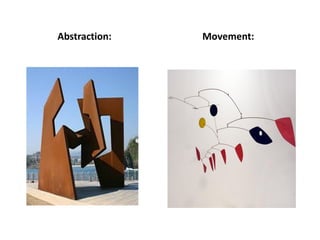
 By the abstraction circulates a great part of
plastics artists of the XX century.
• The Constructivism look for the shapes apart
from the margin of the mass, preferring a
development of surfaces in space.
• Many of the artists who are specialists in this
style, cultivated cupped forms before the closed
volumes.
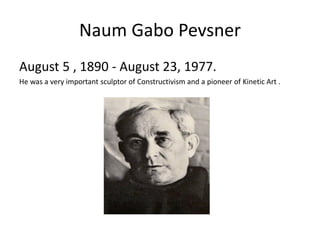
Naum Gabo Pevsner
August 5 , 1890 - August 23, 1977.
He was a very important sculptor of Constructivism and a pioneer of Kinetic Art .
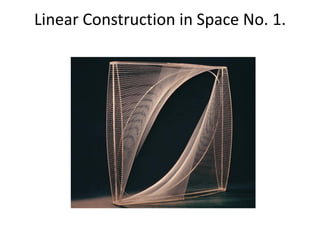
The style of Gabo
Gabo thought in applied to sculptural
forms, mathematical theorems of
engineering, for example, the surfaces of
warped by equations.
In 1920, anticipating future directions, he
performed the first kinetic sculpture in
the world.
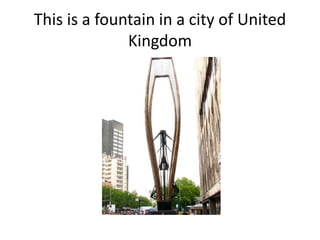
This is a fountain in a city of United
Kingdom
Linear Construction in Space No. 1.
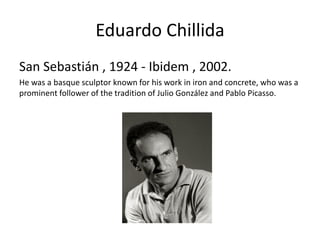
Eduardo Chillida
San Sebastián , 1924 - Ibidem , 2002.
He was a basque sculptor known for his work in iron and concrete, who was a
prominent follower of the tradition of Julio González and Pablo Picasso.
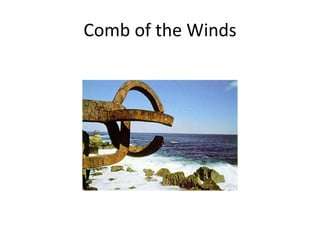
Comb of the Winds
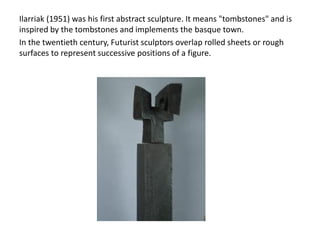
Ilarriak (1951) was his first abstract sculpture. It means "tombstones" and is
inspired by the tombstones and implements the basque town.
In the twentieth century, Futurist sculptors overlap rolled sheets or rough
surfaces to represent successive positions of a figure.
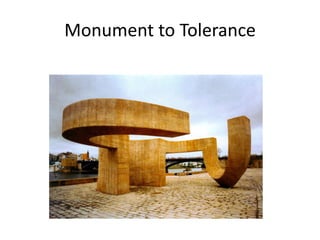
Monument to Tolerance
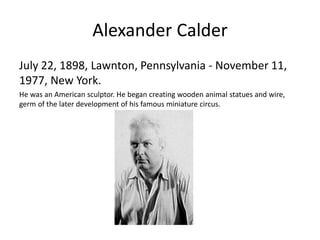
Alexander Calder
July 22, 1898, Lawnton, Pennsylvania - November 11,
1977, New York.
He was an American sculptor. He began creating wooden animal statues and wire,
germ of the later development of his famous miniature circus.
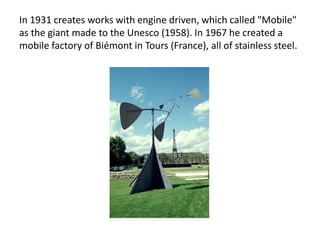
In 1931 creates works with engine driven, which called "Mobile"
as the giant made ​​to the Unesco (1958). In 1967 he created a
mobile factory of Biémont in Tours (France), all of stainless steel.
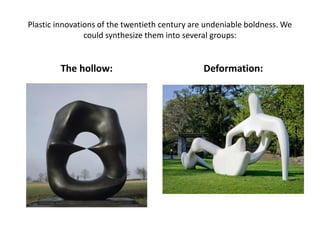
Plastic innovations of the twentieth century are undeniable boldness. We
could synthesize them into several groups:
The hollow: Deformation:
Abstraction: Movement:

Abstraction and movement in sculpture

  • 1.
  • 2.
    Abstraction and movementin sculpture  By the abstraction circulates a great part of plastics artists of the XX century. • The Constructivism look for the shapes apart from the margin of the mass, preferring a development of surfaces in space. • Many of the artists who are specialists in this style, cultivated cupped forms before the closed volumes.
  • 3.
    Naum Gabo Pevsner August5 , 1890 - August 23, 1977. He was a very important sculptor of Constructivism and a pioneer of Kinetic Art .
  • 4.
    The style ofGabo Gabo thought in applied to sculptural forms, mathematical theorems of engineering, for example, the surfaces of warped by equations. In 1920, anticipating future directions, he performed the first kinetic sculpture in the world.
  • 5.
    This is afountain in a city of United Kingdom
  • 6.
  • 7.
    Eduardo Chillida San Sebastián, 1924 - Ibidem , 2002. He was a basque sculptor known for his work in iron and concrete, who was a prominent follower of the tradition of Julio González and Pablo Picasso.
  • 8.
  • 9.
    Ilarriak (1951) washis first abstract sculpture. It means "tombstones" and is inspired by the tombstones and implements the basque town. In the twentieth century, Futurist sculptors overlap rolled sheets or rough surfaces to represent successive positions of a figure.
  • 10.
  • 11.
    Alexander Calder July 22,1898, Lawnton, Pennsylvania - November 11, 1977, New York. He was an American sculptor. He began creating wooden animal statues and wire, germ of the later development of his famous miniature circus.
  • 12.
    In 1931 createsworks with engine driven, which called "Mobile" as the giant made ​​to the Unesco (1958). In 1967 he created a mobile factory of Biémont in Tours (France), all of stainless steel.
  • 13.
    Plastic innovations ofthe twentieth century are undeniable boldness. We could synthesize them into several groups: The hollow: Deformation:
  • 14.