Importance of Outpatient Coding/CDI in a
value-based reimbursement Model
Presented by: Venkatesh Sreenivas, CPC, CCA
Sr Manager, Operations – Risk Adjustment
Vee Technologies
1
The value-based care is essential for achieving improved population health. So the physician’s
role in supporting this transition to value-based care is very critical. The value based care
combined with Clinical documentation improvement will help in achieving the objective of
Improved Population Health
The important takeaway from the value-based care report is the consistent progress of physician
practices in value-based care arrangements to improve quality and reduce health care costs
Physicians are clearly seeing the benefit of improved patient outcomes and more shared savings
The patient’s treated by physician’s under value-based agreements did more preventive care
screening and this resulted in better health outcomes compared with other Fee-for-Service
agreements
22
Introduction
• Some of the Healthcare Industries have already seen the impact because of the value-based
care in terms of patient’s having fewer ER visits among its MA members in value-based
arrangements. If there continues to have a decrease in ER visits, then it’s an indicator that
the patient is more engaged with her primary care physician or her specialist so that when
she is sick, she is reaching out to her primary care doctor. This in the healthcare world is the
quality metrics and the US federal system excited by this progress.
• One of the large University Health System in USA had Medicare Advantage memberships
more than 3.5 million members, which includes members affiliated with providers in value-
based and standard Medicare Advantage settings. According to the report, this particular
health system reached its 2017 goal of having 66 percent of its 2.9 million individual MA
members affiliated with primary care physicians in value-based agreements.
33
Introduction
• The University Health System also compared medical cost and utilization for
calendar year 2017 for approximately 1.5 million MA members who were affiliated
with providers in value-based reimbursement models to approximately 146,000
members who were affiliated with providers under standard MA settings as well
as to original fee-for-service Medicare. The study found that patient’s affiliated
with physicians in Value-based agreements had cost less than the latter and also
more favorable outcomes were observed on various dimensions of care and
service
44
Introduction
Reimbursement Models
There are different types of prospective payment system that we need know
before we get headway on the assigned topic.
It would be imperative to understand the different payment system as the CDI
impacts the reimbursement along with good quality of care patient and also the
treatment outcomes:
•IPPS
•OPPS
•FFS (Profee)
•Risk Adjusted
55
Inpatient Prospective Payment System
(IPPS)
• IPPS: This is referred to the payment system that is set forth for the operating cost
of the Acute Hospital Inpatient care under the Medicare Part A based on the
Prospective set rates
• The prospective rates are set by DRG.
• Payment groups that are used to categorize patients, chiefly Medicare patients,
for the purpose of reimbursing hospitals for care and services with a fixed fee
regardless of the actual costs incurred are also called as Diagnosis Related Group
(DRG).
• Each DRG group has payment weight assigned to it and that is detrimental in
deciding the amount that has to be reimbursed. ICD 10 DX and ICD 10 PCS are
source to define each DRG and this translates helping the payment under this
model.
66
Outpatient Prospective Payment System (OPPS)
• OPPS: The Outpatient Prospective Payment System (OPPS) is the system through
which Medicare decides how much money a hospital or community mental health
center will get for outpatient care to patients. The rate of reimbursement varies
with the location of the hospital or clinic.
• The unit of payment under OPPS (in most cases) is Ambulatory Payment
Classifications also known as APCs. This is USA government’s method of payment
for the hospital/facility outpatient services.
• The OPP systems follows the similar concept of IPPS, but utilizes ICD 10 DX and
CPT (HCPCS Level 1) procedural codes to decide the amount payable to the
Hospital/Facility
77
Fee-for-service (FFS)
• FFS: This payment methodology uses RVU which represent the relative amount of
physician work, resources, and expertise needed to provide service to the
patients. This sets the prospective payment for Profee. Technically, the total
reimbursement (RVUs) include three components.
– Work RVU – reflects the relative time and intensity associated with
furnishing a Medicare Physician Fee Schedule (PFS) services
– Practice Expense RVU – reflects cost of maintaining practice
– Malpractice RVU - Insurance premium that covers when malpractice
lawsuits is filed for the provider
The objective of using the RVUs is for measuring the productivity, allocating expenses,
budgeting and cost benchmarking
Based on this, the Medicare will decide the amount that the physician has to be
reimbursed based on the services he/she provides to the patient
88
Risk-Adjusted payment model
• The risk adjusted payment model utilizes patient’s demographic information as
well as patient’s health status for reimbursement process
• Risk Adjustment score is detrimental factor for payments in this model. This is
derived by capturing only CMS HCC codes (Part C and Part D) using ICD-10 code
sets
• The Risk Adjustment Factor can be defined as disease burden of the patient
• The prospective rates are set by RAF scores in this payment model
99
Comparative Study between IPPS and Risk-Adjusted
Payment System
 Diagnosis Coding:
• Both Inpatient and HCC models uses ICD-10 codes for abstracting DX from
the patient records; however inpatient coding utilizes all code sets available
in ICD-10 codes directory where as HCC model utilizes only those ICD-10
codes that has CMS HCC Part C and Part D HCC values
 Procedure Coding:
• Inpatient coders use ICD-10-PCS for procedure coding
• HCC coders do not capture any procedure codes either from ICD-10 PCS or
CPT codes
 Payment Methodology:
• Inpatient reimbursement is based on IPPS which is determined by MS-DRGs
• HCC reimbursement is based on the RAF which is determined by the patient
demographic details as well as health status
10
Why correct documentation of medical records are
important?
 Generally majority of the physician who are part of the health care system, their
salaries are being paid because of relative value unit (RVUs), i.e., CPT driven, so
physicians are more interested in documentation of the notes that are
appropriate for CPT, but they do not give much importance to documenting the
dx. However, documentation of Dx is very important for IPPS and Risk Adjusted
payment model.
 Similarly Correct documentation is very much important for FFS coding as well
because of the MIPS being in place
 If documentation of medical records are not complete, then it does not
demonstrate treatment or outcome; certainly yes reimbursement can happen;
however that would be compromised and still are the other aspects of
healthcare as well
 Providers are often graded or ranked based on their correct documentation of
medical records because this definitely helps in improved care of the patient and
in turn provides correct reimbursement for the care provided
11
MACRA and MIPS
 MACRA: Medicare Access and CHIP Reauthorization Act of 2015
 MACRA created the Quality Payment Program that improves Medicare by helping
eligible clinicians focus on care quality and making patients healthier. This helped
in stopping against the use of the sustainable growth rate in establishing the
physician’s reimbursement
 This program is the latest in a series of steps the Centers for Medicare and
Medicaid Services (CMS) has taken to incentivize high quality of care, i.e., value
over service volume.
 Streamlines multiple quality programs under the new Merit Based Incentive
Payments System (MIPS) and Advanced Payment Model (APM)
 MIPS The Merit-Based Incentive Payment System (MIPS) is a new payment
mechanism that will provide annual updates to physicians starting in 2019, based
on performance in four categories: quality (replaces PQRS), resource use (Cost),
clinical practice improvement activities and meaningful use of an electronic health
record system
12
MACRA and MIPS
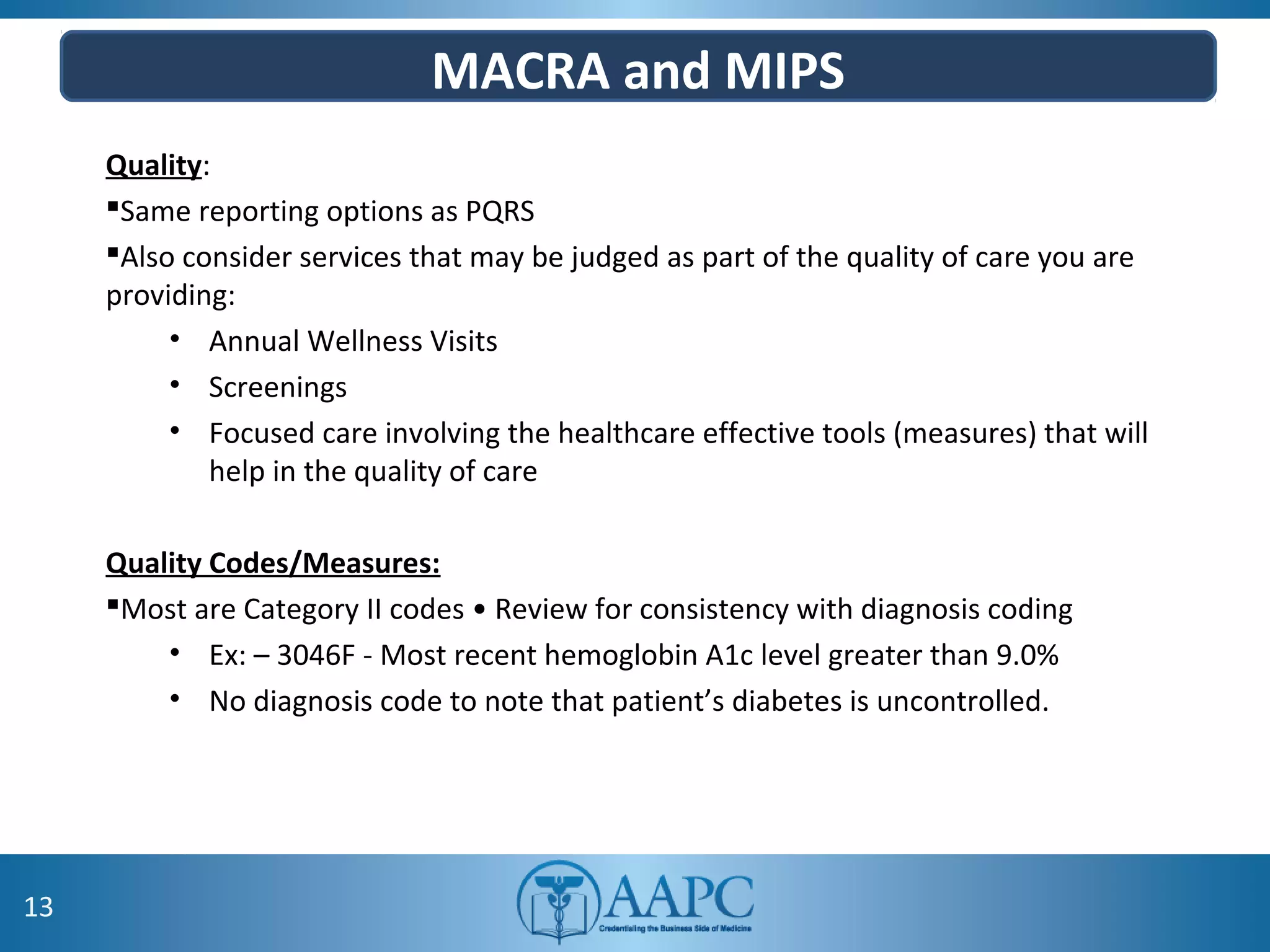
Quality:
Same reporting options as PQRS
Also consider services that may be judged as part of the quality of care you are
providing:
• Annual Wellness Visits
• Screenings
• Focused care involving the healthcare effective tools (measures) that will
help in the quality of care
Quality Codes/Measures:
Most are Category II codes • Review for consistency with diagnosis coding
• Ex: – 3046F - Most recent hemoglobin A1c level greater than 9.0%
• No diagnosis code to note that patient’s diabetes is uncontrolled.
13
MACRA and MIPS
14
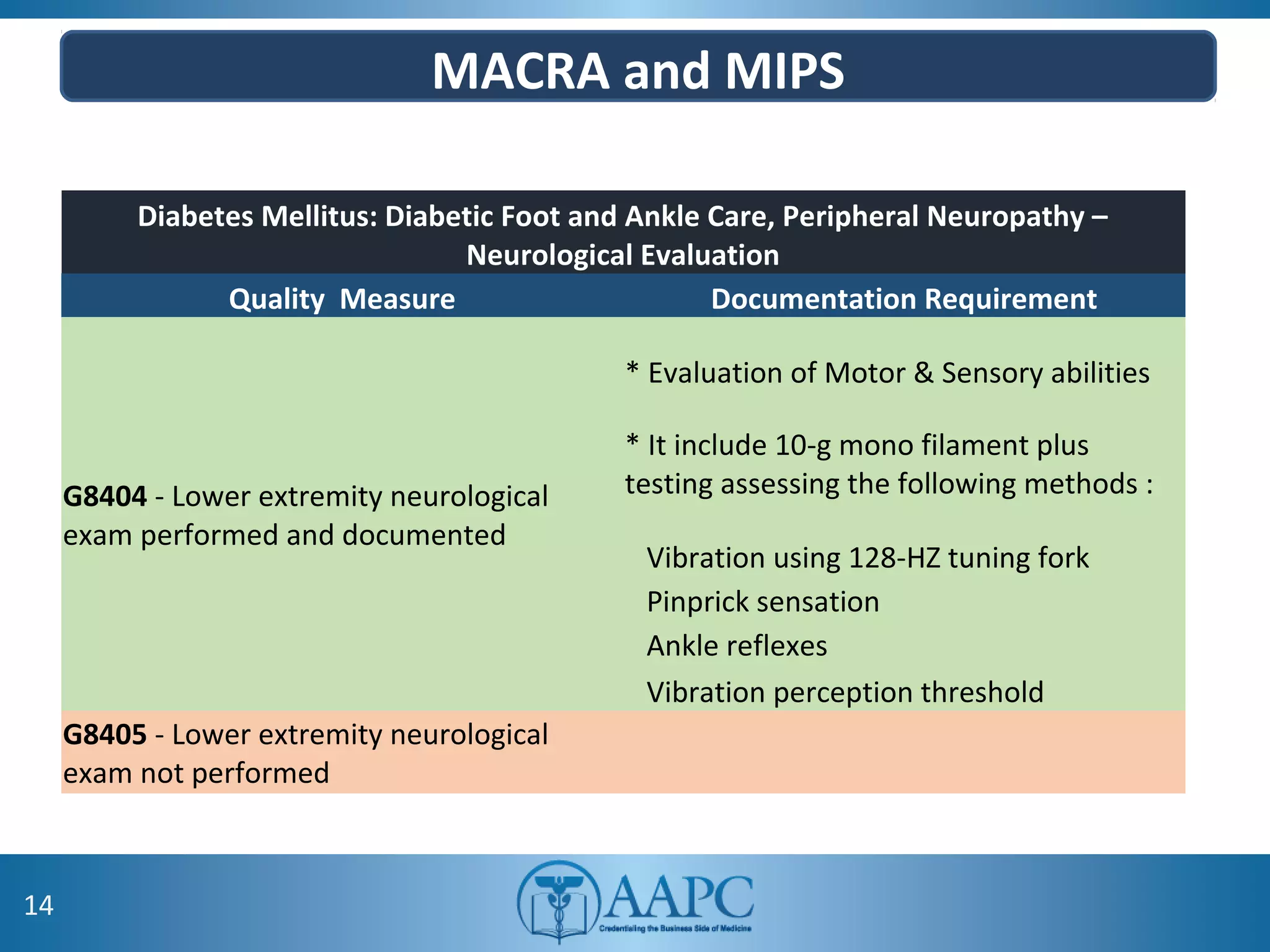
Diabetes Mellitus: Diabetic Foot and Ankle Care, Peripheral Neuropathy –
Neurological Evaluation
Quality Measure Documentation Requirement
G8404 - Lower extremity neurological
exam performed and documented
* Evaluation of Motor & Sensory abilities
* It include 10-g mono filament plus
testing assessing the following methods :
Vibration using 128-HZ tuning fork
Pinprick sensation
Ankle reflexes
Vibration perception threshold
G8405 - Lower extremity neurological
exam not performed
MACRA and MIPS
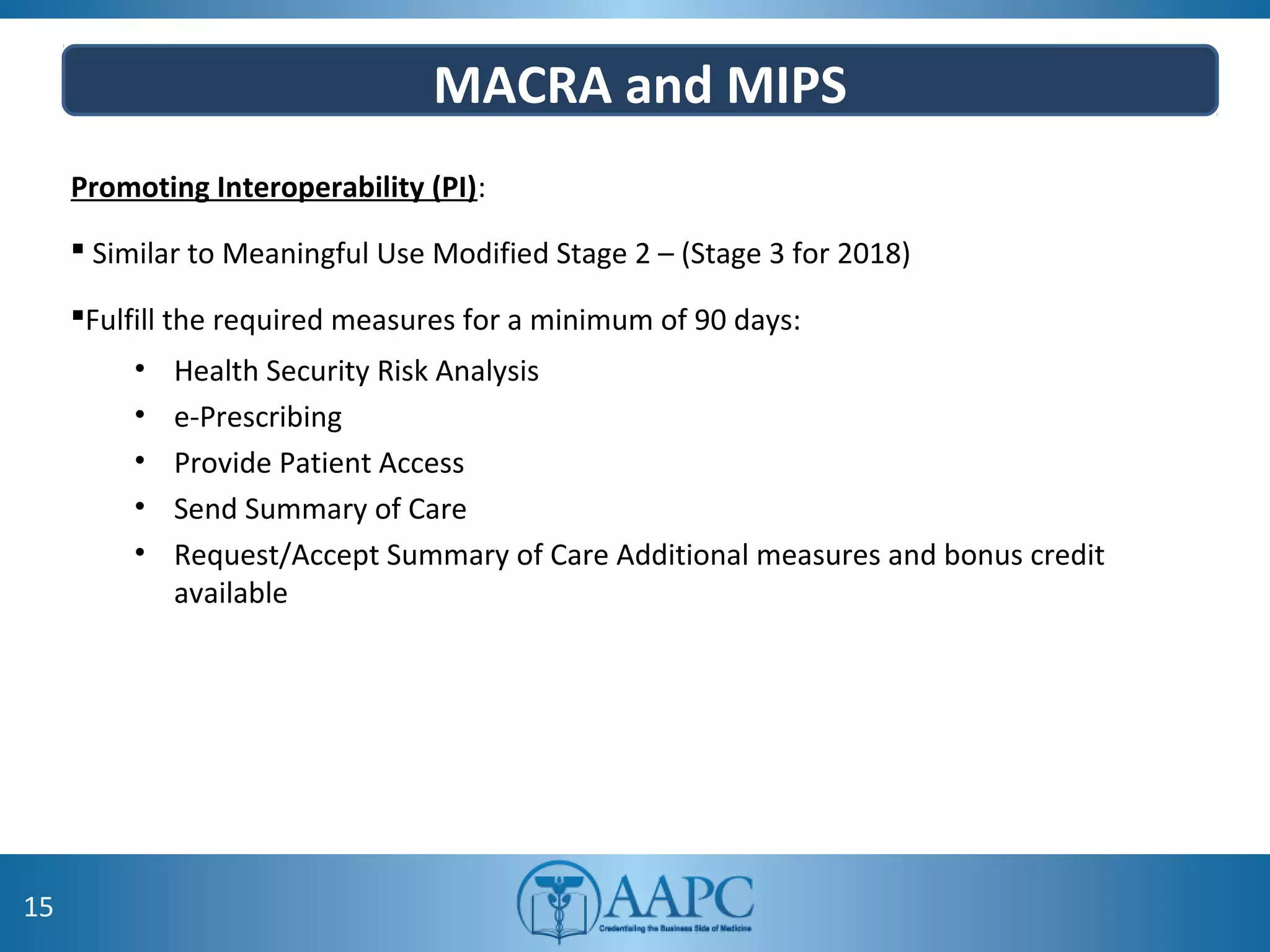
Promoting Interoperability (PI):
 Similar to Meaningful Use Modified Stage 2 – (Stage 3 for 2018)
Fulfill the required measures for a minimum of 90 days:
• Health Security Risk Analysis
• e-Prescribing
• Provide Patient Access
• Send Summary of Care
• Request/Accept Summary of Care Additional measures and bonus credit
available
15
MACRA and MIPS
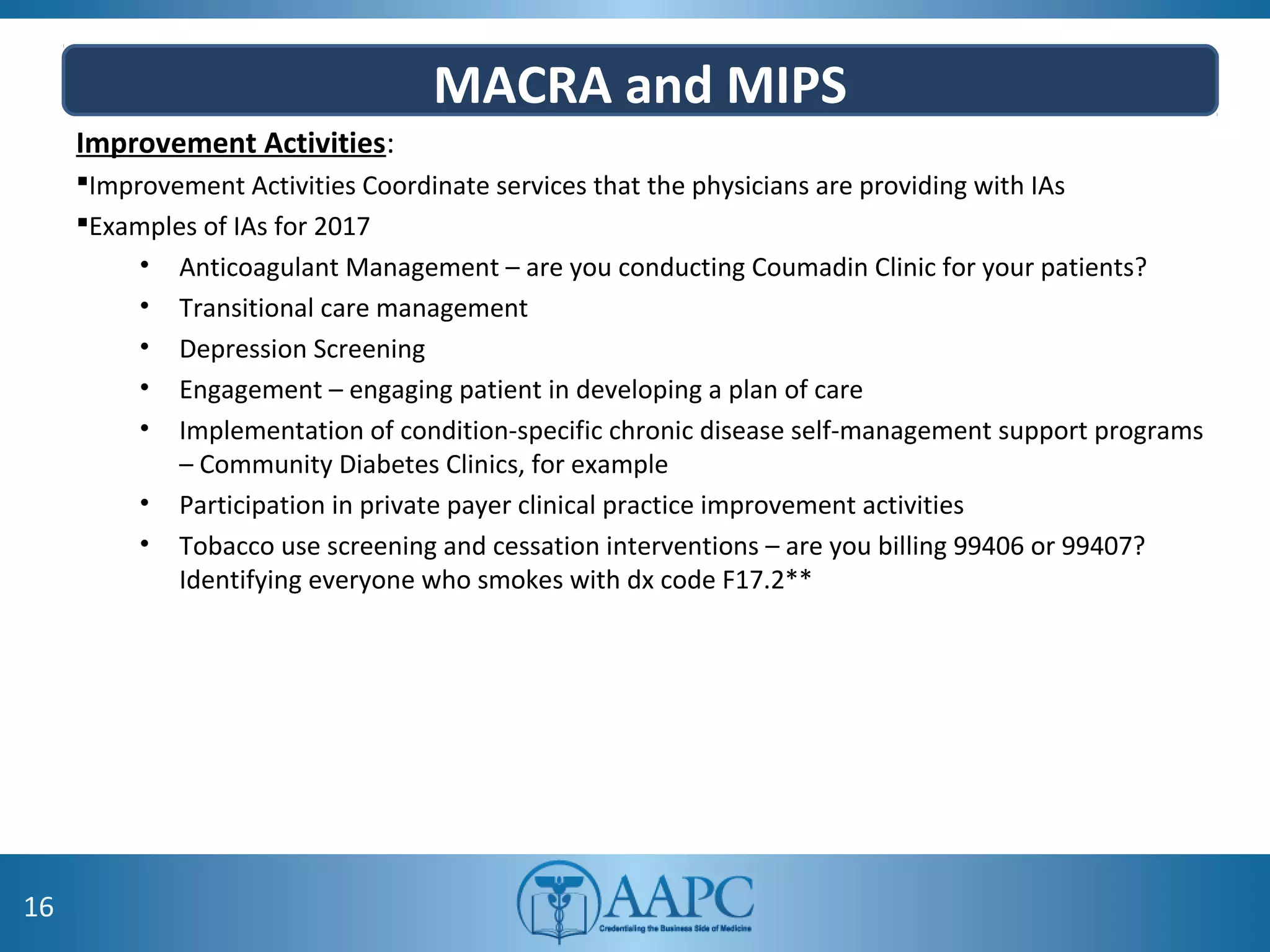
Improvement Activities:
Improvement Activities Coordinate services that the physicians are providing with IAs
Examples of IAs for 2017
• Anticoagulant Management – are you conducting Coumadin Clinic for your patients?
• Transitional care management
• Depression Screening
• Engagement – engaging patient in developing a plan of care
• Implementation of condition-specific chronic disease self-management support programs
– Community Diabetes Clinics, for example
• Participation in private payer clinical practice improvement activities
• Tobacco use screening and cessation interventions – are you billing 99406 or 99407?
Identifying everyone who smokes with dx code F17.2**
16
MACRA and MIPS
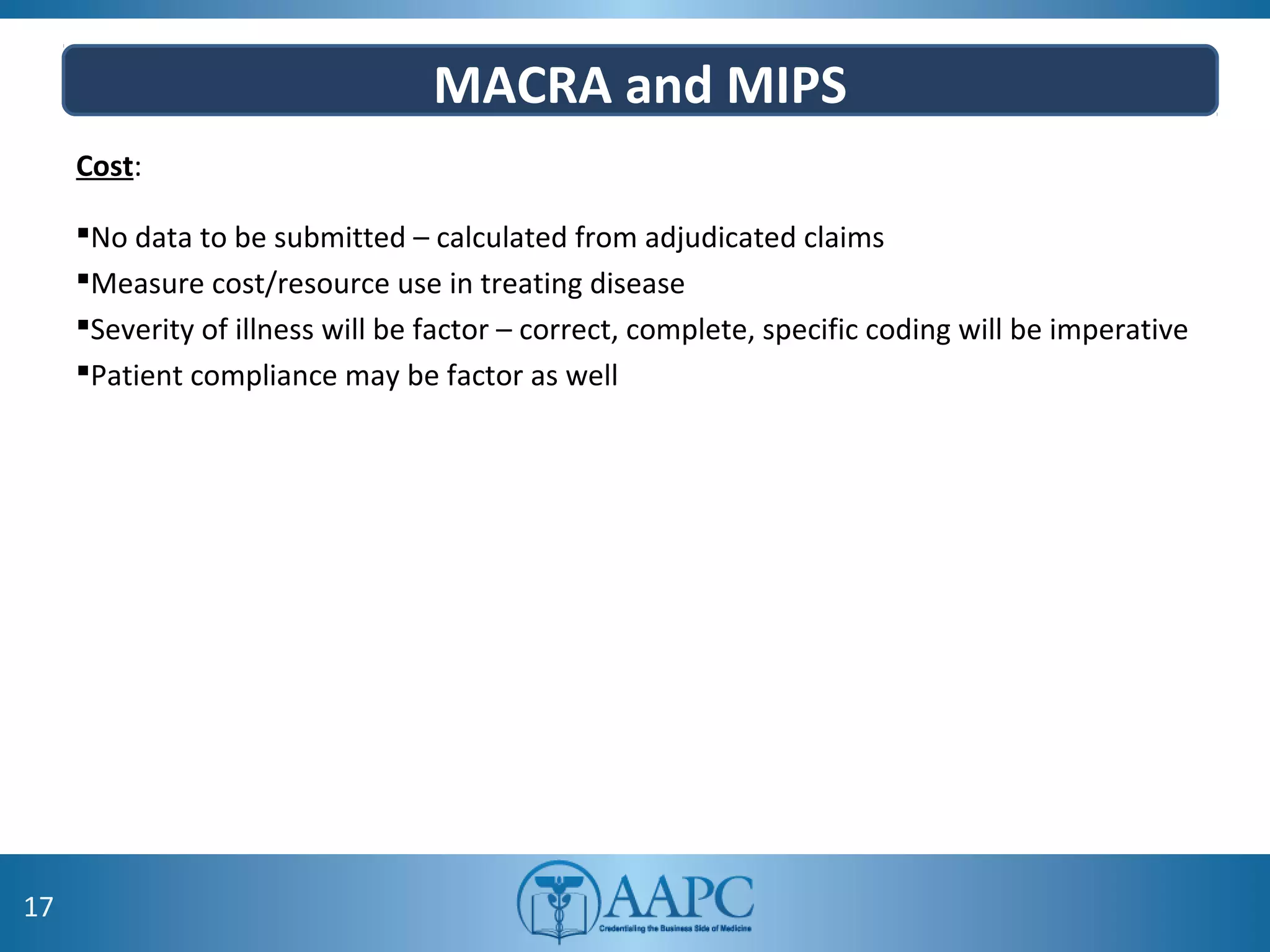
Cost:
No data to be submitted – calculated from adjudicated claims
Measure cost/resource use in treating disease
Severity of illness will be factor – correct, complete, specific coding will be imperative
Patient compliance may be factor as well
17
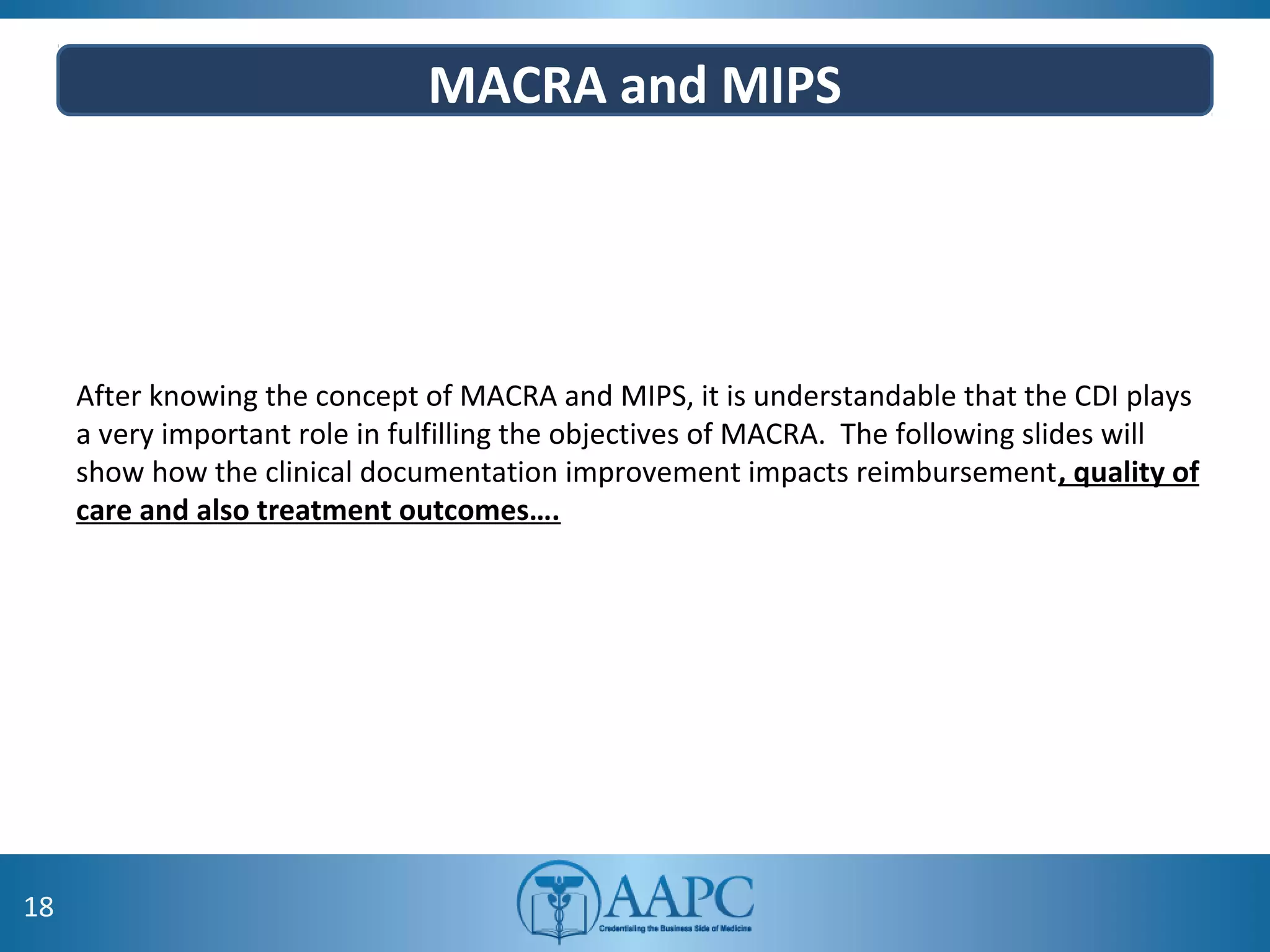
MACRA and MIPS
After knowing the concept of MACRA and MIPS, it is understandable that the CDI plays
a very important role in fulfilling the objectives of MACRA. The following slides will
show how the clinical documentation improvement impacts reimbursement, quality of
care and also treatment outcomes….
18
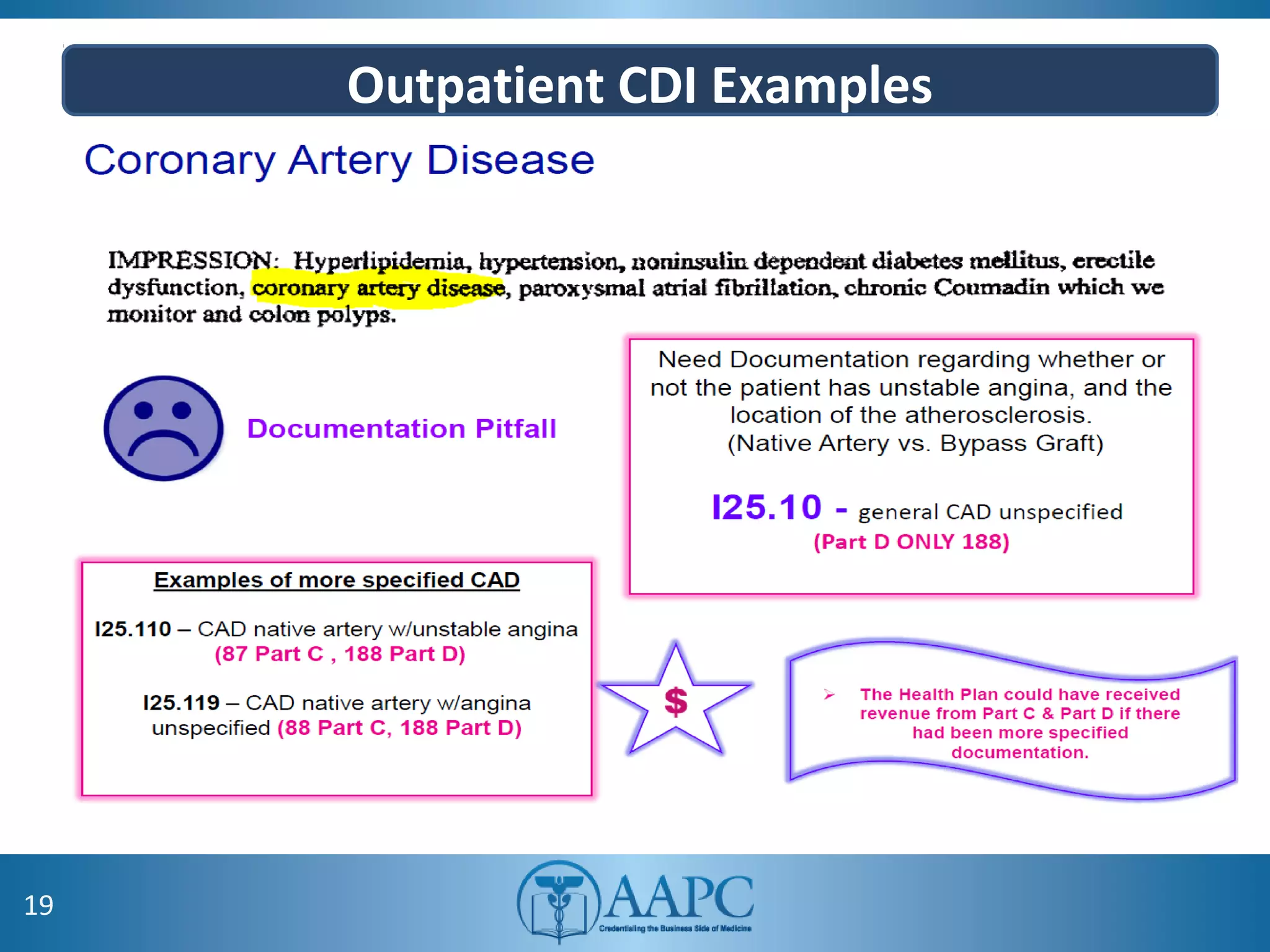
Outpatient CDI Examples
19
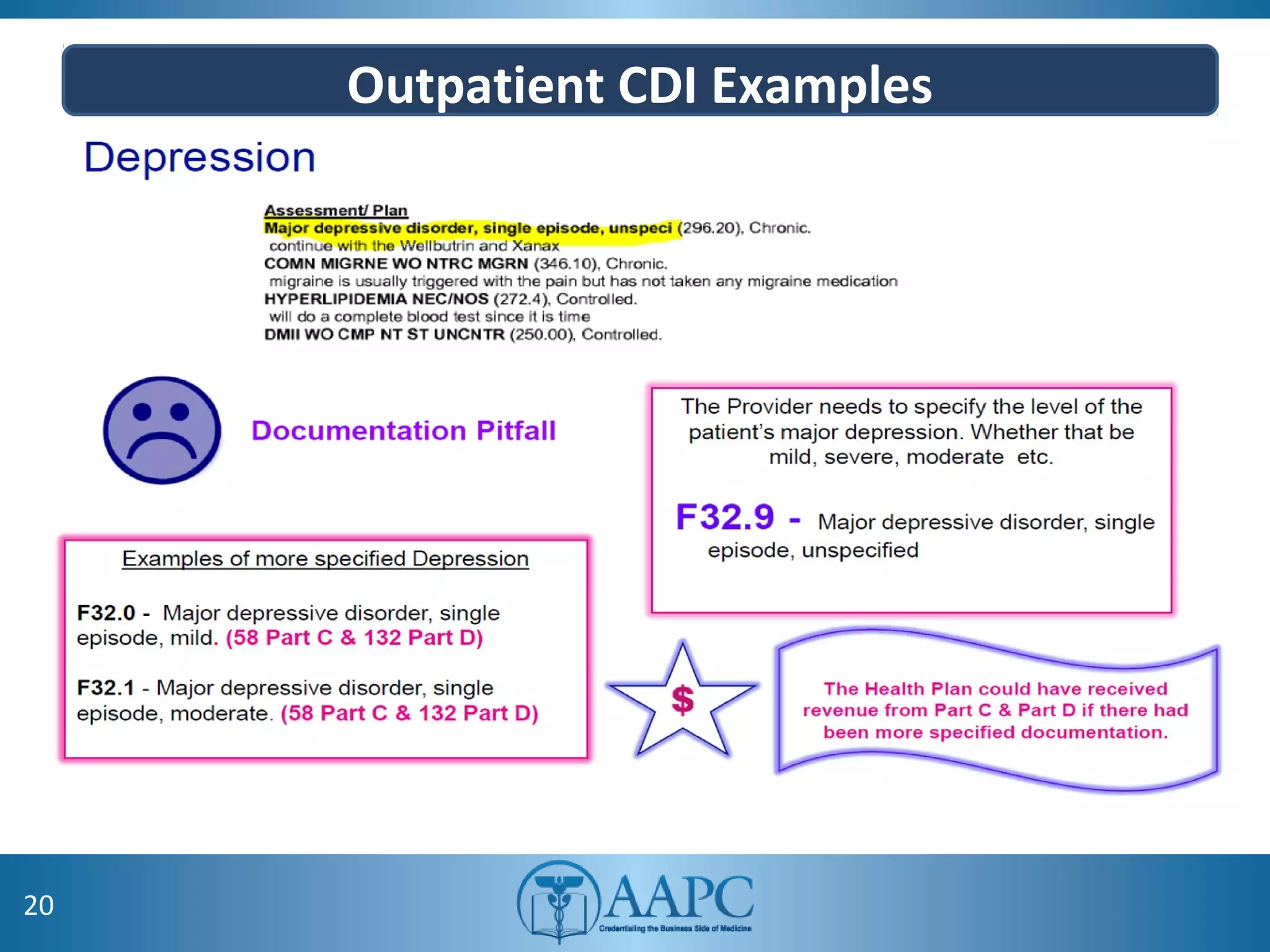
Outpatient CDI Examples
20
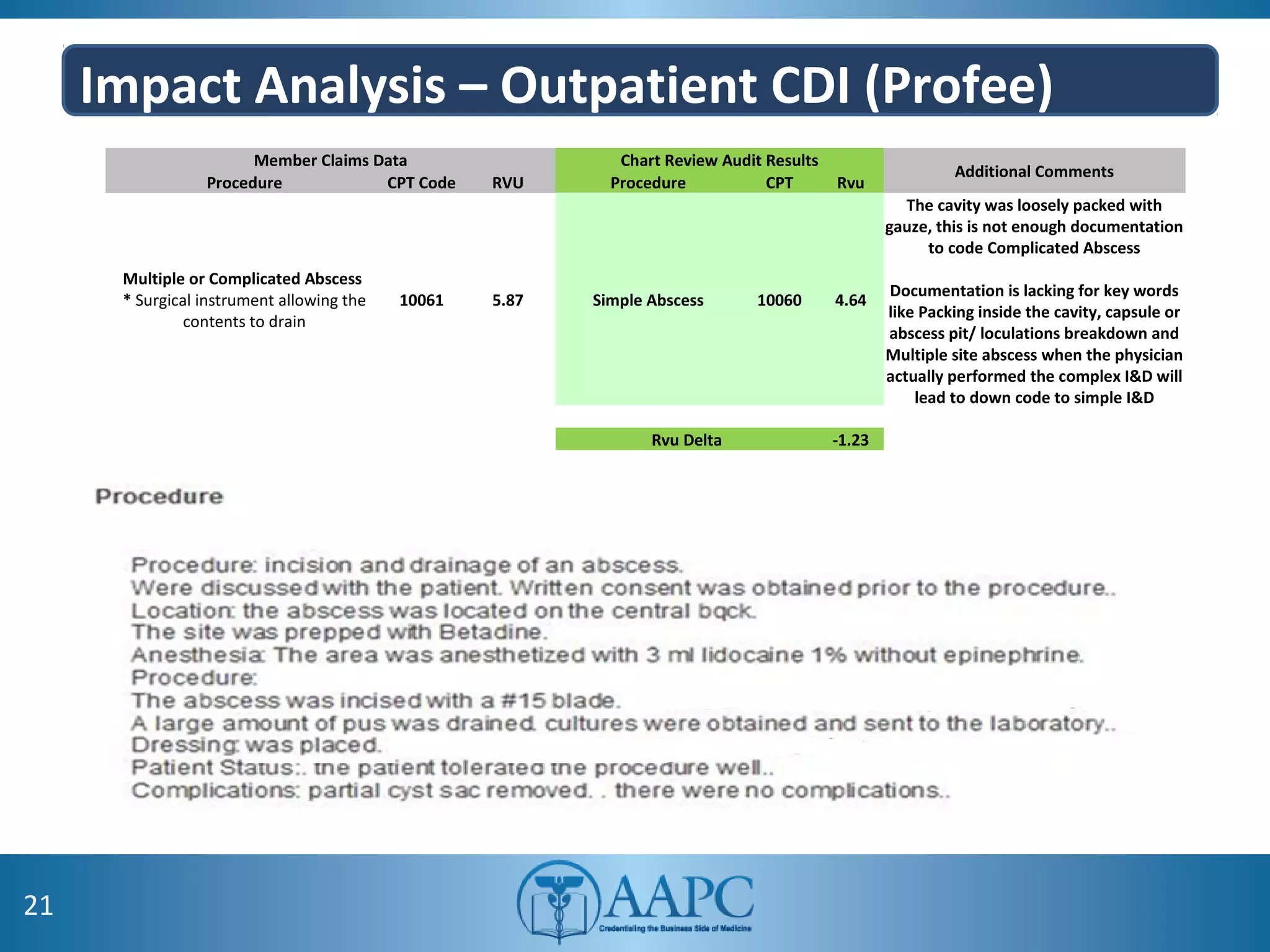
Impact Analysis – Outpatient CDI (Profee)
21
Member Claims Data Chart Review Audit Results
Additional Comments
Procedure CPT Code RVU Procedure CPT Rvu
Multiple or Complicated Abscess
* Surgical instrument allowing the
contents to drain
10061 5.87 Simple Abscess 10060 4.64
The cavity was loosely packed with
gauze, this is not enough documentation
to code Complicated Abscess
Documentation is lacking for key words
like Packing inside the cavity, capsule or
abscess pit/ loculations breakdown and
Multiple site abscess when the physician
actually performed the complex I&D will
lead to down code to simple I&D
Rvu Delta -1.23
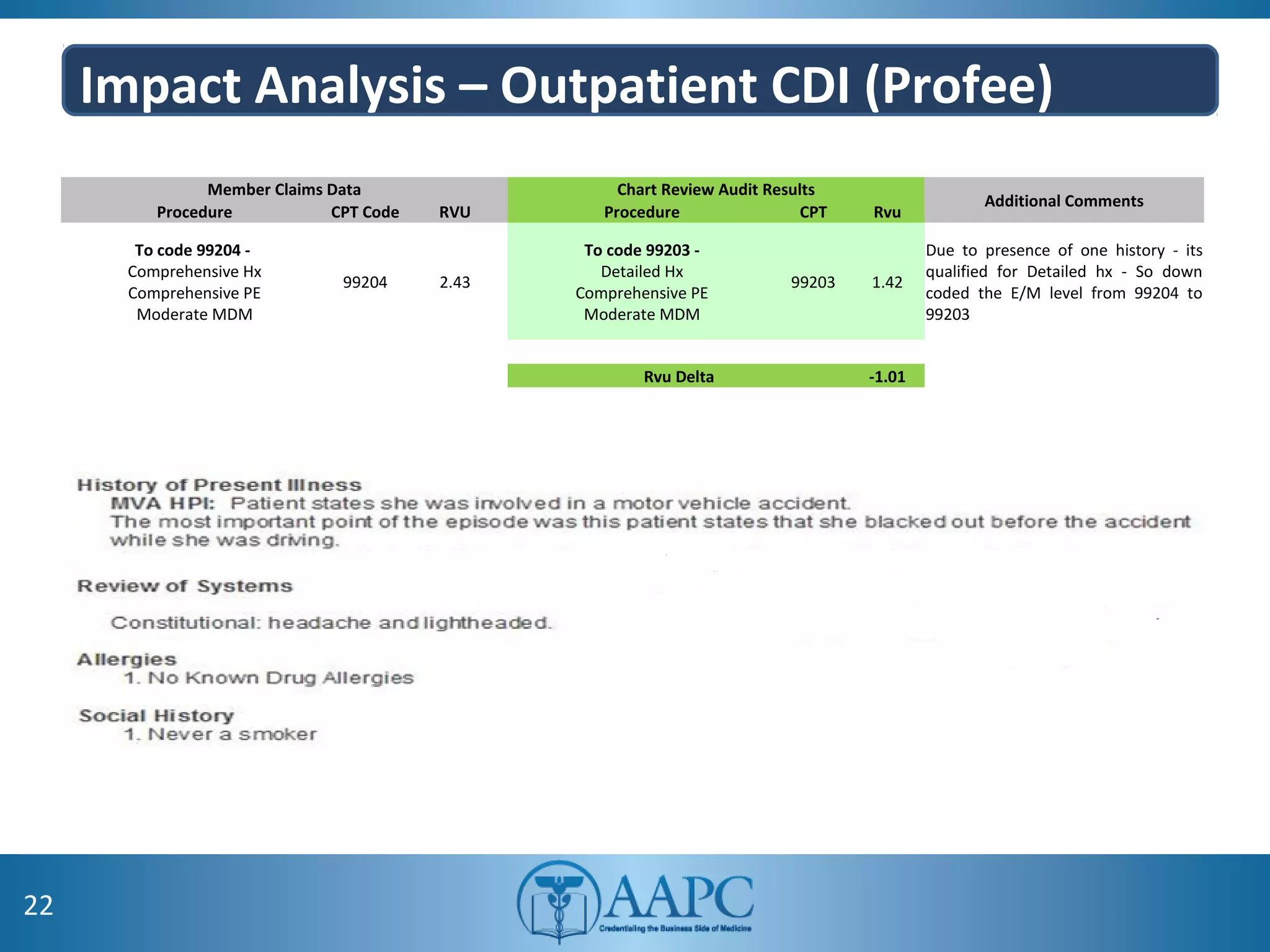
Impact Analysis – Outpatient CDI (Profee)
22
Member Claims Data Chart Review Audit Results
Additional Comments
Procedure CPT Code RVU Procedure CPT Rvu
To code 99204 -
Comprehensive Hx
Comprehensive PE
Moderate MDM
99204 2.43
To code 99203 -
Detailed Hx
Comprehensive PE
Moderate MDM
99203 1.42
Due to presence of one history - its
qualified for Detailed hx - So down
coded the E/M level from 99204 to
99203
Rvu Delta -1.01
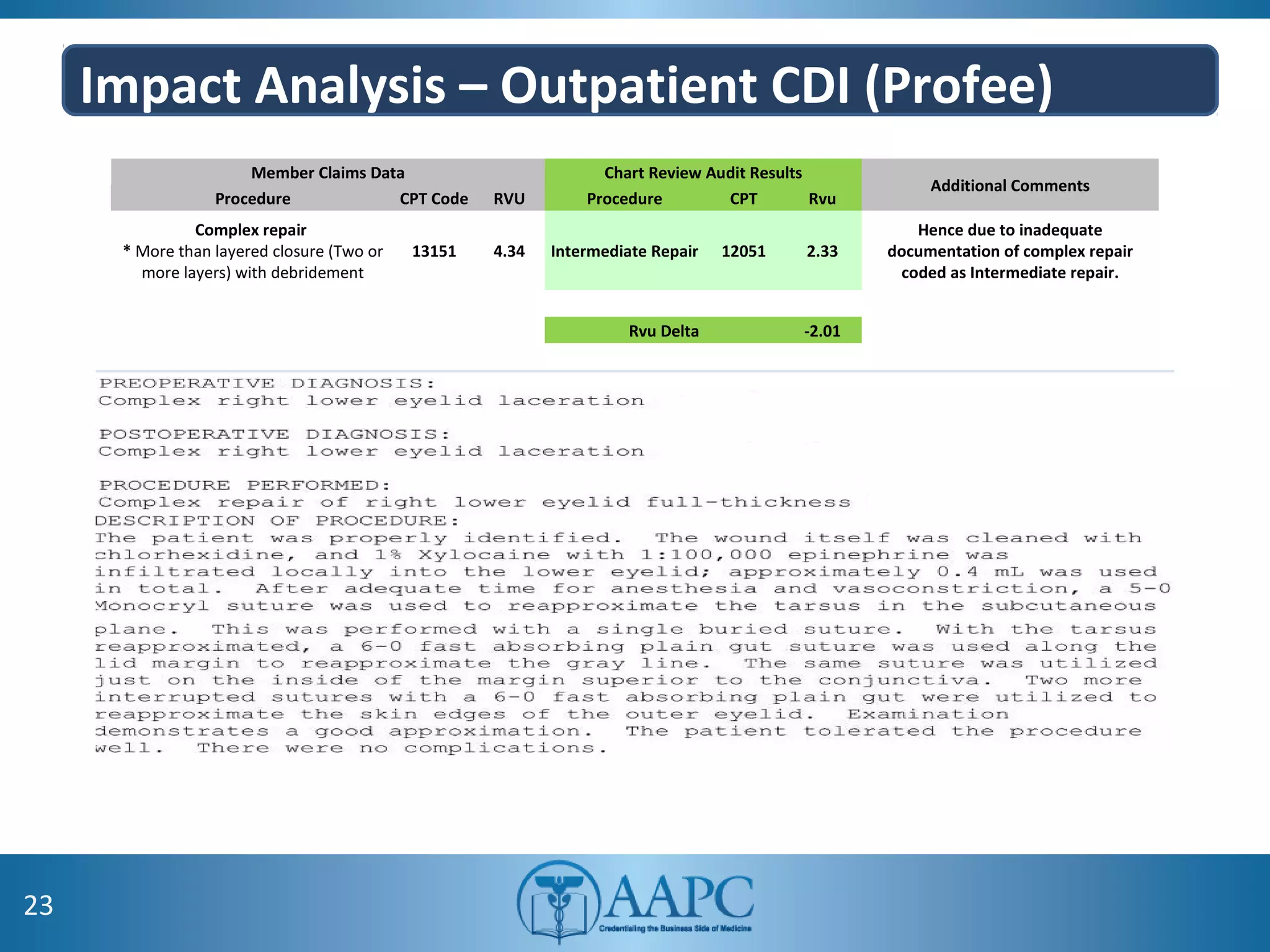
Impact Analysis – Outpatient CDI (Profee)
23
Member Claims Data Chart Review Audit Results
Additional Comments
Procedure CPT Code RVU Procedure CPT Rvu
Complex repair
* More than layered closure (Two or
more layers) with debridement
13151 4.34 Intermediate Repair 12051 2.33
Hence due to inadequate
documentation of complex repair
coded as Intermediate repair.
Rvu Delta -2.01
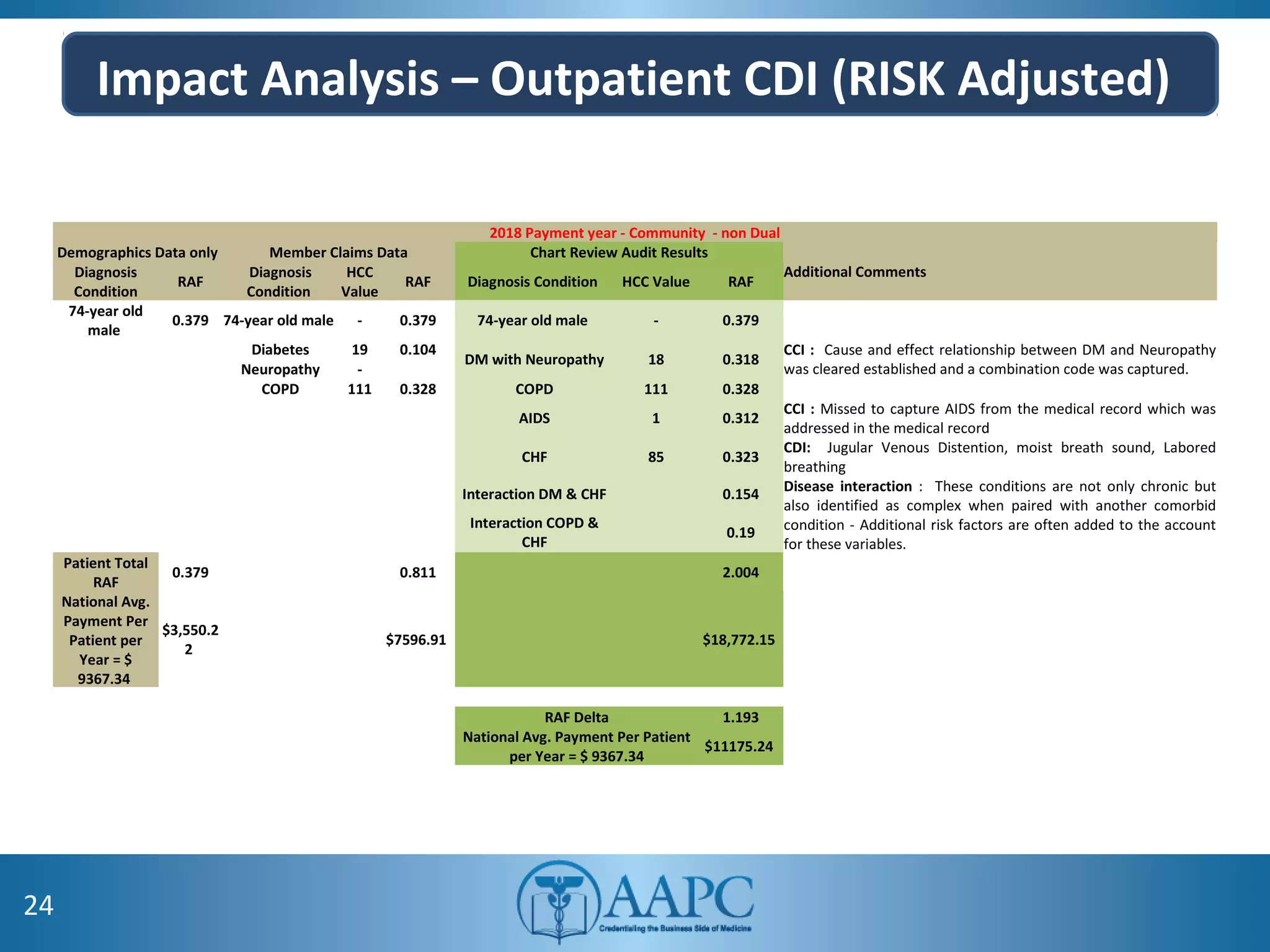
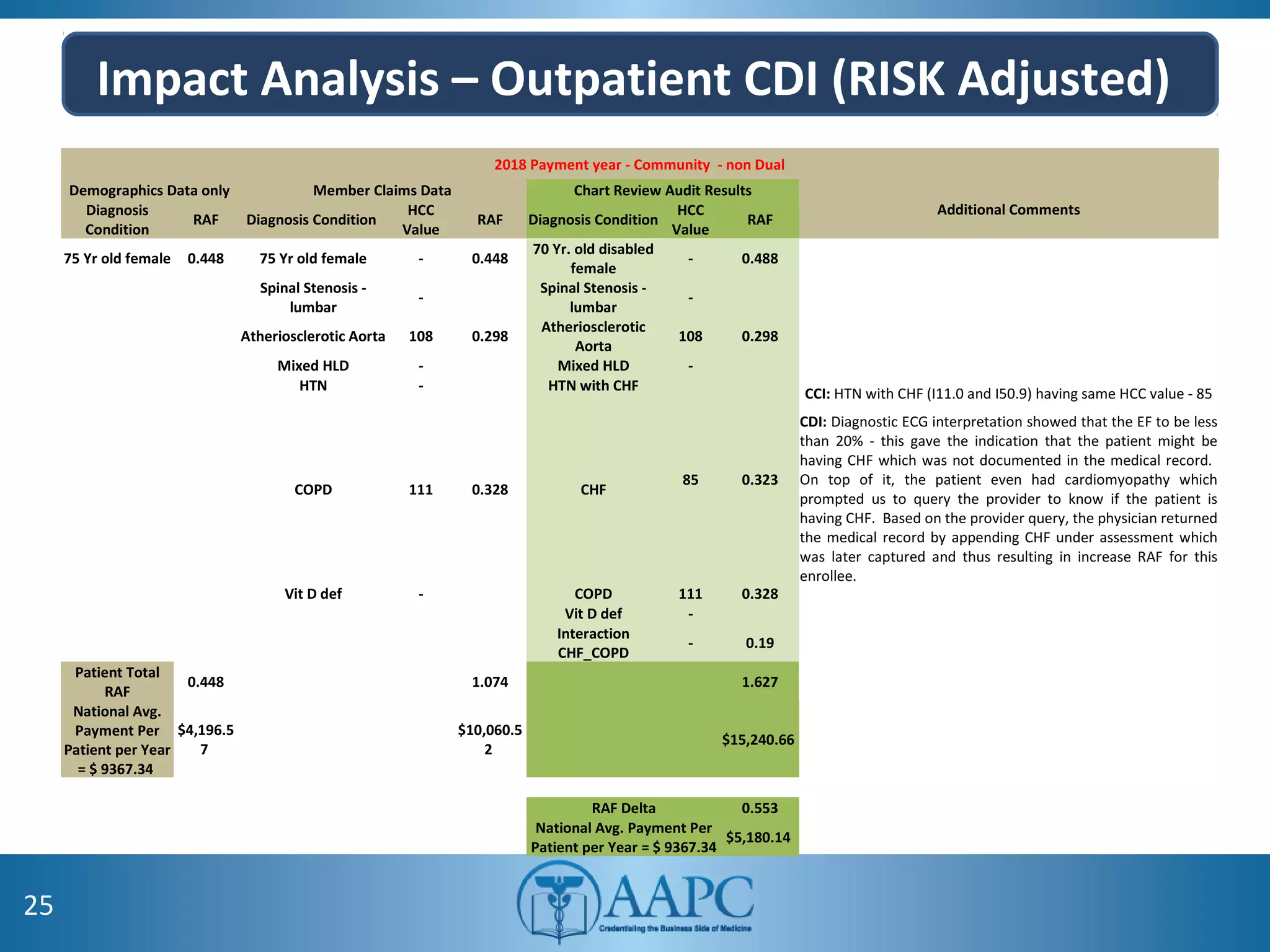
Impact Analysis – Outpatient CDI (RISK Adjusted)
24
2018 Payment year - Community - non Dual
Demographics Data only Member Claims Data Chart Review Audit Results
Additional CommentsDiagnosis
Condition
RAF
Diagnosis
Condition
HCC
Value
RAF Diagnosis Condition HCC Value RAF
74-year old
male
0.379 74-year old male - 0.379 74-year old male - 0.379
Diabetes 19 0.104
DM with Neuropathy 18 0.318
CCI : Cause and effect relationship between DM and Neuropathy
was cleared established and a combination code was captured.Neuropathy -
COPD 111 0.328 COPD 111 0.328
AIDS 1 0.312
CCI : Missed to capture AIDS from the medical record which was
addressed in the medical record
CHF 85 0.323
CDI: Jugular Venous Distention, moist breath sound, Labored
breathing
Interaction DM & CHF 0.154
Disease interaction : These conditions are not only chronic but
also identified as complex when paired with another comorbid
condition - Additional risk factors are often added to the account
for these variables.
Interaction COPD &
CHF
0.19
Patient Total
RAF
0.379 0.811 2.004
National Avg.
Payment Per
Patient per
Year = $
9367.34
$3,550.2
2
$7596.91 $18,772.15
RAF Delta 1.193
National Avg. Payment Per Patient
per Year = $ 9367.34
$11175.24
25
Impact Analysis – Outpatient CDI (RISK Adjusted)
2018 Payment year - Community - non Dual
Demographics Data only Member Claims Data Chart Review Audit Results
Additional CommentsDiagnosis
Condition
RAF Diagnosis Condition
HCC
Value
RAF Diagnosis Condition
HCC
Value
RAF
75 Yr old female 0.448 75 Yr old female - 0.448
70 Yr. old disabled
female
- 0.488
Spinal Stenosis -
lumbar
-
Spinal Stenosis -
lumbar
-
Atheriosclerotic Aorta 108 0.298
Atheriosclerotic
Aorta
108 0.298
Mixed HLD - Mixed HLD -
HTN - HTN with CHF
85 0.323
CCI: HTN with CHF (I11.0 and I50.9) having same HCC value - 85
COPD 111 0.328 CHF
CDI: Diagnostic ECG interpretation showed that the EF to be less
than 20% - this gave the indication that the patient might be
having CHF which was not documented in the medical record.
On top of it, the patient even had cardiomyopathy which
prompted us to query the provider to know if the patient is
having CHF. Based on the provider query, the physician returned
the medical record by appending CHF under assessment which
was later captured and thus resulting in increase RAF for this
enrollee.
Vit D def - COPD 111 0.328
Vit D def -  
Interaction
CHF_COPD
- 0.19
 
Patient Total
RAF
0.448 1.074 1.627
National Avg.
Payment Per
Patient per Year
= $ 9367.34
$4,196.5
7
$10,060.5
2
$15,240.66
RAF Delta 0.553
National Avg. Payment Per
Patient per Year = $ 9367.34
$5,180.14
26
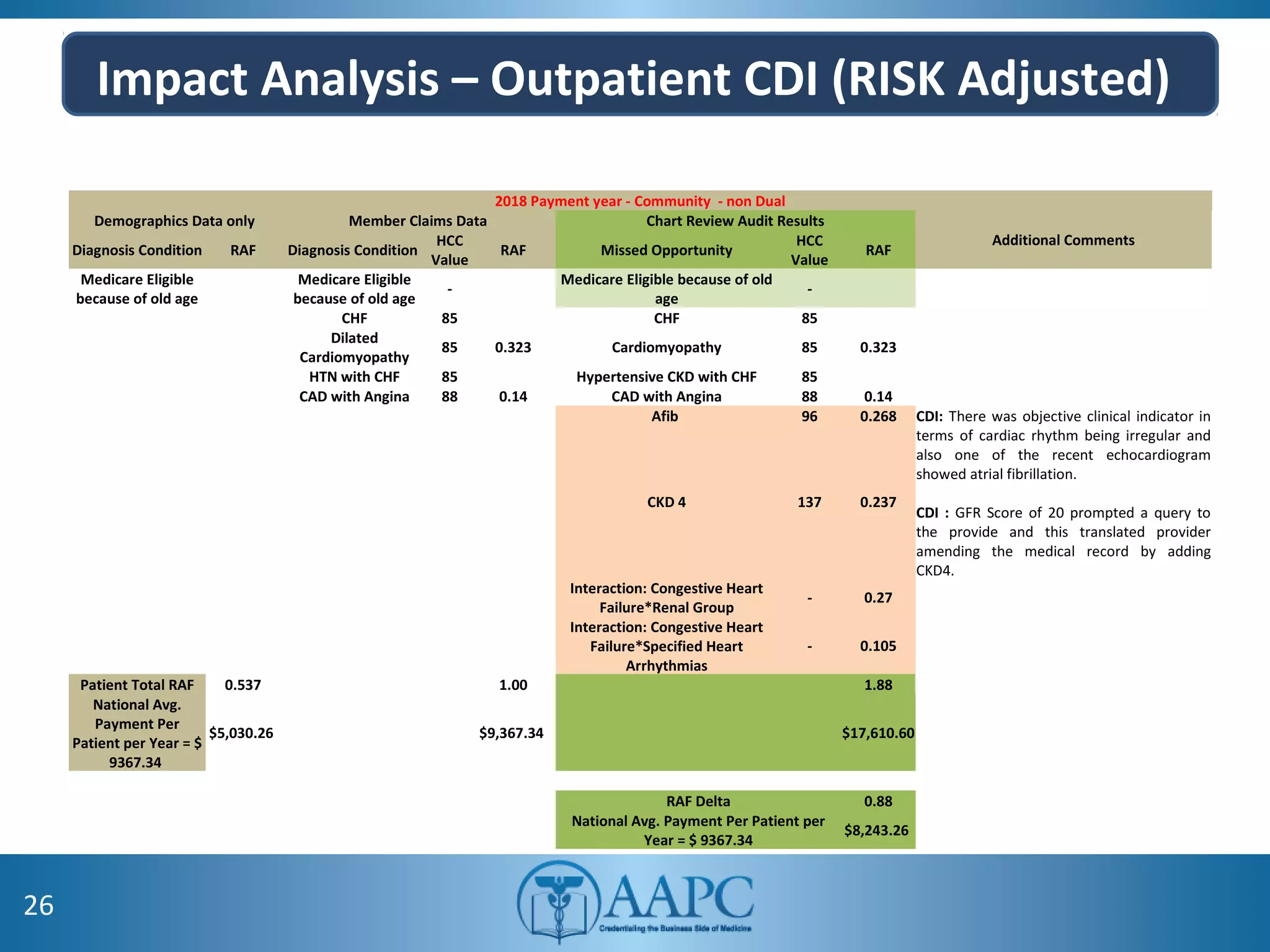
Impact Analysis – Outpatient CDI (RISK Adjusted)
2018 Payment year - Community - non Dual
Demographics Data only Member Claims Data Chart Review Audit Results
Additional Comments
Diagnosis Condition RAF Diagnosis Condition
HCC
Value
RAF Missed Opportunity
HCC
Value
RAF
Medicare Eligible
because of old age
Medicare Eligible
because of old age
-
Medicare Eligible because of old
age
-
CHF 85
0.323
CHF 85
0.323
Dilated
Cardiomyopathy
85 Cardiomyopathy 85
HTN with CHF 85 Hypertensive CKD with CHF 85
CAD with Angina 88 0.14 CAD with Angina 88 0.14
Afib 96 0.268 CDI: There was objective clinical indicator in
terms of cardiac rhythm being irregular and
also one of the recent echocardiogram
showed atrial fibrillation.
CDI : GFR Score of 20 prompted a query to
the provide and this translated provider
amending the medical record by adding
CKD4.
CKD 4 137 0.237
Interaction: Congestive Heart
Failure*Renal Group
- 0.27
Interaction: Congestive Heart
Failure*Specified Heart
Arrhythmias
- 0.105
Patient Total RAF 0.537 1.00 1.88
National Avg.
Payment Per
Patient per Year = $
9367.34
$5,030.26 $9,367.34 $17,610.60
RAF Delta 0.88
National Avg. Payment Per Patient per
Year = $ 9367.34
$8,243.26
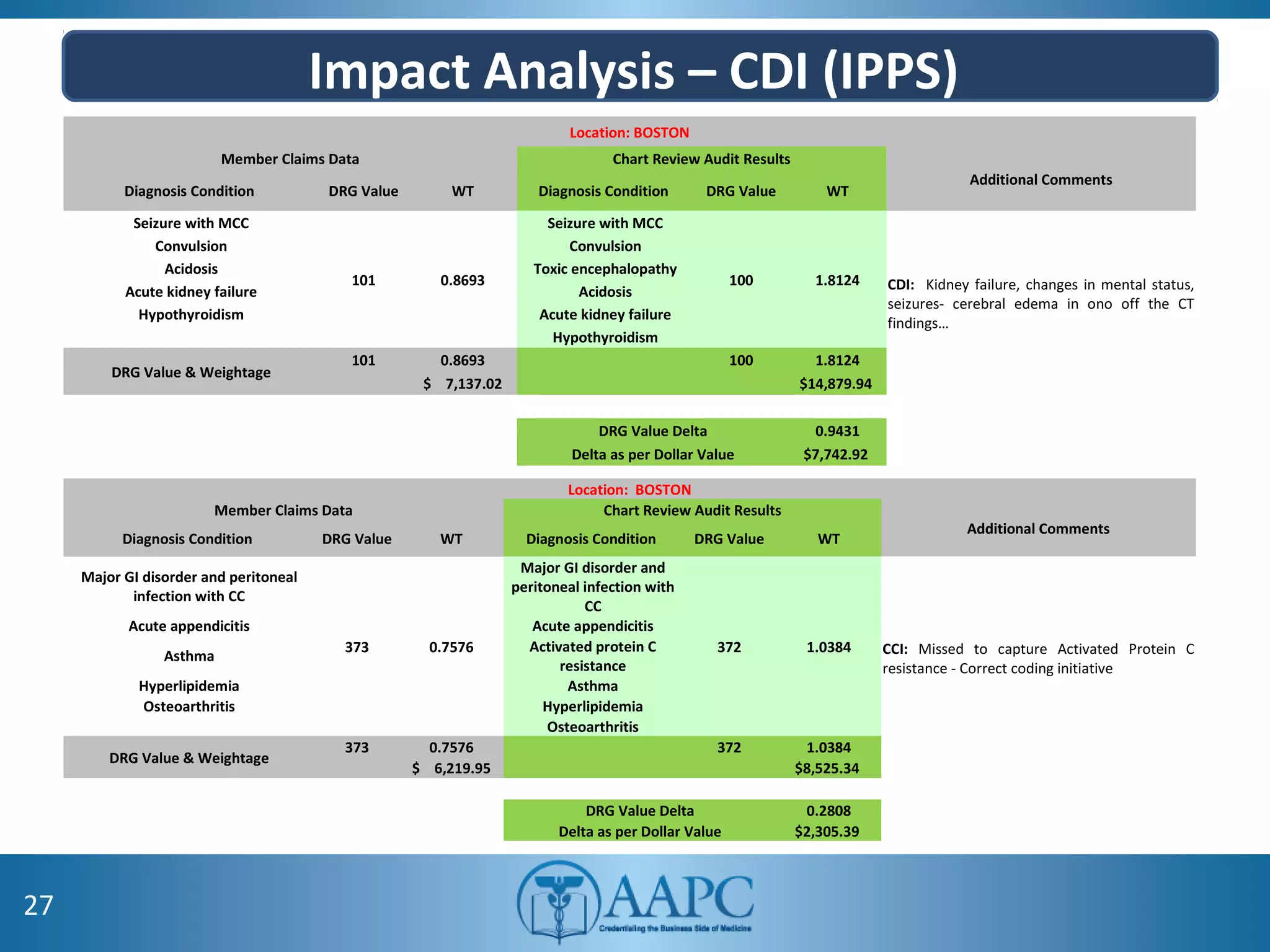
Impact Analysis – CDI (IPPS)
27
Location: BOSTON
Member Claims Data Chart Review Audit Results
Additional Comments
Diagnosis Condition DRG Value WT Diagnosis Condition DRG Value WT
Seizure with MCC
101 0.8693
Seizure with MCC
100 1.8124 CDI: Kidney failure, changes in mental status,
seizures- cerebral edema in ono off the CT
findings…
Convulsion Convulsion
Acidosis Toxic encephalopathy
Acute kidney failure Acidosis
Hypothyroidism Acute kidney failure
Hypothyroidism
DRG Value & Weightage
101 0.8693 100 1.8124
$ 7,137.02 $14,879.94
DRG Value Delta 0.9431
Delta as per Dollar Value $7,742.92
Location: BOSTON
Member Claims Data Chart Review Audit Results
Additional Comments
Diagnosis Condition DRG Value WT Diagnosis Condition DRG Value WT
Major GI disorder and peritoneal
infection with CC
373 0.7576
Major GI disorder and
peritoneal infection with
CC
372 1.0384 CCI: Missed to capture Activated Protein C
resistance - Correct coding initiative
Acute appendicitis Acute appendicitis
Asthma
Activated protein C
resistance
Hyperlipidemia Asthma
Osteoarthritis Hyperlipidemia
Osteoarthritis
DRG Value & Weightage
373 0.7576 372 1.0384
$ 6,219.95 $8,525.34
DRG Value Delta 0.2808
Delta as per Dollar Value $2,305.39
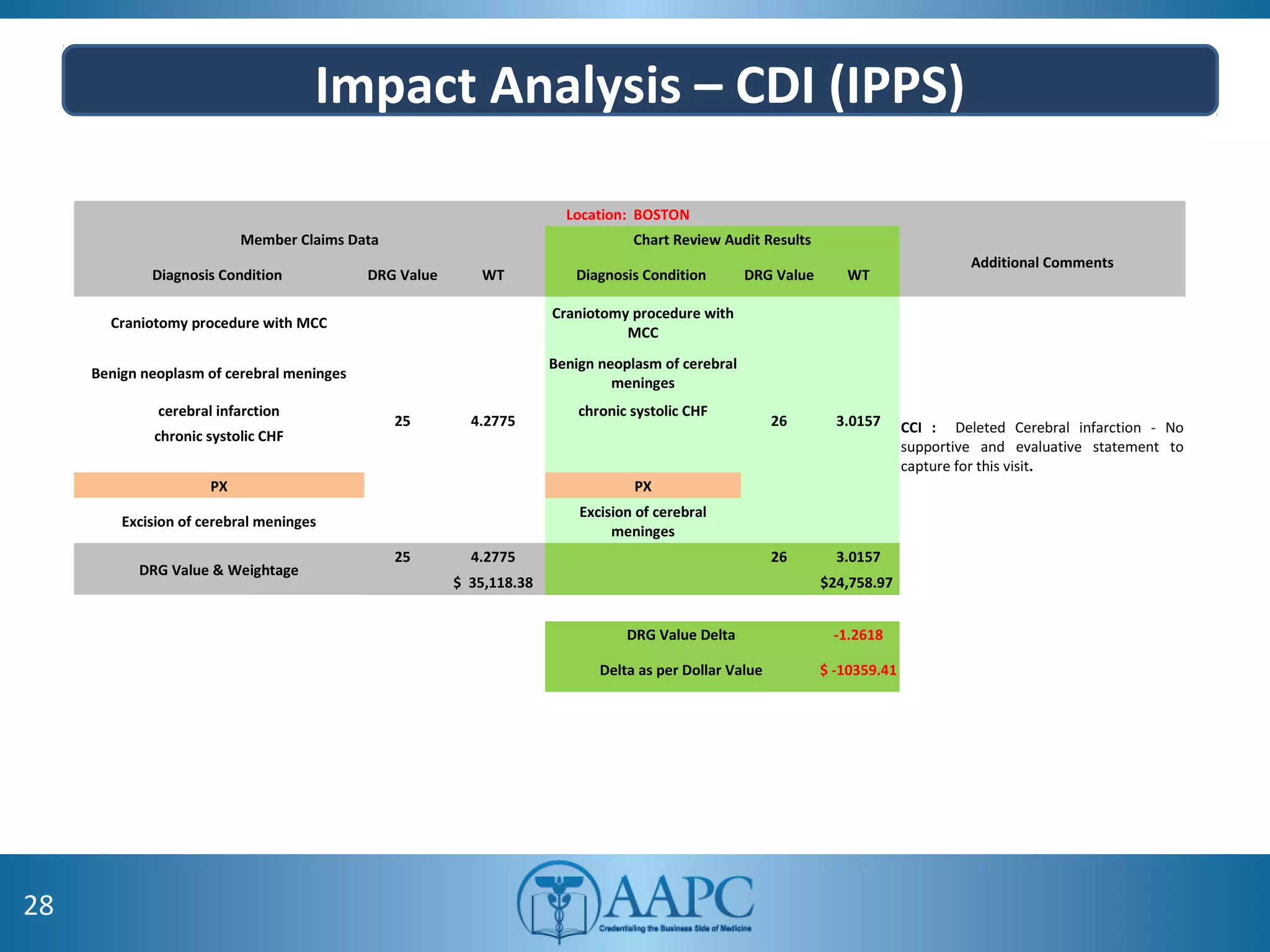
Impact Analysis – CDI (IPPS)
28
Location: BOSTON
Member Claims Data Chart Review Audit Results
Additional Comments
Diagnosis Condition DRG Value WT Diagnosis Condition DRG Value WT
Craniotomy procedure with MCC
25 4.2775
Craniotomy procedure with
MCC
26 3.0157 CCI : Deleted Cerebral infarction - No
supportive and evaluative statement to
capture for this visit.
Benign neoplasm of cerebral meninges
Benign neoplasm of cerebral
meninges
cerebral infarction chronic systolic CHF
chronic systolic CHF
PX PX
Excision of cerebral meninges
Excision of cerebral
meninges
DRG Value & Weightage
25 4.2775 26 3.0157
$ 35,118.38 $24,758.97
DRG Value Delta -1.2618
Delta as per Dollar Value $ -10359.41
Conclusion
Conclusively considering the above facts what we discussed, it is understandable that the
CDI is very critical for achieving the quality of care provided to the patient, treatment
outcomes, analytics, and also help in receding the exponential growth in the
reimbursement process because of improved quality of life of the patient or enrollees.
The role of coders plays an important role in CDI rather than the CDI specialist per se… This
is because the clinical coders review the medical record in Toto and would be in a better
position in terms of decision making for provider feedback or query for documentation
improvement. This will help in closing the deficiency gaps in the documentation if there
are any..
Remembering that we need to look at the documentation improvement beyond the
traditional fee for service model and today we look at some of those reasons and
ways and areas where you can move in the future to capture all of the patient’s
quality of care.
2929
Thank You
30

AAPC Local chapter Presentation by Venkatesh Srinivas-Vee Technologies

  • 1.
    Importance of OutpatientCoding/CDI in a value-based reimbursement Model Presented by: Venkatesh Sreenivas, CPC, CCA Sr Manager, Operations – Risk Adjustment Vee Technologies 1
  • 2.
    The value-based careis essential for achieving improved population health. So the physician’s role in supporting this transition to value-based care is very critical. The value based care combined with Clinical documentation improvement will help in achieving the objective of Improved Population Health The important takeaway from the value-based care report is the consistent progress of physician practices in value-based care arrangements to improve quality and reduce health care costs Physicians are clearly seeing the benefit of improved patient outcomes and more shared savings The patient’s treated by physician’s under value-based agreements did more preventive care screening and this resulted in better health outcomes compared with other Fee-for-Service agreements 22 Introduction
  • 3.
    • Some ofthe Healthcare Industries have already seen the impact because of the value-based care in terms of patient’s having fewer ER visits among its MA members in value-based arrangements. If there continues to have a decrease in ER visits, then it’s an indicator that the patient is more engaged with her primary care physician or her specialist so that when she is sick, she is reaching out to her primary care doctor. This in the healthcare world is the quality metrics and the US federal system excited by this progress. • One of the large University Health System in USA had Medicare Advantage memberships more than 3.5 million members, which includes members affiliated with providers in value- based and standard Medicare Advantage settings. According to the report, this particular health system reached its 2017 goal of having 66 percent of its 2.9 million individual MA members affiliated with primary care physicians in value-based agreements. 33 Introduction
  • 4.
    • The UniversityHealth System also compared medical cost and utilization for calendar year 2017 for approximately 1.5 million MA members who were affiliated with providers in value-based reimbursement models to approximately 146,000 members who were affiliated with providers under standard MA settings as well as to original fee-for-service Medicare. The study found that patient’s affiliated with physicians in Value-based agreements had cost less than the latter and also more favorable outcomes were observed on various dimensions of care and service 44 Introduction
  • 5.
    Reimbursement Models There aredifferent types of prospective payment system that we need know before we get headway on the assigned topic. It would be imperative to understand the different payment system as the CDI impacts the reimbursement along with good quality of care patient and also the treatment outcomes: •IPPS •OPPS •FFS (Profee) •Risk Adjusted 55
  • 6.
    Inpatient Prospective PaymentSystem (IPPS) • IPPS: This is referred to the payment system that is set forth for the operating cost of the Acute Hospital Inpatient care under the Medicare Part A based on the Prospective set rates • The prospective rates are set by DRG. • Payment groups that are used to categorize patients, chiefly Medicare patients, for the purpose of reimbursing hospitals for care and services with a fixed fee regardless of the actual costs incurred are also called as Diagnosis Related Group (DRG). • Each DRG group has payment weight assigned to it and that is detrimental in deciding the amount that has to be reimbursed. ICD 10 DX and ICD 10 PCS are source to define each DRG and this translates helping the payment under this model. 66
  • 7.
    Outpatient Prospective PaymentSystem (OPPS) • OPPS: The Outpatient Prospective Payment System (OPPS) is the system through which Medicare decides how much money a hospital or community mental health center will get for outpatient care to patients. The rate of reimbursement varies with the location of the hospital or clinic. • The unit of payment under OPPS (in most cases) is Ambulatory Payment Classifications also known as APCs. This is USA government’s method of payment for the hospital/facility outpatient services. • The OPP systems follows the similar concept of IPPS, but utilizes ICD 10 DX and CPT (HCPCS Level 1) procedural codes to decide the amount payable to the Hospital/Facility 77
  • 8.
    Fee-for-service (FFS) • FFS:This payment methodology uses RVU which represent the relative amount of physician work, resources, and expertise needed to provide service to the patients. This sets the prospective payment for Profee. Technically, the total reimbursement (RVUs) include three components. – Work RVU – reflects the relative time and intensity associated with furnishing a Medicare Physician Fee Schedule (PFS) services – Practice Expense RVU – reflects cost of maintaining practice – Malpractice RVU - Insurance premium that covers when malpractice lawsuits is filed for the provider The objective of using the RVUs is for measuring the productivity, allocating expenses, budgeting and cost benchmarking Based on this, the Medicare will decide the amount that the physician has to be reimbursed based on the services he/she provides to the patient 88
  • 9.
    Risk-Adjusted payment model •The risk adjusted payment model utilizes patient’s demographic information as well as patient’s health status for reimbursement process • Risk Adjustment score is detrimental factor for payments in this model. This is derived by capturing only CMS HCC codes (Part C and Part D) using ICD-10 code sets • The Risk Adjustment Factor can be defined as disease burden of the patient • The prospective rates are set by RAF scores in this payment model 99
  • 10.
    Comparative Study betweenIPPS and Risk-Adjusted Payment System  Diagnosis Coding: • Both Inpatient and HCC models uses ICD-10 codes for abstracting DX from the patient records; however inpatient coding utilizes all code sets available in ICD-10 codes directory where as HCC model utilizes only those ICD-10 codes that has CMS HCC Part C and Part D HCC values  Procedure Coding: • Inpatient coders use ICD-10-PCS for procedure coding • HCC coders do not capture any procedure codes either from ICD-10 PCS or CPT codes  Payment Methodology: • Inpatient reimbursement is based on IPPS which is determined by MS-DRGs • HCC reimbursement is based on the RAF which is determined by the patient demographic details as well as health status 10
  • 11.
    Why correct documentationof medical records are important?  Generally majority of the physician who are part of the health care system, their salaries are being paid because of relative value unit (RVUs), i.e., CPT driven, so physicians are more interested in documentation of the notes that are appropriate for CPT, but they do not give much importance to documenting the dx. However, documentation of Dx is very important for IPPS and Risk Adjusted payment model.  Similarly Correct documentation is very much important for FFS coding as well because of the MIPS being in place  If documentation of medical records are not complete, then it does not demonstrate treatment or outcome; certainly yes reimbursement can happen; however that would be compromised and still are the other aspects of healthcare as well  Providers are often graded or ranked based on their correct documentation of medical records because this definitely helps in improved care of the patient and in turn provides correct reimbursement for the care provided 11
  • 12.
    MACRA and MIPS MACRA: Medicare Access and CHIP Reauthorization Act of 2015  MACRA created the Quality Payment Program that improves Medicare by helping eligible clinicians focus on care quality and making patients healthier. This helped in stopping against the use of the sustainable growth rate in establishing the physician’s reimbursement  This program is the latest in a series of steps the Centers for Medicare and Medicaid Services (CMS) has taken to incentivize high quality of care, i.e., value over service volume.  Streamlines multiple quality programs under the new Merit Based Incentive Payments System (MIPS) and Advanced Payment Model (APM)  MIPS The Merit-Based Incentive Payment System (MIPS) is a new payment mechanism that will provide annual updates to physicians starting in 2019, based on performance in four categories: quality (replaces PQRS), resource use (Cost), clinical practice improvement activities and meaningful use of an electronic health record system 12
  • 13.
    MACRA and MIPS Quality: Samereporting options as PQRS Also consider services that may be judged as part of the quality of care you are providing: • Annual Wellness Visits • Screenings • Focused care involving the healthcare effective tools (measures) that will help in the quality of care Quality Codes/Measures: Most are Category II codes • Review for consistency with diagnosis coding • Ex: – 3046F - Most recent hemoglobin A1c level greater than 9.0% • No diagnosis code to note that patient’s diabetes is uncontrolled. 13
  • 14.
    MACRA and MIPS 14 DiabetesMellitus: Diabetic Foot and Ankle Care, Peripheral Neuropathy – Neurological Evaluation Quality Measure Documentation Requirement G8404 - Lower extremity neurological exam performed and documented * Evaluation of Motor & Sensory abilities * It include 10-g mono filament plus testing assessing the following methods : Vibration using 128-HZ tuning fork Pinprick sensation Ankle reflexes Vibration perception threshold G8405 - Lower extremity neurological exam not performed
  • 15.
    MACRA and MIPS PromotingInteroperability (PI):  Similar to Meaningful Use Modified Stage 2 – (Stage 3 for 2018) Fulfill the required measures for a minimum of 90 days: • Health Security Risk Analysis • e-Prescribing • Provide Patient Access • Send Summary of Care • Request/Accept Summary of Care Additional measures and bonus credit available 15
  • 16.
    MACRA and MIPS ImprovementActivities: Improvement Activities Coordinate services that the physicians are providing with IAs Examples of IAs for 2017 • Anticoagulant Management – are you conducting Coumadin Clinic for your patients? • Transitional care management • Depression Screening • Engagement – engaging patient in developing a plan of care • Implementation of condition-specific chronic disease self-management support programs – Community Diabetes Clinics, for example • Participation in private payer clinical practice improvement activities • Tobacco use screening and cessation interventions – are you billing 99406 or 99407? Identifying everyone who smokes with dx code F17.2** 16
  • 17.
    MACRA and MIPS Cost: Nodata to be submitted – calculated from adjudicated claims Measure cost/resource use in treating disease Severity of illness will be factor – correct, complete, specific coding will be imperative Patient compliance may be factor as well 17
  • 18.
    MACRA and MIPS Afterknowing the concept of MACRA and MIPS, it is understandable that the CDI plays a very important role in fulfilling the objectives of MACRA. The following slides will show how the clinical documentation improvement impacts reimbursement, quality of care and also treatment outcomes…. 18
  • 19.
  • 20.
  • 21.
    Impact Analysis –Outpatient CDI (Profee) 21 Member Claims Data Chart Review Audit Results Additional Comments Procedure CPT Code RVU Procedure CPT Rvu Multiple or Complicated Abscess * Surgical instrument allowing the contents to drain 10061 5.87 Simple Abscess 10060 4.64 The cavity was loosely packed with gauze, this is not enough documentation to code Complicated Abscess Documentation is lacking for key words like Packing inside the cavity, capsule or abscess pit/ loculations breakdown and Multiple site abscess when the physician actually performed the complex I&D will lead to down code to simple I&D Rvu Delta -1.23
  • 22.
    Impact Analysis –Outpatient CDI (Profee) 22 Member Claims Data Chart Review Audit Results Additional Comments Procedure CPT Code RVU Procedure CPT Rvu To code 99204 - Comprehensive Hx Comprehensive PE Moderate MDM 99204 2.43 To code 99203 - Detailed Hx Comprehensive PE Moderate MDM 99203 1.42 Due to presence of one history - its qualified for Detailed hx - So down coded the E/M level from 99204 to 99203 Rvu Delta -1.01
  • 23.
    Impact Analysis –Outpatient CDI (Profee) 23 Member Claims Data Chart Review Audit Results Additional Comments Procedure CPT Code RVU Procedure CPT Rvu Complex repair * More than layered closure (Two or more layers) with debridement 13151 4.34 Intermediate Repair 12051 2.33 Hence due to inadequate documentation of complex repair coded as Intermediate repair. Rvu Delta -2.01
  • 24.
    Impact Analysis –Outpatient CDI (RISK Adjusted) 24 2018 Payment year - Community - non Dual Demographics Data only Member Claims Data Chart Review Audit Results Additional CommentsDiagnosis Condition RAF Diagnosis Condition HCC Value RAF Diagnosis Condition HCC Value RAF 74-year old male 0.379 74-year old male - 0.379 74-year old male - 0.379 Diabetes 19 0.104 DM with Neuropathy 18 0.318 CCI : Cause and effect relationship between DM and Neuropathy was cleared established and a combination code was captured.Neuropathy - COPD 111 0.328 COPD 111 0.328 AIDS 1 0.312 CCI : Missed to capture AIDS from the medical record which was addressed in the medical record CHF 85 0.323 CDI: Jugular Venous Distention, moist breath sound, Labored breathing Interaction DM & CHF 0.154 Disease interaction : These conditions are not only chronic but also identified as complex when paired with another comorbid condition - Additional risk factors are often added to the account for these variables. Interaction COPD & CHF 0.19 Patient Total RAF 0.379 0.811 2.004 National Avg. Payment Per Patient per Year = $ 9367.34 $3,550.2 2 $7596.91 $18,772.15 RAF Delta 1.193 National Avg. Payment Per Patient per Year = $ 9367.34 $11175.24
  • 25.
    25 Impact Analysis –Outpatient CDI (RISK Adjusted) 2018 Payment year - Community - non Dual Demographics Data only Member Claims Data Chart Review Audit Results Additional CommentsDiagnosis Condition RAF Diagnosis Condition HCC Value RAF Diagnosis Condition HCC Value RAF 75 Yr old female 0.448 75 Yr old female - 0.448 70 Yr. old disabled female - 0.488 Spinal Stenosis - lumbar - Spinal Stenosis - lumbar - Atheriosclerotic Aorta 108 0.298 Atheriosclerotic Aorta 108 0.298 Mixed HLD - Mixed HLD - HTN - HTN with CHF 85 0.323 CCI: HTN with CHF (I11.0 and I50.9) having same HCC value - 85 COPD 111 0.328 CHF CDI: Diagnostic ECG interpretation showed that the EF to be less than 20% - this gave the indication that the patient might be having CHF which was not documented in the medical record. On top of it, the patient even had cardiomyopathy which prompted us to query the provider to know if the patient is having CHF. Based on the provider query, the physician returned the medical record by appending CHF under assessment which was later captured and thus resulting in increase RAF for this enrollee. Vit D def - COPD 111 0.328 Vit D def -   Interaction CHF_COPD - 0.19   Patient Total RAF 0.448 1.074 1.627 National Avg. Payment Per Patient per Year = $ 9367.34 $4,196.5 7 $10,060.5 2 $15,240.66 RAF Delta 0.553 National Avg. Payment Per Patient per Year = $ 9367.34 $5,180.14
  • 26.
    26 Impact Analysis –Outpatient CDI (RISK Adjusted) 2018 Payment year - Community - non Dual Demographics Data only Member Claims Data Chart Review Audit Results Additional Comments Diagnosis Condition RAF Diagnosis Condition HCC Value RAF Missed Opportunity HCC Value RAF Medicare Eligible because of old age Medicare Eligible because of old age - Medicare Eligible because of old age - CHF 85 0.323 CHF 85 0.323 Dilated Cardiomyopathy 85 Cardiomyopathy 85 HTN with CHF 85 Hypertensive CKD with CHF 85 CAD with Angina 88 0.14 CAD with Angina 88 0.14 Afib 96 0.268 CDI: There was objective clinical indicator in terms of cardiac rhythm being irregular and also one of the recent echocardiogram showed atrial fibrillation. CDI : GFR Score of 20 prompted a query to the provide and this translated provider amending the medical record by adding CKD4. CKD 4 137 0.237 Interaction: Congestive Heart Failure*Renal Group - 0.27 Interaction: Congestive Heart Failure*Specified Heart Arrhythmias - 0.105 Patient Total RAF 0.537 1.00 1.88 National Avg. Payment Per Patient per Year = $ 9367.34 $5,030.26 $9,367.34 $17,610.60 RAF Delta 0.88 National Avg. Payment Per Patient per Year = $ 9367.34 $8,243.26
  • 27.
    Impact Analysis –CDI (IPPS) 27 Location: BOSTON Member Claims Data Chart Review Audit Results Additional Comments Diagnosis Condition DRG Value WT Diagnosis Condition DRG Value WT Seizure with MCC 101 0.8693 Seizure with MCC 100 1.8124 CDI: Kidney failure, changes in mental status, seizures- cerebral edema in ono off the CT findings… Convulsion Convulsion Acidosis Toxic encephalopathy Acute kidney failure Acidosis Hypothyroidism Acute kidney failure Hypothyroidism DRG Value & Weightage 101 0.8693 100 1.8124 $ 7,137.02 $14,879.94 DRG Value Delta 0.9431 Delta as per Dollar Value $7,742.92 Location: BOSTON Member Claims Data Chart Review Audit Results Additional Comments Diagnosis Condition DRG Value WT Diagnosis Condition DRG Value WT Major GI disorder and peritoneal infection with CC 373 0.7576 Major GI disorder and peritoneal infection with CC 372 1.0384 CCI: Missed to capture Activated Protein C resistance - Correct coding initiative Acute appendicitis Acute appendicitis Asthma Activated protein C resistance Hyperlipidemia Asthma Osteoarthritis Hyperlipidemia Osteoarthritis DRG Value & Weightage 373 0.7576 372 1.0384 $ 6,219.95 $8,525.34 DRG Value Delta 0.2808 Delta as per Dollar Value $2,305.39
  • 28.
    Impact Analysis –CDI (IPPS) 28 Location: BOSTON Member Claims Data Chart Review Audit Results Additional Comments Diagnosis Condition DRG Value WT Diagnosis Condition DRG Value WT Craniotomy procedure with MCC 25 4.2775 Craniotomy procedure with MCC 26 3.0157 CCI : Deleted Cerebral infarction - No supportive and evaluative statement to capture for this visit. Benign neoplasm of cerebral meninges Benign neoplasm of cerebral meninges cerebral infarction chronic systolic CHF chronic systolic CHF PX PX Excision of cerebral meninges Excision of cerebral meninges DRG Value & Weightage 25 4.2775 26 3.0157 $ 35,118.38 $24,758.97 DRG Value Delta -1.2618 Delta as per Dollar Value $ -10359.41
  • 29.
    Conclusion Conclusively considering theabove facts what we discussed, it is understandable that the CDI is very critical for achieving the quality of care provided to the patient, treatment outcomes, analytics, and also help in receding the exponential growth in the reimbursement process because of improved quality of life of the patient or enrollees. The role of coders plays an important role in CDI rather than the CDI specialist per se… This is because the clinical coders review the medical record in Toto and would be in a better position in terms of decision making for provider feedback or query for documentation improvement. This will help in closing the deficiency gaps in the documentation if there are any.. Remembering that we need to look at the documentation improvement beyond the traditional fee for service model and today we look at some of those reasons and ways and areas where you can move in the future to capture all of the patient’s quality of care. 2929
  • 30.