A presentation about IBM innovation over the years
1.
IBM innovation: aquick glimpse into the
future of technology
César Diniz Maciel
Executive IT Specialist, IBM Cognitive
Systems
2019 IBM Systems Technical
University
Oct 7-11 – Las Vegas
2.
Please note
IBM’s statementsregarding its plans, directions, and intent are subject to change
or withdrawal without notice and at IBM’s sole discretion.
Information regarding potential future products is intended to outline our general
product direction and it should not be relied on in making a purchasing decision.
The information mentioned regarding potential future products is not a commitment,
promise, or legal obligation to deliver any material, code or functionality. Information about
potential future products may not be incorporated into any contract.
The development, release, and timing of any future features or functionality described for
our products remains at our sole discretion.
Performance is based on measurements and projections using standard IBM benchmarks
in a controlled environment. The actual throughput or performance that any user will
experience will vary depending upon many factors, including considerations such as the
amount of multiprogramming in the user’s job stream, the I/O configuration, the storage
configuration, and the workload processed. Therefore, no assurance can be given that an
individual user will achieve results similar to those stated here.
Replace the footer with text from the PPT-Updater. Instructions are included in that file. 2
4
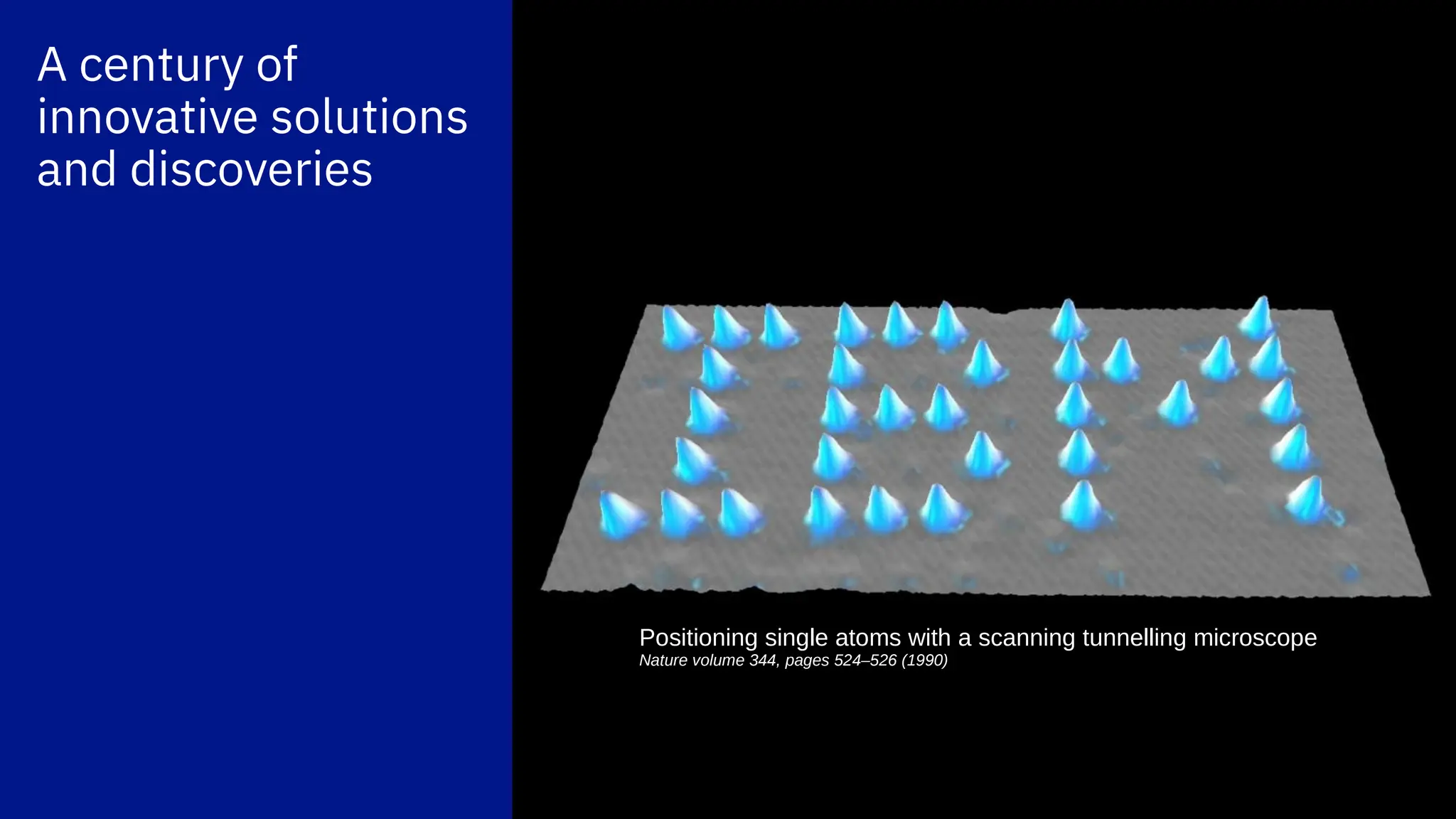
A century of
innovativesolutions
and discoveries
Positioning single atoms with a scanning tunnelling microscope
Nature volume 344, pages 524–526 (1990)
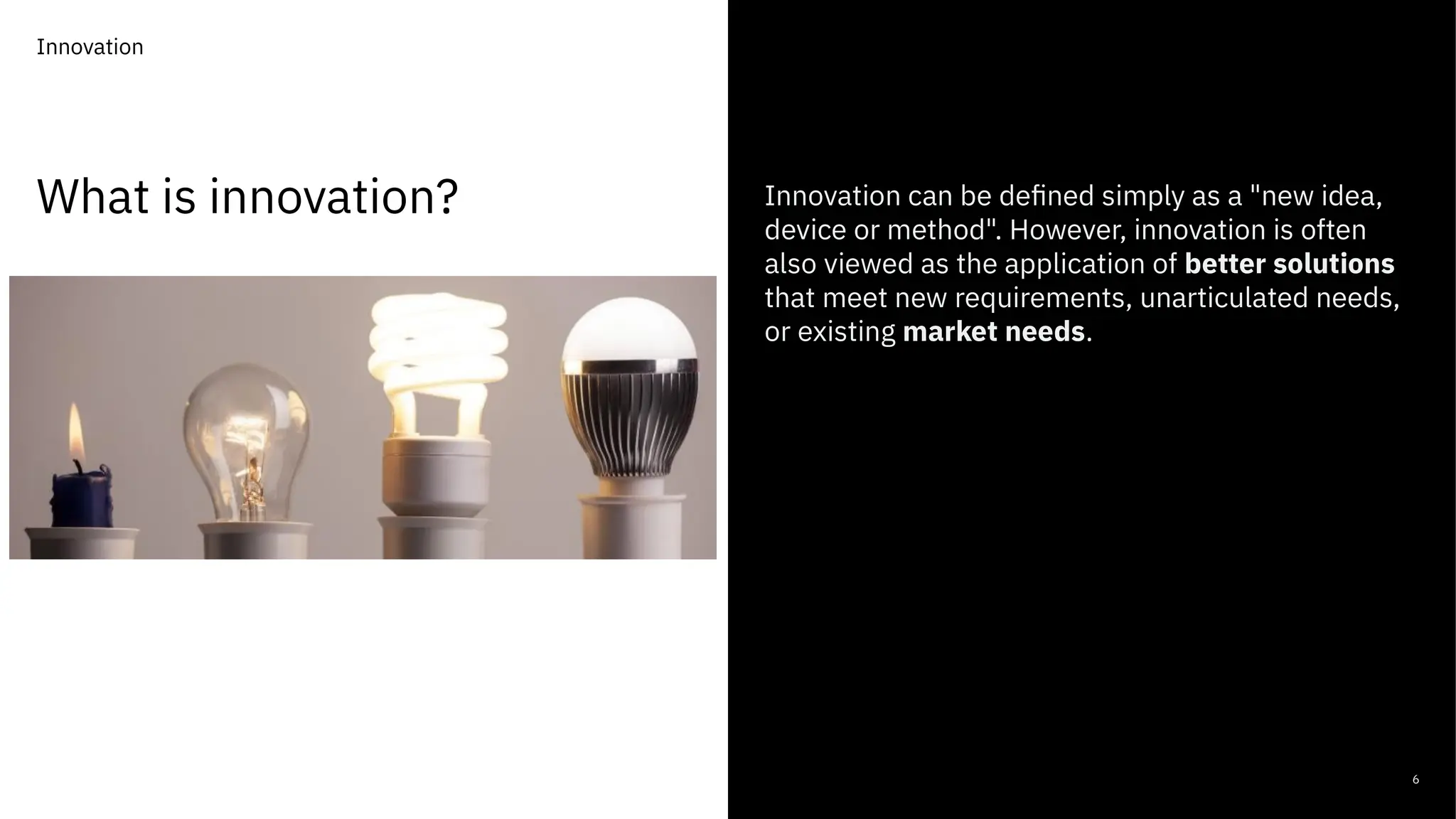
What is innovation?
6
Innovationcan be defined simply as a "new idea,
device or method". However, innovation is often
also viewed as the application of better solutions
that meet new requirements, unarticulated needs,
or existing market needs.
Innovation
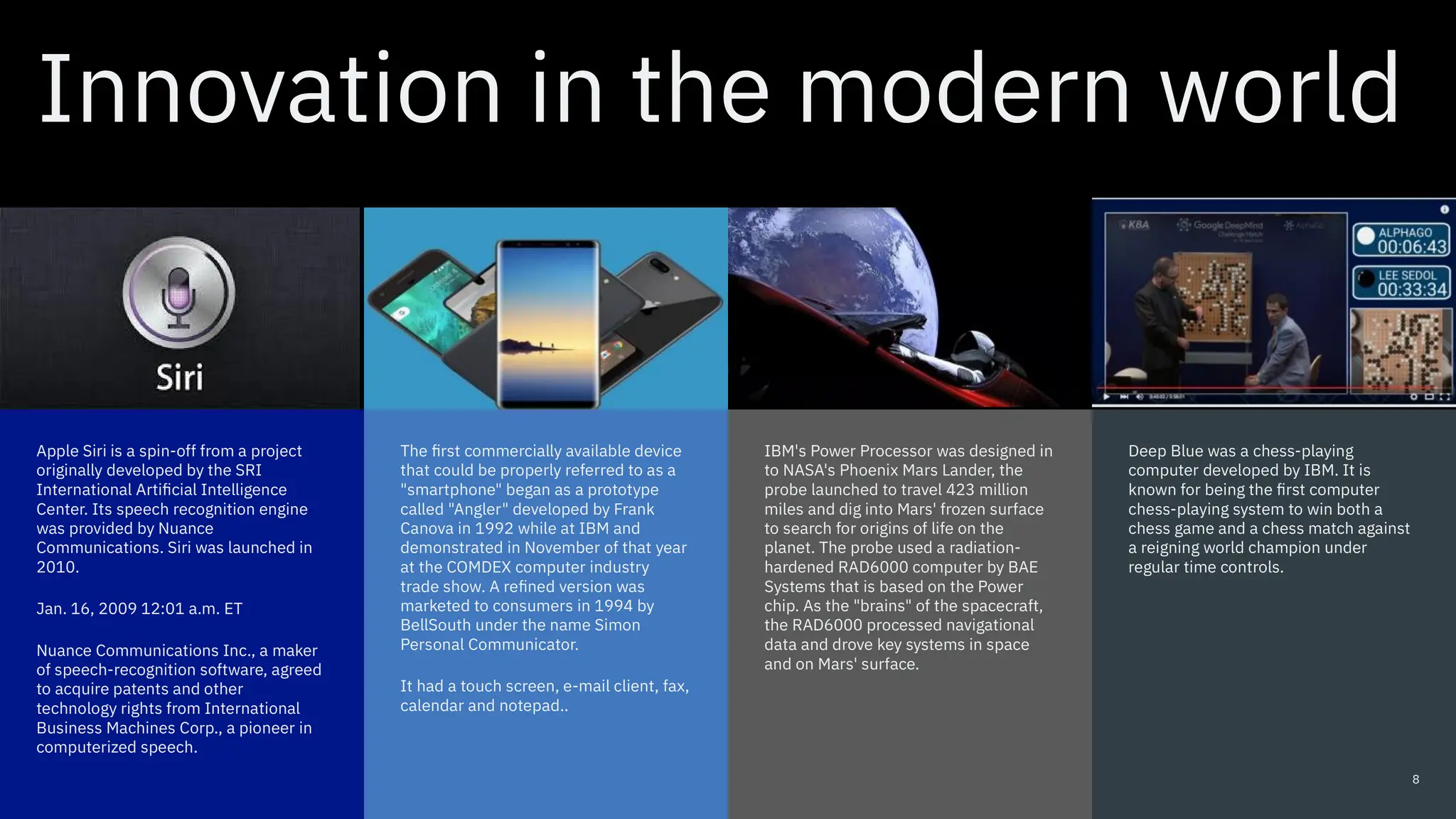
Innovation in themodern world
Apple Siri is a spin-off from a project
originally developed by the SRI
International Artificial Intelligence
Center. Its speech recognition engine
was provided by Nuance
Communications. Siri was launched in
2010.
Jan. 16, 2009 12:01 a.m. ET
Nuance Communications Inc., a maker
of speech-recognition software, agreed
to acquire patents and other
technology rights from International
Business Machines Corp., a pioneer in
computerized speech.
Deep Blue was a chess-playing
computer developed by IBM. It is
known for being the first computer
chess-playing system to win both a
chess game and a chess match against
a reigning world champion under
regular time controls.
The first commercially available device
that could be properly referred to as a
"smartphone" began as a prototype
called "Angler" developed by Frank
Canova in 1992 while at IBM and
demonstrated in November of that year
at the COMDEX computer industry
trade show. A refined version was
marketed to consumers in 1994 by
BellSouth under the name Simon
Personal Communicator.
It had a touch screen, e-mail client, fax,
calendar and notepad..
IBM's Power Processor was designed in
to NASA's Phoenix Mars Lander, the
probe launched to travel 423 million
miles and dig into Mars' frozen surface
to search for origins of life on the
planet. The probe used a radiation-
hardened RAD6000 computer by BAE
Systems that is based on the Power
chip. As the "brains" of the spacecraft,
the RAD6000 processed navigational
data and drove key systems in space
and on Mars' surface.
8
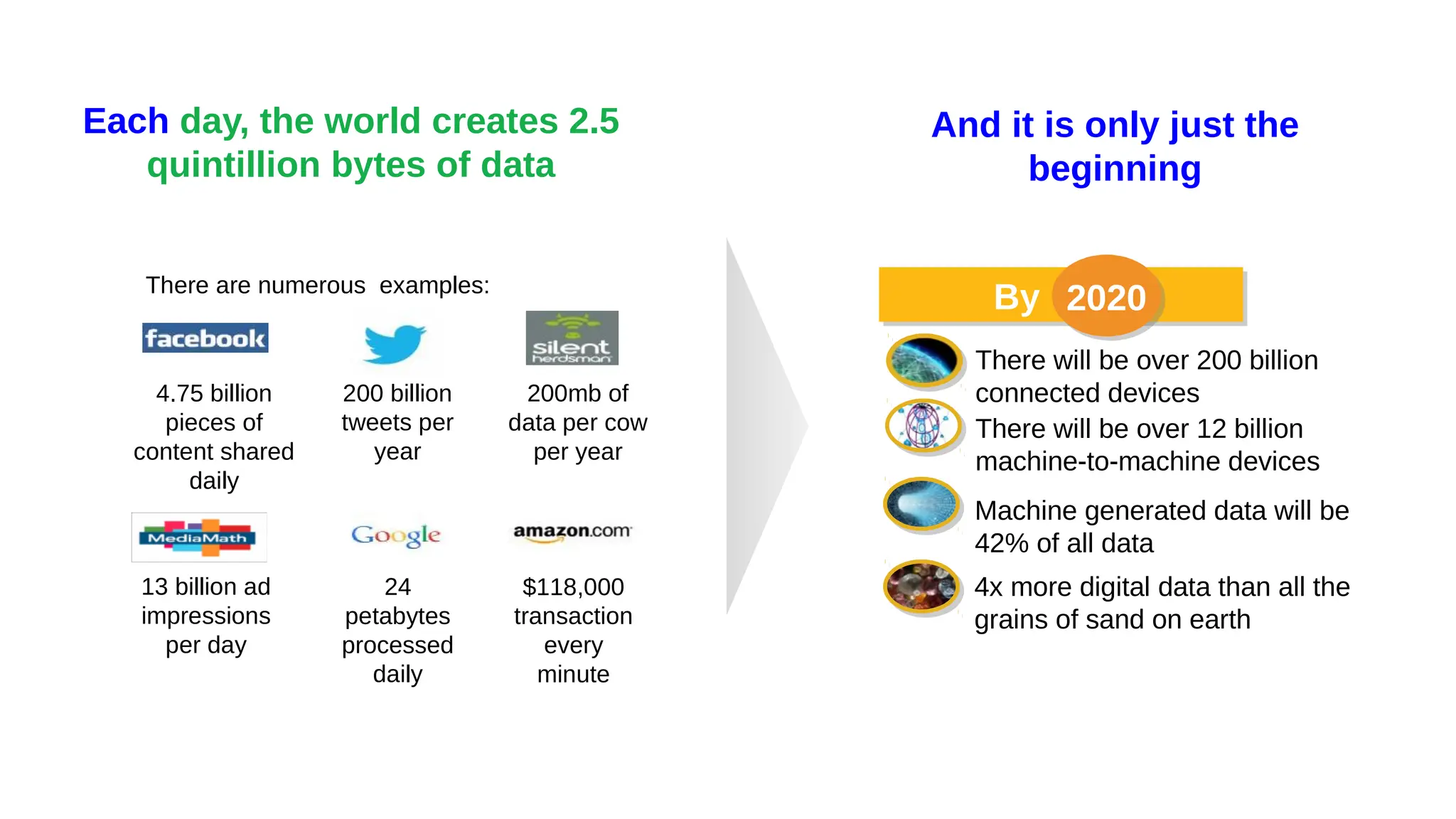
Each day, theworld creates 2.5
quintillion bytes of data
13 billion ad
impressions
per day
200mb of
data per cow
per year
200 billion
tweets per
year
4.75 billion
pieces of
content shared
daily
24
petabytes
processed
daily
There will be over 200 billion
connected devices
There will be over 12 billion
machine-to-machine devices
Machine generated data will be
42% of all data
4x more digital data than all the
grains of sand on earth
By 2020
2020
$118,000
transaction
every
minute
There are numerous examples:
And it is only just the
beginning
11.
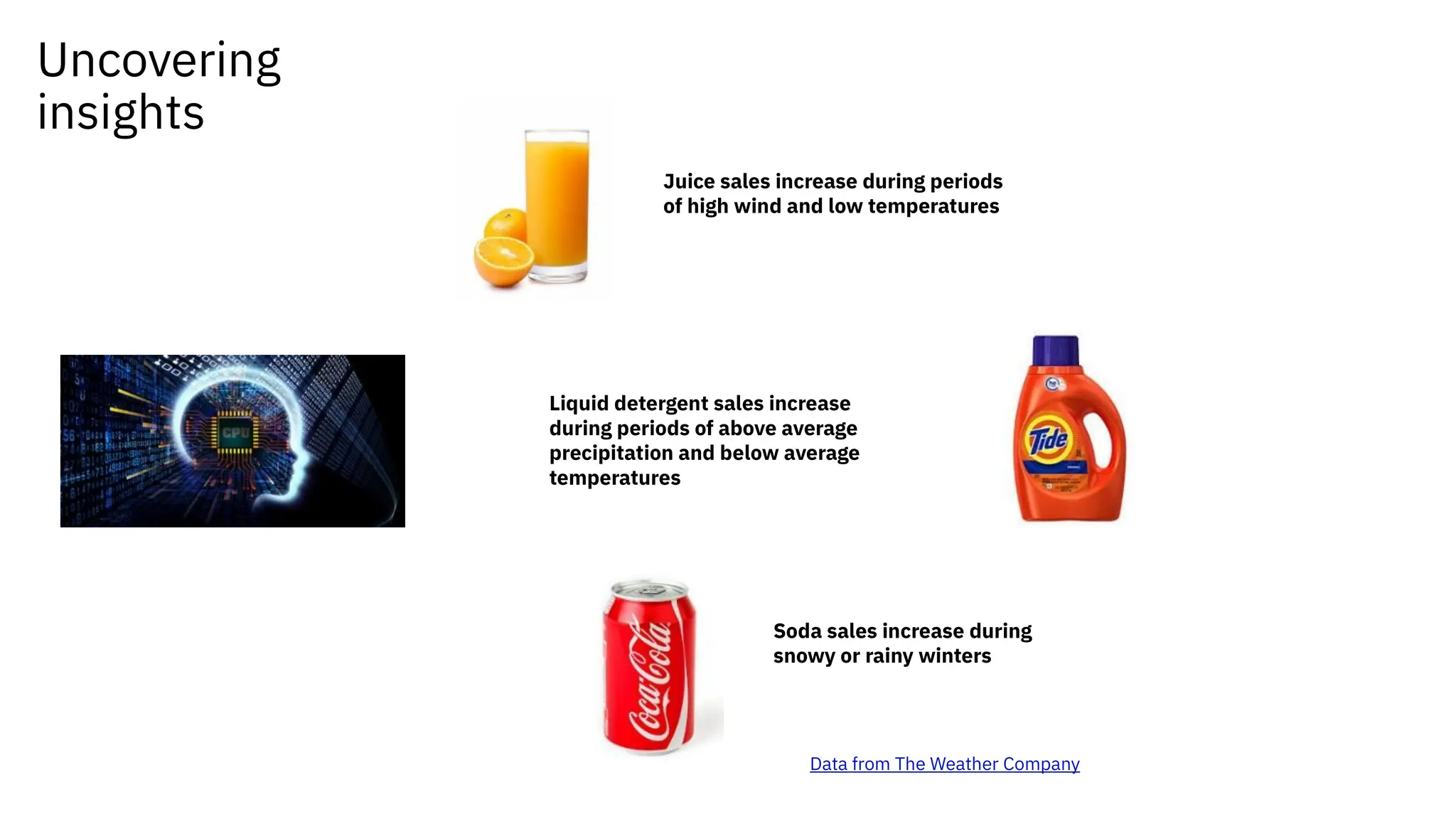
Uncovering
insights
Juice sales increaseduring periods
of high wind and low temperatures
Liquid detergent sales increase
during periods of above average
precipitation and below average
temperatures
Soda sales increase during
snowy or rainy winters
Data from The Weather Company
12.
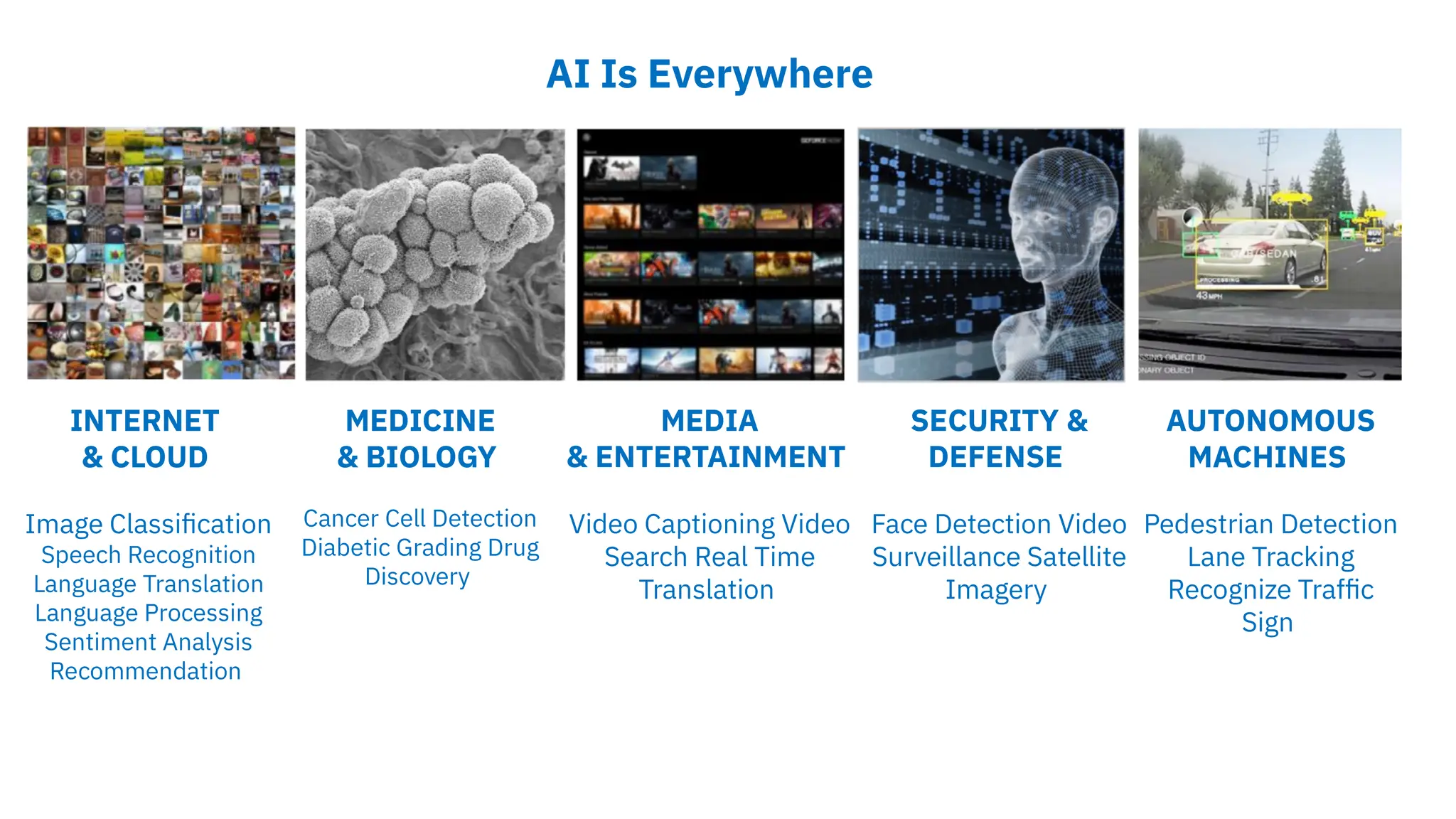
INTERNET
& CLOUD
Image Classification
SpeechRecognition
Language Translation
Language Processing
Sentiment Analysis
Recommendation
MEDICINE
& BIOLOGY
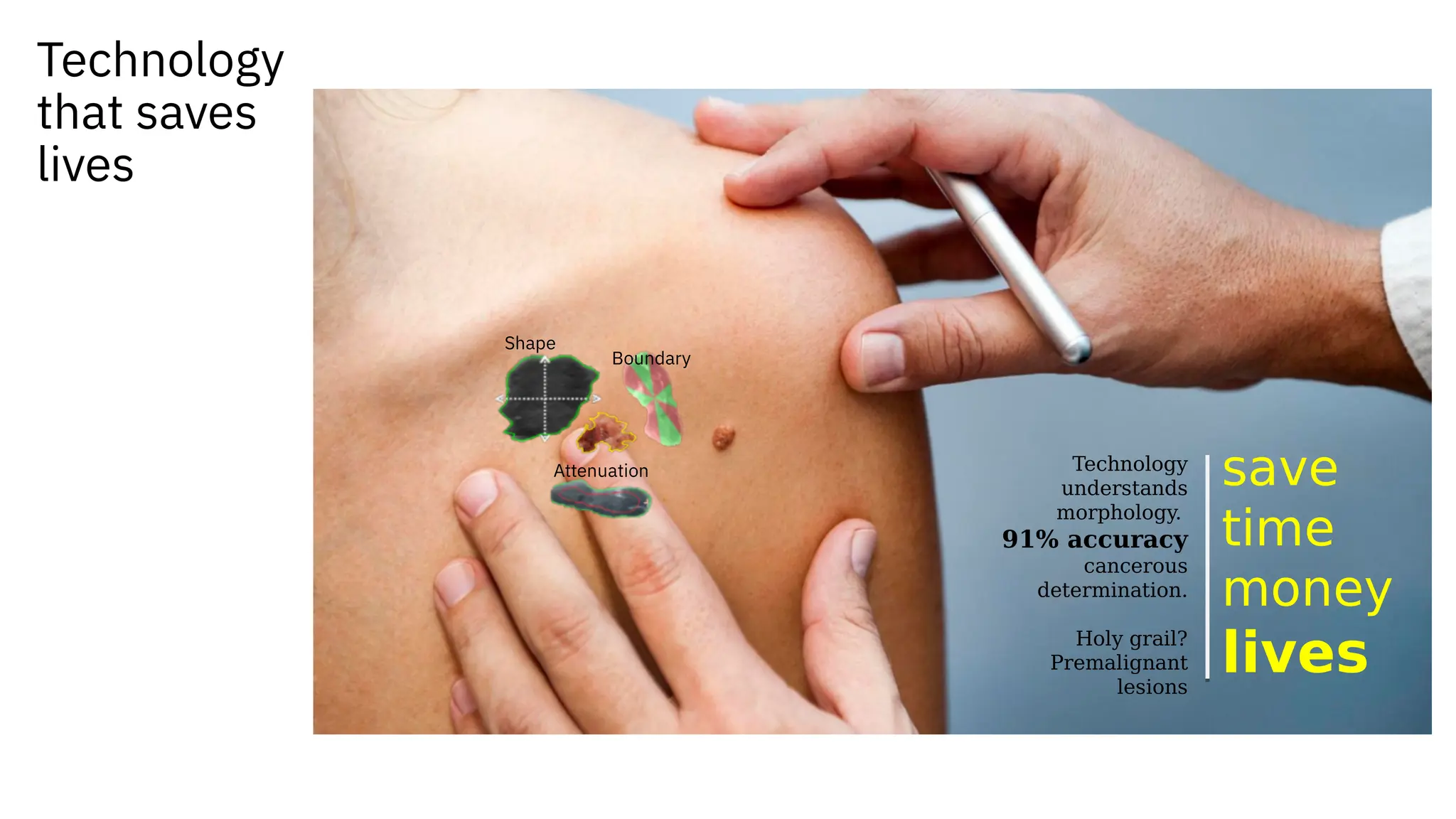
Cancer Cell Detection
Diabetic Grading Drug
Discovery
MEDIA
& ENTERTAINMENT
Video Captioning Video
Search Real Time
Translation
SECURITY &
DEFENSE
Face Detection Video
Surveillance Satellite
Imagery
AUTONOMOUS
MACHINES
Pedestrian Detection
Lane Tracking
Recognize Traffic
Sign
AI Is Everywhere
14.
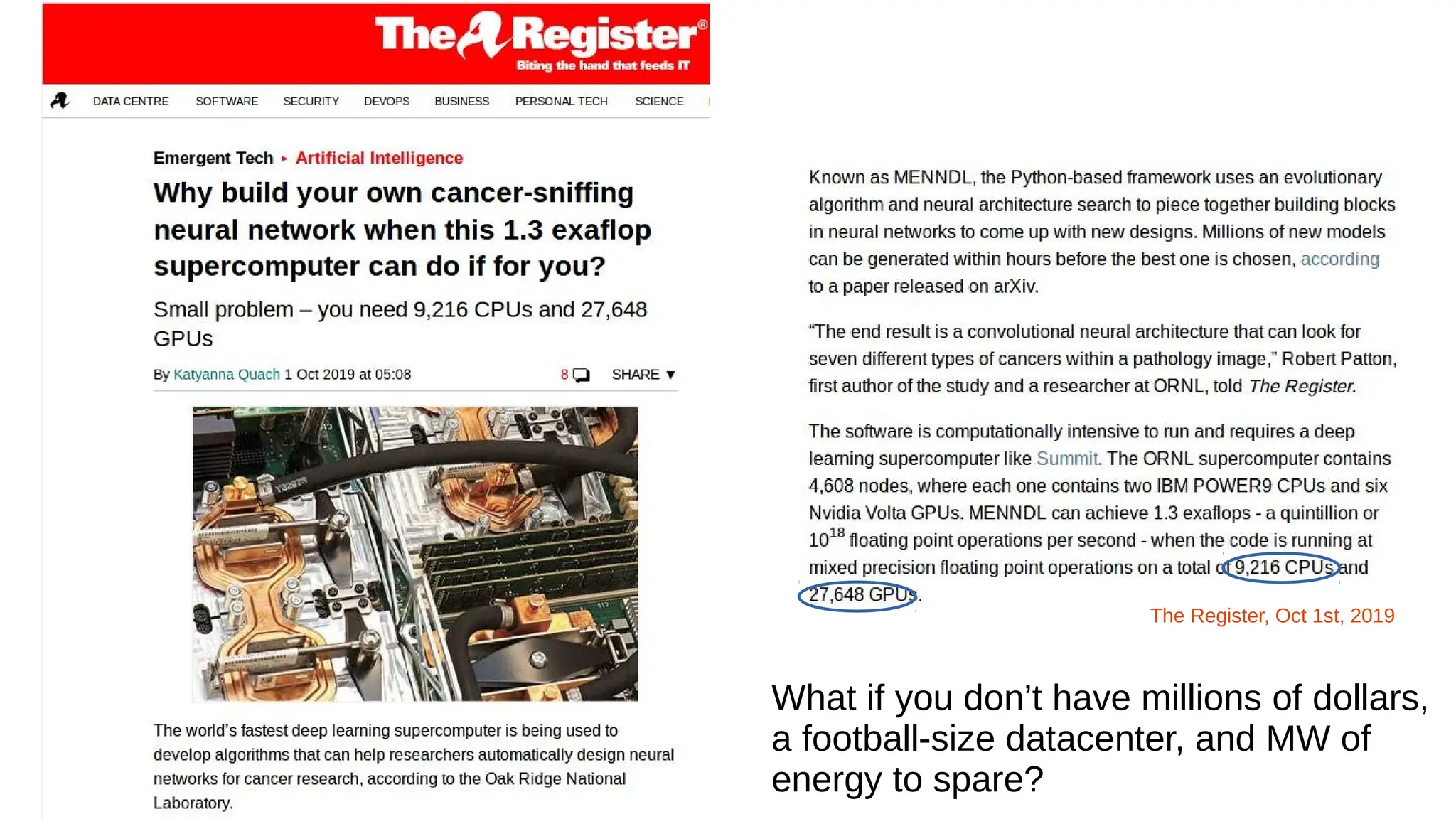
The Register, Oct1st, 2019
What if you don’t have millions of dollars,
a football-size datacenter, and MW of
energy to spare?
16.
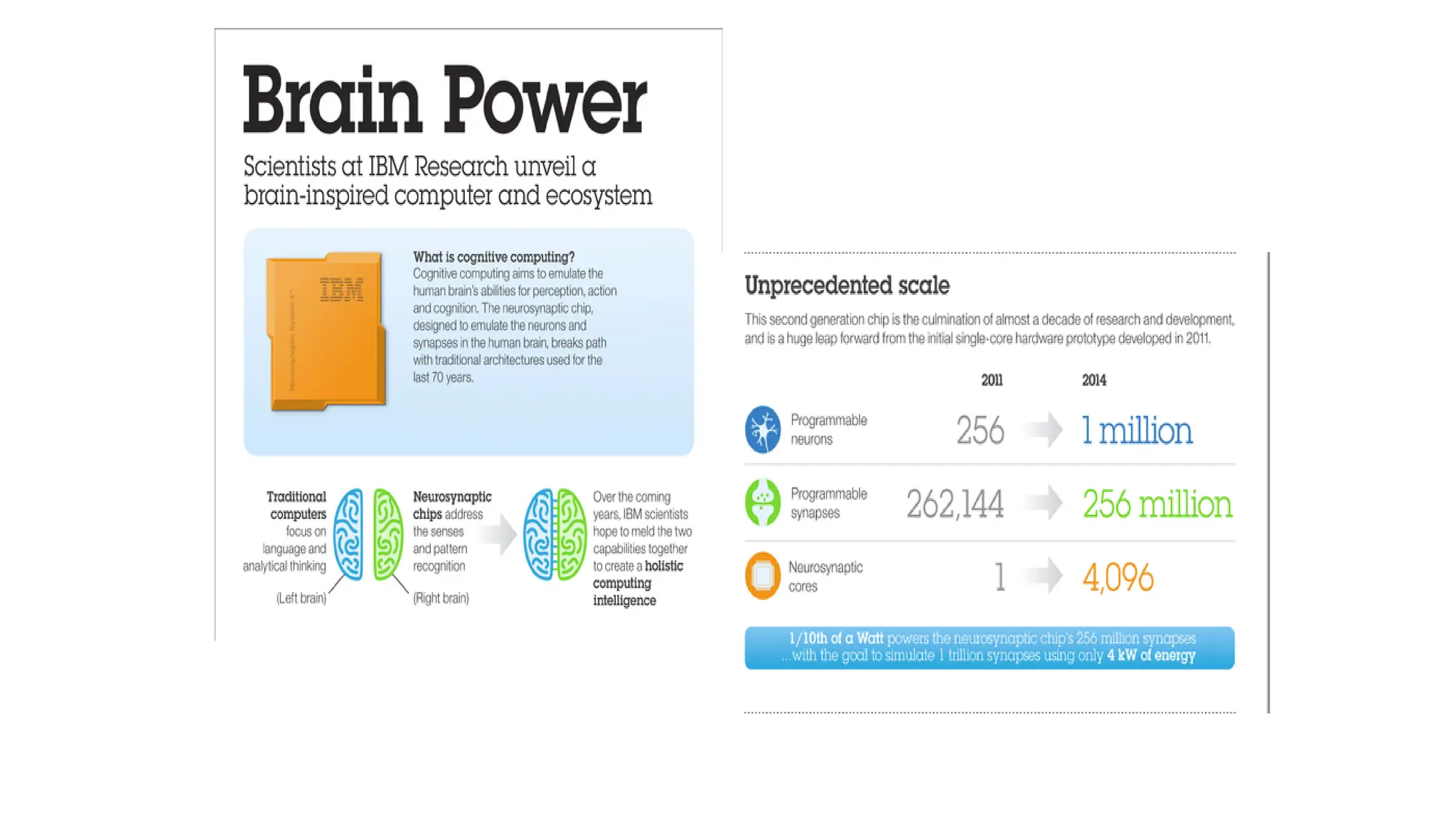
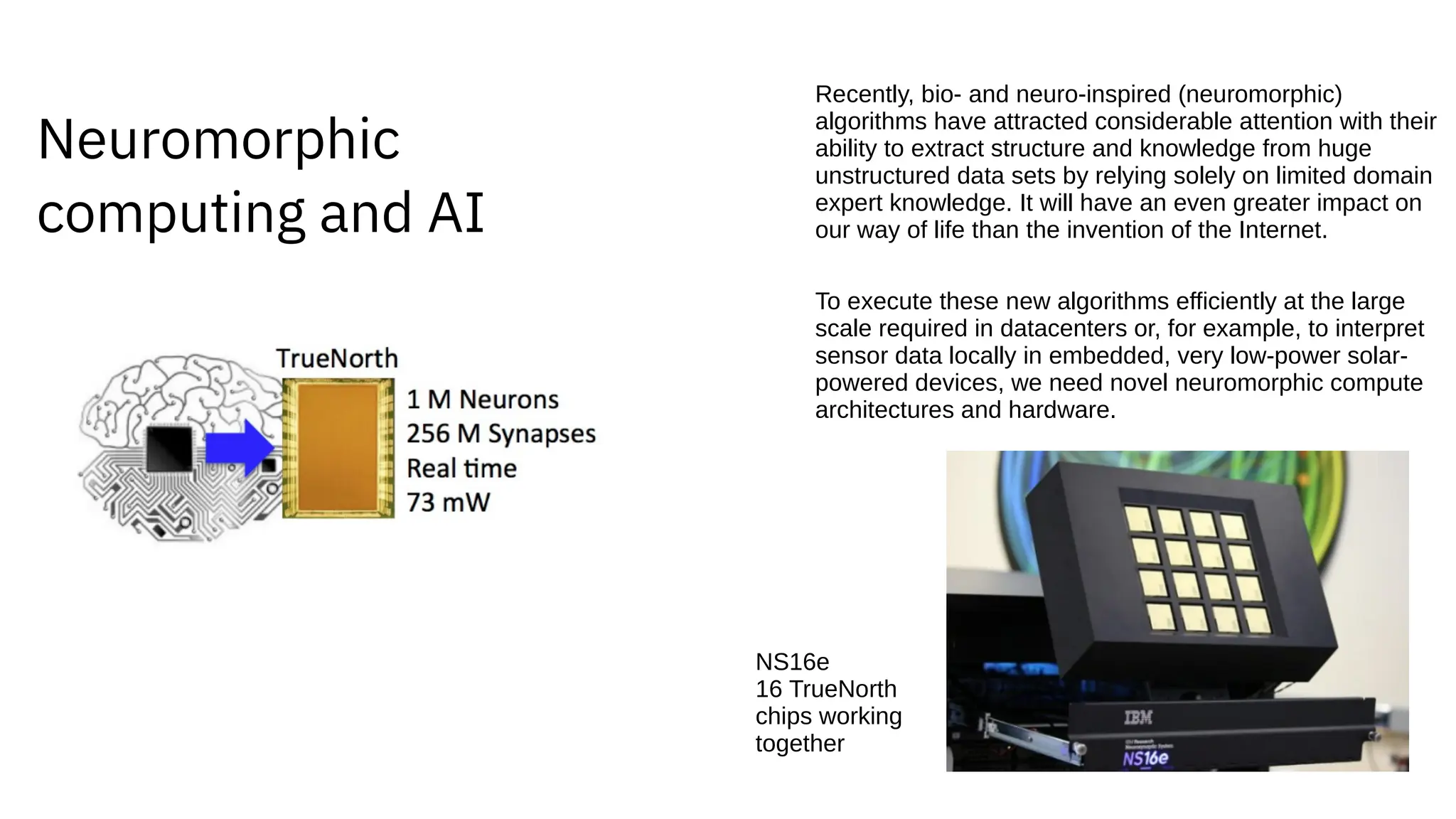
Neuromorphic
computing and AI
Recently,bio- and neuro-inspired (neuromorphic)
algorithms have attracted considerable attention with their
ability to extract structure and knowledge from huge
unstructured data sets by relying solely on limited domain
expert knowledge. It will have an even greater impact on
our way of life than the invention of the Internet.
To execute these new algorithms efficiently at the large
scale required in datacenters or, for example, to interpret
sensor data locally in embedded, very low-power solar-
powered devices, we need novel neuromorphic compute
architectures and hardware.
NS16e
16 TrueNorth
chips working
together
17.
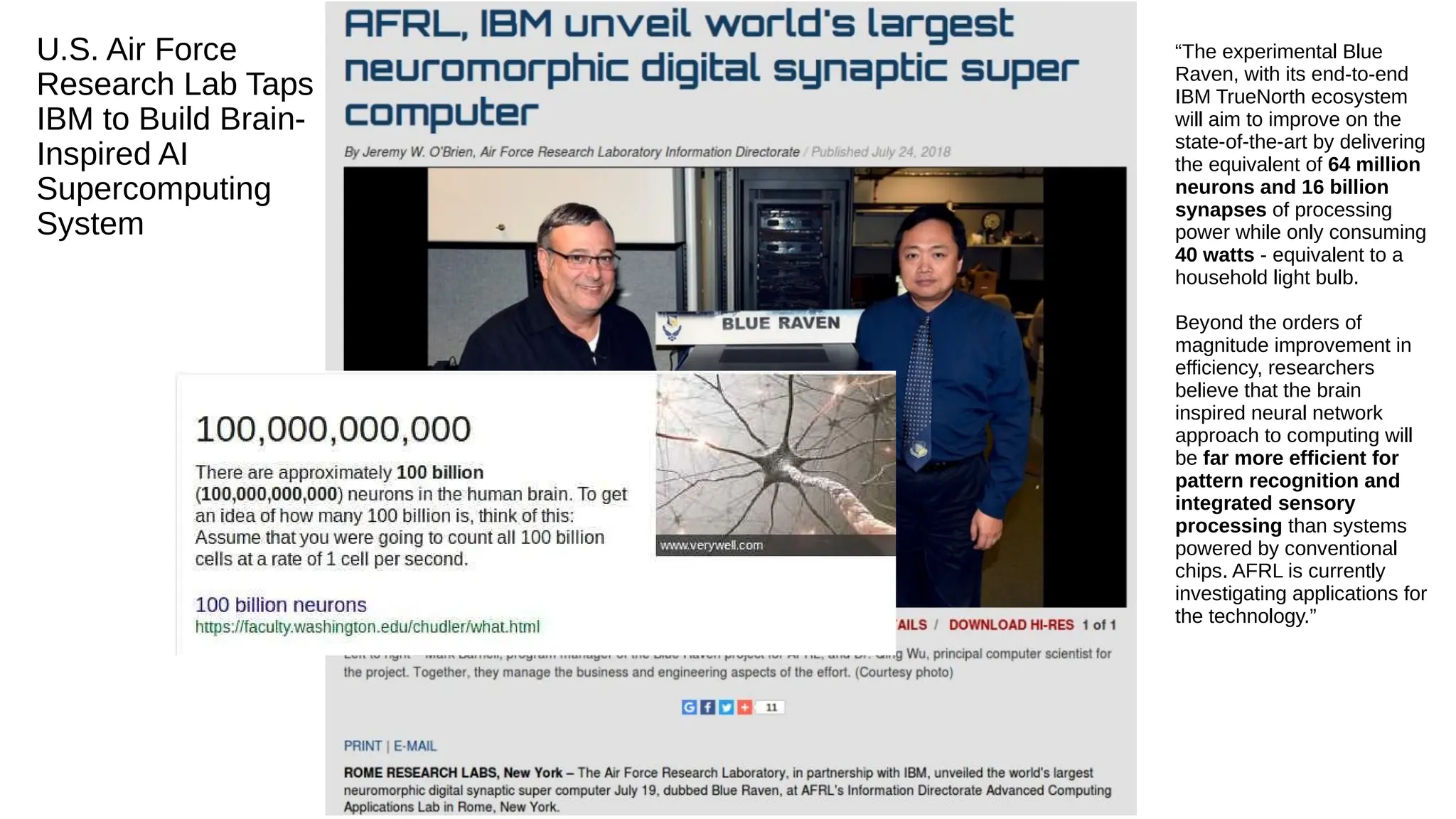
U.S. Air Force
ResearchLab Taps
IBM to Build Brain-
Inspired AI
Supercomputing
System
“The experimental Blue
Raven, with its end-to-end
IBM TrueNorth ecosystem
will aim to improve on the
state-of-the-art by delivering
the equivalent of 64 million
neurons and 16 billion
synapses of processing
power while only consuming
40 watts - equivalent to a
household light bulb.
Beyond the orders of
magnitude improvement in
efficiency, researchers
believe that the brain
inspired neural network
approach to computing will
be far more efficient for
pattern recognition and
integrated sensory
processing than systems
powered by conventional
chips. AFRL is currently
investigating applications for
the technology.”
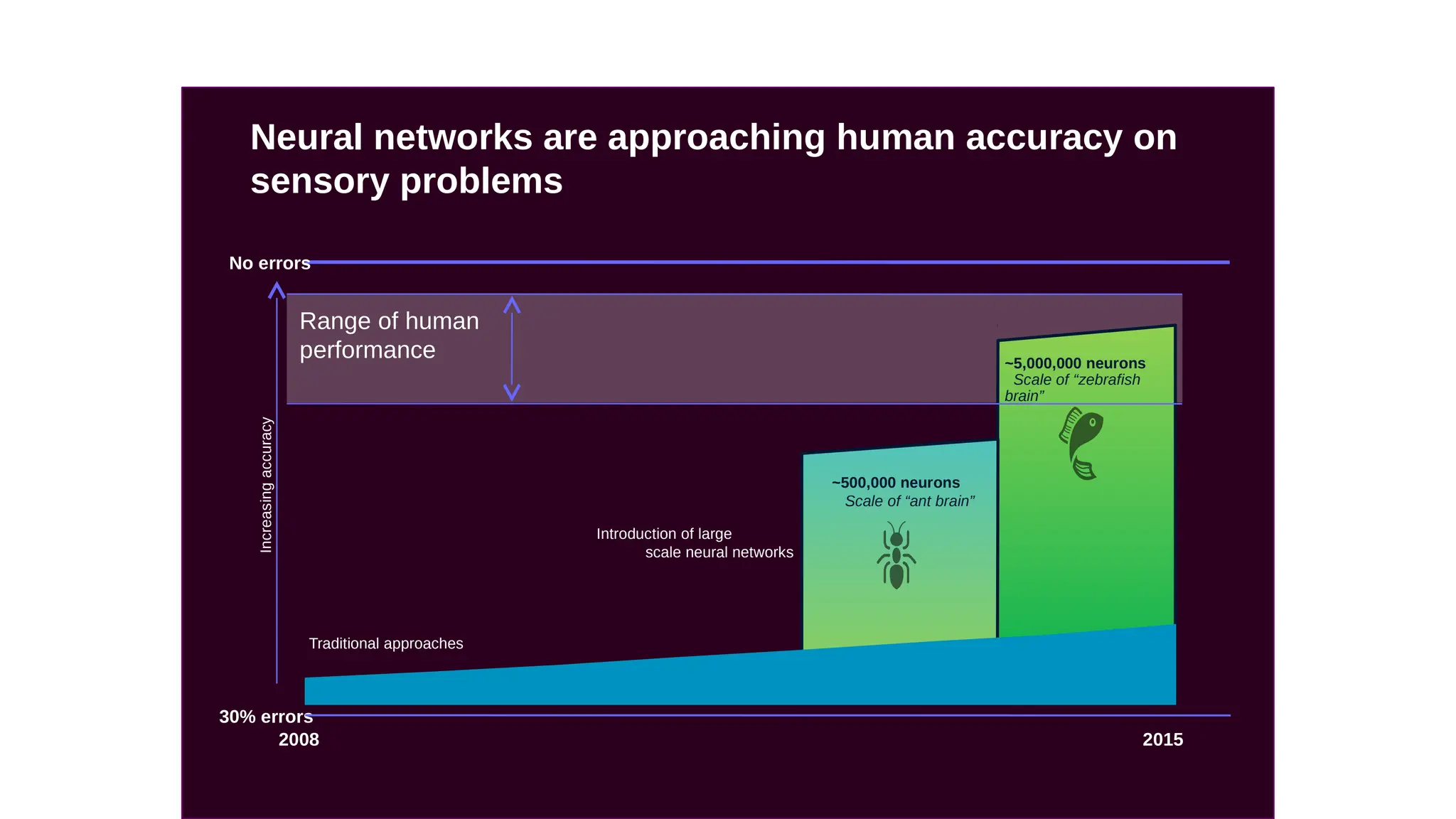
Introduction of large
scaleneural networks
2008 2015
Increasing
accuracy
~500,000 neurons
Scale of “ant brain”
Range of human
performance ~5,000,000 neurons
Scale of “zebrafish
brain”
30% errors
No errors
Traditional approaches
Neural networks are approaching human accuracy on
sensory problems
21.
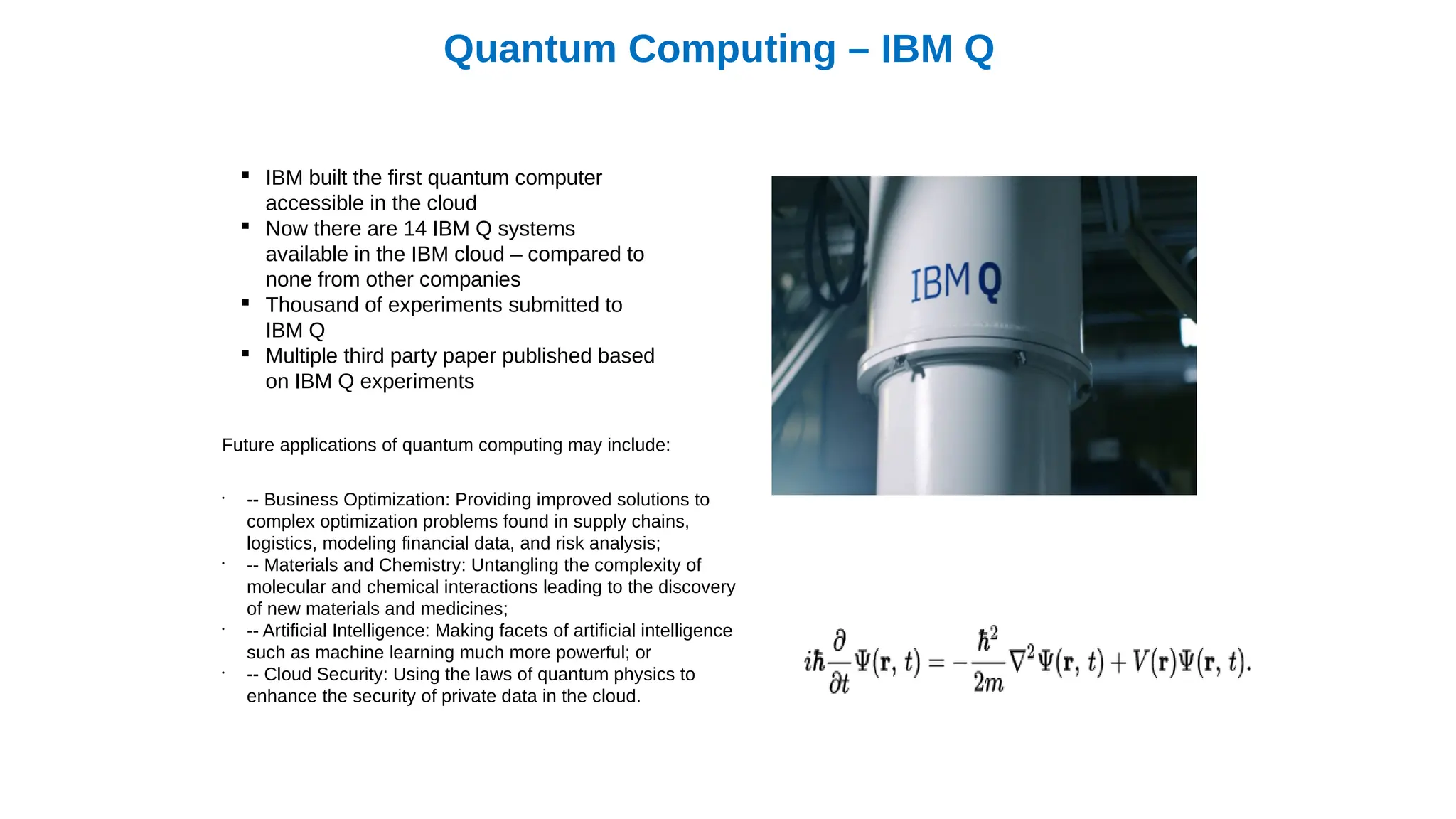
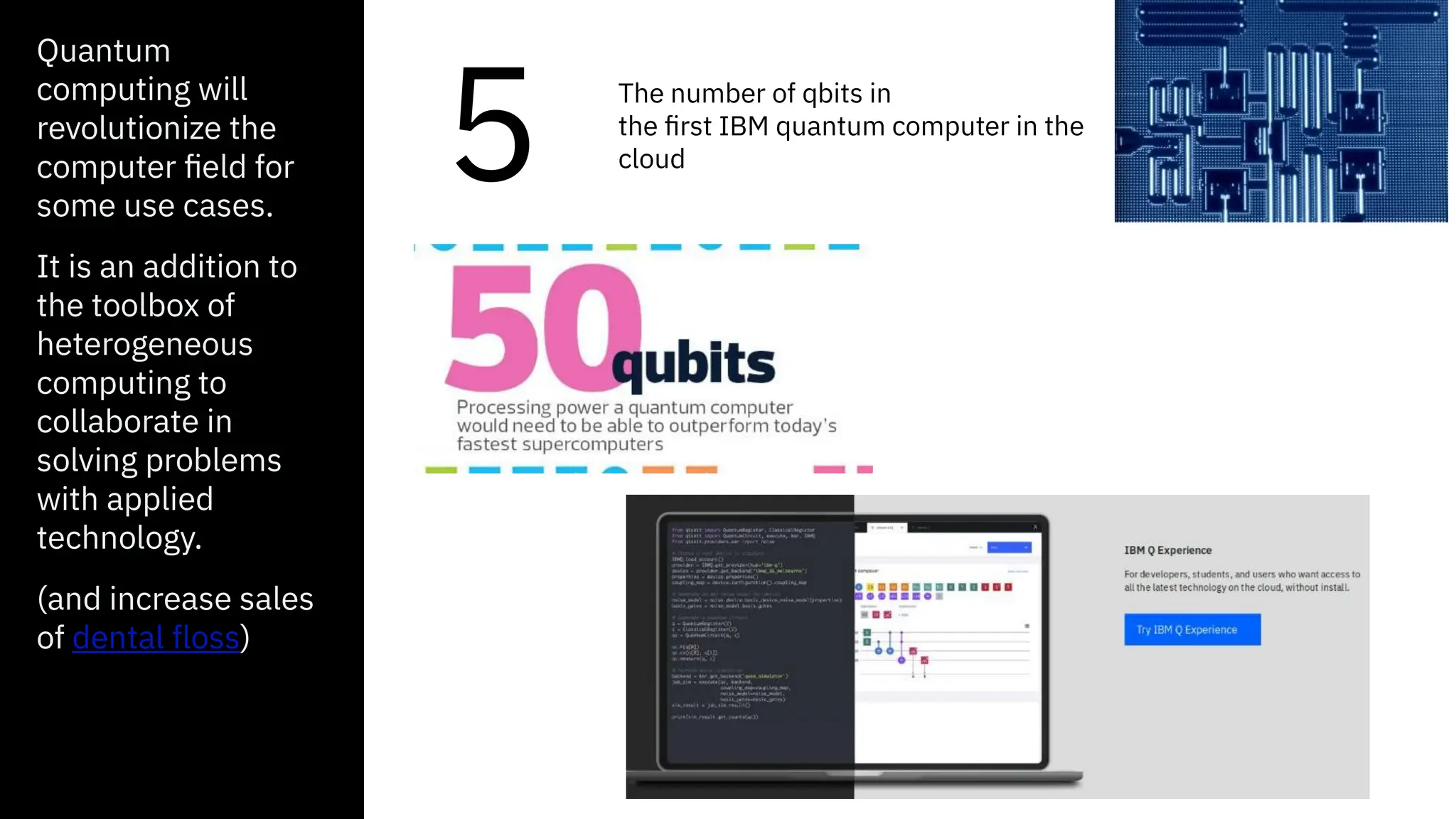
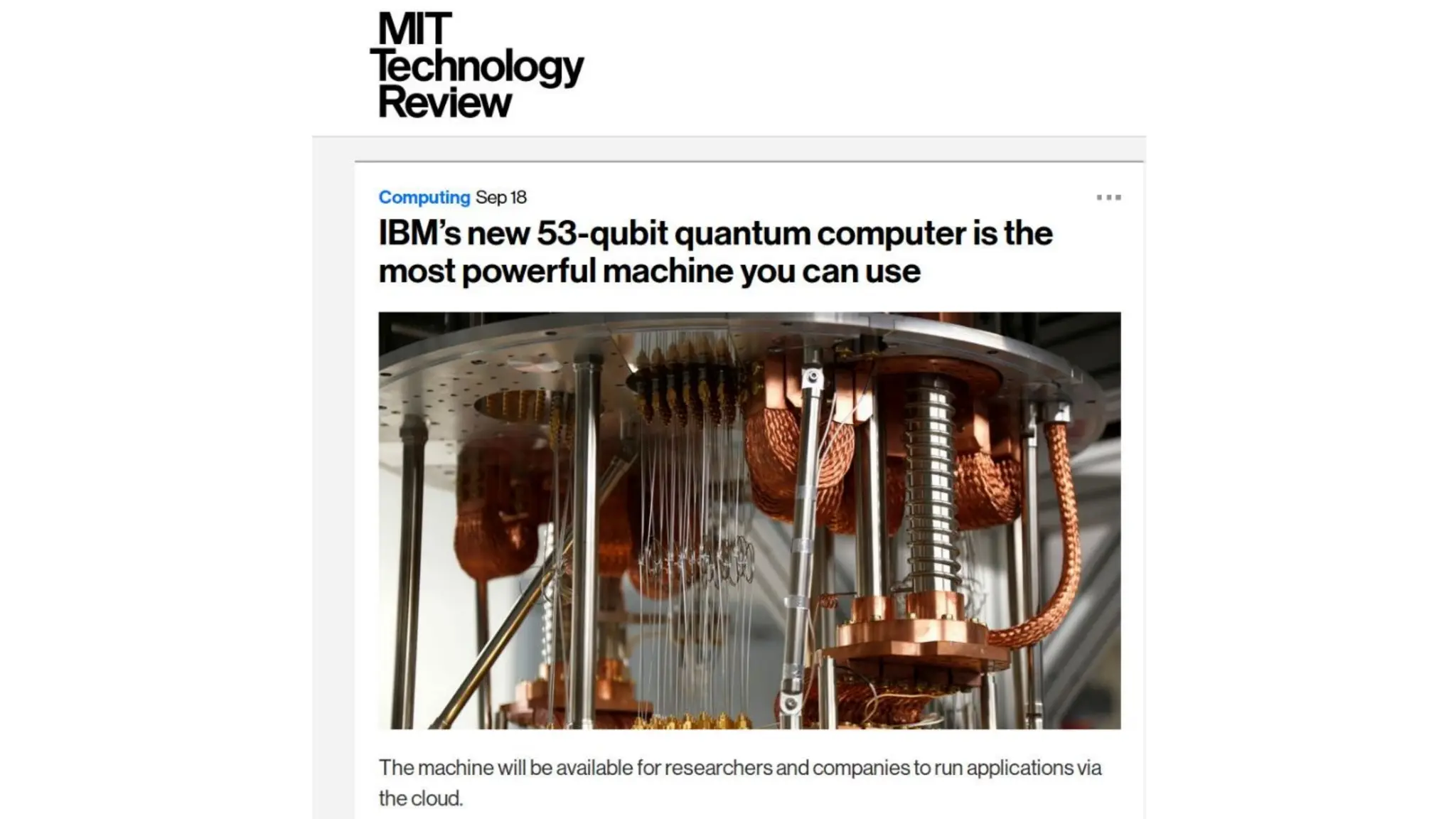
Quantum Computing –IBM Q
IBM built the first quantum computer
accessible in the cloud
Now there are 14 IBM Q systems
available in the IBM cloud – compared to
none from other companies
Thousand of experiments submitted to
IBM Q
Multiple third party paper published based
on IBM Q experiments
Future applications of quantum computing may include:
•
-- Business Optimization: Providing improved solutions to
complex optimization problems found in supply chains,
logistics, modeling financial data, and risk analysis;
•
-- Materials and Chemistry: Untangling the complexity of
molecular and chemical interactions leading to the discovery
of new materials and medicines;
•
-- Artificial Intelligence: Making facets of artificial intelligence
such as machine learning much more powerful; or
•
-- Cloud Security: Using the laws of quantum physics to
enhance the security of private data in the cloud.
22.
Quantum
computing will
revolutionize the
computerfield for
some use cases.
It is an addition to
the toolbox of
heterogeneous
computing to
collaborate in
solving problems
with applied
technology.
(and increase sales
of dental floss)
5 The number of qbits in
the first IBM quantum computer in the
cloud
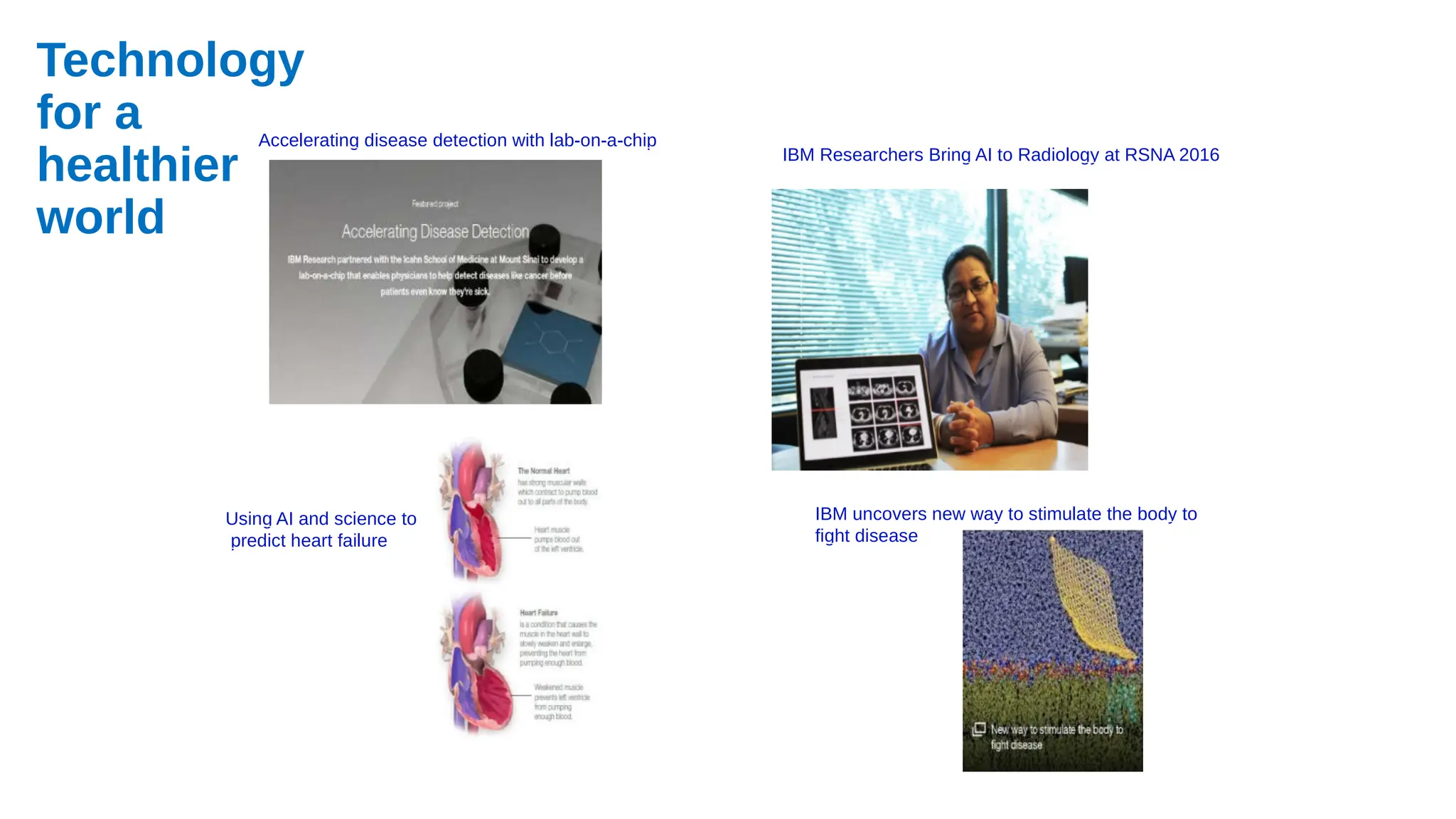
IBM Researchers BringAI to Radiology at RSNA 2016
Accelerating disease detection with lab-on-a-chip
Using AI and science to
predict heart failure
IBM uncovers new way to stimulate the body to
fight disease
Technology
for a
healthier
world
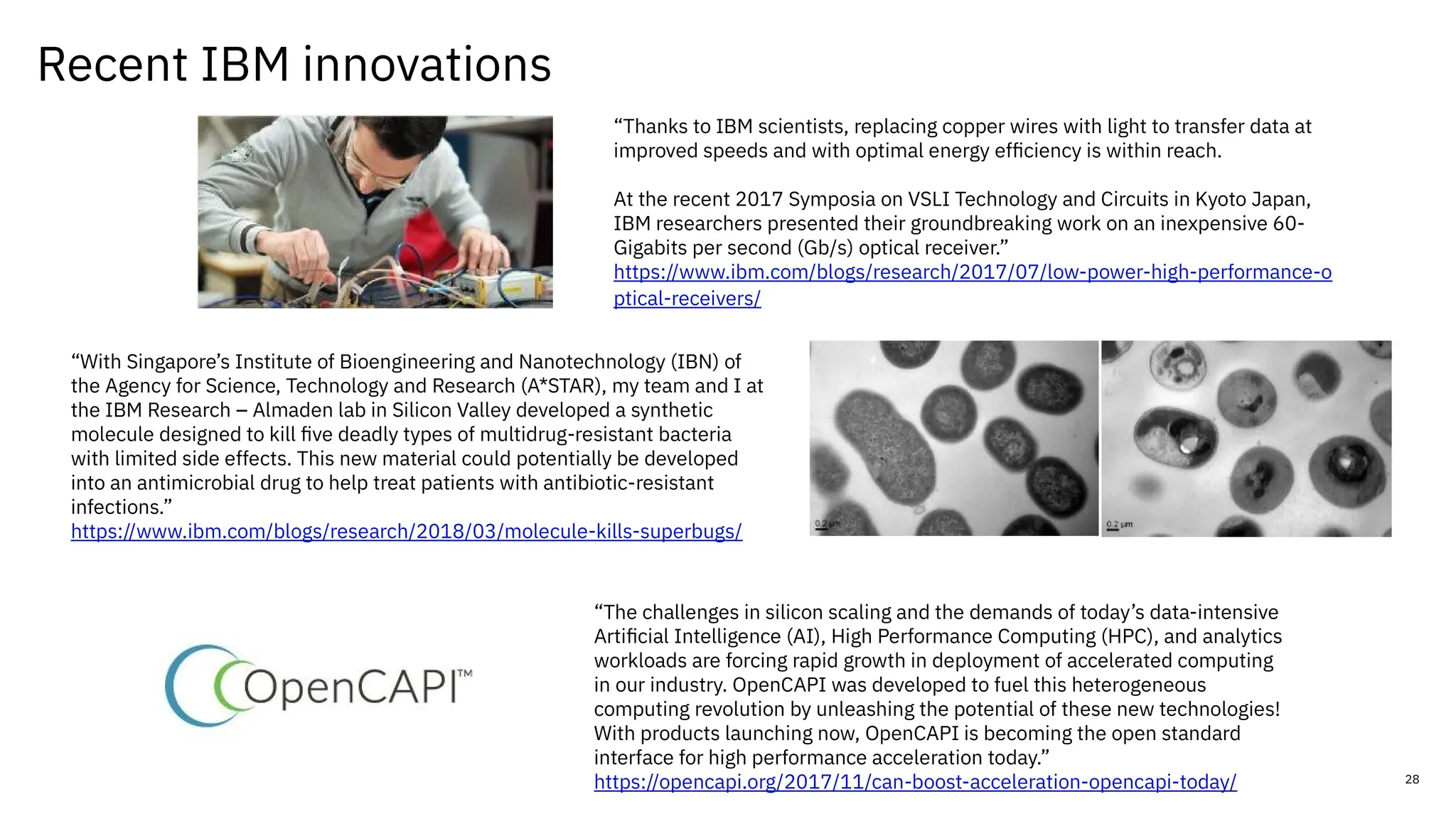
Recent IBM innovations
28
“Thanksto IBM scientists, replacing copper wires with light to transfer data at
improved speeds and with optimal energy efficiency is within reach.
At the recent 2017 Symposia on VSLI Technology and Circuits in Kyoto Japan,
IBM researchers presented their groundbreaking work on an inexpensive 60-
Gigabits per second (Gb/s) optical receiver.”
https://www.ibm.com/blogs/research/2017/07/low-power-high-performance-o
ptical-receivers/
“With Singapore’s Institute of Bioengineering and Nanotechnology (IBN) of
the Agency for Science, Technology and Research (A*STAR), my team and I at
the IBM Research – Almaden lab in Silicon Valley developed a synthetic
molecule designed to kill five deadly types of multidrug-resistant bacteria
with limited side effects. This new material could potentially be developed
into an antimicrobial drug to help treat patients with antibiotic-resistant
infections.”
https://www.ibm.com/blogs/research/2018/03/molecule-kills-superbugs/
“The challenges in silicon scaling and the demands of today’s data-intensive
Artificial Intelligence (AI), High Performance Computing (HPC), and analytics
workloads are forcing rapid growth in deployment of accelerated computing
in our industry. OpenCAPI was developed to fuel this heterogeneous
computing revolution by unleashing the potential of these new technologies!
With products launching now, OpenCAPI is becoming the open standard
interface for high performance acceleration today.”
https://opencapi.org/2017/11/can-boost-acceleration-opencapi-today/
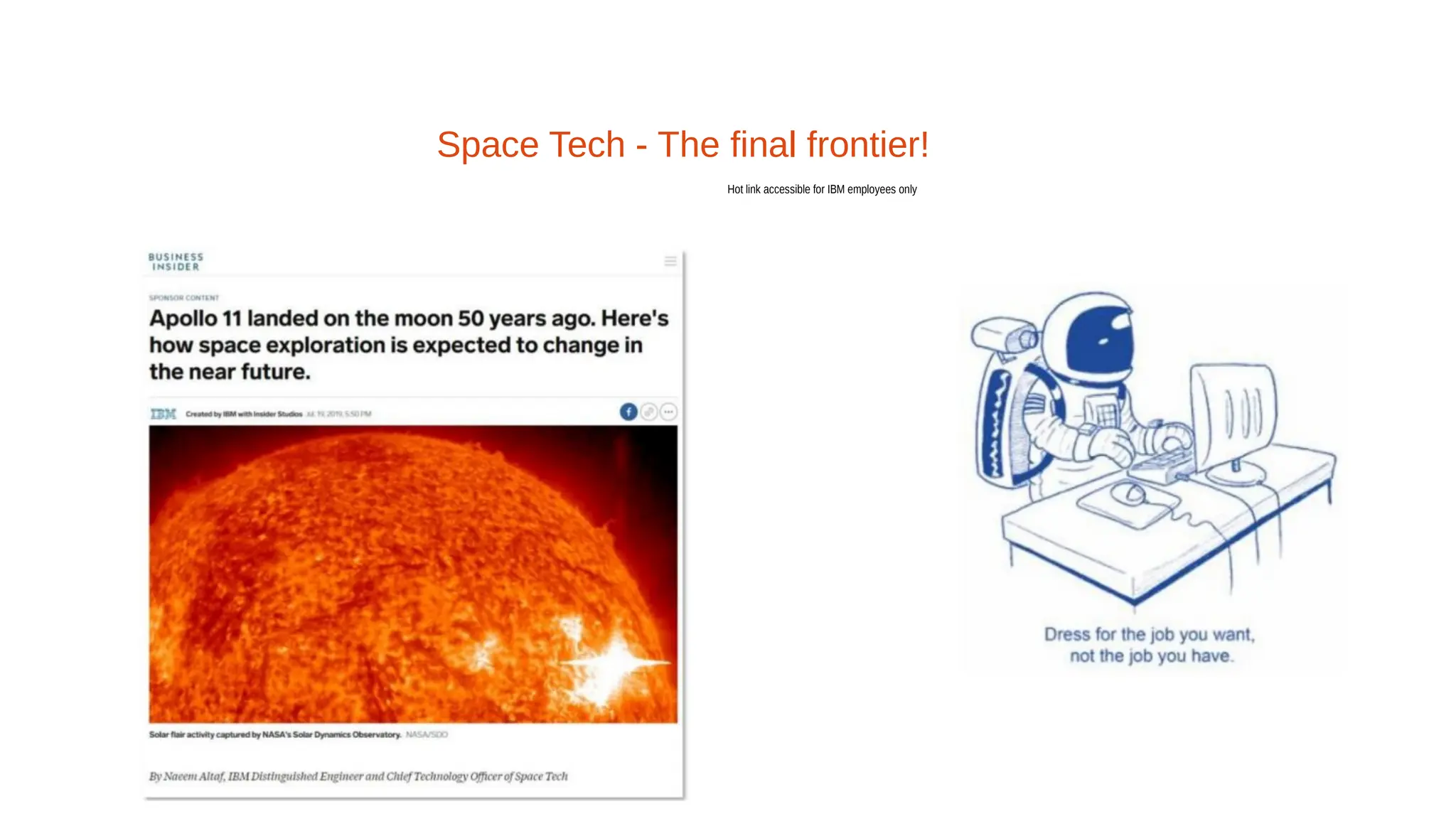
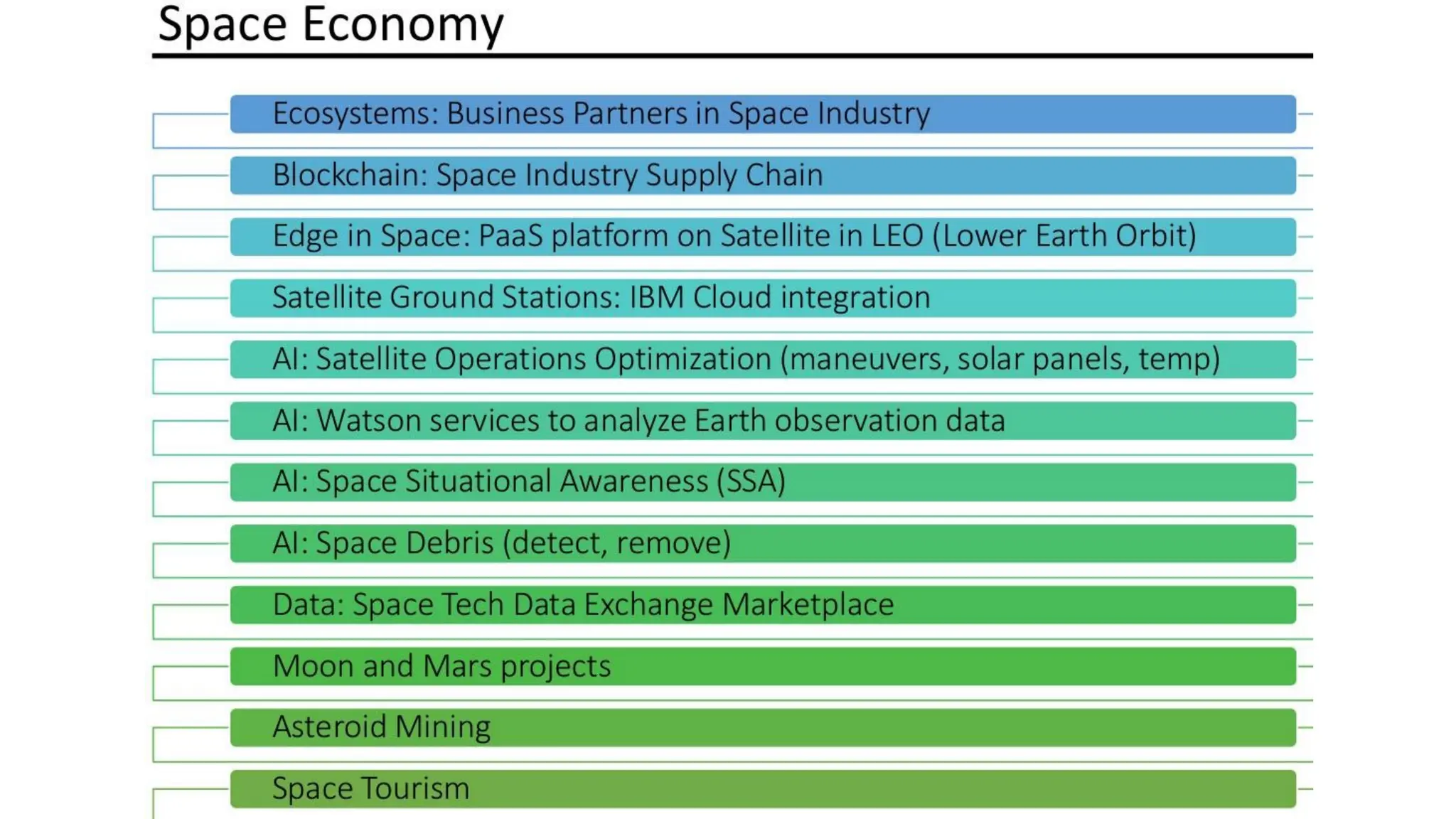
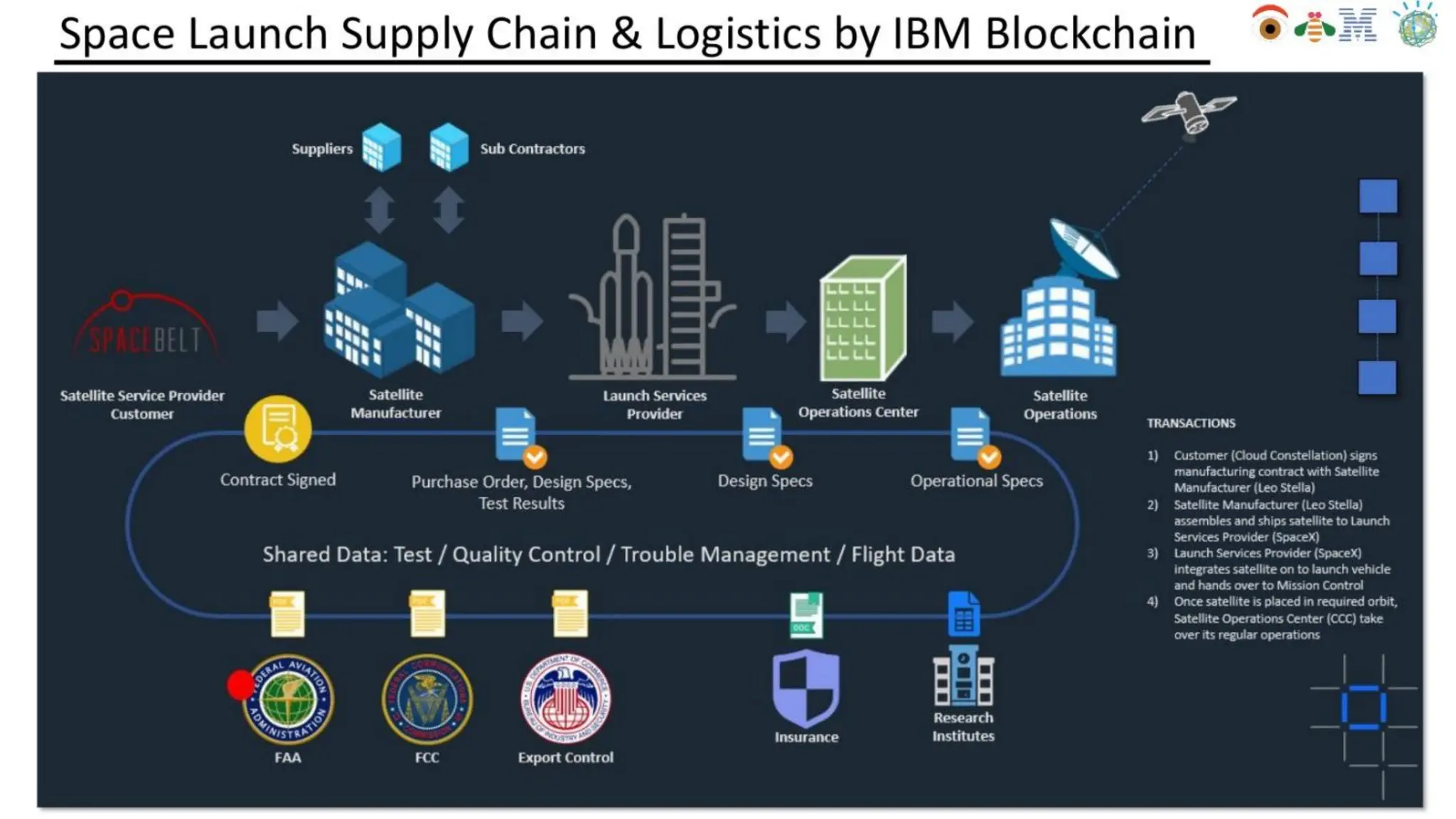
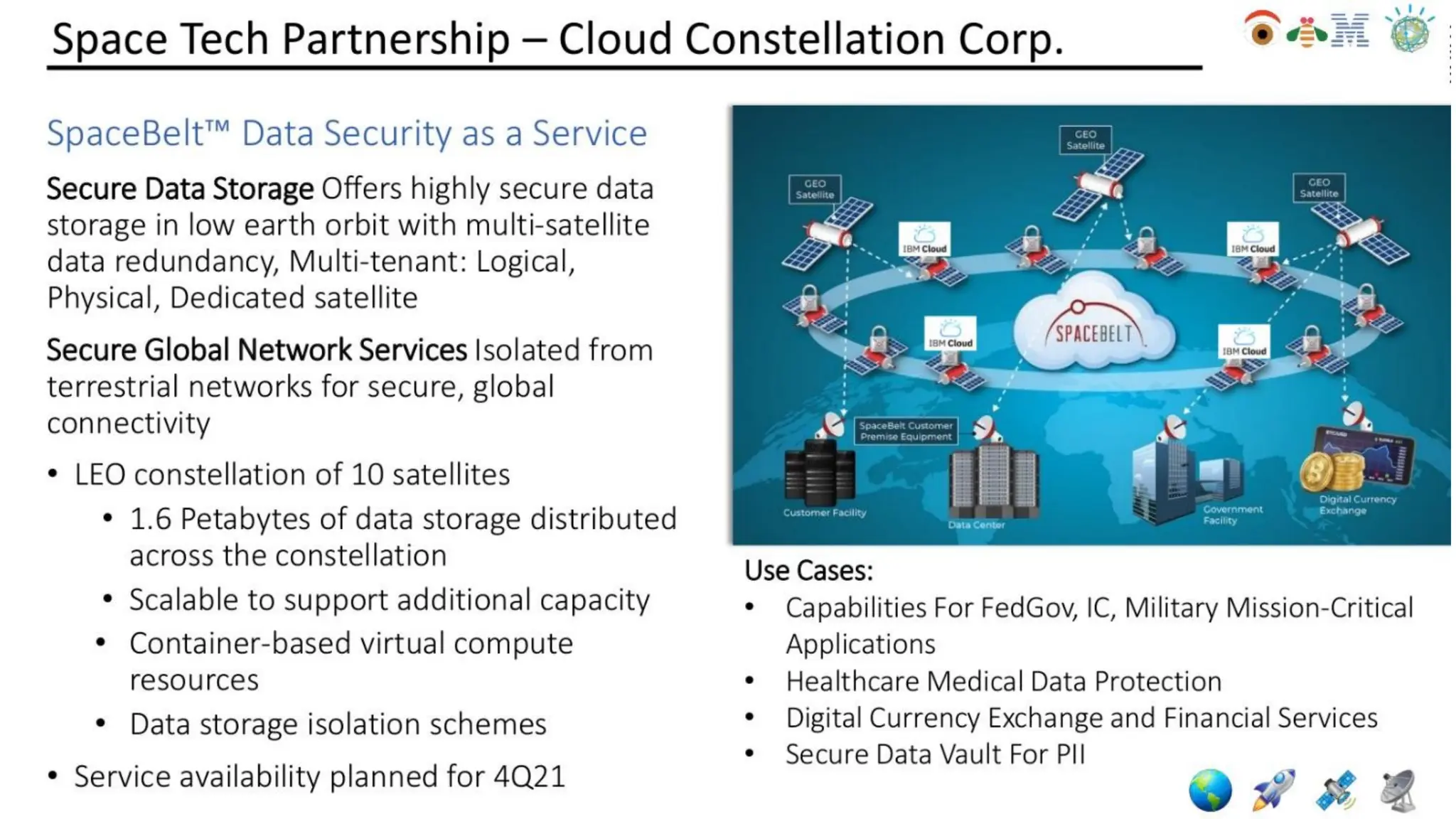
Space Tech -The final frontier!
Hot link accessible for IBM employees only
34.
Analog Computing
34
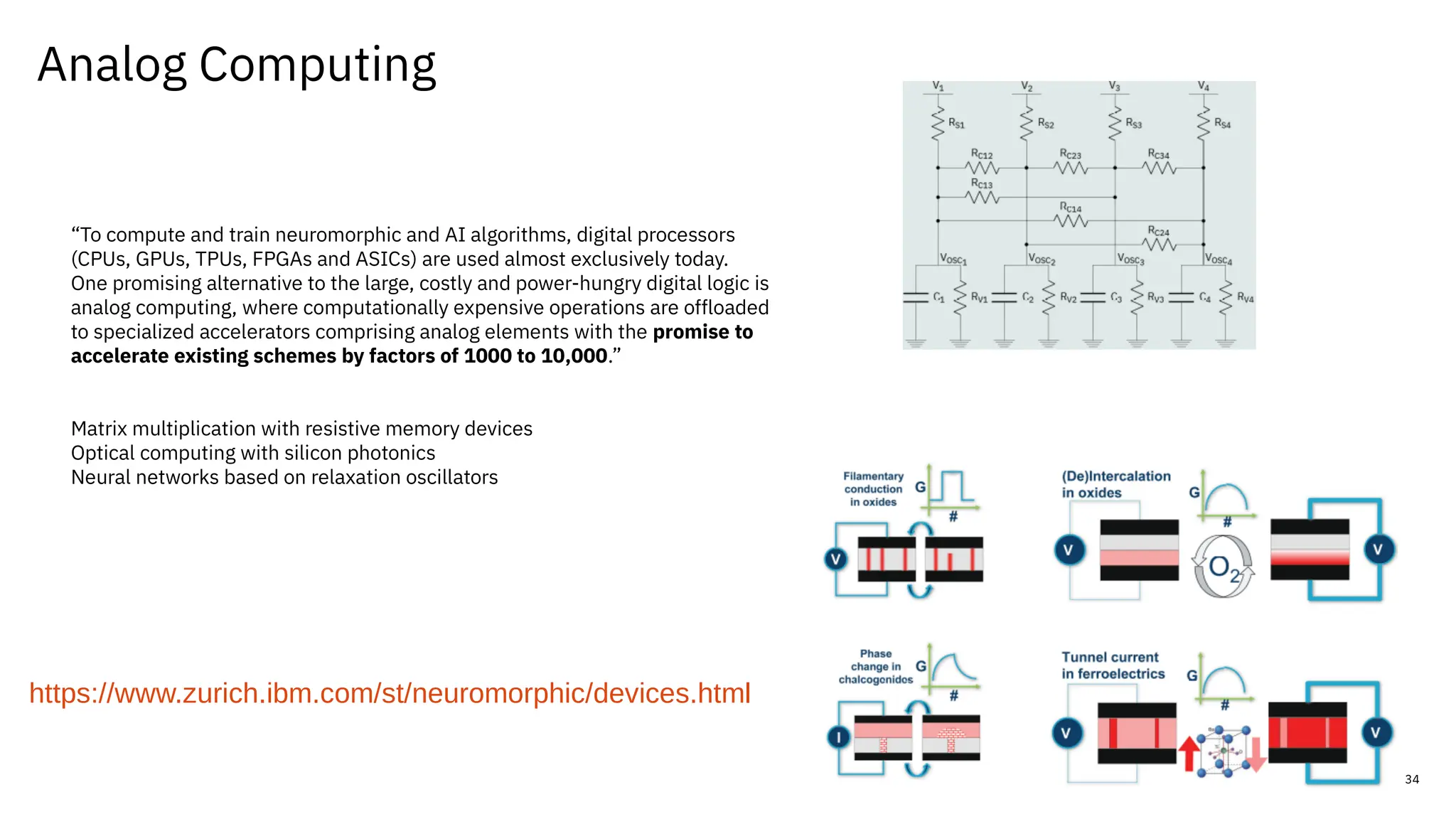
“To computeand train neuromorphic and AI algorithms, digital processors
(CPUs, GPUs, TPUs, FPGAs and ASICs) are used almost exclusively today.
One promising alternative to the large, costly and power-hungry digital logic is
analog computing, where computationally expensive operations are offloaded
to specialized accelerators comprising analog elements with the promise to
accelerate existing schemes by factors of 1000 to 10,000.”
Matrix multiplication with resistive memory devices
Optical computing with silicon photonics
Neural networks based on relaxation oscillators
https://www.zurich.ibm.com/st/neuromorphic/devices.html
35.
The Future -Leading into the Next Era of Computing
Advanced
Image
Recognition
Personality
Analytics
Symbiotic
Cognitive
Platforms
Neurosynaptic
Brain-inspired
Computing
Advanced
Dialogue &
Reasoning
Exascale
Data-centric
Systems
Quantum
Computing
Hybrid
Cloud
Physical
Analytics
Curation
at Scale
Personalized
Learning
0-18 months 18 months - 3 years 3-10+ years
“Ad Hoc”
Systems