PRESENTATION ON
ELECTRICAL POWER TRANSFORMER
BY MPIL
Presented By -
Pankaj Kumar
Contents
 Introduction
 What is Electrical Transformer
 Types of Transformer
 Working of Transformer
 Applications of Transformer
Introduction
Muskaan Power Infrastructure Ltd. is a leading
Manufacturer, Exporter, and Supplier of Distribution
Transformers, Dry Type Transformers, Electrical
Substations etc. As a reputed name in the industry, we offer
outstanding products. Our offer varied products to clients
and these products are manufactured by using top grade
materials. We never compromise on quality norms and the
industry set standards. In our manufacturing unit, we have
installed top-class tools. In 2003, Muskaan Power
Infrastructure Ltd. was established to cater to the wide
industry demands. We are based in the city of Ludhiana,
Punjab (India). Infrastructure To design products of fine
quality, we have a well-facilitated infrastructure in our
company. We ensure all processes as per the industry
recommended quality standards.
What is Electrical Transformer
Electrical transformers are machines that transfer
electricity from one circuit to another with changing voltage
level but no frequency change. Today, they are designed to
use AC supply, which means that fluctuation in supply
voltage is impacted by the fluctuation in the current. So, an
increase in current will bring about an increase in the
voltage and vice versa.
Transformers help improve safety and efficiency of power
systems by raising and lowering voltage levels as and
when needed. They are used in a wide range of residential
and industrial applications, primarily and perhaps most
importantly in the distribution and regulation of power
across long distances.
Working of Transformer
Electrical transformers are machines that transfer
electricity from one circuit to another with changing voltage
level but no frequency change. Today, they are designed to
use AC supply, which means that fluctuation in supply
voltage is impacted by the fluctuation in the current. So, an
increase in current will bring about an increase in the
voltage and vice versa.
Transformers help improve safety and efficiency of power
systems by raising and lowering voltage levels as and
when needed. They are used in a wide range of residential
and industrial applications, primarily and perhaps most
importantly in the distribution and regulation of power
across long distances.
Applications Of Transformer
 It can rise or lower the level of level of Voltage or
Current ( when voltage increases, current decreases
and vice virsa because P =V x I, and Power is
same ) in an AC Circuit.
 It can increase or decrease the value of capacitor, an
inductor or resistance in an AC circuit. It can thus act as
an impedance transferring device.
 It can be used to prevent DC from passing from one
circuit to the other.
Transformer is the main reason to transmit and distribute
power in AC instead of DC, because Transformer not work
on DC so there are too difficulties to transmit power in DC.
Types Of Electrical Transformers
 Dry Type Transformer
 Distribution Transformer
 Cast Resin Transformer
 OLTC Transformer
 Power Transformer
 Air Cooled Transformer
 High Voltage Transformer
 Low Voltage Transformer
Dry Type Transformer
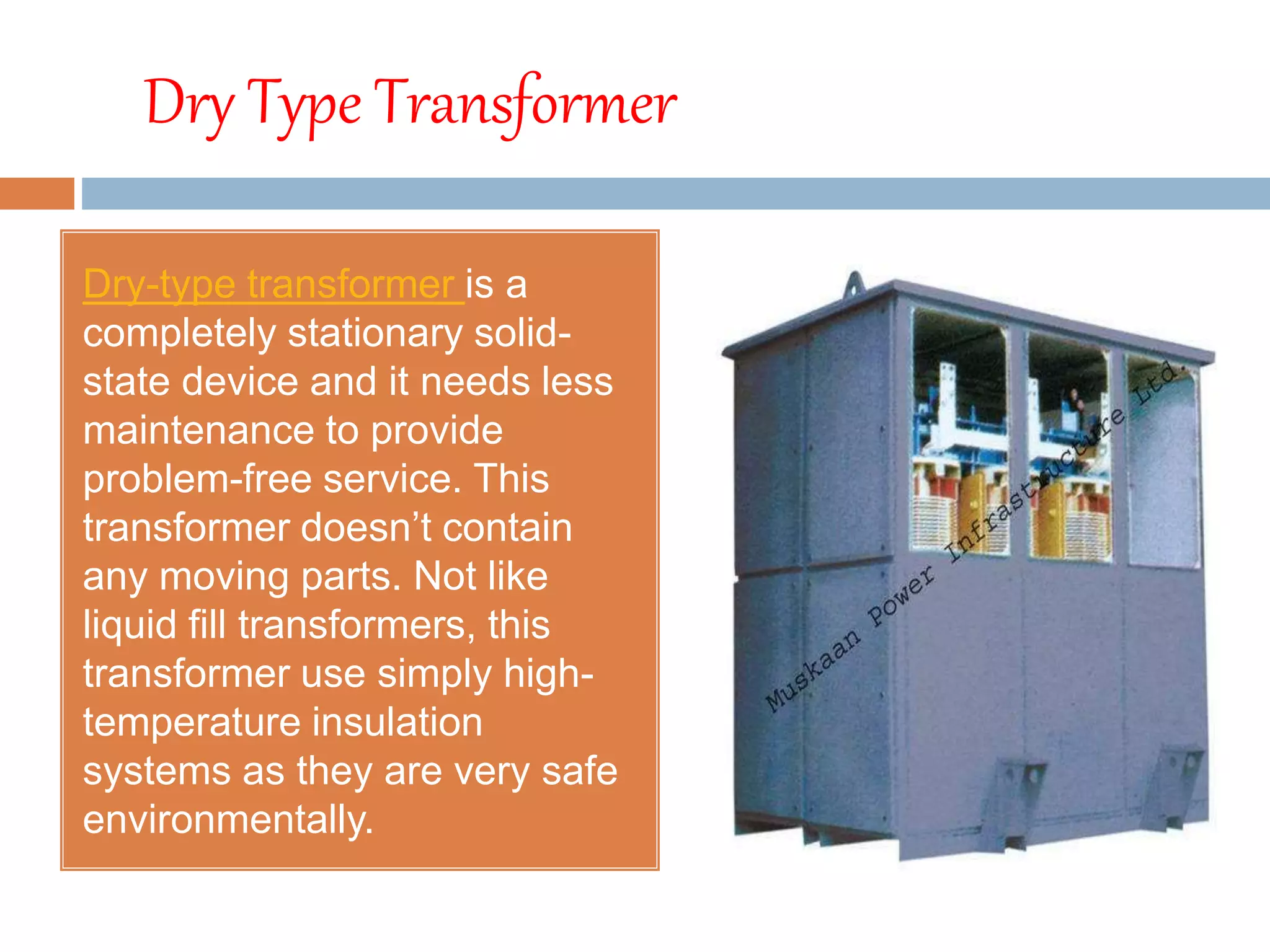
Dry-type transformer is a
completely stationary solid-
state device and it needs less
maintenance to provide
problem-free service. This
transformer doesn’t contain
any moving parts. Not like
liquid fill transformers, this
transformer use simply high-
temperature insulation
systems as they are very safe
environmentally.
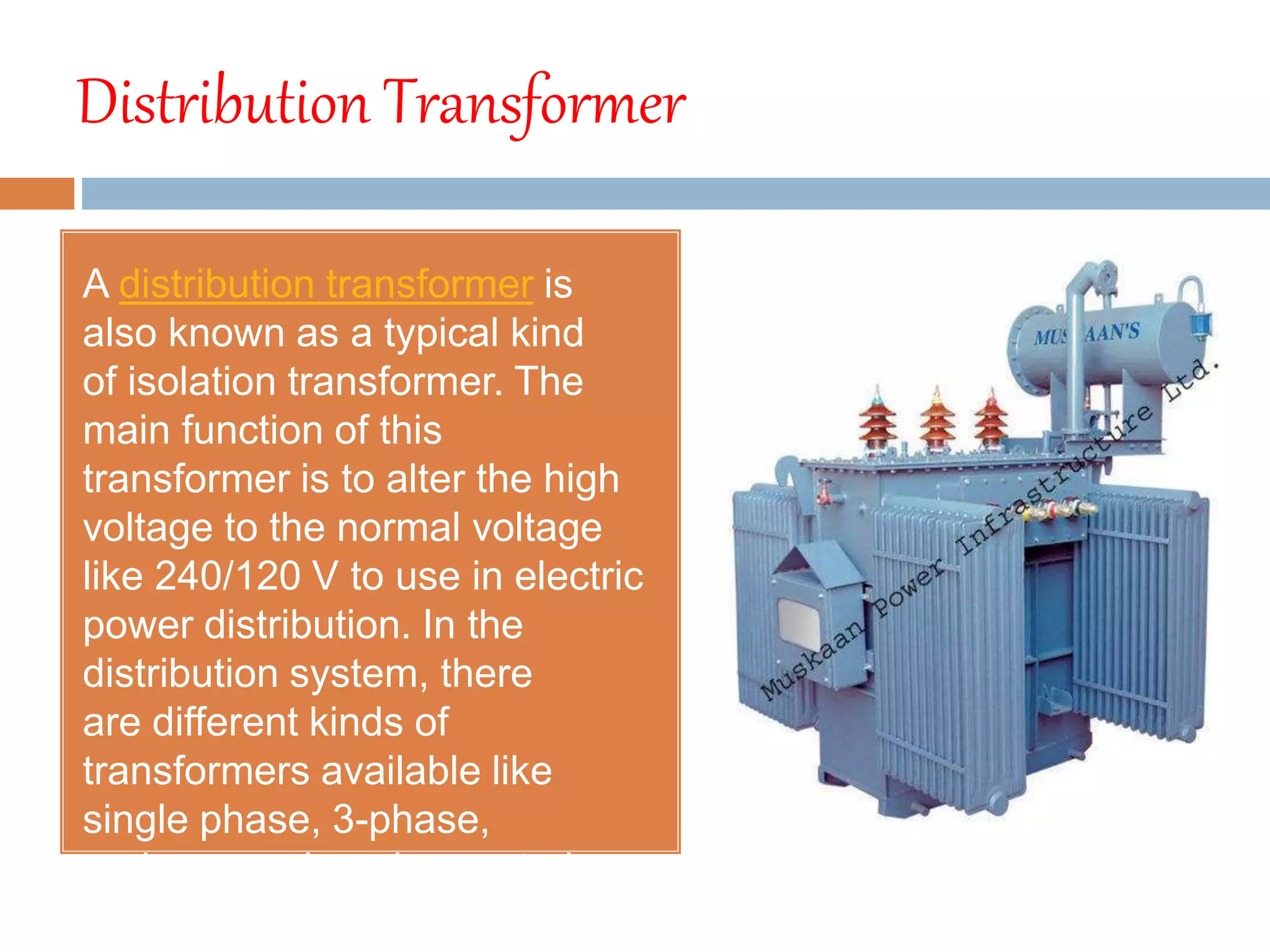
Distribution Transformer
A distribution transformer is
also known as a typical kind
of isolation transformer. The
main function of this
transformer is to alter the high
voltage to the normal voltage
like 240/120 V to use in electric
power distribution. In the
distribution system, there
are different kinds of
transformers available like
single phase, 3-phase,
underground, pad-mounted,
pole-mounted transformer.
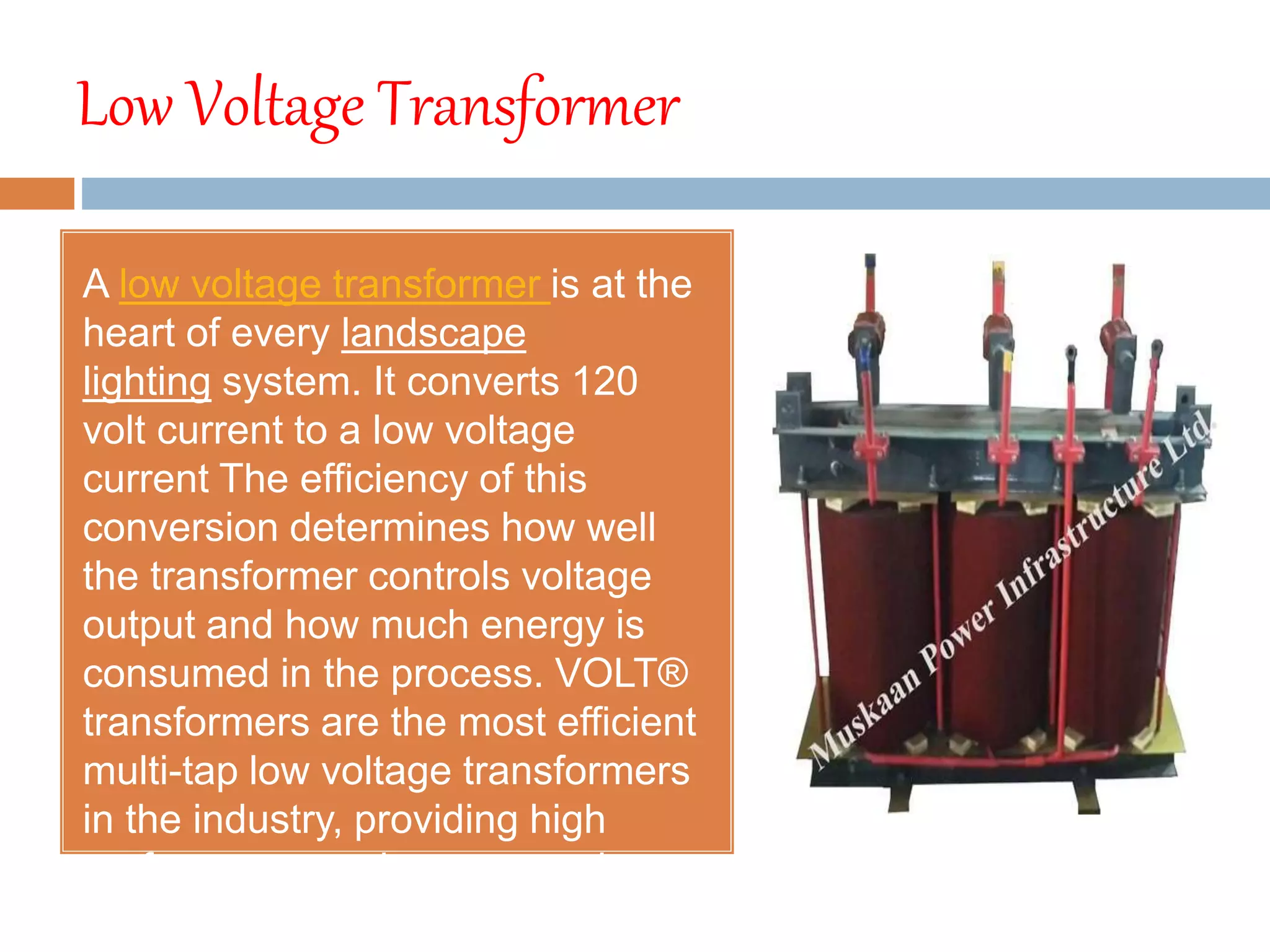
Low Voltage Transformer
A low voltage transformer is at the
heart of every landscape
lighting system. It converts 120
volt current to a low voltage
current The efficiency of this
conversion determines how well
the transformer controls voltage
output and how much energy is
consumed in the process. VOLT®
transformers are the most efficient
multi-tap low voltage transformers
in the industry, providing high
performance and energy savings.
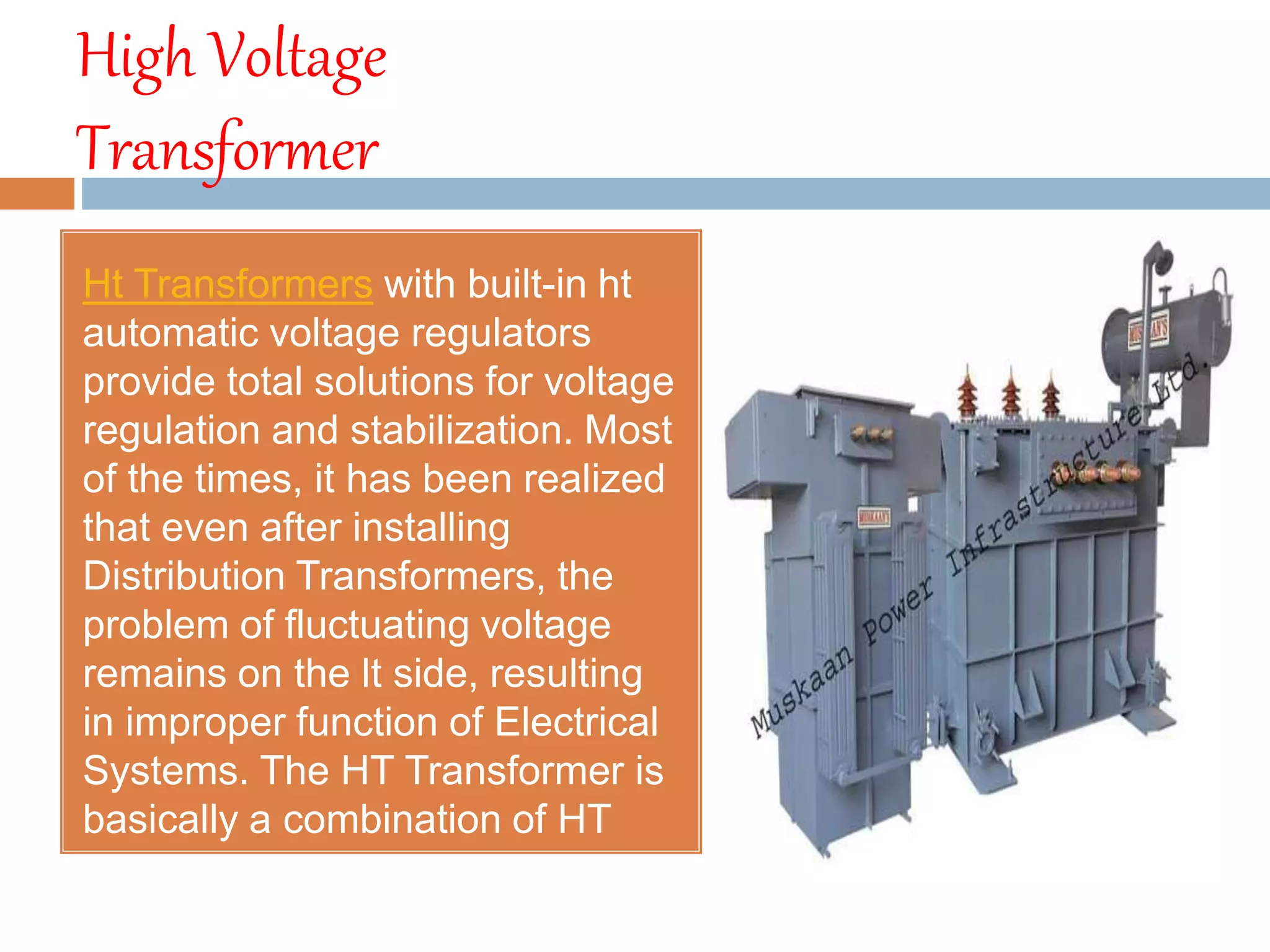
High Voltage
Transformer
Ht Transformers with built-in ht
automatic voltage regulators
provide total solutions for voltage
regulation and stabilization. Most
of the times, it has been realized
that even after installing
Distribution Transformers, the
problem of fluctuating voltage
remains on the lt side, resulting
in improper function of Electrical
Systems. The HT Transformer is
basically a combination of HT
avr.
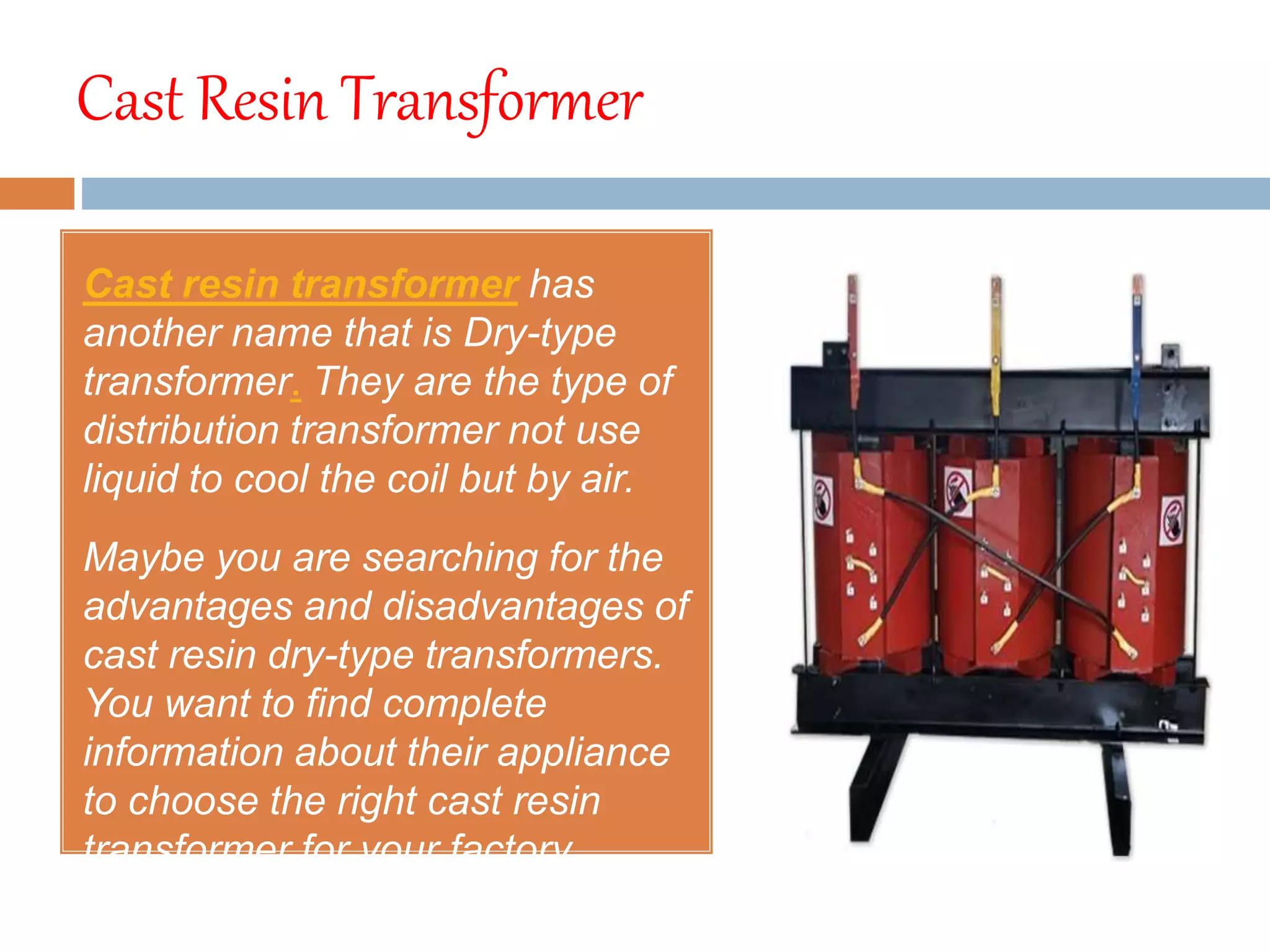
Cast Resin Transformer
Cast resin transformer has
another name that is Dry-type
transformer. They are the type of
distribution transformer not use
liquid to cool the coil but by air.
Maybe you are searching for the
advantages and disadvantages of
cast resin dry-type transformers.
You want to find complete
information about their appliance
to choose the right cast resin
transformer for your factory.
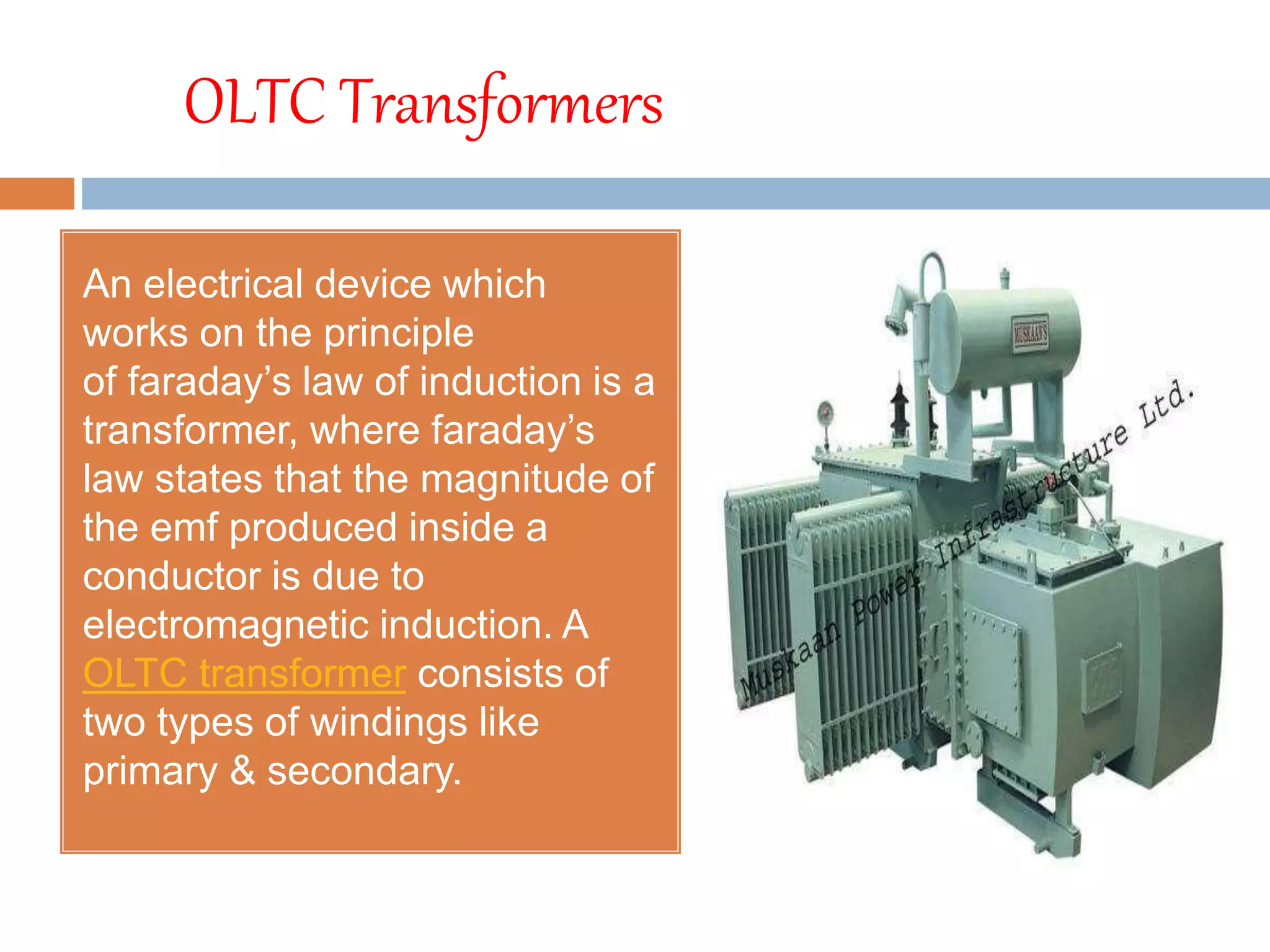
OLTC Transformers
An electrical device which
works on the principle
of faraday’s law of induction is a
transformer, where faraday’s
law states that the magnitude of
the emf produced inside a
conductor is due to
electromagnetic induction. A
OLTC transformer consists of
two types of windings like
primary & secondary.
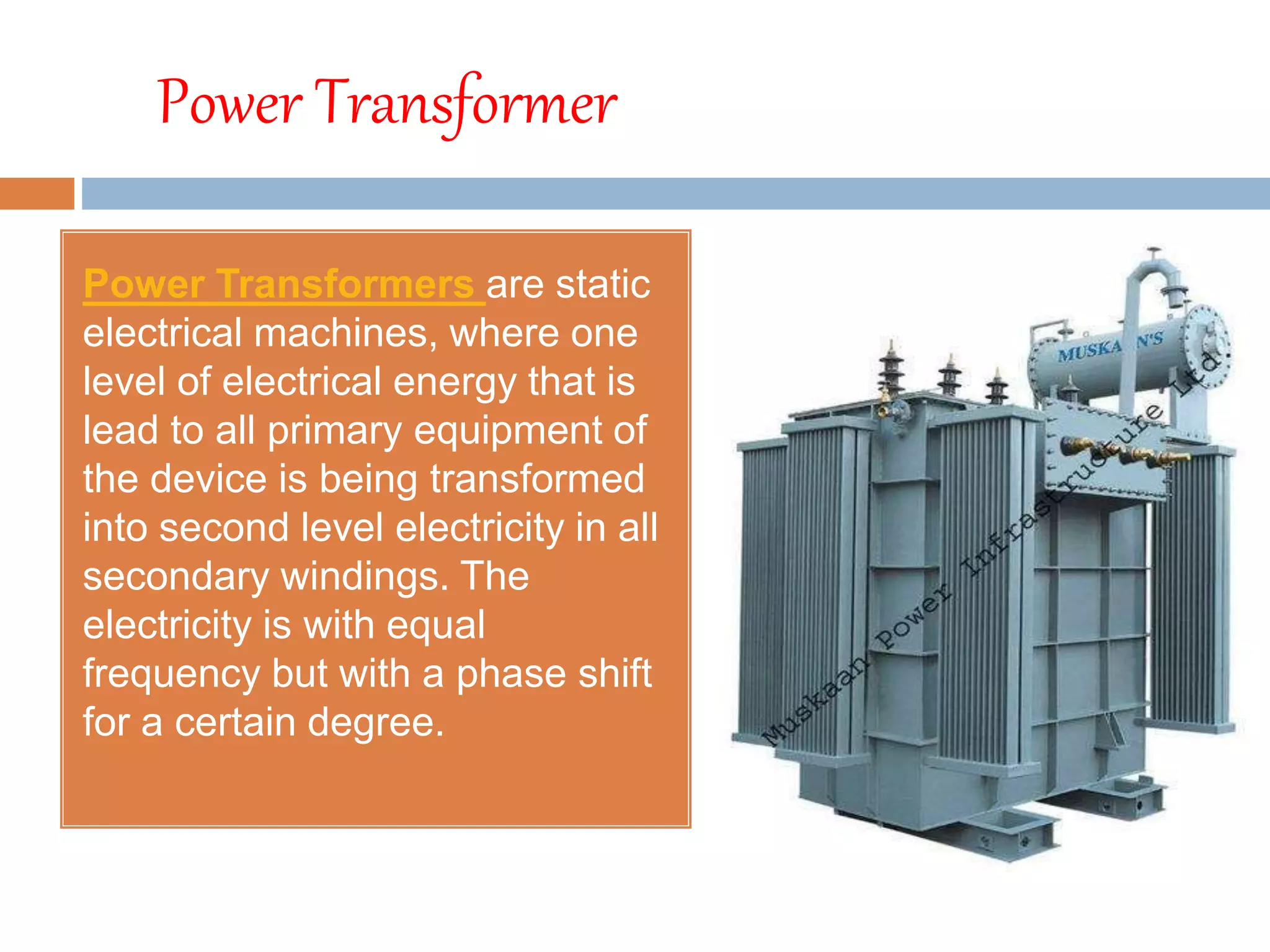
Power Transformer
Power Transformers are static
electrical machines, where one
level of electrical energy that is
lead to all primary equipment of
the device is being transformed
into second level electricity in all
secondary windings. The
electricity is with equal
frequency but with a phase shift
for a certain degree.
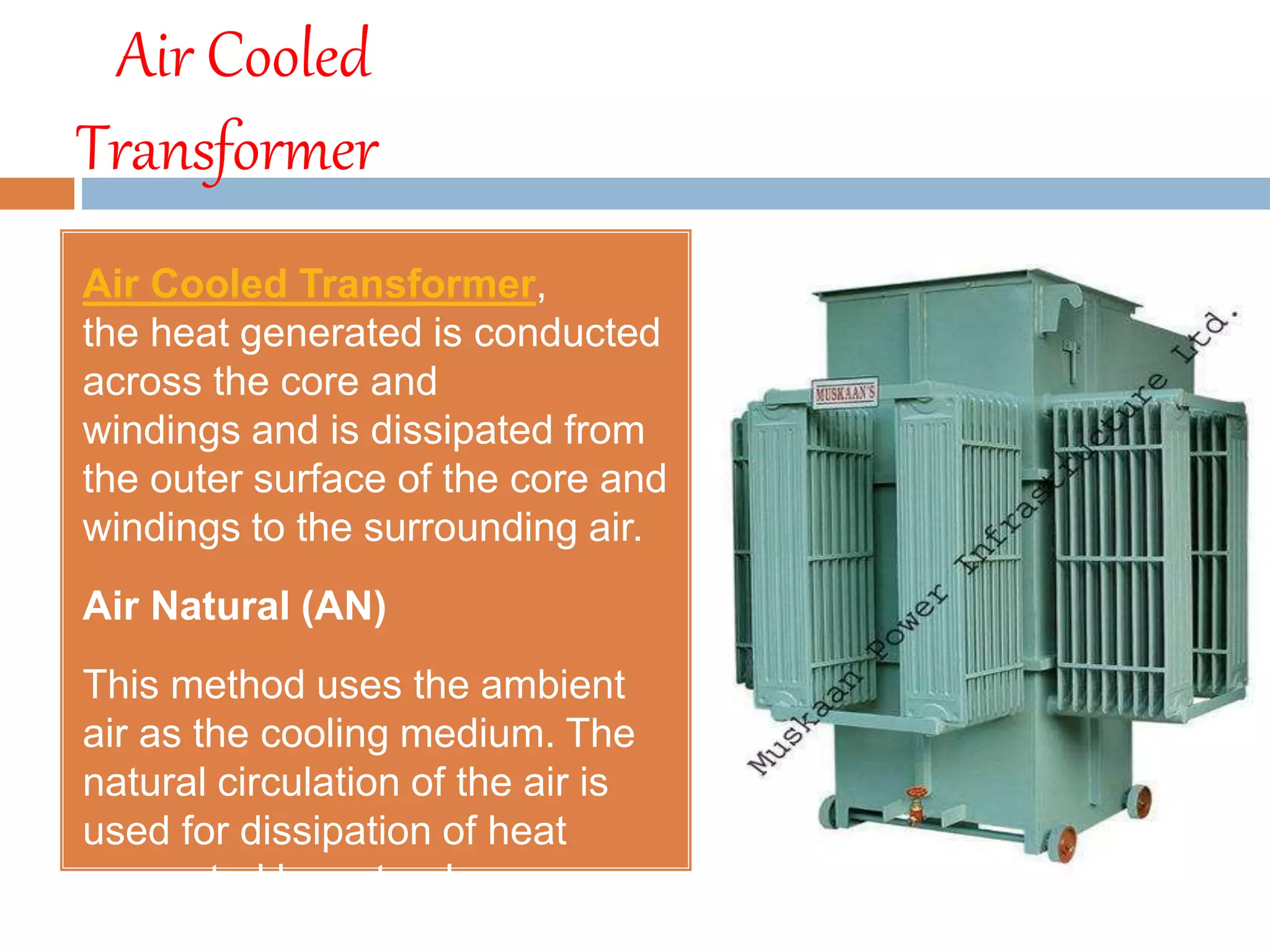
Air Cooled
Transformer
Air Cooled Transformer,
the heat generated is conducted
across the core and
windings and is dissipated from
the outer surface of the core and
windings to the surrounding air.
Air Natural (AN)
This method uses the ambient
air as the cooling medium. The
natural circulation of the air is
used for dissipation of heat
generated by natural
convection.
Website:- www.muskaanpower.com
www.mpilindia.com
Email:- Info@muskaanpower.com
Contact :- +91-9915703061

A PPT On What is Electrical Power Transformers, It's Types and How it's Works?

  • 1.
    PRESENTATION ON ELECTRICAL POWERTRANSFORMER BY MPIL Presented By - Pankaj Kumar
  • 2.
    Contents  Introduction  Whatis Electrical Transformer  Types of Transformer  Working of Transformer  Applications of Transformer
  • 3.
    Introduction Muskaan Power InfrastructureLtd. is a leading Manufacturer, Exporter, and Supplier of Distribution Transformers, Dry Type Transformers, Electrical Substations etc. As a reputed name in the industry, we offer outstanding products. Our offer varied products to clients and these products are manufactured by using top grade materials. We never compromise on quality norms and the industry set standards. In our manufacturing unit, we have installed top-class tools. In 2003, Muskaan Power Infrastructure Ltd. was established to cater to the wide industry demands. We are based in the city of Ludhiana, Punjab (India). Infrastructure To design products of fine quality, we have a well-facilitated infrastructure in our company. We ensure all processes as per the industry recommended quality standards.
  • 4.
    What is ElectricalTransformer Electrical transformers are machines that transfer electricity from one circuit to another with changing voltage level but no frequency change. Today, they are designed to use AC supply, which means that fluctuation in supply voltage is impacted by the fluctuation in the current. So, an increase in current will bring about an increase in the voltage and vice versa. Transformers help improve safety and efficiency of power systems by raising and lowering voltage levels as and when needed. They are used in a wide range of residential and industrial applications, primarily and perhaps most importantly in the distribution and regulation of power across long distances.
  • 5.
    Working of Transformer Electricaltransformers are machines that transfer electricity from one circuit to another with changing voltage level but no frequency change. Today, they are designed to use AC supply, which means that fluctuation in supply voltage is impacted by the fluctuation in the current. So, an increase in current will bring about an increase in the voltage and vice versa. Transformers help improve safety and efficiency of power systems by raising and lowering voltage levels as and when needed. They are used in a wide range of residential and industrial applications, primarily and perhaps most importantly in the distribution and regulation of power across long distances.
  • 6.
    Applications Of Transformer It can rise or lower the level of level of Voltage or Current ( when voltage increases, current decreases and vice virsa because P =V x I, and Power is same ) in an AC Circuit.  It can increase or decrease the value of capacitor, an inductor or resistance in an AC circuit. It can thus act as an impedance transferring device.  It can be used to prevent DC from passing from one circuit to the other. Transformer is the main reason to transmit and distribute power in AC instead of DC, because Transformer not work on DC so there are too difficulties to transmit power in DC.
  • 7.
    Types Of ElectricalTransformers  Dry Type Transformer  Distribution Transformer  Cast Resin Transformer  OLTC Transformer  Power Transformer  Air Cooled Transformer  High Voltage Transformer  Low Voltage Transformer
  • 8.
    Dry Type Transformer Dry-typetransformer is a completely stationary solid- state device and it needs less maintenance to provide problem-free service. This transformer doesn’t contain any moving parts. Not like liquid fill transformers, this transformer use simply high- temperature insulation systems as they are very safe environmentally.
  • 9.
    Distribution Transformer A distributiontransformer is also known as a typical kind of isolation transformer. The main function of this transformer is to alter the high voltage to the normal voltage like 240/120 V to use in electric power distribution. In the distribution system, there are different kinds of transformers available like single phase, 3-phase, underground, pad-mounted, pole-mounted transformer.
  • 10.
    Low Voltage Transformer Alow voltage transformer is at the heart of every landscape lighting system. It converts 120 volt current to a low voltage current The efficiency of this conversion determines how well the transformer controls voltage output and how much energy is consumed in the process. VOLT® transformers are the most efficient multi-tap low voltage transformers in the industry, providing high performance and energy savings.
  • 11.
    High Voltage Transformer Ht Transformerswith built-in ht automatic voltage regulators provide total solutions for voltage regulation and stabilization. Most of the times, it has been realized that even after installing Distribution Transformers, the problem of fluctuating voltage remains on the lt side, resulting in improper function of Electrical Systems. The HT Transformer is basically a combination of HT avr.
  • 12.
    Cast Resin Transformer Castresin transformer has another name that is Dry-type transformer. They are the type of distribution transformer not use liquid to cool the coil but by air. Maybe you are searching for the advantages and disadvantages of cast resin dry-type transformers. You want to find complete information about their appliance to choose the right cast resin transformer for your factory.
  • 13.
    OLTC Transformers An electricaldevice which works on the principle of faraday’s law of induction is a transformer, where faraday’s law states that the magnitude of the emf produced inside a conductor is due to electromagnetic induction. A OLTC transformer consists of two types of windings like primary & secondary.
  • 14.
    Power Transformer Power Transformersare static electrical machines, where one level of electrical energy that is lead to all primary equipment of the device is being transformed into second level electricity in all secondary windings. The electricity is with equal frequency but with a phase shift for a certain degree.
  • 15.
    Air Cooled Transformer Air CooledTransformer, the heat generated is conducted across the core and windings and is dissipated from the outer surface of the core and windings to the surrounding air. Air Natural (AN) This method uses the ambient air as the cooling medium. The natural circulation of the air is used for dissipation of heat generated by natural convection.
  • 16.