A picture is worth more than
a thousand words:
Using Instagram in the classroom
Visual literacy
• People are drawn to humanized learning
• Visual storytelling
• Make meaning from information presented in the form of an image
• Ability to read, write and create visual images
• Science as art
Digital citizenship
• Elements of digital citizenship
• Access
• Commerce
• Communication
• Literacy
• Etiquette
• Law
• Rights and responsibilities
• Health
• Security
Digital footprint
• Trail of data you create while using the Internet
• The Internet is forever
• Passive (visit websites, search histories)
• Active (emails, blogs, social media, social networking,
What is photo journalism?
• Collecting, editing and presenting news
• Employs images to tell the story
• Narrative
• Rigid ethical framework
• Help communities connect
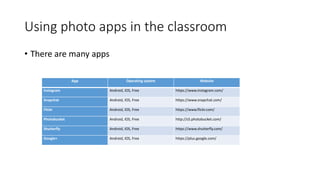
Using photo apps in the classroom
• There are many apps
App Operating system Website
Instagram Android, IOS, Free https://www.instagram.com/
Snapchat Android, IOS, Free https://www.snapchat.com/
Flickr Android, IOS, Free https://www.flickr.com/
Photobucket Android, IOS, Free http://s5.photobucket.com/
Shutterfly Android, IOS, Free https://www.shutterfly.com/
Google+ Android, IOS, Free https://plus.google.com/
What is Instagram?
• Developed by Kevin Systrom and Mike Krieger in 2010, Instagram is a
free mobile app and an online mobile photo-sharing, video-sharing,
and social networking service that enables its users to take pictures
and videos, and share them either publicly or privately on the app, as
well as through a variety of other social networking platforms, such as
Facebook and Twitter.
• Users must be 13 years or older
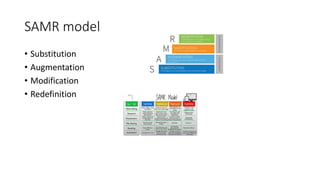
SAMR model
• Substitution
• Augmentation
• Modification
• Redefinition
Tips for using Instagram successfully
• Hastags
• Visually appealing photos – angles – things people don’t normally see
• Caption properly using the 5 W’s (where, why, what, when, how)
• Share frequently
Using Instagram in the classroom
• Research – using hastags
• Assignments – visual literacy
• Creating communities – class Instagram page
Tips for being safe
• Social media policy
• School’s technology policy
• School’s media release policy
• Content rules
• Context rules
• Permission forms
• Instagram contract with students
• Invite parents to follow pages
Instagram in the classroom
• Class account
• Documenting school functions
• Field trips
• Student of the week
• Examples of students work
• School pride
• Tip of the week
• Theme of the week
Languages
• Take a photo of your favourite book – recommendations
• Visual flashcards to learn vocabulary
• 20 word story based on a picture
• Chain stories (in the comment feed)
• Poetry based on a picture
• Writing prompts
Biology/Science
• Collage of plants growing over time
• Phases of germination
• #MondayMandela – nature collages
• Record steps in a science experiment
Art
• e-portfolio
• Recreate famous works of art
• Photo-gallery of the different stages of art production
History/Geography (Social Science)
• Historical buildings
• Historical figures
• Local locations linked to historical events
• #whatwouldMandelasay
• Patterns in nature
• Interesting geological features
Maths
• Step by step problem solving
• Fibonacci’s sequence
• Pi

A picture is worth more than a thousand

  • 1.
    A picture isworth more than a thousand words: Using Instagram in the classroom
  • 2.
    Visual literacy • Peopleare drawn to humanized learning • Visual storytelling • Make meaning from information presented in the form of an image • Ability to read, write and create visual images • Science as art
  • 3.
    Digital citizenship • Elementsof digital citizenship • Access • Commerce • Communication • Literacy • Etiquette • Law • Rights and responsibilities • Health • Security
  • 4.
    Digital footprint • Trailof data you create while using the Internet • The Internet is forever • Passive (visit websites, search histories) • Active (emails, blogs, social media, social networking,
  • 5.
    What is photojournalism? • Collecting, editing and presenting news • Employs images to tell the story • Narrative • Rigid ethical framework • Help communities connect
  • 6.
    Using photo appsin the classroom • There are many apps App Operating system Website Instagram Android, IOS, Free https://www.instagram.com/ Snapchat Android, IOS, Free https://www.snapchat.com/ Flickr Android, IOS, Free https://www.flickr.com/ Photobucket Android, IOS, Free http://s5.photobucket.com/ Shutterfly Android, IOS, Free https://www.shutterfly.com/ Google+ Android, IOS, Free https://plus.google.com/
  • 7.
    What is Instagram? •Developed by Kevin Systrom and Mike Krieger in 2010, Instagram is a free mobile app and an online mobile photo-sharing, video-sharing, and social networking service that enables its users to take pictures and videos, and share them either publicly or privately on the app, as well as through a variety of other social networking platforms, such as Facebook and Twitter. • Users must be 13 years or older
  • 8.
    SAMR model • Substitution •Augmentation • Modification • Redefinition
  • 9.
    Tips for usingInstagram successfully • Hastags • Visually appealing photos – angles – things people don’t normally see • Caption properly using the 5 W’s (where, why, what, when, how) • Share frequently
  • 10.
    Using Instagram inthe classroom • Research – using hastags • Assignments – visual literacy • Creating communities – class Instagram page
  • 11.
    Tips for beingsafe • Social media policy • School’s technology policy • School’s media release policy • Content rules • Context rules • Permission forms • Instagram contract with students • Invite parents to follow pages
  • 12.
  • 13.
    • Class account •Documenting school functions • Field trips • Student of the week • Examples of students work • School pride • Tip of the week • Theme of the week
  • 14.
    Languages • Take aphoto of your favourite book – recommendations • Visual flashcards to learn vocabulary • 20 word story based on a picture • Chain stories (in the comment feed) • Poetry based on a picture • Writing prompts
  • 15.
    Biology/Science • Collage ofplants growing over time • Phases of germination • #MondayMandela – nature collages • Record steps in a science experiment
  • 16.
    Art • e-portfolio • Recreatefamous works of art • Photo-gallery of the different stages of art production
  • 17.
    History/Geography (Social Science) •Historical buildings • Historical figures • Local locations linked to historical events • #whatwouldMandelasay • Patterns in nature • Interesting geological features
  • 18.
    Maths • Step bystep problem solving • Fibonacci’s sequence • Pi