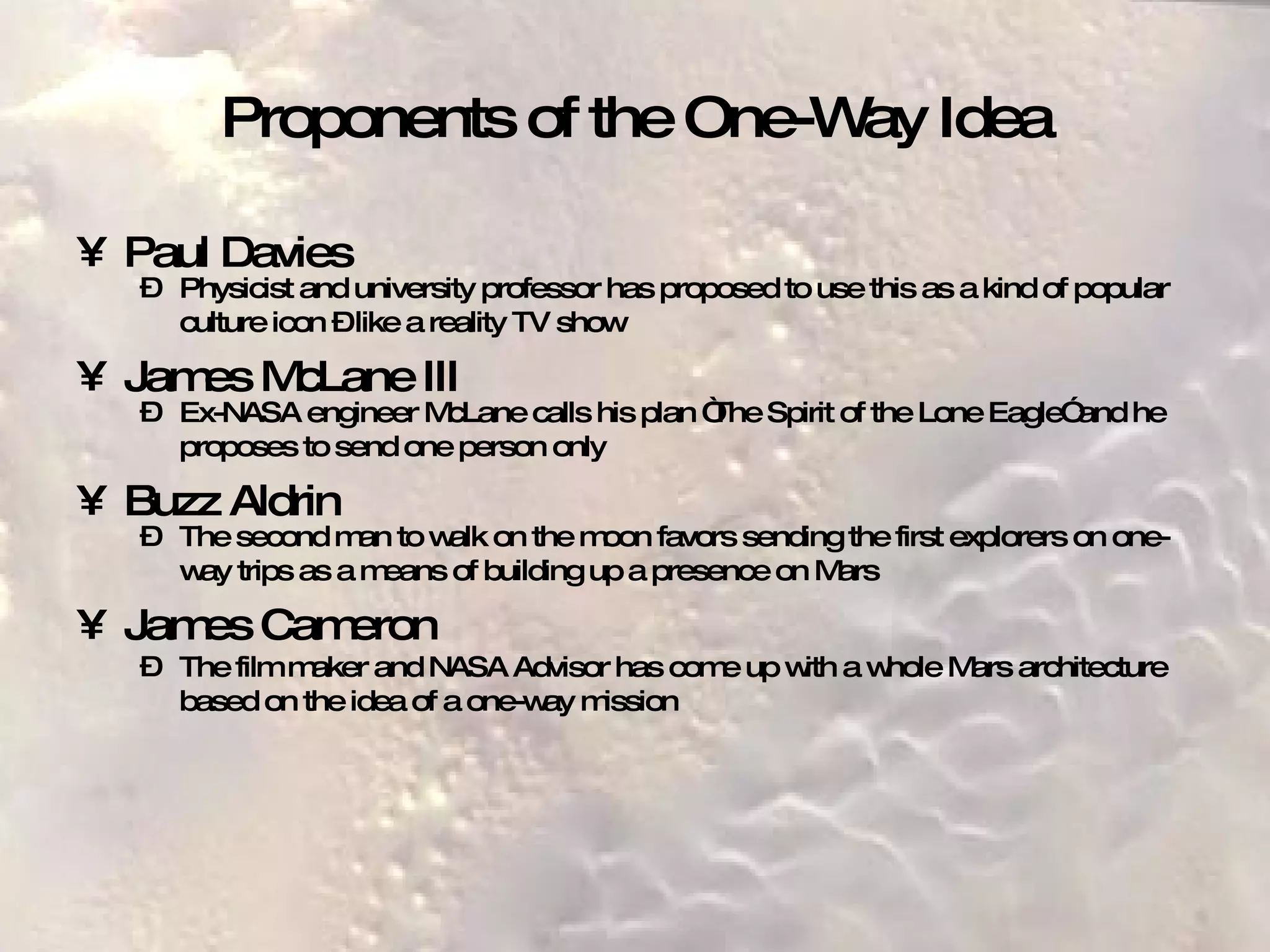
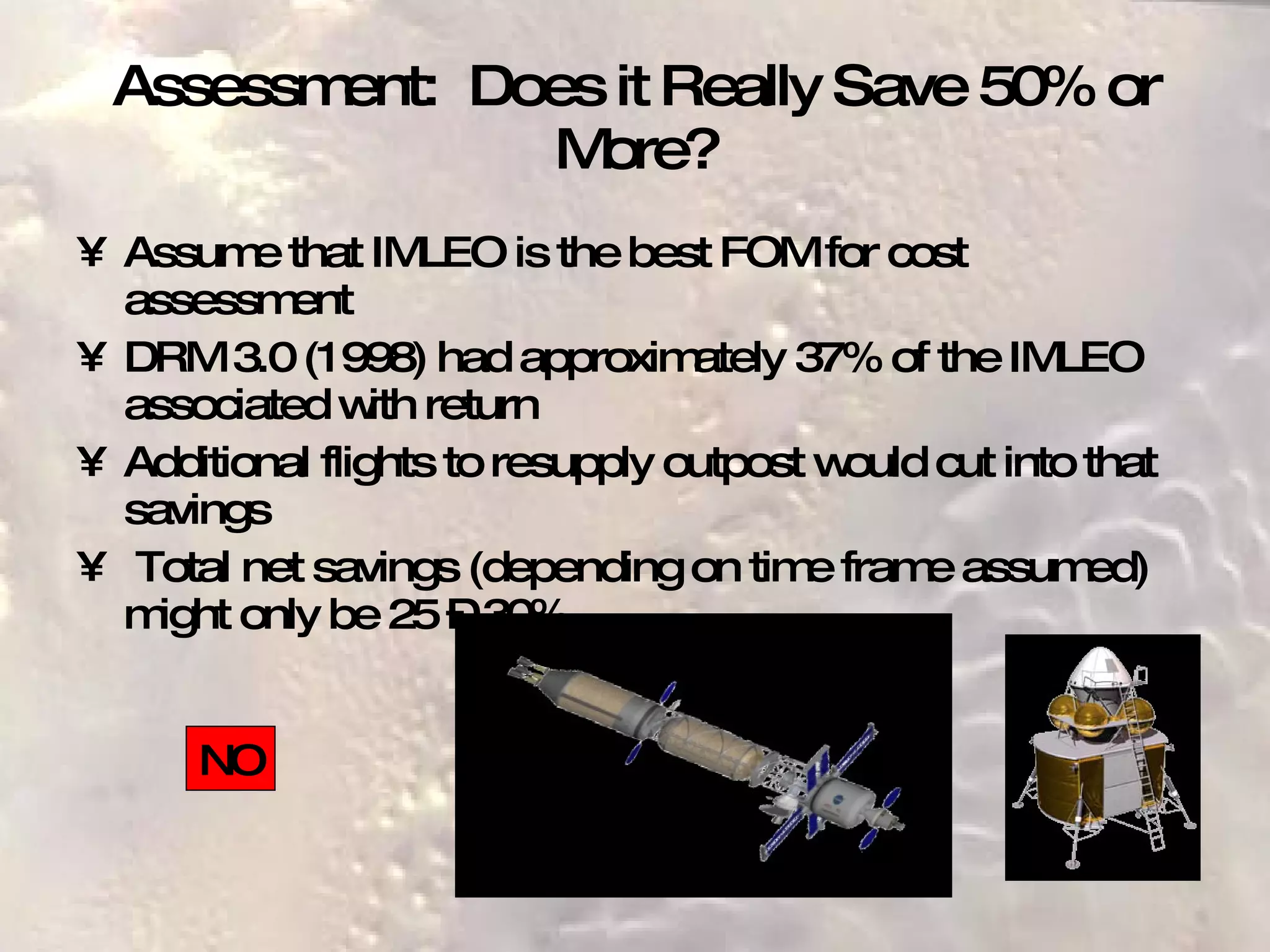
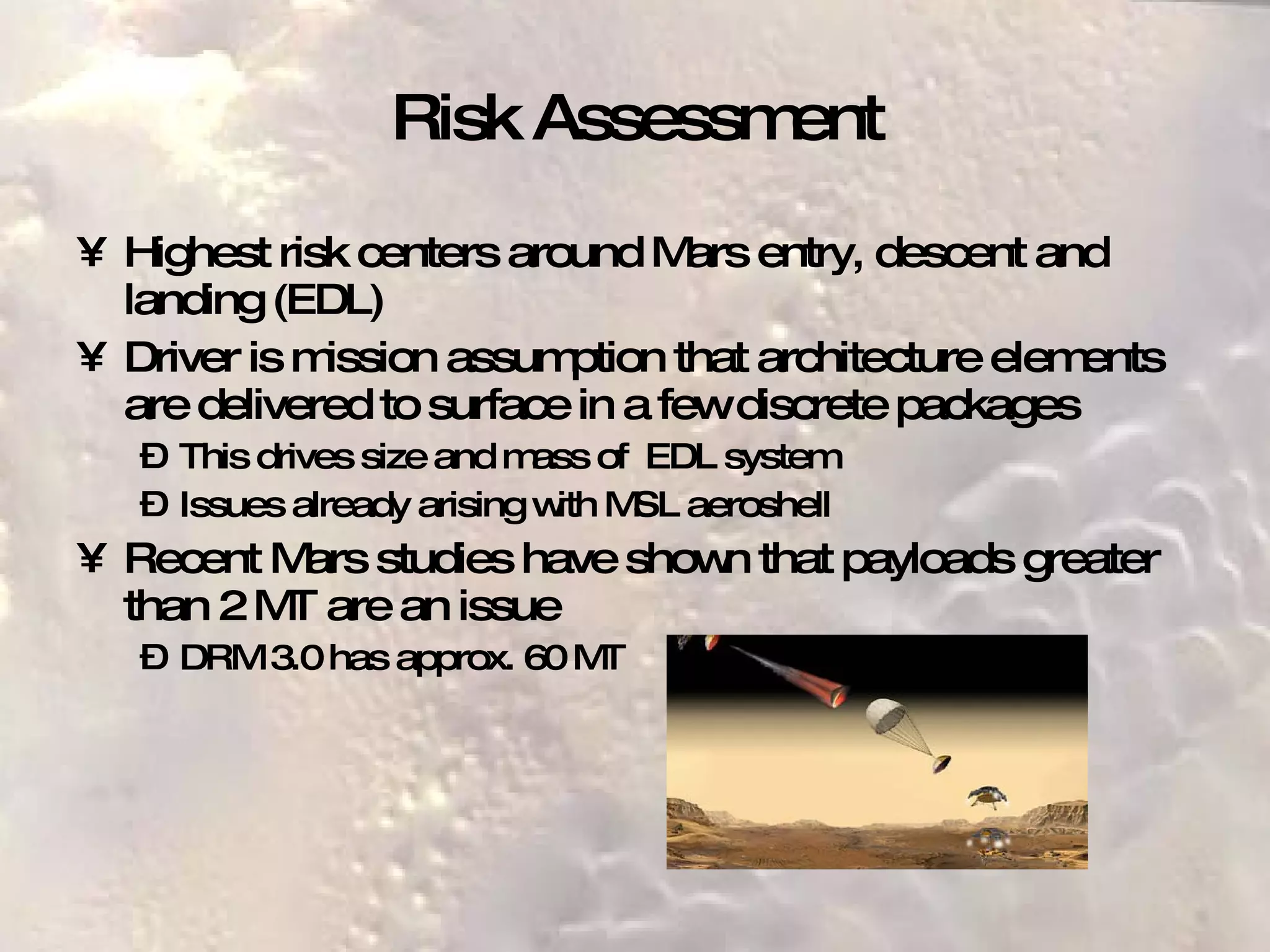

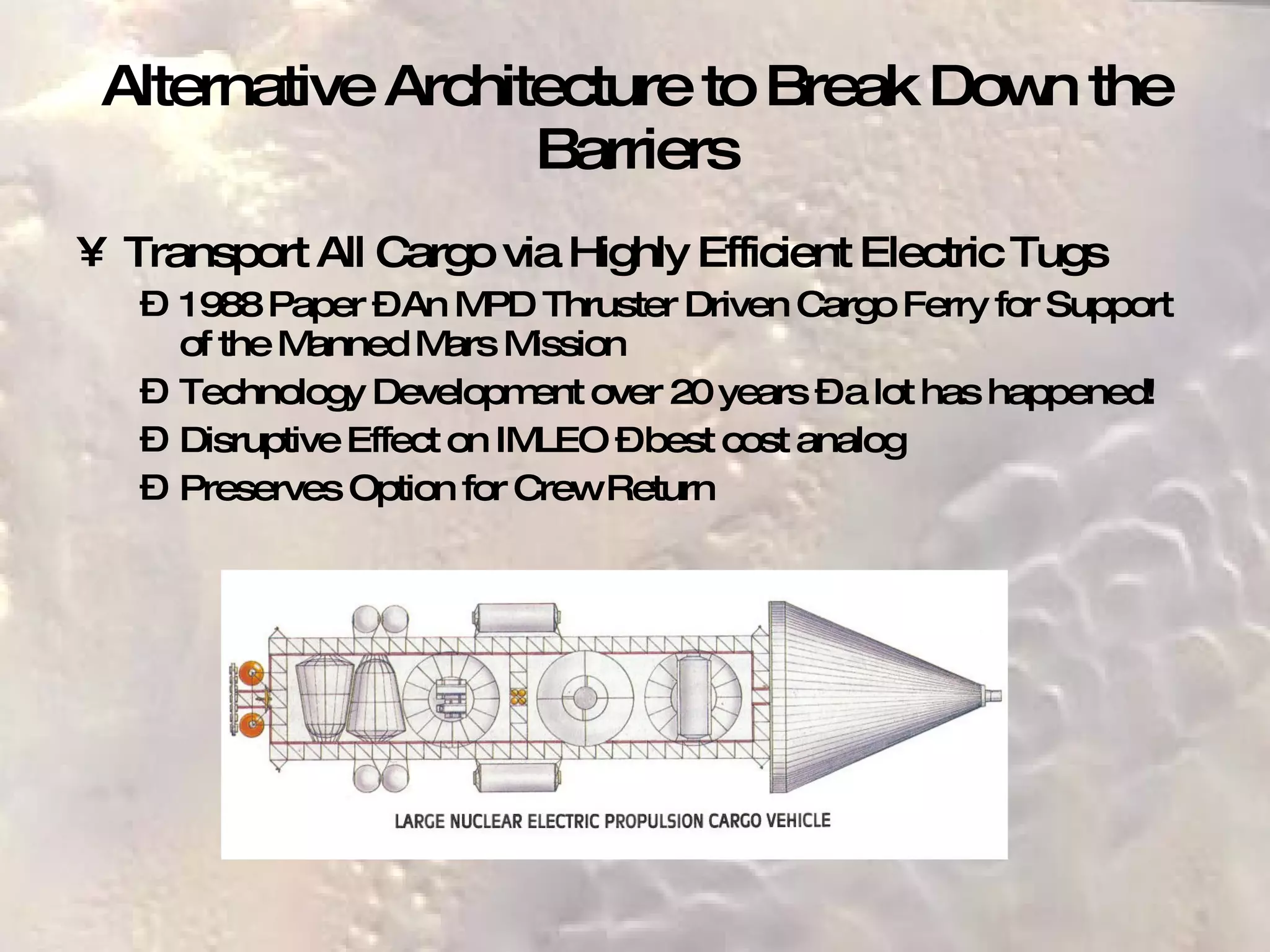
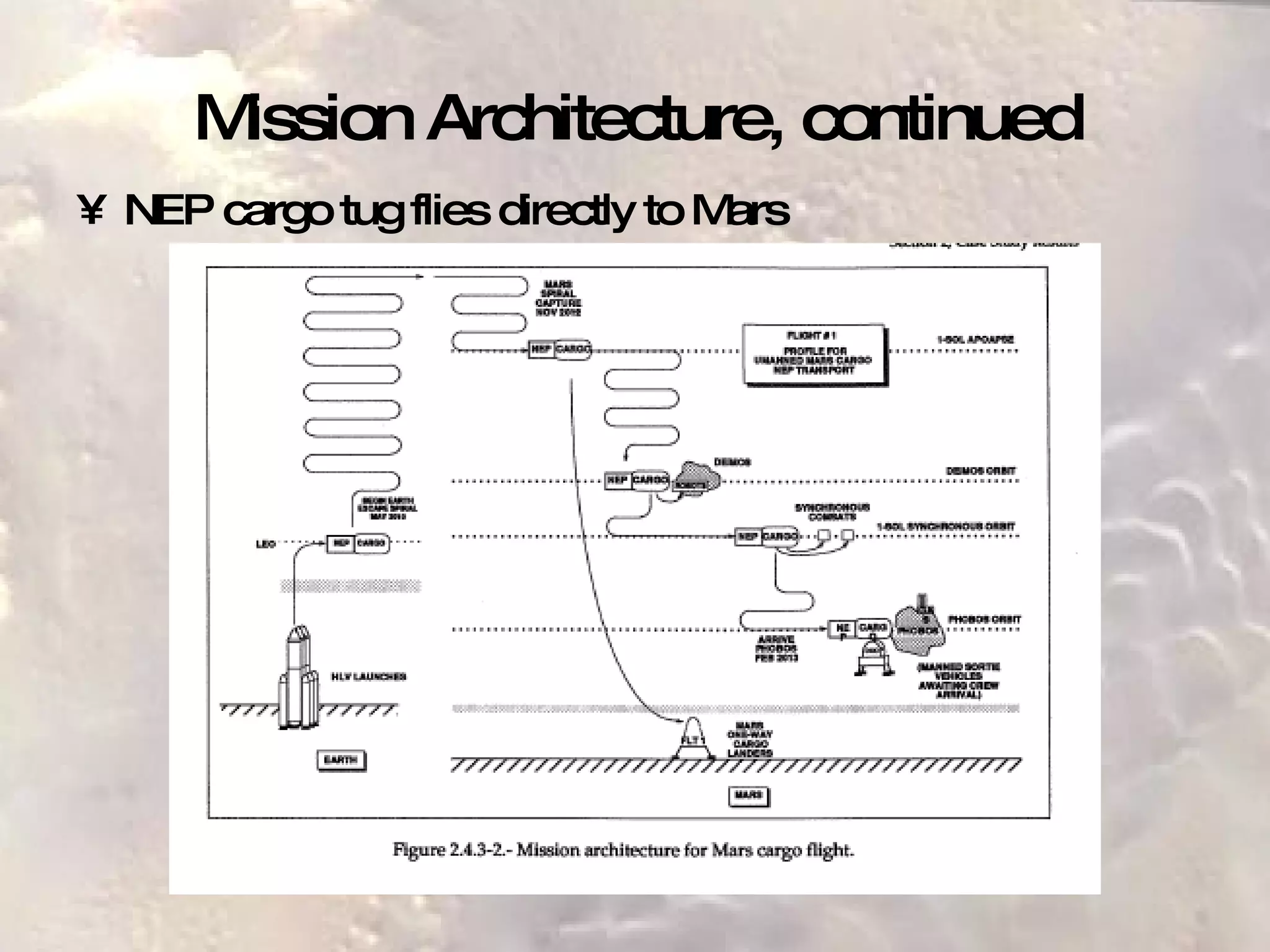
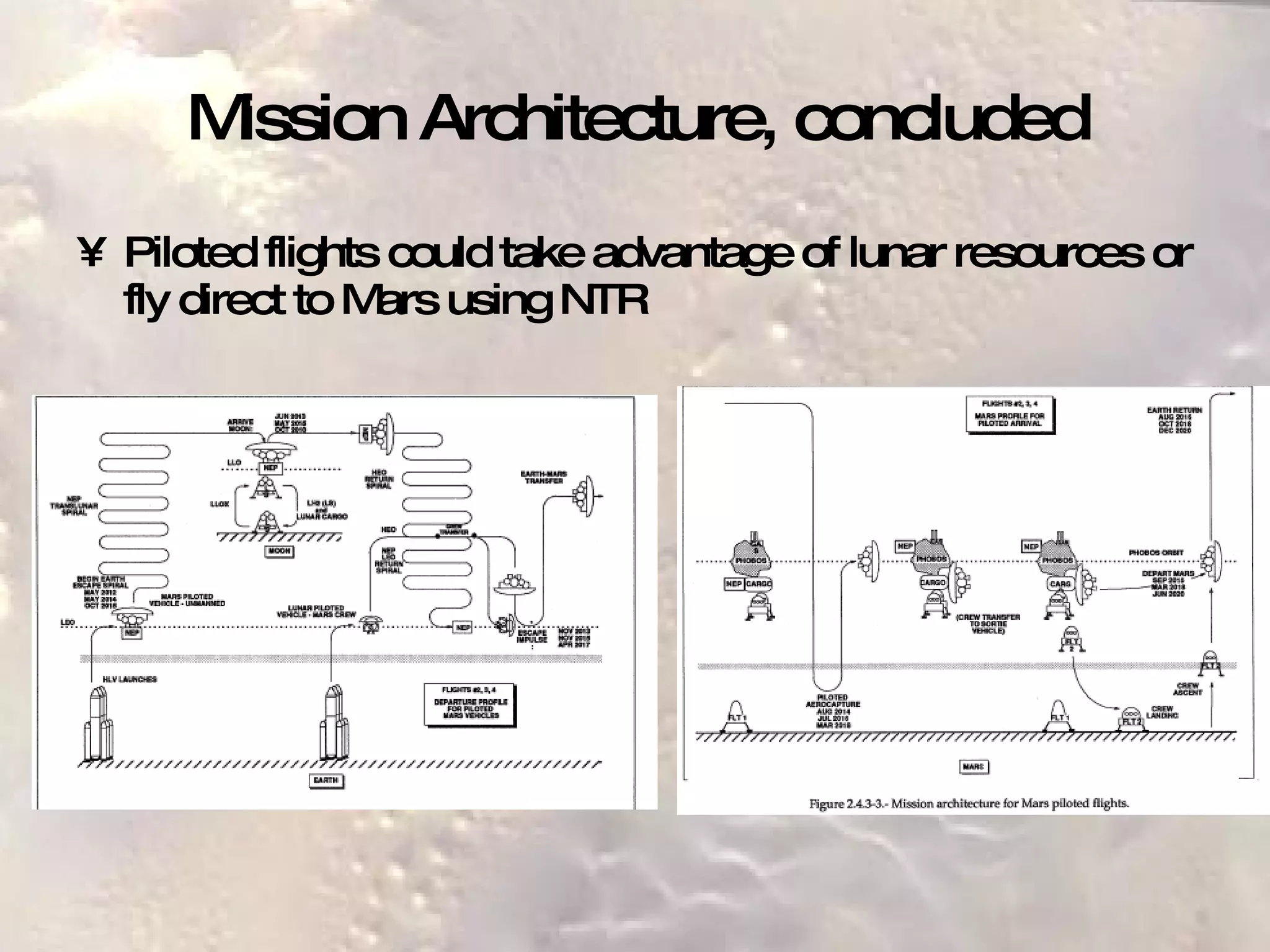
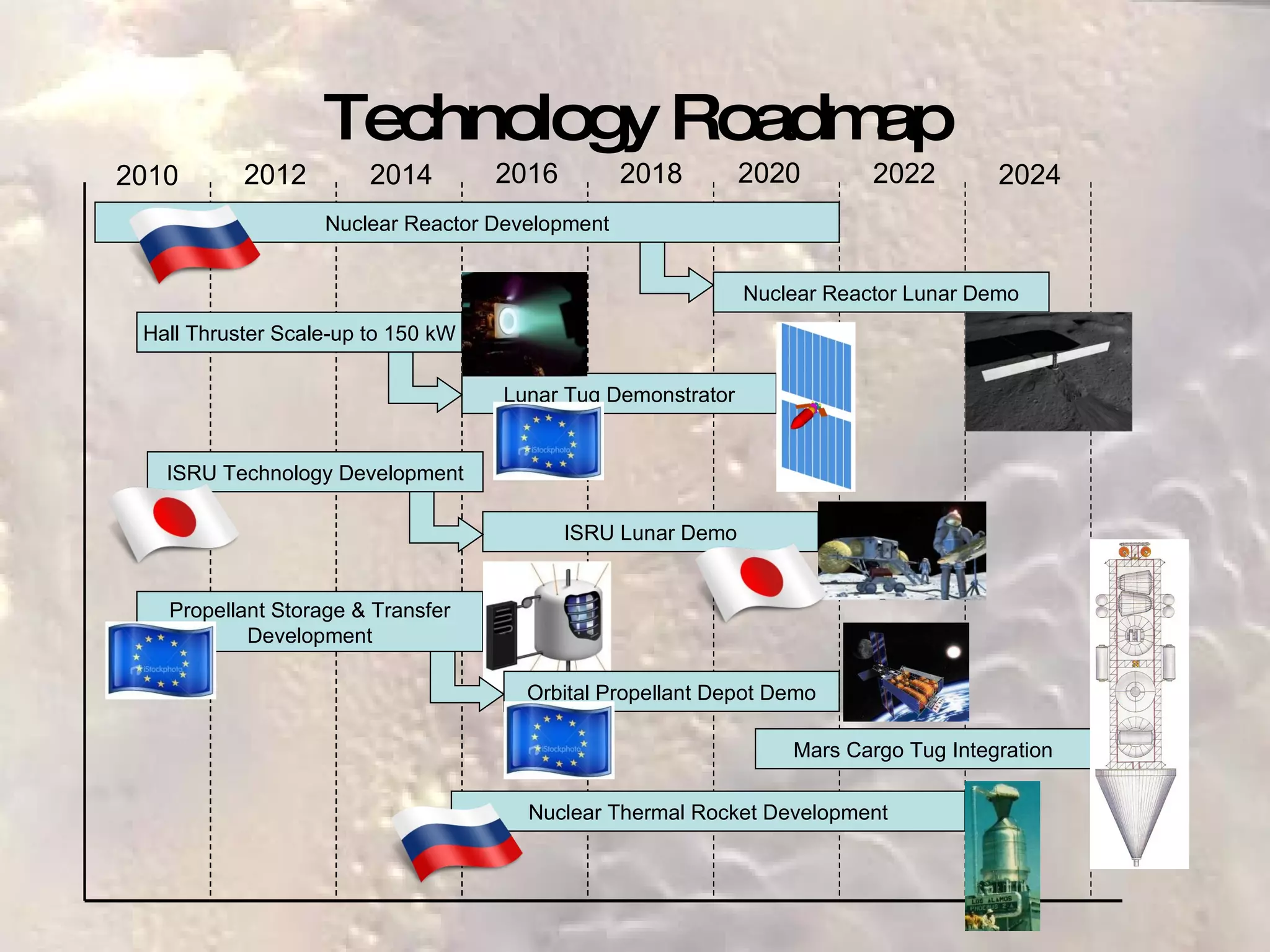


The document discusses proposals for a one-way human mission to Mars that would establish a permanent human presence without the capability to return to Earth. It outlines a plan to produce return fuel on Mars through in-situ resource utilization to convert Martian atmospheric CO2 and hydrogen brought from Earth into methane and oxygen rocket fuel. While some argue a one-way mission could reduce costs and risks, the document assesses that the total cost savings may be limited and risks are not necessarily lower given the long-term challenges of maintaining humans on Mars indefinitely. An alternative architecture is proposed using electric tugs to transport cargo prior to crew arrival in order to reduce payload sizes and risks of entry, descent, and landing.


