ScrumMaster gathering split (croatia), november 2014
Angel Medinilla 
angel.medinilla@proyectalis.com 
www.proyectalis.com/en/AngelMedinilla 
(Slides, Videos, Newsletter, Books, Blog, LinkedIn, Sketchnotes, Twitter...) 
Twitter: @angel_m 
(would love some instant feedback!)
My Pleasure! 
</vanity>
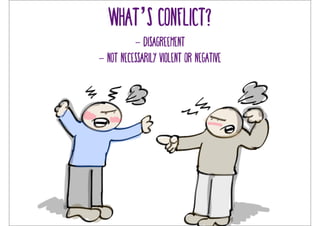
What’s conflict? 
- Disagreement 
- Not necessarily violent or negative
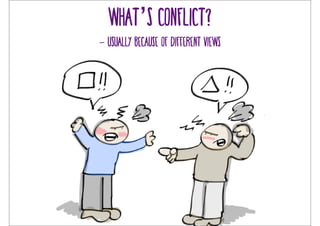
What’s conflict? 
- Usually because of different views
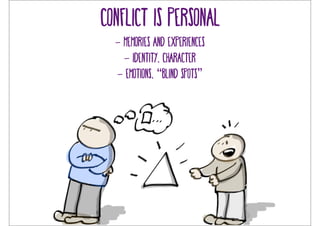
conflict is personal 
- Memories and experiences 
- identity, character 
- emotions, “blind spots”
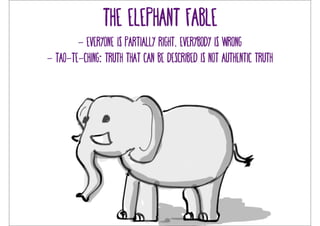
the elephant fable 
- everyone is partially right, everybody is wrong 
- Tao-te-ching: truth that can be described is not authentic truth
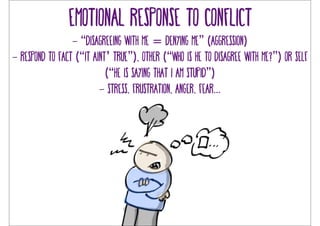
Emotional response to conflict 
- “disagreeing with me = denying me” (aggression) 
- respond to fact (“it aint’ true”), other (“Who is he to disagree with me?”) or self 
(“he is saying that I am stupid”) 
- stress, frustration, anger, fear...
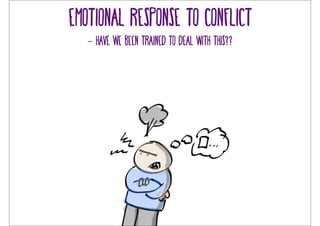
Emotional response to conflict 
- have we been trained to deal with this??
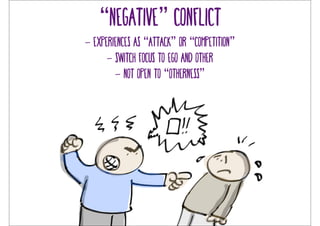
“negative” conflict 
- Experiences as “attack” or “competition” 
- switch focus to ego and other 
- not open to “otherness”
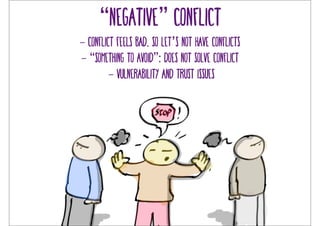
“Negative” conflict 
- conflict feels bad, so let’s not have conflicts 
- “something to avoid”: does not solve conflict 
- Vulnerability and trust issues
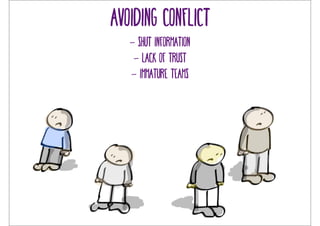
Avoiding conflict 
- Shut information 
- lack of trust 
- Immature teams
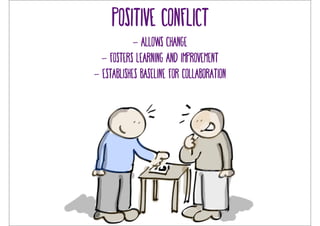
positive conflict 
- Allows change 
- fosters learning and improvement 
- establishes baseline for collaboration
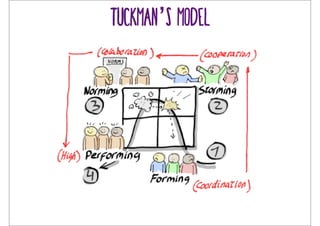
Tuckman’s model
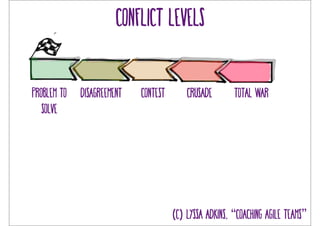
conflict levels 
Problem to 
solve 
Disagreement contest crusade total war 
(c) Lyssa Adkins, “coaching Agile Teams”
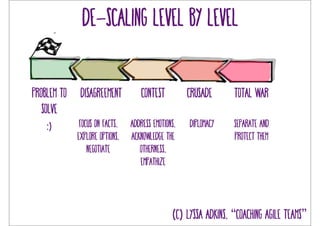
de-scaling level by level 
Problem to 
solve 
Disagreement contest crusade total war 
separate and 
protect them 
address emotions, Diplomacy 
acknowledge the 
otherness, 
empathize 
(c) Lyssa Adkins, “coaching Agile Teams” 
focus on facts, 
explore options, 
negotiate 
:)
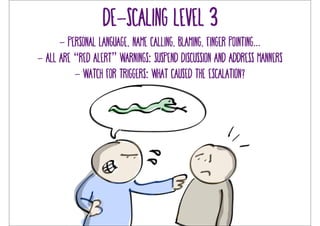
De-scaling level 3 
- Personal language, name calling, blaming, finger pointing... 
- All are “red alert” warnings: suspend discussion and address manners 
- watch for triggers: what caused the escalation?
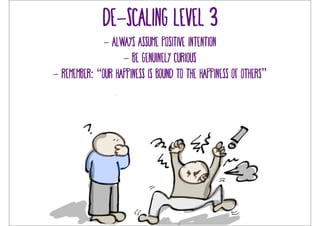
de-scaling level 3 
- always assume positive intention 
- be genuinely curious 
- Remember: “our happiness is bound to the happiness of others”
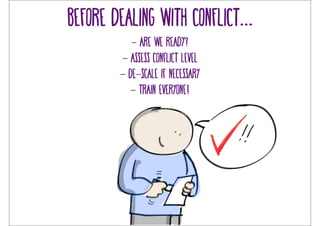
before dealing with conflict... 
- are we ready? 
- assess conflict level 
- de-scale if necessary 
- train everyone!
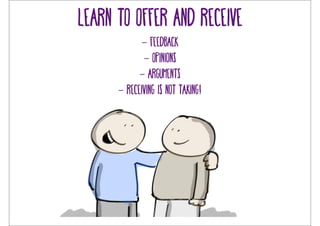
Learn to offer and receive 
- Feedback 
- opinions 
- arguments 
- Receiving is not taking!
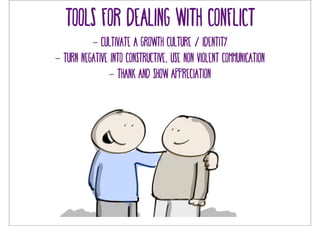
Tools for dealing with conflict 
- cultivate a growth culture / identity 
- turn negative into constructive, use Non violent communication 
- thank and show appreciation
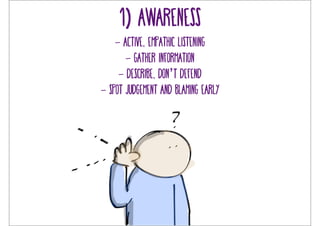
1) awareness 
- active, empathic listening 
- gather information 
- describe, don’t defend 
- spot judgement and blaming early
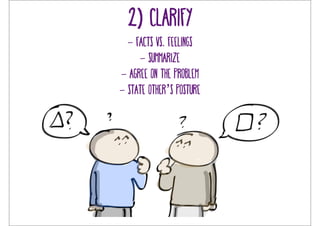
2) clarify 
- facts vs. feelings 
- summarize 
- agree on the problem 
- state other’s posture
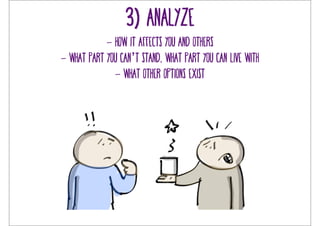
3) analyze 
- how it affects you and others 
- what part you can’t stand, what part you can live with 
- what other options exist
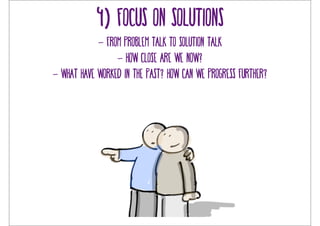
4) focus on solutions 
- from problem talk to solution talk 
- how close are we now? 
- What have worked in the past? how can we progress further?
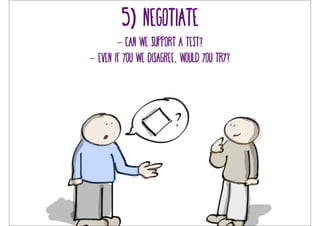
5) negotiate 
- can we support a test? 
- even if you we disagree, would you try?
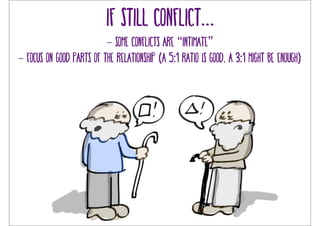
If still conflict... 
- some conflicts are “intimate” 
- focus on good parts of the relationship (a 5:1 ratio is good, a 3:1 might be enough)
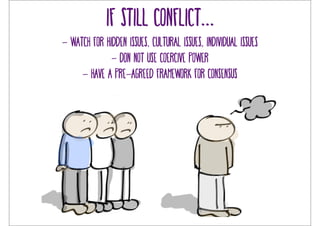
if still conflict... 
- watch for hidden issues, cultural issues, individual issues 
- don not use coercive power 
- have a pre-agreed framework for consensus
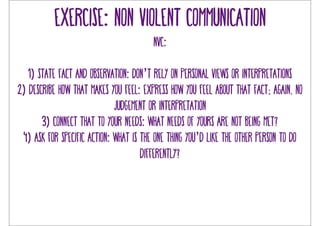
Exercise: non violent communication 
NVC: 
1) state fact and observation: don’t rely on personal views or interpretations 
2) describe how that makes you feel: express how you feel about that fact; again, no 
judgement or interpretation 
3) connect that to your needs: what needs of yours are not being met? 
4) ask for specific action: what is the one thing you’d like the other person to do 
differently?
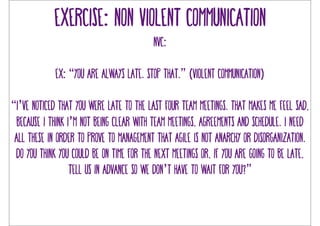
Exercise: non violent communication 
NVC: 
Ex: “you are always late. stop that.” (violent communication) 
“I’ve noticed that you were late to the last four team meetings. That makes me feel sad, 
because i think I’m not being clear with team meetings, agreements and schedule. i need 
all these in order to prove to management that agile is not anarchy or disorganization. 
Do you think you could be on time for the next meetings or, if you are going to be late, 
tell us in advance so we don’t have to wait for you?”
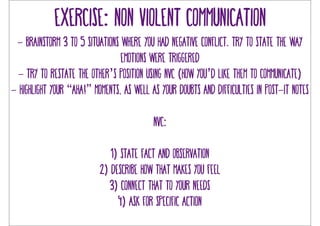
Exercise: non violent communication 
- brainstorm 3 to 5 situations where you had negative conflict. try to state the way 
emotions were triggered 
- try to restate the other’s position using NVC (how you’d like them to communicate) 
- highlight your “aha!” moments, as well as your doubts and difficulties in post-it notes 
NVC: 
1) state fact and observation 
2) describe how that makes you feel 
3) connect that to your needs 
4) ask for specific action
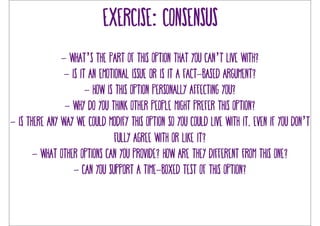
Exercise: CONSENSUS 
- What’s the part of this option that you can’t live with? 
- Is it an emotional issue or is it a fact-based argument? 
- How is this option personally affecting you? 
- Why do you think other people might prefer this option? 
- Is there any way we could modify this option so you could live with it, even if you don’t 
fully agree with or like it? 
- What other options can you provide? How are they different from this one? 
- Can you support a time-boxed test of this option?
More at http://Slideshare.net/proyectalis 
Thank you and... BLOG IT!! 
(Oh, yes, and buy the books!) 
http://www.proyectalis.com/en/AngelMedinilla

A Notebook on Conflict for ScrumMasters

  • 1.
    ScrumMaster gathering split(croatia), november 2014
  • 2.
    Angel Medinilla angel.medinilla@proyectalis.com www.proyectalis.com/en/AngelMedinilla (Slides, Videos, Newsletter, Books, Blog, LinkedIn, Sketchnotes, Twitter...) Twitter: @angel_m (would love some instant feedback!)
  • 8.
  • 9.
    What’s conflict? -Disagreement - Not necessarily violent or negative
  • 10.
    What’s conflict? -Usually because of different views
  • 11.
    conflict is personal - Memories and experiences - identity, character - emotions, “blind spots”
  • 12.
    the elephant fable - everyone is partially right, everybody is wrong - Tao-te-ching: truth that can be described is not authentic truth
  • 13.
    Emotional response toconflict - “disagreeing with me = denying me” (aggression) - respond to fact (“it aint’ true”), other (“Who is he to disagree with me?”) or self (“he is saying that I am stupid”) - stress, frustration, anger, fear...
  • 14.
    Emotional response toconflict - have we been trained to deal with this??
  • 15.
    “negative” conflict -Experiences as “attack” or “competition” - switch focus to ego and other - not open to “otherness”
  • 16.
    “Negative” conflict -conflict feels bad, so let’s not have conflicts - “something to avoid”: does not solve conflict - Vulnerability and trust issues
  • 17.
    Avoiding conflict -Shut information - lack of trust - Immature teams
  • 18.
    positive conflict -Allows change - fosters learning and improvement - establishes baseline for collaboration
  • 19.
  • 20.
    conflict levels Problemto solve Disagreement contest crusade total war (c) Lyssa Adkins, “coaching Agile Teams”
  • 21.
    de-scaling level bylevel Problem to solve Disagreement contest crusade total war separate and protect them address emotions, Diplomacy acknowledge the otherness, empathize (c) Lyssa Adkins, “coaching Agile Teams” focus on facts, explore options, negotiate :)
  • 22.
    De-scaling level 3 - Personal language, name calling, blaming, finger pointing... - All are “red alert” warnings: suspend discussion and address manners - watch for triggers: what caused the escalation?
  • 23.
    de-scaling level 3 - always assume positive intention - be genuinely curious - Remember: “our happiness is bound to the happiness of others”
  • 24.
    before dealing withconflict... - are we ready? - assess conflict level - de-scale if necessary - train everyone!
  • 25.
    Learn to offerand receive - Feedback - opinions - arguments - Receiving is not taking!
  • 26.
    Tools for dealingwith conflict - cultivate a growth culture / identity - turn negative into constructive, use Non violent communication - thank and show appreciation
  • 27.
    1) awareness -active, empathic listening - gather information - describe, don’t defend - spot judgement and blaming early
  • 28.
    2) clarify -facts vs. feelings - summarize - agree on the problem - state other’s posture
  • 29.
    3) analyze -how it affects you and others - what part you can’t stand, what part you can live with - what other options exist
  • 30.
    4) focus onsolutions - from problem talk to solution talk - how close are we now? - What have worked in the past? how can we progress further?
  • 31.
    5) negotiate -can we support a test? - even if you we disagree, would you try?
  • 32.
    If still conflict... - some conflicts are “intimate” - focus on good parts of the relationship (a 5:1 ratio is good, a 3:1 might be enough)
  • 33.
    if still conflict... - watch for hidden issues, cultural issues, individual issues - don not use coercive power - have a pre-agreed framework for consensus
  • 34.
    Exercise: non violentcommunication NVC: 1) state fact and observation: don’t rely on personal views or interpretations 2) describe how that makes you feel: express how you feel about that fact; again, no judgement or interpretation 3) connect that to your needs: what needs of yours are not being met? 4) ask for specific action: what is the one thing you’d like the other person to do differently?
  • 35.
    Exercise: non violentcommunication NVC: Ex: “you are always late. stop that.” (violent communication) “I’ve noticed that you were late to the last four team meetings. That makes me feel sad, because i think I’m not being clear with team meetings, agreements and schedule. i need all these in order to prove to management that agile is not anarchy or disorganization. Do you think you could be on time for the next meetings or, if you are going to be late, tell us in advance so we don’t have to wait for you?”
  • 36.
    Exercise: non violentcommunication - brainstorm 3 to 5 situations where you had negative conflict. try to state the way emotions were triggered - try to restate the other’s position using NVC (how you’d like them to communicate) - highlight your “aha!” moments, as well as your doubts and difficulties in post-it notes NVC: 1) state fact and observation 2) describe how that makes you feel 3) connect that to your needs 4) ask for specific action
  • 37.
    Exercise: CONSENSUS -What’s the part of this option that you can’t live with? - Is it an emotional issue or is it a fact-based argument? - How is this option personally affecting you? - Why do you think other people might prefer this option? - Is there any way we could modify this option so you could live with it, even if you don’t fully agree with or like it? - What other options can you provide? How are they different from this one? - Can you support a time-boxed test of this option?
  • 38.
    More at http://Slideshare.net/proyectalis Thank you and... BLOG IT!! (Oh, yes, and buy the books!) http://www.proyectalis.com/en/AngelMedinilla