


© NEST Corporation 2013
Mapping your audiences
Are you talking to the right people at the right time
in the right way?
© NEST Corporation 2013
Legal information
© NEST Corporation. All rights reserved. This information does not constitute financial,
investment or professional advice and should not be relied upon as such. Reproduction
in any form of all or any part of these slides is prohibited.
© NEST Corporation 2013
Contents
Introductions – 5 mins
Definitions – 5 mins
Approaches to take – 15 mins
Questions – 5 mins
Quick DIY session – 20 mins
Feedback – 20 mins
© NEST Corporation 2013
Introductions
A new pension scheme established by statute, run as a trust
Public service obligation to accept all employers who want to use NEST to
meet their employer duties
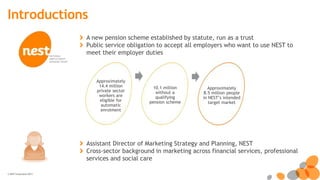
10.1 million
without a
qualifying
pension scheme
Approximately
14.4 million
private sector
workers are
eligible for
automatic
enrolment
Approximately
8.5 million people
in NEST’s intended
target market
Assistant Director of Marketing Strategy and Planning, NEST
Cross-sector background in marketing across financial services, professional
services and social care
© NEST Corporation 2013
Definition
“The assembled spectators
or listeners at a public event
such as a play, film, concert,
or meeting.”
© NEST Corporation 2013
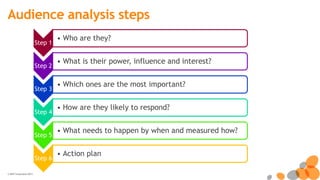
Audience analysis steps
Step 1
• Who are they?
Step 2
• What is their power, influence and interest?
Step 3
• Which ones are the most important?
Step 4
• How are they likely to respond?
Step 5
• What needs to happen by when and measured how?
Step 6
• Action plan
© NEST Corporation 2013
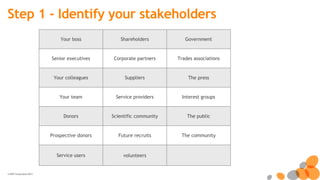
Step 1 - Identify your stakeholders
Your boss Shareholders Government
Senior executives Corporate partners Trades associations
Your colleagues Suppliers The press
Your team Service providers Interest groups
Donors Scientific community The public
Prospective donors Future recruits The community
Service users volunteers
© NEST Corporation 2013
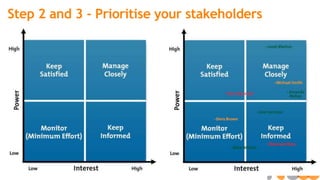
Step 2 and 3 - Prioritise your stakeholders
© NEST Corporation 2013
Step 4 and 5 - Understand your key stakeholders
Key questions that can help you understand your stakeholders are:
– What financial or emotional interest do they have in the outcome of your work? Is it positive
or negative?
– What motivates them most of all?
– What information do they want from you?
– How do they want to receive information from you? What is the best way of communicating
your message to them?
– What is their current opinion of your work? Is it based on good information?
– Who influences their opinions generally, and who influences their opinion of you? Do some of
these influencers therefore become important stakeholders in their own right?
– If they are not likely to be positive, what will win them around to support your project?
– If you don't think you will be able to win them around, how will you manage their opposition?
– Who else might be influenced by their opinions? Do these people become stakeholders in
their own right?
© NEST Corporation 2013
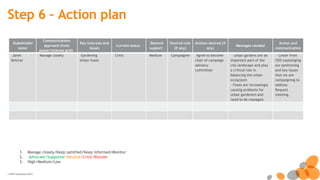
Step 6 – Action plan
Stakeholder
name
Communications
approach (from
power/interest grid)1
Key interests and
issues
Current status2
Desired
support3
Desired role
(if any)
Actions desired (if
any)
Messages needed
Action and
communication
Janet
Belchar
Manage closely Gardening
Urban foxes
Critic Medium Campaigner Agree to become
chair of campaign
advisory
committee
- urban gardens are an
important part of the
city landscape and play
a critical role in
balancing the urban
ecosystem
- Foxes are increasingly
causing problems for
urban gardeners and
need to be managed.
- Letter from
CEO explainging
our positioning
and key issues
that we are
campaigning to
address.
Request
meeting.
1. Manage closely/Keep satisfied/Keep informed/Monitor
2. Advocate/Supporter/Neutral/Critic/Blocker
3. High/Medium/Low
© NEST Corporation 2013
Questions?
Visit the CharityComms website to view
slides from our past events, see what events
we have coming up and to check out what
else we do.
www.charitycomms.org.uk

A guide to mapping your audiences. Audience first conference, 16 July 2014

  • 1.
    © NEST Corporation2013 Mapping your audiences Are you talking to the right people at the right time in the right way?
  • 2.
    © NEST Corporation2013 Legal information © NEST Corporation. All rights reserved. This information does not constitute financial, investment or professional advice and should not be relied upon as such. Reproduction in any form of all or any part of these slides is prohibited.
  • 3.
    © NEST Corporation2013 Contents Introductions – 5 mins Definitions – 5 mins Approaches to take – 15 mins Questions – 5 mins Quick DIY session – 20 mins Feedback – 20 mins
  • 4.
    © NEST Corporation2013 Introductions A new pension scheme established by statute, run as a trust Public service obligation to accept all employers who want to use NEST to meet their employer duties 10.1 million without a qualifying pension scheme Approximately 14.4 million private sector workers are eligible for automatic enrolment Approximately 8.5 million people in NEST’s intended target market Assistant Director of Marketing Strategy and Planning, NEST Cross-sector background in marketing across financial services, professional services and social care
  • 5.
    © NEST Corporation2013 Definition “The assembled spectators or listeners at a public event such as a play, film, concert, or meeting.”
  • 6.
    © NEST Corporation2013 Audience analysis steps Step 1 • Who are they? Step 2 • What is their power, influence and interest? Step 3 • Which ones are the most important? Step 4 • How are they likely to respond? Step 5 • What needs to happen by when and measured how? Step 6 • Action plan
  • 7.
    © NEST Corporation2013 Step 1 - Identify your stakeholders Your boss Shareholders Government Senior executives Corporate partners Trades associations Your colleagues Suppliers The press Your team Service providers Interest groups Donors Scientific community The public Prospective donors Future recruits The community Service users volunteers
  • 8.
    © NEST Corporation2013 Step 2 and 3 - Prioritise your stakeholders
  • 9.
    © NEST Corporation2013 Step 4 and 5 - Understand your key stakeholders Key questions that can help you understand your stakeholders are: – What financial or emotional interest do they have in the outcome of your work? Is it positive or negative? – What motivates them most of all? – What information do they want from you? – How do they want to receive information from you? What is the best way of communicating your message to them? – What is their current opinion of your work? Is it based on good information? – Who influences their opinions generally, and who influences their opinion of you? Do some of these influencers therefore become important stakeholders in their own right? – If they are not likely to be positive, what will win them around to support your project? – If you don't think you will be able to win them around, how will you manage their opposition? – Who else might be influenced by their opinions? Do these people become stakeholders in their own right?
  • 10.
    © NEST Corporation2013 Step 6 – Action plan Stakeholder name Communications approach (from power/interest grid)1 Key interests and issues Current status2 Desired support3 Desired role (if any) Actions desired (if any) Messages needed Action and communication Janet Belchar Manage closely Gardening Urban foxes Critic Medium Campaigner Agree to become chair of campaign advisory committee - urban gardens are an important part of the city landscape and play a critical role in balancing the urban ecosystem - Foxes are increasingly causing problems for urban gardeners and need to be managed. - Letter from CEO explainging our positioning and key issues that we are campaigning to address. Request meeting. 1. Manage closely/Keep satisfied/Keep informed/Monitor 2. Advocate/Supporter/Neutral/Critic/Blocker 3. High/Medium/Low
  • 11.
    © NEST Corporation2013 Questions?
  • 12.
    Visit the CharityCommswebsite to view slides from our past events, see what events we have coming up and to check out what else we do. www.charitycomms.org.uk

Editor's Notes

  • #3 NOTE TO PRESENTER – PLEASE ENSURE THIS SLIDE IS INCLUDED IN ALL PRESENTATIONS.