Page 1 of 2
INTRODUCTION TO BLAST (Basic Local Alignment Search Tool)
Activity No. 4
INTRODUCTION
The Basic Local Alignment Search Tool (BLAST) is a widely used bioinformatics tool for comparing biological
sequences such as DNA, RNA, and proteins. It allows researchers to identify similarities between sequences, infer
evolutionary relationships, and annotate genes.
In this laboratory activity, you will learn how to use BLAST to analyze a given sequence and compare it with known
sequences in the NCBI database.
OBJECTIVES
By the end of this activity, you should be able to:
 Understand the basic principles and applications of BLAST.
 Learn how to retrieve and analyze DNA and protein sequences.
 Perform a sequence alignment using the NCBI BLAST tool.
 Interpret BLAST search results.
MATERIALS AND EQUIPMENT
 Computer with internet access
 NCBI BLAST website
 Sample DNA/protein sequence
METHODOLOGY
SAMPLE SEQUENCES
Nucleotide Sequences
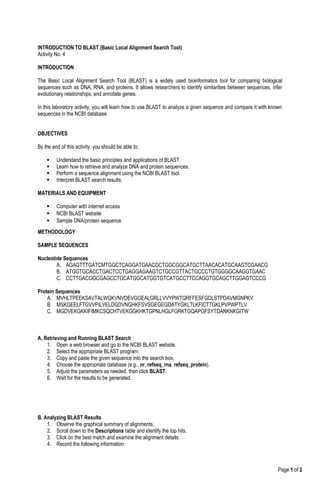
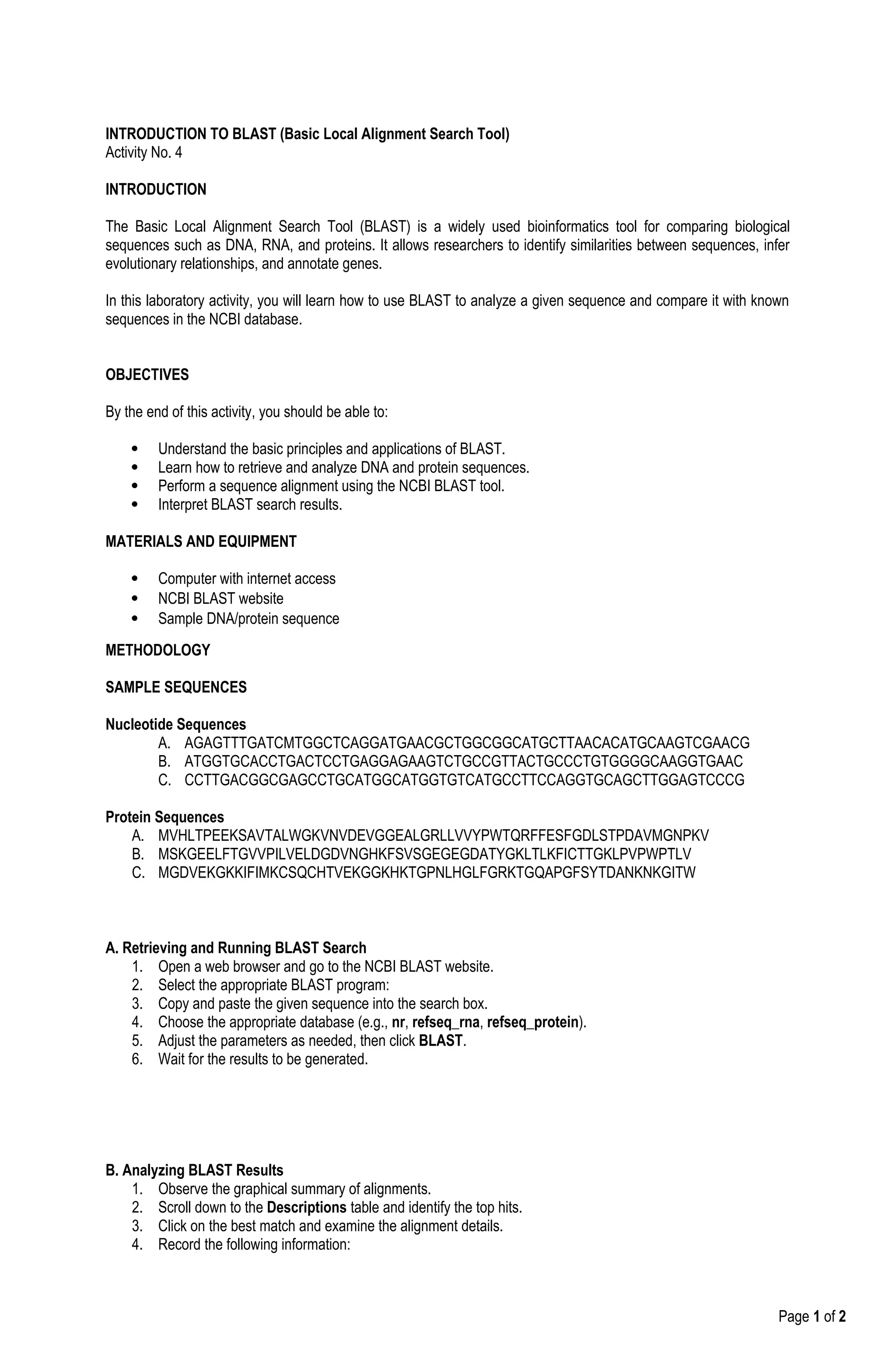
A. AGAGTTTGATCMTGGCTCAGGATGAACGCTGGCGGCATGCTTAACACATGCAAGTCGAACG
B. ATGGTGCACCTGACTCCTGAGGAGAAGTCTGCCGTTACTGCCCTGTGGGGCAAGGTGAAC
C. CCTTGACGGCGAGCCTGCATGGCATGGTGTCATGCCTTCCAGGTGCAGCTTGGAGTCCCG
Protein Sequences
A. MVHLTPEEKSAVTALWGKVNVDEVGGEALGRLLVVYPWTQRFFESFGDLSTPDAVMGNPKV
B. MSKGEELFTGVVPILVELDGDVNGHKFSVSGEGEGDATYGKLTLKFICTTGKLPVPWPTLV
C. MGDVEKGKKIFIMKCSQCHTVEKGGKHKTGPNLHGLFGRKTGQAPGFSYTDANKNKGITW
A. Retrieving and Running BLAST Search
1. Open a web browser and go to the NCBI BLAST website.
2. Select the appropriate BLAST program:
3. Copy and paste the given sequence into the search box.
4. Choose the appropriate database (e.g., nr, refseq_rna, refseq_protein).
5. Adjust the parameters as needed, then click BLAST.
6. Wait for the results to be generated.
B. Analyzing BLAST Results
1. Observe the graphical summary of alignments.
2. Scroll down to the Descriptions table and identify the top hits.
3. Click on the best match and examine the alignment details.
4. Record the following information:
Page 2 of 2
o Query ID:
o E-value:
o Percentage Identity:
o Accession Number:
o Organism Name:
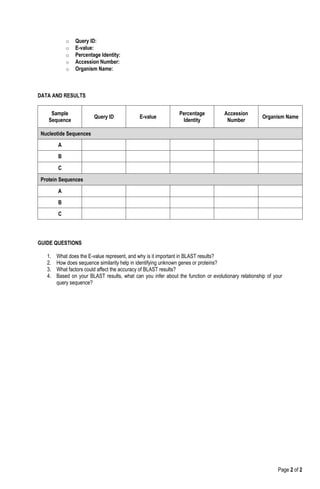
DATA AND RESULTS
Sample
Sequence
Query ID E-value
Percentage
Identity
Accession
Number
Organism Name
Nucleotide Sequences
A
B
C
Protein Sequences
A
B
C
GUIDE QUESTIONS
1. What does the E-value represent, and why is it important in BLAST results?
2. How does sequence similarity help in identifying unknown genes or proteins?
3. What factors could affect the accuracy of BLAST results?
4. Based on your BLAST results, what can you infer about the function or evolutionary relationship of your
query sequence?

_Activity on the Introduction to BLAST.docx

  • 1.
    Page 1 of2 INTRODUCTION TO BLAST (Basic Local Alignment Search Tool) Activity No. 4 INTRODUCTION The Basic Local Alignment Search Tool (BLAST) is a widely used bioinformatics tool for comparing biological sequences such as DNA, RNA, and proteins. It allows researchers to identify similarities between sequences, infer evolutionary relationships, and annotate genes. In this laboratory activity, you will learn how to use BLAST to analyze a given sequence and compare it with known sequences in the NCBI database. OBJECTIVES By the end of this activity, you should be able to:  Understand the basic principles and applications of BLAST.  Learn how to retrieve and analyze DNA and protein sequences.  Perform a sequence alignment using the NCBI BLAST tool.  Interpret BLAST search results. MATERIALS AND EQUIPMENT  Computer with internet access  NCBI BLAST website  Sample DNA/protein sequence METHODOLOGY SAMPLE SEQUENCES Nucleotide Sequences A. AGAGTTTGATCMTGGCTCAGGATGAACGCTGGCGGCATGCTTAACACATGCAAGTCGAACG B. ATGGTGCACCTGACTCCTGAGGAGAAGTCTGCCGTTACTGCCCTGTGGGGCAAGGTGAAC C. CCTTGACGGCGAGCCTGCATGGCATGGTGTCATGCCTTCCAGGTGCAGCTTGGAGTCCCG Protein Sequences A. MVHLTPEEKSAVTALWGKVNVDEVGGEALGRLLVVYPWTQRFFESFGDLSTPDAVMGNPKV B. MSKGEELFTGVVPILVELDGDVNGHKFSVSGEGEGDATYGKLTLKFICTTGKLPVPWPTLV C. MGDVEKGKKIFIMKCSQCHTVEKGGKHKTGPNLHGLFGRKTGQAPGFSYTDANKNKGITW A. Retrieving and Running BLAST Search 1. Open a web browser and go to the NCBI BLAST website. 2. Select the appropriate BLAST program: 3. Copy and paste the given sequence into the search box. 4. Choose the appropriate database (e.g., nr, refseq_rna, refseq_protein). 5. Adjust the parameters as needed, then click BLAST. 6. Wait for the results to be generated. B. Analyzing BLAST Results 1. Observe the graphical summary of alignments. 2. Scroll down to the Descriptions table and identify the top hits. 3. Click on the best match and examine the alignment details. 4. Record the following information:
  • 2.
    Page 2 of2 o Query ID: o E-value: o Percentage Identity: o Accession Number: o Organism Name: DATA AND RESULTS Sample Sequence Query ID E-value Percentage Identity Accession Number Organism Name Nucleotide Sequences A B C Protein Sequences A B C GUIDE QUESTIONS 1. What does the E-value represent, and why is it important in BLAST results? 2. How does sequence similarity help in identifying unknown genes or proteins? 3. What factors could affect the accuracy of BLAST results? 4. Based on your BLAST results, what can you infer about the function or evolutionary relationship of your query sequence?