Clean.Bo Inno.tech Innovative Technology Solution Group
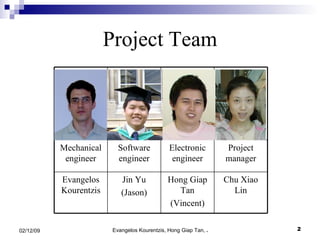
Project Team Chu Xiao Lin Hong Giap Tan (Vincent) Jin Yu (Jason) Evangelos Kourentzis Project manager Electronic engineer Software engineer Mechanical engineer
Project Overview Project objectives design and prototype a model of  autonomous floor cleaning robot
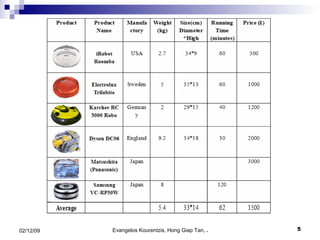
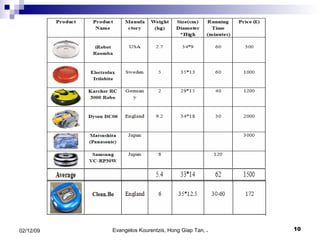
Project Overview Marketing Research  Market size and potential Competitor analysis
 
Project Overview Project Scope  In scope Out of   scope Deliverables
Project Overview Project assumptions Project risk assessment Time  Cost  Human resource Facility availability Team   building Team member capability
Project Overview Project planning  Cost control Time planning Identify main activities
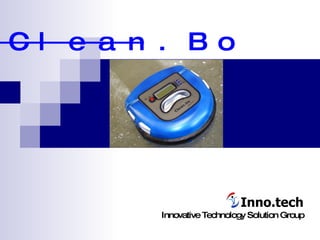
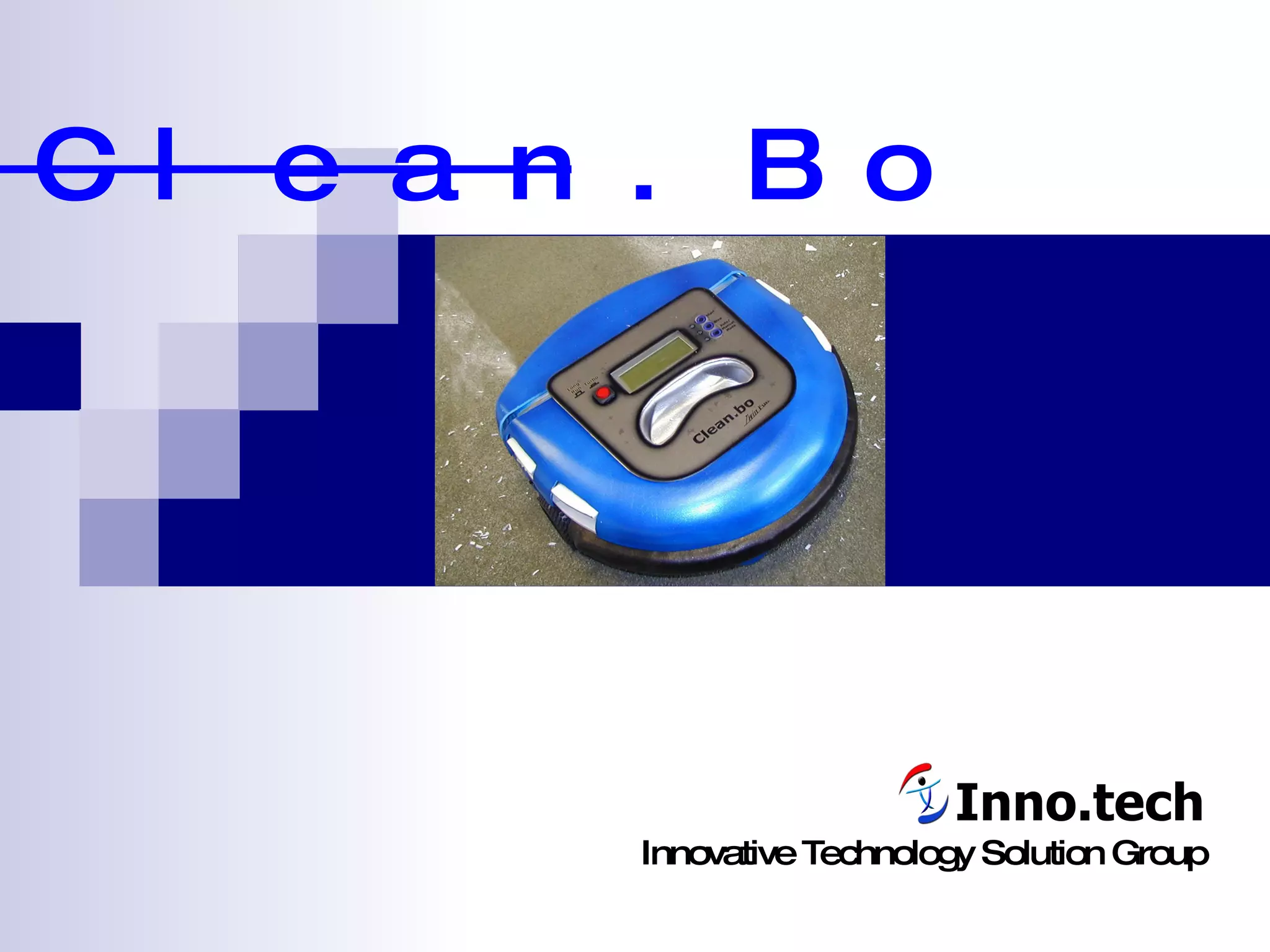
Clean.Bo Key Features: Twin cleaning action: twin fan vacuum cleaner and revolving brush. 2 power usage options: save mode for long running and Turbo mode for deep cleaning. 2 in 1 product: an intelligent auto cleaning robot and canister vacuum cleaner for quick spot cleaning. work effectively with small common dirt like sugar or paper scrap and great with pet hair.  Twin container for no suction loss with total volume 800ml. Ability to download the new firmware from web site to update Clean.Bo. Inno.tech
 
Manufacturing procedure of the Clean.Bo Power calculations, Background research and BSi standard. Cleaning method used. Design procedure followed. Materials and the manufacturing method used.  Testing
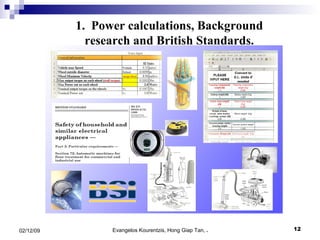
1.  Power calculations, Background research and British Standards.
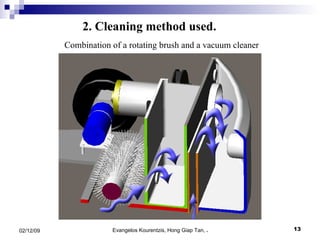
2. Cleaning method used. Combination of a rotating brush and a vacuum cleaner
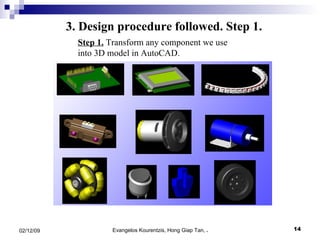
3. Design procedure followed. Step 1. Step 1.   Transform any component we use  into 3D model in AutoCAD.
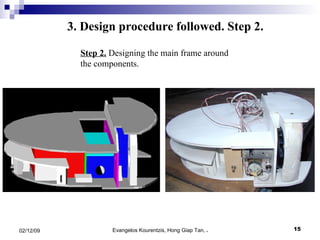
3. Design procedure followed. Step 2. Step 2.  Designing the main frame around  the components.
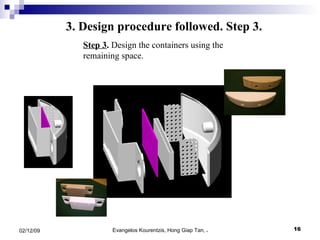
3. Design procedure followed. Step 3. Step 3 .  Design  the containers using the  remaining space .
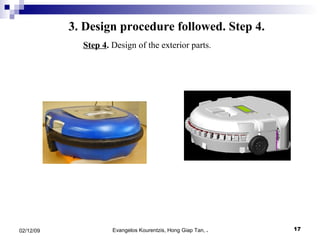
3. Design procedure followed. Step 4. Step 4 .  Design of the exterior parts.
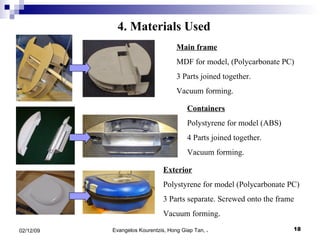
4. Materials Used Main frame MDF for model, ( Polycarbonate PC) 3 Parts joined together. Vacuum forming. Containers P olystyrene  for model (ABS ) 4 Parts joined together. Vacuum forming. Exterior P olystyrene  for model ( Polycarbonate PC) 3 Parts separate. Screwed onto the frame Vacuum forming .
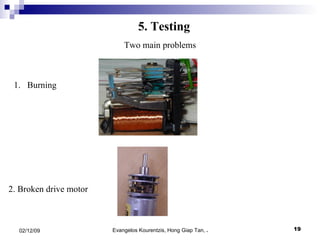
5. Testing Two main problems 1.  Burning 2. Broken drive motor
Navigation System Selection of the navigation strategy Brief explanation of the navigation system design Evolution of the final navigation system
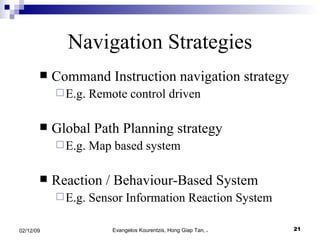
Navigation Strategies Command Instruction navigation strategy E.g. Remote control driven Global Path Planning strategy E.g. Map based system Reaction / Behaviour-Based System   E.g. Sensor Information Reaction System
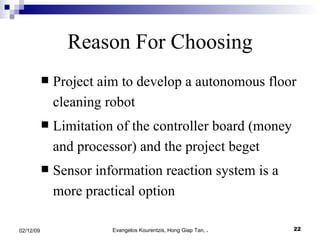
Reason For Choosing Project aim to develop a autonomous floor cleaning robot Limitation of the controller board (money and processor) and the project beget Sensor information reaction system is a more practical option
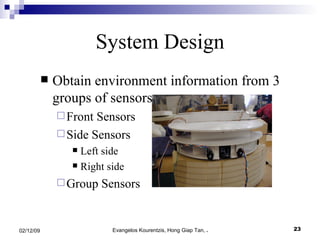
System Design Obtain environment information from 3 groups of sensors Front Sensors Side Sensors Left side Right side Group Sensors
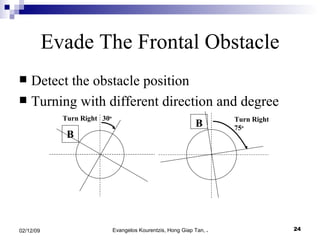
Evade The Frontal Obstacle Detect the obstacle position  Turning with different direction and degree B Turn Right  30 o B Turn Right  75 o
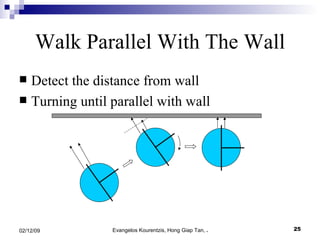
Walk Parallel With The Wall Detect the distance from wall Turning until parallel with wall
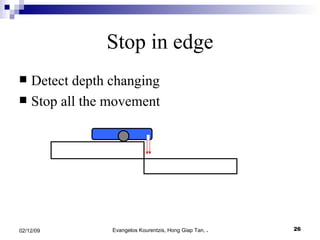
Stop in edge Detect depth changing Stop all the movement
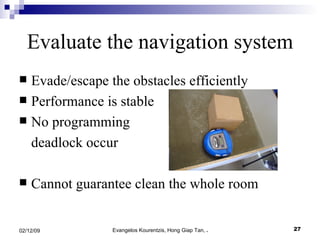
Evade/escape the obstacles efficiently Performance is stable  No programming  deadlock occur Cannot guarantee clean the whole room Evaluate the navigation system
Power source selection Power consumption Battery’s capacity Battery’s type Ni-cd, Ni-mh , Li-ion and SLA(seal lead acid)
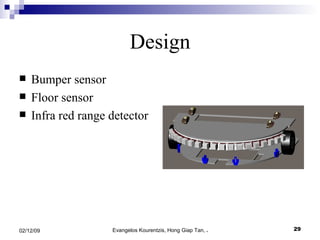
Design Bumper sensor Floor sensor Infra red range detector
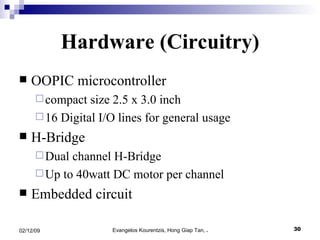
Hardware (Circuitry) OOPIC microcontroller compact size 2.5 x 3.0 inch 16 Digital I/O lines for general usage  H-Bridge  Dual channel H-Bridge  Up to 40watt DC motor per channel  Embedded circuit
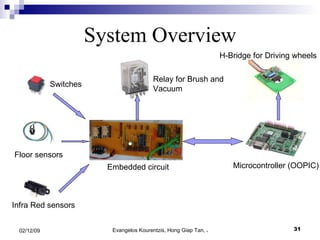
System Overview Relay for Brush and Vacuum Switches Floor sensors Infra Red sensors Microcontroller (OOPIC) H-Bridge for Driving wheels Embedded circuit
Key Features   Modules construction Passive control (Relay) Battery charging Updatable firmware LCD display Turbo mode
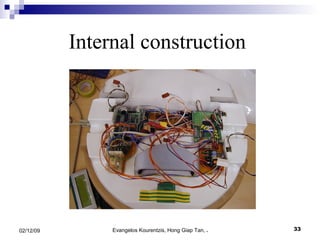
Internal construction
Future work Bluetooth connectivity  AI / Fuzzy leaning capability  Self adjustable wheel Mechanism Brush and drive wheels with integrated  motors
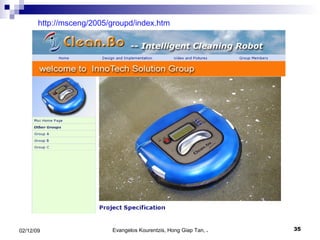
http://msceng/2005/groupd/index.htm
Thank You ! End Of Presentation

Clean.Bo Pressentation

  • 1.
    Clean.Bo Inno.tech InnovativeTechnology Solution Group
  • 2.
    Project Team ChuXiao Lin Hong Giap Tan (Vincent) Jin Yu (Jason) Evangelos Kourentzis Project manager Electronic engineer Software engineer Mechanical engineer
  • 3.
    Project Overview Projectobjectives design and prototype a model of autonomous floor cleaning robot
  • 4.
    Project Overview MarketingResearch Market size and potential Competitor analysis
  • 5.
  • 6.
    Project Overview ProjectScope In scope Out of scope Deliverables
  • 7.
    Project Overview Projectassumptions Project risk assessment Time Cost Human resource Facility availability Team building Team member capability
  • 8.
    Project Overview Projectplanning Cost control Time planning Identify main activities
  • 9.
    Clean.Bo Key Features:Twin cleaning action: twin fan vacuum cleaner and revolving brush. 2 power usage options: save mode for long running and Turbo mode for deep cleaning. 2 in 1 product: an intelligent auto cleaning robot and canister vacuum cleaner for quick spot cleaning. work effectively with small common dirt like sugar or paper scrap and great with pet hair. Twin container for no suction loss with total volume 800ml. Ability to download the new firmware from web site to update Clean.Bo. Inno.tech
  • 10.
  • 11.
    Manufacturing procedure ofthe Clean.Bo Power calculations, Background research and BSi standard. Cleaning method used. Design procedure followed. Materials and the manufacturing method used. Testing
  • 12.
    1. Powercalculations, Background research and British Standards.
  • 13.
    2. Cleaning methodused. Combination of a rotating brush and a vacuum cleaner
  • 14.
    3. Design procedurefollowed. Step 1. Step 1. Transform any component we use into 3D model in AutoCAD.
  • 15.
    3. Design procedurefollowed. Step 2. Step 2. Designing the main frame around the components.
  • 16.
    3. Design procedurefollowed. Step 3. Step 3 . Design the containers using the remaining space .
  • 17.
    3. Design procedurefollowed. Step 4. Step 4 . Design of the exterior parts.
  • 18.
    4. Materials UsedMain frame MDF for model, ( Polycarbonate PC) 3 Parts joined together. Vacuum forming. Containers P olystyrene for model (ABS ) 4 Parts joined together. Vacuum forming. Exterior P olystyrene for model ( Polycarbonate PC) 3 Parts separate. Screwed onto the frame Vacuum forming .
  • 19.
    5. Testing Twomain problems 1. Burning 2. Broken drive motor
  • 20.
    Navigation System Selectionof the navigation strategy Brief explanation of the navigation system design Evolution of the final navigation system
  • 21.
    Navigation Strategies CommandInstruction navigation strategy E.g. Remote control driven Global Path Planning strategy E.g. Map based system Reaction / Behaviour-Based System E.g. Sensor Information Reaction System
  • 22.
    Reason For ChoosingProject aim to develop a autonomous floor cleaning robot Limitation of the controller board (money and processor) and the project beget Sensor information reaction system is a more practical option
  • 23.
    System Design Obtainenvironment information from 3 groups of sensors Front Sensors Side Sensors Left side Right side Group Sensors
  • 24.
    Evade The FrontalObstacle Detect the obstacle position Turning with different direction and degree B Turn Right 30 o B Turn Right 75 o
  • 25.
    Walk Parallel WithThe Wall Detect the distance from wall Turning until parallel with wall
  • 26.
    Stop in edgeDetect depth changing Stop all the movement
  • 27.
    Evade/escape the obstaclesefficiently Performance is stable No programming deadlock occur Cannot guarantee clean the whole room Evaluate the navigation system
  • 28.
    Power source selectionPower consumption Battery’s capacity Battery’s type Ni-cd, Ni-mh , Li-ion and SLA(seal lead acid)
  • 29.
    Design Bumper sensorFloor sensor Infra red range detector
  • 30.
    Hardware (Circuitry) OOPICmicrocontroller compact size 2.5 x 3.0 inch 16 Digital I/O lines for general usage H-Bridge Dual channel H-Bridge Up to 40watt DC motor per channel Embedded circuit
  • 31.
    System Overview Relayfor Brush and Vacuum Switches Floor sensors Infra Red sensors Microcontroller (OOPIC) H-Bridge for Driving wheels Embedded circuit
  • 32.
    Key Features Modules construction Passive control (Relay) Battery charging Updatable firmware LCD display Turbo mode
  • 33.
  • 34.
    Future work Bluetoothconnectivity AI / Fuzzy leaning capability Self adjustable wheel Mechanism Brush and drive wheels with integrated motors
  • 35.
  • 36.
    Thank You !End Of Presentation