Designing Successful Adaptation Projects
Chibesa Pensulo,Water Specialist
Division of Mitigation and Adaptation
Technical Expert Meeting onAdaptation
Korea GlobalAdaptationWeek
Songdo, 11 April 2019
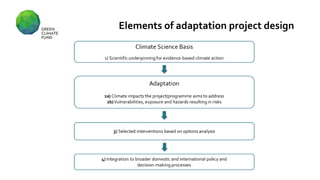
Elements of adaptation project design
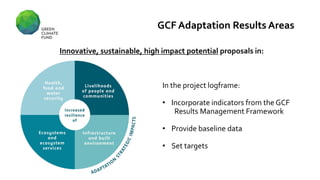
GCF Adaptation Results Areas
Innovative, sustainable, high impact potential proposals in:
In the project logframe:
• Incorporate indicators from the GCF
Results Management Framework
• Provide baseline data
• Set targets
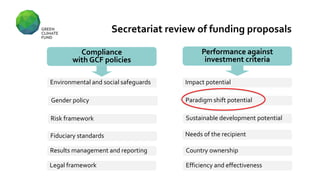
Secretariat review of funding proposals
Paradigm shift potential
Sustainable development potential
Country ownership
Performance against
investment criteria
Compliance
with GCF policies
Impact potential
Needs of the recipient
Efficiency and effectiveness
Gender policy
Risk framework
Results management and reporting
Environmental and social safeguards
Fiduciary standards
Legal framework
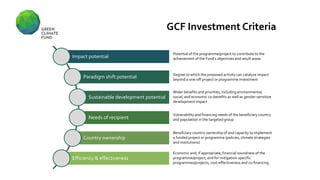
Impact potential
Paradigm shift potential
Sustainable development potential
Needs of recipient
Country ownership
Efficiency & effectiveness
Potential of the programme/project to contribute to the
achievement of the Fund's objectives and result areas
Economic and, if appropriate, financial soundness of the
programme/project, and for mitigation-specific
programmes/projects, cost-effectiveness and co-financing
Beneficiary country ownership of and capacity to implement
a funded project or programme (policies, climate strategies
and institutions)
Vulnerability and financing needs of the beneficiary country
and population in the targeted group
Wider benefits and priorities, including environmental,
social, and economic co-benefits as well as gender-sensitive
development impact
Degree to which the proposed activity can catalyze impact
beyond a one-off project or programme investment
GCF Investment Criteria
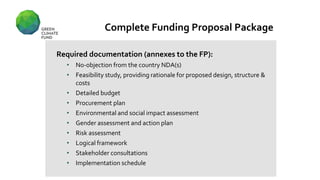
Complete Funding Proposal Package
Required documentation (annexes to the FP):
• No-objection from the country NDA(s)
• Feasibility study, providing rationale for proposed design, structure &
costs
• Detailed budget
• Procurement plan
• Environmental and social impact assessment
• Gender assessment and action plan
• Risk assessment
• Logical framework
• Stakeholder consultations
• Implementation schedule
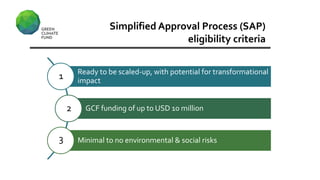
Simplified Approval Process (SAP)
eligibility criteria
Ready to be scaled-up, with potential for transformational
impact
GCF funding of up to USD 10 million
Minimal to no environmental & social risks
1
2
3
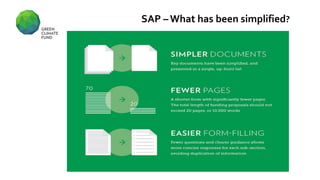
SAP – What has been simplified?
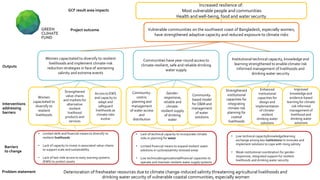
Increased resilience of:
Most vulnerable people and communities
Health and well-being, food and water security
GCF result area impacts
Vulnerable communities on the southwest coast of Bangladesh, especially women,
have strengthened adaptive capacity and reduced exposure to climate risks
Project outcome
Women capacitated to diversify to resilient
livelihoods and implement climate-risk
reduction strategies in face of worsening
salinity and extreme events
Communities have year-round access to
climate-resilient, safe and reliable drinking
water supply
Institutional technical capacity, knowledge and
learning strengthened to enable climate risk
informed management of livelihoods and
drinking water security
Outputs
Women
capacitated to
diversify to
resilient
livelihoods
Strengthened
value-chains
and markets for
alternative
resilient
livelihood
products and
services
Access to EWS
and capacity to
adapt and
safeguard
livelihoods as
climate risks
evolve
Community-
centric
planning and
management
of water access
and
distribution
Gender-
responsive,
reliable and
climate-
resilient supply
of drinking
water
Community-
based model
for O&M and
management
of water
solutions
Strengthened
institutional
capacities for
integrating
climate risk
planning for
coastal
livelihoods
Enhanced
institutional
capacities for
design and
implementation
of climate-
resilient
drinking water
solutions
Improved
knowledge and
evidence-based
learning for climate
risk informed
management of
livelihood and
drinking water
solutions
Interventions
addressing
barriers
• Limited skills and financial means to diversify to
resilient livelihoods
• Lack of capacity to invest in associated value-chains
to support scale and sustainability
• Lack of last-mile access to early warning systems
(EWS) to protect assets
• Lack of technical capacity to incorporate climate
risks in planning for water
• Limited financial means to expand resilient water
solutions in cyclone/salinity stressed areas
• Low technical/organizational/financial capacities to
operate and maintain resilient water supply systems
• Low technical capacity/knowledge/learning
exchange among key institutions to innovate and
implement solutions to cope with rising salinity
• Weak institutional coordination for gender-
responsive, integrated support for resilient
livelihoods and drinking water security
Barriers
to change
Problem statement Deterioration of freshwater resources due to climate change-induced salinity threatening agricultural livelihoods and
drinking water security of vulnerable coastal communities, especially women
For more information, visit
www.greenclimate.fund
Quick links
GCF 101
GCF Results Management Framework
GCF Investment Framework
GCF Simplified Approval Process Guidelines

9.2.5 Regional TEM-A Part III

  • 1.
    Designing Successful AdaptationProjects Chibesa Pensulo,Water Specialist Division of Mitigation and Adaptation Technical Expert Meeting onAdaptation Korea GlobalAdaptationWeek Songdo, 11 April 2019
  • 2.
    Elements of adaptationproject design
  • 3.
    GCF Adaptation ResultsAreas Innovative, sustainable, high impact potential proposals in: In the project logframe: • Incorporate indicators from the GCF Results Management Framework • Provide baseline data • Set targets
  • 4.
    Secretariat review offunding proposals Paradigm shift potential Sustainable development potential Country ownership Performance against investment criteria Compliance with GCF policies Impact potential Needs of the recipient Efficiency and effectiveness Gender policy Risk framework Results management and reporting Environmental and social safeguards Fiduciary standards Legal framework
  • 5.
    Impact potential Paradigm shiftpotential Sustainable development potential Needs of recipient Country ownership Efficiency & effectiveness Potential of the programme/project to contribute to the achievement of the Fund's objectives and result areas Economic and, if appropriate, financial soundness of the programme/project, and for mitigation-specific programmes/projects, cost-effectiveness and co-financing Beneficiary country ownership of and capacity to implement a funded project or programme (policies, climate strategies and institutions) Vulnerability and financing needs of the beneficiary country and population in the targeted group Wider benefits and priorities, including environmental, social, and economic co-benefits as well as gender-sensitive development impact Degree to which the proposed activity can catalyze impact beyond a one-off project or programme investment GCF Investment Criteria
  • 6.
    Complete Funding ProposalPackage Required documentation (annexes to the FP): • No-objection from the country NDA(s) • Feasibility study, providing rationale for proposed design, structure & costs • Detailed budget • Procurement plan • Environmental and social impact assessment • Gender assessment and action plan • Risk assessment • Logical framework • Stakeholder consultations • Implementation schedule
  • 7.
    Simplified Approval Process(SAP) eligibility criteria Ready to be scaled-up, with potential for transformational impact GCF funding of up to USD 10 million Minimal to no environmental & social risks 1 2 3
  • 8.
    SAP – Whathas been simplified?
  • 9.
    Increased resilience of: Mostvulnerable people and communities Health and well-being, food and water security GCF result area impacts Vulnerable communities on the southwest coast of Bangladesh, especially women, have strengthened adaptive capacity and reduced exposure to climate risks Project outcome Women capacitated to diversify to resilient livelihoods and implement climate-risk reduction strategies in face of worsening salinity and extreme events Communities have year-round access to climate-resilient, safe and reliable drinking water supply Institutional technical capacity, knowledge and learning strengthened to enable climate risk informed management of livelihoods and drinking water security Outputs Women capacitated to diversify to resilient livelihoods Strengthened value-chains and markets for alternative resilient livelihood products and services Access to EWS and capacity to adapt and safeguard livelihoods as climate risks evolve Community- centric planning and management of water access and distribution Gender- responsive, reliable and climate- resilient supply of drinking water Community- based model for O&M and management of water solutions Strengthened institutional capacities for integrating climate risk planning for coastal livelihoods Enhanced institutional capacities for design and implementation of climate- resilient drinking water solutions Improved knowledge and evidence-based learning for climate risk informed management of livelihood and drinking water solutions Interventions addressing barriers • Limited skills and financial means to diversify to resilient livelihoods • Lack of capacity to invest in associated value-chains to support scale and sustainability • Lack of last-mile access to early warning systems (EWS) to protect assets • Lack of technical capacity to incorporate climate risks in planning for water • Limited financial means to expand resilient water solutions in cyclone/salinity stressed areas • Low technical/organizational/financial capacities to operate and maintain resilient water supply systems • Low technical capacity/knowledge/learning exchange among key institutions to innovate and implement solutions to cope with rising salinity • Weak institutional coordination for gender- responsive, integrated support for resilient livelihoods and drinking water security Barriers to change Problem statement Deterioration of freshwater resources due to climate change-induced salinity threatening agricultural livelihoods and drinking water security of vulnerable coastal communities, especially women
  • 10.
    For more information,visit www.greenclimate.fund Quick links GCF 101 GCF Results Management Framework GCF Investment Framework GCF Simplified Approval Process Guidelines