The RPI System.
Contents
• Introduction
• Direct retainers
• Clasps
• I bar removable partial denture
• RPI
INTRODUCTION
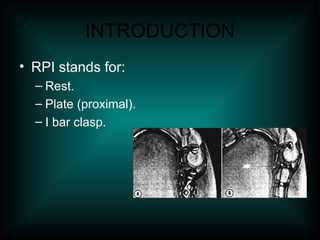
• RPI stands for:
– Rest.
– Plate (proximal).
– I bar clasp.
INTRODUCTION
• Modified I bar retainer system
• Krol 1973
• Principle
“stress control with minimal tooth
and gingival coverage”
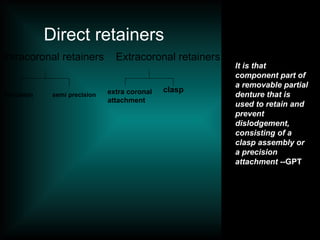
Direct retainers
Intracoronal retainers Extracoronal retainers
Precision semi precision extra coronal
attachment
clasp
It is that
component part of
a removable partial
denture that is
used to retain and
prevent
dislodgement,
consisting of a
clasp assembly or
a precision
attachment --GPT
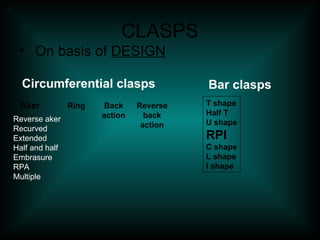
CLASPS
• On basis of DESIGN
Circumferential clasps Bar clasps
Aker
Reverse aker
Recurved
Extended
Half and half
Embrasure
RPA
Multiple
Ring Back
action
Reverse
back
action
T shape
Half T
U shape
RPI
C shape
L shape
I shape
I bar RPD
• Kratochvil
• To reduce tooth contact of the retainer
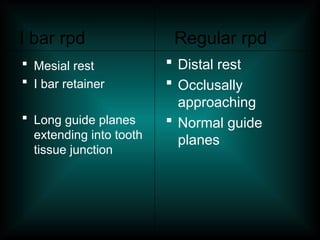
I bar rpd Regular rpd
 Mesial rest
 I bar retainer
 Long guide planes
extending into tooth
tissue junction
 Distal rest
 Occlusally
approaching
 Normal guide
planes
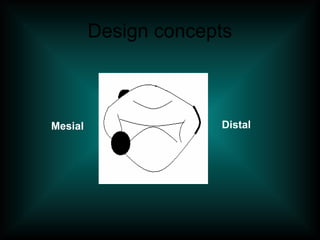
Design concepts
Distal
Mesial
• Mesial rest --minor connector Major connector
• Reasons
-elimination of harmful effects due to horizontal
forces
-mesial tipping
-fulcrum line away from edentulous ridge
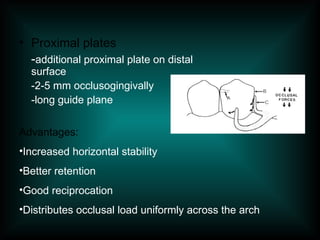
• Proximal plates
-additional proximal plate on distal
surface
-2-5 mm occlusogingivally
-long guide plane
Advantages:
•Increased horizontal stability
•Better retention
•Good reciprocation
•Distributes occlusal load uniformly across the arch
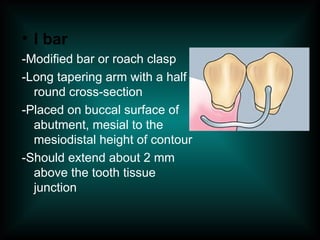
• I bar
-Modified bar or roach clasp
-Long tapering arm with a half
round cross-section
-Placed on buccal surface of
abutment, mesial to the
mesiodistal height of contour
-Should extend about 2 mm
above the tooth tissue
junction
• Advantages
-Minimal tooth coverage
-Passive
• Disadvantages
-Reduced retention
-Less horizontal stability than its counter
parts
Other parts
• Major connector
• Minor connectors
• Denture base connectors
• Modifications of I bar RPDs
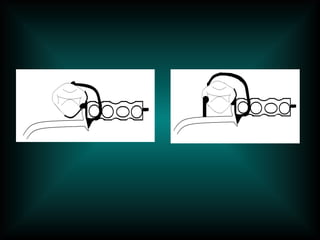
Rest, Proximal plate and I bar
Rest, Proximal plate and Aker’s
clasp
Rest, Proximal Plate and I-bar (RPI)
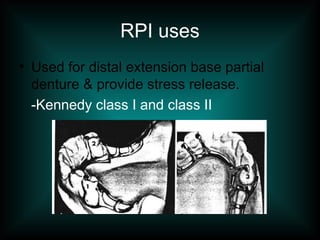
RPI uses
• Used for distal extension base partial
denture & provide stress release.
-Kennedy class I and class II
Modifications in RPI
• Mesial rest modification
-molars-triangular fossa
-canines-mesial marginal ridge
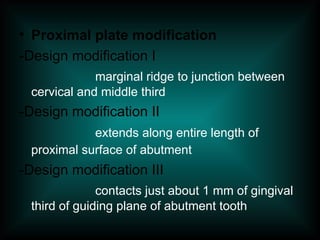
• Proximal plate modification
-Design modification I
marginal ridge to junction between
cervical and middle third
-Design modification II
extends along entire length of
proximal surface of abutment
-Design modification III
contacts just about 1 mm of gingival
third of guiding plane of abutment tooth
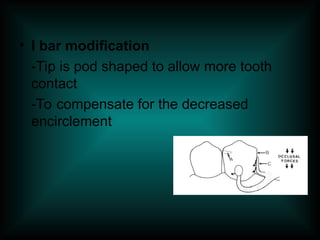
• I bar modification
-Tip is pod shaped to allow more tooth
contact
-To compensate for the decreased
encirclement
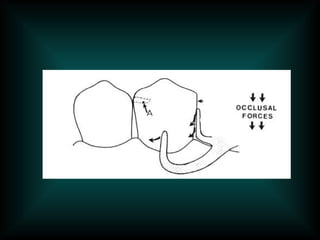
• Advantages:
-kinder on the abutment.
-has stress-breaking action.
-no stress on the tooth.
-passivity
Thank you…

9. rpi system IN RPD PROSTHO .ppt

  • 1.
  • 2.
    Contents • Introduction • Directretainers • Clasps • I bar removable partial denture • RPI
  • 3.
    INTRODUCTION • RPI standsfor: – Rest. – Plate (proximal). – I bar clasp.
  • 4.
    INTRODUCTION • Modified Ibar retainer system • Krol 1973 • Principle “stress control with minimal tooth and gingival coverage”
  • 5.
    Direct retainers Intracoronal retainersExtracoronal retainers Precision semi precision extra coronal attachment clasp It is that component part of a removable partial denture that is used to retain and prevent dislodgement, consisting of a clasp assembly or a precision attachment --GPT
  • 6.
    CLASPS • On basisof DESIGN Circumferential clasps Bar clasps Aker Reverse aker Recurved Extended Half and half Embrasure RPA Multiple Ring Back action Reverse back action T shape Half T U shape RPI C shape L shape I shape
  • 8.
    I bar RPD •Kratochvil • To reduce tooth contact of the retainer
  • 9.
    I bar rpdRegular rpd  Mesial rest  I bar retainer  Long guide planes extending into tooth tissue junction  Distal rest  Occlusally approaching  Normal guide planes
  • 10.
  • 11.
    • Mesial rest--minor connector Major connector • Reasons -elimination of harmful effects due to horizontal forces -mesial tipping -fulcrum line away from edentulous ridge
  • 12.
    • Proximal plates -additionalproximal plate on distal surface -2-5 mm occlusogingivally -long guide plane Advantages: •Increased horizontal stability •Better retention •Good reciprocation •Distributes occlusal load uniformly across the arch
  • 13.
    • I bar -Modifiedbar or roach clasp -Long tapering arm with a half round cross-section -Placed on buccal surface of abutment, mesial to the mesiodistal height of contour -Should extend about 2 mm above the tooth tissue junction
  • 14.
    • Advantages -Minimal toothcoverage -Passive • Disadvantages -Reduced retention -Less horizontal stability than its counter parts
  • 15.
    Other parts • Majorconnector • Minor connectors • Denture base connectors
  • 16.
    • Modifications ofI bar RPDs Rest, Proximal plate and I bar Rest, Proximal plate and Aker’s clasp
  • 17.
    Rest, Proximal Plateand I-bar (RPI)
  • 18.
    RPI uses • Usedfor distal extension base partial denture & provide stress release. -Kennedy class I and class II
  • 20.
    Modifications in RPI •Mesial rest modification -molars-triangular fossa -canines-mesial marginal ridge
  • 21.
    • Proximal platemodification -Design modification I marginal ridge to junction between cervical and middle third -Design modification II extends along entire length of proximal surface of abutment -Design modification III contacts just about 1 mm of gingival third of guiding plane of abutment tooth
  • 23.
    • I barmodification -Tip is pod shaped to allow more tooth contact -To compensate for the decreased encirclement
  • 24.
    • Advantages: -kinder onthe abutment. -has stress-breaking action. -no stress on the tooth. -passivity
  • 25.