META-ANALYSIS/
SYSTEMATIC REVIEW
Updating
New Techniques
33100 active English language, peer reviewed
journals
Over 3 million articles a year
Medical Information
Narrative Review
Narrative
Voting
Systematic Reviews
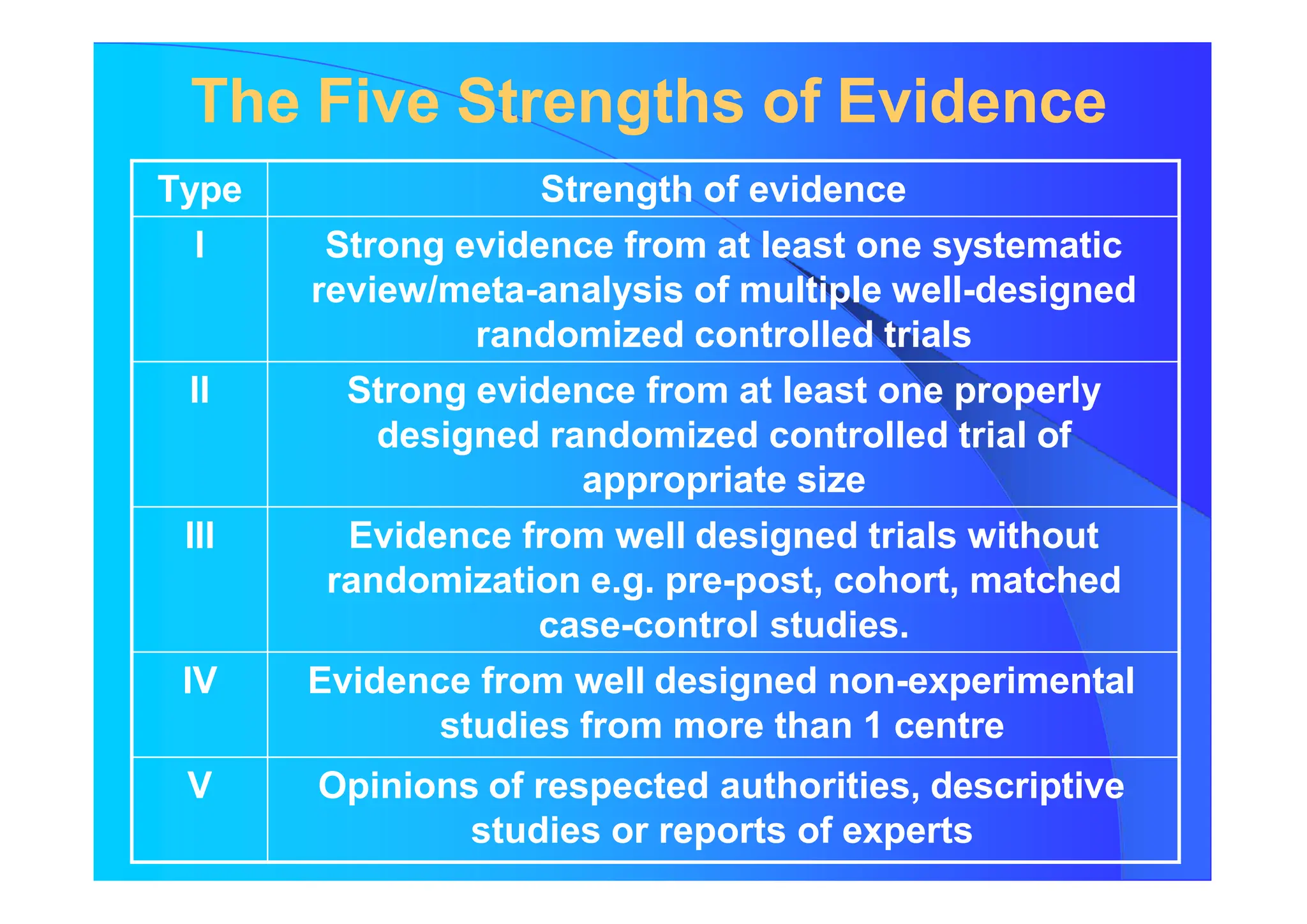
The Five Strengths of Evidence
Type Strength of evidence
I Strong evidence from at least one systematic
review/meta-analysis of multiple well-designed
randomized controlled trials
II Strong evidence from at least one properly
designed randomized controlled trial of
appropriate size
III Evidence from well designed trials without
randomization e.g. pre-post, cohort, matched
case-control studies.
IV Evidence from well designed non-experimental
studies from more than 1 centre
V Opinions of respected authorities, descriptive
studies or reports of experts
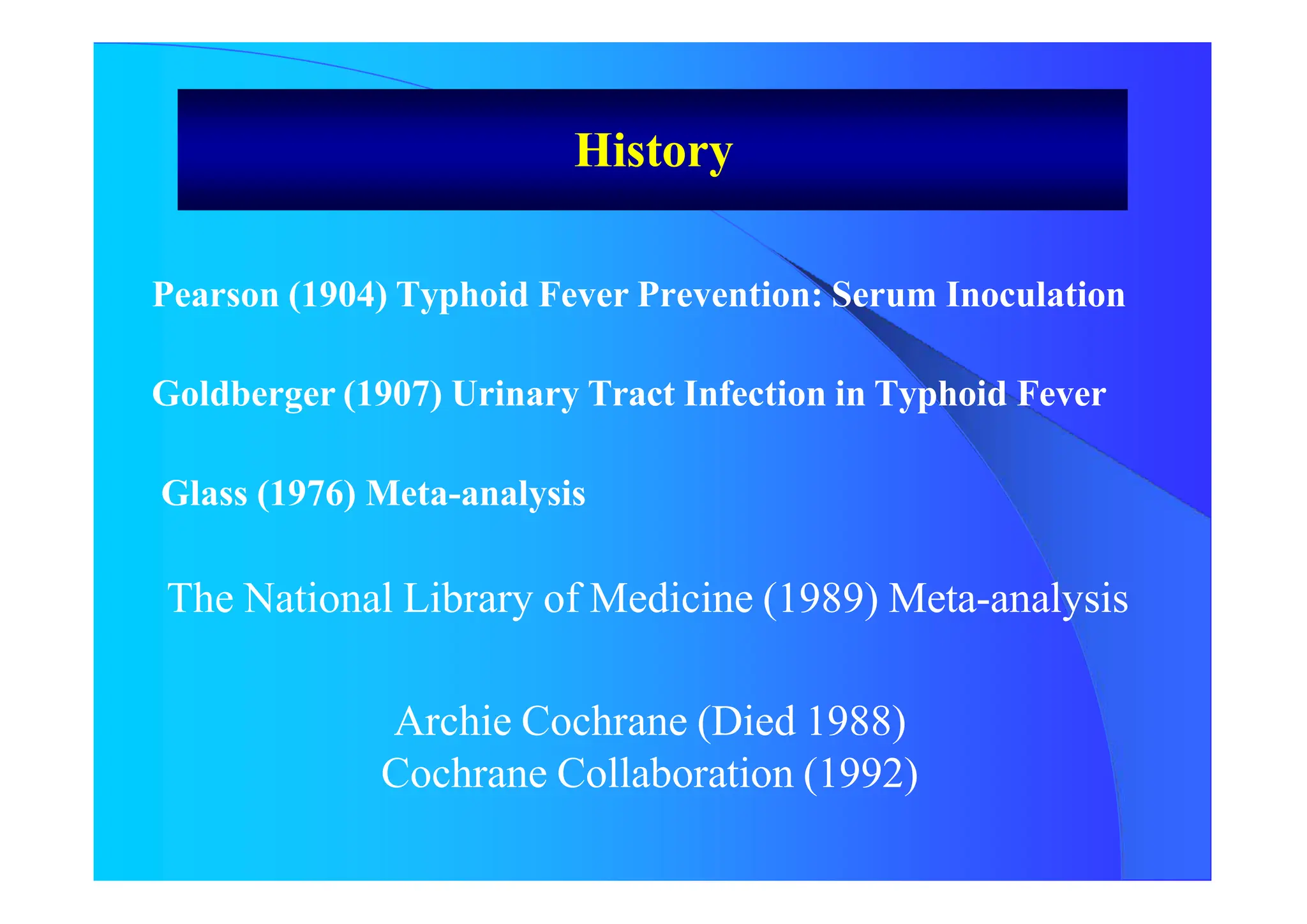
History
Pearson (1904) Typhoid Fever Prevention: Serum Inoculation
Goldberger (1907) Urinary Tract Infection in Typhoid Fever
Glass (1976) Meta-analysis
The National Library of Medicine (1989) Meta-analysis
Archie Cochrane (Died 1988)
Cochrane Collaboration (1992)
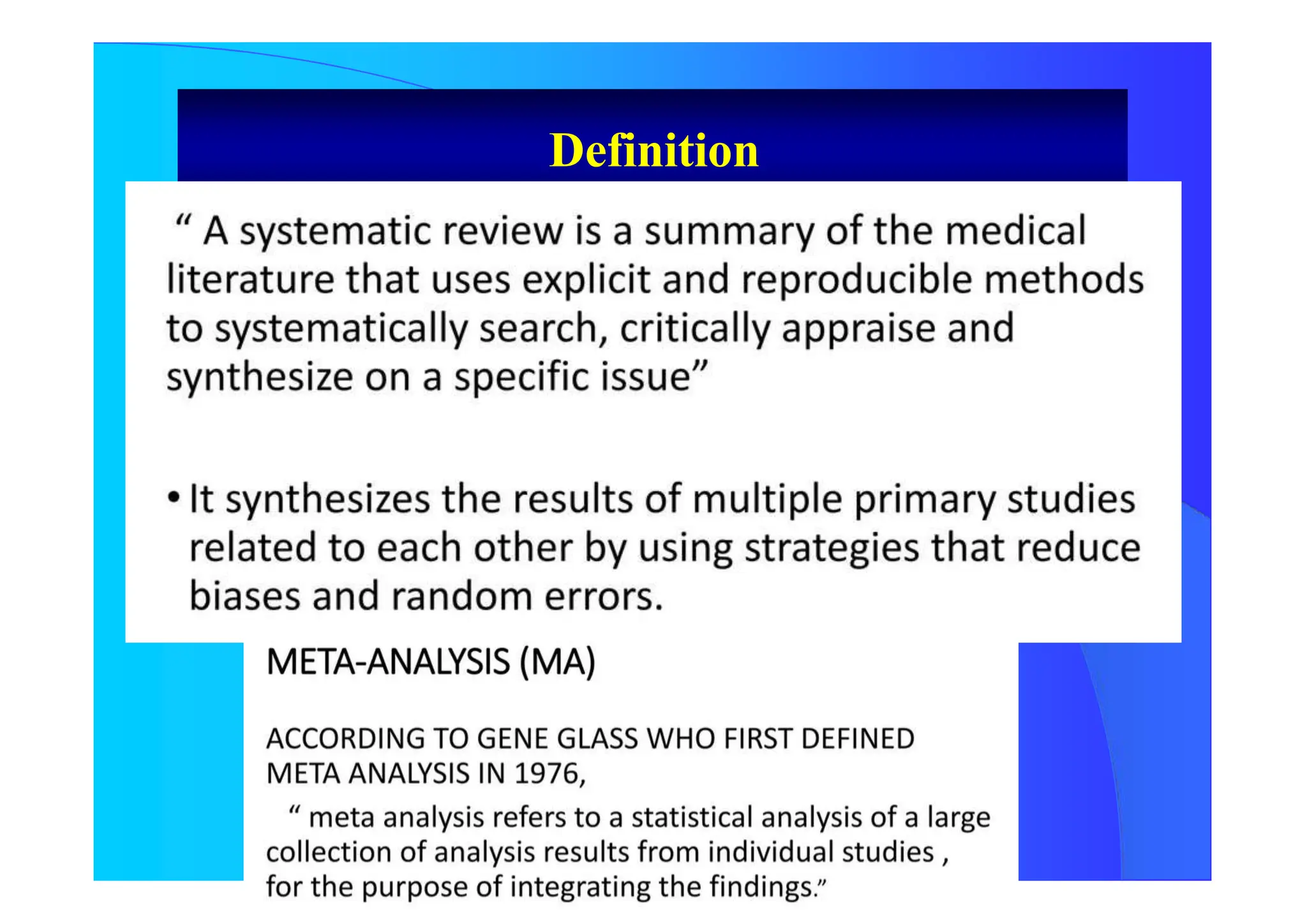
Definition
Webster Ninth New Collegiate Dictionary (1990)
Meta
1. Simple
2. Systematic
3. Statistical Power
4. Best form of evidence
Advantages
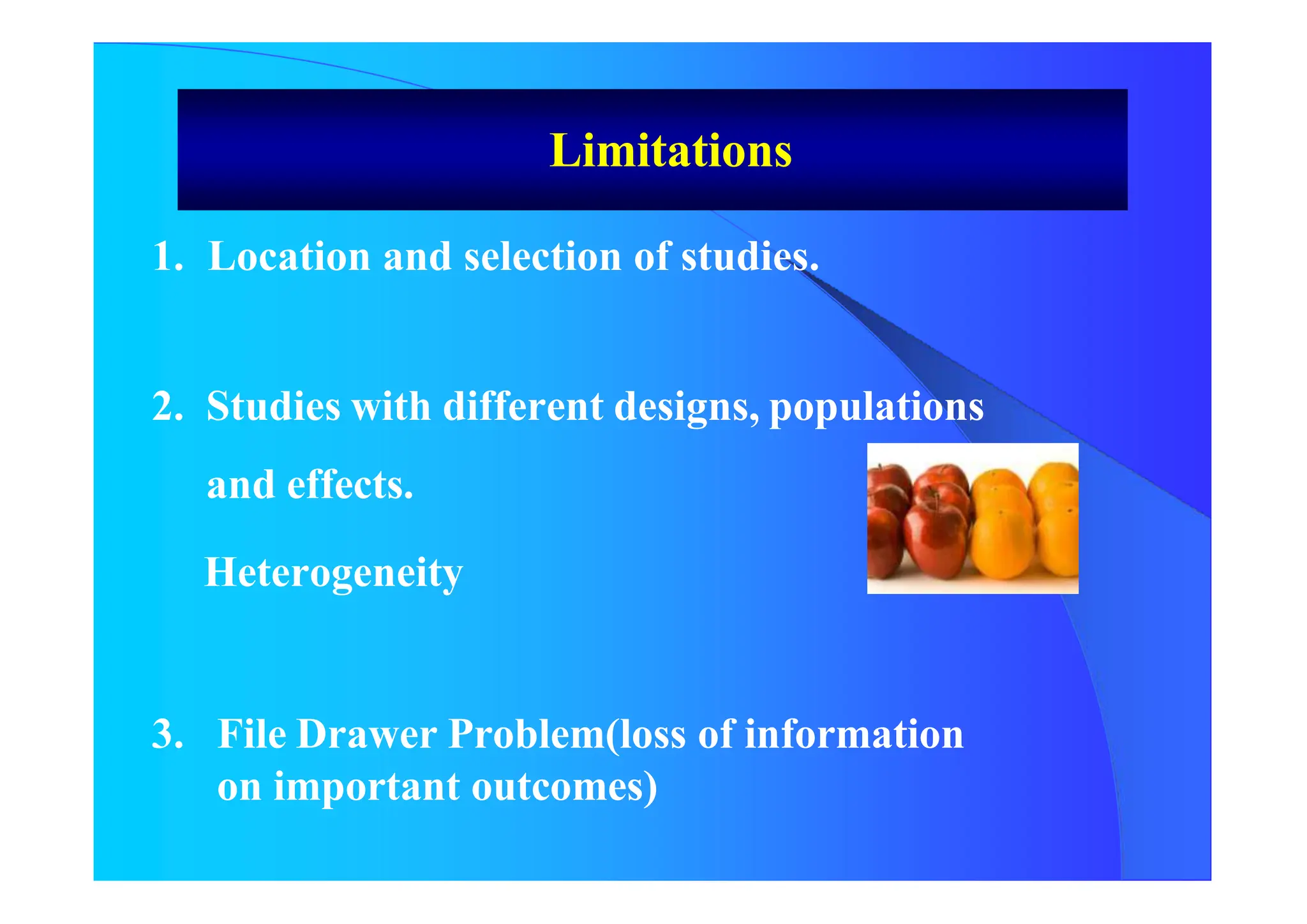
1. Location and selection of studies.
2. Studies with different designs, populations
and effects.
Heterogeneity
3. File Drawer Problem(loss of information
on important outcomes)
Limitations
1. Research question formulation
2. Hypothesis
3. Localization of the Studies(identify
relevant studies)
- MEDLINE/ PubMed (from 1966 –
- PsycLIT (from 1887 -
- Cochrane Library
- Index Medicus
- Manual Review
Phases
3. Selection of the localized studies
- Define Study Design
- Language
- Year of Publication
- Exposure or Intervention
- Effect or Outcome
Phases
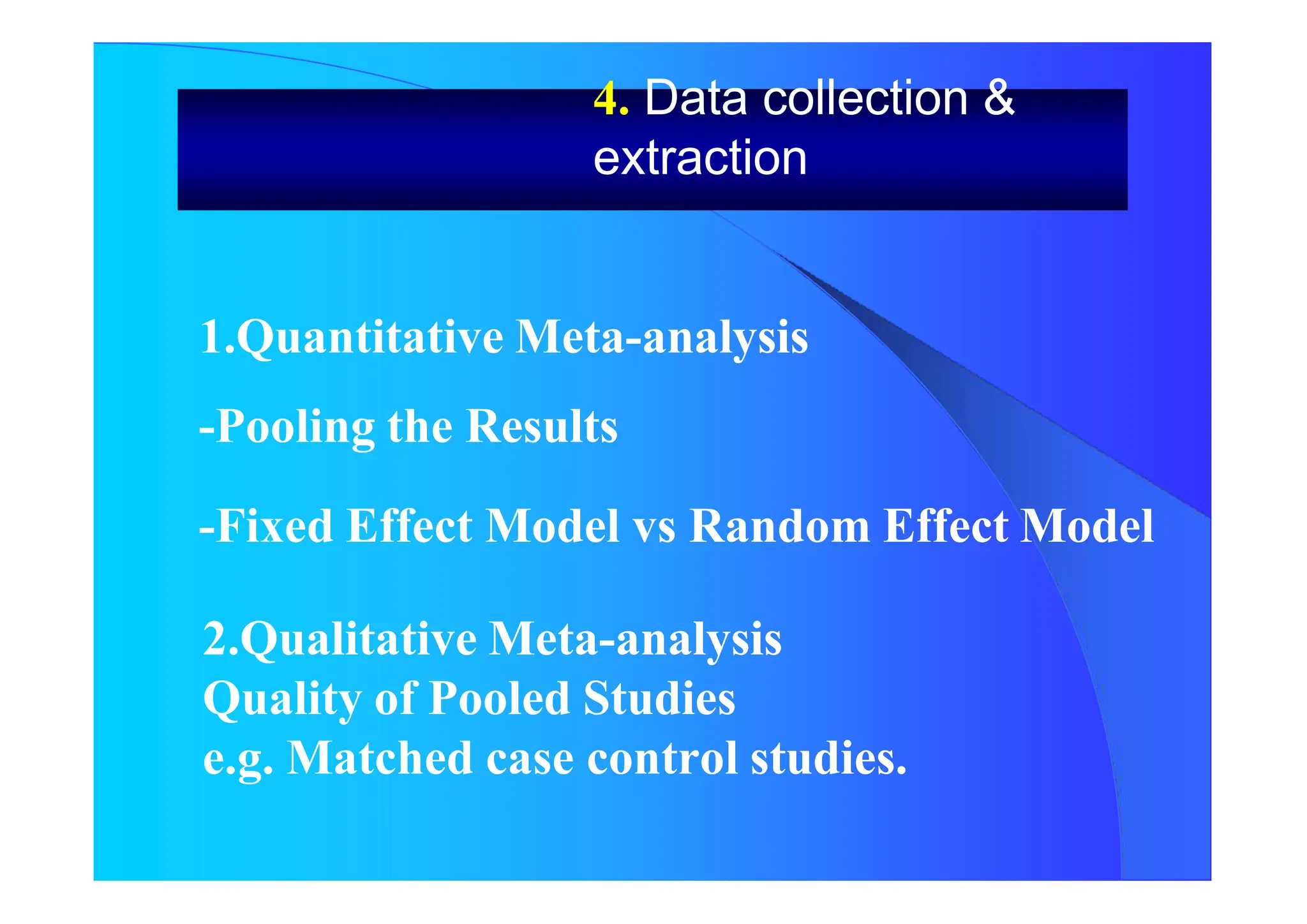
4. Data collection &
extraction
1.Quantitative Meta-analysis
-Pooling the Results
-Fixed Effect Model vs Random Effect Model
2.Qualitative Meta-analysis
Quality of Pooled Studies
e.g. Matched case control studies.
. Quantitative Meta-analysis
- Combing the Results
 = [ pi i ] / pi
pi Weight of every Study
i Parameter selected for investigation
Phases
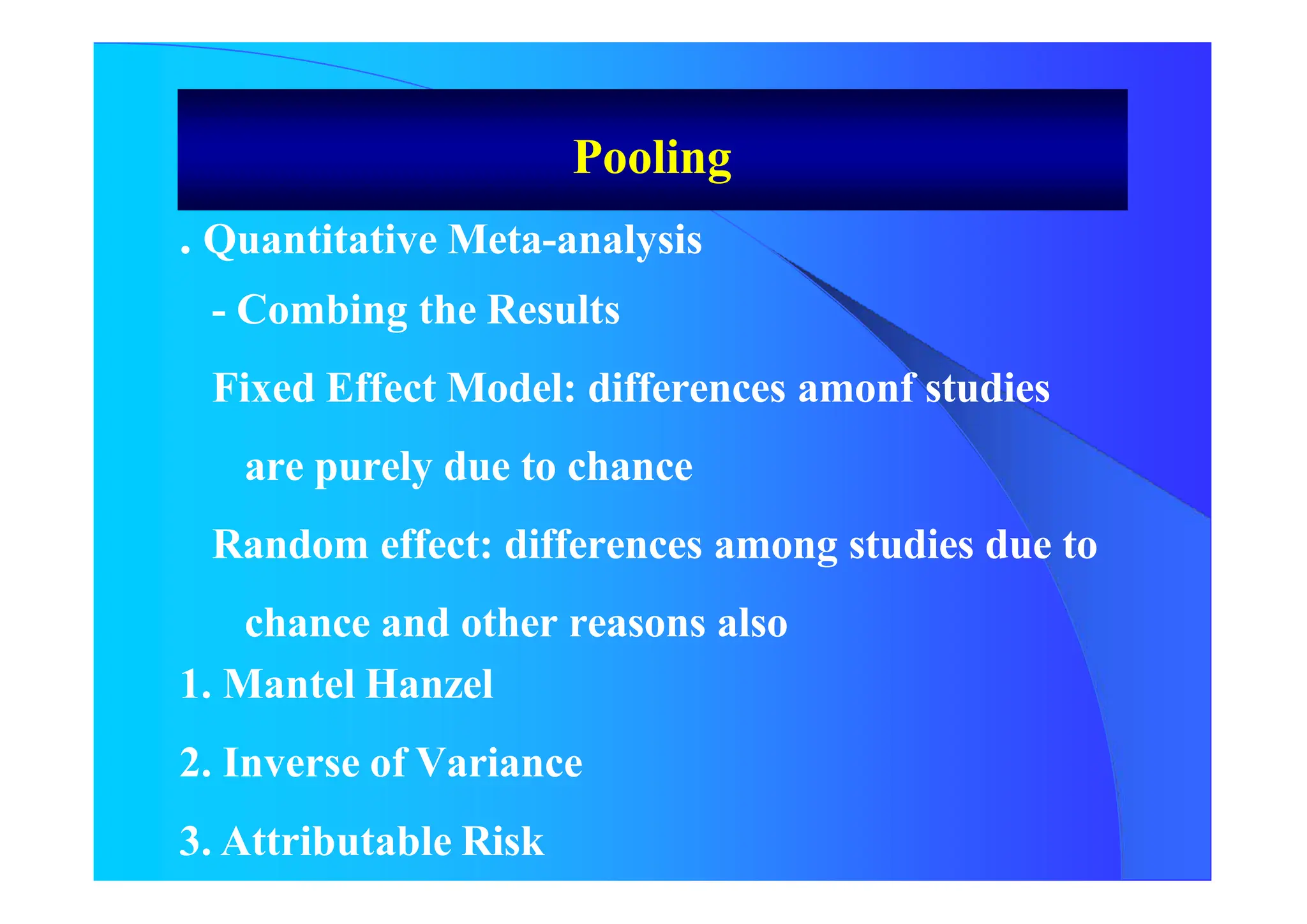
. Quantitative Meta-analysis
- Combing the Results
Fixed Effect Model: differences amonf studies
are purely due to chance
Random effect: differences among studies due to
chance and other reasons also
1. Mantel Hanzel
2. Inverse of Variance
3. Attributable Risk
Pooling
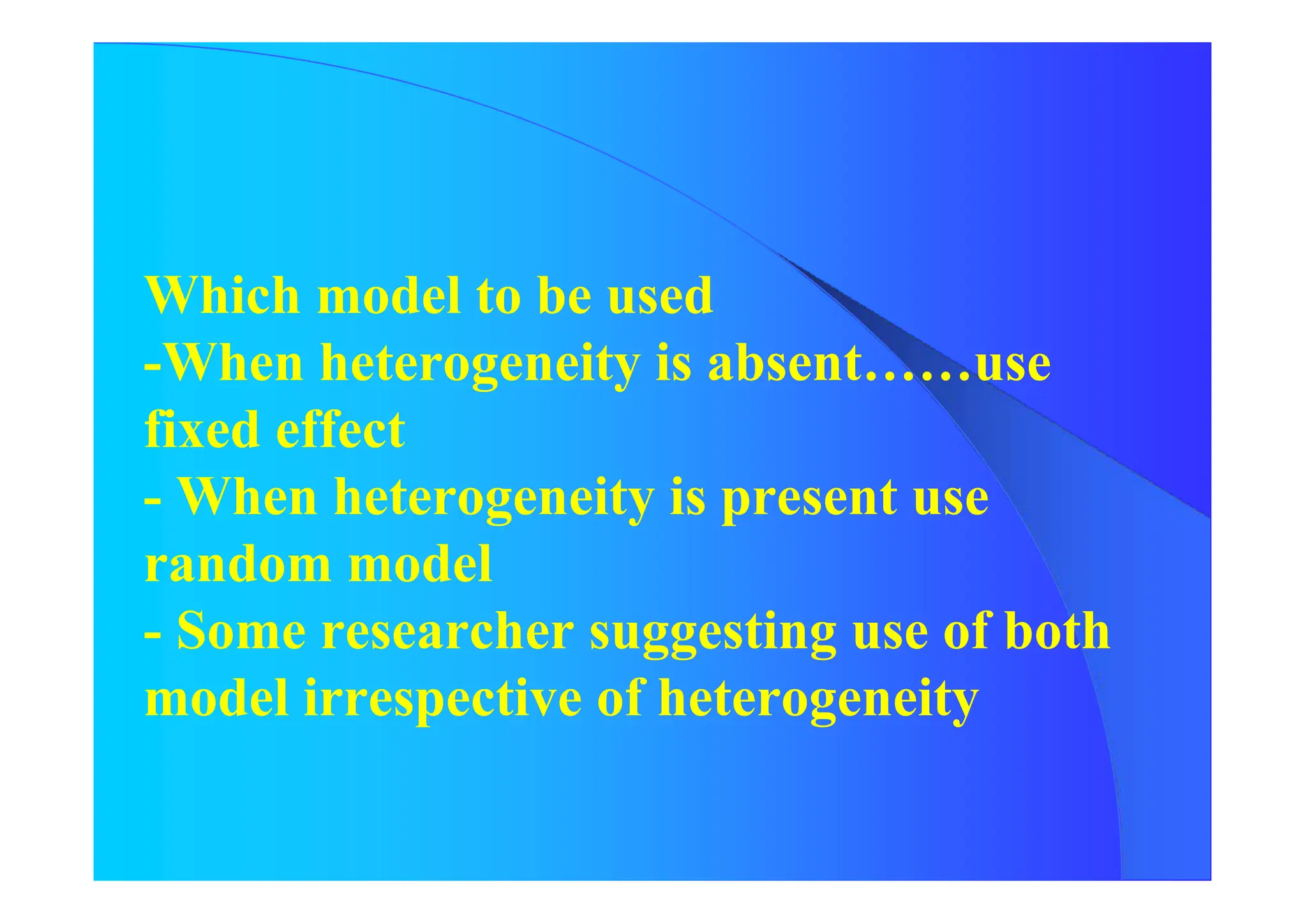
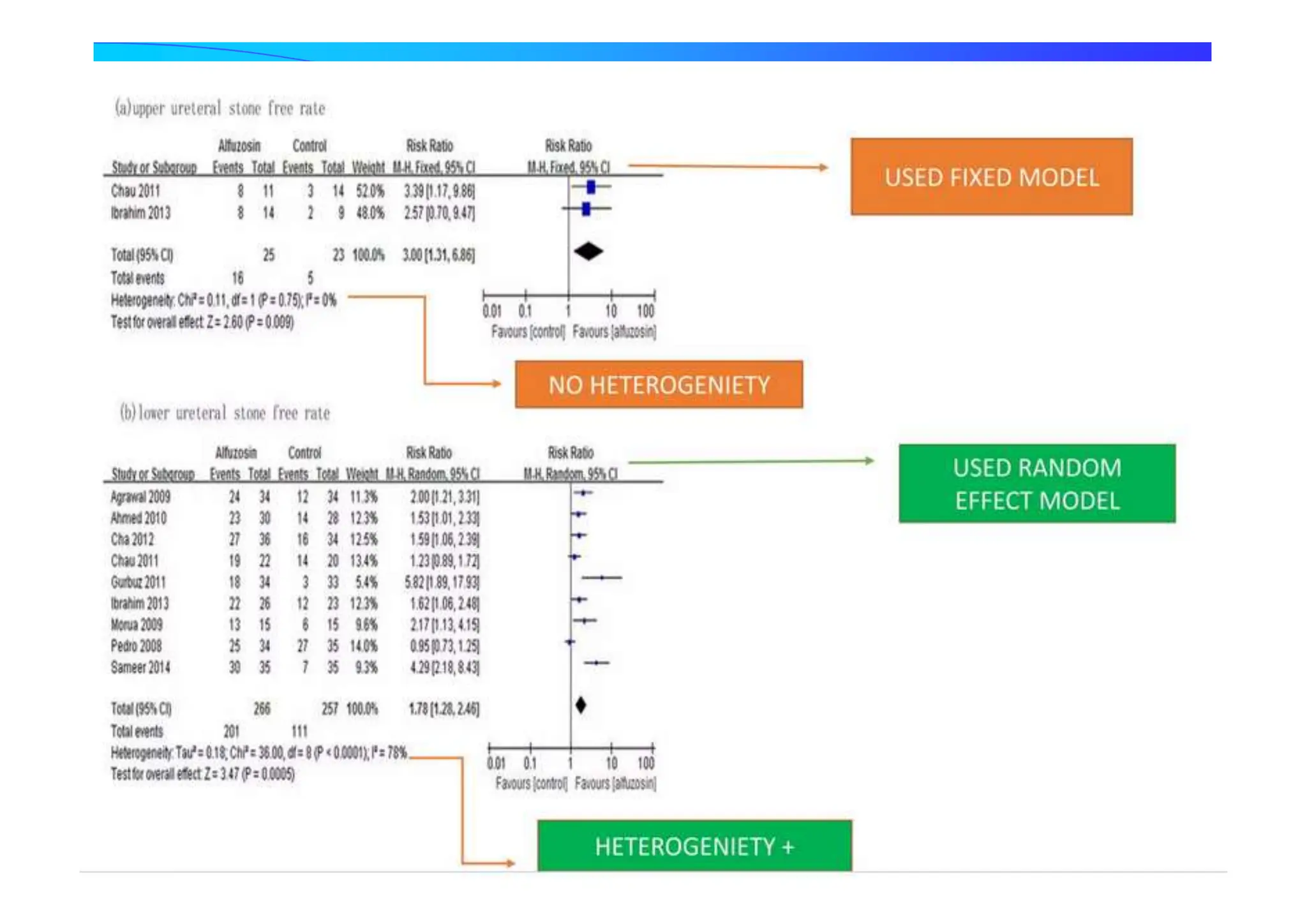
Which model to be used
-When heterogeneity is absent……use
fixed effect
- When heterogeneity is present use
random model
- Some researcher suggesting use of both
model irrespective of heterogeneity
1. Mantel Hanzel
Pooling
E x p o s e d D i s e a s e
P r e s e n t
D i s e a s e
A b s e n t
T o t a l
P r e s e n t A B A + B
A b s e n t C D C + D
T o t a l A + C B + D N
RRMH =  [ (ci bi / ni ) (ai di / bi ci ) ] /  (ci bi / ni )
Var RR = RRi [ 1/a + 1/b + 1/c + 1/d ]
RRMH 95% CI = RRMH x EXP [ + 1,96  Var RR (In RRMH)]
Pooling
2. Inverse of Variance
RRW = Exp [ wi In RRi ] / wi
RRW Global Relative Risk.
wi Weight of every Study: Inverse of Variance of RR.
RRi Relative Risk of every Study
RR refers to RR, SMR, OR or POR
RRW 95% CI = In RRW * Exp [ + 1,96  Var (In RRw)]
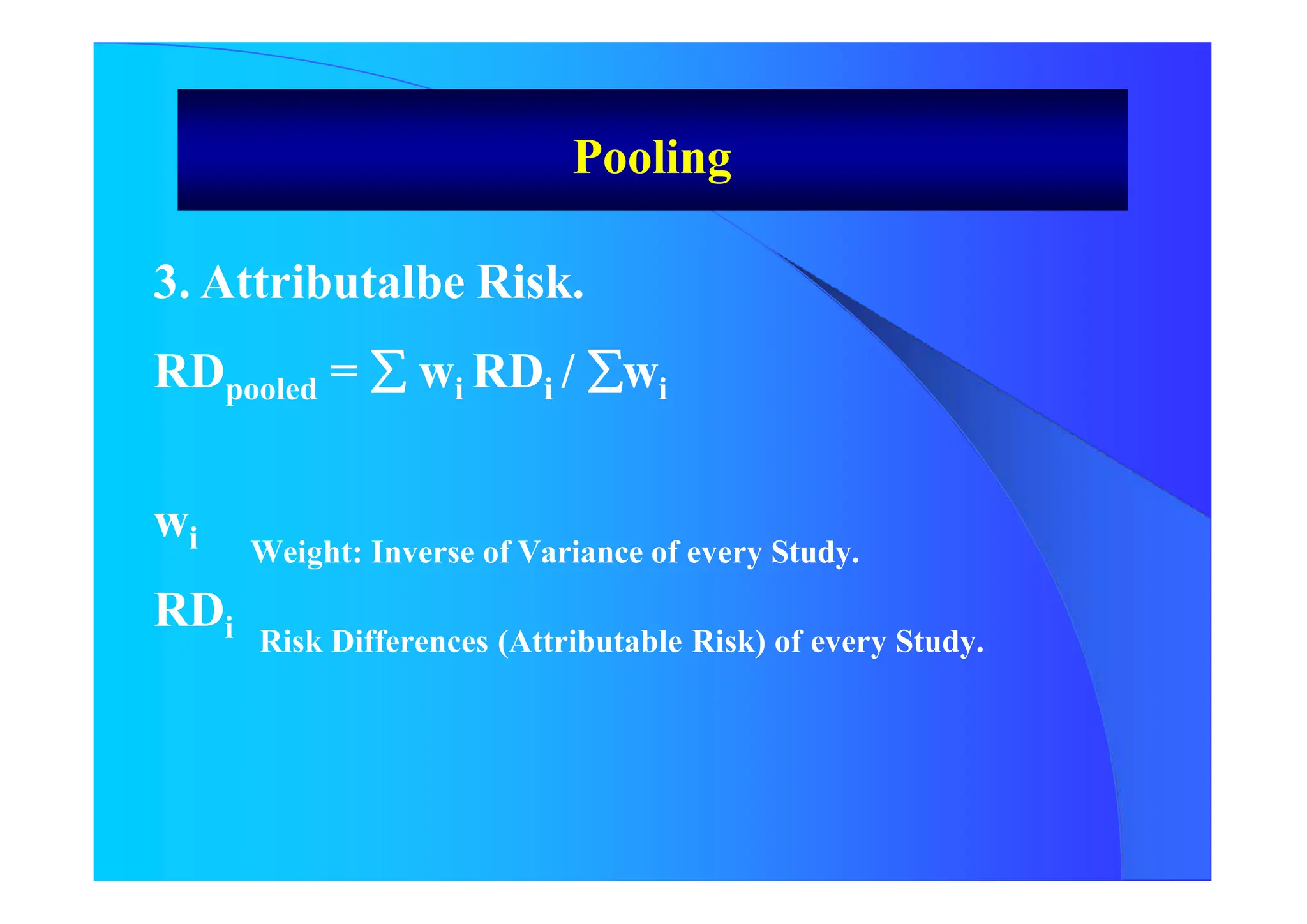
3. Attributalbe Risk.
RDpooled =  wi RDi / wi
Weight: Inverse of Variance of every Study.
wi
RDi Risk Differences (Attributable Risk) of every Study.
Pooling
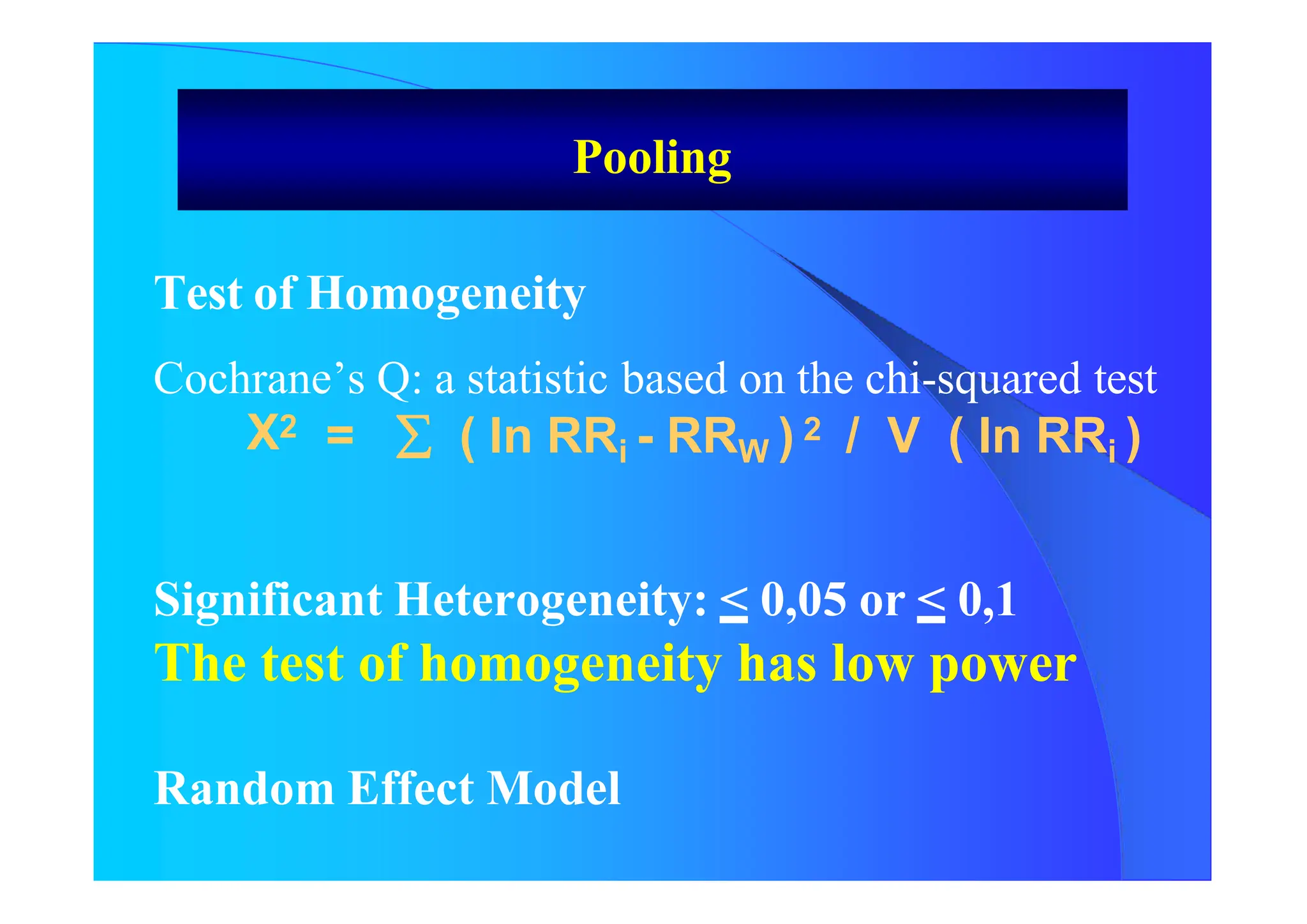
Test of Homogeneity
Cochrane’s Q: a statistic based on the chi-squared test
X2 =  ( In RRi - RRW ) 2 / V ( In RRi )
Significant Heterogeneity: < 0,05 or < 0,1
The test of homogeneity has low power
Random Effect Model
Pooling
Random Effect Model
RRA = Exp [ w*i In RRi ] / w*i
W*I will be calculated as follow:
W *i = 1/ [ V (In ORi) + VAR]
VAR = [Chi Square – (N-1)] / U
U = (N – 1) [WM - { var (w) / N* WM}]
Results of both Fixed Effect Model and
Random Effect Model
Pooling
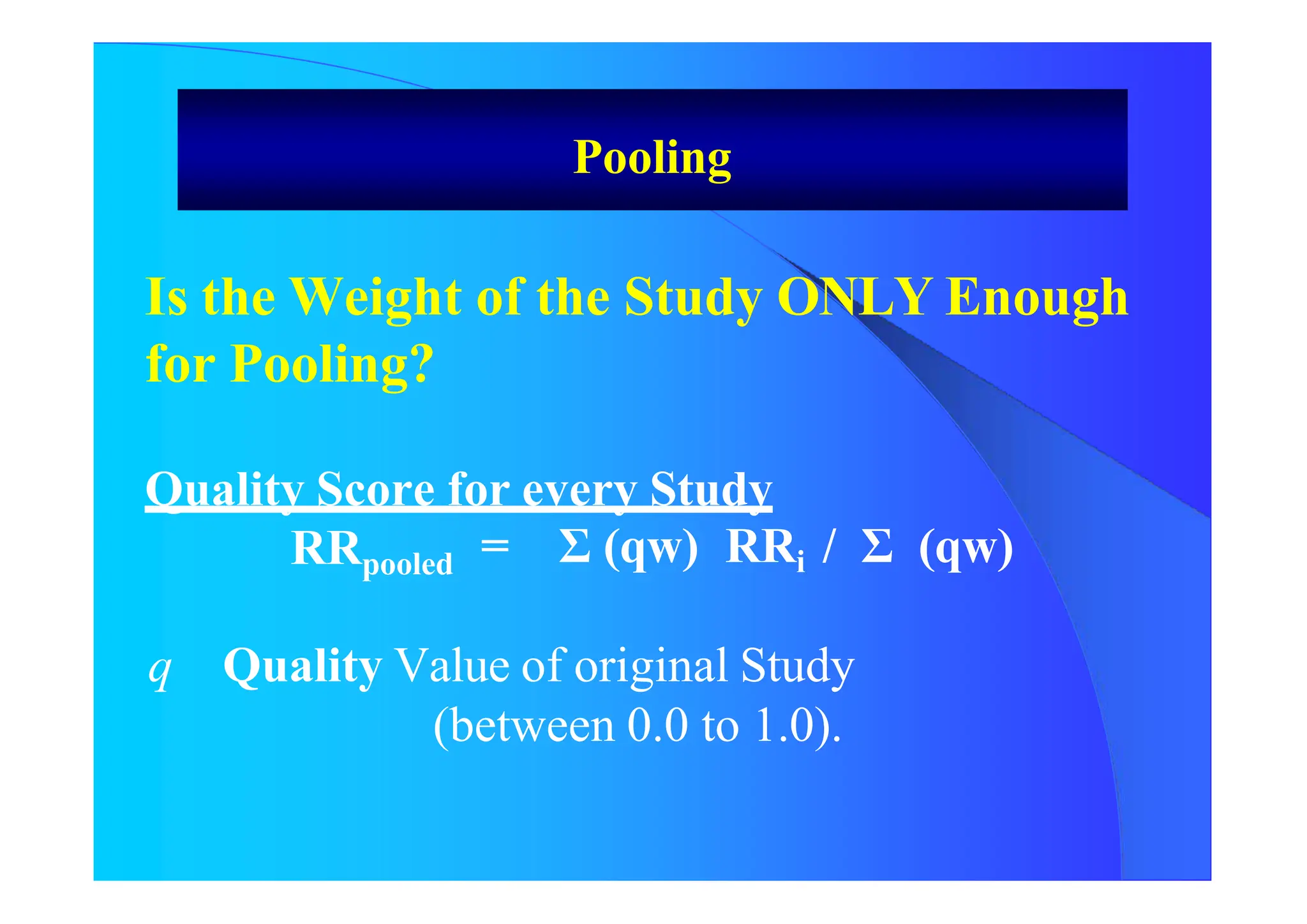
Is the Weight of the Study ONLY Enough
for Pooling?
Quality Score for every Study
RRpooled = Σ (qw) RRi / Σ (qw)
q Quality Value of original Study
(between 0.0 to 1.0).
Pooling
How Many Studies Could Change The Results
ToAccept The Null Hypothesis?
Tolerance Index
N = [ K {K(RRW) 2 – 2,706} ] / 2,706
N Number of Studies not considerded and
with Null Results
K Number of Studies Included in the Review
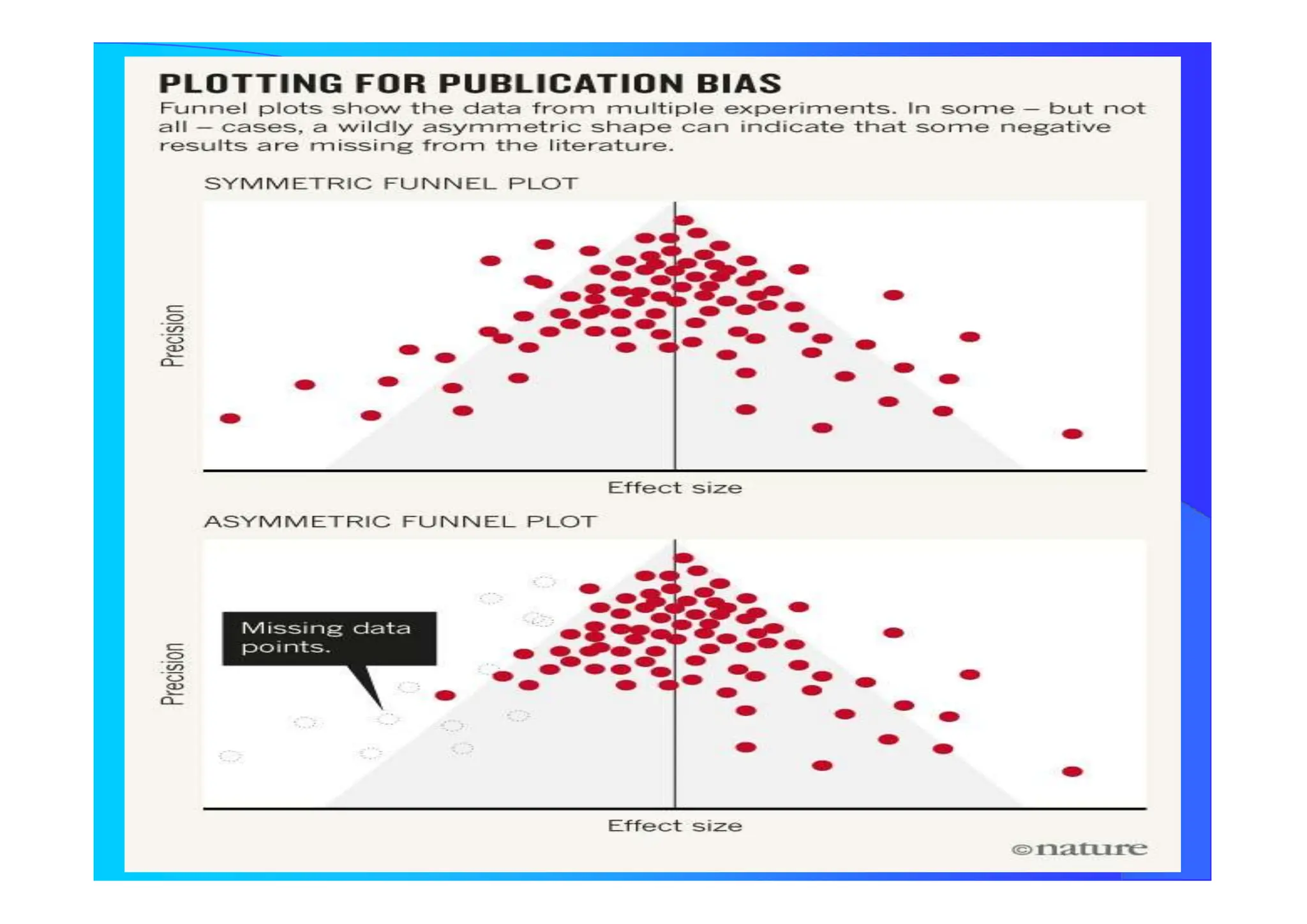
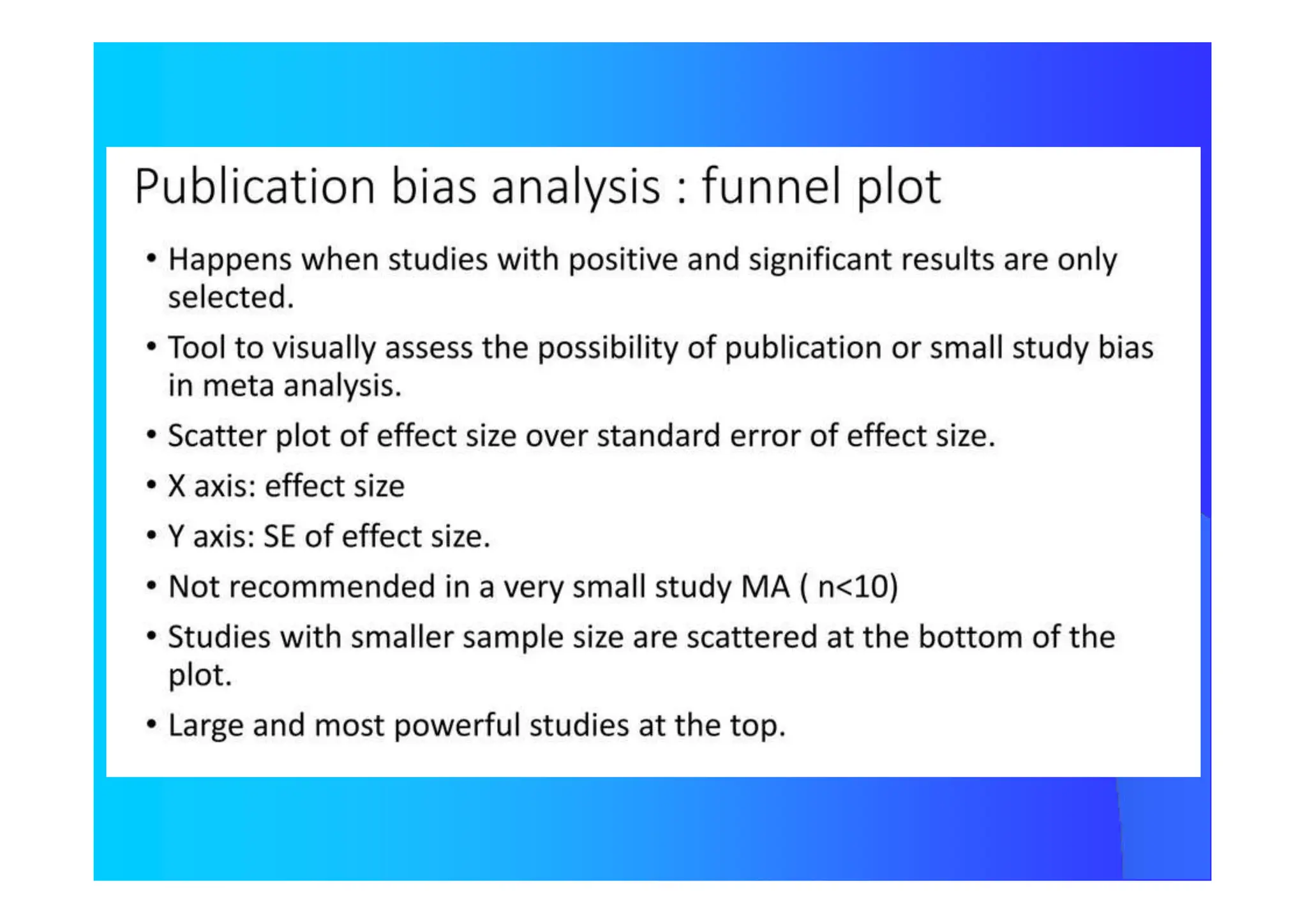
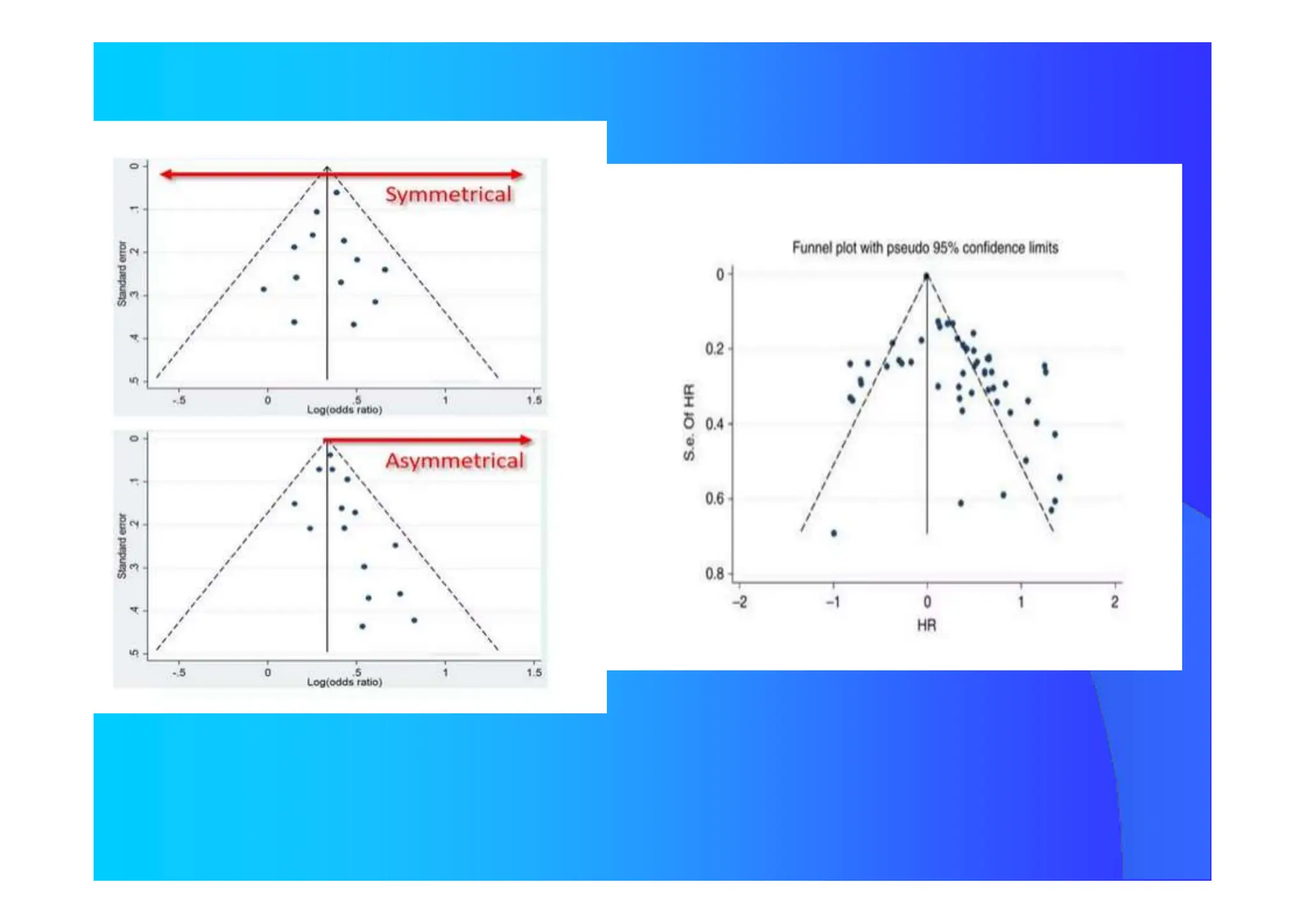
Publication Bias
Phases
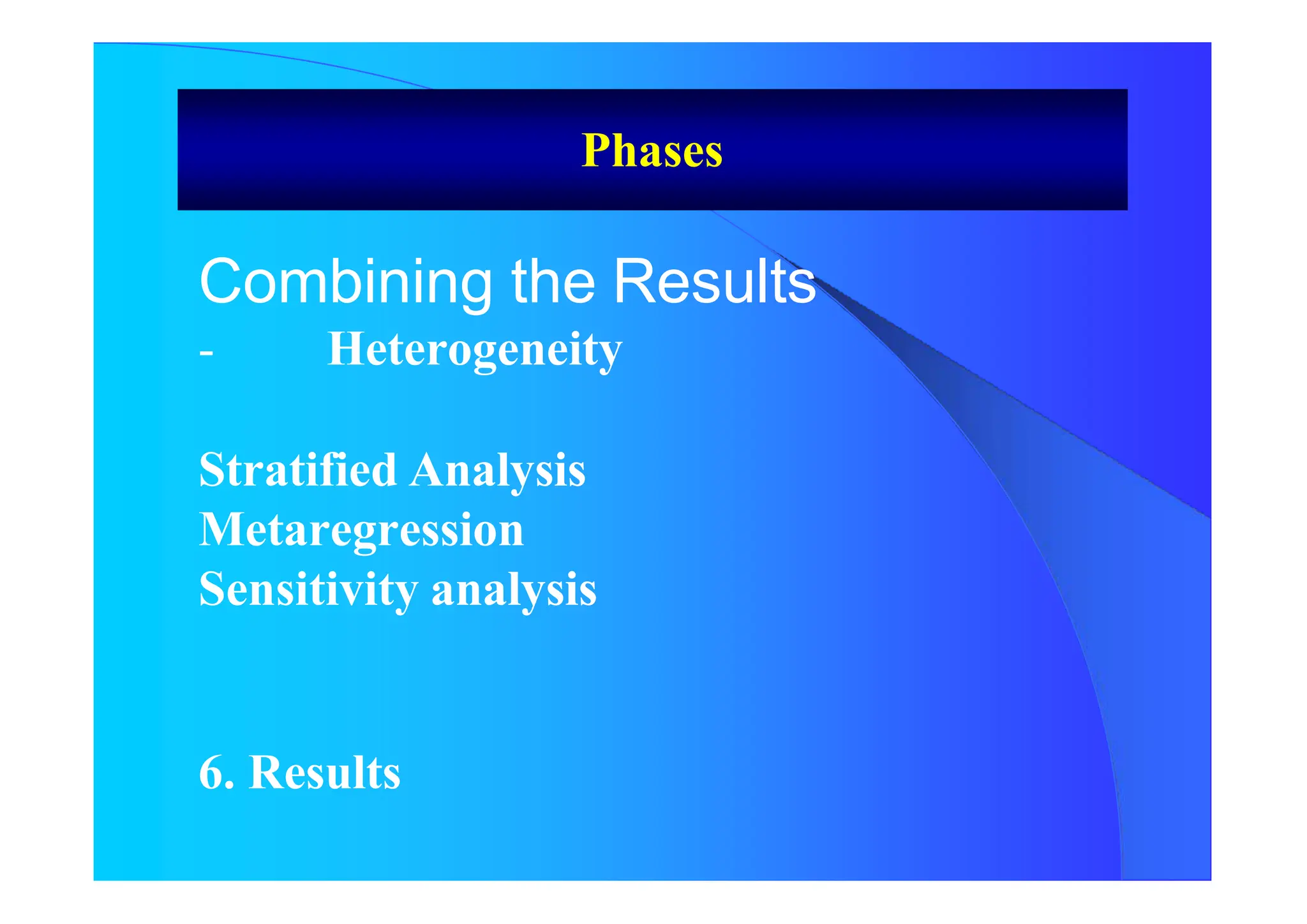
Combining the Results
- Heterogeneity
Stratified Analysis
Metaregression
Sensitivity analysis
6. Results
Phases
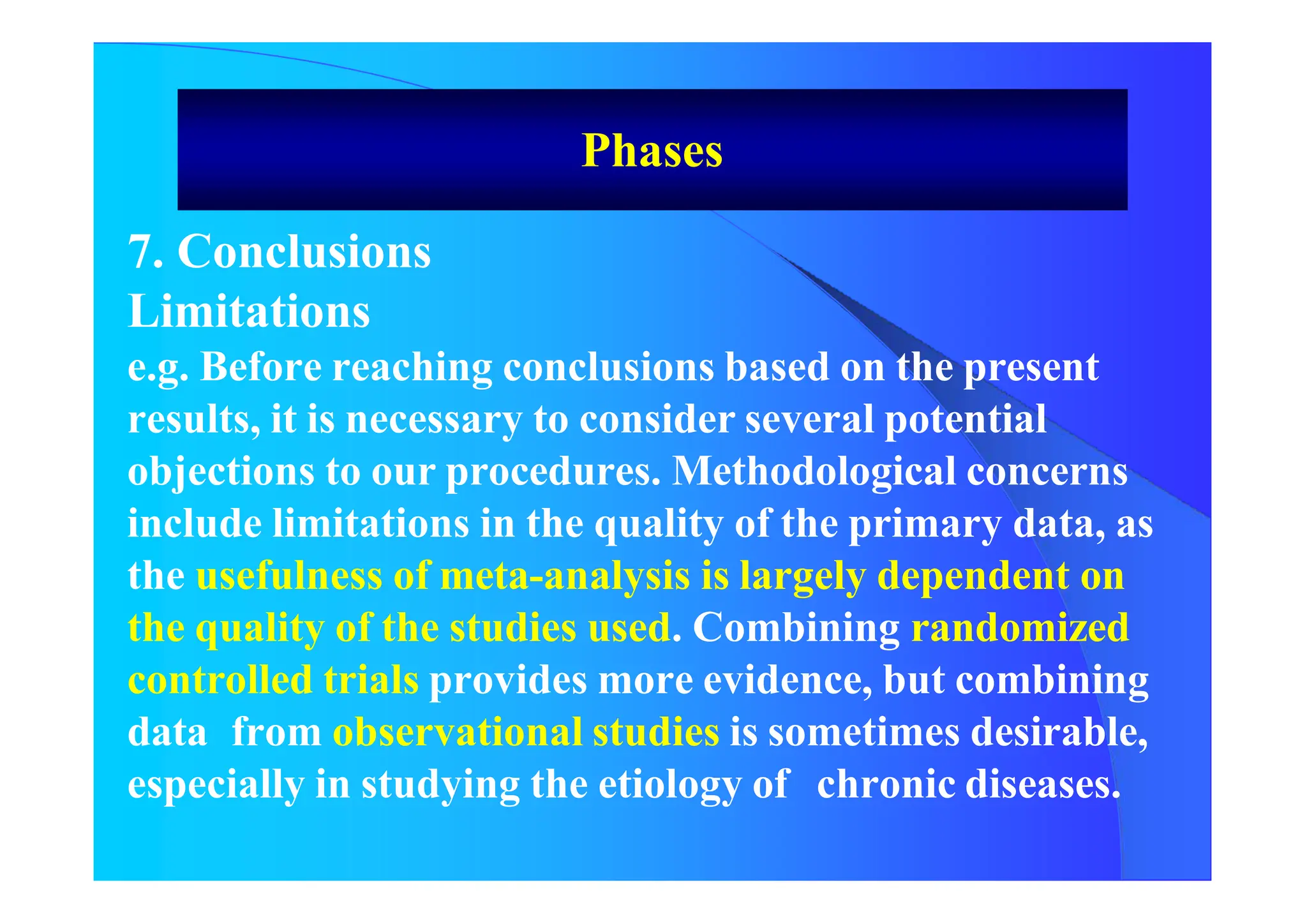
7. Conclusions
Limitations
e.g. Before reaching conclusions based on the present
results, it is necessary to consider several potential
objections to our procedures. Methodological concerns
include limitations in the quality of the primary data, as
the usefulness of meta-analysis is largely dependent on
the quality of the studies used. Combining randomized
controlled trials provides more evidence, but combining
data from observational studies is sometimes desirable,
especially in studying the etiology of chronic diseases.
References
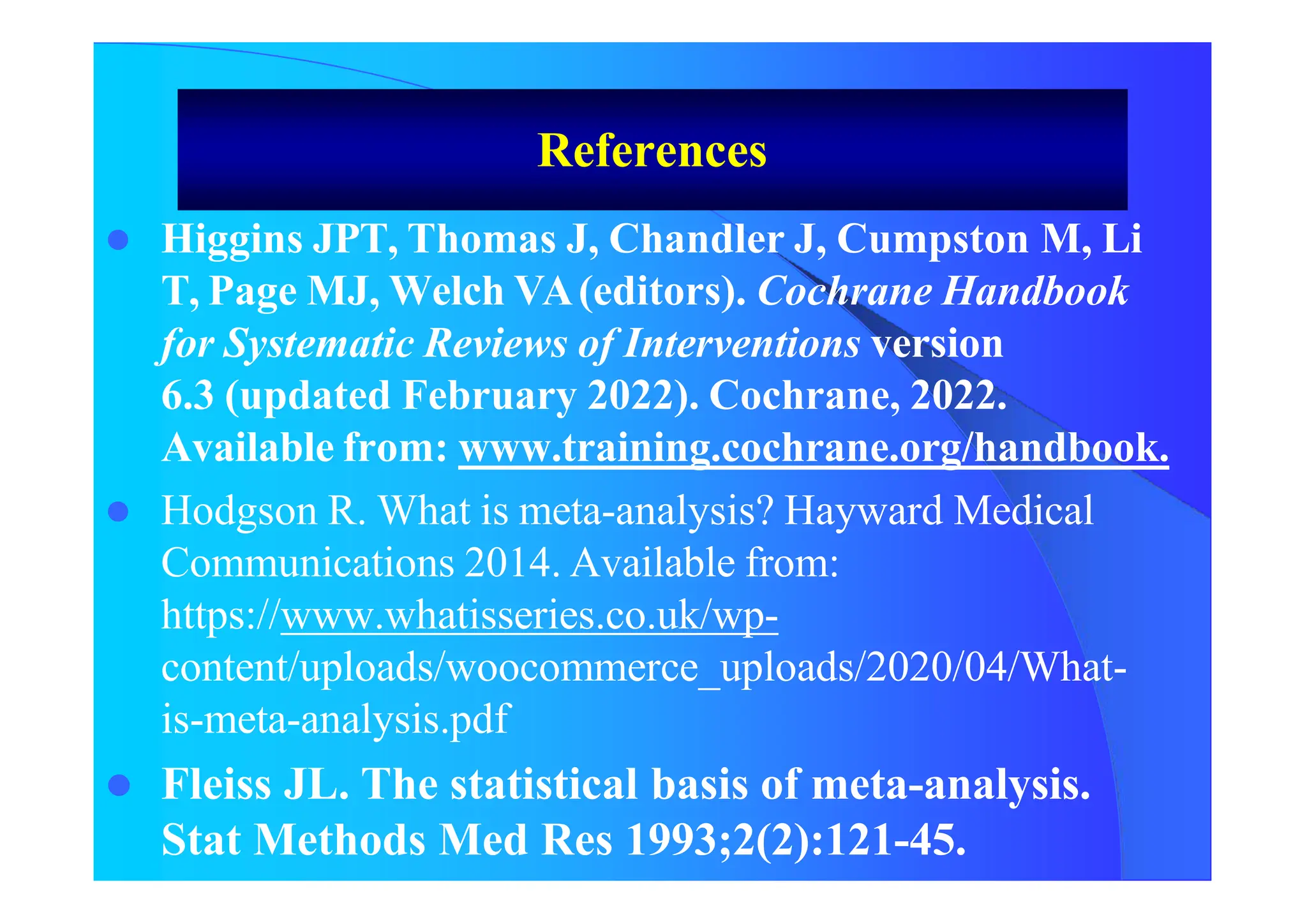
 Higgins JPT, Thomas J, Chandler J, Cumpston M, Li
T, Page MJ, Welch VA(editors). Cochrane Handbook
for Systematic Reviews of Interventions version
6.3 (updated February 2022). Cochrane, 2022.
Available from: www.training.cochrane.org/handbook.
 Hodgson R. What is meta-analysis? Hayward Medical
Communications 2014. Available from:
https://www.whatisseries.co.uk/wp-
content/uploads/woocommerce_uploads/2020/04/What-
is-meta-analysis.pdf
 Fleiss JL. The statistical basis of meta-analysis.
Stat Methods Med Res 1993;2(2):121-45.
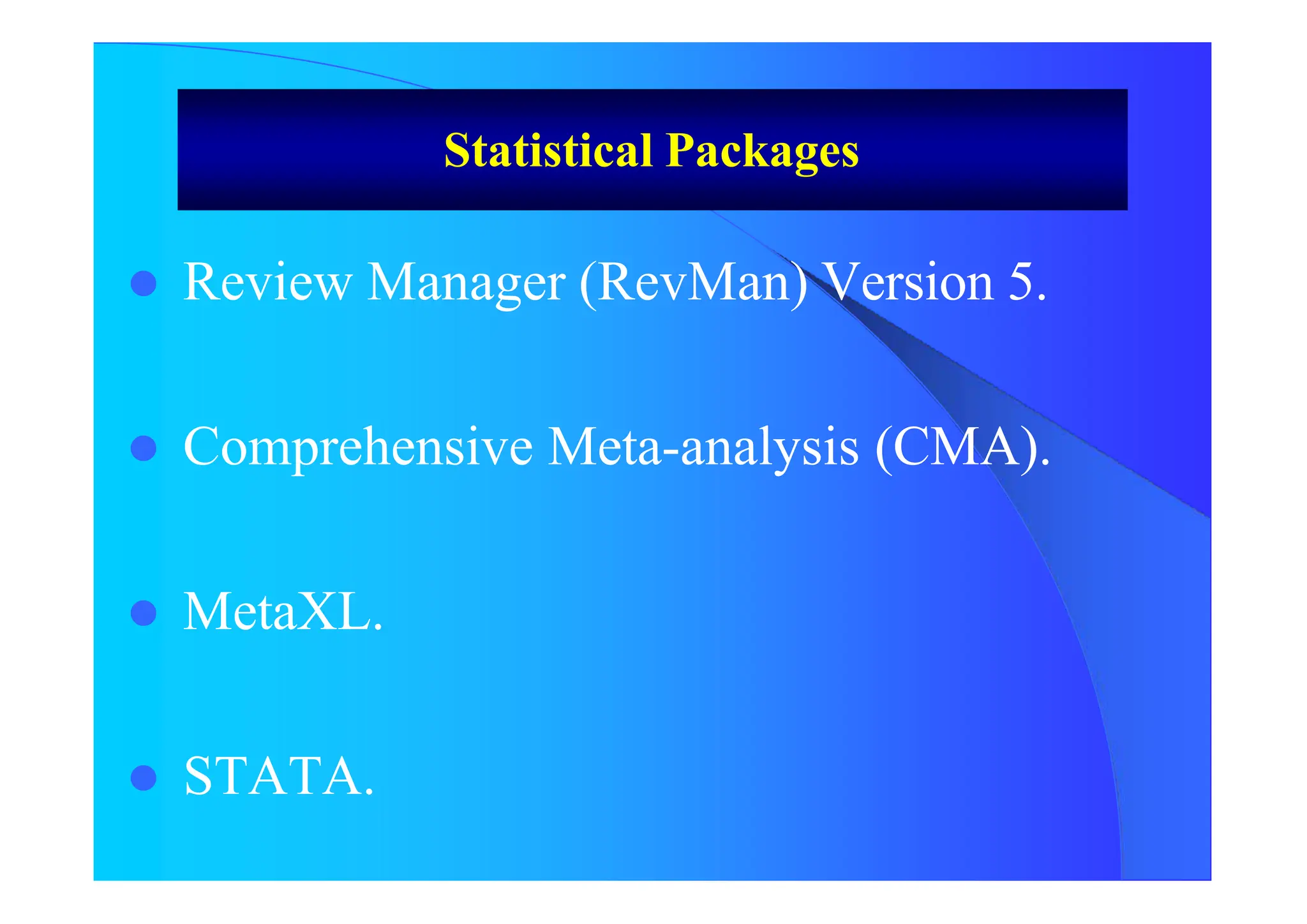
Statistical Packages
 Review Manager (RevMan) Version 5.
 Comprehensive Meta-analysis (CMA).
 MetaXL.
 STATA.

9. Meta-analysis Systematic Review summary view.pptx

  • 1.
  • 2.
    Updating New Techniques 33100 activeEnglish language, peer reviewed journals Over 3 million articles a year Medical Information
  • 3.
  • 4.
    The Five Strengthsof Evidence Type Strength of evidence I Strong evidence from at least one systematic review/meta-analysis of multiple well-designed randomized controlled trials II Strong evidence from at least one properly designed randomized controlled trial of appropriate size III Evidence from well designed trials without randomization e.g. pre-post, cohort, matched case-control studies. IV Evidence from well designed non-experimental studies from more than 1 centre V Opinions of respected authorities, descriptive studies or reports of experts
  • 5.
    History Pearson (1904) TyphoidFever Prevention: Serum Inoculation Goldberger (1907) Urinary Tract Infection in Typhoid Fever Glass (1976) Meta-analysis The National Library of Medicine (1989) Meta-analysis Archie Cochrane (Died 1988) Cochrane Collaboration (1992)
  • 6.
    Definition Webster Ninth NewCollegiate Dictionary (1990) Meta
  • 7.
    1. Simple 2. Systematic 3.Statistical Power 4. Best form of evidence Advantages
  • 8.
    1. Location andselection of studies. 2. Studies with different designs, populations and effects. Heterogeneity 3. File Drawer Problem(loss of information on important outcomes) Limitations
  • 9.
    1. Research questionformulation 2. Hypothesis 3. Localization of the Studies(identify relevant studies) - MEDLINE/ PubMed (from 1966 – - PsycLIT (from 1887 - - Cochrane Library - Index Medicus - Manual Review Phases
  • 10.
    3. Selection ofthe localized studies - Define Study Design - Language - Year of Publication - Exposure or Intervention - Effect or Outcome Phases
  • 11.
    4. Data collection& extraction 1.Quantitative Meta-analysis -Pooling the Results -Fixed Effect Model vs Random Effect Model 2.Qualitative Meta-analysis Quality of Pooled Studies e.g. Matched case control studies.
  • 12.
    . Quantitative Meta-analysis -Combing the Results  = [ pi i ] / pi pi Weight of every Study i Parameter selected for investigation Phases
  • 13.
    . Quantitative Meta-analysis -Combing the Results Fixed Effect Model: differences amonf studies are purely due to chance Random effect: differences among studies due to chance and other reasons also 1. Mantel Hanzel 2. Inverse of Variance 3. Attributable Risk Pooling
  • 14.
    Which model tobe used -When heterogeneity is absent……use fixed effect - When heterogeneity is present use random model - Some researcher suggesting use of both model irrespective of heterogeneity
  • 16.
    1. Mantel Hanzel Pooling Ex p o s e d D i s e a s e P r e s e n t D i s e a s e A b s e n t T o t a l P r e s e n t A B A + B A b s e n t C D C + D T o t a l A + C B + D N RRMH =  [ (ci bi / ni ) (ai di / bi ci ) ] /  (ci bi / ni ) Var RR = RRi [ 1/a + 1/b + 1/c + 1/d ] RRMH 95% CI = RRMH x EXP [ + 1,96  Var RR (In RRMH)]
  • 17.
    Pooling 2. Inverse ofVariance RRW = Exp [ wi In RRi ] / wi RRW Global Relative Risk. wi Weight of every Study: Inverse of Variance of RR. RRi Relative Risk of every Study RR refers to RR, SMR, OR or POR RRW 95% CI = In RRW * Exp [ + 1,96  Var (In RRw)]
  • 18.
    3. Attributalbe Risk. RDpooled=  wi RDi / wi Weight: Inverse of Variance of every Study. wi RDi Risk Differences (Attributable Risk) of every Study. Pooling
  • 22.
    Test of Homogeneity Cochrane’sQ: a statistic based on the chi-squared test X2 =  ( In RRi - RRW ) 2 / V ( In RRi ) Significant Heterogeneity: < 0,05 or < 0,1 The test of homogeneity has low power Random Effect Model Pooling
  • 23.
    Random Effect Model RRA= Exp [ w*i In RRi ] / w*i W*I will be calculated as follow: W *i = 1/ [ V (In ORi) + VAR] VAR = [Chi Square – (N-1)] / U U = (N – 1) [WM - { var (w) / N* WM}] Results of both Fixed Effect Model and Random Effect Model Pooling
  • 24.
    Is the Weightof the Study ONLY Enough for Pooling? Quality Score for every Study RRpooled = Σ (qw) RRi / Σ (qw) q Quality Value of original Study (between 0.0 to 1.0). Pooling
  • 29.
    How Many StudiesCould Change The Results ToAccept The Null Hypothesis? Tolerance Index N = [ K {K(RRW) 2 – 2,706} ] / 2,706 N Number of Studies not considerded and with Null Results K Number of Studies Included in the Review Publication Bias
  • 30.
    Phases Combining the Results -Heterogeneity Stratified Analysis Metaregression Sensitivity analysis 6. Results
  • 31.
    Phases 7. Conclusions Limitations e.g. Beforereaching conclusions based on the present results, it is necessary to consider several potential objections to our procedures. Methodological concerns include limitations in the quality of the primary data, as the usefulness of meta-analysis is largely dependent on the quality of the studies used. Combining randomized controlled trials provides more evidence, but combining data from observational studies is sometimes desirable, especially in studying the etiology of chronic diseases.
  • 33.
    References  Higgins JPT,Thomas J, Chandler J, Cumpston M, Li T, Page MJ, Welch VA(editors). Cochrane Handbook for Systematic Reviews of Interventions version 6.3 (updated February 2022). Cochrane, 2022. Available from: www.training.cochrane.org/handbook.  Hodgson R. What is meta-analysis? Hayward Medical Communications 2014. Available from: https://www.whatisseries.co.uk/wp- content/uploads/woocommerce_uploads/2020/04/What- is-meta-analysis.pdf  Fleiss JL. The statistical basis of meta-analysis. Stat Methods Med Res 1993;2(2):121-45.
  • 34.
    Statistical Packages  ReviewManager (RevMan) Version 5.  Comprehensive Meta-analysis (CMA).  MetaXL.  STATA.