The 8051 Microcontroller
Chapter 1
INTRODUCTION TO
MICROCONTROLLERS
2/8
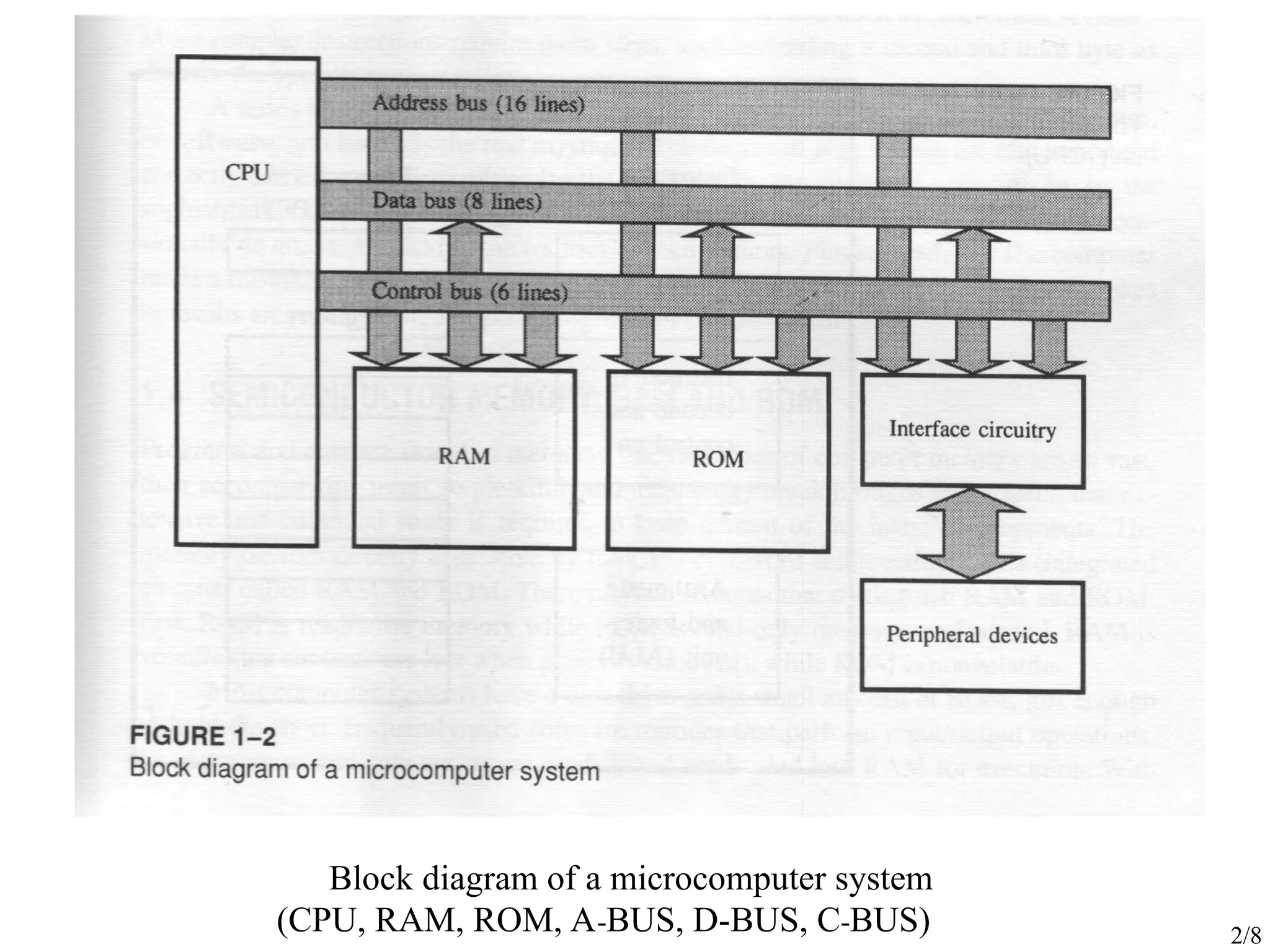
Block diagram of a microcomputer system
(CPU, RAM, ROM, A‑BUS, D-BUS, C‑BUS)
3/8
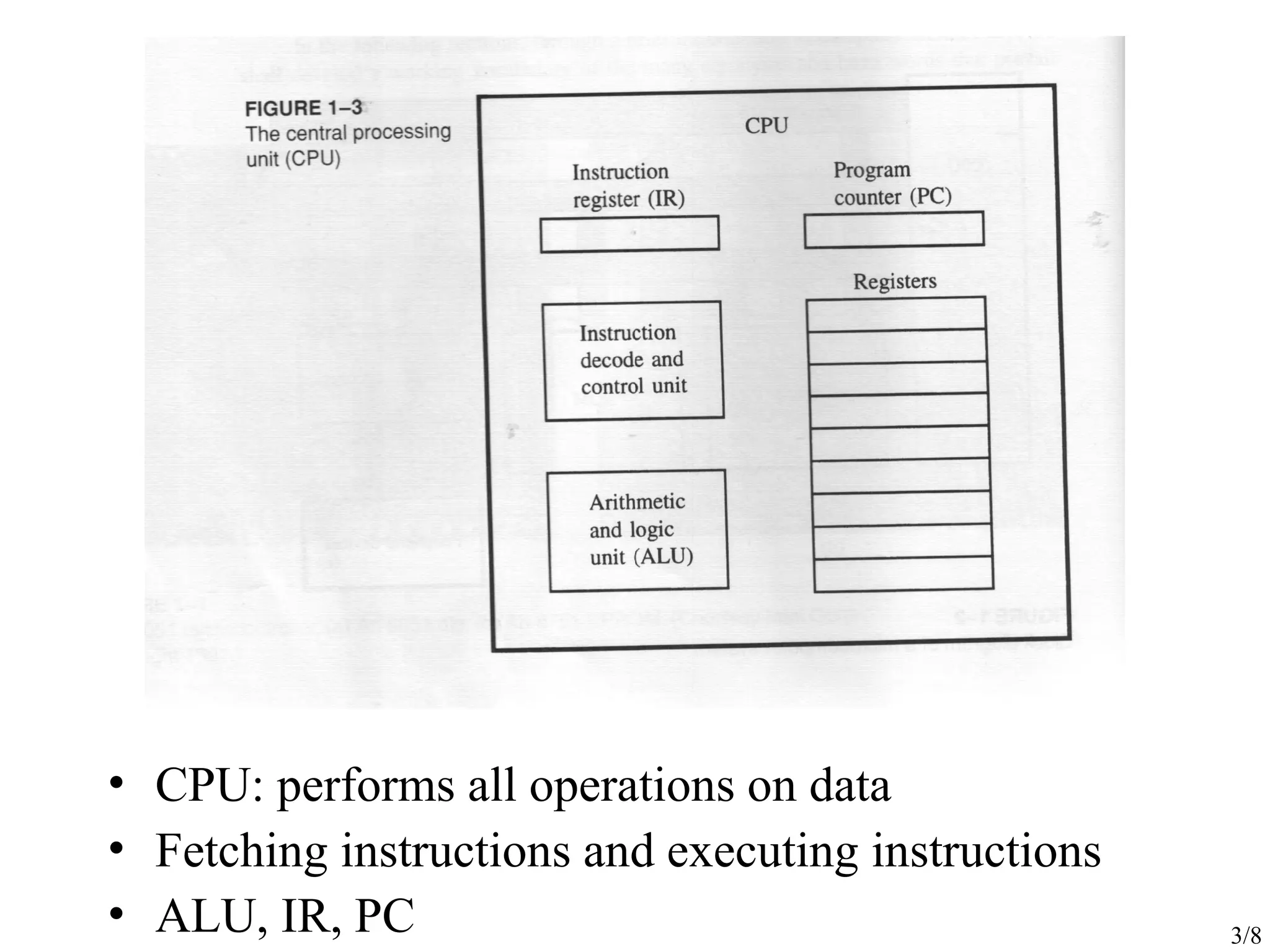
• CPU: performs all operations on data
• Fetching instructions and executing instructions
• ALU, IR, PC
4/8
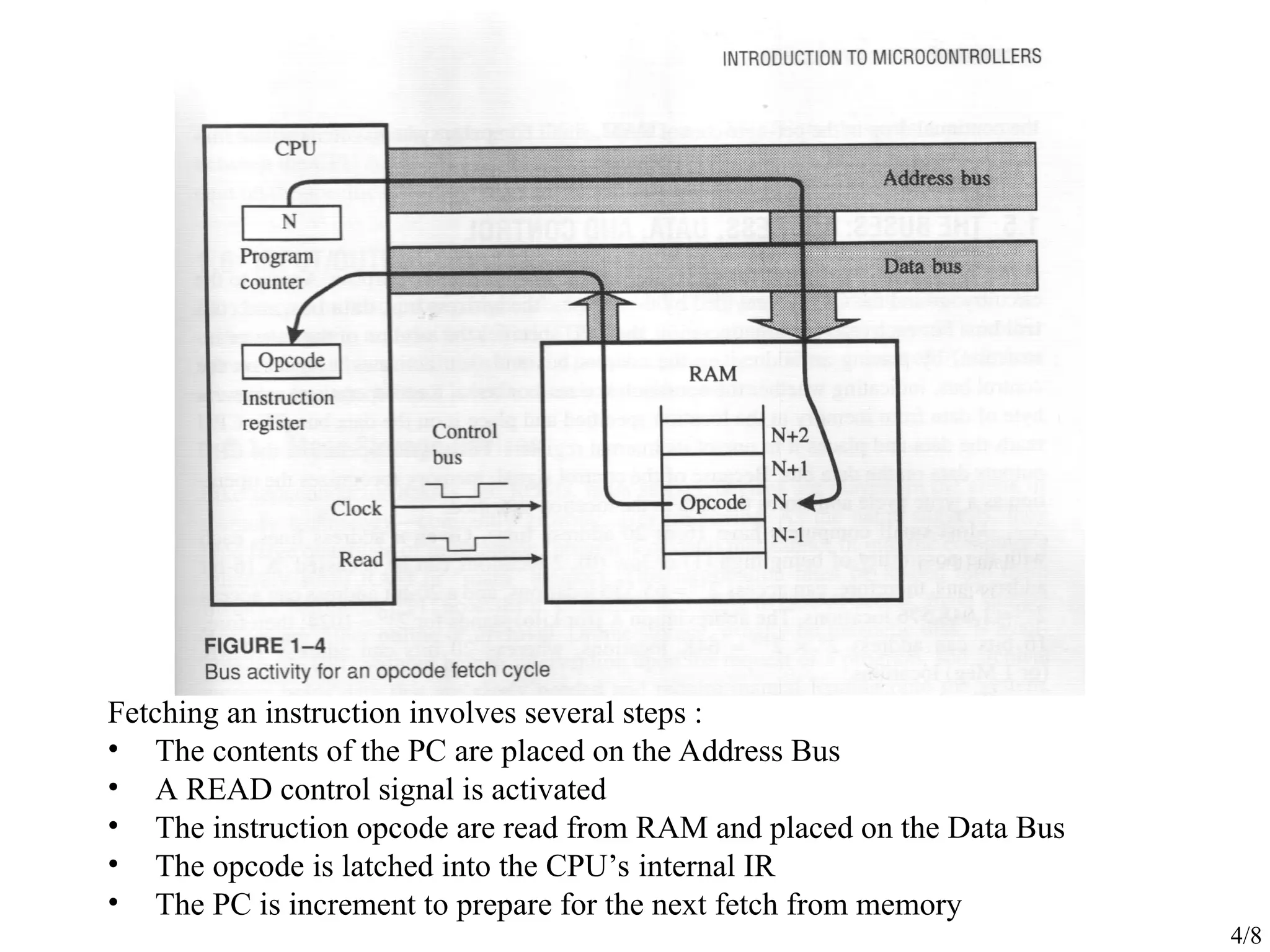
Fetching an instruction involves several steps :
• The contents of the PC are placed on the Address Bus
• A READ control signal is activated
• The instruction opcode are read from RAM and placed on the Data Bus
• The opcode is latched into the CPU’s internal IR
• The PC is increment to prepare for the next fetch from memory
5/8
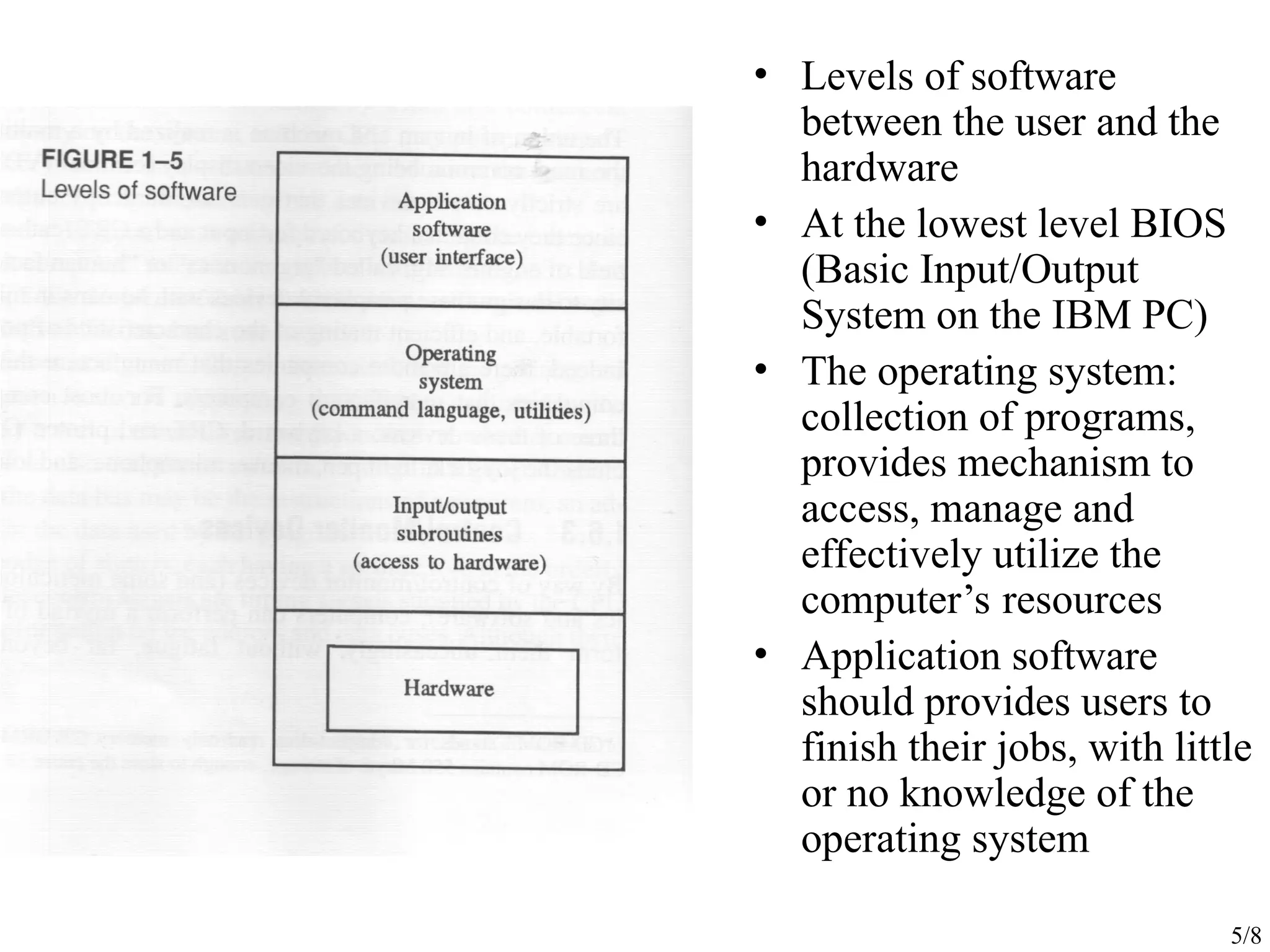
• Levels of software
between the user and the
hardware
• At the lowest level BIOS
(Basic Input/Output
System on the IBM PC)
• The operating system:
collection of programs,
provides mechanism to
access, manage and
effectively utilize the
computer’s resources
• Application software
should provides users to
finish their jobs, with little
or no knowledge of the
operating system
6/8
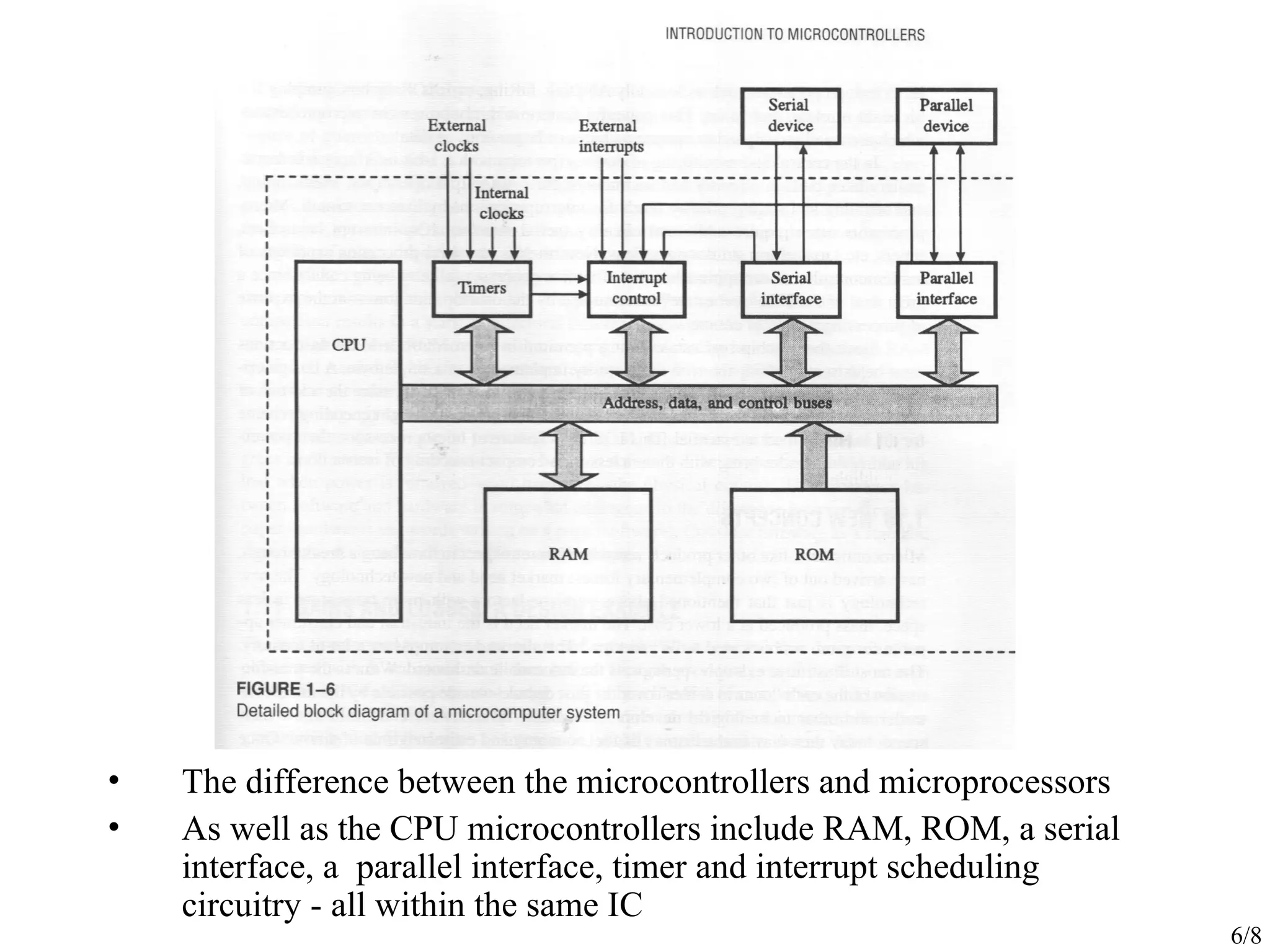
• The difference between the microcontrollers and microprocessors
• As well as the CPU microcontrollers include RAM, ROM, a serial
interface, a parallel interface, timer and interrupt scheduling
circuitry - all within the same IC
7/8
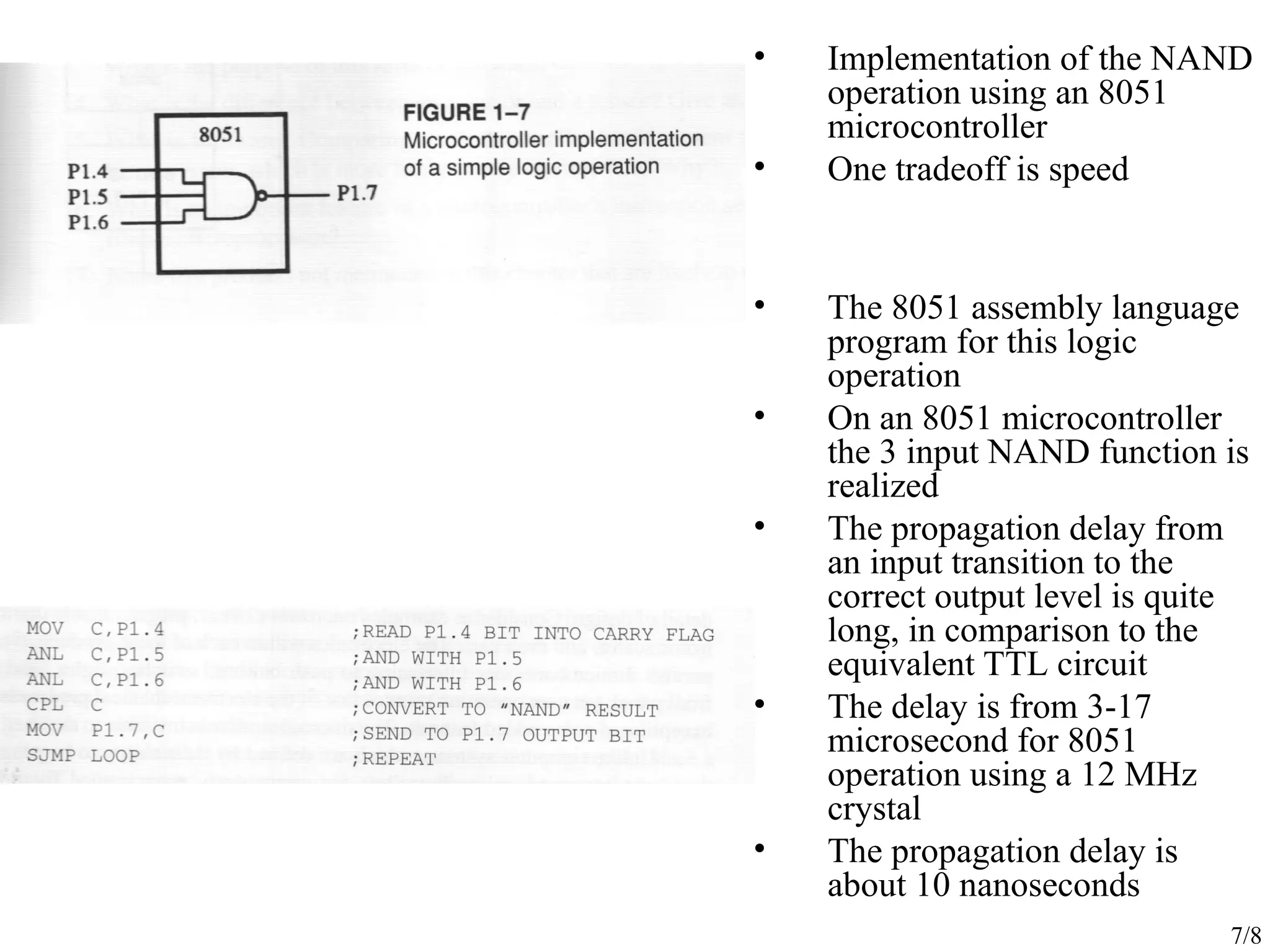
• Implementation of the NAND
operation using an 8051
microcontroller
• One tradeoff is speed
• The 8051 assembly language
program for this logic
operation
• On an 8051 microcontroller
the 3 input NAND function is
realized
• The propagation delay from
an input transition to the
correct output level is quite
long, in comparison to the
equivalent TTL circuit
• The delay is from 3-17
microsecond for 8051
operation using a 12 MHz
crystal
• The propagation delay is
about 10 nanoseconds
8/8
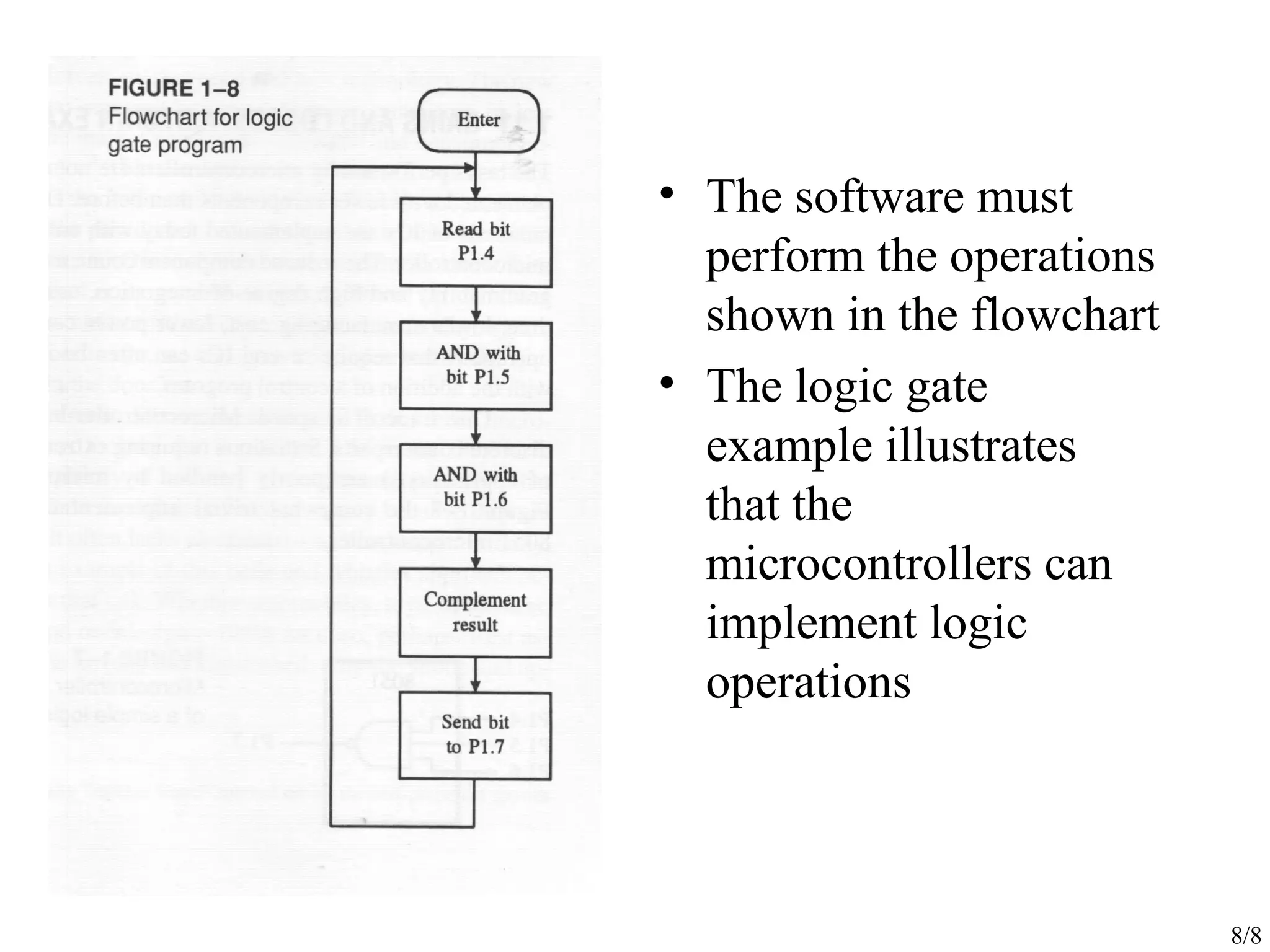
• The software must
perform the operations
shown in the flowchart
• The logic gate
example illustrates
that the
microcontrollers can
implement logic
operations
8051 microcontroller ppt-Introduction to microcontrollers

  • 1.
    The 8051 Microcontroller Chapter1 INTRODUCTION TO MICROCONTROLLERS
  • 2.
    2/8 Block diagram ofa microcomputer system (CPU, RAM, ROM, A‑BUS, D-BUS, C‑BUS)
  • 3.
    3/8 • CPU: performsall operations on data • Fetching instructions and executing instructions • ALU, IR, PC
  • 4.
    4/8 Fetching an instructioninvolves several steps : • The contents of the PC are placed on the Address Bus • A READ control signal is activated • The instruction opcode are read from RAM and placed on the Data Bus • The opcode is latched into the CPU’s internal IR • The PC is increment to prepare for the next fetch from memory
  • 5.
    5/8 • Levels ofsoftware between the user and the hardware • At the lowest level BIOS (Basic Input/Output System on the IBM PC) • The operating system: collection of programs, provides mechanism to access, manage and effectively utilize the computer’s resources • Application software should provides users to finish their jobs, with little or no knowledge of the operating system
  • 6.
    6/8 • The differencebetween the microcontrollers and microprocessors • As well as the CPU microcontrollers include RAM, ROM, a serial interface, a parallel interface, timer and interrupt scheduling circuitry - all within the same IC
  • 7.
    7/8 • Implementation ofthe NAND operation using an 8051 microcontroller • One tradeoff is speed • The 8051 assembly language program for this logic operation • On an 8051 microcontroller the 3 input NAND function is realized • The propagation delay from an input transition to the correct output level is quite long, in comparison to the equivalent TTL circuit • The delay is from 3-17 microsecond for 8051 operation using a 12 MHz crystal • The propagation delay is about 10 nanoseconds
  • 8.
    8/8 • The softwaremust perform the operations shown in the flowchart • The logic gate example illustrates that the microcontrollers can implement logic operations