Research Methodology
Welcome
Implementation and Testing
7/9/2024 1
System build Vs implementation
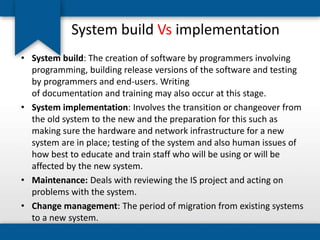
• System build: The creation of software by programmers involving
programming, building release versions of the software and testing
by programmers and end-users. Writing
of documentation and training may also occur at this stage.
• System implementation: Involves the transition or changeover from
the old system to the new and the preparation for this such as
making sure the hardware and network infrastructure for a new
system are in place; testing of the system and also human issues of
how best to educate and train staff who will be using or will be
affected by the new system.
• Maintenance: Deals with reviewing the IS project and acting on
problems with the system.
• Change management: The period of migration from existing systems
to a new system.
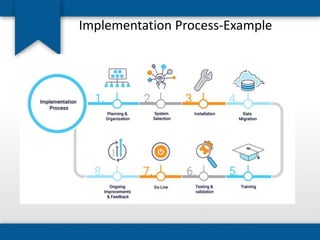
Implementation Process-Example
System Implementation
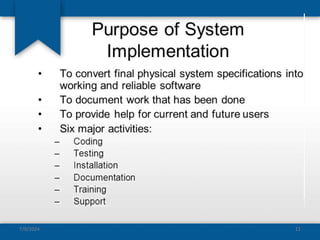
• The purpose of System Implementation Is making the
new system available to a prepared set of users, and
positioning on-going support and maintenance of the
system within the Performing Organization.
• The overall system functions as well as individual
modules should be tested and proven functional.
7/9/2024 4
System implementation (cont.)
Consists of:
• Executing all steps necessary to educate the
Consumers on the use of the new system.
• Placing the newly developed system into
production.
• confirming that all data required at the start of
operations is available and accurate.
7/9/2024 5
System implementation (cont.)
• Transitioning the system support
responsibilities involves:
• Changing from a system development to a
system support and maintenance mode of
operation.
7/9/2024 6
Software quality
• The quality of software is dependent on
two key factors:
– the number of errors or bugs in the software;
– the suitability of the software to its intended
purpose, that is, does it have the features
identified by users which are in the
requirements specification?
Implementation steps
1- Prepare for System Implementation:
• All steps needed in advance of actually
deploying the application are performed
• Preparation of both the production
environment and the Consumer
communities.
7/9/2024 8
Implementation steps (cont.)
2- Deploy System:
• Full deployment plan, initially developed
during System Design and evolved
throughout subsequent lifecycle phases,
is executed and validated
7/9/2024 9
Implementation steps (Cont.)
3- Transition to Performing
Organization:
• Responsibility for and ownership of the
application are transitioned from the
Project Team to the unit in the
Performing Organization that will
provide system support and
maintenance.
7/9/2024 10
7/9/2024 11
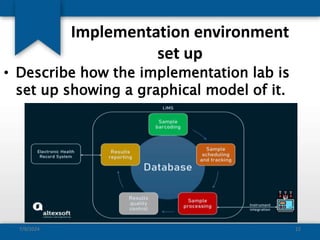
• Describe how the implementation lab is
set up showing a graphical model of it.
7/9/2024 12
Implementation environment
set up
• Describe the main logic of
system implementation,
showing screenshots, code
snippets, charts, activity
models , etc.
7/9/2024 13
Implementation
environment set up
Data migration
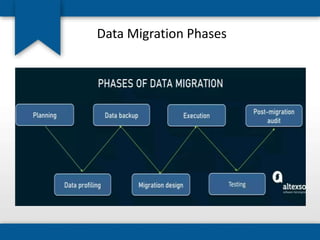
• Data migration: Data migration is the transfer
of data from the old system to the new system.
When data are added to a database, this is
known as populating the database.
• Import and export: Data can be ‘exported’
from an old system and then ‘imported’ into a
new system.
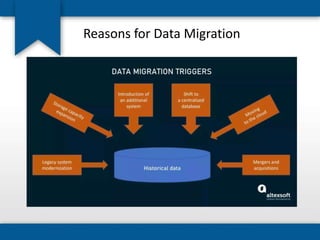
Reasons for Data Migration
Data Migration Phases
Maintenance
• Maintenance: Maintenance occurs
after the system has been signed off
as suitable for users. It involves
reviewing the project and recording
and acting on problems with the
system.
Post-implementation review
• Post-implementation review: A meeting that occurs after
a system is operational to review the success of the
project.
• The review could include the following:
– faults and suggested enhancements with agreement on
which need to be implemented in a future release;
– success of system in meeting its budget and timescale
targets;
– success of system in meeting its business requirements –
has it delivered the anticipated benefits described in the
feasibility study?
– development practices that worked well and poorly during
the project.
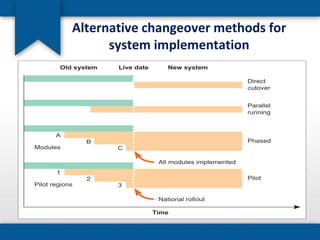
Alternative changeover methods for
system implementation
Testing
• Test specification: A detailed description
of the tests that will be performed to
check the software works correctly.
• Test plan: Plan describing the type and
sequence of testing and who will conduct
it.
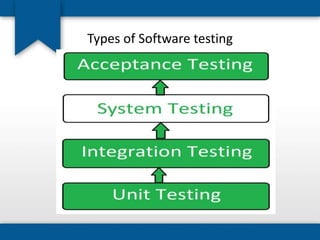
Types of Software testing
Testing
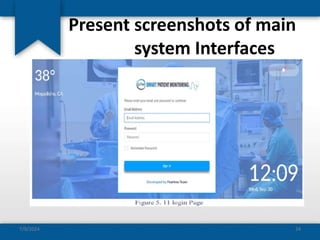
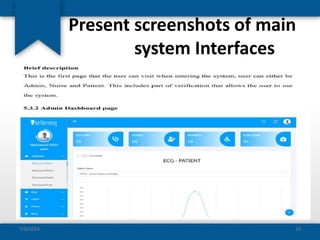
Present screenshots of main
system Interfaces
7/9/2024 24
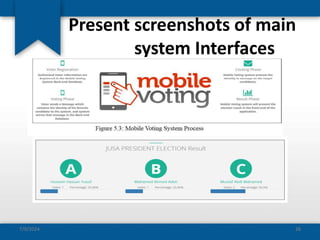
Present screenshots of main
system Interfaces
7/9/2024 25
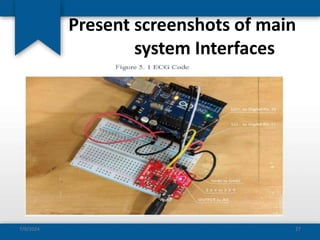
Present screenshots of main
system Interfaces
7/9/2024 26
Present screenshots of main
system Interfaces
7/9/2024 27
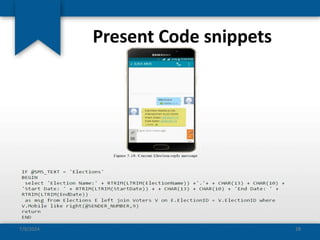
Present Code snippets
7/9/2024 28
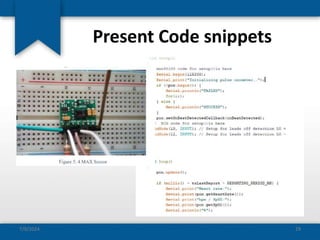
Present Code snippets
7/9/2024 29
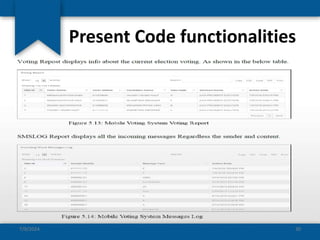
Present Code functionalities
7/9/2024 30
Thank you
7/9/2024 31

8. Implementation & Testing.pptx

  • 1.
  • 2.
    System build Vsimplementation • System build: The creation of software by programmers involving programming, building release versions of the software and testing by programmers and end-users. Writing of documentation and training may also occur at this stage. • System implementation: Involves the transition or changeover from the old system to the new and the preparation for this such as making sure the hardware and network infrastructure for a new system are in place; testing of the system and also human issues of how best to educate and train staff who will be using or will be affected by the new system. • Maintenance: Deals with reviewing the IS project and acting on problems with the system. • Change management: The period of migration from existing systems to a new system.
  • 3.
  • 4.
    System Implementation • Thepurpose of System Implementation Is making the new system available to a prepared set of users, and positioning on-going support and maintenance of the system within the Performing Organization. • The overall system functions as well as individual modules should be tested and proven functional. 7/9/2024 4
  • 5.
    System implementation (cont.) Consistsof: • Executing all steps necessary to educate the Consumers on the use of the new system. • Placing the newly developed system into production. • confirming that all data required at the start of operations is available and accurate. 7/9/2024 5
  • 6.
    System implementation (cont.) •Transitioning the system support responsibilities involves: • Changing from a system development to a system support and maintenance mode of operation. 7/9/2024 6
  • 7.
    Software quality • Thequality of software is dependent on two key factors: – the number of errors or bugs in the software; – the suitability of the software to its intended purpose, that is, does it have the features identified by users which are in the requirements specification?
  • 8.
    Implementation steps 1- Preparefor System Implementation: • All steps needed in advance of actually deploying the application are performed • Preparation of both the production environment and the Consumer communities. 7/9/2024 8
  • 9.
    Implementation steps (cont.) 2-Deploy System: • Full deployment plan, initially developed during System Design and evolved throughout subsequent lifecycle phases, is executed and validated 7/9/2024 9
  • 10.
    Implementation steps (Cont.) 3-Transition to Performing Organization: • Responsibility for and ownership of the application are transitioned from the Project Team to the unit in the Performing Organization that will provide system support and maintenance. 7/9/2024 10
  • 11.
  • 12.
    • Describe howthe implementation lab is set up showing a graphical model of it. 7/9/2024 12 Implementation environment set up
  • 13.
    • Describe themain logic of system implementation, showing screenshots, code snippets, charts, activity models , etc. 7/9/2024 13 Implementation environment set up
  • 15.
    Data migration • Datamigration: Data migration is the transfer of data from the old system to the new system. When data are added to a database, this is known as populating the database. • Import and export: Data can be ‘exported’ from an old system and then ‘imported’ into a new system.
  • 16.
  • 17.
  • 18.
    Maintenance • Maintenance: Maintenanceoccurs after the system has been signed off as suitable for users. It involves reviewing the project and recording and acting on problems with the system.
  • 19.
    Post-implementation review • Post-implementationreview: A meeting that occurs after a system is operational to review the success of the project. • The review could include the following: – faults and suggested enhancements with agreement on which need to be implemented in a future release; – success of system in meeting its budget and timescale targets; – success of system in meeting its business requirements – has it delivered the anticipated benefits described in the feasibility study? – development practices that worked well and poorly during the project.
  • 20.
    Alternative changeover methodsfor system implementation
  • 21.
    Testing • Test specification:A detailed description of the tests that will be performed to check the software works correctly. • Test plan: Plan describing the type and sequence of testing and who will conduct it.
  • 22.
  • 23.
  • 24.
    Present screenshots ofmain system Interfaces 7/9/2024 24
  • 25.
    Present screenshots ofmain system Interfaces 7/9/2024 25
  • 26.
    Present screenshots ofmain system Interfaces 7/9/2024 26
  • 27.
    Present screenshots ofmain system Interfaces 7/9/2024 27
  • 28.
  • 29.
  • 30.
  • 31.

Editor's Notes

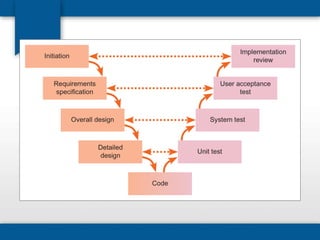
  • #15 Figure 12.1 The V-model of systems development relating analysis and design activities to testing activities