



Adapted from The Saylor Journals
   Turn off the Internet
   Gaps are good things
   Quiz yourself with open-ended questions
   Figure out how you prefer to learn
   Manage your time effectively
   Get an accountability buddy
   Maintain good sleep hygiene
   When you don’t need the Internet for
    work, just turn it off!
   Have set times when you don’t use the
    Internet (days of week/time of day).

   There’s a great program
    called SelfControl (free) that allows you to
    block your server from specific sights until
    time runs out, or block the Internet entirely
    for a set time.
   To know material
    two weeks from
    now, learn it
    today, then practice
    it in one week.
    You’ll be more
    likely to remember
    everything than if
    you had crammed it
    in the last few days.
   To retain over a long period of time, practice
    it at regular intervals or else you will forget.

   Set deadlines for when you want to learn
    things.
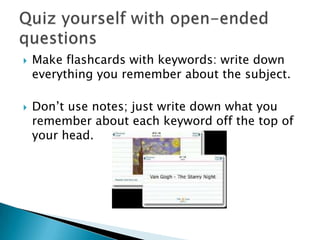
   Make flashcards with keywords: write down
    everything you remember about the subject.

   Don’t use notes; just write down what you
    remember about each keyword off the top of
    your head.
   Have a friend read the keyword, and verbally
    explain to her the substance of it.


   Make mock-tests with short-answer
    questions, if possible, with friends, and then
    give feedback to each other.
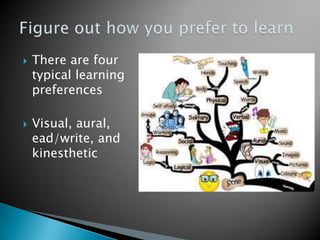
   There are four
    typical learning
    preferences

   Visual, aural,     r
    ead/write, and
    kinesthetic
   These are only preferences, and they do not
    limit you from learning in other ways.


However it is easier to engage in education if
 you’re able to understand how you prefer to
 learn. Check out the “Learn How You
 Learn” test at:
http://www.sophia.org/learning-preferences-
assessment
   Manage time by breaking it into chunks

   Use a calendar

   The combination of a task manager (like
    Things or Asana) and a calendar,
    when actually used, helps accomplish goals.
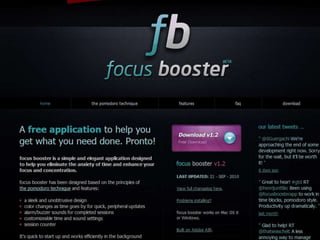
   Focus Booster is a program that sets a timer
    to break work into 25-minute cycles with a
    5-minute break in between each.

   Things (Task Manager)

   Asana (Task Manager)
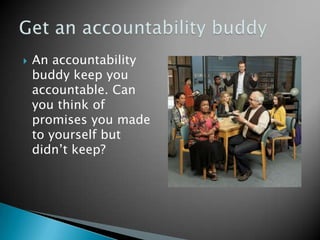
   An accountability
    buddy keep you
    accountable. Can
    you think of
    promises you made
    to yourself but
    didn’t keep?
   That’s where an accountability buddy comes
    into play: when you share your goals with
    somebody, you are more likely to accomplish
    them!

   To find one, email a friend you trust to keep
    you accountable, and ask if he or she would
    like to exchange weekly goals with you
   Once a week, email your friend 5 to 10 goals.
    On the same day, have a conversation to
    share what you did and did not accomplish in
    the previous week.

   Take out a piece of paper right now and write
    down 5 goals for yourself for this week; now
    write down 3 people you could ask to be your
    accountability buddy.
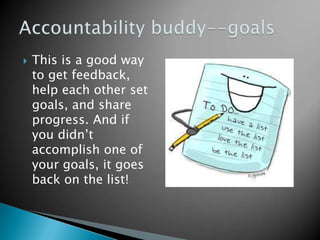
   This is a good way
    to get feedback,
    help each other set
    goals, and share
    progress. And if
    you didn’t
    accomplish one of
    your goals, it goes
    back on the list!
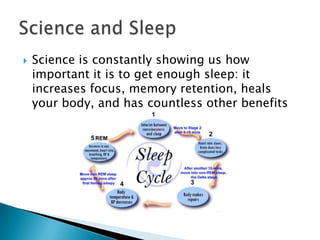
   Science is constantly showing us how
    important it is to get enough sleep: it
    increases focus, memory retention, heals
    your body, and has countless other benefits
   I know the temptation to go and go and go—
    not stopping to break, sleep, or eat. There
    are too many pages to write, there is an
    unending amount of work that needs to get
    done…
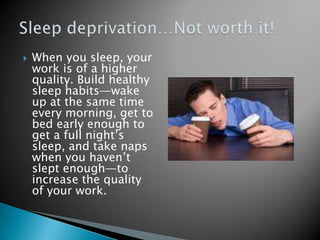
   When you sleep, your
    work is of a higher
    quality. Build healthy
    sleep habits—wake
    up at the same time
    every morning, get to
    bed early enough to
    get a full night’s
    sleep, and take naps
    when you haven’t
    slept enough—to
    increase the quality
    of your work.
   Turn off the Internet
   Gaps are good things
   Quiz yourself with open-ended questions
   Figure out how you prefer to learn
   Manage your time effectively
   Get an accountability buddy
   Maintain good sleep hygiene
7 steps to effective and efficient-self-learning

7 steps to effective and efficient-self-learning

  • 1.
    Adapted from TheSaylor Journals
  • 2.
    Turn off the Internet  Gaps are good things  Quiz yourself with open-ended questions  Figure out how you prefer to learn  Manage your time effectively  Get an accountability buddy  Maintain good sleep hygiene
  • 3.
    When you don’t need the Internet for work, just turn it off!
  • 4.
    Have set times when you don’t use the Internet (days of week/time of day).  There’s a great program called SelfControl (free) that allows you to block your server from specific sights until time runs out, or block the Internet entirely for a set time.
  • 5.
    To know material two weeks from now, learn it today, then practice it in one week. You’ll be more likely to remember everything than if you had crammed it in the last few days.
  • 6.
    To retain over a long period of time, practice it at regular intervals or else you will forget.  Set deadlines for when you want to learn things.
  • 7.
    Make flashcards with keywords: write down everything you remember about the subject.  Don’t use notes; just write down what you remember about each keyword off the top of your head.
  • 8.
    Have a friend read the keyword, and verbally explain to her the substance of it.  Make mock-tests with short-answer questions, if possible, with friends, and then give feedback to each other.
  • 9.
    There are four typical learning preferences  Visual, aural, r ead/write, and kinesthetic
  • 10.
    These are only preferences, and they do not limit you from learning in other ways. However it is easier to engage in education if you’re able to understand how you prefer to learn. Check out the “Learn How You Learn” test at: http://www.sophia.org/learning-preferences- assessment
  • 11.
    Manage time by breaking it into chunks  Use a calendar  The combination of a task manager (like Things or Asana) and a calendar, when actually used, helps accomplish goals.
  • 12.
    Focus Booster is a program that sets a timer to break work into 25-minute cycles with a 5-minute break in between each.  Things (Task Manager)  Asana (Task Manager)
  • 14.
    An accountability buddy keep you accountable. Can you think of promises you made to yourself but didn’t keep?
  • 15.
    That’s where an accountability buddy comes into play: when you share your goals with somebody, you are more likely to accomplish them!  To find one, email a friend you trust to keep you accountable, and ask if he or she would like to exchange weekly goals with you
  • 16.
    Once a week, email your friend 5 to 10 goals. On the same day, have a conversation to share what you did and did not accomplish in the previous week.  Take out a piece of paper right now and write down 5 goals for yourself for this week; now write down 3 people you could ask to be your accountability buddy.
  • 17.
    This is a good way to get feedback, help each other set goals, and share progress. And if you didn’t accomplish one of your goals, it goes back on the list!
  • 18.
    Science is constantly showing us how important it is to get enough sleep: it increases focus, memory retention, heals your body, and has countless other benefits
  • 19.
    I know the temptation to go and go and go— not stopping to break, sleep, or eat. There are too many pages to write, there is an unending amount of work that needs to get done…
  • 20.
    When you sleep, your work is of a higher quality. Build healthy sleep habits—wake up at the same time every morning, get to bed early enough to get a full night’s sleep, and take naps when you haven’t slept enough—to increase the quality of your work.
  • 21.
    Turn off the Internet  Gaps are good things  Quiz yourself with open-ended questions  Figure out how you prefer to learn  Manage your time effectively  Get an accountability buddy  Maintain good sleep hygiene