THE PRESENT SIMPLE TENSE
(Affirmative)
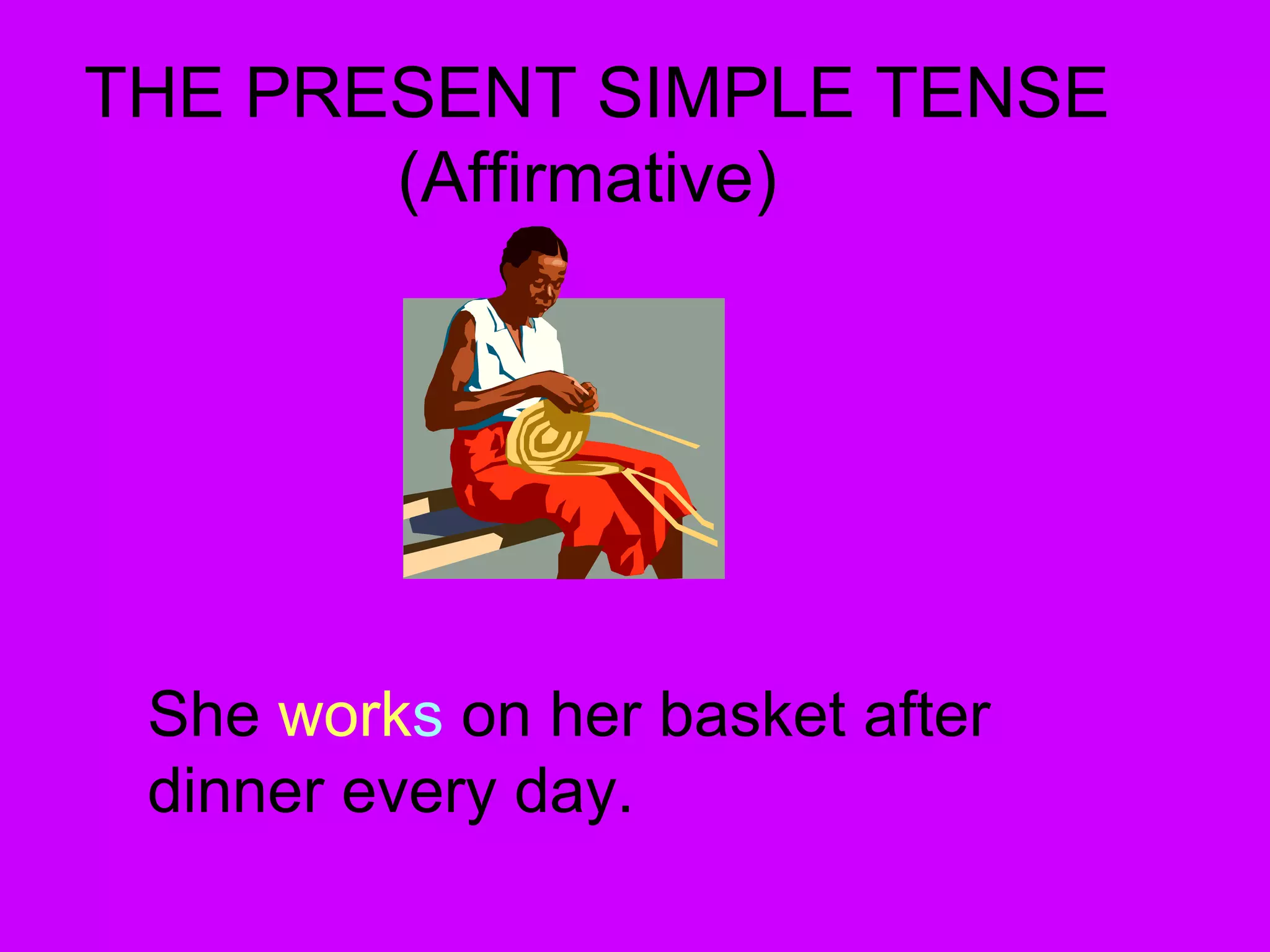
She works on her basket after
dinner every day.
THE PRESENT SIMPLE TENSE
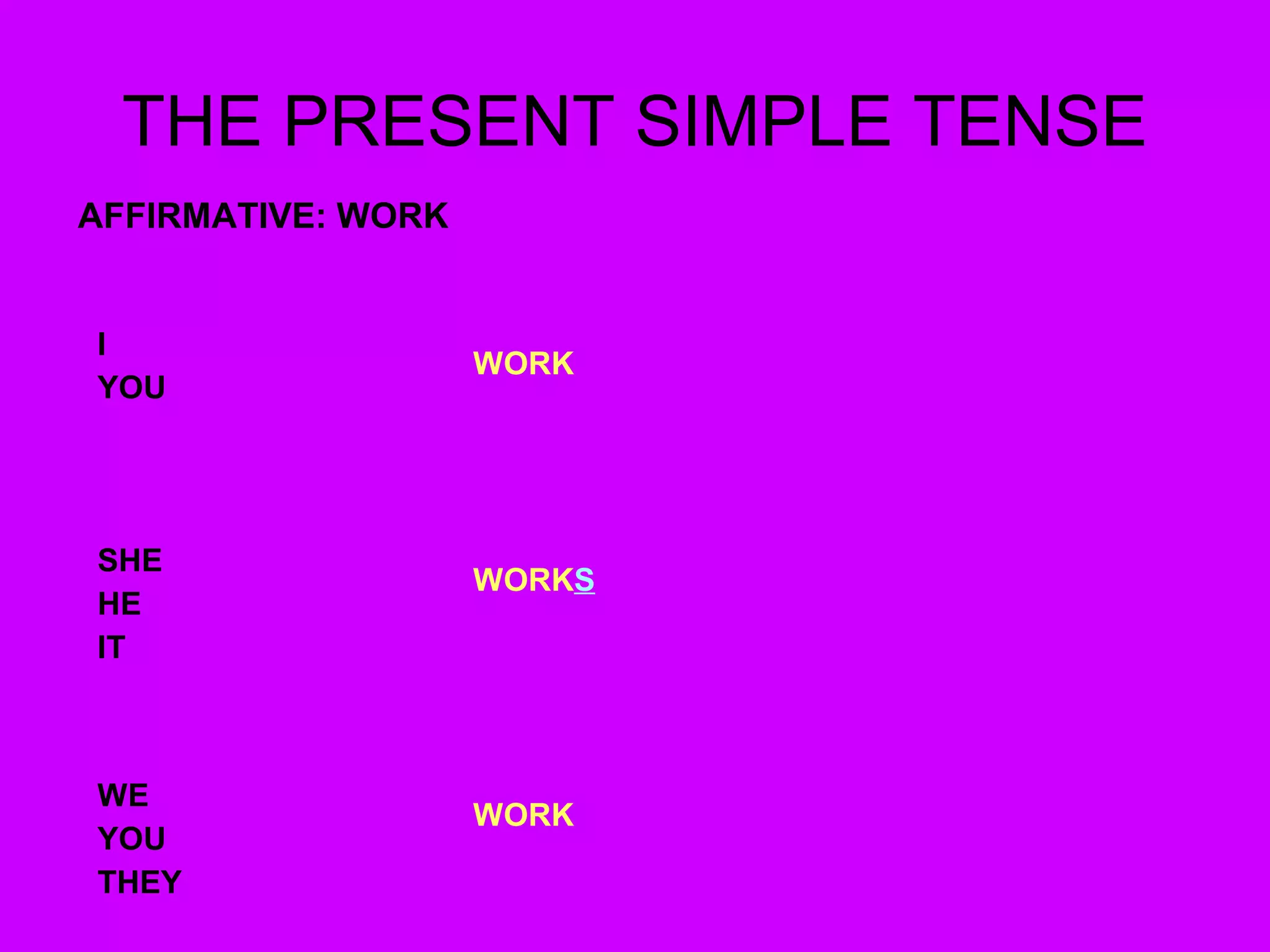
AFFIRMATIVE: WORK
I
YOU
WORK
SHE
HE
IT
WORKS
WE
YOU
THEY
WORK
3rd
person singular - spelling
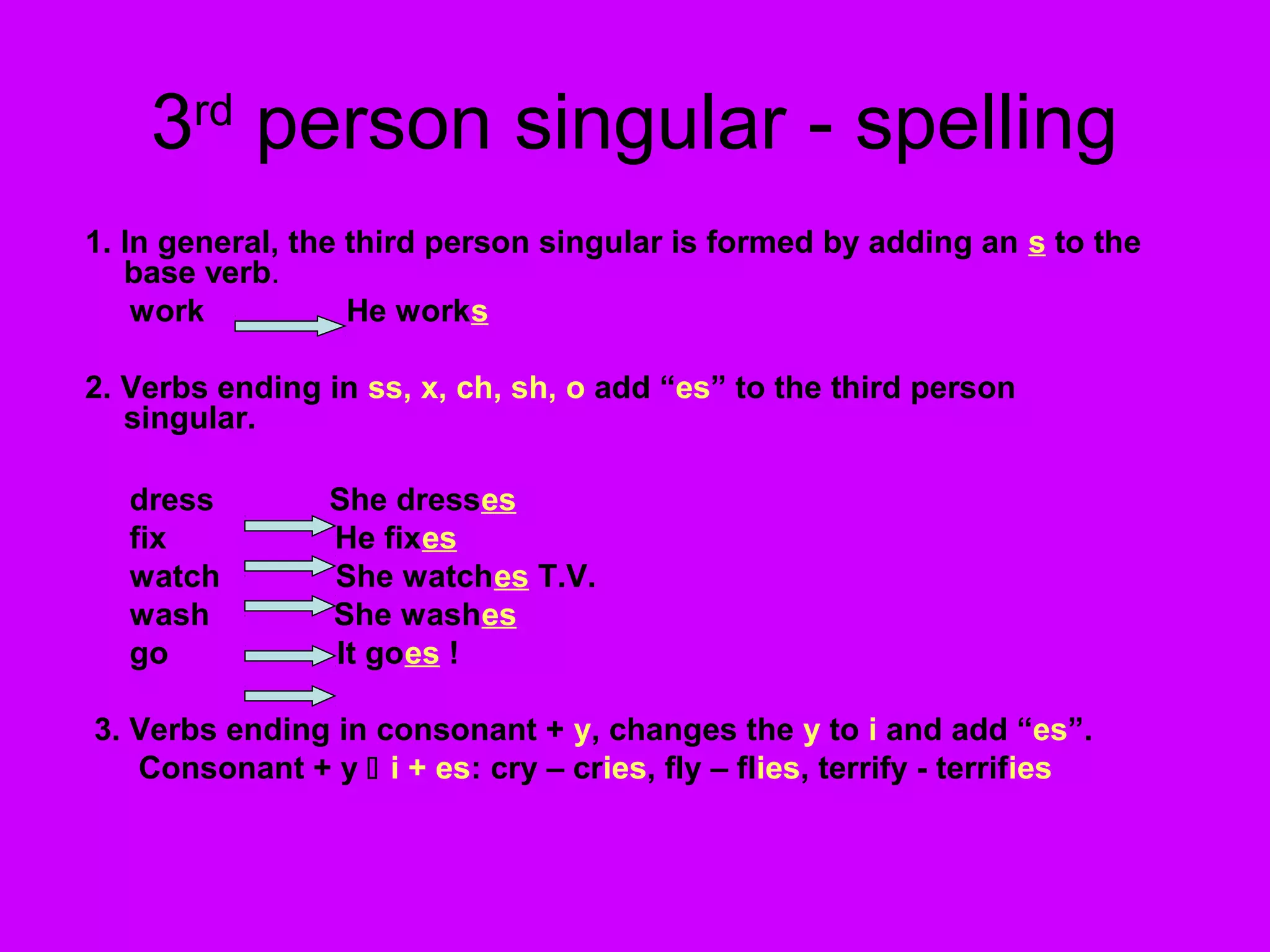
1. In general, the third person singular is formed by adding an s to the
base verb.
work He works
2. Verbs ending in ss, x, ch, sh, o add “es” to the third person
singular.
dress She dresses
fix He fixes
watch She watches T.V.
wash She washes
go It goes !
3. Verbs ending in consonant + y, changes the y to i and add “es”.
Consonant + y  i + es: cry – cries, fly – flies, terrify - terrifies
What’s the 3rd
person singular?
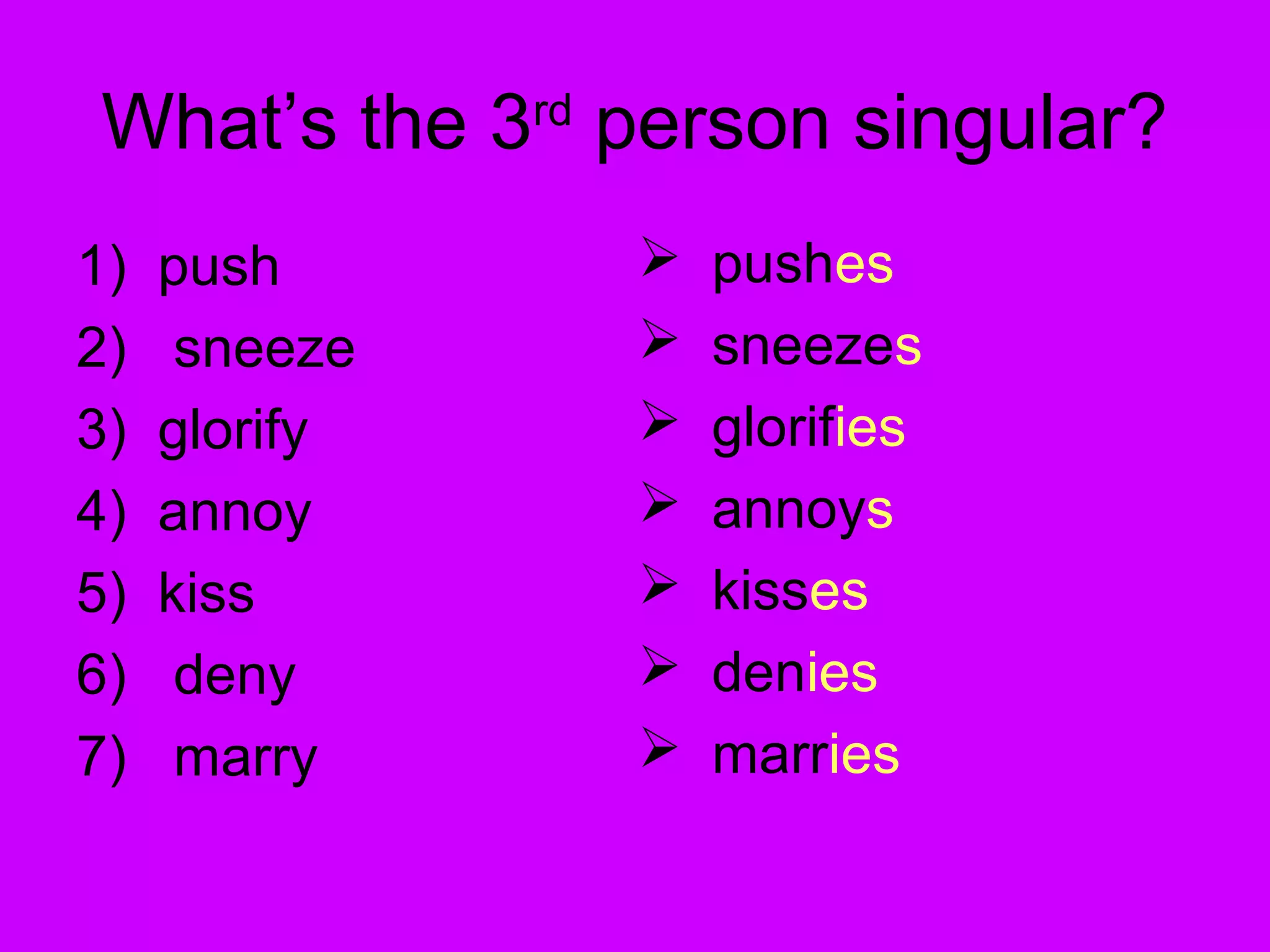
1) push
2) sneeze
3) glorify
4) annoy
5) kiss
6) deny
7) marry
 pushes
 sneezes
 glorifies
 annoys
 kisses
 denies
 marries
THE PRESENT SIMPLE TENSE
(Interrogative)
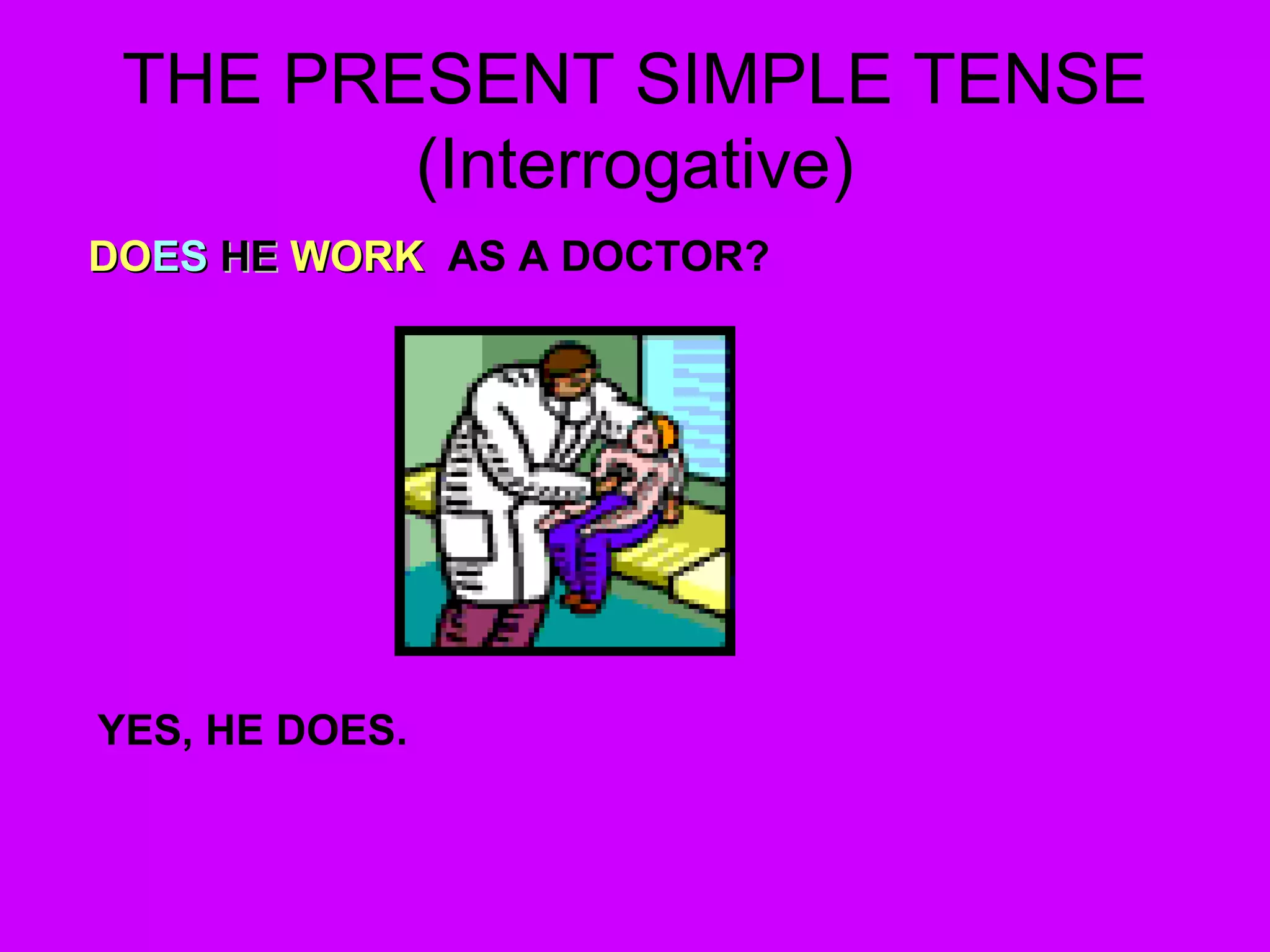
DODOESES HEHE WORKWORK AS A DOCTOR?
YES, HE DOES.
THE PRESENT SIMPLE TENSE
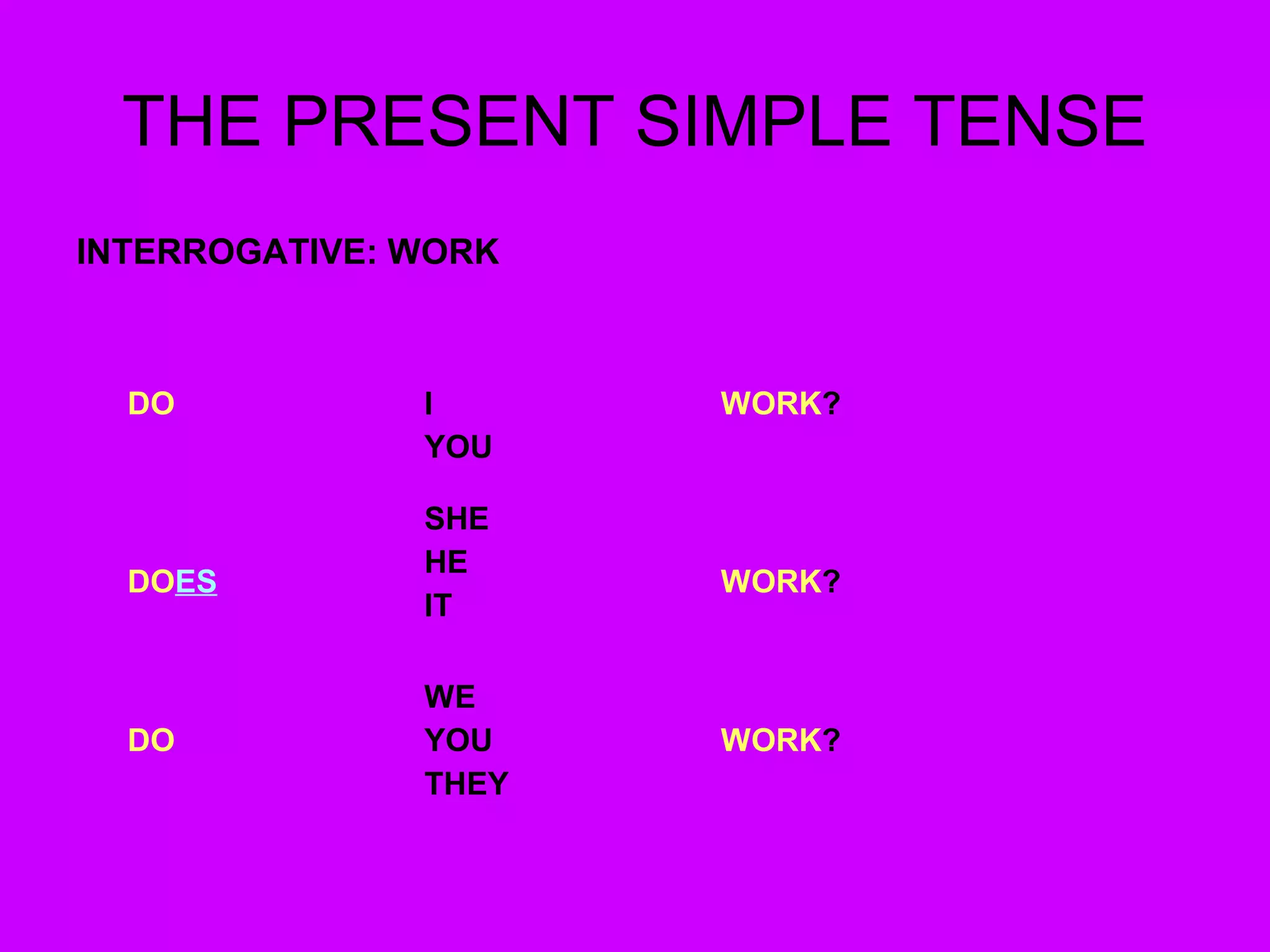
INTERROGATIVE: WORK
DO I
YOU
WORK?
DOES
SHE
HE
IT
WORK?
DO
WE
YOU
THEY
WORK?
THE PRESENT SIMPLE TENSE
(Negative)
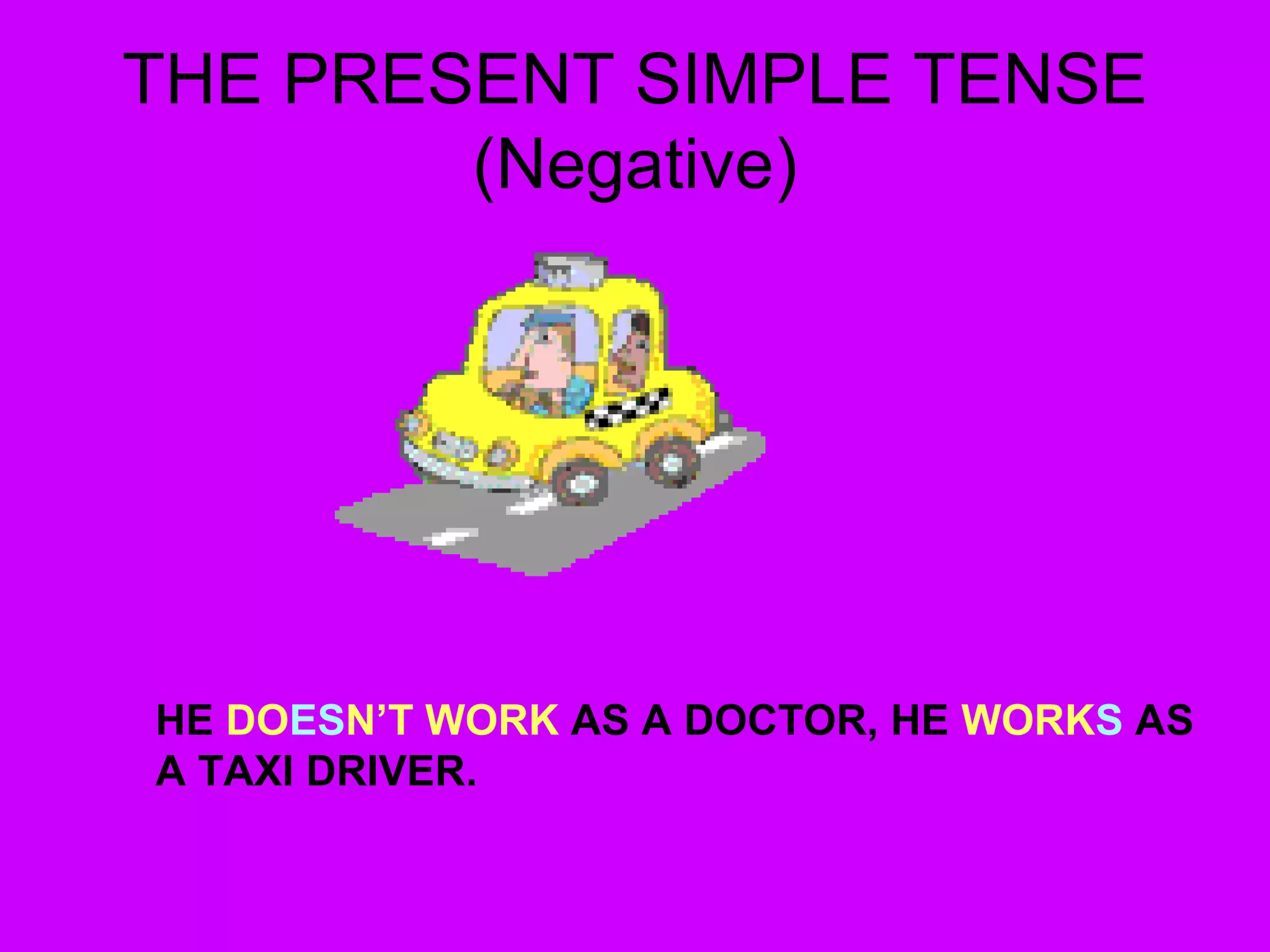
HE DOESN’T WORK AS A DOCTOR, HE WORKS AS
A TAXI DRIVER.
THE PRESENT SIMPLE TENSE
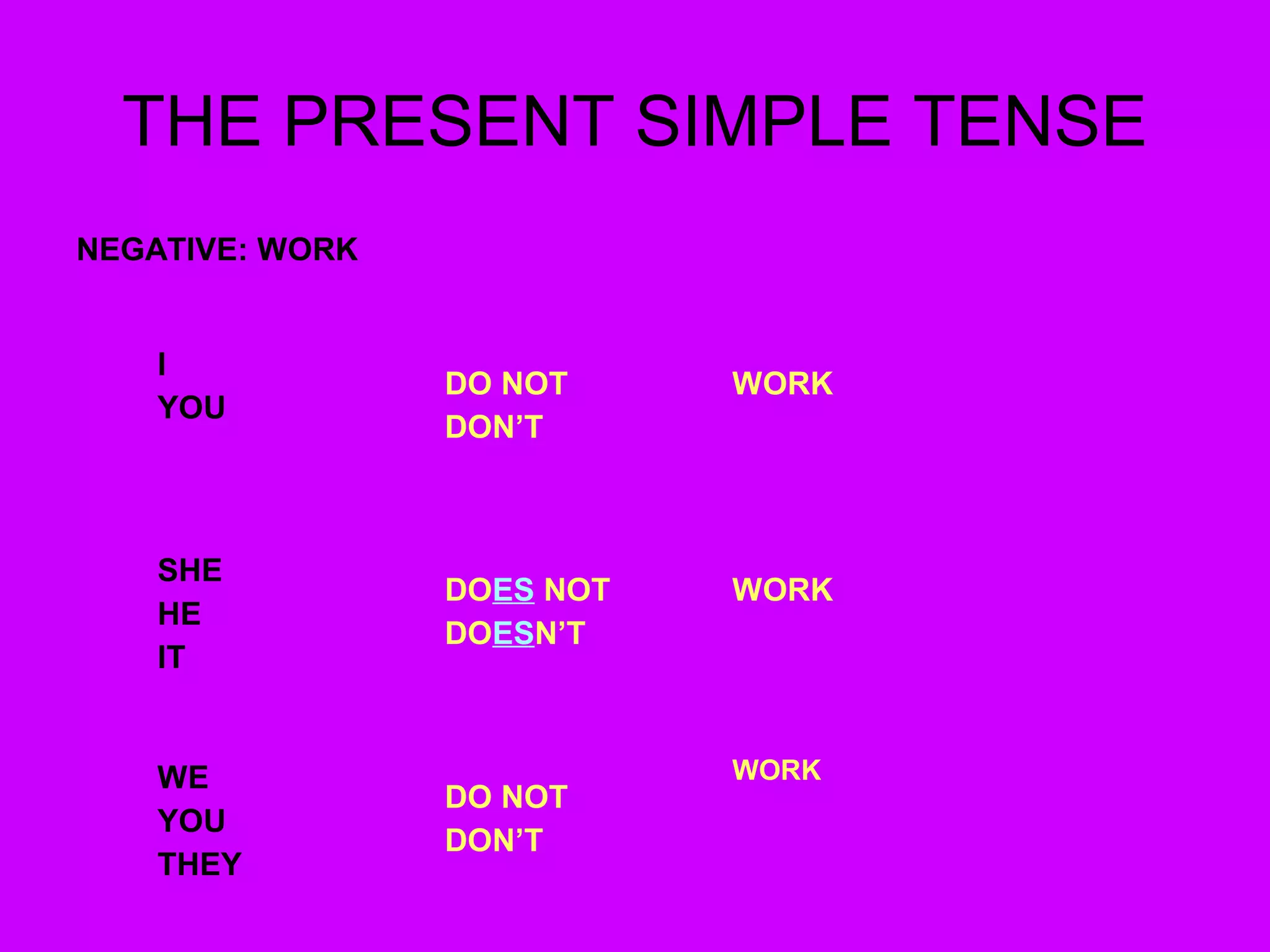
NEGATIVE: WORK
I
YOU
DO NOT
DON’T
WORK
SHE
HE
IT
DOES NOT
DOESN’T
WORK
WE
YOU
THEY
DO NOT
DON’T
WORK
The Present Simple Tense
is used to describe:
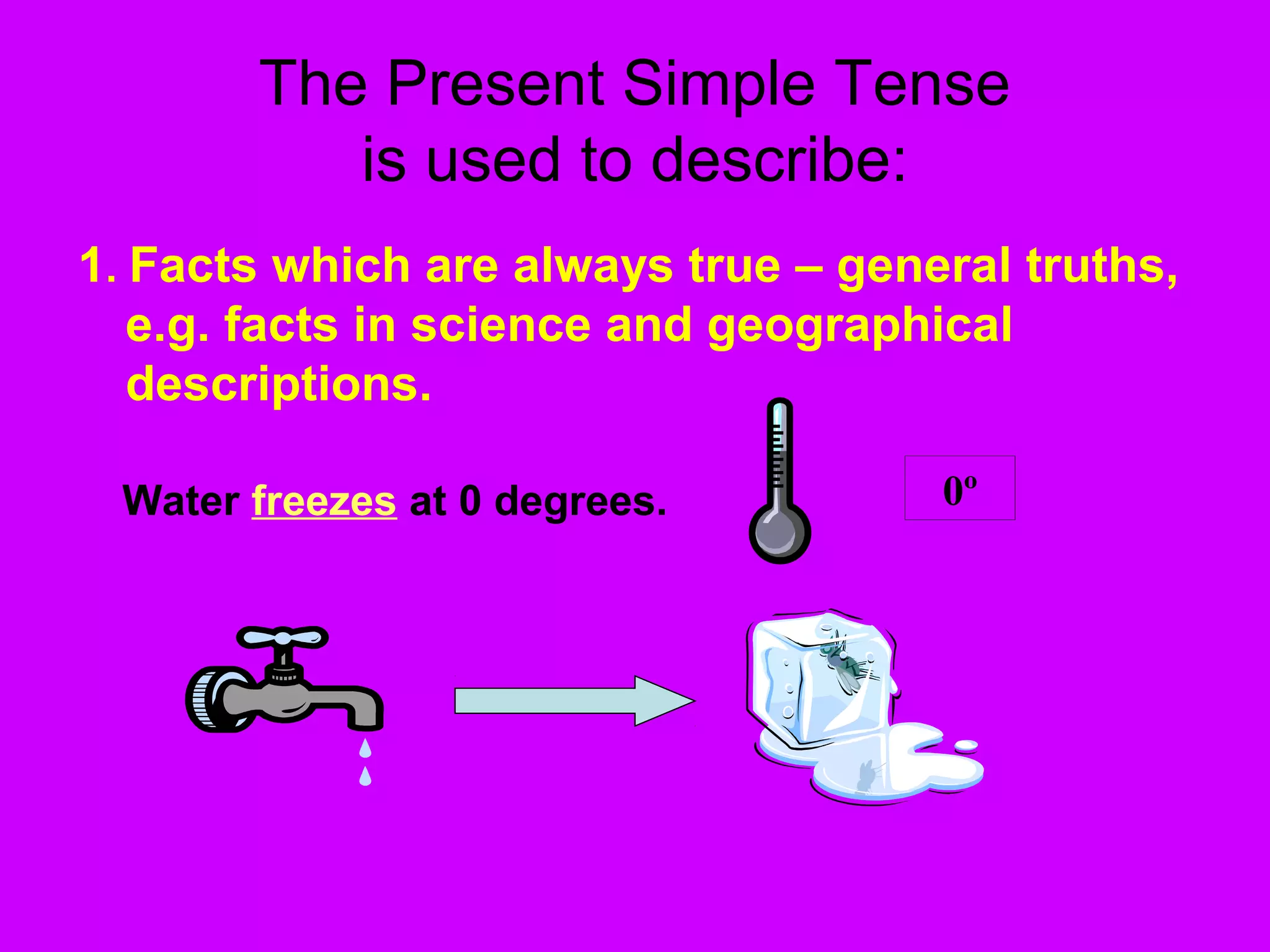
1. Facts which are always true – general truths,
e.g. facts in science and geographical
descriptions.
Water freezes at 0 degrees. 0º
The Present Simple Tense
is used to describe:
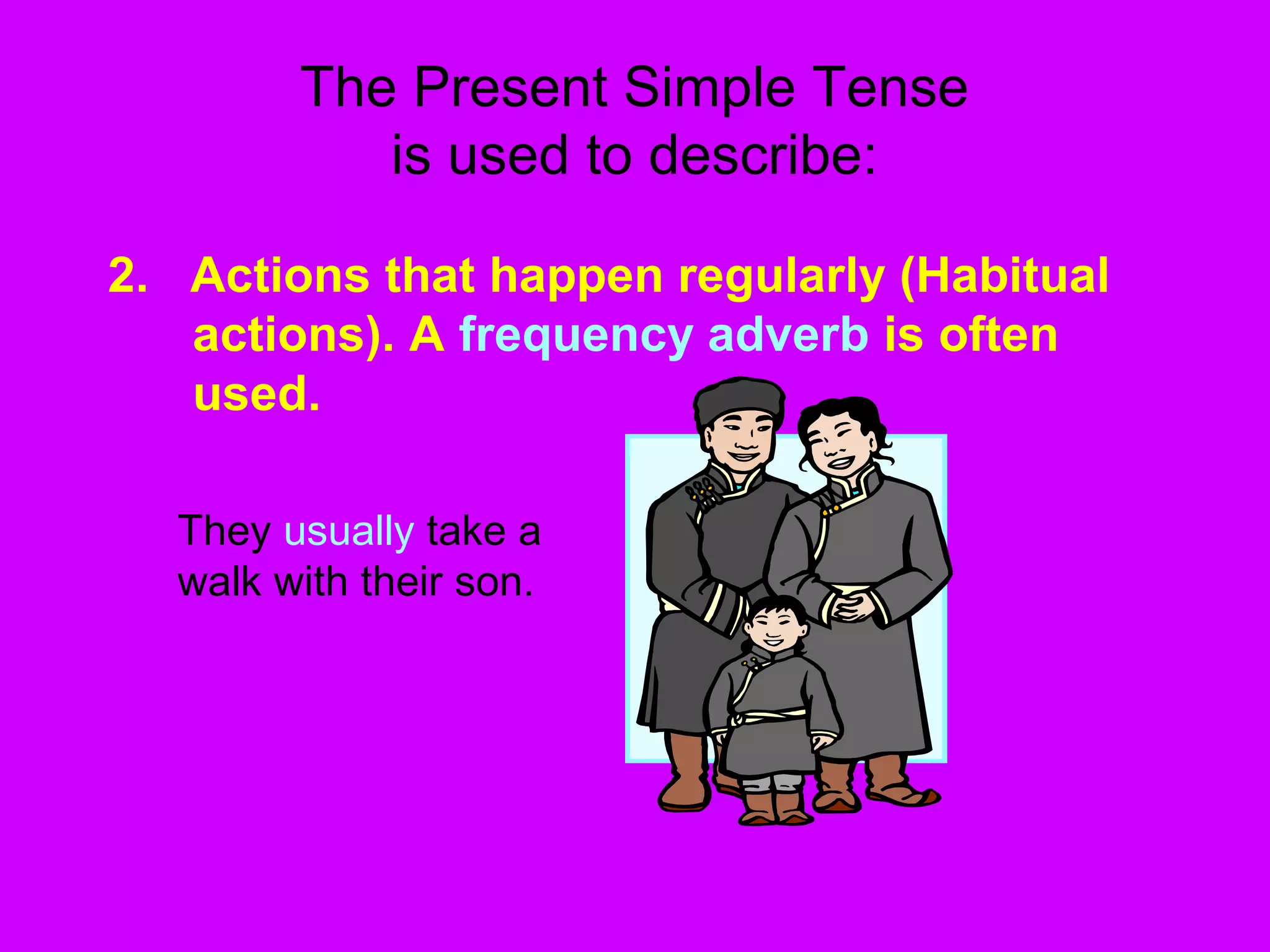
2. Actions that happen regularly (Habitual
actions). A frequency adverb is often
used.
They usually take a
walk with their son.
The Present Simple Tense
is used to describe:
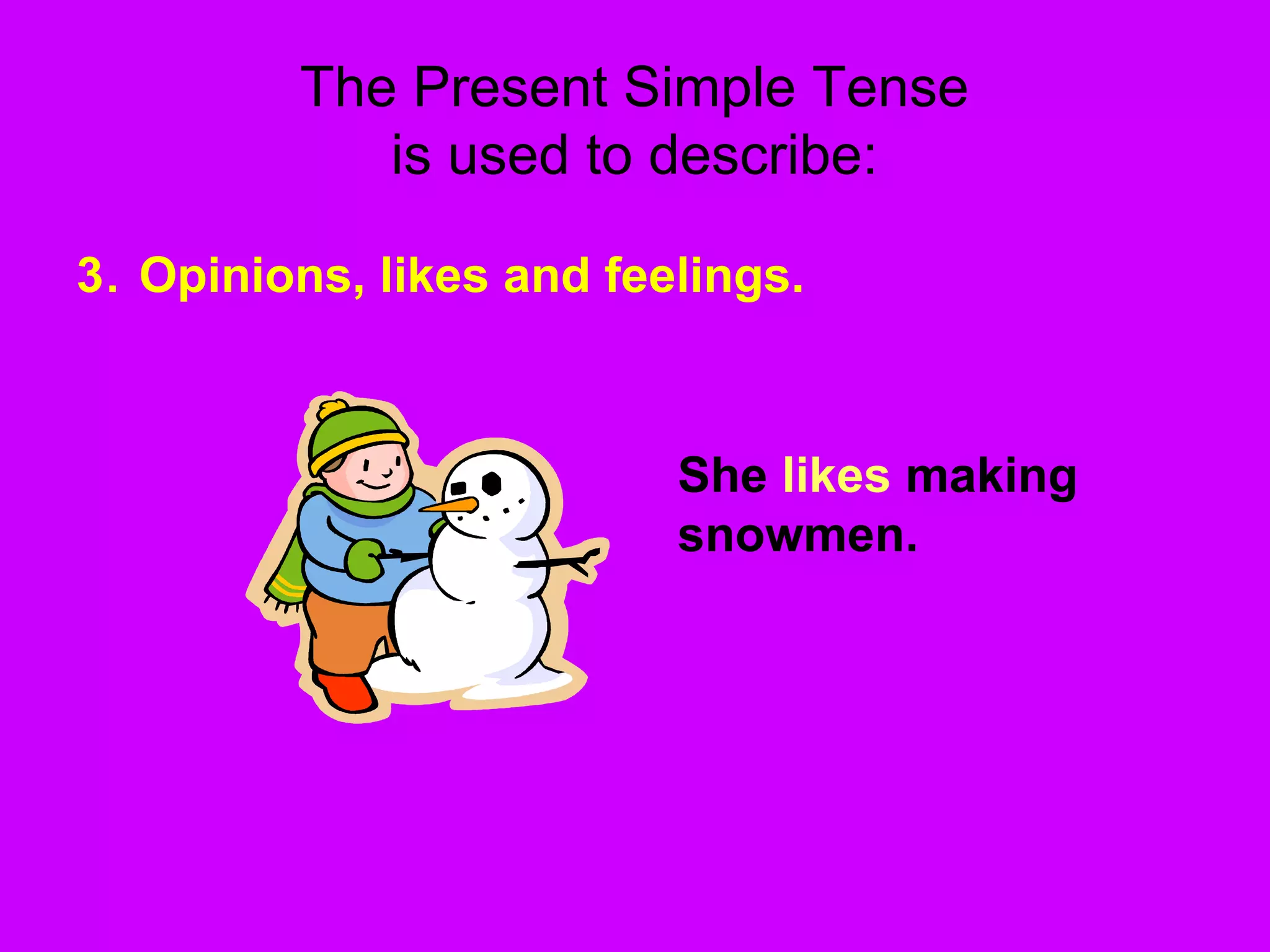
3. Opinions, likes and feelings.
She likes making
snowmen.
THE PRESENT SIMPLE TENSE
TIME EXPRESSIONS:
FREQUENCY ADVERBS:
ALWAYS, OFTEN, GENERALLY, USUALLY, NORMALLY, SOMETIMES, NEVER.
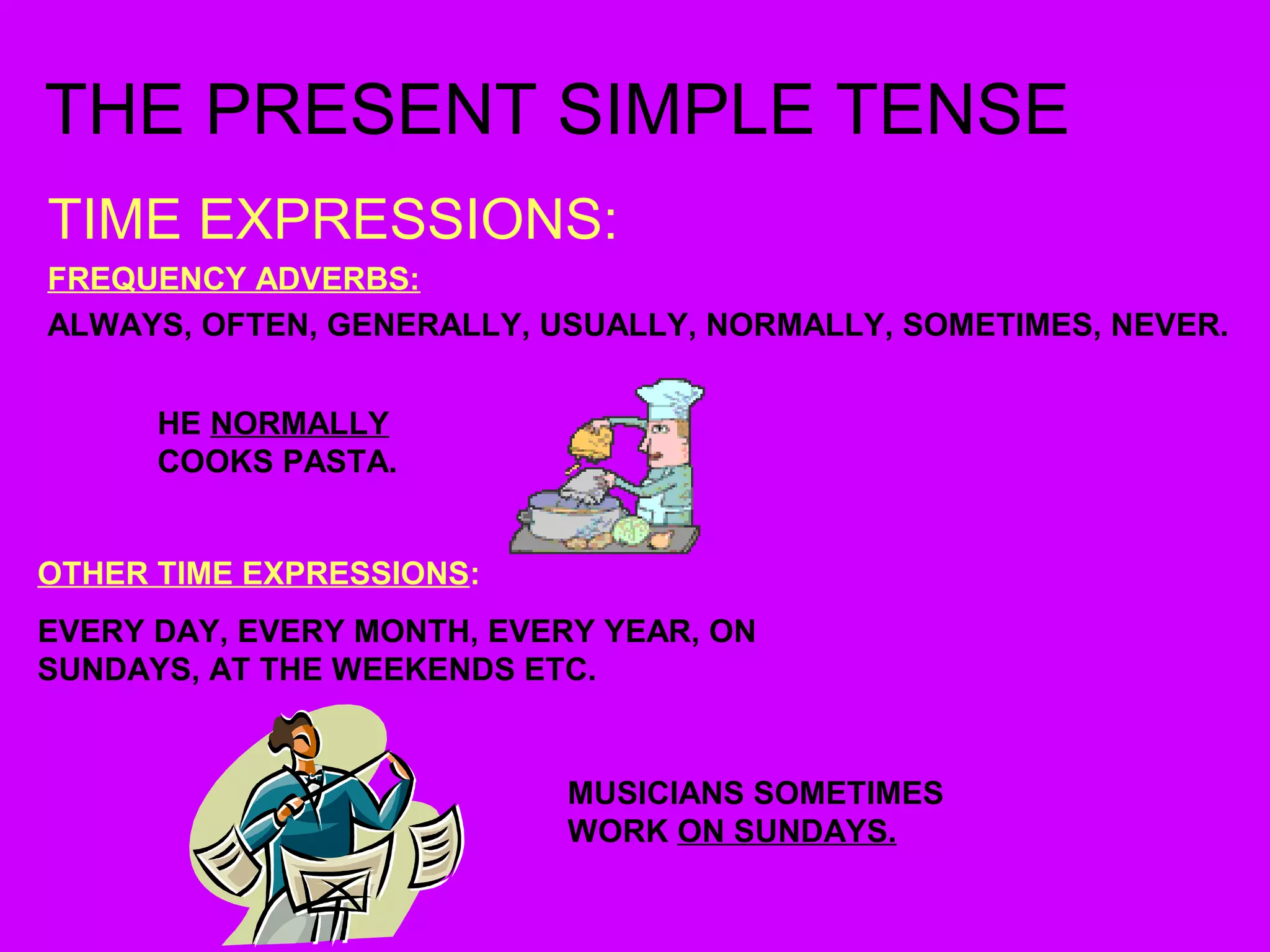
HE NORMALLY
COOKS PASTA.
OTHER TIME EXPRESSIONS:
EVERY DAY, EVERY MONTH, EVERY YEAR, ON
SUNDAYS, AT THE WEEKENDS ETC.
MUSICIANS SOMETIMES
WORK ON SUNDAYS.

The present-simple

  • 1.
    THE PRESENT SIMPLETENSE (Affirmative) She works on her basket after dinner every day.
  • 2.
    THE PRESENT SIMPLETENSE AFFIRMATIVE: WORK I YOU WORK SHE HE IT WORKS WE YOU THEY WORK
  • 3.
    3rd person singular -spelling 1. In general, the third person singular is formed by adding an s to the base verb. work He works 2. Verbs ending in ss, x, ch, sh, o add “es” to the third person singular. dress She dresses fix He fixes watch She watches T.V. wash She washes go It goes ! 3. Verbs ending in consonant + y, changes the y to i and add “es”. Consonant + y  i + es: cry – cries, fly – flies, terrify - terrifies
  • 4.
    What’s the 3rd personsingular? 1) push 2) sneeze 3) glorify 4) annoy 5) kiss 6) deny 7) marry  pushes  sneezes  glorifies  annoys  kisses  denies  marries
  • 5.
    THE PRESENT SIMPLETENSE (Interrogative) DODOESES HEHE WORKWORK AS A DOCTOR? YES, HE DOES.
  • 6.
    THE PRESENT SIMPLETENSE INTERROGATIVE: WORK DO I YOU WORK? DOES SHE HE IT WORK? DO WE YOU THEY WORK?
  • 7.
    THE PRESENT SIMPLETENSE (Negative) HE DOESN’T WORK AS A DOCTOR, HE WORKS AS A TAXI DRIVER.
  • 8.
    THE PRESENT SIMPLETENSE NEGATIVE: WORK I YOU DO NOT DON’T WORK SHE HE IT DOES NOT DOESN’T WORK WE YOU THEY DO NOT DON’T WORK
  • 9.
    The Present SimpleTense is used to describe: 1. Facts which are always true – general truths, e.g. facts in science and geographical descriptions. Water freezes at 0 degrees. 0º
  • 10.
    The Present SimpleTense is used to describe: 2. Actions that happen regularly (Habitual actions). A frequency adverb is often used. They usually take a walk with their son.
  • 11.
    The Present SimpleTense is used to describe: 3. Opinions, likes and feelings. She likes making snowmen.
  • 12.
    THE PRESENT SIMPLETENSE TIME EXPRESSIONS: FREQUENCY ADVERBS: ALWAYS, OFTEN, GENERALLY, USUALLY, NORMALLY, SOMETIMES, NEVER. HE NORMALLY COOKS PASTA. OTHER TIME EXPRESSIONS: EVERY DAY, EVERY MONTH, EVERY YEAR, ON SUNDAYS, AT THE WEEKENDS ETC. MUSICIANS SOMETIMES WORK ON SUNDAYS.