Contact: Sire.Diallo@sharedvalueafrica.com
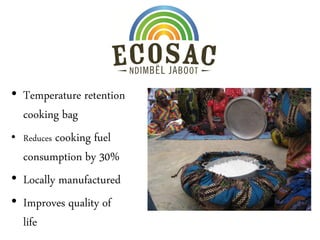
Improved Cookstoves Benefits
• Large domestic fuel
  savings
• Reduced health risk due
  to indoor air pollution
• Prevents deforestation
  and desertification
• Improves livelihoods
  and gender equity
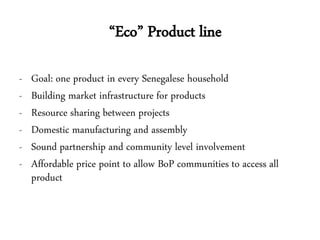
• Temperature retention
  cooking bag
• Reduces cooking fuel
  consumption by 30%
• Locally manufactured
• Improves quality of
  life
“Eco” Product line

-   Goal: one product in every Senegalese household
-   Building market infrastructure for products
-   Resource sharing between projects
-   Domestic manufacturing and assembly
-   Sound partnership and community level involvement
-   Affordable price point to allow BoP communities to access all
    product
What We need: EcoBloc
• The third leg to our “eco” line is a densified cooking fuel using
  agricultural waste and forest residues.
• Multiple feed stocks available for process.
• Proven technology and obvious environmental benefits
• Can undercut charcoal prices by 40%
• Synchronize with existing product line for market access and
  adaptability.
• Equity investment for first installation- 2500 ton/year facility.
  Startup capital cost of project =$225,000
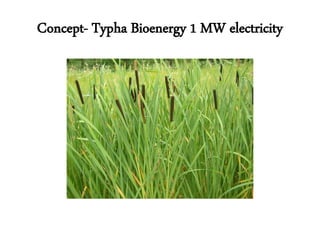
Concept- Typha Bioenergy 1 MW electricity
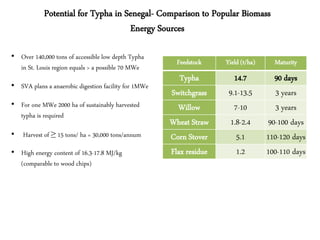
Potential for Typha in Senegal- Comparison to Popular Biomass
                                    Energy Sources

• Over 140,000 tons of accessible low depth Typha
                                                        Feedstock    Yield (t/ha)     Maturity
  in St. Louis region equals > a possible 70 MWe
                                                         Typha          14.7           90 days
• SVA plans a anaerobic digestion facility for 1MWe
                                                      Switchgrass     9.1-13.5         3 years
• For one MWe 2000 ha of sustainably harvested          Willow          7-10           3 years
  typha is required
                                                      Wheat Straw      1.8-2.4       90-100 days
• Harvest of ≥ 15 tons/ ha = 30,000 tons/annum        Corn Stover        5.1        110-120 days
• High energy content of 16.3-17.8 MJ/kg              Flax residue       1.2        100-110 days
  (comparable to wood chips)
Implementing Partners

Netley-Libau Nutrient-Bioenergy Project- IISD and University of Manitoba
• 7 years of research specializing nutrient equilibrium and phosphorus removal though
  typha in marshland ecosystems
• 4 years sustainably harvested Typha for bioenergy (gasification, bio-char and anaerobic
  digestion)
             Prairie Agricultural Machinery Institute

• Expertise in bioenergy technology development
• Custom built typha harvest/ anaerobic digestion equipment
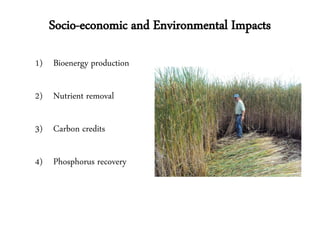
Socio-economic and Environmental Impacts

1) Bioenergy production

2) Nutrient removal

3) Carbon credits

4) Phosphorus recovery
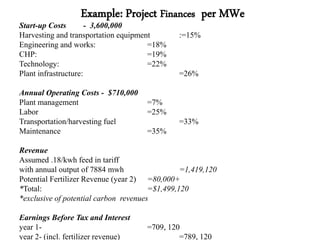
Example: Project Finances per MWe
Start-up Costs        - 3,600,000
Harvesting and transportation equipment        :=15%
Engineering and works:                =18%
CHP:                                  =19%
Technology:                           =22%
Plant infrastructure:                          =26%

Annual Operating Costs - $710,000
Plant management                     =7%
Labor                                =25%
Transportation/harvesting fuel                 =33%
Maintenance                          =35%

Revenue
Assumed .18/kwh feed in tariff
with annual output of 7884 mwh                  =1,419,120
Potential Fertilizer Revenue (year 2) =80,000+
*Total:                                =$1,499,120
*exclusive of potential carbon revenues

Earnings Before Tax and Interest
year 1-                              =709, 120
year 2- (incl. fertilizer revenue)            =789, 120
Contact:
Sire.Diallo@sharedvalueafrica.com

6 fa sva_siré_diallo

  • 1.
  • 2.
    Improved Cookstoves Benefits •Large domestic fuel savings • Reduced health risk due to indoor air pollution • Prevents deforestation and desertification • Improves livelihoods and gender equity
  • 3.
    • Temperature retention cooking bag • Reduces cooking fuel consumption by 30% • Locally manufactured • Improves quality of life
  • 4.
    “Eco” Product line - Goal: one product in every Senegalese household - Building market infrastructure for products - Resource sharing between projects - Domestic manufacturing and assembly - Sound partnership and community level involvement - Affordable price point to allow BoP communities to access all product
  • 5.
    What We need:EcoBloc • The third leg to our “eco” line is a densified cooking fuel using agricultural waste and forest residues. • Multiple feed stocks available for process. • Proven technology and obvious environmental benefits • Can undercut charcoal prices by 40% • Synchronize with existing product line for market access and adaptability. • Equity investment for first installation- 2500 ton/year facility. Startup capital cost of project =$225,000
  • 6.
    Concept- Typha Bioenergy1 MW electricity
  • 7.
    Potential for Typhain Senegal- Comparison to Popular Biomass Energy Sources • Over 140,000 tons of accessible low depth Typha Feedstock Yield (t/ha) Maturity in St. Louis region equals > a possible 70 MWe Typha 14.7 90 days • SVA plans a anaerobic digestion facility for 1MWe Switchgrass 9.1-13.5 3 years • For one MWe 2000 ha of sustainably harvested Willow 7-10 3 years typha is required Wheat Straw 1.8-2.4 90-100 days • Harvest of ≥ 15 tons/ ha = 30,000 tons/annum Corn Stover 5.1 110-120 days • High energy content of 16.3-17.8 MJ/kg Flax residue 1.2 100-110 days (comparable to wood chips)
  • 8.
    Implementing Partners Netley-Libau Nutrient-BioenergyProject- IISD and University of Manitoba • 7 years of research specializing nutrient equilibrium and phosphorus removal though typha in marshland ecosystems • 4 years sustainably harvested Typha for bioenergy (gasification, bio-char and anaerobic digestion) Prairie Agricultural Machinery Institute • Expertise in bioenergy technology development • Custom built typha harvest/ anaerobic digestion equipment
  • 9.
    Socio-economic and EnvironmentalImpacts 1) Bioenergy production 2) Nutrient removal 3) Carbon credits 4) Phosphorus recovery
  • 10.
    Example: Project Financesper MWe Start-up Costs - 3,600,000 Harvesting and transportation equipment :=15% Engineering and works: =18% CHP: =19% Technology: =22% Plant infrastructure: =26% Annual Operating Costs - $710,000 Plant management =7% Labor =25% Transportation/harvesting fuel =33% Maintenance =35% Revenue Assumed .18/kwh feed in tariff with annual output of 7884 mwh =1,419,120 Potential Fertilizer Revenue (year 2) =80,000+ *Total: =$1,499,120 *exclusive of potential carbon revenues Earnings Before Tax and Interest year 1- =709, 120 year 2- (incl. fertilizer revenue) =789, 120
  • 11.