
How to Make Your Farm Carbon Neutral & Teach about it Wayne Castonguay- Director of Center for Agriculture and Environment Meghan Connolly-Education Coordinator, Weir River Farm
 
Meg’s Trustees introduction here


Climate Change Its all about the carbon cycle
What are the gases of concern? How much does TTOR contribute? How can we reduce our carbon footprint? What is the opportunity for TTOR with respect to carbon trading and carbon sequestration to help offset our footprint?   Four Key Questions
Different greenhouse gases have different  Global Warming Potential (GWP): CO2e is the common unit Carbon Dioxide (CO 2 ):  fossil fuel combustion Methane (CH 4 ):  manure, decomposition Nitrous Oxide (N 2 O):  nitrogen fertilizer 1 unit of CO 2  =  1  CO 2 e quivalents 1 unit of CH 4  =  23  CO 2 e quivalents 1 unit of N 2 O =  298  CO 2 e quivalents Gases of Concern
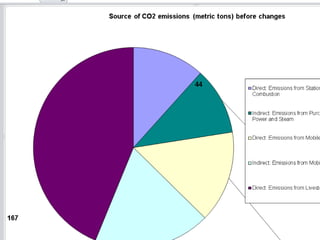
Berkshires 12% Pioneer Valley 4% Central 8% Northeast 44% Greater Boston 26% Southeast 5% Carbon Footprint 1,640 MT CO2 The 1,640 metric ton carbon footprint is based on the total energy use calculated for all utilities including, propane, fuel oil, natural gas, electricity, and the use of gasoline for our fleet of trucks and mileage reimbursement.
The Trustees’ Agriculture Program Goals: Through food & agriculture, help increase the  sustainability of our society; Support healthy, active and green communities by  helping to build a sustainable local food system accessible to all people; Connect many more people to land & conservation through food & agriculture
 
 
Attributes of Appleton Farms A Working Farm 1,000 acres located w/in 25 miles of downtown Boston Oldest continuously operated farm in country (c.1636) Legacy of an American Founding Family Hundreds of acres in active agriculture Ecologically friendly, economically viable and sustainable  Grass-based livestock agriculture Community Supported Agriculture  Value-added farm products Recreation & education programs
 
 
Property Management Property Management
Dairy and Livestock
Community Supported Agriculture (CSA)
Engagement
Goal: Eliminate Carbon Footprint
Options for Appleton Farms reduce the carbon footprint of operations generate renewable energy on-site offset our carbon footprint by  sequestering carbon on our land purchase carbon offsets in the marketplace
Decision Making Criteria at Appleton Farms A. Reducing Carbon Footprint first step Begin with measuring carbon footprint  Conduct cost-benefit analysis of improvement or activity Implement obvious best management practices Focus on reducing big 3 source of footprint: transportation/equipment, building heating, electricity usage (beware of biofuels) Minimal opportunity to reduce footprint of cattle
Decision Making Criteria at Appleton Farms B. Opportunities for carbon offsets second step Green on-site generation of heat & power Carbon sequestration in forests and soils on farm Purchase of carbon offsets in marketplace (or obtain offsets from other ttor/private land)
Carbon Sequestration on Land Only Two Viable Choices for Appleton Farms: Trees  Soils
Increased storage of C in forests Storage of C in wood products Substitution of  - wood for fossil fuels  - wood products for GHG intensive  materials (steel, aluminum, concrete) Forest resources can mitigate GHG emissions by:
Substitution of Wood for Fossil Fuels As direct biofuel; heat or co-firing for electricity Substitute for GHG intensive products (concrete, steel, aluminum)
Combustion Efficiency  TARM Wood Gasification boiler 1800 °C  80-85% eff. Harmon pellet stove 80-85% eff.
Soil Carbon Sequestration Conversion of disturbed, tilled land and lawns to grasslands  Only works in specific soil types with net capacity Intensive rotational grazing is only effective tool to sequester significant amounts of carbon in soil  Significant monitoring required to verify pre existing soil carbon levels and annual amount of carbon sequestered Management activities must be committed to over a specified period of time to be used as an offset or credit
C Sequestration in Soil Potential varies with current soil OC level and texture field M  Jones  farm C sequestration potential 0   100 % Silt + Clay Soil Organic Carbon Minimum - intensive tillage Maximum - no-tillage Manageable Range of SOC
Pattern of C Sequestration  in Soil New Maximum  C Level Soil Organic Carbon Conventional  tillage Change to No-tillage  0  50 Time (yr)
Eliminating our carbon footprint The Appleton Farms Plan: goal is to become first commercial scale carbon-neutral farm in MA Adopt best management practices everywhere - recycle everything & conserve - eliminate trash dumpster - change to efficient lighting/equipment, etc. - eliminate vehicle/equipment trips (meetings!) - adopt energy efficiencies in 22 buildings - buy local  - think green in all future decisions - convert propane/oil to electric/biodiesel
Eliminating our carbon footprint (cont.) Change fleet and equipment to biodiesel & electric - convert 3 on-road gas trucks to biodiesel - convert 3 off-road gas trucks to biodiesel - replace gas utility ATV’s with electric  - replace gas ATV with biodiesel ATV - replace gas lawn mowers with biodiesel - use biodiesel in all diesel equipment    (tractors, backhoe, skid steer, etc.) Eliminate commercial fertilizers Organic production & land management
Eliminating our carbon footprint (cont.) Install wind power & photovoltaics - 100KW wind turbine on Sunset Hill - 50 & 15 KW photovoltaic array’s Biomass & biodiesel building heating - heat greenhouses, barns and shops with wood - heat houses with biodiesel Carbon sequestration in topsoil and forests - sequester 1000 tons C/yr in soil - replant old tree plantations with new trees - mange forests to increase C sequestration
Appleton Farms Carbon-counting Model


OUR PLACE IN YOUR GREENER FUTURE Powisset Farm, Dover
“ Sustainable is meeting the needs of the present without compromising the ability of future generations to meet their own needs” -UN World Commission on Environment and Development
TTOR Engagement Cycle How We Teach About It
Lead by Example Low on engagement cycle CSA Green Building Tours Sustainable Ag Tours
Weir River Farm, Hingham
Gaining Real Skills Individual Ownership Composting Canning, extending harvest How to weatherize your home Keeping backyard chickens
 
Mobilizing More People to Act
Empowering Activists Training and Mentoring people to make sustainable choices •  Youth Corps High Level Volunteers Discussion Course
Inspiration From Others Northwest Earth Institute www.nwei.org
Apeiron Institute for Sustainable Living, Rhode Island www.apeiron.org
Group Discussion What programs are you offering, have participated in or heard of that help people move towards making more thoughtful decisions?
Group Reporting Share one program from each group that achieved desired outcome.  How did you measure success?
What concrete steps can you offer others so they can emulate these successful programs at their own sites?
 

How to Make Your Farm Carbon Neutral & Teach About It

  • 1.
    How to MakeYour Farm Carbon Neutral & Teach about it Wayne Castonguay- Director of Center for Agriculture and Environment Meghan Connolly-Education Coordinator, Weir River Farm
  • 2.
  • 3.
  • 4.
  • 5.
  • 6.
  • 7.
  • 8.
  • 9.
  • 10.
  • 11.
  • 12.
  • 13.
    Climate Change Itsall about the carbon cycle
  • 14.
    What are thegases of concern? How much does TTOR contribute? How can we reduce our carbon footprint? What is the opportunity for TTOR with respect to carbon trading and carbon sequestration to help offset our footprint? Four Key Questions
  • 15.
    Different greenhouse gaseshave different Global Warming Potential (GWP): CO2e is the common unit Carbon Dioxide (CO 2 ): fossil fuel combustion Methane (CH 4 ): manure, decomposition Nitrous Oxide (N 2 O): nitrogen fertilizer 1 unit of CO 2 = 1 CO 2 e quivalents 1 unit of CH 4 = 23 CO 2 e quivalents 1 unit of N 2 O = 298 CO 2 e quivalents Gases of Concern
  • 16.
    Berkshires 12% PioneerValley 4% Central 8% Northeast 44% Greater Boston 26% Southeast 5% Carbon Footprint 1,640 MT CO2 The 1,640 metric ton carbon footprint is based on the total energy use calculated for all utilities including, propane, fuel oil, natural gas, electricity, and the use of gasoline for our fleet of trucks and mileage reimbursement.
  • 17.
    The Trustees’ AgricultureProgram Goals: Through food & agriculture, help increase the sustainability of our society; Support healthy, active and green communities by helping to build a sustainable local food system accessible to all people; Connect many more people to land & conservation through food & agriculture
  • 18.
  • 19.
  • 20.
    Attributes of AppletonFarms A Working Farm 1,000 acres located w/in 25 miles of downtown Boston Oldest continuously operated farm in country (c.1636) Legacy of an American Founding Family Hundreds of acres in active agriculture Ecologically friendly, economically viable and sustainable Grass-based livestock agriculture Community Supported Agriculture Value-added farm products Recreation & education programs
  • 21.
  • 22.
  • 23.
  • 24.
  • 25.
  • 26.
  • 27.
  • 28.
    Options for AppletonFarms reduce the carbon footprint of operations generate renewable energy on-site offset our carbon footprint by sequestering carbon on our land purchase carbon offsets in the marketplace
  • 29.
    Decision Making Criteriaat Appleton Farms A. Reducing Carbon Footprint first step Begin with measuring carbon footprint Conduct cost-benefit analysis of improvement or activity Implement obvious best management practices Focus on reducing big 3 source of footprint: transportation/equipment, building heating, electricity usage (beware of biofuels) Minimal opportunity to reduce footprint of cattle
  • 30.
    Decision Making Criteriaat Appleton Farms B. Opportunities for carbon offsets second step Green on-site generation of heat & power Carbon sequestration in forests and soils on farm Purchase of carbon offsets in marketplace (or obtain offsets from other ttor/private land)
  • 31.
    Carbon Sequestration onLand Only Two Viable Choices for Appleton Farms: Trees Soils
  • 32.
    Increased storage ofC in forests Storage of C in wood products Substitution of - wood for fossil fuels - wood products for GHG intensive materials (steel, aluminum, concrete) Forest resources can mitigate GHG emissions by:
  • 33.
    Substitution of Woodfor Fossil Fuels As direct biofuel; heat or co-firing for electricity Substitute for GHG intensive products (concrete, steel, aluminum)
  • 34.
    Combustion Efficiency TARM Wood Gasification boiler 1800 °C 80-85% eff. Harmon pellet stove 80-85% eff.
  • 35.
    Soil Carbon SequestrationConversion of disturbed, tilled land and lawns to grasslands Only works in specific soil types with net capacity Intensive rotational grazing is only effective tool to sequester significant amounts of carbon in soil Significant monitoring required to verify pre existing soil carbon levels and annual amount of carbon sequestered Management activities must be committed to over a specified period of time to be used as an offset or credit
  • 36.
    C Sequestration inSoil Potential varies with current soil OC level and texture field M Jones farm C sequestration potential 0 100 % Silt + Clay Soil Organic Carbon Minimum - intensive tillage Maximum - no-tillage Manageable Range of SOC
  • 37.
    Pattern of CSequestration in Soil New Maximum C Level Soil Organic Carbon Conventional tillage Change to No-tillage 0 50 Time (yr)
  • 38.
    Eliminating our carbonfootprint The Appleton Farms Plan: goal is to become first commercial scale carbon-neutral farm in MA Adopt best management practices everywhere - recycle everything & conserve - eliminate trash dumpster - change to efficient lighting/equipment, etc. - eliminate vehicle/equipment trips (meetings!) - adopt energy efficiencies in 22 buildings - buy local - think green in all future decisions - convert propane/oil to electric/biodiesel
  • 39.
    Eliminating our carbonfootprint (cont.) Change fleet and equipment to biodiesel & electric - convert 3 on-road gas trucks to biodiesel - convert 3 off-road gas trucks to biodiesel - replace gas utility ATV’s with electric - replace gas ATV with biodiesel ATV - replace gas lawn mowers with biodiesel - use biodiesel in all diesel equipment (tractors, backhoe, skid steer, etc.) Eliminate commercial fertilizers Organic production & land management
  • 40.
    Eliminating our carbonfootprint (cont.) Install wind power & photovoltaics - 100KW wind turbine on Sunset Hill - 50 & 15 KW photovoltaic array’s Biomass & biodiesel building heating - heat greenhouses, barns and shops with wood - heat houses with biodiesel Carbon sequestration in topsoil and forests - sequester 1000 tons C/yr in soil - replant old tree plantations with new trees - mange forests to increase C sequestration
  • 41.
  • 42.
  • 43.
  • 44.
  • 45.
  • 46.
  • 47.
  • 48.
  • 49.
  • 50.
    OUR PLACE INYOUR GREENER FUTURE Powisset Farm, Dover
  • 51.
    “ Sustainable ismeeting the needs of the present without compromising the ability of future generations to meet their own needs” -UN World Commission on Environment and Development
  • 52.
    TTOR Engagement CycleHow We Teach About It
  • 53.
    Lead by ExampleLow on engagement cycle CSA Green Building Tours Sustainable Ag Tours
  • 54.
  • 55.
    Gaining Real SkillsIndividual Ownership Composting Canning, extending harvest How to weatherize your home Keeping backyard chickens
  • 56.
  • 57.
  • 58.
    Empowering Activists Trainingand Mentoring people to make sustainable choices • Youth Corps High Level Volunteers Discussion Course
  • 59.
    Inspiration From OthersNorthwest Earth Institute www.nwei.org
  • 60.
    Apeiron Institute forSustainable Living, Rhode Island www.apeiron.org
  • 61.
    Group Discussion Whatprograms are you offering, have participated in or heard of that help people move towards making more thoughtful decisions?
  • 62.
    Group Reporting Shareone program from each group that achieved desired outcome. How did you measure success?
  • 63.
    What concrete stepscan you offer others so they can emulate these successful programs at their own sites?
  • 64.

Editor's Notes

  • #10 This is an ongoing work in progress What we’ll walk thru today and want you to take away Outline
  • #33 Forest resources can mitigate GHG emissions by storage or sequestration in living forests and wood products. However, we should also consider whether greater GHG benefits can be realized by using wood to displace fossil fuel intensive products such as those listed.
  • #34 Substitution of wood for fossil fuels is an alternative to simply storing C in wood. The substitution can be direct, e.g. burning wood for heat or co-firing with coal for electricity generation. Or, it can be indirect by substituting wood for materials such as concrete, aluminum and steel that GHG intensive, requiring lots of fossil fuel to manufacture. Much of this would be in the construction industry.
  • #35 If wood is used as a fuel the combustion process needs to be efficient. Low efficiencies of wood stoves has caused many to associate wood burning with atmospheric pollution. This does not have to be the case. Modern gasification combustion processes can be highly efficient for providing heat or combined heat and power. A range of wood products such as logs, chips and pellets can all be used. These two home heating systems use supplementary air to assist gasification/combustion.
  • #37 Soils have a manageable range of organic carbon. The minimum represents intensely tilled soils where all macroaggregates (>0.25 mm) have been destroyed but microaggregates (<0.25 mm) persist. The maximum SOC level is where soil is not disturbed, i.e. no-till, or NT. Soil texture is a very important to the formation of aggregates which protect SOM from decomposition by a mixture of physical and chemical mechanisms. Coarse textured (sandy) soils have little potential to form aggregates as their particle size is too large. In contrast fine textures soils (clays), where surface areas are high and surfaces are reactive, have a high potential to form aggregates and hence protect SOM. Consequently SOM, or SOC, levels vary as a function of texture. Changes in residue inputs will have small impacts on soil OC levels but will alter the rate of gain after adoption of NT. Most soils on farms are somewhere between the potential minimum and maximum values, e.g. field M of the Jones farm. The C sequestration potential is the difference between the current soil C level and the and maximum under NT for the particular soil texture.
  • #38 C sequestration will not follow a linear pattern; its starts slowly, reaches a maximum rate then declines as the new (higher) SOC equilibrium level is approached. It is not clear why the initial rate of gain is low, but it may be related to the time it takes to re-establish faunal populations that assist aggregate formation. Re-emphasize that this is reversible with tillage and that rate of C loss is faster than rate of C gain under NT.
  • #56 Learning by Doing: Stewardship is best understood through hands-on learning and individual ownership. We are uniquely positioned to engage people in authentic and relevant work. By providing skill building experiences, we deepen connections to our work and empower them to carry those skills back to their own lives and communities.