OPTIMIZING EFFICIENCY:
THE 5S WORKPLACE
ORGANIZATION
METHODOLOGY
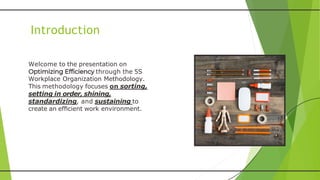
Welcome to the presentation on
through the 5S
Workplace Organization Methodology.
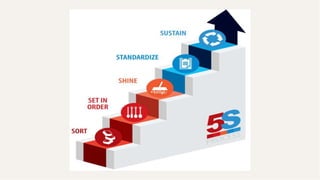
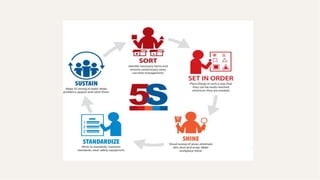
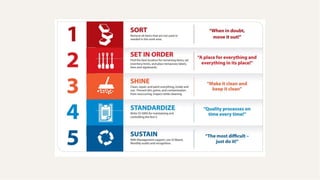
This methodology focuses on sorting,
setting in order, shining,
standardizing, and sustaining to
create an efficient work environment.
Introduction
Sort
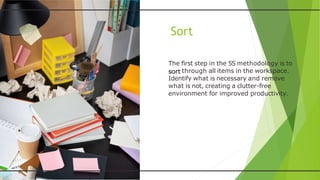
The first step in the 5S methodology is to
through all items in the workspace.
Identify what is necessary and remove
what is not, creating a clutter-free
environment for improved productivity.
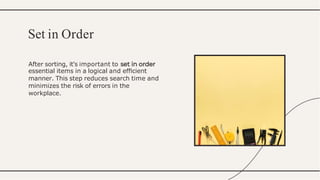
After sorting, it's important to
essential items in a logical and efficient
manner. This step reduces search time and
minimizes the risk of errors in the
workplace.
Set in Order
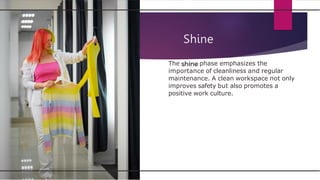
Shine
The phase emphasizes the
importance of cleanliness and regular
maintenance. A clean workspace not only
improves safety but also promotes a
positive work culture.
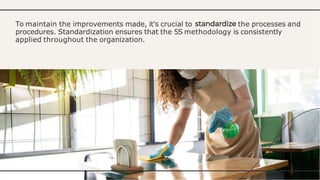
To maintain the improvements made, it's crucial to the processes and
procedures. Standardization ensures that the 5S methodology is consistently
applied throughout the organization.
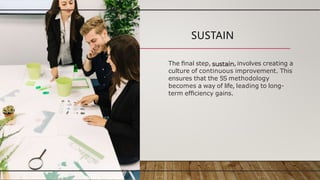
SUSTAIN
The final step, ,involves creating a
culture of continuous improvement. This
ensures that the 5S methodology
becomes a way of life, leading to long-
term efficiency gains.
Implementing the 5S methodology brings
numerous benefits, including improved
and
.It also leads to cost savings and
enhanced customer satisfaction.
Benefits
Explore real-world examples of
organizations that have successfully
implemented the 5S methodology. Learn
from their experiences and understand
the impact of this methodology on various
industries.
Case Studies
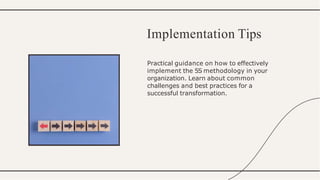
Practical guidance on how to effectively
implement the 5S methodology in your
organization. Learn about common
challenges and best practices for a
successful transformation.
Implementation Tips
In conclusion, the 5S Workplace
Organization Methodology is a powerful
tool for optimizing efficiency and creating
a culture of continuous improvement. By
embracing the principles of
and
organizations can achieve lasting success.
Conclusion
Thanks!
SURIAPRAGASEAM
HUMAN RESOURCE
DEVELOPMENT TRAINER
KMPS

5S WORKPLACE ORGANIZATION AND WORKPLACES

  • 1.
    OPTIMIZING EFFICIENCY: THE 5SWORKPLACE ORGANIZATION METHODOLOGY
  • 2.
    Welcome to thepresentation on through the 5S Workplace Organization Methodology. This methodology focuses on sorting, setting in order, shining, standardizing, and sustaining to create an efficient work environment. Introduction
  • 3.
    Sort The first stepin the 5S methodology is to through all items in the workspace. Identify what is necessary and remove what is not, creating a clutter-free environment for improved productivity.
  • 4.
    After sorting, it'simportant to essential items in a logical and efficient manner. This step reduces search time and minimizes the risk of errors in the workplace. Set in Order
  • 5.
    Shine The phase emphasizesthe importance of cleanliness and regular maintenance. A clean workspace not only improves safety but also promotes a positive work culture.
  • 6.
    To maintain theimprovements made, it's crucial to the processes and procedures. Standardization ensures that the 5S methodology is consistently applied throughout the organization.
  • 7.
    SUSTAIN The final step,,involves creating a culture of continuous improvement. This ensures that the 5S methodology becomes a way of life, leading to long- term efficiency gains.
  • 11.
    Implementing the 5Smethodology brings numerous benefits, including improved and .It also leads to cost savings and enhanced customer satisfaction. Benefits
  • 12.
    Explore real-world examplesof organizations that have successfully implemented the 5S methodology. Learn from their experiences and understand the impact of this methodology on various industries. Case Studies
  • 13.
    Practical guidance onhow to effectively implement the 5S methodology in your organization. Learn about common challenges and best practices for a successful transformation. Implementation Tips
  • 14.
    In conclusion, the5S Workplace Organization Methodology is a powerful tool for optimizing efficiency and creating a culture of continuous improvement. By embracing the principles of and organizations can achieve lasting success. Conclusion
  • 15.