Sales & Menus
Which Comes First
Maximize your Menu
Forecast Sales
ChefMichaelScott
LeadChefInstructorAESCA
Boulder
Today’s Lesson
• Sales Forecast
• Menu Mix
• Contribution to Margin
• Menu item contribution
• Stars, Puzzles, Plow Horse, Dog
• The menu as a financial tool
ChefMichaelScott
LeadChefInstructorAESCA
Boulder
Sales Forecasting
• Total Number of Seats
• Number of Tables
• Two top, Four top, Family style dining
• Take out
• Bar service
• Number of turns
• Daily volume
• Maximize hours
• Track & adjust
ChefMichaelScott
LeadChefInstructorAESCA
Boulder
Forecasting vs. Tracking
Forecasting is an educated estimate of potential sales
• Use industry standards
• Start with capacity
• Adjust each month by % of capacity
• Utilize Contribution Margin
Tracking monitors the movement and impact of menu
items
• Use actual sales numbers
• Utilize Contribution Margin
• Utilize Menu Mix
ChefMichaelScott
LeadChefInstructorAESCA
Boulder
Menu Engineering
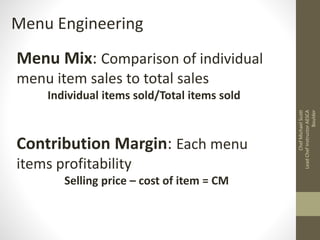
Menu Mix: Comparison of individual
menu item sales to total sales
Individual items sold/Total items sold
Contribution Margin: Each menu
items profitability
Selling price – cost of item = CM
ChefMichaelScott
LeadChefInstructorAESCA
Boulder
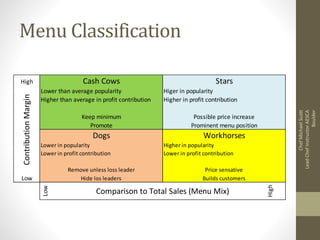
Menu Classification
High
Higher in popularity
Lower in profit contribution
Low
Low
High
Cash Cows Stars
Higher than average in profit contribution
Keep minimum
Promote
Lower than average popularity Higer in popularity
Higher in profit contribution
ContributionMargin
Comparison to Total Sales (Menu Mix)
Possible price increase
Prominent menu position
Lower in popularity
Lower in profit contribution
Remove unless loss leader
Hide los leaders
Price sensative
Builds customers
Dogs Workhorses
ChefMichaelScott
LeadChefInstructorAESCA
Boulder
Calculating Sales
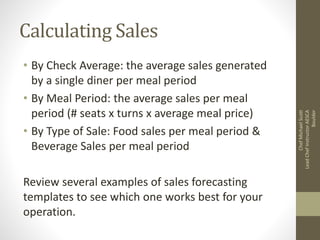
• By Check Average: the average sales generated
by a single diner per meal period
• By Meal Period: the average sales per meal
period (# seats x turns x average meal price)
• By Type of Sale: Food sales per meal period &
Beverage Sales per meal period
Review several examples of sales forecasting
templates to see which one works best for your
operation.
ChefMichaelScott
LeadChefInstructorAESCA
Boulder

53 sales & menu

  • 1.
    Sales & Menus WhichComes First Maximize your Menu Forecast Sales ChefMichaelScott LeadChefInstructorAESCA Boulder
  • 2.
    Today’s Lesson • SalesForecast • Menu Mix • Contribution to Margin • Menu item contribution • Stars, Puzzles, Plow Horse, Dog • The menu as a financial tool ChefMichaelScott LeadChefInstructorAESCA Boulder
  • 3.
    Sales Forecasting • TotalNumber of Seats • Number of Tables • Two top, Four top, Family style dining • Take out • Bar service • Number of turns • Daily volume • Maximize hours • Track & adjust ChefMichaelScott LeadChefInstructorAESCA Boulder
  • 4.
    Forecasting vs. Tracking Forecastingis an educated estimate of potential sales • Use industry standards • Start with capacity • Adjust each month by % of capacity • Utilize Contribution Margin Tracking monitors the movement and impact of menu items • Use actual sales numbers • Utilize Contribution Margin • Utilize Menu Mix ChefMichaelScott LeadChefInstructorAESCA Boulder
  • 5.
    Menu Engineering Menu Mix:Comparison of individual menu item sales to total sales Individual items sold/Total items sold Contribution Margin: Each menu items profitability Selling price – cost of item = CM ChefMichaelScott LeadChefInstructorAESCA Boulder
  • 6.
    Menu Classification High Higher inpopularity Lower in profit contribution Low Low High Cash Cows Stars Higher than average in profit contribution Keep minimum Promote Lower than average popularity Higer in popularity Higher in profit contribution ContributionMargin Comparison to Total Sales (Menu Mix) Possible price increase Prominent menu position Lower in popularity Lower in profit contribution Remove unless loss leader Hide los leaders Price sensative Builds customers Dogs Workhorses ChefMichaelScott LeadChefInstructorAESCA Boulder
  • 7.
    Calculating Sales • ByCheck Average: the average sales generated by a single diner per meal period • By Meal Period: the average sales per meal period (# seats x turns x average meal price) • By Type of Sale: Food sales per meal period & Beverage Sales per meal period Review several examples of sales forecasting templates to see which one works best for your operation. ChefMichaelScott LeadChefInstructorAESCA Boulder