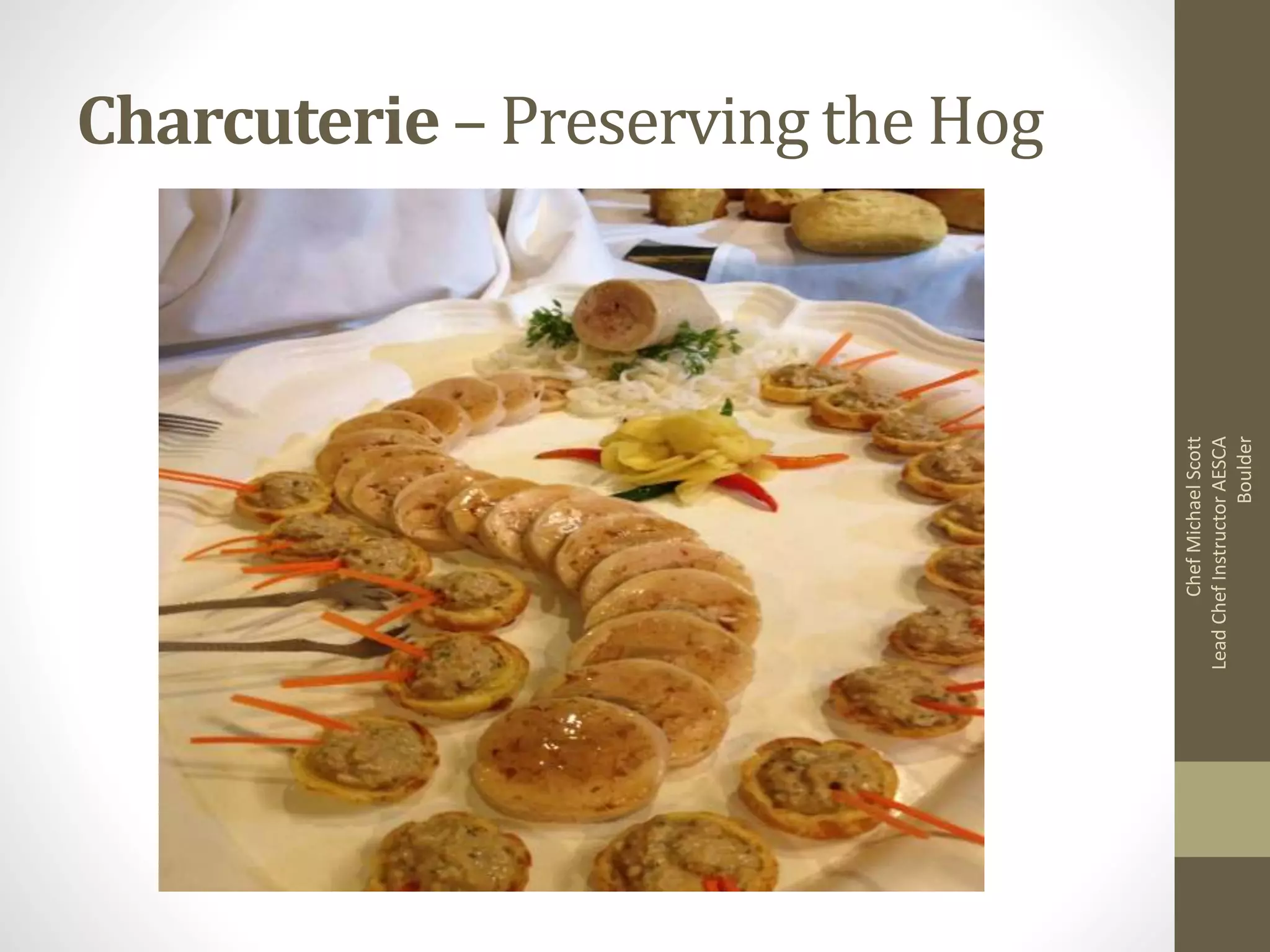

Charcuterie – Preserving the Hog
ChefMichaelScott
LeadChefInstructorAESCA
Boulder
Charcuterie: French for “Pork Butcher’s Shop”, originally
developed as a way of preserving meats primarily pork
• Cured meats
• Hams
• Sausages
• Pâtés & Terrines
Garde manger: French for “Keeper of the Food”
• Salads
• Hot food presented cold
• Hors d’oeuvres
• Buffet presentations
• Show pieces
ChefMichaelScott
LeadChefInstructorAESCA
Boulder
Forcemeats
A preparation of uncooked ground meat, poultry, fish or
shellfish that is seasoned and emulsified with fats.
• Used in making pâtés, terrines, galantines & sausages
• Textures vary from smooth and velvety to course
• May include garnishes to compliment flavor and
presentation
• May be served hot or cold
Important considerations when making forcemeat
• Ratio of fat to meat
• Proper emulsification (temperature control Below 41 ̊F)
• Seasoning (test your forcemeat before continuing)
ChefMichaelScott
LeadChefInstructorAESCA
Boulder
Ingredients Used in Forcemeat
• Meat – the predominant meat is referred to when naming
and gives it the essential flavor
• Other meats may be used as fillers, for their fat content or
as garnish
• Fats – add moisture and richness
• Pork fatback is the most common fat used
• Binders – help maintain texture and emulsification
• Panada: crust-less white bread soaked in milk or cream
• Eggs
• Seasoning
• Salts & curing salts (preservatives)
• Marinades, herbs and spices
• Garnishes
ChefMichaelScott
LeadChefInstructorAESCA
Boulder
Curing Salts
Sodium Nitrite & Nitrate – Also known as pink salt or tinted
curing mix (TCM)
• Nitrite = nitrogen + 2 oxygen molecules
• Nitrate = nitrogen + 3 oxygen molecules – nitrates take longer
to breakdown therefor have a longer shelf life
Nitrites and Nitrates are mixed with salt to form Sodium Nitrite
(Nitrate) which is used to flavor and preserve meats especially
the color.
Pâté spice: a mixture of spices and herbs that can be premixed
and used as needed
ChefMichaelScott
LeadChefInstructorAESCA
Boulder
Equipment and Safety
• High quality meat grinder with various size dies
• Robot coup
• Drum sieve or tamis
• Sausage stuffer
• Various molds
Warning: potentially hazardous food
• Keep all equipment and tools free from cross contamination
• Keep all product out of the danger zone (41 ̊F or below)
• Keep grinding equipment in ice bath
• Cut product into small pieces for ease in grinding and to
prevent friction
ChefMichaelScott
LeadChefInstructorAESCA
Boulder
Types of Forcemeat
Country Style
• Simplest to prepare
• Heavily seasoned
Basic
• Smoother and more refined
• Most versatile
Mousseline
• Light, airy and delicate
• Used mostly with seafood and chicken
• Quenelles: mousseline shaped into ovals for either
presentation or testing for seasoning
ChefMichaelScott
LeadChefInstructorAESCA
Boulder
Terminology
• Terrines: when a forcemeat is baked in an earthenware mold
(also called a terrine)
• Pâté: literally means paste and refers to the texture of
forcemeat.
• Can be baked in various vessels, or stuffed into other
ingredients
• Pâté en croûte: a forcemeat wrapped and baked in pastry
• Galantines: Forcemeats wrapped in the skin of the animal and
poached, served cold.
• Ballotines: Forcemeats wrapped in the skin of chickens
(usually the leg/thigh), partially poached then roasted, served
hot.
ChefMichaelScott
LeadChefInstructorAESCA
Boulder
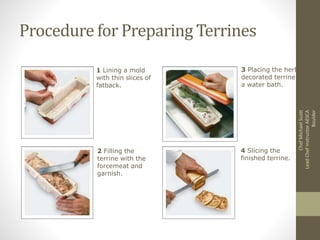
Procedure for Preparing Terrines
1 Lining a mold
with thin slices of
fatback.
2 Filling the
terrine with the
forcemeat and
garnish.
3 Placing the herb-
decorated terrine in
a water bath.
4 Slicing the
finished terrine.
ChefMichaelScott
LeadChefInstructorAESCA
Boulder
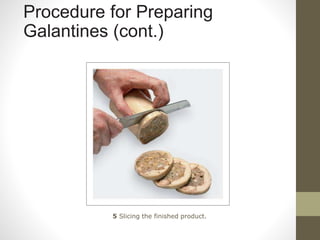
5 Slicing the finished product.
Procedure for Preparing
Galantines (cont.)
ChefMichaelScott
LeadChefInstructorAESCA
Boulder
ChefMichaelScott
LeadChefInstructorAESCA
Boulder
ChefMichaelScott
LeadChefInstructorAESCA
Boulder
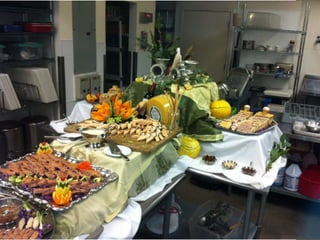
Menu
A selection of Hors d’oeuvres
Cold Hors D’Ouevres
Canapés
Crudités
Dips and Spreads
Hot Hors D’Ouevres
Filled Pastry Shells
Brochettes
Meatballs
Wrapped Hors D’Oeuvres
Filled Dough
A section of Pate and terrine preparations
Terrine using - Country Style Forcemeat
Pate en croute using - Basic Forcemeat
Galantine or Ballotine using Mousseline
A selection of hot and cold sausage
Italian Sausage
Andouille Sausage
Smoked Chicken and Roasted Garlic Sausage
Hot Dogs
Mexican Chorizo
Breakfast Sausage

Charcuterie – preserving the hog

  • 1.
    Charcuterie – Preservingthe Hog ChefMichaelScott LeadChefInstructorAESCA Boulder
  • 2.
    Charcuterie: French for“Pork Butcher’s Shop”, originally developed as a way of preserving meats primarily pork • Cured meats • Hams • Sausages • Pâtés & Terrines Garde manger: French for “Keeper of the Food” • Salads • Hot food presented cold • Hors d’oeuvres • Buffet presentations • Show pieces ChefMichaelScott LeadChefInstructorAESCA Boulder
  • 3.
    Forcemeats A preparation ofuncooked ground meat, poultry, fish or shellfish that is seasoned and emulsified with fats. • Used in making pâtés, terrines, galantines & sausages • Textures vary from smooth and velvety to course • May include garnishes to compliment flavor and presentation • May be served hot or cold Important considerations when making forcemeat • Ratio of fat to meat • Proper emulsification (temperature control Below 41 ̊F) • Seasoning (test your forcemeat before continuing) ChefMichaelScott LeadChefInstructorAESCA Boulder
  • 4.
    Ingredients Used inForcemeat • Meat – the predominant meat is referred to when naming and gives it the essential flavor • Other meats may be used as fillers, for their fat content or as garnish • Fats – add moisture and richness • Pork fatback is the most common fat used • Binders – help maintain texture and emulsification • Panada: crust-less white bread soaked in milk or cream • Eggs • Seasoning • Salts & curing salts (preservatives) • Marinades, herbs and spices • Garnishes ChefMichaelScott LeadChefInstructorAESCA Boulder
  • 5.
    Curing Salts Sodium Nitrite& Nitrate – Also known as pink salt or tinted curing mix (TCM) • Nitrite = nitrogen + 2 oxygen molecules • Nitrate = nitrogen + 3 oxygen molecules – nitrates take longer to breakdown therefor have a longer shelf life Nitrites and Nitrates are mixed with salt to form Sodium Nitrite (Nitrate) which is used to flavor and preserve meats especially the color. Pâté spice: a mixture of spices and herbs that can be premixed and used as needed ChefMichaelScott LeadChefInstructorAESCA Boulder
  • 6.
    Equipment and Safety •High quality meat grinder with various size dies • Robot coup • Drum sieve or tamis • Sausage stuffer • Various molds Warning: potentially hazardous food • Keep all equipment and tools free from cross contamination • Keep all product out of the danger zone (41 ̊F or below) • Keep grinding equipment in ice bath • Cut product into small pieces for ease in grinding and to prevent friction ChefMichaelScott LeadChefInstructorAESCA Boulder
  • 7.
    Types of Forcemeat CountryStyle • Simplest to prepare • Heavily seasoned Basic • Smoother and more refined • Most versatile Mousseline • Light, airy and delicate • Used mostly with seafood and chicken • Quenelles: mousseline shaped into ovals for either presentation or testing for seasoning ChefMichaelScott LeadChefInstructorAESCA Boulder
  • 8.
    Terminology • Terrines: whena forcemeat is baked in an earthenware mold (also called a terrine) • Pâté: literally means paste and refers to the texture of forcemeat. • Can be baked in various vessels, or stuffed into other ingredients • Pâté en croûte: a forcemeat wrapped and baked in pastry • Galantines: Forcemeats wrapped in the skin of the animal and poached, served cold. • Ballotines: Forcemeats wrapped in the skin of chickens (usually the leg/thigh), partially poached then roasted, served hot. ChefMichaelScott LeadChefInstructorAESCA Boulder
  • 9.
    Procedure for PreparingTerrines 1 Lining a mold with thin slices of fatback. 2 Filling the terrine with the forcemeat and garnish. 3 Placing the herb- decorated terrine in a water bath. 4 Slicing the finished terrine. ChefMichaelScott LeadChefInstructorAESCA Boulder
  • 10.
    5 Slicing thefinished product. Procedure for Preparing Galantines (cont.)
  • 11.
  • 12.
  • 13.
    ChefMichaelScott LeadChefInstructorAESCA Boulder Menu A selection ofHors d’oeuvres Cold Hors D’Ouevres Canapés Crudités Dips and Spreads Hot Hors D’Ouevres Filled Pastry Shells Brochettes Meatballs Wrapped Hors D’Oeuvres Filled Dough A section of Pate and terrine preparations Terrine using - Country Style Forcemeat Pate en croute using - Basic Forcemeat Galantine or Ballotine using Mousseline A selection of hot and cold sausage Italian Sausage Andouille Sausage Smoked Chicken and Roasted Garlic Sausage Hot Dogs Mexican Chorizo Breakfast Sausage