Donta’, Macey, Juan, Tyler
 Adulthood is a time of transition.
 It involves shifting priorities and outlooks on
life from adolescence throughout the
remainder of life.
 Middle aged adults hair starts to turn gray,
Skin gets dry also.
 Older aged adults skin becomes wrinkly,
their muscle and fat that have been built up
start to deteriorate.
 They lose weight and get shorter. Senses are
also altered.
 More stimulation becomes required for each
sense.
 Good health reflects a life of making choices
 exercise, diet, and lifestyle.
 avoid cigarettes, drugs, alcohol, and
emotional stress and it will make you look
and feel younger
 The 3 most common causes for bad health in
late adulthood are heart disease, cancer, and
drugs.
 Production of sex hormones drops
tremendously
 Stop ovulating
 No more menstruating
 Cannot conceive
 Calmer, confident, and freer
 Men don’t change biologically
 90 percent of adults in the US will be married at
sometime in their lives
 40 to 60 percent of those marriages will end in a
divorce
 Success or failure in a marriage depends on 2
things: how couples handle conflicts and how
often couples share intimate and happy moments
 Happily married couples and unhappy couples
both argue but happily married couples argue
constructively
 Listen, focus, respect.
 Do not ignore, deny the conflict, exaggerate
issues, or have ugly fights.
 Studies have shown that sexual activity does
not automatically decline with age.
 Those who are inactive are bored with their
partner, have poor physical condition, or have
an illness.
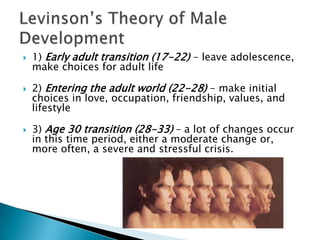
 1) Early adult transition (17-22) - leave adolescence,
make choices for adult life
 2) Entering the adult world (22-28) - make initial
choices in love, occupation, friendship, values, and
lifestyle
 3) Age 30 transition (28-33) – a lot of changes occur
in this time period, either a moderate change or,
more often, a severe and stressful crisis.
 4) Settling down (33-40) - establish a place in
society, have a stable home and children
 5) Mid-life transition ( 40-45) -usually a time of
crisis in the meaning, direction, and value of each
person's life. Also at this time, men becoming
increasingly aware of death and they are
reminded of how short life really is. They
become involved in trying to leave a legacy and
this usually forms the core of the second half of
his life.
 6) Entering middle adulthood (45-50) - choices
must be made, a new life structure formed.
 “Empty Nest” syndrome
-women think that the period after the
children are grown is one of the happiest
times of their lives because they reorganize
their lives by focusing on new interests and
activities
- if a women has a warm relationship with
her husband she may find the adjustment
easier.

5.1 adulthood

  • 1.
  • 2.
     Adulthood isa time of transition.  It involves shifting priorities and outlooks on life from adolescence throughout the remainder of life.
  • 3.
     Middle agedadults hair starts to turn gray, Skin gets dry also.  Older aged adults skin becomes wrinkly, their muscle and fat that have been built up start to deteriorate.  They lose weight and get shorter. Senses are also altered.  More stimulation becomes required for each sense.
  • 4.
     Good healthreflects a life of making choices  exercise, diet, and lifestyle.  avoid cigarettes, drugs, alcohol, and emotional stress and it will make you look and feel younger  The 3 most common causes for bad health in late adulthood are heart disease, cancer, and drugs.
  • 5.
     Production ofsex hormones drops tremendously  Stop ovulating  No more menstruating  Cannot conceive  Calmer, confident, and freer  Men don’t change biologically
  • 6.
     90 percentof adults in the US will be married at sometime in their lives  40 to 60 percent of those marriages will end in a divorce  Success or failure in a marriage depends on 2 things: how couples handle conflicts and how often couples share intimate and happy moments  Happily married couples and unhappy couples both argue but happily married couples argue constructively  Listen, focus, respect.  Do not ignore, deny the conflict, exaggerate issues, or have ugly fights.
  • 7.
     Studies haveshown that sexual activity does not automatically decline with age.  Those who are inactive are bored with their partner, have poor physical condition, or have an illness.
  • 8.
     1) Earlyadult transition (17-22) - leave adolescence, make choices for adult life  2) Entering the adult world (22-28) - make initial choices in love, occupation, friendship, values, and lifestyle  3) Age 30 transition (28-33) – a lot of changes occur in this time period, either a moderate change or, more often, a severe and stressful crisis.
  • 9.
     4) Settlingdown (33-40) - establish a place in society, have a stable home and children  5) Mid-life transition ( 40-45) -usually a time of crisis in the meaning, direction, and value of each person's life. Also at this time, men becoming increasingly aware of death and they are reminded of how short life really is. They become involved in trying to leave a legacy and this usually forms the core of the second half of his life.  6) Entering middle adulthood (45-50) - choices must be made, a new life structure formed.
  • 10.
     “Empty Nest”syndrome -women think that the period after the children are grown is one of the happiest times of their lives because they reorganize their lives by focusing on new interests and activities - if a women has a warm relationship with her husband she may find the adjustment easier.