© 2019, Amazon Web Services, Inc. or its affiliates. All rights reserved.
Five Step Plan to Securing Your APIs
Javier Garza
SEC211-S
Sr. Developer Evangelist
Akamai Technologies
Developer Evangelist @Akamai (San Francisco, CA)
‱ 15+ years at Akamai helping large enterprises run fast
and secure apps at the Edge
‱ Co-author of O’Reilly’s “Learning HTTP/2” book,
blogger, speaker, one-liner king
‱ Motto: Share what you know, and learn what you don’t
‱ Hobbies: challenging workouts, non-profit volunteering@jjaviergarza
Speaker
Javier Garza
Agenda
Introduction
Understand the Attack VectorsPart
Mitigate the attacks with a 5 Step PlanPart
Leverage the EdgePart
Wrap-up
1
2
3
Understand
The attack vectors
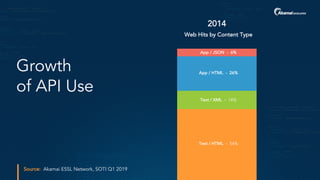
Source: Akamai ESSL Network, SOTI Q1 2019
Web Hits by Content Type
2014
Growth
of API Use
Text / HTML - 54%
Text / XML - 14%
App / HTML - 26%
App / JSON - 6%
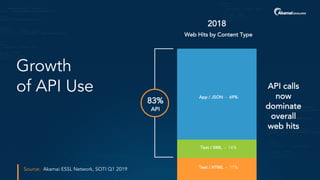
API calls
now
dominate
overall
web hits
Source: Akamai ESSL Network, SOTI Q1 2019
83%
API
Growth
of API Use
Text / HTML - 17%
Text / XML - 14%
App / JSON - 69%
Web Hits by Content Type
2018
Challenges in
API Security
- Often InfoSec/DevSecOps is looped too
late in the development process
- API security is often complex (multiple
standards, limited number of tools, lack of
expertise)
- Great level of effort to apply API security at
scale, specially across diverse cloud
infrastructure
- Hard to stay up to date with new
vulnerabilities
APIs are a
Primary Target
for Attackers
Today
4X more
credential stuffing attacks
on APIs
#shellshock#heartbleed
#poodle#fappening
#DROWN
#snappening
API Security Top 10
A1: Broken Object Level Authorization
A2: Broken Authentication
A3: Excessive Data Exposure
A4: Lack of Resources & Rate Limiting
A5: Broken Function Level Authorization
A6: Mass Assignment
A7: Security Misconfiguration
A8: Injection
A9: Improper Assets Management
A10: Insufficient Logging & Monitoring
Source: https://www.owasp.org/images/5/59/API_Security_Top_10_RC.pdf
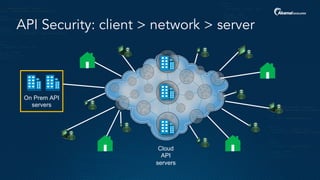
API Security: client > network > server
On Prem API
servers
Cloud
API
servers
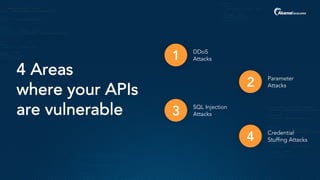
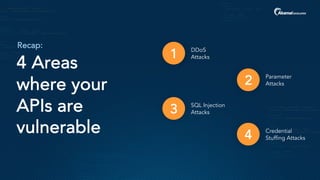
4 Areas
where your APIs
are vulnerable
1 DDoS
Attacks
3 SQL Injection
Attacks
2 Parameter
Attacks
4 Credential
Stuffing Attacks
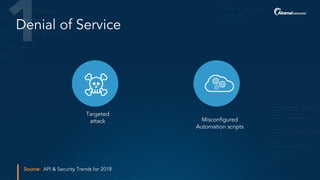
Denial of Service
Targeted
attack
Source: API & Security Trends for 2018
Misconfigured
Automation scripts
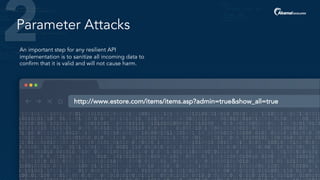
Parameter Attacks
An important step for any resilient API
implementation is to sanitize all incoming data to
confirm that it is valid and will not cause harm.
http://www.estore.com/items/items.asp?admin=true&show_all=true
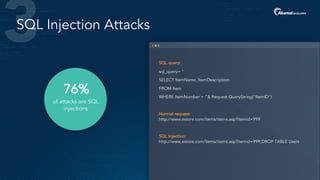
SQL Injection Attacks
SQL query:
sql_query= "
SELECT ItemName, ItemDescription
FROM Item
WHERE ItemNumber = "& Request.QueryString("ItemID")
Normal request:
http://www.estore.com/items/items.asp?itemid=999
SQL Injection:
http://www.estore.com/items/items.asp?itemid=999;DROP TABLE Users
76%
of attacks are SQL
injections
Credential
Stuffing Attacks
With clients that don’t render JavaScript a
lot of the typical credential stuffing
defenses just don’t work.
Aggressive botnets will overwhelm origin
with login requests.
credential stuffing attempts
in 8 months
Source: Akamai SOTI 1Q 2019
(Observed on Akamai Intelligent Edge Platform, 2018
28billion
4 Areas
where your
APIs are
vulnerable
1 DDoS
Attacks
3 SQL Injection
Attacks
2 Parameter
Attacks
4 Credential
Stuffing Attacks
Recap:
Mitigation
Know how to stop the attack.
Step 1:
DDOS Mitigation
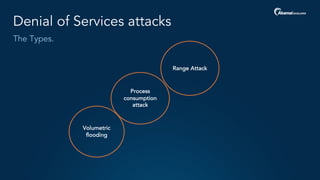
The Types.
Denial of Services attacks
Volumetric
flooding
Process
consumption
attack
Range Attack
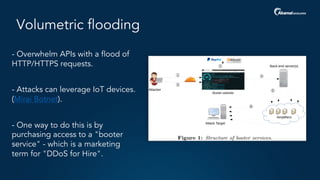
Volumetric flooding
- Overwhelm APIs with a flood of
HTTP/HTTPS requests.
- Attacks can leverage IoT devices.
(Mirai Botnet).
- One way to do this is by
purchasing access to a "booter
service" - which is a marketing
term for "DDoS for Hire".
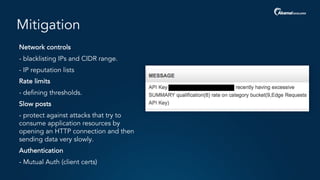
Mitigation
- Network controls
- - blacklisting IPs and CIDR range.
- - IP reputation lists
- Rate limits
- - defining thresholds.
- Slow posts
- - protect against attacks that try to
consume application resources by
opening an HTTP connection and then
sending data very slowly.
- Authentication
- - Mutual Auth (client certs)
Step 2:
Protect processes
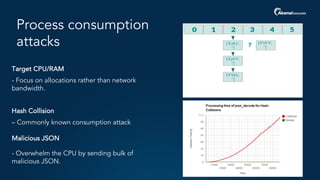
Target CPU/RAM
- Focus on allocations rather than network
bandwidth.
Hash Collision
– Commonly known consumption attack
Malicious JSON
- Overwhelm the CPU by sending bulk of
malicious JSON.
Process consumption
attacks
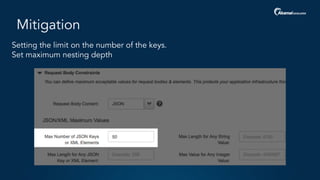
Mitigation
Setting the limit on the number of the keys.
Set maximum nesting depth
Step 3:
Range attacks / Scraping
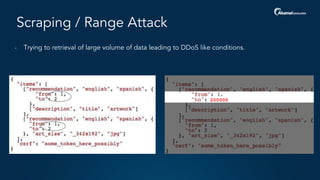
Scraping / Range Attack
- Trying to retrieval of large volume of data leading to DDoS like conditions.
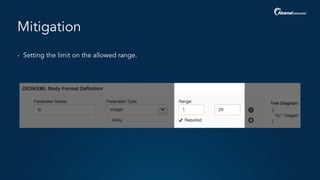
Mitigation
- Setting the limit on the allowed range.
Step 4:
Protect credentials
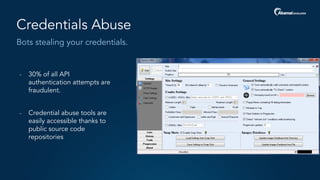
Bots stealing your credentials.
Credentials Abuse
- 30% of all API
authentication attempts are
fraudulent.
- Credential abuse tools are
easily accessible thanks to
public source code
repositories
Mitigation
- Good practices; i.e. Don’t give them hints
regarding valid users and password, password
recovery, etc.
- Rate controls on login, password recovery, etc.
- Strong authentication (two-factor auth,
biometric/security keys), OAuth, OpenID
- Human behavior detection (automatically
distinguish if the user is a human or not)
Step 5: Manage bots
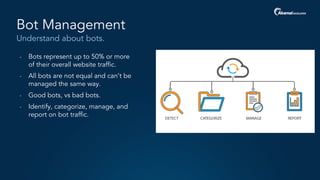
Understand about bots.
Bot Management
- Bots represent up to 50% or more
of their overall website traffic.
- All bots are not equal and can’t be
managed the same way.
- Good bots, vs bad bots.
- Identify, categorize, manage, and
report on bot traffic.
Mitigation
- Enforce quotas
- Analyze traffic and try to categorize known
bot traffic
- Use a bot detection tool
Leverage Edge
Thwart attack closer to your origin
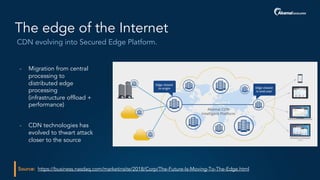
CDN evolving into Secured Edge Platform.
The edge of the Internet
- Migration from central
processing to
distributed edge
processing
(infrastructure offload +
performance)
- CDN technologies has
evolved to thwart attack
closer to the source
Source: https://business.nasdaq.com/marketinsite/2018/Corp/The-Future-Is-Moving-To-The-Edge.html
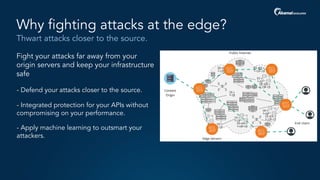
Thwart attacks closer to the source.
Why fighting attacks at the edge?
Fight your attacks far away from your
origin servers and keep your infrastructure
safe
- Defend your attacks closer to the source.
- Integrated protection for your APIs without
compromising on your performance.
- Apply machine learning to outsmart your
attackers.
Secure APIs = Security + Management
With API Gateway
API Management
Manage and govern all your API operations at the edge.
-Prevent Intentional/Unintentional abuses
-Rate limiting
-Quotas
-Authentication
-Rule based Defense shield on the edge
Demo
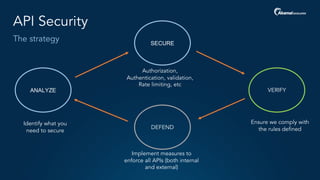
The strategy
API Security
VERIFY
DEFEND
ANALYZE
Ensure we comply with
the rules defined
Implement measures to
enforce all APIs (both internal
and external)
Identify what you
need to secure
SECURE
Authorization,
Authentication, validation,
Rate limiting, etc
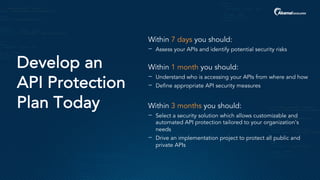
Develop an
API Protection
Plan Today
Within 7 days you should:
− Assess your APIs and identify potential security risks
Within 1 month you should:
− Understand who is accessing your APIs from where and how
− Define appropriate API security measures
Within 3 months you should:
− Select a security solution which allows customizable and
automated API protection tailored to your organization’s
needs
− Drive an implementation project to protect all public and
private APIs
Thank you!
© 2019, Amazon Web Services, Inc. or its affiliates. All rights reserved.
Slides: https://www.slideshare.net/JavierGarza18@jjaviergarza

5 step plan to securing your APIs

  • 1.
    © 2019, AmazonWeb Services, Inc. or its affiliates. All rights reserved. Five Step Plan to Securing Your APIs Javier Garza SEC211-S Sr. Developer Evangelist Akamai Technologies
  • 2.
    Developer Evangelist @Akamai(San Francisco, CA) ‱ 15+ years at Akamai helping large enterprises run fast and secure apps at the Edge ‱ Co-author of O’Reilly’s “Learning HTTP/2” book, blogger, speaker, one-liner king ‱ Motto: Share what you know, and learn what you don’t ‱ Hobbies: challenging workouts, non-profit volunteering@jjaviergarza Speaker Javier Garza
  • 3.
    Agenda Introduction Understand the AttackVectorsPart Mitigate the attacks with a 5 Step PlanPart Leverage the EdgePart Wrap-up 1 2 3
  • 4.
  • 5.
    Source: Akamai ESSLNetwork, SOTI Q1 2019 Web Hits by Content Type 2014 Growth of API Use Text / HTML - 54% Text / XML - 14% App / HTML - 26% App / JSON - 6%
  • 6.
    API calls now dominate overall web hits Source:Akamai ESSL Network, SOTI Q1 2019 83% API Growth of API Use Text / HTML - 17% Text / XML - 14% App / JSON - 69% Web Hits by Content Type 2018
  • 7.
    Challenges in API Security -Often InfoSec/DevSecOps is looped too late in the development process - API security is often complex (multiple standards, limited number of tools, lack of expertise) - Great level of effort to apply API security at scale, specially across diverse cloud infrastructure - Hard to stay up to date with new vulnerabilities
  • 8.
    APIs are a PrimaryTarget for Attackers Today 4X more credential stuffing attacks on APIs #shellshock#heartbleed #poodle#fappening #DROWN #snappening
  • 9.
    API Security Top10 A1: Broken Object Level Authorization A2: Broken Authentication A3: Excessive Data Exposure A4: Lack of Resources & Rate Limiting A5: Broken Function Level Authorization A6: Mass Assignment A7: Security Misconfiguration A8: Injection A9: Improper Assets Management A10: Insufficient Logging & Monitoring Source: https://www.owasp.org/images/5/59/API_Security_Top_10_RC.pdf
  • 10.
    API Security: client> network > server On Prem API servers Cloud API servers
  • 11.
    4 Areas where yourAPIs are vulnerable 1 DDoS Attacks 3 SQL Injection Attacks 2 Parameter Attacks 4 Credential Stuffing Attacks
  • 12.
    Denial of Service Targeted attack Source:API & Security Trends for 2018 Misconfigured Automation scripts
  • 13.
    Parameter Attacks An importantstep for any resilient API implementation is to sanitize all incoming data to confirm that it is valid and will not cause harm. http://www.estore.com/items/items.asp?admin=true&show_all=true
  • 14.
    SQL Injection Attacks SQLquery: sql_query= " SELECT ItemName, ItemDescription FROM Item WHERE ItemNumber = "& Request.QueryString("ItemID") Normal request: http://www.estore.com/items/items.asp?itemid=999 SQL Injection: http://www.estore.com/items/items.asp?itemid=999;DROP TABLE Users 76% of attacks are SQL injections
  • 15.
    Credential Stuffing Attacks With clientsthat don’t render JavaScript a lot of the typical credential stuffing defenses just don’t work. Aggressive botnets will overwhelm origin with login requests. credential stuffing attempts in 8 months Source: Akamai SOTI 1Q 2019 (Observed on Akamai Intelligent Edge Platform, 2018 28billion
  • 16.
    4 Areas where your APIsare vulnerable 1 DDoS Attacks 3 SQL Injection Attacks 2 Parameter Attacks 4 Credential Stuffing Attacks Recap:
  • 17.
    Mitigation Know how tostop the attack.
  • 18.
  • 19.
    The Types. Denial ofServices attacks Volumetric flooding Process consumption attack Range Attack
  • 20.
    Volumetric flooding - OverwhelmAPIs with a flood of HTTP/HTTPS requests. - Attacks can leverage IoT devices. (Mirai Botnet). - One way to do this is by purchasing access to a "booter service" - which is a marketing term for "DDoS for Hire".
  • 21.
    Mitigation - Network controls -- blacklisting IPs and CIDR range. - - IP reputation lists - Rate limits - - defining thresholds. - Slow posts - - protect against attacks that try to consume application resources by opening an HTTP connection and then sending data very slowly. - Authentication - - Mutual Auth (client certs)
  • 22.
  • 23.
    Target CPU/RAM - Focuson allocations rather than network bandwidth. Hash Collision – Commonly known consumption attack Malicious JSON - Overwhelm the CPU by sending bulk of malicious JSON. Process consumption attacks
  • 24.
    Mitigation Setting the limiton the number of the keys. Set maximum nesting depth
  • 25.
  • 26.
    Scraping / RangeAttack - Trying to retrieval of large volume of data leading to DDoS like conditions.
  • 27.
    Mitigation - Setting thelimit on the allowed range.
  • 28.
  • 29.
    Bots stealing yourcredentials. Credentials Abuse - 30% of all API authentication attempts are fraudulent. - Credential abuse tools are easily accessible thanks to public source code repositories
  • 30.
    Mitigation - Good practices;i.e. Don’t give them hints regarding valid users and password, password recovery, etc. - Rate controls on login, password recovery, etc. - Strong authentication (two-factor auth, biometric/security keys), OAuth, OpenID - Human behavior detection (automatically distinguish if the user is a human or not)
  • 31.
  • 32.
    Understand about bots. BotManagement - Bots represent up to 50% or more of their overall website traffic. - All bots are not equal and can’t be managed the same way. - Good bots, vs bad bots. - Identify, categorize, manage, and report on bot traffic.
  • 33.
    Mitigation - Enforce quotas -Analyze traffic and try to categorize known bot traffic - Use a bot detection tool
  • 34.
    Leverage Edge Thwart attackcloser to your origin
  • 35.
    CDN evolving intoSecured Edge Platform. The edge of the Internet - Migration from central processing to distributed edge processing (infrastructure offload + performance) - CDN technologies has evolved to thwart attack closer to the source Source: https://business.nasdaq.com/marketinsite/2018/Corp/The-Future-Is-Moving-To-The-Edge.html
  • 36.
    Thwart attacks closerto the source. Why fighting attacks at the edge? Fight your attacks far away from your origin servers and keep your infrastructure safe - Defend your attacks closer to the source. - Integrated protection for your APIs without compromising on your performance. - Apply machine learning to outsmart your attackers.
  • 37.
    Secure APIs =Security + Management
  • 38.
    With API Gateway APIManagement Manage and govern all your API operations at the edge. -Prevent Intentional/Unintentional abuses -Rate limiting -Quotas -Authentication -Rule based Defense shield on the edge
  • 39.
  • 40.
    The strategy API Security VERIFY DEFEND ANALYZE Ensurewe comply with the rules defined Implement measures to enforce all APIs (both internal and external) Identify what you need to secure SECURE Authorization, Authentication, validation, Rate limiting, etc
  • 41.
    Develop an API Protection PlanToday Within 7 days you should: − Assess your APIs and identify potential security risks Within 1 month you should: − Understand who is accessing your APIs from where and how − Define appropriate API security measures Within 3 months you should: − Select a security solution which allows customizable and automated API protection tailored to your organization’s needs − Drive an implementation project to protect all public and private APIs
  • 42.
    Thank you! © 2019,Amazon Web Services, Inc. or its affiliates. All rights reserved. Slides: https://www.slideshare.net/JavierGarza18@jjaviergarza