5 PEN TECHNOLOGY
GUIDED BY: BY:
SHAVETA TATWANI PRASHANT KUMAR
ASST. PROFESSOR 00410402712
(CSE/IT) CSE
FROM THE VERY BEGINNING
• First computer invented - the ENIAC (1943)
• Modern computers based on integrated circuits
• Today, very compact table computers with the most
popular being the IPad (9.1 inch and weighing about
700 grams)
• Now, imagine having a computer that will fit into
your pencil case
HISTORY OF “5 PEN TECHNOLOGY”
• Pen Style Personal Networking Gadget (P-ISM) -
created in 2003 by Tokyo based Japanese company,
NEC
• First featured at 2003 ITU Telecom world – Geneva,
Switzerland
• P-ISM system – based on “Electronic Perception
Technology” – pioneered by Canesta Inc., San Jose,
California.
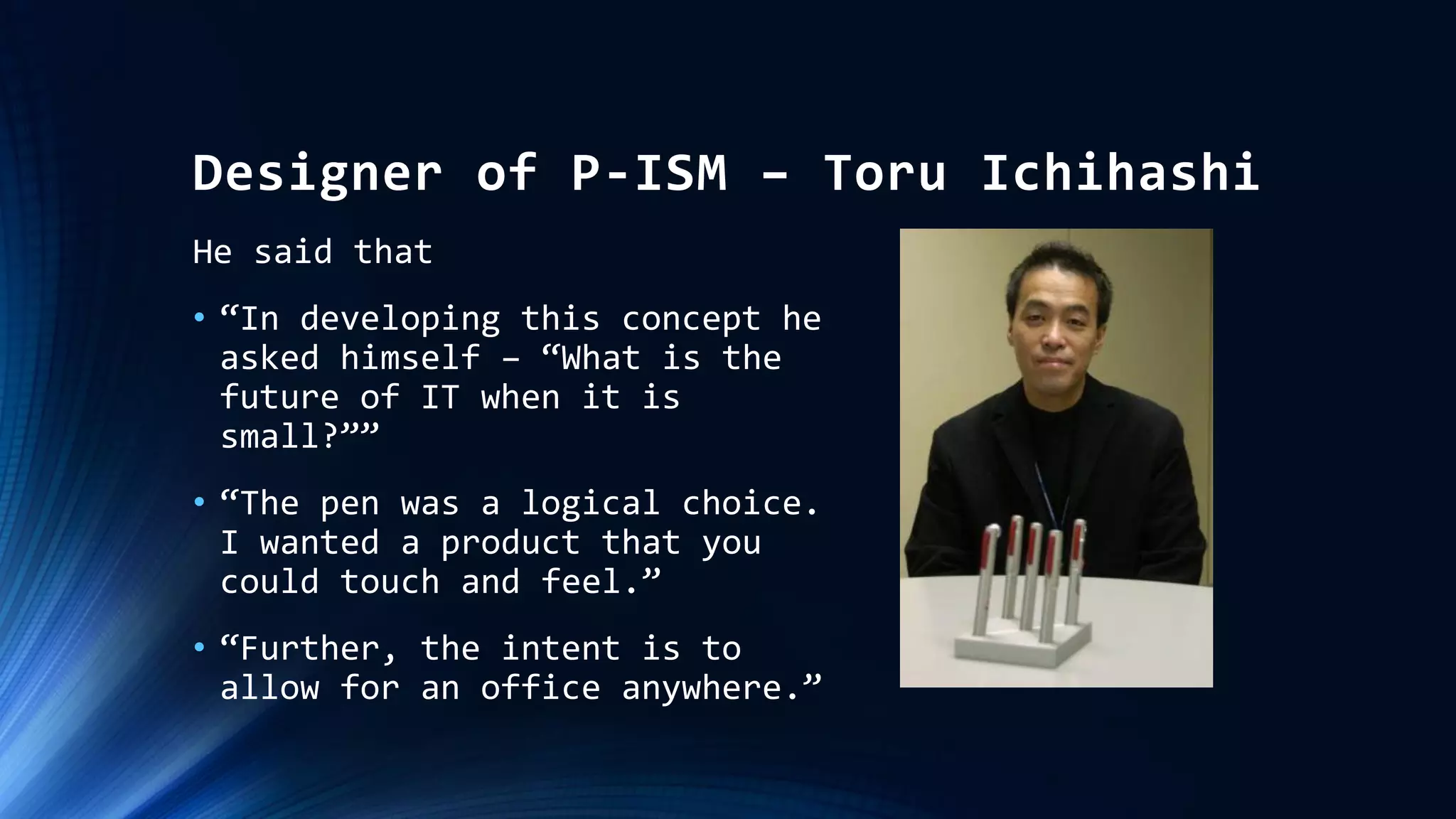
Designer of P-ISM – Toru Ichihashi
He said that
• “In developing this concept he
asked himself – “What is the
future of IT when it is
small?””
• “The pen was a logical choice.
I wanted a product that you
could touch and feel.”
• “Further, the intent is to
allow for an office anywhere.”
INTRODUCTION
• P-ISM is a gadget package includes five pens: a CPU
pen, communication pen with a cellular phone
function, virtual keyboard, a very small projector,
and a camera.
• Connected with one another through short-range
wireless technology.
• Connected to the Internet through the cellular
phone function.
• Based on Electronic Perception Technology.
ELECTRONIC PERCEPTION TECHNOLOGY
• Electronic Perception Technology (EPT) is a low-cost,
single-chip imagining technology that enables electronic
components to form a 3-D map of their surroundings and see
what their users are doing.
• One of the first applications is a “virtual keyboard”
• Current EPT keyboards can sense up to 400 characters per
minute.
• EPT systems can accurately determine brightness.
• EPT systems can determine depth.
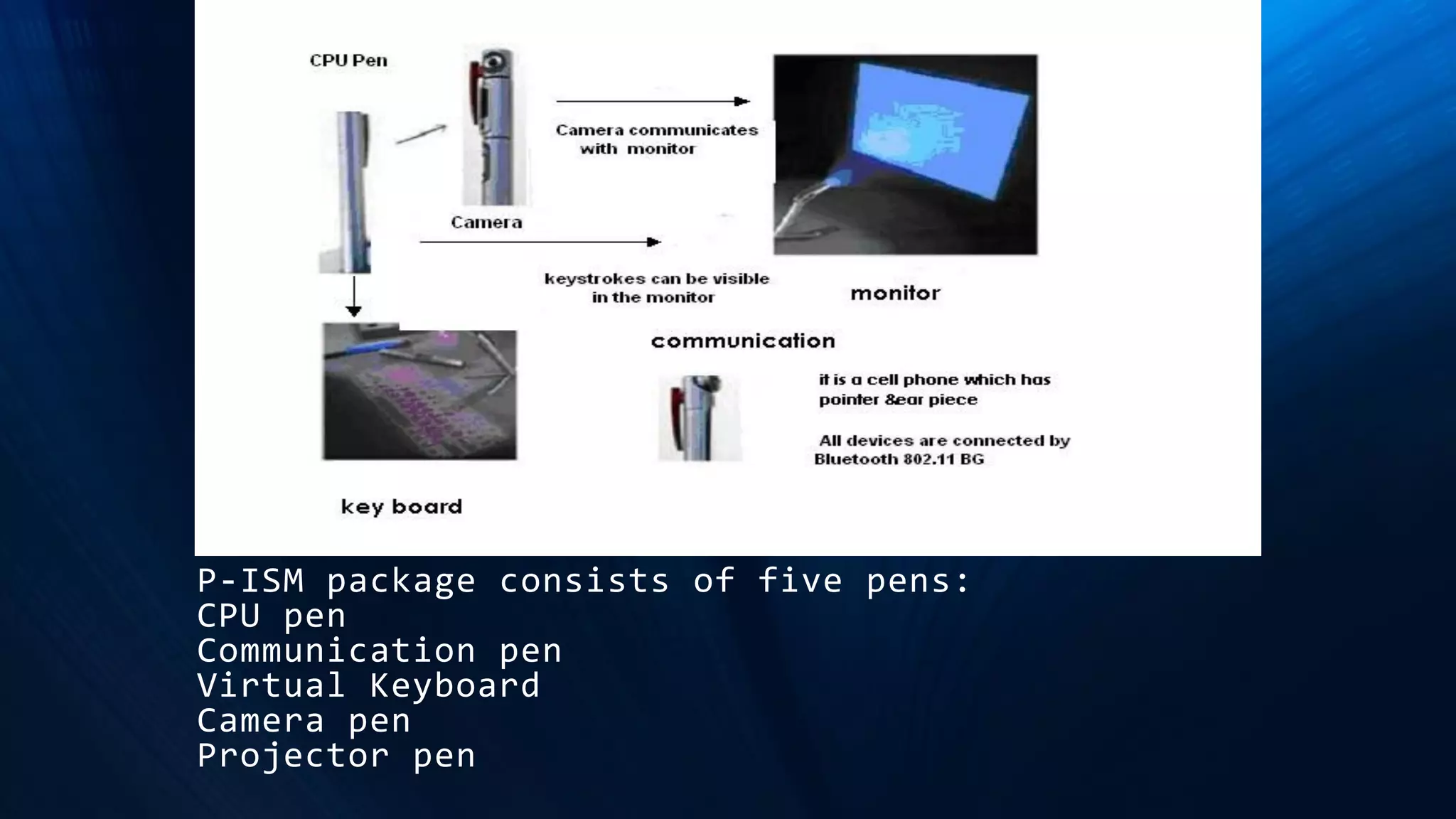
P-ISM package consists of five pens:
CPU pen
Communication pen
Virtual Keyboard
Camera pen
Projector pen
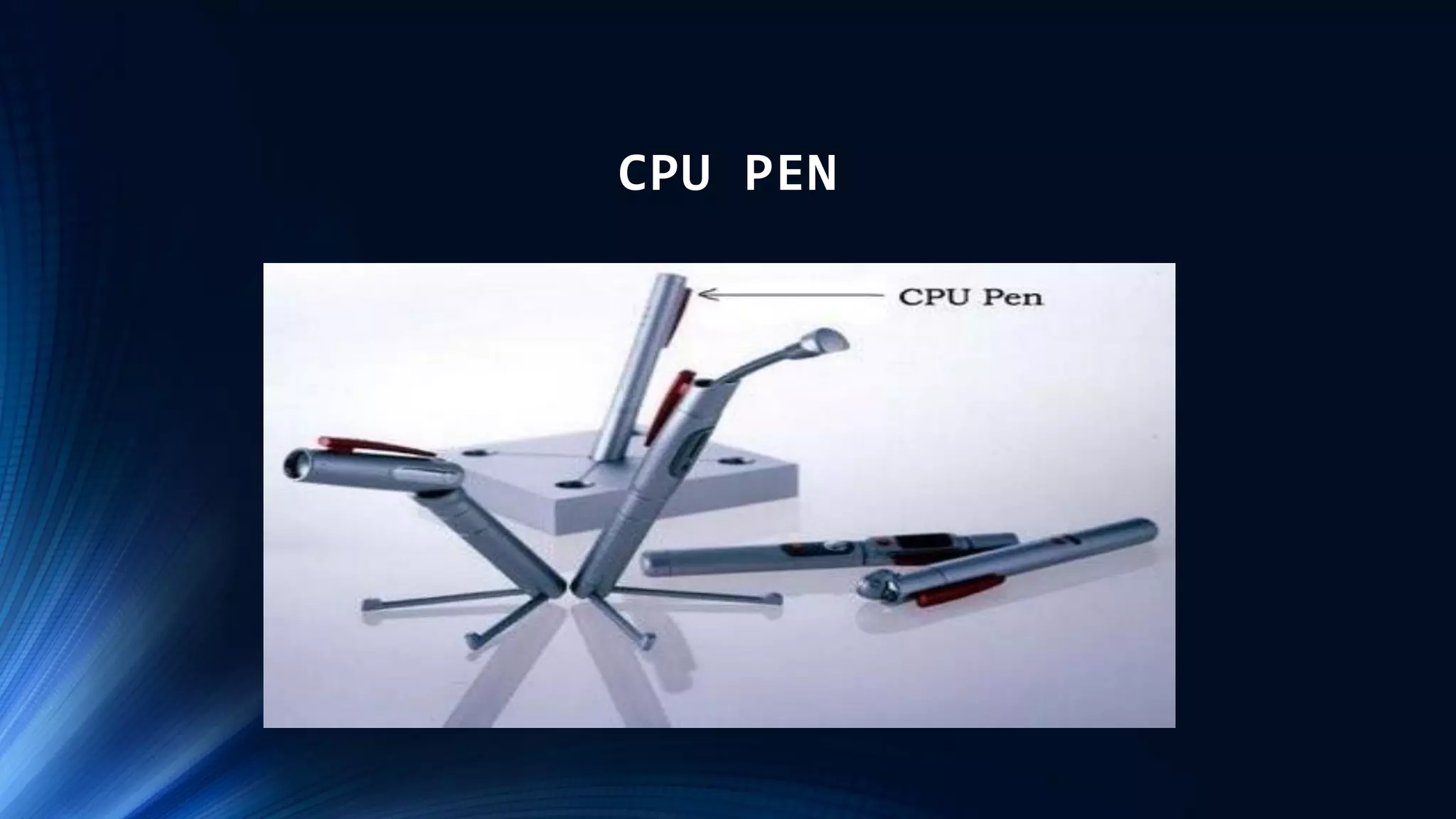
CPU PEN
CPU PEN
• Functionality of the CPU - done by one of the pen
also known as computing engine.
• Consists of dual core processor embedded in it
• Works with WINDOWS operating system.
• Contains circuitry that uses electrical signals to
direct the entire computer system to carry out
program instructions.
• Four steps that nearly all CPUs use in their
operation: fetch, decode, execute, and write back.
COMMUNICATION PEN
COMMUNICATION PEN
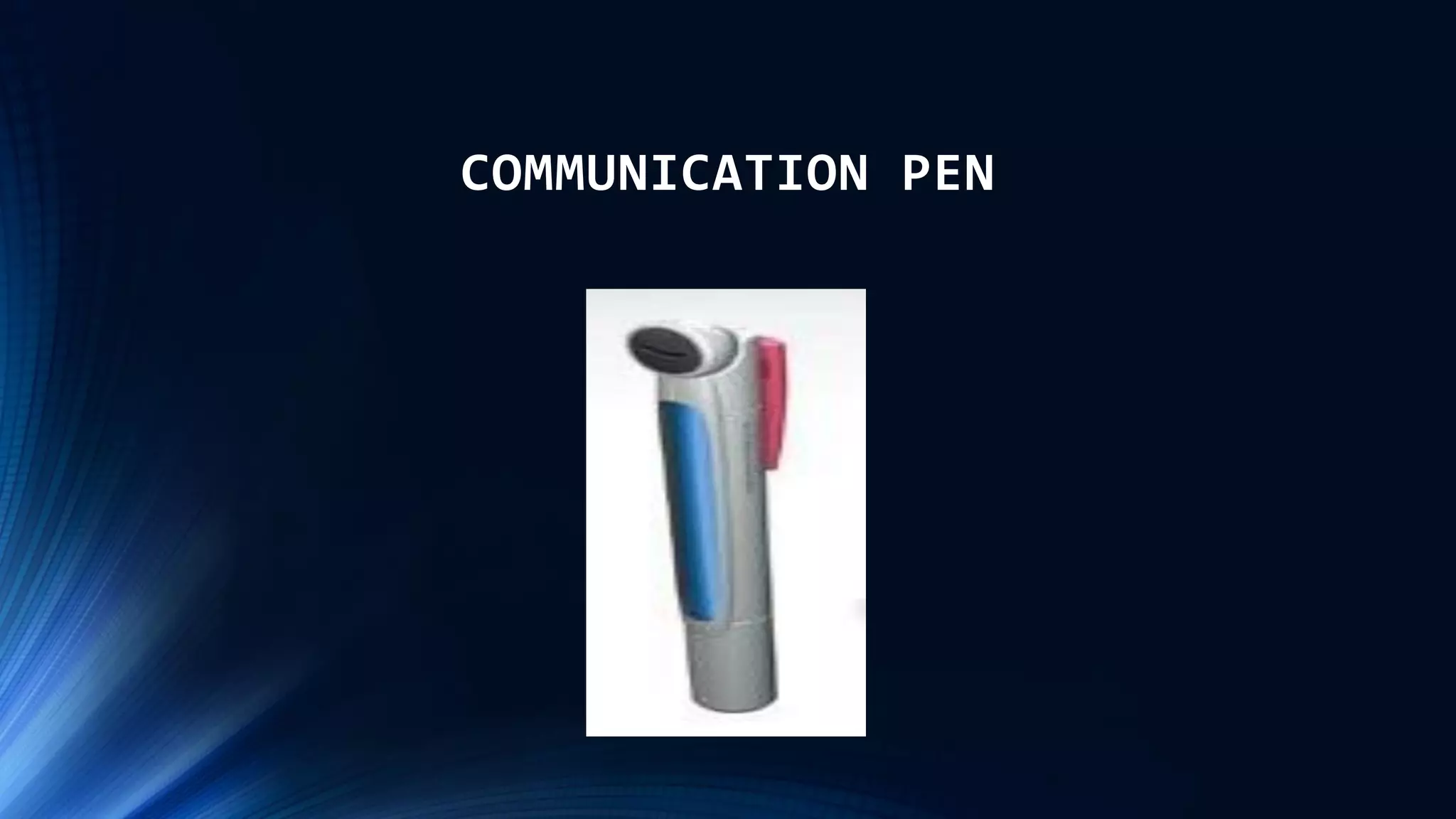
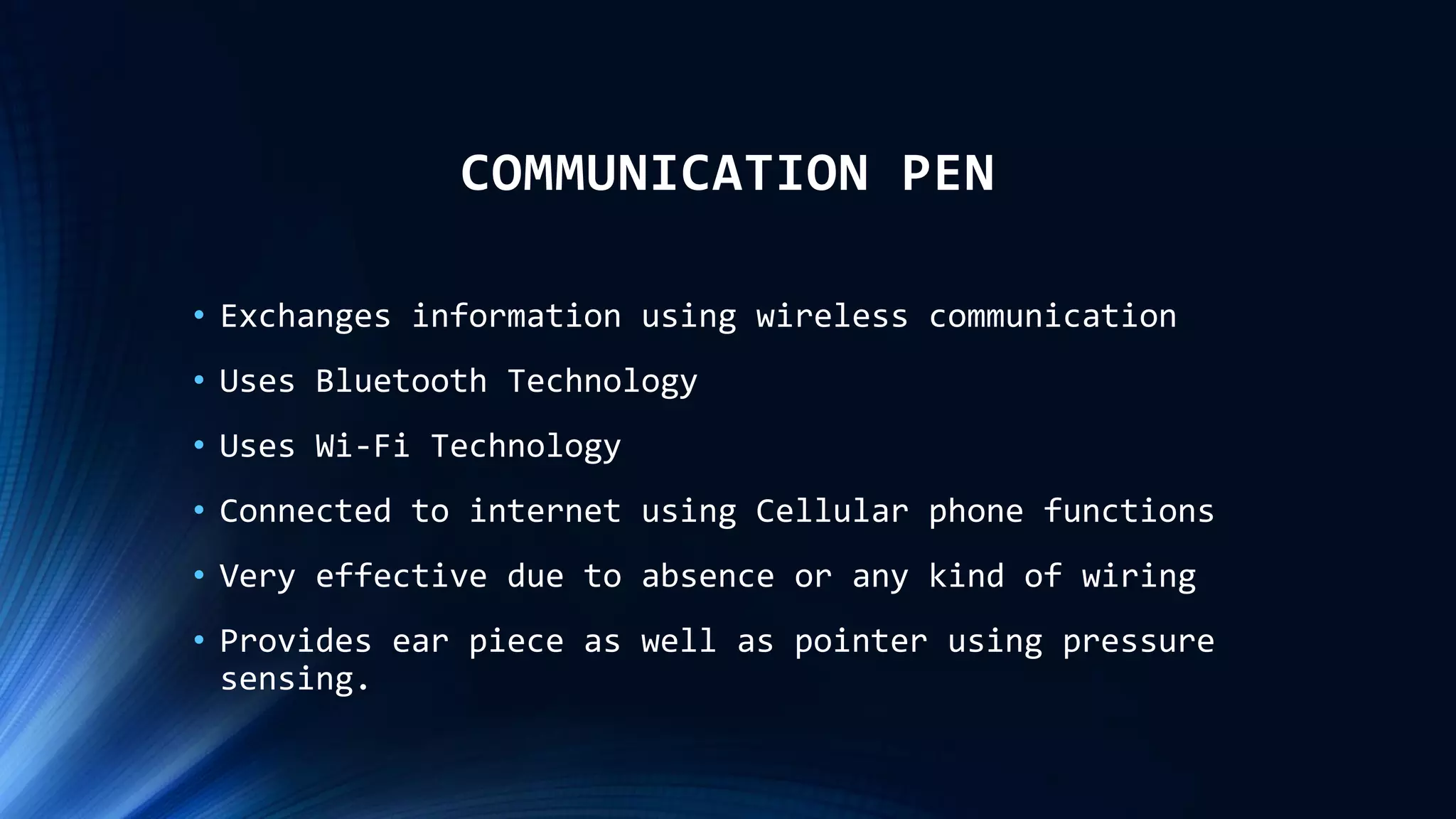
• Exchanges information using wireless communication
• Uses Bluetooth Technology
• Uses Wi-Fi Technology
• Connected to internet using Cellular phone functions
• Very effective due to absence or any kind of wiring
• Provides ear piece as well as pointer using pressure
sensing.
VIRTUAL KEYBOARD (VKB)
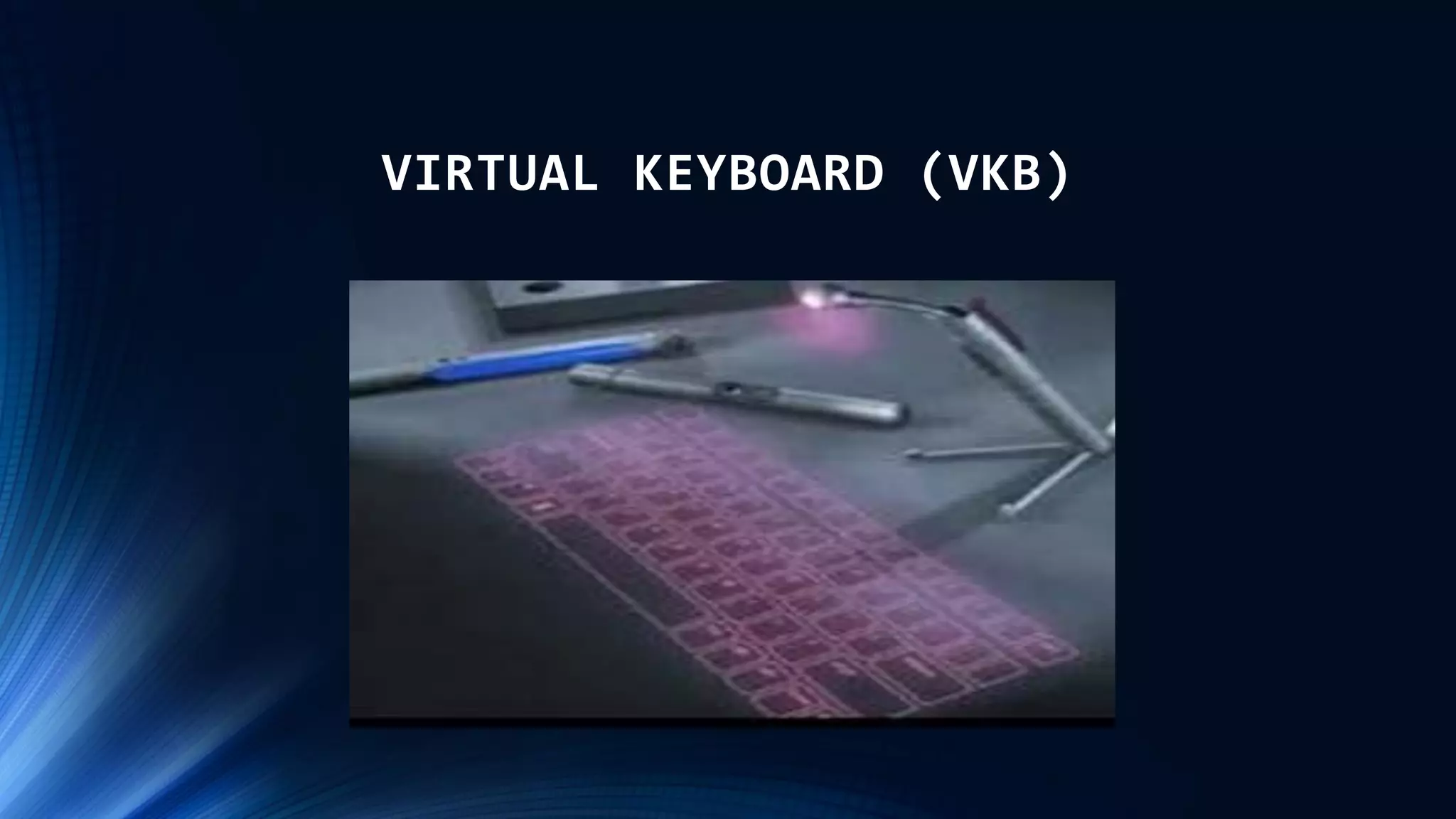
• It emits laser beam on to the desk to generate a
full-size perfectly operating laser keyboard.
• It uses 3-D imaging (EPT).
• It reduces the risk of keystroke logging.
• It avoids password theft from viruses.
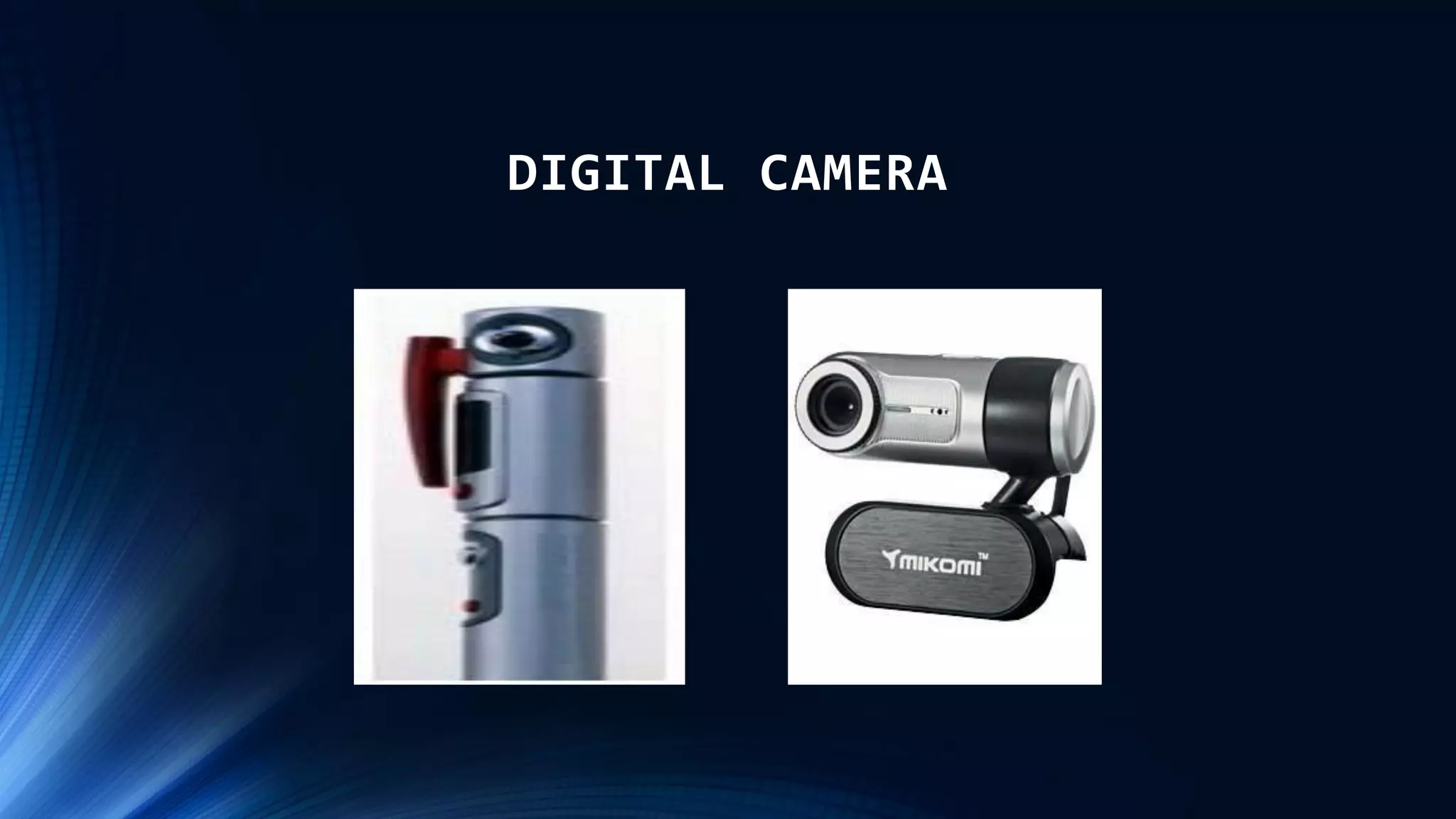
DIGITAL CAMERA
DIGITAL CAMERA
• Digital camera or the webcam is in the shape of a
pen
• Useful in video recording and video conferencing,
etc.
• Its three main capturing methods:
• Single shot
• Multi shot
• Scanning
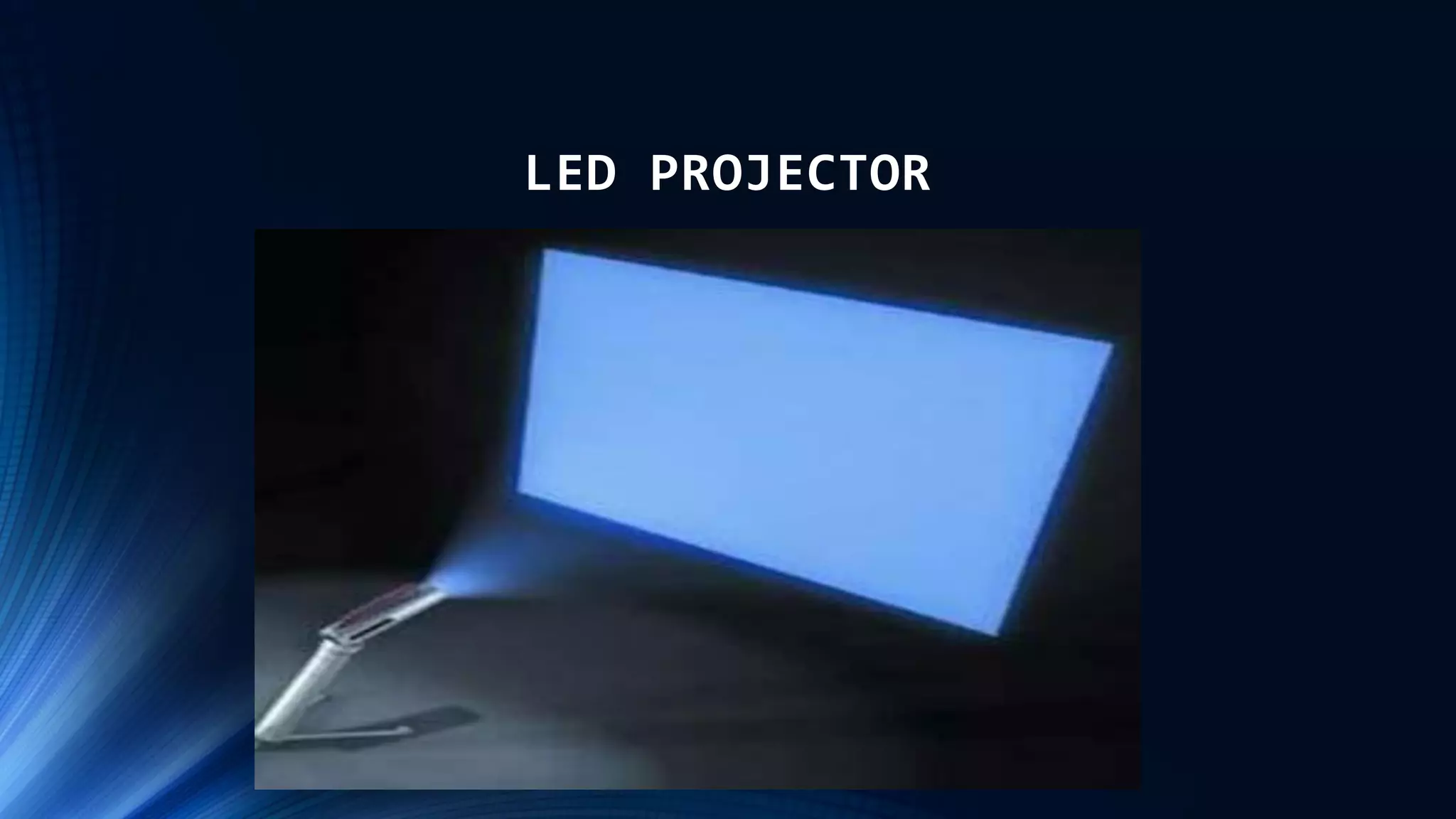
LED PROJECTOR
LED PROJECTOR
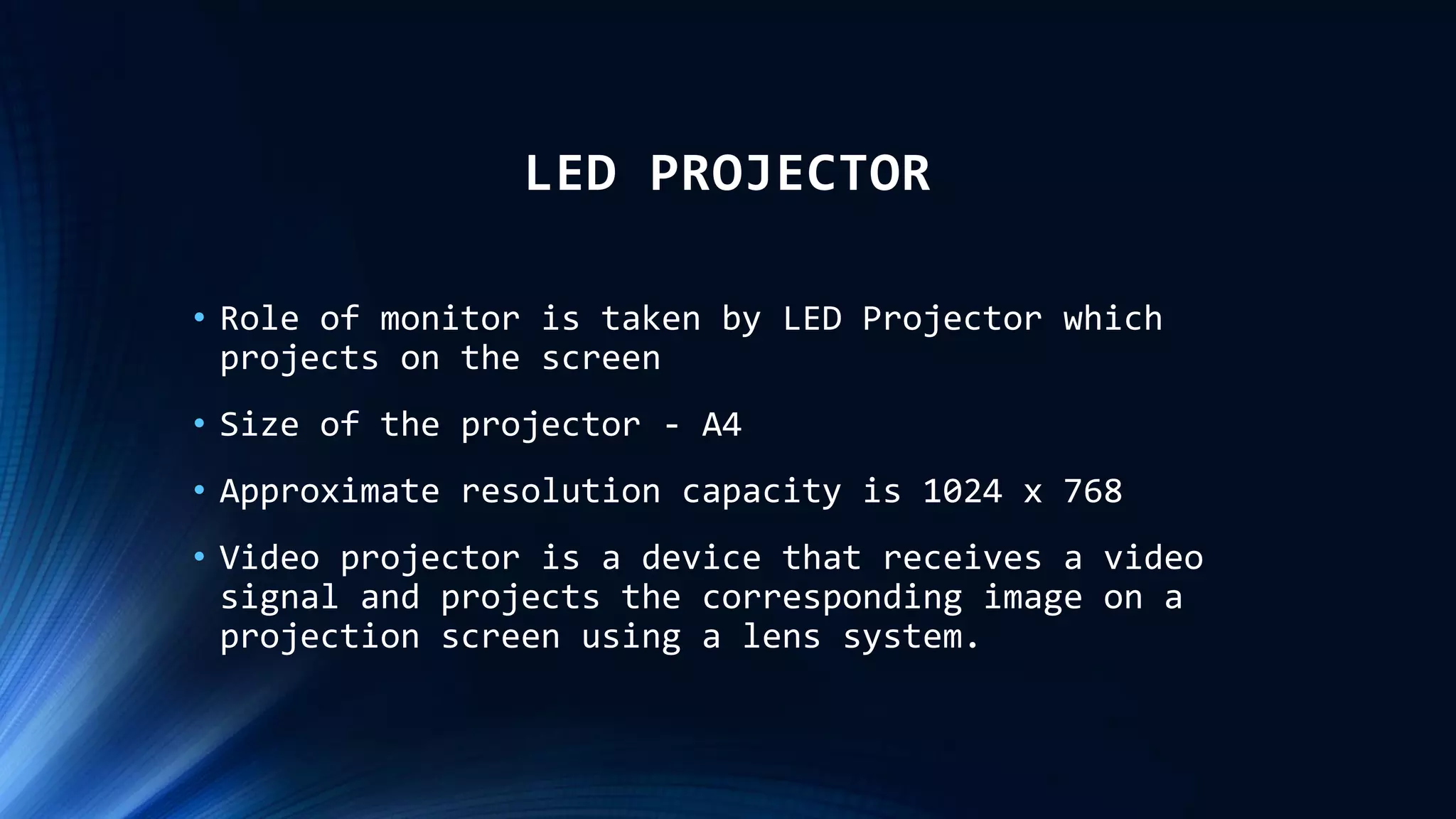
• Role of monitor is taken by LED Projector which
projects on the screen
• Size of the projector - A4
• Approximate resolution capacity is 1024 x 768
• Video projector is a device that receives a video
signal and projects the corresponding image on a
projection screen using a lens system.
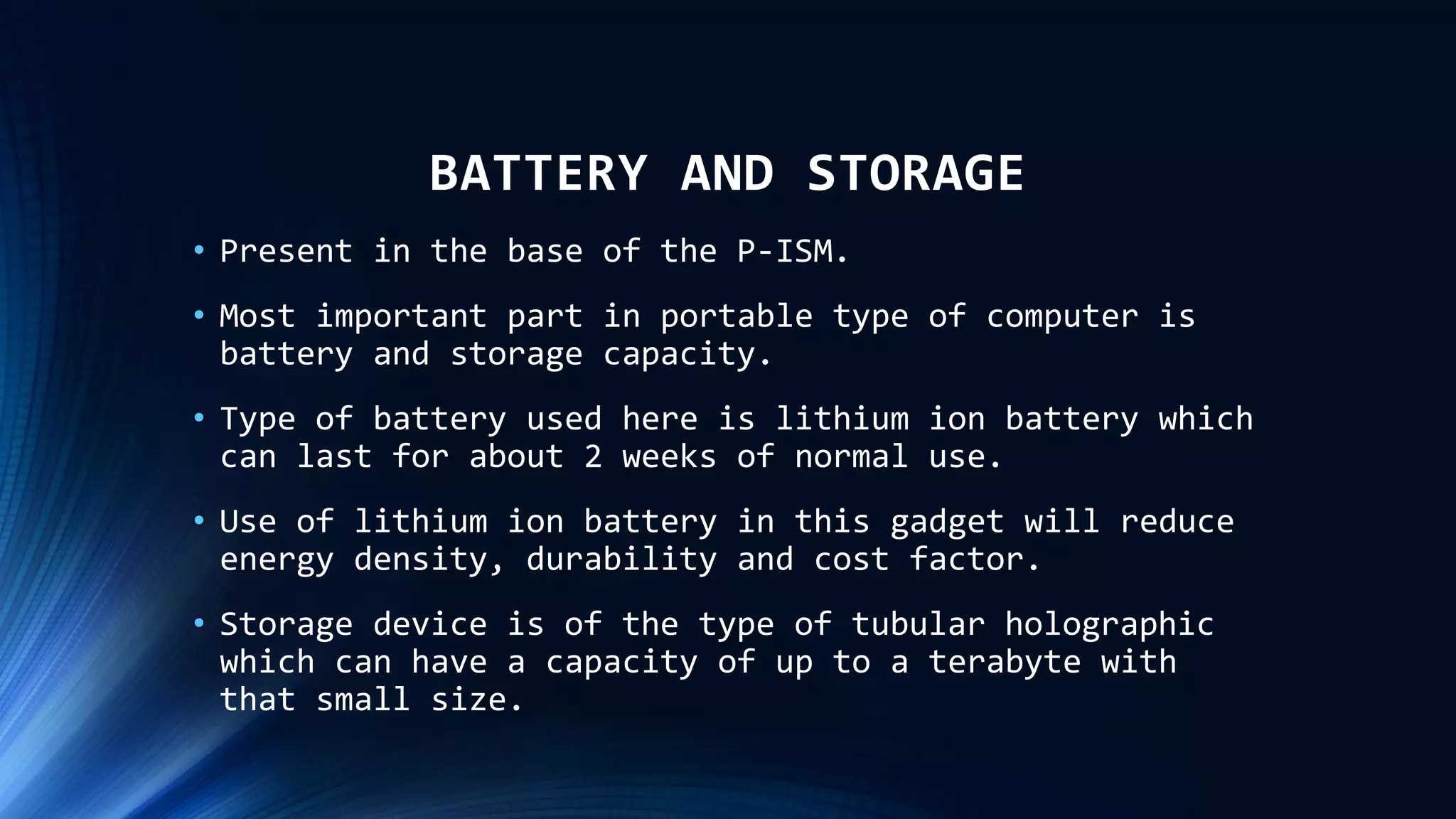
BATTERY AND STORAGE
• Present in the base of the P-ISM.
• Most important part in portable type of computer is
battery and storage capacity.
• Type of battery used here is lithium ion battery which
can last for about 2 weeks of normal use.
• Use of lithium ion battery in this gadget will reduce
energy density, durability and cost factor.
• Storage device is of the type of tubular holographic
which can have a capacity of up to a terabyte with
that small size.
ADVANTAGES
• Portable
• Feasible
• Makes use of Wi-Fi technology
• Based on Electronic Perception Technology
• Small size
DISADVANTAGES
• Cost factor
• Keyboard concept is not new (Lumio Inc.)
• Can be easily misplaced
• Currently unclear
CONCLUSION
The communication devices are becoming smaller and
compact.
This technology is just an example of what we’ll be
using in the future.
This is just a start and we can expect such more
developments in the upcoming years.
REFERENCES
• Five Pen PC Technology, International Journal of
Research in Computer Applications and Robotics,
Vol. 3 Issue 1 - by B. Saranya, S. Muruganandham
• http://www.computinghistory.org.uk/history.html
• http://en.wikipidia.org/wiki/pen_computing
• http://www.compinfo_center.com/ledprojector.html
THANK YOU

5 pen technology presentation

  • 1.
    5 PEN TECHNOLOGY GUIDEDBY: BY: SHAVETA TATWANI PRASHANT KUMAR ASST. PROFESSOR 00410402712 (CSE/IT) CSE
  • 2.
    FROM THE VERYBEGINNING • First computer invented - the ENIAC (1943) • Modern computers based on integrated circuits • Today, very compact table computers with the most popular being the IPad (9.1 inch and weighing about 700 grams) • Now, imagine having a computer that will fit into your pencil case
  • 4.
    HISTORY OF “5PEN TECHNOLOGY” • Pen Style Personal Networking Gadget (P-ISM) - created in 2003 by Tokyo based Japanese company, NEC • First featured at 2003 ITU Telecom world – Geneva, Switzerland • P-ISM system – based on “Electronic Perception Technology” – pioneered by Canesta Inc., San Jose, California.
  • 5.
    Designer of P-ISM– Toru Ichihashi He said that • “In developing this concept he asked himself – “What is the future of IT when it is small?”” • “The pen was a logical choice. I wanted a product that you could touch and feel.” • “Further, the intent is to allow for an office anywhere.”
  • 6.
    INTRODUCTION • P-ISM isa gadget package includes five pens: a CPU pen, communication pen with a cellular phone function, virtual keyboard, a very small projector, and a camera. • Connected with one another through short-range wireless technology. • Connected to the Internet through the cellular phone function. • Based on Electronic Perception Technology.
  • 7.
    ELECTRONIC PERCEPTION TECHNOLOGY •Electronic Perception Technology (EPT) is a low-cost, single-chip imagining technology that enables electronic components to form a 3-D map of their surroundings and see what their users are doing. • One of the first applications is a “virtual keyboard” • Current EPT keyboards can sense up to 400 characters per minute. • EPT systems can accurately determine brightness. • EPT systems can determine depth.
  • 8.
    P-ISM package consistsof five pens: CPU pen Communication pen Virtual Keyboard Camera pen Projector pen
  • 9.
  • 10.
    CPU PEN • Functionalityof the CPU - done by one of the pen also known as computing engine. • Consists of dual core processor embedded in it • Works with WINDOWS operating system. • Contains circuitry that uses electrical signals to direct the entire computer system to carry out program instructions. • Four steps that nearly all CPUs use in their operation: fetch, decode, execute, and write back.
  • 11.
  • 12.
    COMMUNICATION PEN • Exchangesinformation using wireless communication • Uses Bluetooth Technology • Uses Wi-Fi Technology • Connected to internet using Cellular phone functions • Very effective due to absence or any kind of wiring • Provides ear piece as well as pointer using pressure sensing.
  • 13.
  • 14.
    VIRTUAL KEYBOARD (VKB) •It emits laser beam on to the desk to generate a full-size perfectly operating laser keyboard. • It uses 3-D imaging (EPT). • It reduces the risk of keystroke logging. • It avoids password theft from viruses.
  • 15.
  • 16.
    DIGITAL CAMERA • Digitalcamera or the webcam is in the shape of a pen • Useful in video recording and video conferencing, etc. • Its three main capturing methods: • Single shot • Multi shot • Scanning
  • 17.
  • 18.
    LED PROJECTOR • Roleof monitor is taken by LED Projector which projects on the screen • Size of the projector - A4 • Approximate resolution capacity is 1024 x 768 • Video projector is a device that receives a video signal and projects the corresponding image on a projection screen using a lens system.
  • 19.
    BATTERY AND STORAGE •Present in the base of the P-ISM. • Most important part in portable type of computer is battery and storage capacity. • Type of battery used here is lithium ion battery which can last for about 2 weeks of normal use. • Use of lithium ion battery in this gadget will reduce energy density, durability and cost factor. • Storage device is of the type of tubular holographic which can have a capacity of up to a terabyte with that small size.
  • 20.
    ADVANTAGES • Portable • Feasible •Makes use of Wi-Fi technology • Based on Electronic Perception Technology • Small size
  • 21.
    DISADVANTAGES • Cost factor •Keyboard concept is not new (Lumio Inc.) • Can be easily misplaced • Currently unclear
  • 22.
    CONCLUSION The communication devicesare becoming smaller and compact. This technology is just an example of what we’ll be using in the future. This is just a start and we can expect such more developments in the upcoming years.
  • 23.
    REFERENCES • Five PenPC Technology, International Journal of Research in Computer Applications and Robotics, Vol. 3 Issue 1 - by B. Saranya, S. Muruganandham • http://www.computinghistory.org.uk/history.html • http://en.wikipidia.org/wiki/pen_computing • http://www.compinfo_center.com/ledprojector.html
  • 24.