‘An agreement between two contracting
parties, originally sealed with blood; a
bond, or a law; a permanent religious
dispensation. The old, primitive way of
concluding a covenant was for the
covenanters to cut into each other’s arm
and suck the blood, the mixing of the
blood rendering them ‘brothers of the
covenant’. (Jewish Encyclopaedia online)
B’RIT (COVENANT)
 B’rit, the Hebrew word for Covenant appears
270 times in the Hebrew Bible.
 It means covenant, pact or treaty
 Ancient covenants were made by animal
sacrifice hence the phrase ‘to cut a covenant’
 B’rit implies the shedding of blood in the
process of making an agreement.
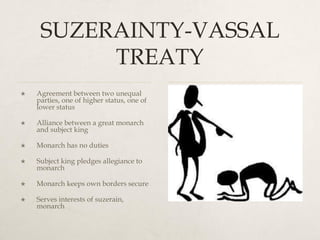
SUZERAINTY-VASSAL
TREATY
 Agreement between two unequal
parties, one of higher status, one of
lower status
 Alliance between a great monarch
and subject king
 Monarch has no duties
 Subject king pledges allegiance to
monarch
 Monarch keeps own borders secure
 Serves interests of suzerain,
monarch
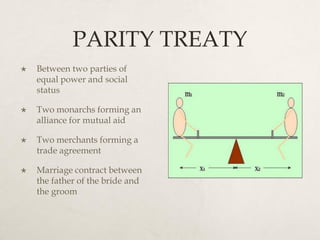
PARITY TREATY
 Between two parties of
equal power and social
status
 Two monarchs forming an
alliance for mutual aid
 Two merchants forming a
trade agreement
 Marriage contract between
the father of the bride and
the groom
LAND GRANT
 Free gift of land to
faithful subject of a great
monarch or servant of a
wealthy landowner
 Greater party binds self
to the treaty
 Lesser party benefits
from the gift, but may not
be bound to any specific
stipulations, either before
or after reception of the
land grant
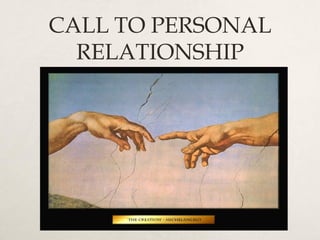
CALL TO PERSONAL
RELATIONSHIP
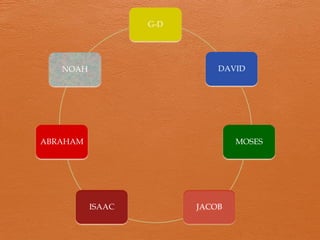
G-D
DAVID
MOSES
JACOBISAAC
ABRAHAM
NOAH
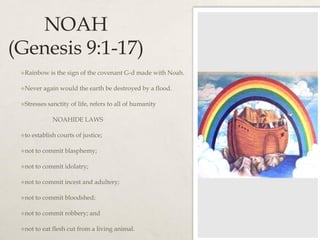
NOAH
(Genesis 9:1-17)
Rainbow is the sign of the covenant G-d made with Noah.
Never again would the earth be destroyed by a flood.
Stresses sanctity of life, refers to all of humanity
NOAHIDE LAWS
to establish courts of justice;
not to commit blasphemy;
not to commit idolatry;
not to commit incest and adultery;
not to commit bloodshed;
not to commit robbery; and
not to eat flesh cut from a living animal.
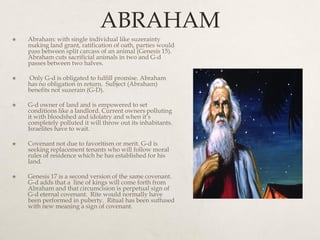
ABRAHAM
 Abraham: with single individual like suzerainty
making land grant, ratification of oath, parties would
pass between split carcass of an animal (Genesis 15).
Abraham cuts sacrificial animals in two and G-d
passes between two halves.
 Only G-d is obligated to fulfill promise. Abraham
has no obligation in return. Subject (Abraham)
benefits not suzerain (G-D).
 G-d owner of land and is empowered to set
conditions like a landlord. Current owners polluting
it with bloodshed and idolatry and when it’s
completely polluted it will throw out its inhabitants.
Israelites have to wait.
 Covenant not due to favoritism or merit. G-d is
seeking replacement tenants who will follow moral
rules of residence which he has established for his
land.
 Genesis 17 is a second version of the same covenant.
G-d adds that a line of kings will come forth from
Abraham and that circumcision is perpetual sign of
G-d eternal covenant. Rite would normally have
been performed in puberty. Ritual has been suffused
with new meaning a sign of covenant.
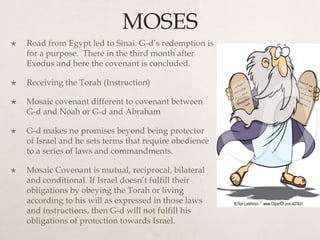
MOSES
 Road from Egypt led to Sinai. G-d’s redemption is
for a purpose. There in the third month after
Exodus and here the covenant is concluded.
 Receiving the Torah (Instruction)
 Mosaic covenant different to covenant between
G-d and Noah or G-d and Abraham
 G-d makes no promises beyond being protector
of Israel and he sets terms that require obedience
to a series of laws and commandments.
 Mosaic Covenant is mutual, reciprocal, bilateral
and conditional. If Israel doesn’t fulfill their
obligations by obeying the Torah or living
according to his will as expressed in those laws
and instructions, then G-d will not fulfill his
obligations of protection towards Israel.
Suzerainty Treaty Parts …
 Preamble
 Historical prologue
 Stipulations
 Provisions for treaty deposit & public reading
 List of Divine witnesses to the treaty
 Blessings & curses (for fidelity or infidelity to the treaty)
MOSAIC COVENANT
has the same elements…
 ‘You have seen what I did to the Egyptians…’ – G-d’s claim to
sovereignty Historical prologue
 ‘If you obey me faithfully’ …. Stipulations articulated in later
(Exodus 20-23)
 Moses reads publicly (Exodus 24:7)
 Deposited in safe keeping in Ark (Deuteronomy)
 The people vow to obey (Exodus 24:3; 7b)
 Sacrifice seals oath (Exodus 24:8)
 Because it is monotheistic gods cannot be invoked so that heaven and
earth are invoked as witnesses (Deuteronomy 4:26; 30:19; 31:28)
 Lists of blessings and curses (Leviticus 26 and Deut 28)
Model of Suzerainty Treaty
for Mosaic Covenant
 Historical prologue grounds obligations of Israel in the history of his acts on
Israel’s behalf i.e. historical moment
 Historical prologue bridges gap between generations: Israel’s past, present
and future generations form a collective entity ‘Israel’ e.g. passover
ceremonies today Jews are reminded to see themselves as coming out of Egypt
and personally covenanted with G-d.
 Israel’s relationship with G-d is told through story. Israel can rely on G-d. The
road from Egypt leads to Sinai. Exodus is the story of a relationship expressed
in the observance of the commandments and instructions, not just about a
miraculous delivery.
 Israelites are to treat one another well. Covenant is the basis for social ethics.
 Covenant entails exclusive service of G-d.
 Covenant precludes alliances with other human competitors. If Israel serves a
divine king, Israel cannot serve a human king.
 Vassals love for the Suzerain: Covenant bond, they promise to love.
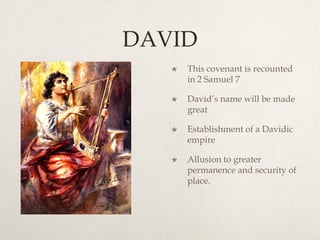
DAVID
 This covenant is recounted
in 2 Samuel 7
 David’s name will be made
great
 Establishment of a Davidic
empire
 Allusion to greater
permanence and security of
place.

5

  • 2.
    ‘An agreement betweentwo contracting parties, originally sealed with blood; a bond, or a law; a permanent religious dispensation. The old, primitive way of concluding a covenant was for the covenanters to cut into each other’s arm and suck the blood, the mixing of the blood rendering them ‘brothers of the covenant’. (Jewish Encyclopaedia online)
  • 3.
    B’RIT (COVENANT)  B’rit,the Hebrew word for Covenant appears 270 times in the Hebrew Bible.  It means covenant, pact or treaty  Ancient covenants were made by animal sacrifice hence the phrase ‘to cut a covenant’  B’rit implies the shedding of blood in the process of making an agreement.
  • 5.
    SUZERAINTY-VASSAL TREATY  Agreement betweentwo unequal parties, one of higher status, one of lower status  Alliance between a great monarch and subject king  Monarch has no duties  Subject king pledges allegiance to monarch  Monarch keeps own borders secure  Serves interests of suzerain, monarch
  • 6.
    PARITY TREATY  Betweentwo parties of equal power and social status  Two monarchs forming an alliance for mutual aid  Two merchants forming a trade agreement  Marriage contract between the father of the bride and the groom
  • 7.
    LAND GRANT  Freegift of land to faithful subject of a great monarch or servant of a wealthy landowner  Greater party binds self to the treaty  Lesser party benefits from the gift, but may not be bound to any specific stipulations, either before or after reception of the land grant
  • 9.
  • 10.
  • 11.
    NOAH (Genesis 9:1-17) Rainbow isthe sign of the covenant G-d made with Noah. Never again would the earth be destroyed by a flood. Stresses sanctity of life, refers to all of humanity NOAHIDE LAWS to establish courts of justice; not to commit blasphemy; not to commit idolatry; not to commit incest and adultery; not to commit bloodshed; not to commit robbery; and not to eat flesh cut from a living animal.
  • 12.
    ABRAHAM  Abraham: withsingle individual like suzerainty making land grant, ratification of oath, parties would pass between split carcass of an animal (Genesis 15). Abraham cuts sacrificial animals in two and G-d passes between two halves.  Only G-d is obligated to fulfill promise. Abraham has no obligation in return. Subject (Abraham) benefits not suzerain (G-D).  G-d owner of land and is empowered to set conditions like a landlord. Current owners polluting it with bloodshed and idolatry and when it’s completely polluted it will throw out its inhabitants. Israelites have to wait.  Covenant not due to favoritism or merit. G-d is seeking replacement tenants who will follow moral rules of residence which he has established for his land.  Genesis 17 is a second version of the same covenant. G-d adds that a line of kings will come forth from Abraham and that circumcision is perpetual sign of G-d eternal covenant. Rite would normally have been performed in puberty. Ritual has been suffused with new meaning a sign of covenant.
  • 13.
    MOSES  Road fromEgypt led to Sinai. G-d’s redemption is for a purpose. There in the third month after Exodus and here the covenant is concluded.  Receiving the Torah (Instruction)  Mosaic covenant different to covenant between G-d and Noah or G-d and Abraham  G-d makes no promises beyond being protector of Israel and he sets terms that require obedience to a series of laws and commandments.  Mosaic Covenant is mutual, reciprocal, bilateral and conditional. If Israel doesn’t fulfill their obligations by obeying the Torah or living according to his will as expressed in those laws and instructions, then G-d will not fulfill his obligations of protection towards Israel.
  • 14.
    Suzerainty Treaty Parts…  Preamble  Historical prologue  Stipulations  Provisions for treaty deposit & public reading  List of Divine witnesses to the treaty  Blessings & curses (for fidelity or infidelity to the treaty)
  • 15.
    MOSAIC COVENANT has thesame elements…  ‘You have seen what I did to the Egyptians…’ – G-d’s claim to sovereignty Historical prologue  ‘If you obey me faithfully’ …. Stipulations articulated in later (Exodus 20-23)  Moses reads publicly (Exodus 24:7)  Deposited in safe keeping in Ark (Deuteronomy)  The people vow to obey (Exodus 24:3; 7b)  Sacrifice seals oath (Exodus 24:8)  Because it is monotheistic gods cannot be invoked so that heaven and earth are invoked as witnesses (Deuteronomy 4:26; 30:19; 31:28)  Lists of blessings and curses (Leviticus 26 and Deut 28)
  • 16.
    Model of SuzeraintyTreaty for Mosaic Covenant  Historical prologue grounds obligations of Israel in the history of his acts on Israel’s behalf i.e. historical moment  Historical prologue bridges gap between generations: Israel’s past, present and future generations form a collective entity ‘Israel’ e.g. passover ceremonies today Jews are reminded to see themselves as coming out of Egypt and personally covenanted with G-d.  Israel’s relationship with G-d is told through story. Israel can rely on G-d. The road from Egypt leads to Sinai. Exodus is the story of a relationship expressed in the observance of the commandments and instructions, not just about a miraculous delivery.  Israelites are to treat one another well. Covenant is the basis for social ethics.  Covenant entails exclusive service of G-d.  Covenant precludes alliances with other human competitors. If Israel serves a divine king, Israel cannot serve a human king.  Vassals love for the Suzerain: Covenant bond, they promise to love.
  • 17.
    DAVID  This covenantis recounted in 2 Samuel 7  David’s name will be made great  Establishment of a Davidic empire  Allusion to greater permanence and security of place.