By Ashley Judd
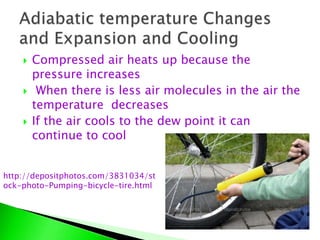
 Compressed air heats up because the
pressure increases
 When there is less air molecules in the air the
temperature decreases
 If the air cools to the dew point it can
continue to cool
http://depositphotos.com/3831034/st
ock-photo-Pumping-bicycle-tire.html
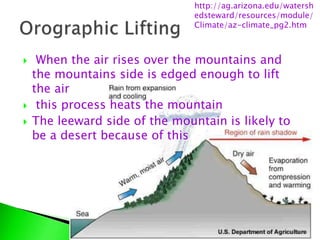
 When the air rises over the mountains and
the mountains side is edged enough to lift
the air
 this process heats the mountain
 The leeward side of the mountain is likely to
be a desert because of this
http://ag.arizona.edu/watersh
edsteward/resources/module/
Climate/az-climate_pg2.htm
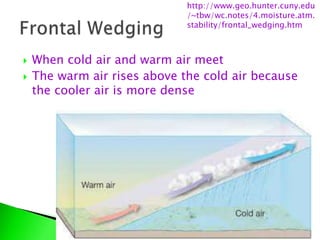
 When cold air and warm air meet
 The warm air rises above the cold air because
the cooler air is more dense
http://www.geo.hunter.cuny.edu
/~tbw/wc.notes/4.moisture.atm.
stability/frontal_wedging.htm
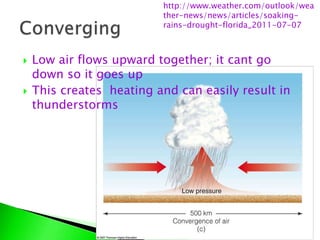
 Low air flows upward together; it cant go
down so it goes up
 This creates heating and can easily result in
thunderstorms
http://www.weather.com/outlook/wea
ther-news/news/articles/soaking-
rains-drought-florida_2011-07-07
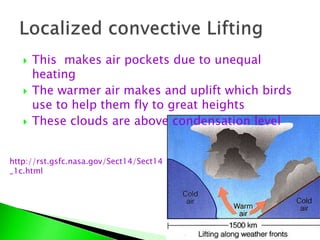
 This makes air pockets due to unequal
heating
 The warmer air makes and uplift which birds
use to help them fly to great heights
 These clouds are above condensation level
http://rst.gsfc.nasa.gov/Sect14/Sect14
_1c.html
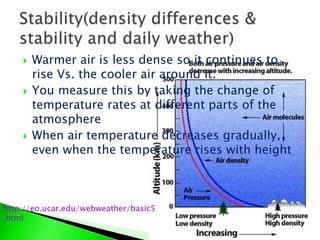
 Warmer air is less dense so it continues to
rise Vs. the cooler air around it.
 You measure this by taking the change of
temperature rates at different parts of the
atmosphere
 When air temperature decreases gradually,
even when the temperature rises with height
http://eo.ucar.edu/webweather/basic5
.html
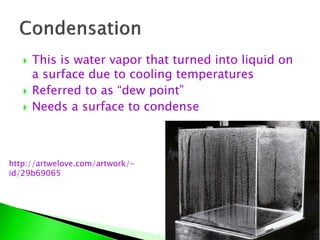
 This is water vapor that turned into liquid on
a surface due to cooling temperatures
 Referred to as “dew point”
 Needs a surface to condense
http://artwelove.com/artwork/-
id/29b69065
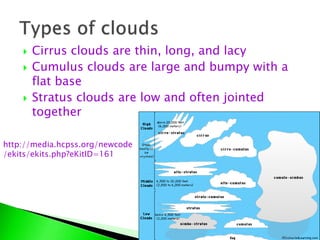
 Cirrus clouds are thin, long, and lacy
 Cumulus clouds are large and bumpy with a
flat base
 Stratus clouds are low and often jointed
together
http://media.hcpss.org/newcode
/ekits/ekits.php?eKitID=161
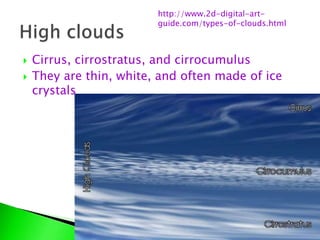
 Cirrus, cirrostratus, and cirrocumulus
 They are thin, white, and often made of ice
crystals
http://www.2d-digital-art-
guide.com/types-of-clouds.html
http://www.google.com/imgres?q=middle+clouds&hl=en&safe=active&gbv=
2&biw=1024&bih=453&tbm=isch&tbnid=sBtuNWyTP0aM-
M:&imgrefurl=http://www.meted.ucar.edu/fire/s290/unit6/print_2.htm&doci
d=tpdLN7pCXQIb4M&imgurl=http://www.meted.ucar.edu/fire/s290/unit6/m
edia/graphics/clouds_by_height.jpg&w=500&h=350&ei=HtnzTtPBM8Ph0QHC
0_GuAg&zoom=1&iact=rc&dur=5&sig=104574880544260111202&page=3&
tbnh=91&tbnw=130&start=22&ndsp=12&ved=1t:429,r:3,s:22&tx=87&ty=61
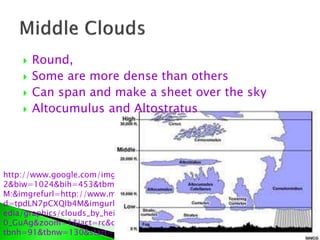
 Round,
 Some are more dense than others
 Can span and make a sheet over the sky
 Altocumulus and Altostratus
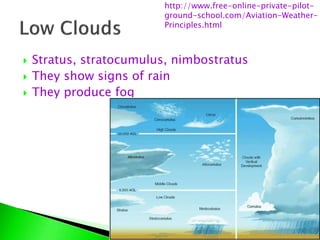
 Stratus, stratocumulus, nimbostratus
 They show signs of rain
 They produce fog
http://www.free-online-private-pilot-
ground-school.com/Aviation-Weather-
Principles.html
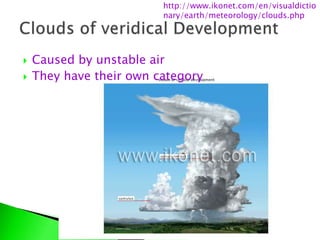
 Caused by unstable air
 They have their own category
http://www.ikonet.com/en/visualdictio
nary/earth/meteorology/clouds.php
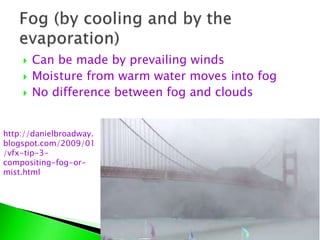
 Can be made by prevailing winds
 Moisture from warm water moves into fog
 No difference between fog and clouds
http://danielbroadway.
blogspot.com/2009/01
/vfx-tip-3-
compositing-fog-or-
mist.html
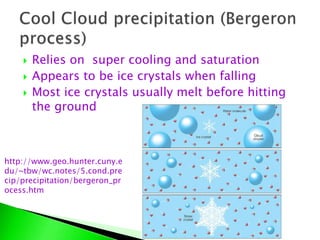
 Relies on super cooling and saturation
 Appears to be ice crystals when falling
 Most ice crystals usually melt before hitting
the ground
http://www.geo.hunter.cuny.e
du/~tbw/wc.notes/5.cond.pre
cip/precipitation/bergeron_pr
ocess.htm
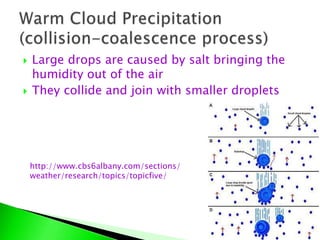
 Large drops are caused by salt bringing the
humidity out of the air
 They collide and join with smaller droplets
http://www.cbs6albany.com/sections/
weather/research/topics/topicfive/
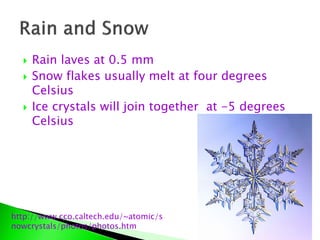
 Rain laves at 0.5 mm
 Snow flakes usually melt at four degrees
Celsius
 Ice crystals will join together at -5 degrees
Celsius
http://www.cco.caltech.edu/~atomic/s
nowcrystals/photos/photos.htm
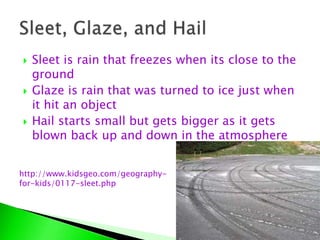
 Sleet is rain that freezes when its close to the
ground
 Glaze is rain that was turned to ice just when
it hit an object
 Hail starts small but gets bigger as it gets
blown back up and down in the atmosphere
http://www.kidsgeo.com/geography-
for-kids/0117-sleet.php

4ajudd

  • 1.
  • 2.
     Compressed airheats up because the pressure increases  When there is less air molecules in the air the temperature decreases  If the air cools to the dew point it can continue to cool http://depositphotos.com/3831034/st ock-photo-Pumping-bicycle-tire.html
  • 3.
     When theair rises over the mountains and the mountains side is edged enough to lift the air  this process heats the mountain  The leeward side of the mountain is likely to be a desert because of this http://ag.arizona.edu/watersh edsteward/resources/module/ Climate/az-climate_pg2.htm
  • 4.
     When coldair and warm air meet  The warm air rises above the cold air because the cooler air is more dense http://www.geo.hunter.cuny.edu /~tbw/wc.notes/4.moisture.atm. stability/frontal_wedging.htm
  • 5.
     Low airflows upward together; it cant go down so it goes up  This creates heating and can easily result in thunderstorms http://www.weather.com/outlook/wea ther-news/news/articles/soaking- rains-drought-florida_2011-07-07
  • 6.
     This makesair pockets due to unequal heating  The warmer air makes and uplift which birds use to help them fly to great heights  These clouds are above condensation level http://rst.gsfc.nasa.gov/Sect14/Sect14 _1c.html
  • 7.
     Warmer airis less dense so it continues to rise Vs. the cooler air around it.  You measure this by taking the change of temperature rates at different parts of the atmosphere  When air temperature decreases gradually, even when the temperature rises with height http://eo.ucar.edu/webweather/basic5 .html
  • 8.
     This iswater vapor that turned into liquid on a surface due to cooling temperatures  Referred to as “dew point”  Needs a surface to condense http://artwelove.com/artwork/- id/29b69065
  • 9.
     Cirrus cloudsare thin, long, and lacy  Cumulus clouds are large and bumpy with a flat base  Stratus clouds are low and often jointed together http://media.hcpss.org/newcode /ekits/ekits.php?eKitID=161
  • 10.
     Cirrus, cirrostratus,and cirrocumulus  They are thin, white, and often made of ice crystals http://www.2d-digital-art- guide.com/types-of-clouds.html
  • 11.
  • 12.
     Stratus, stratocumulus,nimbostratus  They show signs of rain  They produce fog http://www.free-online-private-pilot- ground-school.com/Aviation-Weather- Principles.html
  • 13.
     Caused byunstable air  They have their own category http://www.ikonet.com/en/visualdictio nary/earth/meteorology/clouds.php
  • 14.
     Can bemade by prevailing winds  Moisture from warm water moves into fog  No difference between fog and clouds http://danielbroadway. blogspot.com/2009/01 /vfx-tip-3- compositing-fog-or- mist.html
  • 15.
     Relies onsuper cooling and saturation  Appears to be ice crystals when falling  Most ice crystals usually melt before hitting the ground http://www.geo.hunter.cuny.e du/~tbw/wc.notes/5.cond.pre cip/precipitation/bergeron_pr ocess.htm
  • 16.
     Large dropsare caused by salt bringing the humidity out of the air  They collide and join with smaller droplets http://www.cbs6albany.com/sections/ weather/research/topics/topicfive/
  • 17.
     Rain lavesat 0.5 mm  Snow flakes usually melt at four degrees Celsius  Ice crystals will join together at -5 degrees Celsius http://www.cco.caltech.edu/~atomic/s nowcrystals/photos/photos.htm
  • 18.
     Sleet israin that freezes when its close to the ground  Glaze is rain that was turned to ice just when it hit an object  Hail starts small but gets bigger as it gets blown back up and down in the atmosphere http://www.kidsgeo.com/geography- for-kids/0117-sleet.php