Service Priorities for Homeless Veterans – How Does HUD-VASH Fit?  Presentation by Tori Lyon Executive Director, Jericho Project National Alliance to End Homelessness Conference July 14, 2011
Jericho Project Background 28 years of supportive housing to chronic substance abusers Focus on recovery, employment, and independence Unique service model designed to promote graduation to independent housing Utilizes peer support as important part of recovery process
Veterans Initiative Creation of two new, state-of-the-art supportive housing residences and apartment program for veterans in New York City Expansion of Jericho’s service model to address the unique needs of veterans Strategic efforts to stimulate additional development of permanent supportive housing for veterans nationwide
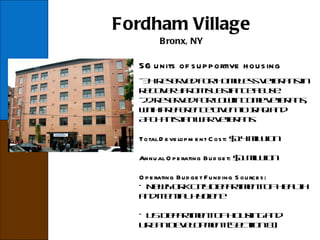
Fordham Village Bronx, NY 56 units of supportive housing - 34 reserved for homeless veterans in recovery from substance abuse. -22 reserved for low-income veterans, with preference given to Iraq and Afghanistan war veterans. Total Development Cost:  $14 million Annual Operating Budget:  $1 million Operating Budget Funding Sources: New York City Department of Health and Mental Hygiene US Department of Housing and Urban Development (Section 8)
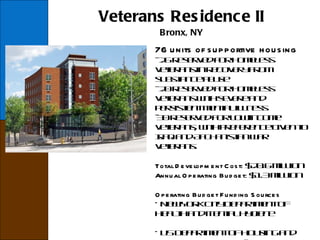
Veterans Residence II Bronx, NY 76 units of supportive housing - 26 reserved for homeless veterans in recovery from substance abuse - 20 reserved for homeless veterans with severe and persistent mental illness 30 reserved for low-income veterans, with preference given to Iraq and Afghanistan war veterans. Total Development Cost:  $20.6 million Annual Operating Budget : $1.3 million  Operating Budget Funding Sources New York City Department of Health and Mental Hygiene US Department of Housing and Urban Development (Shelter Plus Care and Section 8)
Veterans Supportive Apartment Program Provide 50 units of scatter-site housing for veterans with HUD-VASH vouchers. Created partnerships with James J. Peters Bronx VA and Harbor VA Medical Centers. Program open to individuals and families. Initially targeted to: Iraq and Afghanistan war veterans; Veterans with families; and Veterans who need vocational and educational assistance
Partnership with  VA Medical Centers Created linkages with Bronx and Harbor VA Medical Centers. Commitment to partnering with the VA, not duplicating VA services. Maintain consistent communication with the VA HUD-VASH teams to ensure optimal coordination and service to the veteran. Created streamlined and timely referral process for both the VA and the veteran.
Referral Process Veterans for program are identified by HUD-VASH team. Appropriate veteran documentation forwarded to Jericho. Jericho conducts a brief assessment of applicant and apprises HUD-VASH team on acceptance into the program. Veteran must sign a consent of release for the Jericho Project and the VA .
Program Approach Utilize network of landlord contacts to identify apartments, even for vets with poor credit. Help veterans with resources to transition to homes, including security deposits and moving expenses. Provide furniture and household items. Implement individualized vocational services.
Outcomes to Date 50 veterans accepted into program All 50 housed in a timely manner Demographics: 42% are women 64% served post-9/11 36% are families Service Needs: One-third are employed; another third are seeking jobs One-quarter are in college or training 55% have mental health issues, including PTSD 15% have substance abuse disorder
Lessons Learned Consistent communication with VA teams is key. Building trust and being consistent is most important. Marketing benefits of the program to veterans already required to meet VA case managers. Gaps in services at VA for family and employment/training services.  Scatter-site model is more challenging. HUD-VASH Program could be effectively administered by nonprofit partners via contracts.

4.6 Tori Lyon

  • 1.
    Service Priorities forHomeless Veterans – How Does HUD-VASH Fit? Presentation by Tori Lyon Executive Director, Jericho Project National Alliance to End Homelessness Conference July 14, 2011
  • 2.
    Jericho Project Background28 years of supportive housing to chronic substance abusers Focus on recovery, employment, and independence Unique service model designed to promote graduation to independent housing Utilizes peer support as important part of recovery process
  • 3.
    Veterans Initiative Creationof two new, state-of-the-art supportive housing residences and apartment program for veterans in New York City Expansion of Jericho’s service model to address the unique needs of veterans Strategic efforts to stimulate additional development of permanent supportive housing for veterans nationwide
  • 4.
    Fordham Village Bronx,NY 56 units of supportive housing - 34 reserved for homeless veterans in recovery from substance abuse. -22 reserved for low-income veterans, with preference given to Iraq and Afghanistan war veterans. Total Development Cost: $14 million Annual Operating Budget:  $1 million Operating Budget Funding Sources: New York City Department of Health and Mental Hygiene US Department of Housing and Urban Development (Section 8)
  • 5.
    Veterans Residence IIBronx, NY 76 units of supportive housing - 26 reserved for homeless veterans in recovery from substance abuse - 20 reserved for homeless veterans with severe and persistent mental illness 30 reserved for low-income veterans, with preference given to Iraq and Afghanistan war veterans. Total Development Cost: $20.6 million Annual Operating Budget : $1.3 million Operating Budget Funding Sources New York City Department of Health and Mental Hygiene US Department of Housing and Urban Development (Shelter Plus Care and Section 8)
  • 6.
    Veterans Supportive ApartmentProgram Provide 50 units of scatter-site housing for veterans with HUD-VASH vouchers. Created partnerships with James J. Peters Bronx VA and Harbor VA Medical Centers. Program open to individuals and families. Initially targeted to: Iraq and Afghanistan war veterans; Veterans with families; and Veterans who need vocational and educational assistance
  • 7.
    Partnership with VA Medical Centers Created linkages with Bronx and Harbor VA Medical Centers. Commitment to partnering with the VA, not duplicating VA services. Maintain consistent communication with the VA HUD-VASH teams to ensure optimal coordination and service to the veteran. Created streamlined and timely referral process for both the VA and the veteran.
  • 8.
    Referral Process Veteransfor program are identified by HUD-VASH team. Appropriate veteran documentation forwarded to Jericho. Jericho conducts a brief assessment of applicant and apprises HUD-VASH team on acceptance into the program. Veteran must sign a consent of release for the Jericho Project and the VA .
  • 9.
    Program Approach Utilizenetwork of landlord contacts to identify apartments, even for vets with poor credit. Help veterans with resources to transition to homes, including security deposits and moving expenses. Provide furniture and household items. Implement individualized vocational services.
  • 10.
    Outcomes to Date50 veterans accepted into program All 50 housed in a timely manner Demographics: 42% are women 64% served post-9/11 36% are families Service Needs: One-third are employed; another third are seeking jobs One-quarter are in college or training 55% have mental health issues, including PTSD 15% have substance abuse disorder
  • 11.
    Lessons Learned Consistentcommunication with VA teams is key. Building trust and being consistent is most important. Marketing benefits of the program to veterans already required to meet VA case managers. Gaps in services at VA for family and employment/training services. Scatter-site model is more challenging. HUD-VASH Program could be effectively administered by nonprofit partners via contracts.