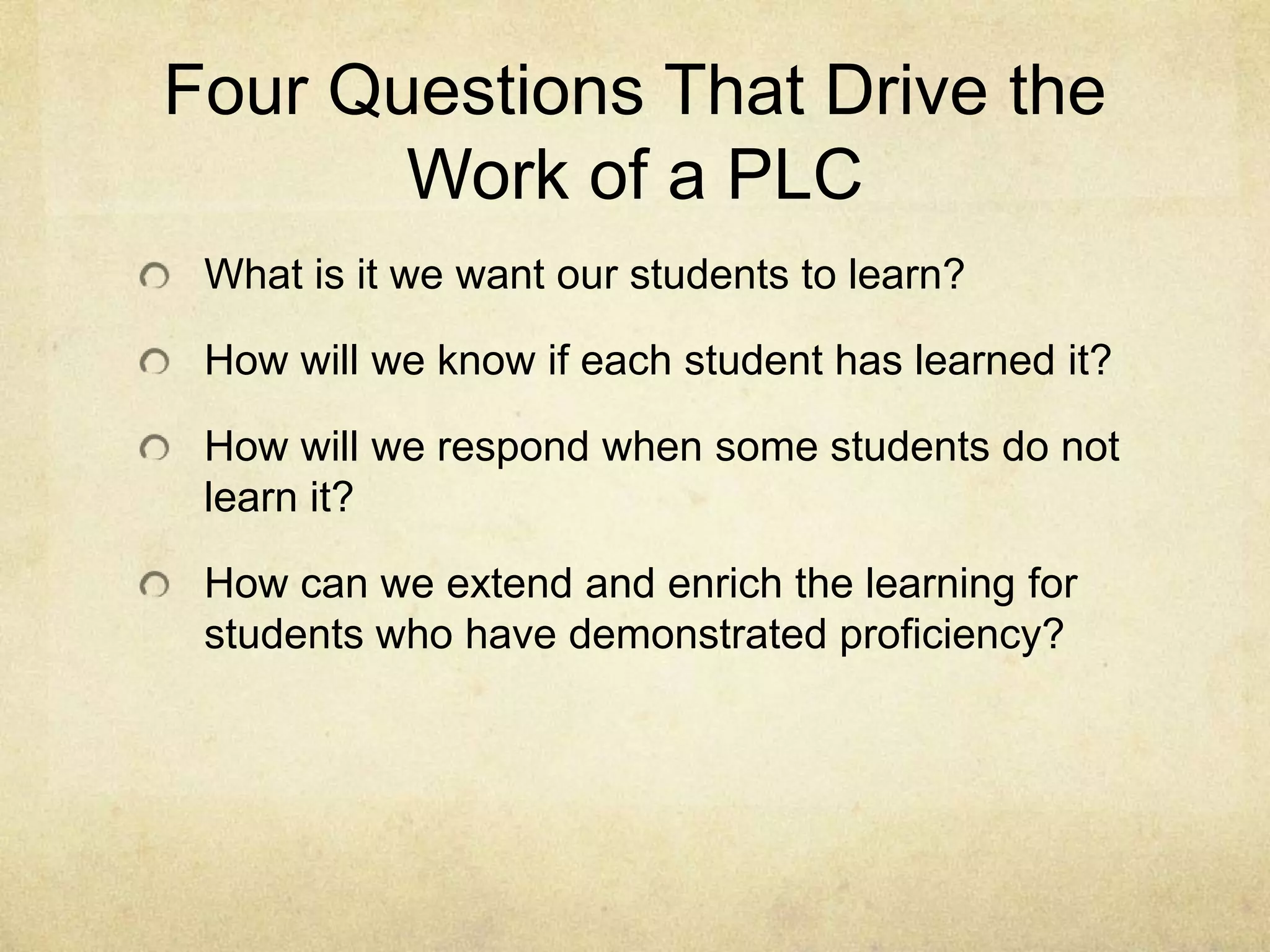
Four Questions That Drive the
Work of a PLC
What is it we want our students to learn?
How will we know if each student has learned it?
How will we respond when some students do not
learn it?
How can we extend and enrich the learning for
students who have demonstrated proficiency?
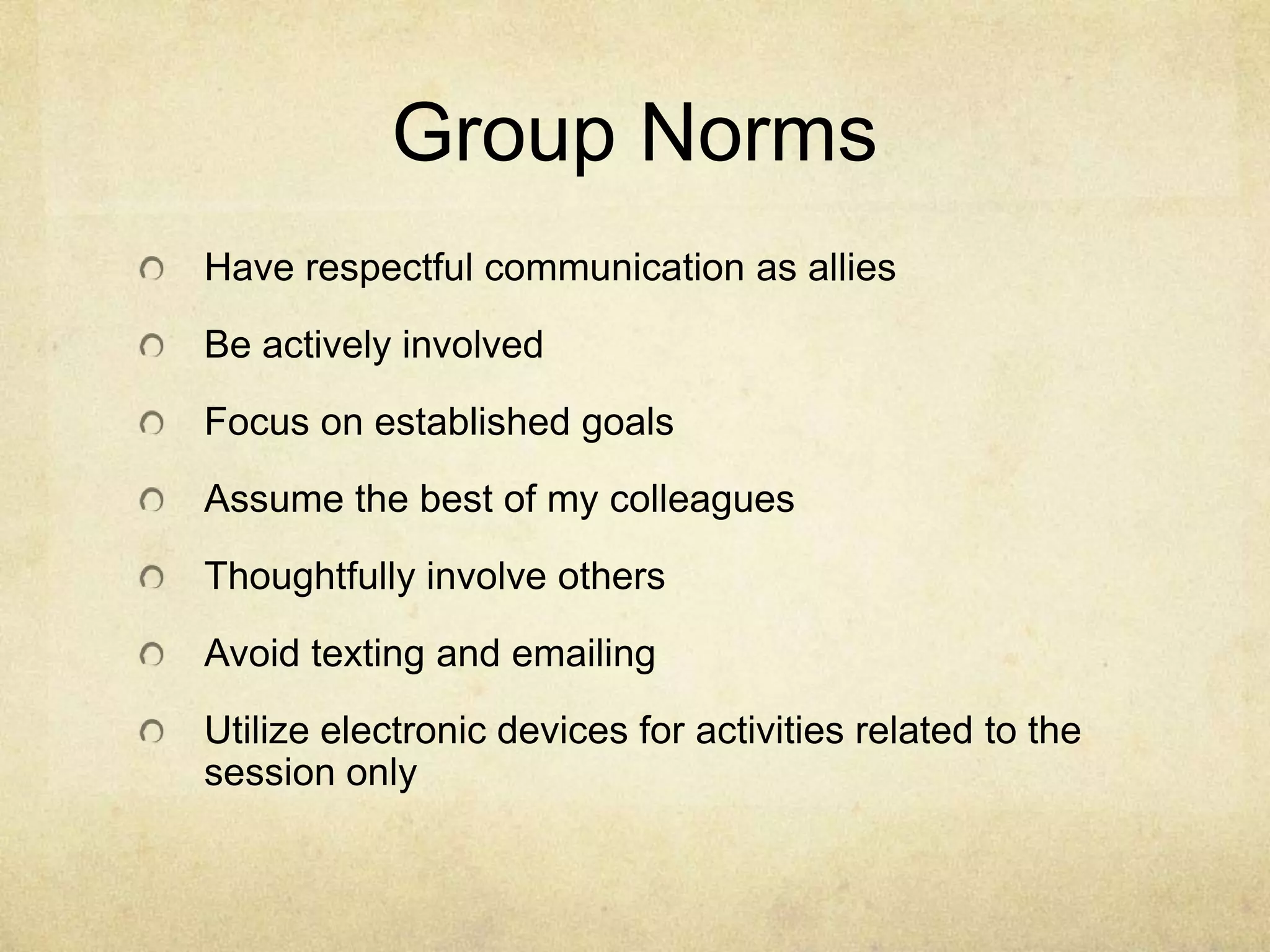
Group Norms
Have respectful communication as allies
Be actively involved

Focus on established goals
Assume the best of my colleagues
Thoughtfully involve others
Avoid texting and emailing
Utilize electronic devices for activities related to the
session only
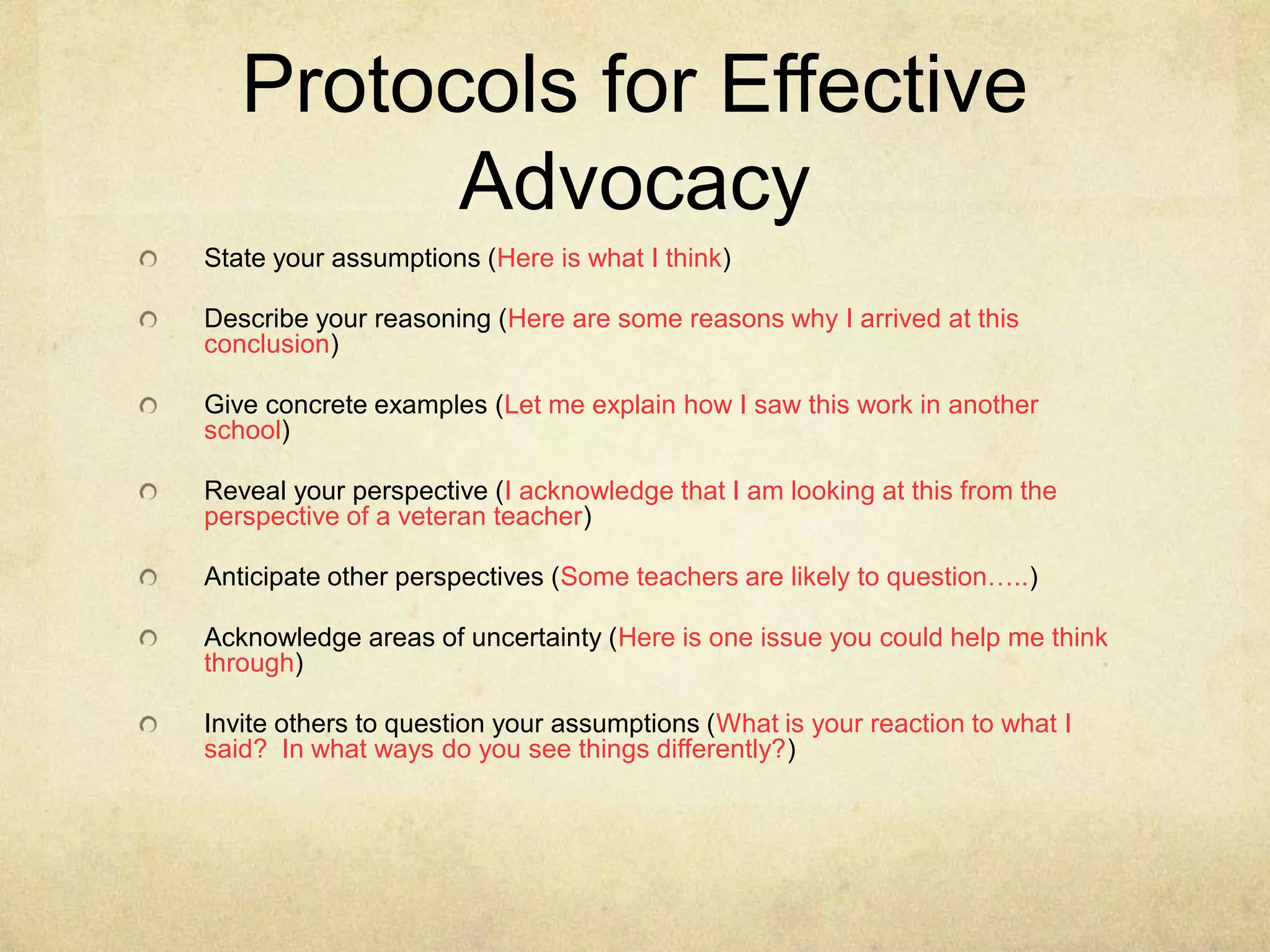
Protocols for Effective
Advocacy
State your assumptions (Here is what I think)
Describe your reasoning (Here are some reasons why I arrived at this
conclusion)
Give concrete examples (Let me explain how I saw this work in another
school)
Reveal your perspective (I acknowledge that I am looking at this from the
perspective of a veteran teacher)
Anticipate other perspectives (Some teachers are likely to question…..)

Acknowledge areas of uncertainty (Here is one issue you could help me think
through)
Invite others to question your assumptions (What is your reaction to what I
said? In what ways do you see things differently?)
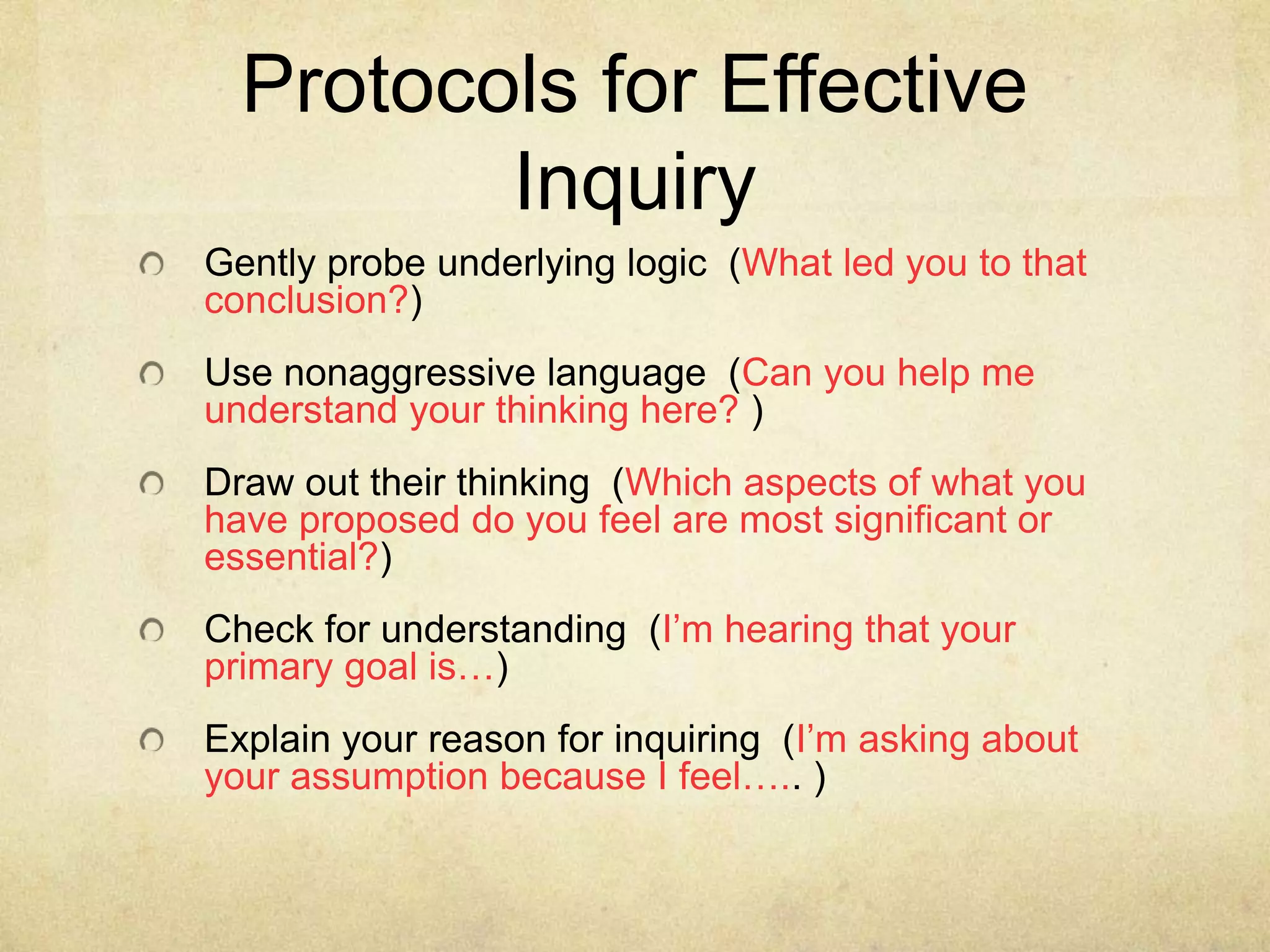
Protocols for Effective
Inquiry
Gently probe underlying logic (What led you to that
conclusion?)
Use nonaggressive language (Can you help me
understand your thinking here? )
Draw out their thinking (Which aspects of what you
have proposed do you feel are most significant or
essential?)

Check for understanding (I’m hearing that your
primary goal is…)
Explain your reason for inquiring (I’m asking about
your assumption because I feel….. )

4 plc questions

  • 1.
    Four Questions ThatDrive the Work of a PLC What is it we want our students to learn? How will we know if each student has learned it? How will we respond when some students do not learn it? How can we extend and enrich the learning for students who have demonstrated proficiency?
  • 2.
    Group Norms Have respectfulcommunication as allies Be actively involved Focus on established goals Assume the best of my colleagues Thoughtfully involve others Avoid texting and emailing Utilize electronic devices for activities related to the session only
  • 3.
    Protocols for Effective Advocacy Stateyour assumptions (Here is what I think) Describe your reasoning (Here are some reasons why I arrived at this conclusion) Give concrete examples (Let me explain how I saw this work in another school) Reveal your perspective (I acknowledge that I am looking at this from the perspective of a veteran teacher) Anticipate other perspectives (Some teachers are likely to question…..) Acknowledge areas of uncertainty (Here is one issue you could help me think through) Invite others to question your assumptions (What is your reaction to what I said? In what ways do you see things differently?)
  • 4.
    Protocols for Effective Inquiry Gentlyprobe underlying logic (What led you to that conclusion?) Use nonaggressive language (Can you help me understand your thinking here? ) Draw out their thinking (Which aspects of what you have proposed do you feel are most significant or essential?) Check for understanding (I’m hearing that your primary goal is…) Explain your reason for inquiring (I’m asking about your assumption because I feel….. )