When a pregnant woman goes to her
first check-up with the doctor, the first
thing the doctor does is to listen to the
baby’s heartbeat. It is the first sign of
life, and it is also the last to stop before
the person passes away – this occur
when the heart rate falls to zero.
In the previous lesson, you learned that
the oxygen are transported through
circulatory system. In this lesson you
will find out what are the important
parts in circulatory system and its
functions.
The circulatory system is the life
support structure that nourishes your
cells with nutrients from the food you
eat and oxygen from the air you
breathe. It can be compared to a
complex arrangement of highways,
avenues and lanes connecting all the
cells together into a neighborhood.
Sequentially, the community of cells
sustains the body to stay alive.
Another name for the circulatory
system is the cardiovascular system.
The circulatory system functions with
other body systems to deliver
different materials in the body. It
circulates vital elements such as
oxygen and nutrients. At the same
time, it also transports wastes away
from the body.
What are the three major parts
of the circulatory system and
their roles?
Heart
pumps the blood throughout the
body
Blood
carries the materials
throughout the body
Blood vessel
carries the blood throughout the
body
The main types of blood
vessels
Arteries
carry oxygenated blood away
from the heart to the cells,
tissues and organs of the body
Veins
carry deoxygenated blood to
the heart
Capillaries
the smallest blood vessels in the
body, connecting the smallest
arteries to the smallest veins -
the actual site where gases and
nutrients are exchanged
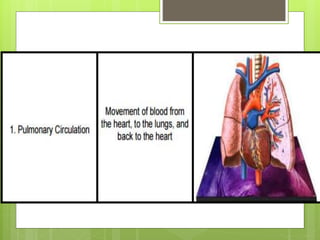
Circulation
2. Coronary
Circulation
Movement of
blood
through the
tissues of the
heart
Activity 4
Let’s organize
Objectives:
- Identify the components of the
circulatory system
- Explain the different types of
circulation
Procedure:
Using the given graphic
organizer, fill in the missing
parts, description, and
functions to complete the entire
concept.
The Human Heart
Do you know how big your
heart is?
Take a look at your fist.
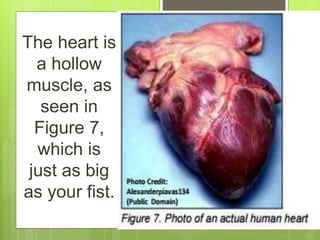
The heart is
a hollow
muscle, as
seen in
Figure 7,
which is
just as big
as your fist.
It has four chambers
with specific tasks to do:
- two ventricles and
- two atria.
The atria are the receiving
chambers of the heart,
accepting blood from the body
(right atrium) and from the
lungs (left atrium).
The ventricles are the pumping
chambers, moving blood to the
lungs (right ventricle) and into
the body (left ventricle).
The heart has two pumps. Each
pump has two chambers, the
upper and lower chambers. The
upper chamber is the atrium that
receives blood coming in from the
veins. The lower chamber is the
ventricle that forces the blood out
into the arteries.
There is a valve between each
atrium and ventricle to prevent
the blood from flowing
backwards. The valves are like
one-way doors that keep the
blood moving in only one
direction.
Valves control movement of
blood into the heart
chambers and out to the
aorta and the pulmonary
artery.
4 let's organize
4 let's organize

4 let's organize

  • 2.
    When a pregnantwoman goes to her first check-up with the doctor, the first thing the doctor does is to listen to the baby’s heartbeat. It is the first sign of life, and it is also the last to stop before the person passes away – this occur when the heart rate falls to zero.
  • 3.
    In the previouslesson, you learned that the oxygen are transported through circulatory system. In this lesson you will find out what are the important parts in circulatory system and its functions.
  • 4.
    The circulatory systemis the life support structure that nourishes your cells with nutrients from the food you eat and oxygen from the air you breathe. It can be compared to a complex arrangement of highways, avenues and lanes connecting all the cells together into a neighborhood.
  • 5.
    Sequentially, the communityof cells sustains the body to stay alive. Another name for the circulatory system is the cardiovascular system.
  • 6.
    The circulatory systemfunctions with other body systems to deliver different materials in the body. It circulates vital elements such as oxygen and nutrients. At the same time, it also transports wastes away from the body.
  • 8.
    What are thethree major parts of the circulatory system and their roles?
  • 9.
    Heart pumps the bloodthroughout the body
  • 10.
  • 11.
    Blood vessel carries theblood throughout the body
  • 12.
    The main typesof blood vessels
  • 13.
    Arteries carry oxygenated bloodaway from the heart to the cells, tissues and organs of the body
  • 14.
  • 15.
    Capillaries the smallest bloodvessels in the body, connecting the smallest arteries to the smallest veins - the actual site where gases and nutrients are exchanged
  • 16.
  • 18.
  • 21.
  • 22.
    Objectives: - Identify thecomponents of the circulatory system - Explain the different types of circulation
  • 23.
    Procedure: Using the givengraphic organizer, fill in the missing parts, description, and functions to complete the entire concept.
  • 25.
  • 26.
    Do you knowhow big your heart is? Take a look at your fist.
  • 27.
    The heart is ahollow muscle, as seen in Figure 7, which is just as big as your fist.
  • 28.
    It has fourchambers with specific tasks to do: - two ventricles and - two atria.
  • 29.
    The atria arethe receiving chambers of the heart, accepting blood from the body (right atrium) and from the lungs (left atrium).
  • 30.
    The ventricles arethe pumping chambers, moving blood to the lungs (right ventricle) and into the body (left ventricle).
  • 31.
    The heart hastwo pumps. Each pump has two chambers, the upper and lower chambers. The upper chamber is the atrium that receives blood coming in from the veins. The lower chamber is the ventricle that forces the blood out into the arteries.
  • 32.
    There is avalve between each atrium and ventricle to prevent the blood from flowing backwards. The valves are like one-way doors that keep the blood moving in only one direction.
  • 33.
    Valves control movementof blood into the heart chambers and out to the aorta and the pulmonary artery.