A cut below: research and advocacy on 
female genital cosmetic surgery 
Jessica Malone 
Policy Officer
Overview of the Issues Paper 
• Issues Paper on women and genital cosmetic surgery 
released in February 2013. 
• Explores female genital cosmetic surgery in Victoria 
and Australia. 
• What is it, who is having it, what their reasons are. 
• Implications for policy and potential for advocacy.
What is female genital cosmetic surgery? 
• “...procedures that aim to change aesthetic (or 
functional) aspects of women’s genitalia but that are 
not medically indicated” (Braun 2010)
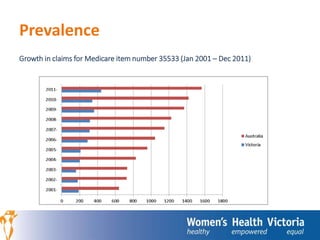
Prevalence 
Growth in claims for Medicare item number 35533 (Jan 2001 – Dec 2011)
But… 
Is this a problem?
Standard of evidence 
• “Significant concerns exist in relation to the safety and 
efficacy of these procedures, not least because the 
evidence that currently exists is of questionable 
quality.” (Braun 2010)
Reasons for seeking surgery 
• Aesthetic: Size , asymmetry, colour of the labia 
• Functional: Hygiene, pain, sexual function 
• Psychological: Embarrassment, anxiety or depression, 
mood disturbances.
What is normal? 
• Normality and abnormality: Suggests there is an 
acceptable range for genital morphology. 
• Classifications of hypertrophy are arbitrary, 
inconsistent, and promote a limited concept of 
normality.
Who else is influencing women’s 
decisions? 
• External influences not as prominent as we had 
assumed. 
• Role of spouses, partners, or friends (Miklos & Moore 
2008). 
• Role of mothers as well as sexual partners (Deans et al. 
2011).
Sociocultural context 
• Lack of knowledge about female genitals, especially 
genital diversity 
• The ideal vulva: Small, clean, discreet and tucked away 
• Pre-pubescent comparison
Female genitals in the media 
• Lack of visibility of normal female genitals in the media. 
• Role of the Guidelines for the Classification of 
Publications 2005 .
Potential responses 
Advocate for changes to the media classification system. 
• Remove ‘genital detail’ and ‘genital emphasis’ clause 
• Or apply them more transparently
Potential responses 
Raise awareness about genital diversity 
• Media literacy 
• Genital body image and sexuality education 
• The Labia Library will be launched in late June: 
www.labialibrary.org.au
Potential responses 
Raise awareness among medical professionals 
• Their ideas are shaped in the same social context 
• They need to be aware of female genital diversity
Potential responses 
Encourage safe and responsible medical practice 
• Professional bodies to take an active role in speaking 
out and regulating provision of female genital cosmetic 
surgery 
• The Netherlands: Protocol for management of women 
seeking labioplasty developed jointly between O&Gs 
and plastic surgeons
Now is the time to act 
• Promote awareness of genital diversity and informed 
decision making . 
• Promote access to safe and responsible medical 
practice.
Thank you 
Jessica Malone 
Policy Officer 
03 9664 9300 
jessica.malone@whv.org.au 
Follow us: @WHVictoria 
Like us: www.facebook.com/WomensHealthVictoria

3.5.4 ms jessica malone

  • 1.
    A cut below:research and advocacy on female genital cosmetic surgery Jessica Malone Policy Officer
  • 2.
    Overview of theIssues Paper • Issues Paper on women and genital cosmetic surgery released in February 2013. • Explores female genital cosmetic surgery in Victoria and Australia. • What is it, who is having it, what their reasons are. • Implications for policy and potential for advocacy.
  • 3.
    What is femalegenital cosmetic surgery? • “...procedures that aim to change aesthetic (or functional) aspects of women’s genitalia but that are not medically indicated” (Braun 2010)
  • 4.
    Prevalence Growth inclaims for Medicare item number 35533 (Jan 2001 – Dec 2011)
  • 5.
    But… Is thisa problem?
  • 6.
    Standard of evidence • “Significant concerns exist in relation to the safety and efficacy of these procedures, not least because the evidence that currently exists is of questionable quality.” (Braun 2010)
  • 7.
    Reasons for seekingsurgery • Aesthetic: Size , asymmetry, colour of the labia • Functional: Hygiene, pain, sexual function • Psychological: Embarrassment, anxiety or depression, mood disturbances.
  • 8.
    What is normal? • Normality and abnormality: Suggests there is an acceptable range for genital morphology. • Classifications of hypertrophy are arbitrary, inconsistent, and promote a limited concept of normality.
  • 9.
    Who else isinfluencing women’s decisions? • External influences not as prominent as we had assumed. • Role of spouses, partners, or friends (Miklos & Moore 2008). • Role of mothers as well as sexual partners (Deans et al. 2011).
  • 10.
    Sociocultural context •Lack of knowledge about female genitals, especially genital diversity • The ideal vulva: Small, clean, discreet and tucked away • Pre-pubescent comparison
  • 11.
    Female genitals inthe media • Lack of visibility of normal female genitals in the media. • Role of the Guidelines for the Classification of Publications 2005 .
  • 12.
    Potential responses Advocatefor changes to the media classification system. • Remove ‘genital detail’ and ‘genital emphasis’ clause • Or apply them more transparently
  • 13.
    Potential responses Raiseawareness about genital diversity • Media literacy • Genital body image and sexuality education • The Labia Library will be launched in late June: www.labialibrary.org.au
  • 14.
    Potential responses Raiseawareness among medical professionals • Their ideas are shaped in the same social context • They need to be aware of female genital diversity
  • 15.
    Potential responses Encouragesafe and responsible medical practice • Professional bodies to take an active role in speaking out and regulating provision of female genital cosmetic surgery • The Netherlands: Protocol for management of women seeking labioplasty developed jointly between O&Gs and plastic surgeons
  • 16.
    Now is thetime to act • Promote awareness of genital diversity and informed decision making . • Promote access to safe and responsible medical practice.
  • 17.
    Thank you JessicaMalone Policy Officer 03 9664 9300 jessica.malone@whv.org.au Follow us: @WHVictoria Like us: www.facebook.com/WomensHealthVictoria