Classification of cropping
system
Mono cropping, intensive cropping, multiple
cropping, mixed cropping.
Classification
1. Mono cropping
2. Multiple cropping
i) Inter cropping
ii) Mixed cropping
iii) Sequential/ sequence/ non-overlapping cropping
iv) Relay /overlapping cropping
v) Double/triple/quadruple cropping
vi) Ratoon cropping
vii) Multi-stored/multilevel/multi-tier cropping
viii) Paira/utera cropping
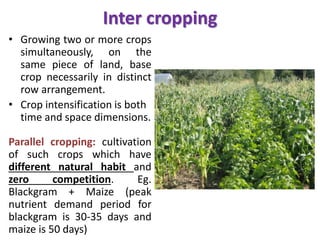
Inter cropping
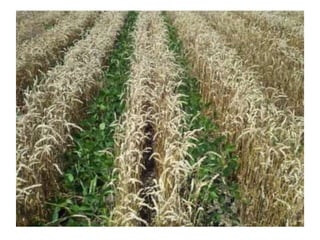
• Growing two or more crops
simultaneously, on the
same piece of land, base
crop necessarily in distinct
row arrangement.
• Crop intensification is both
time and space dimensions.
Parallel cropping: cultivation
of such crops which have
different natural habit and
zero competition. Eg.
Blackgram + Maize (peak
nutrient demand period for
blackgram is 30-35 days and
maize is 50 days)
Companion cropping: intercropping where the
production of both intercrops is equal to that of its
solid planting. (Eg. Mustard/Onion+Sugarcane)
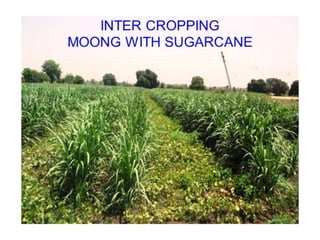
Synergetic cropping: the yield of both crops are
higher than of their pure crop on unit area basis.
(eg. Sugarcane+Potato).
Cont..
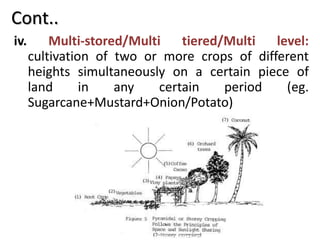
iv. Multi-stored/Multi tiered/Multi level:
cultivation of two or more crops of different
heights simultaneously on a certain piece of
land in any certain period (eg.
Sugarcane+Mustard+Onion/Potato)
On the basis of percent of population used for
each crop in intercropping system;
intercropping is of two types
a. Additive series: one crop is main/ base crop
and another is intercrop. Introduced by
adjusting or changing crop geometry. Plant
population of main (base) crop is same as
that of pure crop stand.
b. Replacement series: both the crops are
component crops. Neither is the base crop
nor the intercrop. Plant population of both
component crops is less than their
recommended population in pure stand.
• Paira/ Utera cropping: growing of such crops
sown a few days or weeks before harvesting of
standing mature crops is called paira/utera
cropping and the sown crop is called paira/ utera
crop. Eg lathyrus in rice. Paira cropping in
succession may constitute relay cropping.
• Pulses like mung, blackgram, gram, lentil and
lathyrus come up well as paira cropping in the rabi
season. Where the land after harvest of paddy
remains slaucy making it unsuitable for tillage,
these crops may be broadcast atleast 15-20 days
before harvest using 1.50 times the seeds
required for normal sowing.
• Intensive cropping: cropping system based on
climate, soil and water availability have to be
evolved for realizing the potential production
levels through efficient use of available resources.
• The cropping system should provide enough food
for the family, fodder to the cattle and generate
sufficient cash income for domestic and
cultivation expenses. These objective could be
achieved by adopting intensive cropping.
• Intensive farming is an agricultural intensification
and mechanization system that aims to maximize
yields from available land through various means,
such as use of pesticides and chemical fertilizers
etc.,
Choice of crops for multiple intensive
• Crops should be arranged in such a way that
allelopathic effect, temporary immobilisation
of nutrients and depletion of nutrients from
the same layer of soil do not occur.
• Legumes have a definite place in any cropping
system because of their limited demand on
resources like water, nutrients and light, their
adaptability to varying environmental
conditions and capacity to fix atmospheric N
in root nodules.
• Vegetables deserve their due place in intensive
cropping because
a. Of high cash and nutritional values.
b. Most vegetables can be raised as seedlings and
planted thus reducing main field duration and
competition with the associated crop.
c. They can be grown in interspaces in orchards and
plantations
d. They can be inter or relay cropped in cereal base
crops.
• Short duration, photoperiod insensitive genotypes
are suited for intensive cropping system.
Terms used in Multiple cropping
system
• Cropping index
• Cropping pattern
• Cropping system
• Monoculture
• Sole cropping
• Rotation
• Mixed farming
• Land equivalent ratio (LER)
• Income equivalent ratio (IER)
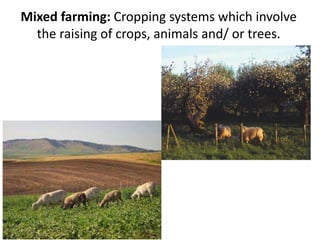
Mixed farming: Cropping systems which involve
the raising of crops, animals and/ or trees.
• LER: Relative land area under sole crop that
would be required to produce the equivalent
yield under a mixed or an intercropping system
at the same level of management.
LER = 𝑖=1
𝑛
𝑌𝑖/𝑌𝑖𝑗
Where Yi is the yield of ith component from a
unit area grown as intercrop and Yij is the yield of
ith component grown as sole crop over the same
area. In brief, LER is the summation of ratios of
yield of intercrop to the yield of sole crop.
• IER: Ratio of the area needed under sole cropping
to produce the same gross income as one ha of
intercropping at the same management level. IER
is the conversion of LER into economic terms.
• Over yielding: Production of component crop in
an intercrop which is higher than the sum of
appropriate monoculture crops. This is indicated
by an LER greater than unity.
• Residual effect: Effect of the previous crop in a
sequential cropping pattern on the productivity of
the current crop.

cropping system types

  • 1.
    Classification of cropping system Monocropping, intensive cropping, multiple cropping, mixed cropping.
  • 2.
    Classification 1. Mono cropping 2.Multiple cropping i) Inter cropping ii) Mixed cropping iii) Sequential/ sequence/ non-overlapping cropping iv) Relay /overlapping cropping v) Double/triple/quadruple cropping vi) Ratoon cropping vii) Multi-stored/multilevel/multi-tier cropping viii) Paira/utera cropping
  • 3.
    Inter cropping • Growingtwo or more crops simultaneously, on the same piece of land, base crop necessarily in distinct row arrangement. • Crop intensification is both time and space dimensions. Parallel cropping: cultivation of such crops which have different natural habit and zero competition. Eg. Blackgram + Maize (peak nutrient demand period for blackgram is 30-35 days and maize is 50 days)
  • 4.
    Companion cropping: intercroppingwhere the production of both intercrops is equal to that of its solid planting. (Eg. Mustard/Onion+Sugarcane) Synergetic cropping: the yield of both crops are higher than of their pure crop on unit area basis. (eg. Sugarcane+Potato).
  • 6.
    Cont.. iv. Multi-stored/Multi tiered/Multilevel: cultivation of two or more crops of different heights simultaneously on a certain piece of land in any certain period (eg. Sugarcane+Mustard+Onion/Potato)
  • 7.
    On the basisof percent of population used for each crop in intercropping system; intercropping is of two types a. Additive series: one crop is main/ base crop and another is intercrop. Introduced by adjusting or changing crop geometry. Plant population of main (base) crop is same as that of pure crop stand. b. Replacement series: both the crops are component crops. Neither is the base crop nor the intercrop. Plant population of both component crops is less than their recommended population in pure stand.
  • 8.
    • Paira/ Uteracropping: growing of such crops sown a few days or weeks before harvesting of standing mature crops is called paira/utera cropping and the sown crop is called paira/ utera crop. Eg lathyrus in rice. Paira cropping in succession may constitute relay cropping. • Pulses like mung, blackgram, gram, lentil and lathyrus come up well as paira cropping in the rabi season. Where the land after harvest of paddy remains slaucy making it unsuitable for tillage, these crops may be broadcast atleast 15-20 days before harvest using 1.50 times the seeds required for normal sowing.
  • 10.
    • Intensive cropping:cropping system based on climate, soil and water availability have to be evolved for realizing the potential production levels through efficient use of available resources. • The cropping system should provide enough food for the family, fodder to the cattle and generate sufficient cash income for domestic and cultivation expenses. These objective could be achieved by adopting intensive cropping. • Intensive farming is an agricultural intensification and mechanization system that aims to maximize yields from available land through various means, such as use of pesticides and chemical fertilizers etc.,
  • 11.
    Choice of cropsfor multiple intensive • Crops should be arranged in such a way that allelopathic effect, temporary immobilisation of nutrients and depletion of nutrients from the same layer of soil do not occur. • Legumes have a definite place in any cropping system because of their limited demand on resources like water, nutrients and light, their adaptability to varying environmental conditions and capacity to fix atmospheric N in root nodules.
  • 12.
    • Vegetables deservetheir due place in intensive cropping because a. Of high cash and nutritional values. b. Most vegetables can be raised as seedlings and planted thus reducing main field duration and competition with the associated crop. c. They can be grown in interspaces in orchards and plantations d. They can be inter or relay cropped in cereal base crops. • Short duration, photoperiod insensitive genotypes are suited for intensive cropping system.
  • 13.
    Terms used inMultiple cropping system • Cropping index • Cropping pattern • Cropping system • Monoculture • Sole cropping • Rotation • Mixed farming • Land equivalent ratio (LER) • Income equivalent ratio (IER)
  • 14.
    Mixed farming: Croppingsystems which involve the raising of crops, animals and/ or trees.
  • 15.
    • LER: Relativeland area under sole crop that would be required to produce the equivalent yield under a mixed or an intercropping system at the same level of management. LER = 𝑖=1 𝑛 𝑌𝑖/𝑌𝑖𝑗 Where Yi is the yield of ith component from a unit area grown as intercrop and Yij is the yield of ith component grown as sole crop over the same area. In brief, LER is the summation of ratios of yield of intercrop to the yield of sole crop.
  • 16.
    • IER: Ratioof the area needed under sole cropping to produce the same gross income as one ha of intercropping at the same management level. IER is the conversion of LER into economic terms. • Over yielding: Production of component crop in an intercrop which is higher than the sum of appropriate monoculture crops. This is indicated by an LER greater than unity. • Residual effect: Effect of the previous crop in a sequential cropping pattern on the productivity of the current crop.